


 Claim Ownership
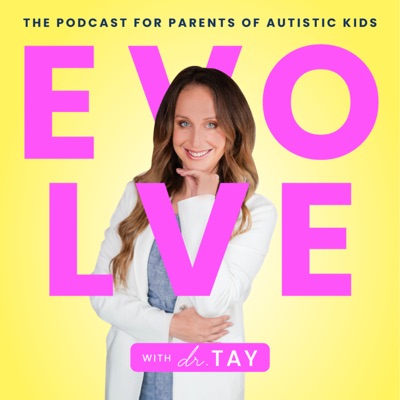
EVOLVE with Dr. Tay: the podcast for parents of autistic kids
Subscribed: 28Played: 655
Subscribe

© Copyright 2026 Dr. Taylor Day
Description
welcome to a parenting space actually designed for YOU! where you can get answers about navigating a life that includes autism.
I’m Dr. Tay, a licensed child psychologist specializing in autism and neuroaffirming care. I have supported 100s of autistic children and their families and have been in the autism field for over a decade.
on this podcast, we focus on supporting your autistic child AND your whole family, including you! every topic is on the table, and your questions (which you can submit through my social media) inspire the episodes created. I share some of my personal stories growing up with a brother who was diagnosed at 23 months of age as well as feature other families' stories so you know you are not navigating this journey alone. this is a space for you to be SEEN. HEARD. SUPPORTED. and get reputable and reliable information about autism instead of searching Google endlessly for hours. I am so dang grateful that you are here.
***disclaimer: not clinical advice, for educational purposes only***
subscribe to this podcast by hitting the plus or follow button so you don't miss an episode.
I’m Dr. Tay, a licensed child psychologist specializing in autism and neuroaffirming care. I have supported 100s of autistic children and their families and have been in the autism field for over a decade.
on this podcast, we focus on supporting your autistic child AND your whole family, including you! every topic is on the table, and your questions (which you can submit through my social media) inspire the episodes created. I share some of my personal stories growing up with a brother who was diagnosed at 23 months of age as well as feature other families' stories so you know you are not navigating this journey alone. this is a space for you to be SEEN. HEARD. SUPPORTED. and get reputable and reliable information about autism instead of searching Google endlessly for hours. I am so dang grateful that you are here.
***disclaimer: not clinical advice, for educational purposes only***
subscribe to this podcast by hitting the plus or follow button so you don't miss an episode.
232 Episodes
Reverse

about this episode (+ scroll for resources) 👇this episode is for the moms who feel like some weeks they can do it all… and other weeks everything feels harder.dr. tay shares a vulnerable, real-time reflection from the depths of her luteal phase and explains why cycle tracking can be such a powerful tool for understanding mood, energy, capacity, productivity, and parenting.because your hormonal health is not separate from your autism parenting journey. your body, your nervous system, your capacity, and your regulation are all part of the ecosystem your child is living in.you’ll hear about:why the luteal phase can impact mood, energy, and capacityhow cycle tracking can help reduce shame and increase self-understandingthe connection between hormones, mental health, and neurodivergencewhy parenting often requires so much “output” energyhow to adjust expectations, support, and routines around your cyclewhy your capacity matters in the whole-family support picturetimestamps00:00 why dr. tay is talking about her luteal phase on an autism podcast04:16 what the luteal phase is and why cycle tracking matters08:15 tracking mood and energy, and medication adjustments16:46 what happens hormonally before your period23:25 why the luteal phase is harder for some people27:32 how this connects to parenting and capacity31:32 adjusting expectations, support, and routines around your cycle36:36 why this belongs in the autism parenting conversation38:28 EVOLVE support and closing reflectionsresources⚡️ EVOLVE the membership — ongoing education, monthly masterclasses, and weekly Q+A support for parents of autistic kids⚡️ explore dr. tay’s clinical services, parent resources, and support at drtaylorday.com⚡️ follow dr. tay on instagram @the.dr.tay for practical autism education, behind-the-scenes reflections, and parenting insights
about this episode (+ scroll for resources) 👇what does it mean for a child to be twice exceptional, or 2e?in this episode, dr. tay is joined by dr. megan helmen, a pediatric neuropsychologist and founder of Developmental Discoveries, to talk about 2e profiles, giftedness, autism, and why these kids are so often misunderstood.dr. megan explains how giftedness is not just “being smart,” but can involve a different way of thinking, processing, feeling, and moving through the world. when giftedness overlaps with autism, ADHD, learning disabilities, or other developmental differences, children may have areas of incredible strength alongside areas where they need significant support.this conversation explores why 2e autistic children may be missed, how they use strengths to compensate, why school performance does not always tell the full story, and how parents can better understand and support their child’s unique brain.in this episode, you'll hear:what 2e, or twice exceptional, meanshow giftedness and autism can overlapwhy 2e autistic children are often missed or misunderstoodhow high intelligence can mask support needswhy overall IQ scores may not capture the full picturewhat “subtle but significant autism” can look likehow 2e kids may use compensation strategies in social situationswhy hard things may feel easy and “easy” things may feel hardthe importance of including children in the feedback and diagnostic processhow to support 2e kids through strengths, accommodations, interests, and belongingwhy parents of 2e children deserve compassion and gracetimestamps00:00 introduction to 2e and guest background01:47 dr. megan helmen's journey into neuropsychology03:36 the shift towards neurodiversity affirming practices07:12 what is 2e and how does it relate to autism11:52 subtle presentations of autism in gifted children16:09 compensation strategies in 2e autistic kids22:32 IQ and the profile of 2e individuals26:24 differentiating giftedness from autism35:36 supporting 2e children in navigating the world42:36 parenting tips and final thoughtsresources⚡️ Developmental Discoveries — learn more about dr. megan helmen’s neuropsychological assessment practice as well as resources for 2e kids. also follow on Instagram and Facebook⚡️ Autism Traits Guide — a $7 parent-friendly resource that breaks down autism diagnostic criteria, including subtle profiles, and shares examples of how traits can show up across ages, support needs, and presentations⚡️ EVOLVE the membership — includes the “talking to your kid about their diagnosis” masterclass, along with monthly trainings, weekly Q+A episodes, and ongoing support for parents of autistic kids⚡️ explore dr. tay’s clinical services, parent resources, and support at drtaylorday.com⚡️ follow dr. tay on instagram @the.dr.tay for practical autism education and parenting insights
about this episode (+ scroll for resources) 👇oday’s episode is a little different.on her birthday, dr. tay shares a more personal, behind-the-scenes reflection on life, work, mental health, medication, neurodiversity, intuition, advocacy, and what it means to show up as a full human while doing meaningful work.this episode is an honest look at why dr. tay values letting you see the human side of her life and work—not as a polished, curated version, but as a real person navigating growth, self-support, business, advocacy, and the emotions that come with being deeply invested in this work.you’ll hear about:why dr. tay chooses to share the human side of this workwhat happens when overthinking and perfectionism stop feeling helpfulhow medication, therapy, and other supports can create more capacitywhy understanding your own brain can change how you show upthe connection between neurodiversity-affirming care, advocacy, and human rightswhat dr. tay is dreaming about next for her work and impacttimestamps00:00 birthday reflections and showing the human side04:00 authenticity, emotional capacity, and self-support08:47 medication, mental health, and understanding your brain16:38 intuition, signs, and trusting the process21:21 business growth, impact, and accessibility dreams27:48 neurodiversity, advocacy, and misinformation36:31 personal growth, life updates, and what’s next40:19 closing reflections and birthday requestresources⚡️ explore dr. tay’s clinical services, parent resources, and support at drtaylorday.com⚡️ EVOLVE the membership — ongoing education, monthly masterclasses, and weekly Q+A support for parents of autistic kids⚡️ follow dr. tay on instagram @the.dr.tay for practical autism education, behind-the-scenes reflections, and parenting insights
about this episode (+ scroll for resources) 👇your child’s teacher says they had a great day.they followed directions. they were kind. they were helpful. maybe the teacher even says they wish they had a whole classroom full of kids like yours.and then your child gets home… and completely falls apart.in this episode, dr. tay explores the after-school rebound effect, especially for high-masking autistic kids who appear fine at school but struggle intensely at home. she explains why this contrast can feel so confusing for parents, how masking and people-pleasing can hide a child’s distress during the school day, and why meltdowns, shutdowns, withdrawal, or school refusal at home are meaningful data.you’ll also hear practical ways to support your child after school, including lowering demands, creating predictable recovery rituals, offering sensory regulation, and communicating with the school when your child’s nervous system is clearly carrying too much.in this episode, you'll hear:why some autistic kids look “fine” at school but fall apart at homehow masking, anxiety, rigidity, and people-pleasing can show up in school settingswhy teacher reports may not tell the whole storywhat meltdowns, shutdowns, withdrawal, and morning refusal may be communicatinghow sensory overload, social demands, transitions, and executive functioning load can build throughout the daywhy after-school questions, activities, homework, and transitions can all become demandshow to create a lower-demand after-school routineways to support recovery through food, water, quiet, sensory tools, movement, and predictabilitywhen to communicate with the teacher or advocate for school-based accommodationswhy home and school should be viewed as one connected ecosystemtimestamps00:00 introduction to masking and its effects02:08 common patterns in high-masking children03:41 misdiagnosis and missed signs of masking05:02 interpreting conflicting data from school and home06:19 understanding the rebound effect and child's internal state07:22 the role of anxiety, rigidity, and compliance10:14 environmental overstimulation and sensory challenges12:03 the significance of the child's emotional bucket13:09 immediate strategies to support children at home14:56 reducing demands and supporting regulation17:29 building routines and sensory regulation tools20:12 advocating for your child's needs in school21:11 creating a holistic support system across environments23:11 the importance of recognizing child's effort and regulation needs24:06 considering mental health days and self-care25:54 resources and support for back-to-school transitionresources ⚡️ Small Things, Smooth School Year Masterclass — a back-to-school masterclass to help you prepare for the school year, communicate with your child’s teacher, and create proactive supports⚡️ School Avoidance Masterclass — available inside EVOLVE the membership (sign up here) for parents navigating school avoidance, refusal, or difficulty accessing school. includes monthly masterclasses, weekly Q+A, and ongoing educational support for parents of autistic kids hosted on a private podcast feed⚡️ episode 228: when should you push your autistic child… and when should you accommodate? — learn how to tell whether something is too hard, a little hard, or not hard enough, and how to balance accommodation with gentle challenge⚡️ explore dr. tay’s clinical services, parent resources, and support at drtaylorday.com⚡️ follow dr. tay on instagram @the.dr.tay for practical autism education, parenting insights, and back-to-school support
about this episode (+ scroll for resources) 👇this is one of the hardest questions for parents, especially during back-to-school season when routines are changing, anxiety may be higher, and your child’s capacity can shift quickly.in this episode, dr. tay shares a practical framework she uses often with clinical families: is this a little hard or too hard?you’ll learn how to recognize signs that something may be flooding your child’s nervous system, how to think about accommodations without over-accommodating, and why the goal is not to remove every challenge... but to help your child stay in that “little hard” zone where growth, confidence, and resilience can happen.this framework applies to school transitions, anxiety, exposure work, leaving the house, after-school recovery, and everyday parenting decisions at home.in this episode, you'll hear:how to tell the difference between “a little hard” and “too hard”why pushing too hard can flood your child’s nervous systemwhat shutdown, withdrawal, meltdowns, and rebound effects may be communicatinghow accommodations can make something more accessiblewhy over-accommodation can unintentionally limit skill-buildinghow exposure work can be done in a neurodiversity-affirming waywhy autonomy, agency, and trust matter when supporting anxietyhow to use small exposures to build confidence and capacitywhy back-to-school transitions may require more support at firsthow to introduce this language to your child over timetimestamps00:00 introduction to the capacity framework for supporting kids03:10 the chaos of back-to-school and resource creation06:02 understanding “a little hard” vs. “too hard” in child tasks07:26 supporting autistic kids in school and alternative settings08:57 the role of exposure therapy and gradual challenges10:37 gradual exposure and building autonomy in kids13:12 resources and masterclasses for school support14:40 practical examples of exposure at home17:07 balancing accommodation and challenge in support strategies19:22 tapering accommodations and supporting capacity growth20:51 using parental intuition to gauge hardness levels21:52 encouraging communication and self-awareness in kids22:48 summary and resources for back-to-school supportresources⚡️ Small Things, Smooth School Year Masterclass — a back-to-school masterclass to help you prepare for the school year, communicate with your child’s teacher, and create proactive supports⚡️ School Avoidance Masterclass — available inside EVOLVE the membership (sign up here) for parents navigating school avoidance, refusal, or difficulty accessing school. includes monthly masterclasses, weekly Q+A, and ongoing educational support for parents of autistic kids hosted on a private podcast feed⚡️ episode 196 and 204 are additional resources for this episode⚡️ explore dr. tay’s clinical services, parent resources, and support at drtaylorday.com⚡️ follow dr. tay on instagram @the.dr.tay for practical autism education, parenting insights, and back-to-school support

Comments

Download from Google Play

Download from App Store
 United States