


 Claim Ownership
The Flip
Subscribed: 911Played: 7,212
Subscribe

© The Flip Media
Description
The Flip is an editorial-style podcast exploring contextually relevant insights from entrepreneurs and investors changing the status quo in Africa. The name The Flip comes from the opportunity to flip the script – question some of the pervasive narratives on entrepreneurship, challenge the ubiquity of Silicon Valley thought leadership, and champion the entrepreneurs building a future inspired by Africa. Produced and hosted by Johannesburg-based entrepreneur and American expat Justin Norman. Sayo Folawiyo is the executive producer and b-mic.
102 Episodes
Reverse

China's manufacturing scale has no historical precedent. $3.8 trillion in exports in 2025. A $1.2 trillion trade surplus — the largest any country has ever recorded. China is the top import partner for roughly 40% of the world's countries.The West's response has been tariffs. And China now trades 50% more with the Global South than with the US and Europe combined. But trade grew faster than the plumbing underneath it. The banks, correspondent networks, and currency markets that move money between these regions weren't built for this volume, and in many cases, barely exist at all.Which leaves Chinese exporters with a problem: how do you get paid by countries that aren't well connected to the global financial system?To answer that question, we visit the electronics markets of Shenzhen, the historical trade ports of Guangzhou, and the financial center of Hong Kong.In this episode, we're joined by Vincent Yang, Co-founder of Obita. This episode of Money Trails is presented by the Stellar Development Foundation.00:00 - Intro01:36 - Welcome to Shenzhen02:53 - China's export economy04:45 - China's comparative advantage05:56 - How does China get paid from the Global South?07:20 - New payments infrastructure09:23 - The Canton System10:57 - Hong Kong & stablecoinsOur Links -🎥 YouTube - https://youtube.com/@thefliphq🐦 Twitter - https://twitter.com/thefliphq👥 LinkedIn - https://www.linkedin.com/company/thefliphq/📸 Instagram - https://instagram.com/thefliphq💻 Website - https://theflip.africaCredits - Host & Executive Producer - Justin NormanExecutive Producer - Sayo FolawiyoProducer - Liz PetersonLocal Fixer/Producer - Amy Ip Ka ManEditor - Le Anh DoAssistant Editor - Le Minh DoMotion Designer - Thao PhanDOP - Richie FowlerCamera Operator - Chung Wan KinCamera Operator - Chan Ka WaiSpecial thanks to Stellar Development FoundationObita

Vietnam is one of the fastest-growing economies in the world. But its currency, the Dong, devalues 3-5% per year to support its export-oriented growth. When the price of gold rises, Vietnamese people queue for hours to buy more. Vietnam is fourth in global crypto adoption, with volumes around $200 billion, and the government just banned global exchanges from operating in the country. What's going on here? In this episode, we head to Ho Chi Minh City, Vietnam, to explore this gap between the headlines and the realities on the ground. In this episode of Money Trails, presented by the Stellar Development Foundation, we’re joined by Khoa Do from AlphaTrue and Basal Pay.00:00 - Why is everyone here queuing for gold?00:50 - Welcome to Ho Chi Minh City01:38 - My freelancer asked to be paid in stablecoins03:00 - Buying gold in Vietnam03:50 - Vietnam's history of inflation04:58 - Vietnam's economy today06:40 - Why is crypto adoption so high? 08:35 - Vietnam's crypto regulation09:46 - Vietnam's gold monopoly10:26 - New use cases for stablecoins in VietnamOur Links -🎥 YouTube - https://youtube.com/@thefliphq🐦 Twitter - https://twitter.com/thefliphq👥 LinkedIn - https://www.linkedin.com/company/thefliphq/📸 Instagram - https://instagram.com/thefliphq💻 Website - https://theflip.africa

In Northwest Syria, a critical network of hospitals faces a unique challenge: how do you pay medical staff and fund healthcare when your country is completely cut off from the global financial system?Due to economic sanctions and a fractured banking infrastructure following over a decade of civil war, humanitarian organizations like the Union of Medical Care and Relief Organizations (UOSSM) have struggled to safely distribute funds.Previously, hospital employees had to embark on grueling, risky journeys to the Turkish border, waiting in long lines for hours just to collect their salaries in physical cash.In this episode, we take a firsthand look at how the evolution of cross-border payments is impacting real lives on the ground.UOSSM is sending bulk payments to its employees on the blockchain, who receive their salaries in their digital wallets, and then use informal Hawala networks to off-ramp the digital dollars into cash. In this episode of Money Trails, presented by Stellar Development Foundation we're joined by Ibrahim Abdulhuseyin, CEO & Co-founder & CEO of DigiBank, Tori Samples, the Director of Product, Stellar, and Younes Al-Haj Saleh, from UOSSM's Financial Operations.Watch the full episode on YouTube.00:00 - Intro01:27 - How employees used to get paid02:38 - Civil war and sanctions03:47 - UOSSM's payment struggles05:58 - Stablecoin payments06:49 - How Digibank built Syria's cash-out network08:38 - Bulk payments with SDP10:30 - Aid orgs are crypto adoptersOur Links -🎥 YouTube - https://youtube.com/@thefliphq🐦 Twitter - https://twitter.com/thefliphq👥 LinkedIn - https://www.linkedin.com/company/thefliphq/📸 Instagram - https://instagram.com/thefliphq💻 Website - https://theflip.africa
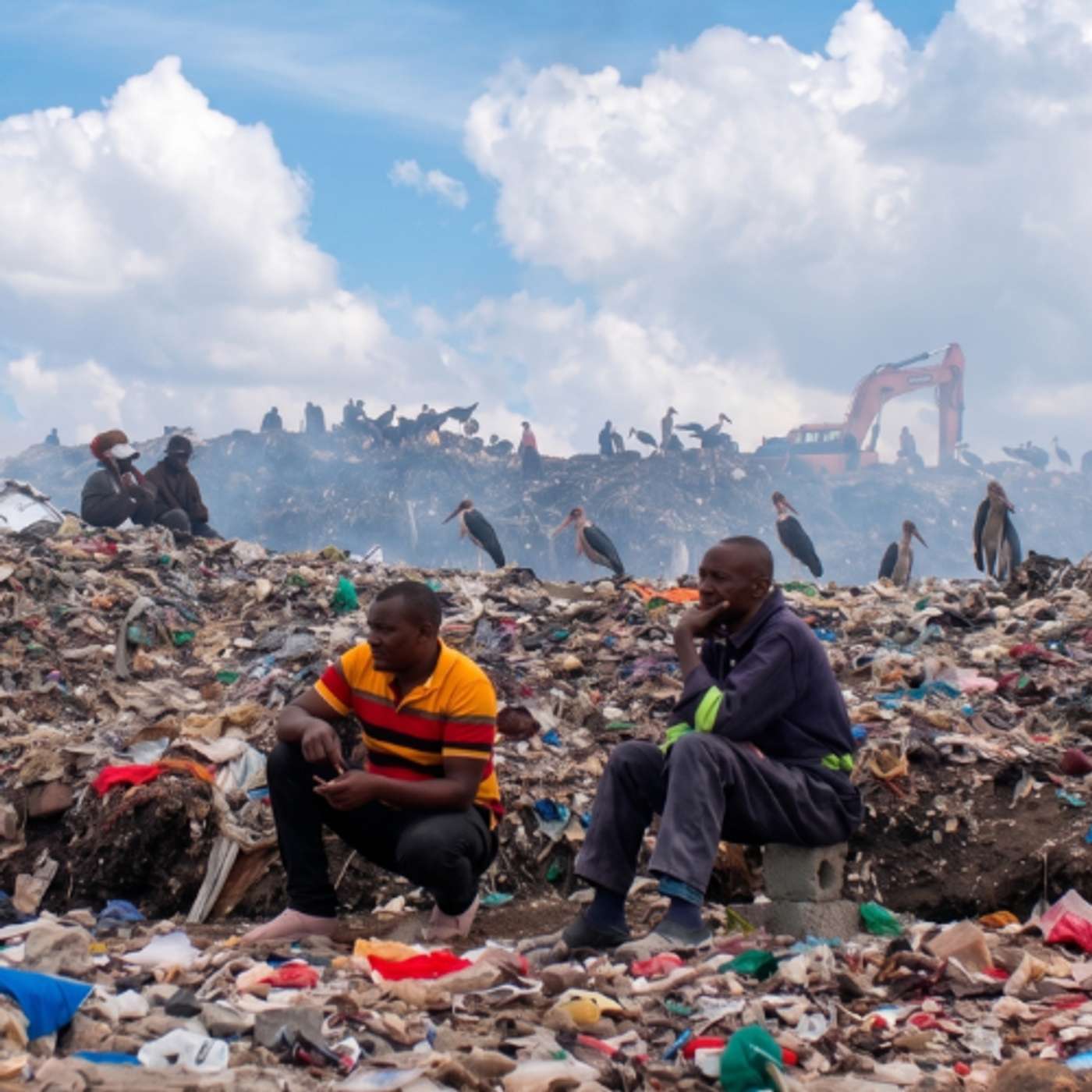
Drive through cities in Africa and you’re likely to see a waste problem. In the streets, the sewage, in the waterways…540 million tons of waste goes uncollected every year across sub-Saharan Africa. It's a $16 billion opportunity. But much of the infrastructure is still missing. What would it actually take to build it at scale?In Nigeria, a company called Scrapays is paying people to collect it. In Kenya, Plas-tech is turning the same plastic into cooking gas. 00:00 - Where does your waste go? 01:25 - In Lagos, Scrapay’s Boluwatife Arewa is empowering informal waste pickers05:44 - In Mombosa, Plas-tech’s Robin Kariuki is turning waste into cooking gas09:13 - The multi-billion dollar opportunity in wasteThis episode was produced as part of our series on climate action in Africa, The Greenprint, in partnership with Catalyst Fund and FSD Africa, with the help of UK aid.Watch more episodes of The Greenprint here.Our Links -🎥 YouTube - https://youtube.com/@thefliphq🐦 Twitter - https://twitter.com/thefliphq👥 LinkedIn - https://www.linkedin.com/company/thefliphq/📸 Instagram - https://instagram.com/thefliphq💻 Website - https://theflip.africa

In Lagos' Computer Village, Nigeria's largest electronics market, everything is imported from China. But how merchants access dollars and pay their suppliers is a challenge.Nigeria imports $20 billion from China every year, yet dollar access problems and legacy banking systems create friction for those doing global trade. So how do countries like Nigeria and China trade with each other?In this episode, we head to Lagos, Nigeria, to see it firsthand - how money moves, and how new technologies like stablecoins are facilitating global trade.In this episode of Money Trails, presented by Stellar Development Foundation.Watch the full episode on YouTube.00:00 - Inside Computer Village01:22 - Everything is imported from China02:32 - The Nigerian Economy03:56 - Importing phones with WeChat and Alipay05:18 - No one uses the banks for FX06:17 - Naira volatility, explained09:10 - Informal and parallel economies09:38 OTC Traders Fill the Gap11:21 - Are stablecoins the future of global trade?14:43 - Next stop: SyriaOur Links -🎥 YouTube - https://youtube.com/@thefliphq🐦 Twitter - https://twitter.com/thefliphq👥 LinkedIn - https://www.linkedin.com/company/thefliphq/📸 Instagram - https://instagram.com/thefliphq💻 Website - https://theflip.africa

Comments

Download from Google Play

Download from App Store
 United States