


 Claim Ownership
Austin Next
Subscribed: 12Played: 174
Subscribe

© 2023
Description
Austin is building the new tech, cultural, and intellectual stack. The region is a living laboratory to answer a single question: How do you build a global innovation superpower?
Host Jason Scharf dissects innovation from the individual to the ecosystem. From the soundstage to the data center to the fab, we decode the mechanics of Austin's innovation ecosystem.
As Atoms, Bits, and Intelligence converge, we explore how Hard Tech scale, digital velocity, and creative density collide. This is an audit of the future. We map the physics of the flywheel so builders and investors can navigate the chaos.
187 Episodes
Reverse
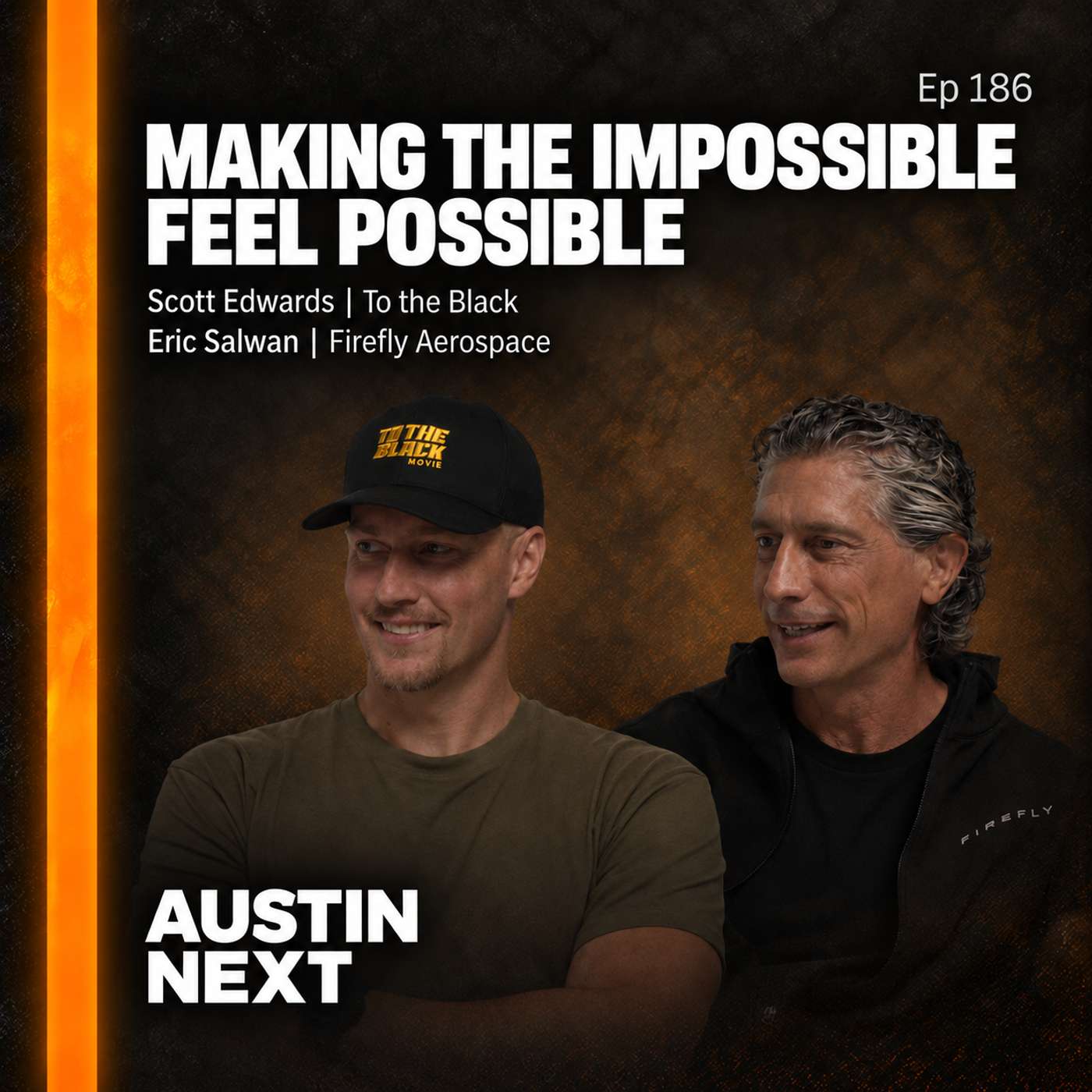
I thought I knew the straightforward Firefly Aerospace story. First an Austin space unicorn, then an IPO, and a finally a Moon landing. I watched To the Black and realized I had no idea how brutal the road was. Eric Salwan was one of Firefly’s co-founders and earliest investors, then went from IT to business development and became the person selling rockets that did not exist yet. Scott Edwards is the Austin filmmaker who spent six years inside Firefly making To the Black. The thread running through it is what has to happen before something impossible starts to look inevitable. People come back, talent gets built, Austin becomes more capable, and Scott stays long enough to show the parts nobody puts in a launch video.The Agenda0:00 The road behind Firefly11:26 Scott gets final cut23:01 How Briggs came around29:02 Why Firefly chose Austin35:23 The job was just the formality39:45 Firefly hired interns from day one45:13 Scott becomes part of the team51:43 Six years of footage, 95 minutes58:36 Austin’s creative + hardtech divide1:05:26 We touched thatGuest BiosEric Salwan, Co-founder and Director of Commercial BD, Firefly AerospaceEric Salwan is a NewSpace advocate and entrepreneur. As one of the seed investors and first employees of Firefly Space Systems, Eric was a member of the team that worked to create an innovative small satellite launch solution. Eric was the Information Technology Director at Firefly Space Systems, responsible for all aspects of the Firefly IT infrastructure. Eric is the co-founder of Firefly Aerospace, the industry leader in end-to-end responsive space services. As Director of Commercial Business Development, Eric was responsible for developing the commercial business pipeline for the Firefly Alpha launch vehicle. Scott Edwards, Merit ProductionsAs an award-winning filmmaker based in Austin, TX, Scott has been creating documentary style content for brands such as Dell, Cadillac, Microsoft, Autodesk, Asana, Texas Monthly & others. He regularly produces content for the Bob Bullock Texas State History Museum. Scott discovered Firefly in 2016 and began an exclusive relationship with them to document their journey as a space startup. Having studied as a painter, Scott’s visual talent informs his filmmaking. After 10 years in the making, Scott is releasing his debut feature documentary, To the Black.
-------------------Austin Next Links: Website, X/Twitter, YouTube, LinkedInEcosystem Metacognition Substack

Serendipity generally looks accidental. These three builders spend a lot of time trying to make it happen. Evan Baehr of Arena Hall, Chris Taylor of Red Fridge Society, and Zac Solomon of ATX Writing Club are building very different physical communities in Austin. We get into fast and slow serendipity, how rooms get curated, why members need roles, and where AI can help without replacing human judgment.Along the way, the conversation turns into a jam session as they actively steal each other's ideas and tricks. The larger question is what kind of physical social infrastructure helps turn connections into relationships, and transform relationships into things that actually happen.Agenda0:00 Three Rooms, Three Bets10:33 How Austin's Networks Cross19:31 Why Members Want a Role23:20 Open City, Fragmented Networks33:55 Fast Serendipity vs Slow Serendipity42:20 When a Writing Club Becomes About Talking46:11 Let the Members Host53:29 Who Gets In?1:04:40 Can the Culture Scale?1:10:54 Austin in Five YearsGuest Links and BiosEvan Baehr is the CEO of Arena Hall, a hospitality and real estate company that builds intentional communities. Its first location is in Austin, Texas, where Arena Hall operates as a civic institution bringing together founders, investors, artists, and public leaders through disciplined hospitality, serious conversation, and long-term commitment.Zac Solomon is the founder of ATX Writing Club, a community of more than 4,400 writers across the Austin area. He also owns The Rosedale Society, a 24/7 creative clubhouse in the heart of Austin where writers can deepen their craft, create meaningful connections, and find new opportunities to make a living from their work.Chris Taylor is a dad, husband, serial entrepreneur, and champion of bootstrapped founders. He bootstrapped and led his SaaS company, Square Root, for 15 years before selling it in 2021. Known for his obsession with company culture, Chris helped Square Root earn national recognition—including FORTUNE’s #2 Best Medium Workplace, Fast Company’s Top Innovators, and PEOPLE’s Companies That Care. Today, he channels that same energy into the Red Fridge Society, a founder community and social club that helps entrepreneurs navigate challenges and celebrate wins together.
-------------------Austin Next Links: Website, X/Twitter, YouTube, LinkedInEcosystem Metacognition Substack
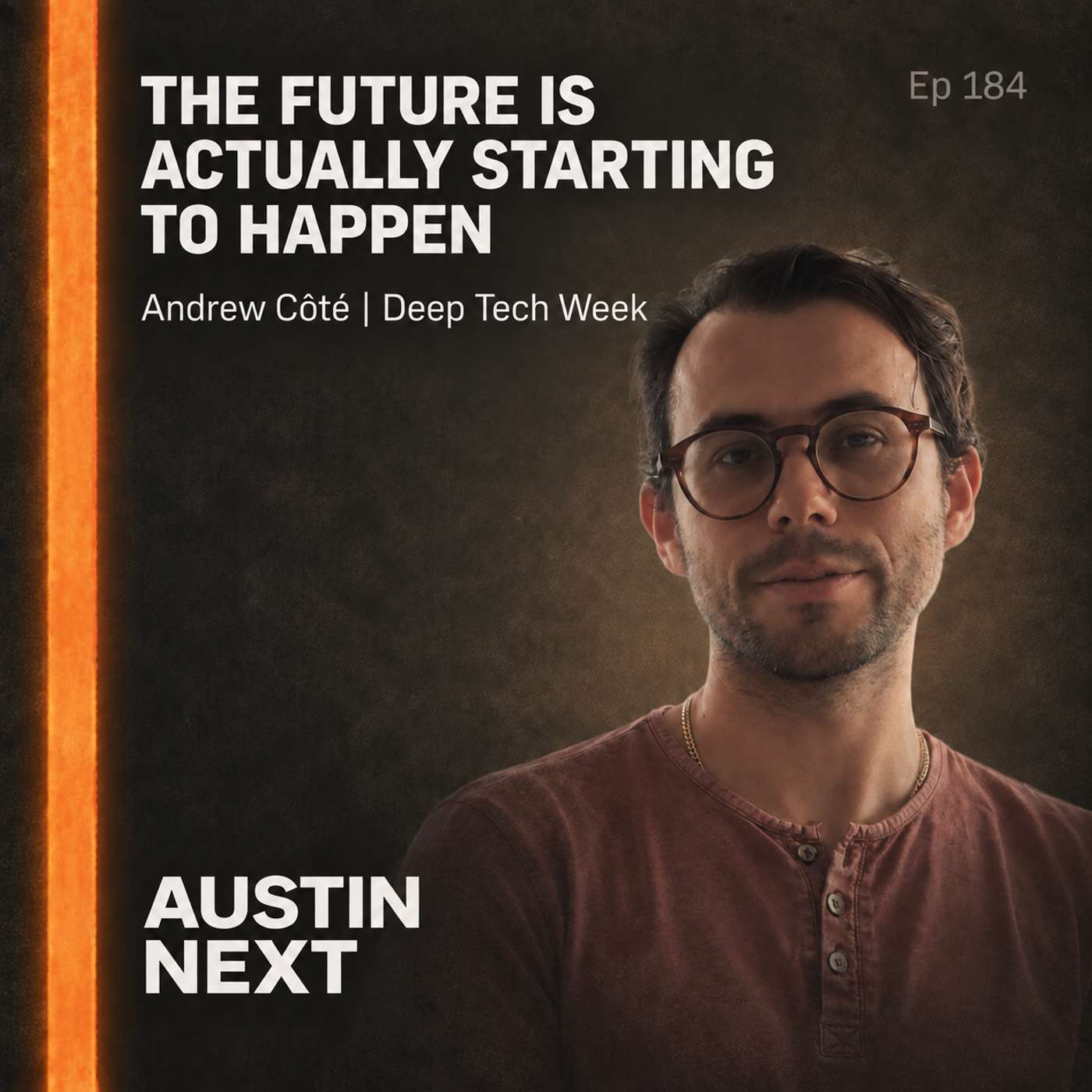
I had been thinking Austin needed some kind of frontier-tech week when Andrew Côté announced that he was bringing Deep Tech Week here. I reached out almost immediately, and now I’m helping build it.That gave us the excuse for this conversation, but the rabbit hole went much deeper. We are living through a moment when things that recently belonged mostly to science fiction are becoming companies and products you can actually encounter in the physical world. That is where Andrew’s perspective gets especially useful. He has moved from engineering physics and fusion into shaping what is essentially a storytelling platform around the people trying to make these futures real. Austin is becoming one of the places where that transition is unusually tactile, where the imagined future is starting to become something you can walk into, touch, and build.Agenda0:00 Austin’s takeoff and cowboy futurism10:00 Where physics meets economics17:12 Industry, AI and abundant energy28:18 The geography of deep tech33:29 Underwriting hard tech39:21 Ambition and the sci-fi future46:47 Austin’s factories and permission53:53 Orbit, beamlines and what comes nextCome to Austin Deep Tech WeekThe week opens with a hardware showcase at The American Housing Corp on September 21. The Factory Crawl runs September 22–24, with stops including ICON, Neurophos and Emerald Cloud Lab. We close with a nuclear-powered party at the Aalo Atomics factory on September 25.Explore the full schedule and registerGuest Bio & LinksAndrew Côté: X, Writing, Deep Tech WeekAndrew Côté is an engineering physicist that went from designing superconducting magnets for nuclear fusion to running deep tech week.
-------------------Austin Next Links: Website, X/Twitter, YouTube, LinkedInEcosystem Metacognition Substack
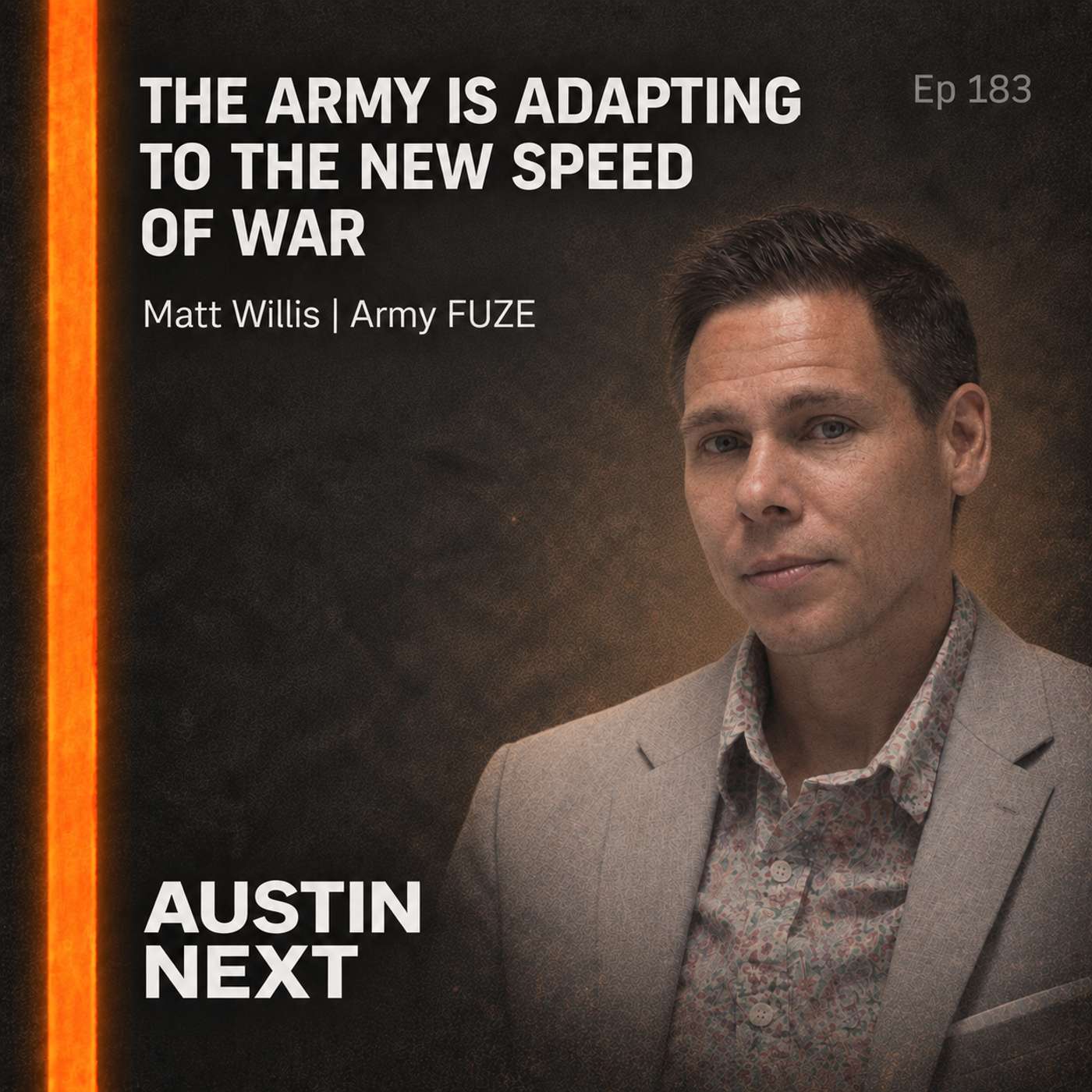
The battlefield is changing faster than the systems built to supply it. Matt Willis runs Army FUZE, a roughly $750M portfolio built to get new technology into soldiers’ hands faster. The deeper question is what an institution as large as the Army has to change when technology cycles collapse from years to weeks. That means accepting more failure up front, shortening the distance between a problem and a decision, getting real-world feedback before a product is fully baked, and building a system that can keep adjusting as the technology and the mission keep moving. The question now is whether those changes are durable enough to let the Army operate at unprecedented speed, or whether bureaucratic inertia eventually pulls it back toward the old model. Agenda0:00 The new speed of war7:51 Speed, risk, and the 80% solution17:23 Soldiers, marketplaces, and feedback22:22 The tech stack and commercial innovation29:10 New requirements and industrial capacity35:32 Open systems and Operation Jailbreak41:32 Manufacturing and the capital stack46:33 Austin and the defense innovation map52:57 Soldier founders and access to innovation57:13 AI, augmented soldiers, and what’s nextGuest Links and BioMatt WillisUS Army PIT: Website, LinkedInUS Army xTech, US Army SBIR/STTRDr. Matt Willis serves as the Director of Army FUZE, leading the Army’s portfolio of private sector engagements through prize competitions (xTech), the Army Small Business Innovation Research (SBIR) and Small Business Technology Transfer (STTR) programs, the Technology Maturation Initiative (TMI) program, and the Manufacturing Technology (ManTech) program, comprising over $750 million in annual research and development investments.Previously, Dr. Willis served as the Army Director for Laboratory Management at the Office of the Assistant Secretary of the Army for Acquisition, Logistics, and Technology (ASA(ALT)) and held various positions across the Army and the Office of the Secretary of Defense. Dr. Willis earned a Bachelor of Science in Chemical Engineering from Cornell University and both a Master of Science and Ph.D. in Chemical Engineering from the University of Illinois Urbana-Champaign.
-------------------Austin Next Links: Website, X/Twitter, YouTube, LinkedInEcosystem Metacognition Substack
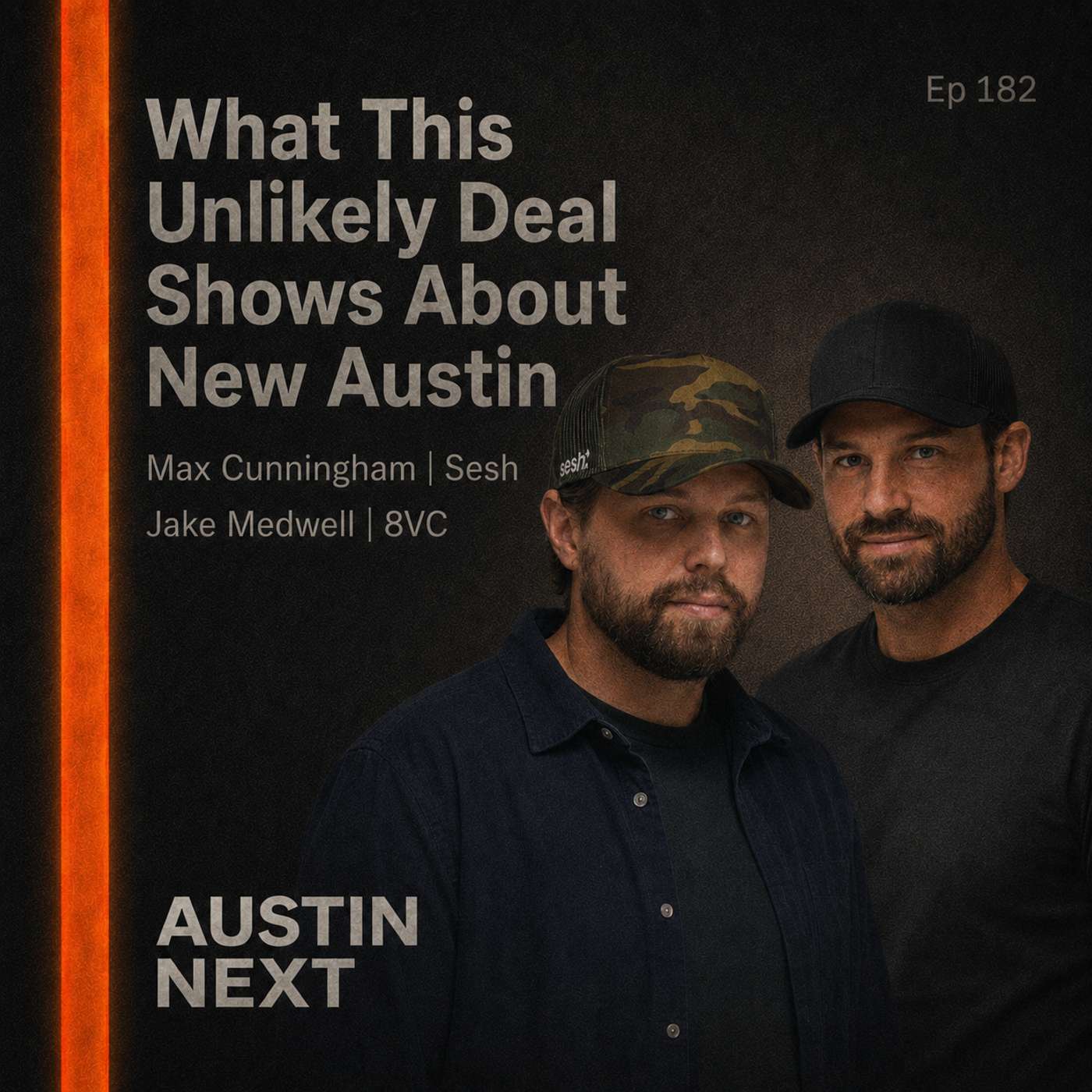
Sesh looks like a consumer brand. 8VC looks like the last fund that would back it. That mismatch is the fastest way to see what Austin is becoming.Sesh founder Max Cunningham and 8VC's Jake Medwell start with the logic that makes the deal make sense. Sesh holds a legal moat most competitors can't cross for years, and it earns software-like margins on a physical product. From there the conversation opens into a bigger question about where ambitious companies belong, and why more of them are choosing a city that now draws the founders and families betting on that future.Agenda00:00 What Sesh is06:05 Why 8VC backed a nicotine company10:44 Regulatory timing and the six-year door16:37 Software margins and owning the factory22:01 Who buys this and why the market is growing29:27 Why some companies need SF and others do not34:32 What Austin talent looks like now42:10 The Elon spillover and the coming IPO wave 48:37 Raising kids in the AI age55:07 Safety, schools, and what comes nextGuest LinksSesh: Max Cunningham, Website, X, Instagram8VC: Jake Medwell, Website, X
-------------------Austin Next Links: Website, X/Twitter, YouTube, LinkedInEcosystem Metacognition Substack

Comments

Download from Google Play

Download from App Store
 United States