


 Claim Ownership
Ancient Futures
Subscribed: 14Played: 507
Subscribe

© Daniel Simpson
Description
Timeless wisdom for modern dilemmas, combining yoga philosophy, practical insight and critical thinking. Hosted by Daniel Simpson.
ancientfutures.substack.com
ancientfutures.substack.com
97 Episodes
Reverse

Does technology enslave or empower us? If someone built a machine that made people happy, would you be tempted to use it? What might we lose in a quest for lasting happiness? Are other priorities more important? If so, which and why?Anastasia Shevchenko is the author of The Happiness Engine, a novel that explores these themes alongside many others. She also teaches yoga and founded the Berlin Yoga Conference, so we discuss how yogic teachings have shaped her ideas about contentment, autonomy, ethics and consent. To quote the book’s cover:In near-future Berlin, Zoe Malkovich has built the life she was supposed to want: a successful career at one of Europe’s most ambitious tech companies, a celebrated artist for a husband, and a place in the city’s glittering creative elite.Just as GAIETY’s newest invention promises what humanity has always sought—happiness on demand—Zoe’s carefully constructed life begins to unravel. The harder she has worked to become the right person and build the right life, the further she has drifted from herself.Now, Zoe must decide what kind of life is worth living, what she must let go of, and what is worth fighting for.THE HAPPINESS ENGINE explores what we gain and what we lose in the pursuit of the perfect life. At its heart, it is a story about freedom, authenticity, and the courage to choose one’s own path.For the latest on Anastasia’s work, follow her on Instagram or Facebook.--🙋♀️ To explore how yogic ideas relate to modern life, join our new online community🙏 Your support makes this podcast sustainable – please consider subscribing or make a donation... It's greatly appreciated! This is a public episode. If you'd like to discuss this with other subscribers or get access to bonus episodes, visit ancientfutures.substack.com/subscribe

What if the average yoga class started with instructions to swallow some cloth before pulling it out again? How about if that were followed by administering an enema? Or inserting a thread up one nostril and out of your mouth? This might have been more common until relatively recently.James Russell researches intersections between haṭha yoga and Indian medical traditions. He’s also an experienced teacher and practitioner of kriyās, which are purifying preliminaries that have a lot more prominence in pre-modern texts.Our conversation explores where they come from, how their form and function change, and the ways they’re used in contemporary practice. In the process, we consider how optional they may have been at first, and why they’ve since been eclipsed by more popular methods, such as postures and breath-control.We also reflect on resistance to scholarly findings – particularly those that conflict with established narratives, such as James’s work on sun salutations, which suggests they were inspired in part by a Persian wrestling technique.--🤿 To dive deep into yoga’s evolution, join me for online courses at truthofyoga.com🙏 Your support makes this podcast sustainable – please consider subscribing or make a donation... It’s greatly appreciated! This is a public episode. If you'd like to discuss this with other subscribers or get access to bonus episodes, visit ancientfutures.substack.com/subscribe

What does it mean to be free? One of the earliest overviews of yogic ideas is the Mahābhārata, whose epic stories include extensive teachings on philosophy and practice. These are detailed in a section called the Mokṣadharma-parvan, whose primary focus is liberating insight.James Fitzgerald has been working on this text for half a century. He recently published a full translation as part of a series begun by his mentor, Johannes van Buitenen. His work explores the Mahābhārata from multiple angles – as religious, philosophical and political literature, with a particular historical context.Our conversation reflects on how yoga relates to the battle at the heart of the narrative. This clash is preceded by the Bhagavad-gītā and followed by the twelfth book on peace (the Śānti-parvan), which contains the Mokṣadharma and echoes the Gītā’s principal themes, including devotion – here to Viṣṇu-Nārāyaṇa.It’s structured as a dialogue between Bhīṣma, the dying patriarch, and the new king Yudhiṣṭhira, who abhors the messy business of ruling and wants to renounce it. To persuade him to shoulder his duty for the greater good, Bhīṣma tells stories about yogic wisdom, which highlight the virtue of inner detachment.In the process, renunciate teachings – from Sāṃkhya philosophy to meditative practice and the precept of non-harming – are explained in depth. That raises the question of whether worldly action or turning inward is the highest objective. The result is a Brahmin synthesis that counters a challenge from Buddhists and Jains.--🔎 To explore yogic texts and traditions, join me for a course at truthofyoga.com🙏 Your support makes this podcast sustainable – please consider subscribing or make a donation... It's greatly appreciated! This is a public episode. If you'd like to discuss this with other subscribers or get access to bonus episodes, visit ancientfutures.substack.com/subscribe

To what extent is yoga compatible with drama? Performance is in some ways the opposite of inward focus, yet it might still be enhanced by yogic practices.Sergei Tcherkasski is a theatre director and teacher of acting at the Russian State Institute of Performing Arts. He is also the author of Stanislavsky and Yoga, which explores a key influence on the Russian pioneer of modern acting techniques.Konstantin Stanislavsky’s system helped actors tap into their inner experiences, enabling them to embody a fictional character and perform more believably. This inspired what American followers such as Lee Strasberg called “method acting” and shaped what’s taught in drama schools all over the world.As Sergei explains, about a third of the first-year acting curriculum is influenced by yoga, which Stanislavsky learned in the early 20th century. He did so not by visiting India but from reading translated books by an American attorney who wrote under the pseudonym “Yogi Ramacharaka”.We talk about the hybrid ideas that Ramacharaka presented, and why their worldly emphasis might be more helpful than traditional teachings on transcendence – as argued by the Polish director Jerzy Grotowski. We also consider which modern schools of yoga might be best suited to training actors.Among other names we discuss are Stella Adler and Sanford Meisner, two other influential American acting coaches. Plus Sergei highlights the term perezhivanie (переживание), which translates as “emotional experience”. He once made a film about Stanislavsky and yoga, which is available on YouTube.--🧭 To explore how yogic traditions relate to modern life, join my online community🙏 Your support makes this podcast sustainable – please consider subscribing or make a donation... It's greatly appreciated! This is a public episode. If you'd like to discuss this with other subscribers or get access to bonus episodes, visit ancientfutures.substack.com/subscribe
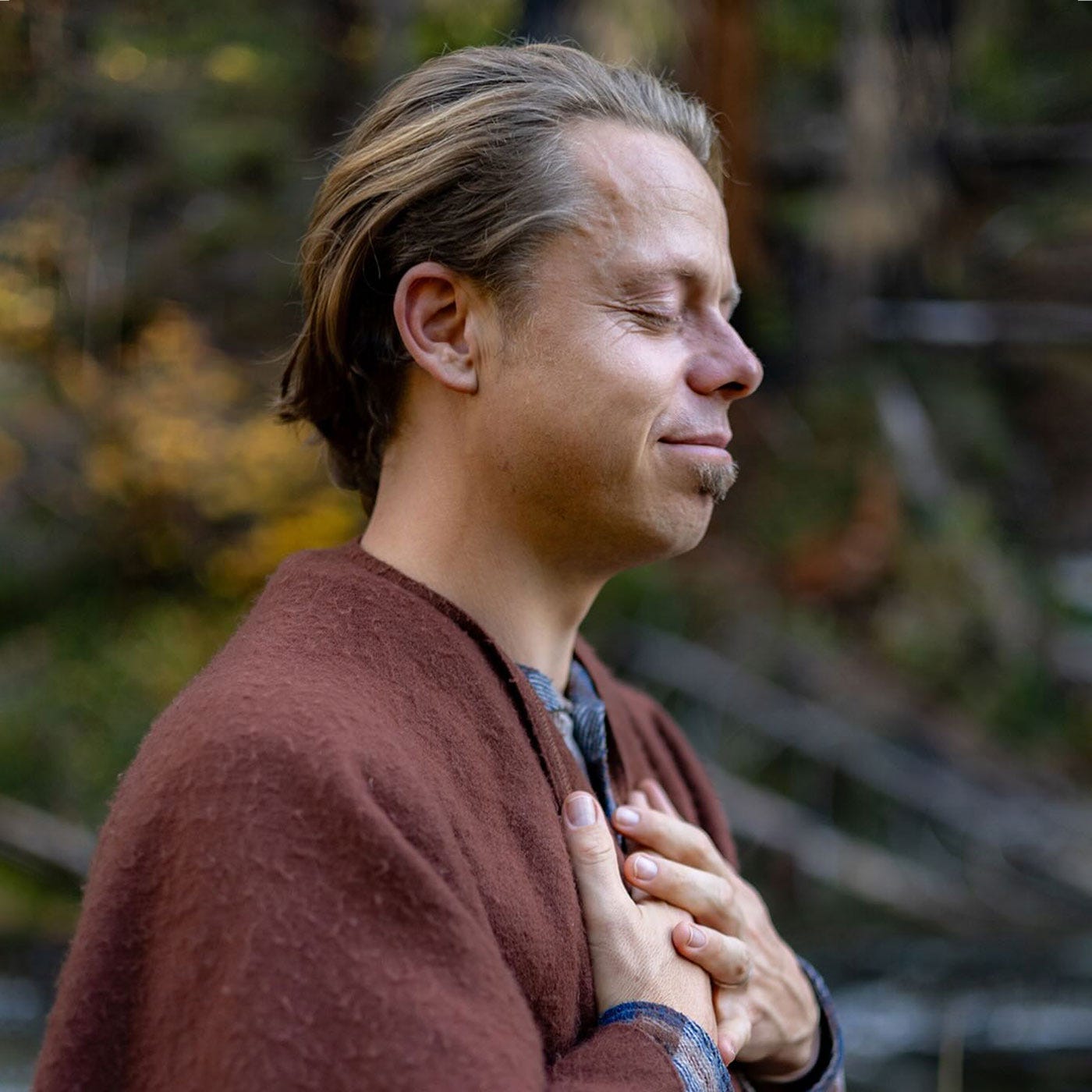
What distinguishes self-centredness from care for oneself? To what extent is emotional healing a spiritual practice? How might an inner sense of safety and connection fuel better relationships and more sustainable ways of living?Justin Michelson is a meditation teacher, author and wilderness guide. His recent book The Dharma of Healing is billed by its publisher as: “A handbook for spiritual freedom in an age of global crisis”. Its focus is on changing responses to difficult feelings, which otherwise block the development of wisdom and compassion.Our conversation explores Justin’s fusion of Buddhist perspectives with modern psychology. We discuss what it means to heal personal wounds, as well as how that relates to taking better care of each other and the world. We also reflect on a tension between accepting what is and facilitating change.Justin’s book provides a practical guide to the transformative power of self-compassion. It’s accompanied by guided meditations, available here.--🧘 To explore dharmic wisdom from a yogic perspective, join us on The Path of Knowledge🙏 Your support makes this podcast sustainable – please consider subscribing or make a donation... It’s greatly appreciated! This is a public episode. If you'd like to discuss this with other subscribers or get access to bonus episodes, visit ancientfutures.substack.com/subscribe

Comments

Download from Google Play

Download from App Store
 United States