



 Claim Ownership
Based Camp | Simone & Malcolm Collins
Subscribed: 100Played: 22,106
Subscribe

© Simone & Malcolm Collins
Description
Based Camp is a podcast focused on how humans process the world around them and the future of our species. That means we go into everything from human sexuality, to weird sub-cultures, dating markets, philosophy, and politics.
Malcolm and Simone are a husband wife team of a neuroscientist and marketer turned entrepreneurs and authors. With graduate degrees from Stanford and Cambridge under their belts as well as five bestselling books, one of which topped out the WSJs nonfiction list, they are widely known (if infamous) intellectuals / provocateurs.
If you want to dig into their ideas further or check citations on points they bring up check out their book series. Note: They all sell for a dollar or so and the money made from them goes to charity. https://www.amazon.com/gp/product/B08FMWMFTG
basedcamppodcast.substack.com
896 Episodes
Reverse

It’s clear that the Democratic Socialists of America (DSA) are gaining prominence, especially with Alexandria Ocasio-Cortez being the longstanding frontrunner in betting markets for the 2028 Democratic presidential nominee. What makes this interesting is just how extreme the DSA’s views are. While sometimes the DSA’s “defund the police” stance breaks into mainstream media, that’s actually one of their tamer stances in the larger scheme of things.So join us today as we explore the DSA’s actual program and discuss what a DSA-led America what might actually look like. Sure is interesting!Show NotesDSA StructureFounded in 1982 through the merger of two leftist orgs, the DSA is made up of a National Convention (its highest decision-making body which convenes every two years) and super autonomous local chapters.* National leadership* Is where all dues go; they’re then partially redistributed back to chapters* Made up of:* The National Political Committee (NPC): serves as collective leadership and a board of directors* A Steering Committee that makes interim decisions, oversees staff and finances, charters and revokes chapters and commissions, and implements convention priorities* The NPC and national staff provide resources, field organizers, training, shared tools (phone/text banking, compliance help), and national priority campaigns.* Local chapters* Are required to affirm the national body’s principles and basic democratic norms.* Send delegates to the convention proportional to their membership* At the convention, they set strategy & priorities, elect leadership, and adopt resolutions and platforms* Do the day-to-day political work* Have their own membership meetings, bylaws, officers, and sophisticated internal structures* Youth wing: Young Democratic Socialists of America (YSDA)Active MembersThe DSA started growing explosively with Bernie Sanders’ 2016 campaign and the election of President Trump.* Membership went from around 6500 in 2014-2016 to over 120,000 now (+ median age dropped significantly)According to Peter Sterne (News & Opinion Editor @CityAndStateNY)“As of the end of July, DSA has about 129,000 dues-paying members.NYC-DSA has about 15,800 members.Next 5 largest chapters are:* At-large (i.e. not in a local chapter): 6,500 members* LA: 6,000 members* DC: 4,000 members* Portland: 3,700 members* Chicago: 3,300 members”Every member of the DSA simultaneously belongs to the national organization and one local chapter (or “at large” if no group exists nearby)* Which is rich because this August The Hill reported that “Ocasio-Cortez is not a member of the DSA’s national branch but maintains ties to her local chapter in the Big Apple.” (that’s NOT A THING)DSA StancesI’ve bolded all the ones I think are actually coolTheir current program:* THRIVING WORKING CLASS COMMUNITIES* Freedom To Flourish* “Expand public resources to support recreation, learning, and social spaces accessible to all. Establish paid family leave for all workers, a 32 hour work week with full pay and benefits, and a living minimum wage. Provide free, quality public education from pre-K to college and cancel all student debt.”* Healthcare For All* “Guarantee universal healthcare at no cost to individuals, including complete access to reproductive and gender-affirming care. Expand healthcare access and quality by investing in new public hospitals and clinics. Make all medical education and training public and free.”* Housing For All:* “Build new, publicly-owned social housing, strictly regulate investment properties, establish universal rent control, and guarantee right to counsel for all tenants.”* Finish Reconstruction:* “End the legacies of slavery and colonialism. Reinforce anti-discrimination laws. Honor all treaties and tribal sovereignty. Enact reparations and massively invest in good jobs, quality housing and infrastructure in neglected minority communities.”* End Mass Incarceration and Police Immunity* (this is basically reworded “abolish the police”)* “Demilitarize police departments, disempower police unions, and redirect funding to public services as steps towards fully abolishing the police and prison system which protects the rich and jails the poor. Treat drug addiction and mental illness as health issues, not crimes. End qualified immunity and empower civilian oversight bodies with real authority over the police.”* Feminism For All* “Stop gender violence and end policies that oppress bodily autonomy and intimate life, including patriarchal restrictions on abortion, childbirth and childraising, gender expression and transition, marriage, and divorce. Ban sex discrimination and ensure fair compensation and support for all forms of labor, including care work.”* Green New Deal* “Pass a federal jobs guarantee. Implement massive investment in sustainable, publicly owned energy and transit infrastructure. Phase out the use of fossil fuels. Reclaim and repair our earth’s resources for all.”* NOTE: A federal jobs guarantee generally means the federal government would ensure a paid public-service job is available on request to people who are ready and willing to work, especially if they cannot find adequate private-sector employment.* WORKING-CLASS FOREIGN POLICY* End The U.S. War Machine* “End all foreign wars and close overseas military bases. Support and fully employ veterans. End immunity for U.S. war criminals and support the International Criminal Court’s mandate to prosecute war crimes.”* Free Palestine* “Recognize the rights of the Palestinian people, including the right of return, the right to resist military occupation, and the right to self determination in a free Palestine with Jerusalem as its capital. End all military and economic aid to Israel. Prosecute U.S. and Israeli leaders responsible for the genocide in Gaza.”* Note: They’re SUPER against Israel. There’s one candidate, Nithya Raman, an LA city council and mayoral candidate, whose endorsement might be expelled from the DSA because she failure to properly probe or affirm her support for BDS (an international campaign seeking to pressure Israel over its treatment of Palestinians.) and anti-Zionism even though she was previously censured for accepting an endorsement from a pro-Israel group.* End Blockades, Embargoes, and Sanctions* “End economic warfare against countries whose governments act independently of the United States, such as Cuba, Venezuela, and Iran.”* Abolish ICE* “Legalize migration, grant amnesty for all immigrants regardless of status, provide a path to citizenship for all permanent residents, and end visa caps and quotas.”* WORKING-CLASS DEMOCRACY* Democracy For All* “Extend full voting rights to all permanent U.S. residents and restore the right to vote for incarcerated people and people with criminal convictions. Establish statehood for Washington D.C. and recognize the right to self-determination for all U.S. territories and colonies. Expand and protect voting rights and end voter suppression.”* A Real Democracy* “For the working class to govern, we need a new political system. End political corruption and legalized bribery: get rid of lobbyists, dark money, and Citizens United, and publicly finance all elections. Abolish the Electoral College. Replace the President and Supreme Court with an executive and judiciary chosen by and subordinate to Congress.”* A Democratic Congress* “Replace the two-party system with a multi-party democracy. Expand the House of Representatives, implement proportional representation and ranked choice voting in all elections, and abolish the Senate.”* Economic Democracy* “Establish public ownership of the largest corporations and essential industries to ensure democratic control and accountability to the people. Enact aggressive wealth taxes on the richest individuals and corporations to spend on public goods and infrastructure.”* Democracy At Work* “Empower workers to come together and fight the boss. Protect, expand, and enforce the rights of all workers to form, join, and strike with their unions, regardless of industry. Support union members who organize reform caucuses, democratize their unions, and take political action.”VariationThey do not support identical policies in lockstep. DSA is explicitly multi-tendency (“big tent” on the left). Ideological caucuses (e.g., Bread and Roses, Groundwork, Socialist Majority, Marxist Unity Group, Libertarian Socialist Caucus, and others) organize around different strategic and theoretical emphases—ranging from more reformist electoral and labor strategies to more revolutionary or dual-power approaches. Local chapters adapt national priorities to local conditions and can emphasize different tactics or issues. Differences on foreign policy (especially Israel/Palestine), the relationship to the Democratic Party, and the balance between electoral work versus base-building/direct action are ongoing and sometimes sharp.Prominent DSA MembersZohran Mamdani* NYC Mayor* Longtime member of NYC-DSA.* He has publicly described DSA as his political home* He was a key figure in the chapter’s “Socialists in Office” network while in the State Assembly.* His 2025 mayoral win significantly raised DSA’s national visibility.AOC* Congresswoman* Fellow NYC-DSA memberAccording to August reporting in The Hill:“Despite residing in the far-left wing of the party, Ocasio-Cortez has begun to distance herself from the Democratic Socialists of America (DSA).The New York representative has walked back previous statements about defunding the police — a policy supported by the DSA — but hasn’t completely opposed the presence of democratic socialists within the party.“I believe that democratic socialists are fundamentally pro-democracy. And we believe in the ballot box. We believe in respecting the outcomes of elections and governing democratically and ensuring that the ideas … and policies that are implemented are won through popular vote and popular opinion,” Ocasio-Cortez told host Jonathan Karl.“And so, I t

What if, by asking Abraham to sacrifice Isaac, God was testing him? While his response showed obedience, Abraham demonstrated a total lack of independent moral judgment, which signaled to God that the Israelites required a FAR more micromanagey covenant, including super specific rules against child sacrifice (you’d think this would go without saying, but… well, God checked and Abraham demonstrated otherwise). In today’s deep exploration of the story of Abraham and Isaac, Malcolm demonstrates that the test was never about whether Abraham would receive the promise but about the nature of the relationship between God and his people.The discussion contrasts surface readings with deeper interpretations, examines Jewish and New Testament perspectives, and explains why the Jewish covenant emphasizes strict rules while highlighting moral agency in other traditions. It also addresses real-world implications of misreading such stories and how the account distinguishes different approaches to faith and scripture.Episode TranscriptMalcolm Collins:Hello, Simone. I’m excited to be here with you today. Today, We are gonna be exploring the Lindsey Clancy of the bible, in this... Today’s tract. And this... Of all of the tracks that I have ever put together in terms of, like, studying the bible, attempting to understand it, This one threw me for the biggest wrench at first. Yes. It also had one of the biggest realizations for me that completely transform how I see the entire biblical narrative. Not only that, but once you notice it, there is no other way that this story can be read Really? To be logically consistent.Simone Collins:Woah. Okay. This is very... Okay. Yeah. I’ve... Sorry. I’m extremely intrigued because I really don’t like child sacrifice. I’m like, how could this guyMalcolm Collins:Yeah. If a god asked one of his people to commit a child sacrifice.Simone Collins:Yeah. Like, that’s the whole thing is, like, that’s why god constantly is, stop, like, Moloch, this whole thing. Stop, you know, the baby sacrifice.Speaker 3:Yeah. ButMalcolm Collins:that is that is what defines a people often in the bible as so evil they deserve a complete eradication.Simone Collins:It’s a named no no in Leviticus. You do not pass your seed through the fire to Moloch. Like, it’s it’s... We don’t do child sacrifice atSpeaker 3:the end.Malcolm Collins:If this story is read on face value, it says that a number of really bad things. It says that the only reason we don’t do child sacrifice isn’t because it’s wrong, but it’s because god hasn’t asked us to yet. Oh. And that if god did ask us to do child sacrifice, we should do child sacrifice or at least go all the way to attempt to because presumably... And we’ll get into the various alternate aspects. I’m just going for the Sunday school explanation first. Right? We’re going for the easiest understanding, the surface at face value as it’s taught to me as a kid. It implied to me as it was taught to me as a kid that, yeah, if god tells you to kill your kids, if you’re a moral person, you will kill your kids.Simone Collins:Well... And I think the big problem is that a lot of people have, I think, killed their kids thinking that God talked to Yeah.Malcolm Collins:Specific instances. If you wanna be like, Abraham’s a good guy. First of all, Abraham was not a good guy. We’ll get into this. He had a habit of pulling this trick where he would have his wife marry other men that extorts things from them. What? He did this multiple times. he’s kind of a douche canoe. WhySimone Collins:are people naming their kids Abraham then?Malcolm Collins:Because that part is often forgotten that he liked burying his wife to other men and Well,Simone Collins:but we all know the child sacrifice part, and I... That’s why I was so confused. Just like this isn’t one of those, you know, big name bible people, like the ones that we actually Right. People inMalcolm Collins:the kids offer.Speaker 4:So we have another episode that we will do where we will dig deeper into this specifically because it is just so utterly bizarre, but he does it twice. Isn’t it? Like, he he has an excuse every time for how he accidentally, whenever he comes to a neighborhood, tries to get his wife to have sex with whoever the most powerful man is in that neighborhood or marry them. And the second time, god even, like, comes in and he tells the guy, he’s like, no. That’s... This woman’s married. He... Somebody’s trying to get you to have sex with this married woman. And then his son does it too, by the way. it’s it’s utterly bizarre, and it is, I think not in line with what a lot of people remember from the story. So, yeah, he always has an excuse for why he did it, but, like, that had happened twice. I’m like, I don’t believe you. This was this was the beginning of your fortune. You made your fortune doing this. That’s weird.Speaker 25:I’m telling you, you’re a pimp.Speaker 26:No. Are you even listening to the story? Anyway, one day I wake up and I look in the mirror and I don’t like what I see. I mean, I I had gotten out of control and I I didn’t even realize that.Speaker 25:You can’t have a conscience in the pimp gameSpeaker 24:And in regards to the morality of this, think about this from the perspective of his wife who he is pimping out to, in the most charitable interpretation, protect himself. But in the, I think, actual, if you look at what happens, because every time he shakes these guys down for lots of money, to make money, why why does he always have to ask them for money? He doesn’t do that. There’s this interim period where a guy, he did war or something. He’s like, I’m not gonna ask you for money, no one can say I ask you for money. He knows what he’s doing here. He knows what he’s doing here.Malcolm Collins:The the Abraham story... I mean, God does say that Abraham loves him or is beloved by him or his friend. It’s sometimes translated. And we know that by... The bible, God is okay and will make heroes of people of low moral character take David. Right? Like, sending out somebody who... To die in a war so that you can marry their wife, right, is... That person died out of loyalty to David. That is to me one of the lowest things of... Like, I almost cannot imagine anything more immoral than using somebody’s trust in you to murder them to sleep with their wife. It’s...Simone Collins:Yeah. Truly. SoMalcolm Collins:That is about as low as you get. And yet David is one of god’s... You know, and people... Some Jews are like, no. He’s okay because he repented afterwards. I’m like, he said he was sorry. He said he was sorry. What? I’m like, well, he was still being used by God before he repented. Right? He was still God’s champion before he repented. Yeah. He may he may repent eventually, but... And then you can look at Solomon, for example. You don’t get to be much a bigger douche canoe than Solomon. Solomon’s entire story, he’s just, like, not a good guy. And we’ll we’ll get into that story one day. So, I don’t think it’s it’s particularly big a thing. That is not what God looks for in his heroes and stories. That was not the problem for me. I don’t have a problem that you do not have to be a moral paragon to have a good relationship with god. What I have a problem with is two things. One, god establishing a precedent that he might ask you... You might hear a voice in your head. Like, is it a good thing in a religious tradition to have a precedent that if you hear a voice in your head telling you to kill your kids, maybe you should? That is... Especially given that, like, multiple people have acted on this. And, no, Lindsay Clancy did say one of the reasons she did it as a Catholic was so that she could meet her kids in heaven when she killed her. It wasn’t the exact sameSimone Collins:as god told her but, like, yeah, it was part of the equation. Didn’t they? I mean, so I I all... I could not honestly engage with the the court information because it... This is too hard for me to emotionally deal with. But I thought that voices were telling her according to her lawyer to kill her.Malcolm Collins:Maybe.Speaker 5:Yes. A voice was telling her to do it, but she didn’t equate that voice with god. she just thought that once she killed all her kids, they could be together in heaven.Malcolm Collins:But then again, this is the thing. If... When we read these women who did this, it’s like, so how are these women? Some of them appear to genuinely have heard voices. Like, we know that’s a thing that happens to some people even in the secular world.Simone Collins:The... It’s it’s just a a certain portion of the population hears voices, and then those voicesMalcolm Collins:differentiate the voice telling you to kill your kid from a demon testing you to God. Right? Like, my presumption... Any listener of this podcast, if you’re a good Christian and one day you started hearing a voice telling you that god wants you to sacrifice your child, I would presume the good Christian thing to assume is that’s actually the devil testing you.Simone Collins:Yeah. Like... Yeah. I mean, especially even if you... Because I I... Again, I got I got stuck, and I haven’t I haven’t continued very far into the Old Testament. But I definitely got to the part where it was like, no. You don’t, you know, get in there. You don’t hurt.Malcolm Collins:Yeah. So how does this story work? Yeah. How do you get around? And the reason why this story was so hard for me is I go through the story. I go through the story. I go through the story again. I look for alternate translations. I look for any way out of god not just being okay with Abraham’s actions, but deliberately approving of them and rewarding him for them. I go over it over and over and over and over, and I go through all of the ways that people have tried to get out of this history, and all of the ways I could find seemed really squirrely. And I’m not gonna eat them, but I’ll go over them with you before we go over the... What I
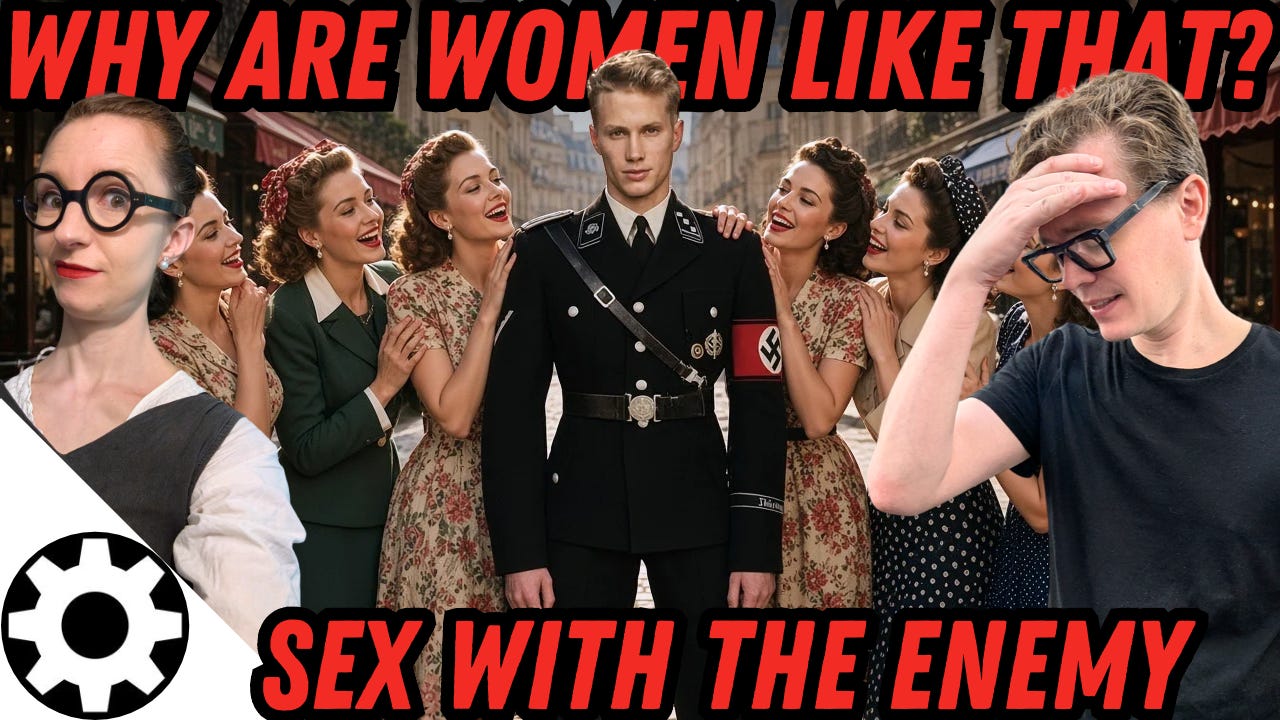
A detailed examination of historical records showing patterns of relationships between local women and occupying forces during major conflicts. The discussion covers data from World War I occupations in France and Belgium, World War II cases including France and Japan, and comparisons between hostile and allied occupations. It explores evolutionary psychology factors, cooperation studies, genetic ancestry evidence, and implications for group dynamics.The conversation also addresses male behavior in similar contexts, biblical references, and long-term strategies for post-conquest stability. It draws on primary sources, historian estimates, and experimental research to provide context on these recurring historical patterns.Episode TranscriptMalcolm Collins:Hello, Simone. I’m excited to be here with you today. In the, manosphere, one of the common topics is how women like to sleep with the enemies... The invading enemies during war. And I had heard this historically, and my take on it was... I mean, I guess, maybe, but I decided to do a bit more of a breakdown of this, get the actual numbers. How much of a population comes from this? Why do women do this? Why do we let a population that has a propensity for facilitating the enemy vote in our elections? What would these women likely do if asked to vote on policies like in Well, it’s just... Oh, boy.Simone Collins:Oh, why are we...Malcolm Collins:Oh. When I went into this data, the thing that really surprised me, because what you could argue is this is just a function of having a large army within a territory for a period. Right? But if we break down different instances, like the American occupation of France versus similar time window, the Nazi occupation of France, because America occupied France as we were pushing back the Nazis, the French women barely married or had kids with the Americans, whereas they did it in huge numbers with the Nazis. If we look in the case of Americans because the Americans were stationed in New Zealand, they were stationed in Australia, they were stationed in many places, if you’re talking about the Pacific Theater, barely had any marriages out of that. A huge number, orders of magnitude more when Americans were occupying Japan, like an actual hostile conquest even though they treated them fairly nice during that period. so what we’re seeing here is women seem to have a propensity to get with a specific type of male. But let’s go into it. You’re gonna say something, Simone?Simone Collins:This is bizarre to me because, of course, I only exist because a French boar bride married an American Okie and had my mom. Right?Malcolm Collins:I think that’s okay. I think it’s fine to marry into a force liberating your country. I think it is quite a different thingSimone Collins:to worry Didn’t the Nazis frame it as, like, I’m coming to liberate France from your Frenchness or something?Malcolm Collins:They almost did. They almost did. Say, lovey, look at France today allowing itself to be looted and massacred.Simone Collins:It’s not looking very good for them. You know, you gotta you gotta say it’sMalcolm Collins:You think about all these... Like, all the, Irish terrorist organizations to earn their independence only to sell out their country, like, a generation later.Simone Collins:Yeah.Malcolm Collins:For real. It is it is wild to me, these historic conflicts reframed. But let’s get into it. I’m gonna start with one of the lesser known examples so we can go into it Yeah. Which is a World War one interwar period between 1914 and nineteen thirties, the occupied Northern France and Belgium region, that led to the term femmes et broches. German occupation of Belgium, and 10 French departments precluded extensive contact between women and German soldiers. Diaries from the period mentioned these relationships frequently to the point where they are actually mentioned in two thirds of all diaries surveyed.Simone Collins:Are you serious?Malcolm Collins:That’s No. Mentioned, that doesn’t mean that they weren’t mentioned approvingly.Simone Collins:Oh, like, maybe their friend Yeah. He was But it wasMalcolm Collins:a common part of life.Simone Collins:That is bizarre. I just figure you... One, if you were involved with a foreign invader male that maybe your entire community would think that you’re a spy and ostracize you? And then two, wouldn’t you get in trouble for doing that with the foreign invading?Malcolm Collins:Of these women were ostracized later, but let’s go into numbers here. Okay?Simone Collins:Okay.Malcolm Collins:So, there were roughly 6,000 in Belgium and 10 to 20,000 in the occupied French departments, often registered as father unknown or illegitimate birth. This is for how many children were born as a result of this. To understand how much of, impact this had, Douai, one of the districts, saw birth rates go from... In prewar, they were around ten percent, okay, to during the war, note, the local men are gone during the war, okay, to twenty to thirty eight percent.Simone Collins:That... That’s like a... That’s almost a third.Malcolm Collins:You mean that’s more than tripling, almost quadrupling if the 38%Simone Collins:is for a number of birth is right and atMalcolm Collins:least doubling the birth rate is. Well, all the local men are away. That’s So, again, not a simple phenomenon. no. No. Sure. This was a heavily occupied district where you didn’t see this as much in the rural areas where you didn’t have any... As many standing troops and stuff like this. So it didn’t have as big of a neg... Genetic impact. So historian Emmanuel Dettour estimates that there were 15 to 20,000 rapes during this period. That said, there were over 50,000 instances of sexual contact. So that means that the rape... You say this is downstream of rapes. It’s not downstream as a rape. Detroit’s core primary source with a corpus of 110 private diaries kept by civilians, about the intimate relationships with German soldiers, which, again, were in two thirds of them. the dominant mentions are, sort of moral panic, and they were thought of as traitors from a brochures or affiliates brochures or worse. a common, motif appears in the diaries where local girls or women are visibly upset when particular German units left. one formulation that surfaces is the observation of girls were seen crying when the soldiers departed.Simone Collins:Oh my gosh. Wait. Wasn’t this a theme in the sound of music? Wasn’t, one of the older girls super all about, what was his name, Hans or Frans or something?Malcolm Collins:Yeah. And what the women would often do is they’d flee to some town where they weren’t known afterwards, so the kid wouldn’t be known as the descendant of a Nazi. But in studies after this period, they represented the children as German fathers, 1.5% of the population.Simone Collins:Oh my gosh. It was the uniforms. Okay.Malcolm Collins:There’s see this in other instances as well. I’m just I’m just pointing out, this is more of a thing than people often lead on. Now let’s, contrast this, okay, with The United States numbers. Alright? So US soldiers in France and Britain and Rhineland formed relationship with thousands of marriages. While exact totals are uncertain, these range from only 5,000 to 18,000, with one number or in figure is 6,000 bona fide marriages. so very, very low when contrasted with the French. And what’s interesting is that the Americans wanted to get married and form families. Whereas with the Nazis, we only know of about 13, like, a handful, like, in the teens of Nazi soldiers who actually married a local person.Simone Collins:Could this be a timing thing? I mean, because my grandmother, for example, met my grandfather after the war was over when the Americans were still in Paris. Like, presumably, you’re into family formation when the wartime is over and not so much in the middle of theMalcolm Collins:It’s part a policy thing in American attitude thing.Simone Collins:Also, you’re saying, like, the Nazi party was like, you cannot form families with Well, they Oh, right. Because they were all about, you know, German supremacy.Malcolm Collins:War one. War one, we’re talking about here in sorry.Simone Collins:I thought you’re talking about World War two. Okay. Sorry. Sorry. Sorry.Malcolm Collins:Sorry. So World War one, it was still the Germans were like, no.Simone Collins:We’re... You’reMalcolm Collins:you’re not taking back the random locals seriously because... And their kids. Whereas American has always reacted very differently to immigration historically and had a different relationship with it. And I think very few Americans would seriously protest bringing back war brides from the European allied nations.Simone Collins:Oh, yeah. It was seen as as fancy.Malcolm Collins:Yes. contemporary newspaper accounts, e g the New York Times reporting on embarkment, noted the brides whose nationality recorded the majority were French followed by British with fewer Germans. Military authorities established bridal camps and transportation arrangements. The Red Cross and YMCA assisted. Some black American soldiers also married French women with an estimated 2,000 such, unions. Military and civil commentary often expressed paternalistic or anxious views. Official worried about foreign sirens and venereal disease and the suitability of such women. In the nineteen twenties, some of these marriages faced social or practical consequences. One 1925 assessment suggested a significant portion estimates around thirty percent or higher over time ended in separation or divorce. Now keep in mind, a moral panic over a divorce rate of only thirty percent. Oh, no. You have a thirty percent chance of getting divorced. I think even, like, the lower numbers today put inSimone Collins:That must have that must have been a record high. Right? Like Yeah. Before it was unheard of. So I I could see that being pretty alarming.Malcolm Collins:Now let’s go to the peak of documented cases, W
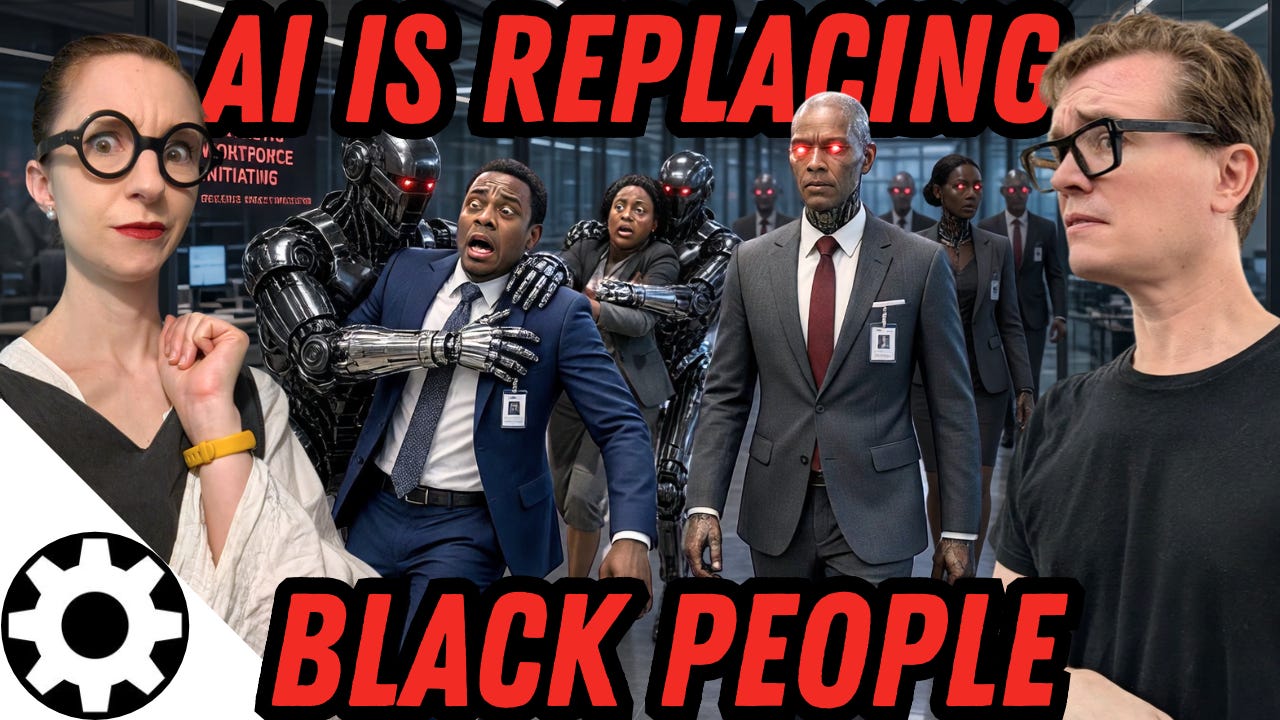
This episode examines claims that AI detectors like Pangram unfairly flag writing by African and Black authors as artificial. Analysis of publication data from the Pan African Review and individual authors (most entertainingly by Cremieux) reveals a sharp rise in AI-generated and AI-assisted content coinciding with the availability of large language models.The discussion extends to similar patterns among other academics and journalists who publicly oppose AI while relying on it for their work. Examples include university administrators, book reviewers, and media figures facing scrutiny over undisclosed AI assistance. The conversation highlights tensions in elite institutions around transparency, performance expectations, and evolving tools for content creation.Broader themes include differing responses to AI detection across communities and the challenges of maintaining integrity standards as AI adoption grows in professional writing.Show NotesHat tip to Cremieux for Does African Writing Sound Like AI?Black Academics Using AI And Lying About ItFrom Cremieux:“If you read about Pangram, you’ll quickly see a bunch of people claiming that it doesn’t work. Worse, they’ll sometimes claim that it’s biased. Pangram allegedly discriminates against autistic authors, against anti-vaccine authors, against people I’d politely describe as ‘conspiracy theorists’ on both sides of the aisle, and, most prominently, against African writers. How? Well, it supposedly flags their work as AI!There are a lot of articles about Pangram and other AI detectors ‘mistakenly’ flagging Black and African authors as using AI to do or assist with their writing. The most prominent piece that comes to mind for me was published in the Pan African Review. The piece was an unusual breakout for the Review: the journal generally enjoys a pretty limited circulation. I suspect this is because of the import of the topic area and the utility of providing an example to point to when people want to explain why they were ‘wrongly’ flagged as using AI for writing. So, I’ll consider the perspective of this piece to be emblematic of a community’s wider concerns given how much it resonated.The piece is authored by one Timi Olagunju. Olagunju is “a lawyer and public policy expert working at the intersection of tech, governance, and development.” His claim is that writing in formal English will be flagged as AI-generated by AI text detector:“Consider an international student in the United States. She has spent years being told that her English must be grammatically correct. She avoids slang, checks every verb and structures each paragraph carefully. Then a detector labels her work artificial because it is controlled and predictable. First, the institution tells her to master standard English through IELTS and TOEFL. Then it treats mastery as suspicious.”This allegedly explains why “African (or black) writers” are liable to have their work flagged by AI detectors:“For many African writers like Falade, English is both a language and an inheritance shaped by colonial history. In Nigeria, Kenya, Ghana and other former British colonies, generations of students were taught forms of English influenced by British education. Teachers emphasized correctness, formal composition and structure.”Is this the case? We can test this right away by inputting Olagunju’s own article into Pangram and… it receives a 100% AI score with high confidence. Surely he wouldn’t use AI to write, right? Let’s consider his thesis in good faith and perish the thought—for now. Surely the other writers in the Pan African Review wouldn’t use AI to write either, right?To test the extent of AI adoption in the Pan African Review, I looked at how much Pangram flagged articles there over time. Unfortunately, the site is currently down, so I had to extract whatever articles I could from the Internet Archive.1 What we see right away is a total rejection of Olagunju’s thesis: articles were never flagged as AI-generated before the advent of LLMs, and the share flagged as AI-written has rapidly crept up afterwards. This is not what we expect if African writing generally is to be considered liable to be flagged as AI.Another test of Olagunju’s thesis is to simply look at his writing. He wouldn’t lie about this stuff, would he? All of his past work before LLMs came out should return a 100% AI score with at least moderate confidence. Alas, quite literally none of it that I could find does. All of it shows up as human-written. It’s only after LLMs came out that his work started being flagged as AI-generated.But maybe we’re at fault here. Maybe Pangram trained on the Pan African Review and Olagunju’s work and they flag pre-LLM work as AI-generated because it’s in the training set. To get at this question, I asked Pangram CEO Max Spero if that was the case: was “Pangram trained on the articles in the Pan African Review?” “It was not.”Jason ArdayThe first thing I thought about when it came to matters of “prominently black academics who center discussions of race” and potentia* Academics Dave Harris and Martyn Hammersley raised concerns in 2023 about similarities between an Arday paper on minority students’ mental health and an earlier study by Anjum Memon and colleagues. Two journals subsequently published corrections addressing attribution or textual overlap.* More importantly, some quotations presented as coming from Arday’s own interview participants closely resembled quotations from participants in Memon’s earlier study. Retraction Watch documented examples and reported that Arday later removed or altered numerous participant quotations.* If substantiated, presenting another study’s interview material as one’s own would be a research-data issue, not merely inadequate citation.Cambridge initially defended him, but on August 5, 2026, announced an investigation into qualifications and honorary appointments, alongside ongoing academic-misconduct complaints. He resigned that day, explicitly saying his resignation was not an acceptance of the allegationsDoing the Pengram Thing with His WorkFighting the tide: Understanding the difficulties facing Black, Asian and Minority Ethnic (BAME) Doctoral Students’ pursuing a career in Academia (2018) - 100% human written per PangramUnderstanding Mental Health: What Are the Issues for Black and Ethnic Minority Students at University? (2018) - 100% human written per PangramCouldn’t find solely authored 2025-2026 articles by Jason Arday (everything is co-authored; the only solely authored things in 2020 or earlier), but we do have:* 2026: “Same storm, different boats: the impact of COVID-19 on Black students and academic staff in UK and US higher education” (with Christopher Jones), Higher Education (2026). - 100% per Pangram* DOI: 10.1007/s10734-022-00939-0* 2026: “The fragile future of EDI demands bold university leadership” — WonkheWritten by Arun Verma and Jason Arday. - 100% per Pangram* 2025: “The routes to intellectual authority in a prior colonial empire”A bibliographic index identifies it as co-authored with Dina Zoe Belluigi and Joanne O’Keeffe, rather than solely authored by Arday - 100% per PangramAcademics Using AI and Lying About ItIn August of this year, Santiago Schnell, Dartmouth College provost, published a Washington Post op-ed arguing that universities should ensure degrees reflect what students can do independently of AI (as opposed to with it).* According to Atlantic coverage of his subsequent kerfuffle, Pangram scored it 100% AI-written in a Semafor analysis.* A subsequent Dartmouth student newspaper investigation of nine of his 2026 publications (op-eds and academic pieces) found a median ~96% AI-written score; his pre-ChatGPT (pre-late 2022) works scored 100% human.* His emailed statement responding to the accusations was itself scored 100% AI-written by Pangram.* He acknowledged using AI chatbots as “assistive tools” for language, clarity, and efficiency while insisting the ideas and authorship were his. The case prompted campus controversy, faculty/student calls for review or removal, and a formal look by the university.Also this summer, Cath Ellis, the pro vice-chancellor for quality and integrity at Western Sydney University, published an opinion piece in the Sydney Morning Herald (and The Age) urging students not to “cut corners” or outsource their thinking to AI.* The piece was flagged by Pangram as AI-generated and was retracted. Ellis denied it was written by AI, stating it was written with AI and that there is “a really big difference.”* She said she jotted ideas on the train and used Microsoft Copilot to structure them, drawing on her own prior research (she reportedly uploaded tens of thousands of words of her materials).* The university confirmed the process.* The irony was widely noted because of her role overseeing academic integrity.The Tension, Laid Bare by Journalists and AuthorsIt’s inevitable that non-personality-centric publications shift to AIIn November 2023, Futurism reported that Sports Illustrated had published product-review content under nonexistent writers’ names, with author portraits traced to an AI-image marketplace. Sources familiar with the production process also said the articles were AI-generated. One said: “The content is absolutely AI-generated … no matter how much they say that it’s not.”The publisher, Arena Group, responded that the allegation was “not accurate” and said its contractor, AdVon Commerce, had assured it that all the articles were “written and edited by humans.” It nevertheless removed the content and ended the partnership.And yet when journalists talk about using AI, they’re defenestratedChris Quinn openly defended AI-assisted writing and faced calls to resign* In February 2026, Chris Quinn, editor of Cleveland.com and The Plain Dealer, publicly described a workflow in which reporters gather information and an “AI rewrite specialist” uses an internal version of ChatGPT to turn their material into drafts.

This episode explores the rabbit clock meme frequently posted in female streamer chats and its dual implications around fertility timelines and career longevity in content creation. We examine quotes from progressive streamers including Pinkabina, Valkyrie, Norissa Ravencroft, and QT Cinderella as they discuss their own experiences with baby fever. The conversation also covers the meme’s apparent erasure from sites like Know Your Meme and Reddit, personal reflections on miscarriage and family planning, realities of egg freezing, and examples of graceful aging in online spaces.Episode TranscriptMalcolm Collins:. Hello, Simone. I’m excited to be here with you today. Today, I discovered a deep rabbit hole, if you will. Okay? Specifically... Okay. So here is the image. There’s this meme. This came up in a conversation with Simone because she’s been feeling intense baby fever recently. And I started to be like, well, it’d be cool to go into all of the progressive streamers who are feeling baby fever and sort of go over how their audience has reacted to that. And I was like, and, of course, we’re going to cover this meme. Now do you know why... To a lot of our fans, this memeSimone Collins:immediately means something to them. Yeah. Malcolm’s showing a picture of a rabbit pointing to a clock. And I know I’ve seen this before, but I don’t know Okay. So It looks familiar. What does it mean?Malcolm Collins:Frequently, it is posted to mean your time to have a baby is running out.Simone Collins:Isn’t it the rabbit from AliceMalcolm Collins:from Alice in Wonder. So this comes from two well known streamers, Valkyrie and Sina, who in a November 2025 stream said, post a selfie. One of those Instill accounts will post my photo with a rabbit clock. Seriously? Yes.Simone Collins:Like, every time?Malcolm Collins:I have personally seen it spammed in streamer chats before. Wow. It is very common. When aSimone Collins:female Like a thirst trap picture or justMalcolm Collins:a selfie? Anything. Basically, it’s just when a woman is... I mean, selfies are thirst trap pictures, Simone. These women, that’s their job. Okay?Simone Collins:Not when I take them. I’ll tell you what.Malcolm Collins:Well, you’re not an ethot. Okay? You don’t know how to be sexy. That is not in your vocabulary since the end youSimone Collins:were This is my sexy pose. She saidMalcolm Collins:but they pose this alongside a picture of them. And it was enough of a problem that major streamers were crashing out about this. Right? Like, I... This is getting very frustrating. And you can imagine, you know, you start to talk about... This could really get to me if I was a woman, to beSimone Collins:Really?Malcolm Collins:You start talkingSimone Collins:It’s just people chuckling to themselves about something that you don’t care about. Why should that annoy people?Malcolm Collins:What do you mean that you don’t care about? If you are a female streamerSimone Collins:Okay.Malcolm Collins:It means... And it’s two really big meanings for female streamers, and they’re both, like, apocalyptic for them. One, you’re talking about having baby fever, and somebody posts this, which basically is saying you’re never gonna have a kid. You’re not trying right now. You’re almost at the end of your cycle, so you’re gonna live your life barren. But then two, it’s pointing out that their career intrinsically has a timer.Simone Collins:Oh, but then they just become a VTuber. They create an AI version of themselves that never gets young.Malcolm Collins:That is I mean, old. Not something that happens. Rare. So, typically, in person streamer females Good example of this is, like, I think, Casey Tron. They just age and become old middle aged women doing middle aged woman stuff for their fans.Simone Collins:Is Casey Tron the one who wears a hijab?Malcolm Collins:Is she... Hold on. Which one is she again? Trying to think... The one that I’m thinking of is the stoner one who, like, looks actively old. Might be Casey Tron.Simone Collins:Oh, Casey. Yeah. Okay. Never mind. That’s not the one who wears a hijab. Yeah. Casey Tron looks like she would... She tries to be attractive. Yes. That didn’t... That’s in...Malcolm Collins:Actually, I have not seen any instances of them going and trying to be a VTuber of of real life YouTubers. They just sort of end up irrelevant. This has happened to major female stars. This has happened to... It’s sort of being like, you’re only here because of how attractive you are, and you’re not gonna be attractive forever. So it has a double meaning. Right? What is fascinating and what I found when I was doing this deep dive, Simone This double meaning, history that our fans will be familiar with from streams that they have watched is being erased within the year of the historic event happening.Simone Collins:Wait. What?Malcolm Collins:So this meme only became... I was actually surprised by this. It only became popular in 2020 No. Or 2024 becauseSimone Collins:Feels so much more familiar than that. With, yeah, with posting it.Malcolm Collins:So maybe maybe it’s a couple years old. But, yeah, it’s it’s... Right now, it’s being used in this way. If you go to know your memeSimone Collins:Wow.Malcolm Collins:Nowhere on know your meme does it mention that the meme is used in this way. It says that it’s a meme about running out of time, you know, for, like, getting to class on time and stuff. literally, completely scrubbed. But it’s not just scrubbed from know your meme. So if you look at the Reddit post on this, right, the Peter explains the joke from one year ago. What does this mean? I see it everywhere. Okay? It shows this meme. It’s got over 500 upvotes, so it’s like a... You know, for a medium sub that’s gonna hit pretty high up. Alright. So you then look at the comments. Right? And you’re like, Okay. So they’re not mentioning it in the first comment. They’re not mentioning it in the second comment. They’re not mentioning... Like, here’s an example of the third comment. How [bleep] look when you say quarter till 09:00 instead of just 08:45. Right? That’s, that’s not how the meme is used. And then you get to the fifth comment, and it’s removed.Simone Collins:Oh. Uh-oh.Malcolm Collins:Why is the why is the fifth commentSimone Collins:removed? I get that Who moderates know your meme? Wait. Someone who’s, like, very No. Defensive about female aging?Malcolm Collins:That’s not that’s not proof that the fifth comment was this particular explanation. And then you can look at the comments under it, and it’s, people use it on post talking about being x age without having had a baby, become a millionaire, etcetera, So, clearly, it it was talking about babies just, like, from the context of the comments under it. So even on Reddit, they’re going around and deleting any instance of people saying that it was used in this way? That is fascinating. That is interesting. I need to know more. so that then had me be like, why? Of all of the memes that I’ve seen... Like, I haven’t gone back to, like, try to dig into the history of many memes online, but why did they have to really erase this meme from the collective memory of the Internet? Why was it erased from know your meme? Why was it erased from Reddit? Why has it been so thoroughly erased from the Internet? that if you ask an AI about this, you have to explicitly prime it with this understanding and people having had crash ups about it that were public enough that now it’s aware that, like, people were crashing out about it. Why is it important that this meme was erased from history? What the heck? Why Yeah.Simone Collins:Camera Oh.Malcolm Collins:I’ll try to catch that the next time I see it.Simone Collins:Okay.Malcolm Collins:Anyway, why was it erased? and I think the issue is is exactly what I was saying with you. It’s it’s a few fault. One is the degree to which female streamers have crashed out about this particular meme being spammed is higher than other types of crash outs I have seen from streamers, which leads me to believe it is uniquely psychologically terrorizing to a particular group of people. I think you as a woman, Simone... And Simone’s a really interesting case study because she’s had five kids. This was your first miscarriage miscarriage, right, like, after it took and everything like that. And it’s been incredibly psychologically difficult for you. and not just that, but you’ve been having intense, like, crying baby fever. Like, you want babies really bad. Now you have a one year old, and you still want... You are the the Scrooge McDuck of women here.Simone Collins:Yeah. Yeah. Think it goes to show, yeah, that, like, even... Because I I thought previously first that baby fever maybe was just hormonal because I don’t have the normal hormones. So maybe that’s why I didn’t have it, but now I have it. And having... It doesn’t seem to be cured by any amount of children if I have five and I’m still dying for more children. So, like, also, I think that this change changes what baby fever even is for childless women because they’d be feeling it regardless.Malcolm Collins:No. You know? I think you’re missing something. I think you, a woman with five kids, simply is unaware of how hard these women are feeling this. You understand how bad it is for you. You aren’t thinking about living your entire life without children. Okay?Simone Collins:Mayhaps. Mayhaps.Malcolm Collins:For them, this is almost certainly, in many cases, many, many times worse. And it’s existential because when you realize what it really means, the being erased from human history, the dying old and alone, the not... You know, being able to have that type of impact on the next generation, especially while your friends are doing it. And the combined meaning of your worth is only in how attractive you are. For a lot of women, that is deeply psychologically damaging, which I think means we need to remember to never let this meme disappear. But I wanted to explore w

Comments

Download from Google Play

Download from App Store
 United States