


Engineering Unblocked
Subscribed: 129Played: 590
Subscribe

© Swarmia
Description
Keeping software engineers in flow and unblocked is one of the key responsibilities of software development leaders. In each episode of the Engineering Unblocked podcast, Rebecca Murphey interviews leaders who have navigated challenges of scale, complexity, and growth. You’ll hear from people with lived experience across the software development ecosystem, from CTOs and VPEs to directors and line managers to product managers, program managers, tech leads, and more.
31 Episodes
Reverse

In this special episode, former Engineering Unblocked host Rebecca Murphey returns — now at Honeycomb — alongside Swarmia CEO Otto Hilska, to talk through the third edition of Build: Elements of an Effective Software Organization: what changed between editions, what didn't, and where the industry is headed.Rebecca looked at a few thousand pull requests at Honeycomb and found that somewhere in the order of 90% were unaffected by human review. Her team now has a goal of merging a quarter of all pull requests without a human reviewer by the end of the year. Otto describes the same bottleneck from the other side: what he calls the AI paradox, where individual developers 10x and the organization gets 10%.They also get into where the constraint goes next. Otto thinks quality is the under-discussed topic of this era, and that cost and ROI math needs to become standard in every engineering organization. Rebecca thinks the question has stopped being about effective software organizations and started being about effective businesses.(0:00) The AI paradox: individual developers 10x, the organization gets 10%(0:32) Introduction(1:55) Why Build needed a third edition(4:03) Why the constraint has moved beyond engineering(5:51) Non-engineers writing code(7:42) Enablement, platforms, and making it safe to build(12:06) Same fundamentals, new reality(15:25) Rethinking teams and roles(21:32) The first step for engineering leaders(26:05) Individual versus organizational productivity(30:11) Sharing AI knowledge across the organization(32:53) Developer productivity in the AI era(34:18) Constraints over code(35:03) Why one productivity metric will never work(37:23) How quality drives speed(41:29) AI costs and the ROI math(47:21) What happens to metrics when agents write the code(53:31) Rethinking code review(1:01:08) Platform teams and blast radius(1:03:36) Why change stalls(1:06:53) The next booksFollow Otto on LinkedIn Follow Rebecca on LinkedInRead Build for free on the Swarmia websiteFind the full transcript on the Swarmia website
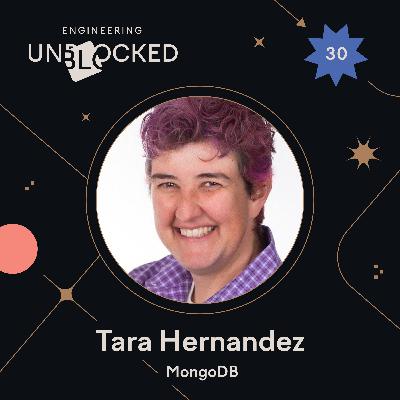
In this episode, Tara Hernandez shares what 18 months of rigorous AI experimentation taught her at MongoDB — including why the initial results showed negative ROI, and where her team eventually found the real productivity wins.Tara explains how AI saved developers an hour a week on coding but had zero impact on product velocity, why the unglamorous outer loop improvements (Slack bots, log analysis, ticket generation) deliver bigger impact than code generation, and how developer productivity ultimately comes down to information flow between humans.She also gets into why developer experience matters more now than during the hiring frenzy, and why curiosity is what defines good developers.(0:00) Introduction(1:04) How Tara became MongoDB’s first VP of Developer Productivity(6:42) Teaching Pixar how to do software development in 2002(11:06) Tara's three pillars of developer productivity: tools, communication, and process(18:52) How the internet changed infrastructure from “not real engineering” to essential(22:00) MongoDB’s 18-month AI journey: from skepticism to scientific measurement(25:11) The surprising truth: AI saved coding time but had zero impact on velocity(27:03) Where AI actually wins: senior engineers with agentic programming(30:04) What developer productivity teams should focus on in the AI era(34:14) Why the outer loop matters more than the inner loop(37:08) Measuring the cost of human-to-human communication(40:14) Developer productivity is really about information flow(41:13) Why developer experience matters more now, not less(44:33) The ethical problem with celebrating AI-driven layoffsFollow Tara on LinkedIn Follow Rebecca on LinkedInFind the full transcript on the Swarmia website
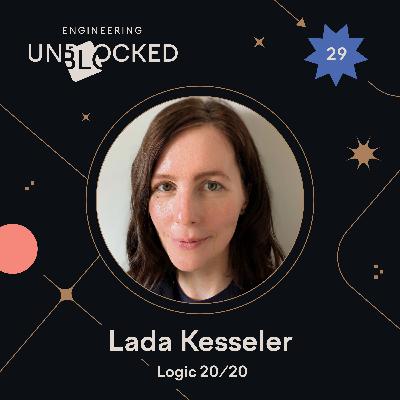
In this episode, Lada Kesseler shares what she’s learned from a year of hands-on experience building with AI coding tools — including the three fundamental challenges that define how these tools work, and why understanding limitations is what makes you better at using them.Lada explains why “focus” is the critical concept most developers miss, how a dedicated committer agent will catch issues that a general-purpose copilot never does, and why software craftsmanship matters more now than ever. She also gets into why using AI to critique itself produces dramatically better results, and how AI works as an amplifier that speeds up both good and bad engineering practices.Find the transcript at: https://www.swarmia.com/podcast/lada-kesseler-logic2020(0:00) Introduction(2:46) The five fundamental gaps in AI development(7:15) “You’re absolutely right!”(8:00) The anti-pattern of the distracted agent(11:09) Do agile best practices still matter in the age of AI?(14:48) Why software craftsmanship is more important than ever(15:46) Managing complexity: Can AI do it, or do we still need humans?(18:19) The difference between vibe coding and craft(20:24) How AI is an amplifier — for better or worse(21:23) Good practices that are suddenly essential(23:02) The superpower of refactoring(25:36) Documentation: harder to maintain but more important than ever(26:58) When developers don’t write code anymore(32:49) AI costs and the coming reckoning(33:54) When AI is not the right choice(36:06) Three things senior leaders need to understand about AI(39:46) Will we still be talking about this in a year’s time?Watch Lada’s talk Augmented Coding: Mapping the Uncharted Territory See the interactive map on Lada’s website Follow Lada on LinkedIn Follow Rebecca on LinkedIn

In this episode, Rob Zuber shares what he’s learned from over a decade as CTO at CircleCI — including why the current market requires CTOs to be more hands-on than ever, and why he doesn’t even know who his competitors are anymore.Rob explains how his team deliberately encourages AI tool sprawl to find the gaps, how CircleCI went from instant product-market fit to navigating constant transformation, and why boring technology still wins for infrastructure even as everything else changes. He also gets into why AI works as an amplifier that speeds up both good processes and bad ones.Find the transcript at: https://www.swarmia.com/podcast/rob-zuber-circleci(00:00) Introduction(01:00) What it means to be a CTO right now(03:09) The evolution of software development since 2011(06:07) The mobile revolution and iOS tooling(08:28) JavaScript frameworks and the rise of containers(12:03) Staying competitive in a crowded CI/CD market(15:32) AI is changing everything about software delivery(18:17) Setting goals and priorities in uncertain times(28:58) What the board holds CTOs accountable for(34:27) The ZIRP era and its aftermath(38:45) Why headcount became the wrong metric(41:22) AI as an amplifier — for better or worse(44:03) Will companies without fundamentals survive?(46:00) The reverse camera problem(51:52) Do we still need to understand how things work?Links and mentionsFollow Rob on LinkedIn: https://www.linkedin.com/in/robzuber/Follow Rebecca on LinkedIn: https://www.linkedin.com/in/rmurphey/

In this episode, Michael Lopp shares what he's learned leading engineering teams at Slack, Pinterest, and Palantir — including why AI is delivering real but modest productivity gains, and why junior engineers churning out AI-generated code is probably slowing teams down.Michael Lopp (Rands) brings three decades of engineering leadership experience to the AI conversation — revealing why he thinks we're experiencing another bubble similar to the dotcom era, but moving much faster. He's bullish on the technology but realistic: AI enables 5-10% productivity gains for complex work, not the revolutionary changes some expect. His framework emphasizes that good leadership still requires empathy, one-on-ones, and actually listening to your team.Find the transcript at: https://www.swarmia.com/podcast/michael-lopp-rands/(0:00) Introduction(2:45) Are we living in another dotcom bubble?(11:12) AI doesn't replace critical thinking(15:34) The problem with measuring the productivity impact of AI(18:01) Your job as a human is to know when you're being lied to(19:40) What junior engineers need to learn now(24:16) Assessing team health and psychological safety at scale(28:12) What happens at 150 headcount(30:21) Are companies buying AI tools without a hypothesis?(33:11) The fakers(35:22) Rands’ advice on leading through hard times(42:18) Why telling managers to stop coding was a bad idea(45:25) Rands’ hot take on the industryFollow Michael on LinkedIn: https://www.linkedin.com/in/michaelloppFollow Rebecca on LinkedIn: https://www.linkedin.com/in/rmurphey/

Comments

Download from Google Play

Download from App Store
 United States