


 Claim Ownership
European Tech Talks
Subscribed: 0Played: 6
Subscribe

© European Champions Alliance
Description
European Tech Talks is handing the mic to successful European entrepreneurs and experts to reveal the best strategies to scale in Europe and beyond.
Every month we receive an actor from the European tech ecosystem to analyze what makes the EU tech market so unique and powerful.
This podcast is hosted by three European women:
- Andrea Vaugan, the founder of the ECA, hosting from Paris, France
- Lucie Poisson, hosting from Karlsruhe, Germany
- Anne-Sophie Reinckens, hosting from the Silicon Valley.
European Tech Talks is a podcast produced by the European Champions Alliance
Hosted on Ausha. See ausha.co/privacy-policy for more information.
Every month we receive an actor from the European tech ecosystem to analyze what makes the EU tech market so unique and powerful.
This podcast is hosted by three European women:
- Andrea Vaugan, the founder of the ECA, hosting from Paris, France
- Lucie Poisson, hosting from Karlsruhe, Germany
- Anne-Sophie Reinckens, hosting from the Silicon Valley.
European Tech Talks is a podcast produced by the European Champions Alliance
Hosted on Ausha. See ausha.co/privacy-policy for more information.
13 Episodes
Reverse

In this episode of ECA Tech Talks, Andrea Vaugan speaks with Assaf Shamia from G+D Ventures about the European tech ecosystem, particularly in cybersecurity.They discuss the unique characteristics of Israeli startups, the recent exits in the cybersecurity space, and the differences between European and Israeli entrepreneurial cultures.Assaf emphasises the importance of building a European startup playbook that leverages local strengths and addresses the challenges of the European market.The conversation concludes with a hopeful outlook on the future of European cybersecurity and the need to highlight successful stories to inspire future entrepreneurs.ECA Tech Talks aims to support the European tech ecosystem. G+D Ventures focuses on cybersecurity and trust tech. Israeli startups are characterised by high-quality teams and ideas. The Israeli military plays a crucial role in developing cybersecurity talent. European startups often lack a global market focus. Cultural perceptions of entrepreneurship differ significantly between Europe and Israel. Regulation can drive innovation and create opportunities for startups. European startups should leverage their unique market structures. Highlighting success stories can inspire future entrepreneurs. The future of European cybersecurity looks promising with emerging leaders. 00:00 Introduction to ECA Tech Talks01:16 Understanding G+D Ventures and Its Focus04:10 The Israeli Playbook for Startups12:41 Recent Exits in Cybersecurity20:04 Comparing European and Israeli Startup Ecosystems27:59 Strategies for European Entrepreneurs37:47 The Future of European CybersecurityLinks: https://www.linkedin.com/in/assafshamia/https://www.linkedin.com/in/andreavaugan/https://www.gi-de.com/en/ventureshttps://www.gi-de.com/en/https://www.linkedin.com/company/metaco-ag/about/https://www.linkedin.com/company/rippleofficial/https://www.idnow.io/https://cloud.google.com/blog/products/identity-security/google-announces-agreement-acquire-wiz?hl=enhttps://www.blockbrain.fr/ECA Tech Talks, G+D Ventures, cybersecurity, Israeli startups, European tech ecosystem, venture capital, trust tech, startup playbook, innovation in Europe, entrepreneurial mindsetHosted on Ausha. See ausha.co/privacy-policy for more information.

In this episode of ECA Tech Talks, Andrea Vaugan interviews Luigi Lenguito, founder and CEO Bfore AI, discussing the landscape of cybersecurity in Europe and the US. They explore Luigi's multicultural background, the strategic decisions behind founding B4, and the differences in market dynamics between Europe and the US. The conversation delves into the challenges and opportunities for startups in the cybersecurity space, emphasizing the importance of understanding buyer needs and positioning products effectively in different markets. In this conversation, Luigi Lenguito discusses the challenges and opportunities in the cybersecurity industry, particularly focusing on the differences between European and US markets. He emphasizes the importance of customer relationships, local networks, and cultural understanding in building a successful business. Luigi also highlights the need for European companies to embrace innovation and risk-taking, as well as the definition of a European champion in the tech space. He shares insights on future aspirations and strategies for growth in both the US and European markets.TakeawaysBfore AI was founded to address the reactive nature of cybersecurity.The US market offers more favorable conditions for startups compared to Europe.CISOs in the US are generally younger and more open to innovation.Pricing strategies differ significantly between the US and Europe.Successful startups often focus on specific sectors within the US market.Building a strong value proposition is crucial for success in the US.Commitment to the US market is essential for gaining buyer trust.Product positioning must align with local market needs.Understanding buyer psychology is key to successful sales strategies. The perception of technology varies between startups and established companies.Distribution is more critical than product in achieving success.Building a local network in the US is essential for understanding the market.The energy and business spirit in the US is unmatched.European customers need to be less risk-averse and embrace innovation.The market dynamics in Europe often lead to underinvestment in local startups.Proven technology is preferred by European buyers, often hindering innovation.Cultural understanding is key to successful international expansion.Entrepreneurs have the freedom to choose their business paths.The journey of building a global leader in cybersecurity is unique to each entrepreneur.Chapters00:00 Introduction to Cybersecurity and Multiculturalism03:00 Founding Bfore AI and the Vision for Cybersecurity05:56 Strategic Decisions: US vs Europe for Cybersecurity08:54 Market Dynamics: US vs Europe in Cybersecurity12:04 Product Positioning and Market Fit15:08 Navigating the US Market: Key Steps for Startups18:06 Understanding Buyer Needs in the US Market20:54 Advice for New Entrepreneurs in Cybersecurity23:31 Navigating Customer Relationships in Cybersecurity25:13 The Importance of Local Networks and Cultural Understanding29:41 Learning from the US: Embracing Risk and Innovation33:36 Defining European Champions in Cybersecurity36:03 Future Aspirations and Market StrategiesHosted on Ausha. See ausha.co/privacy-policy for more information.
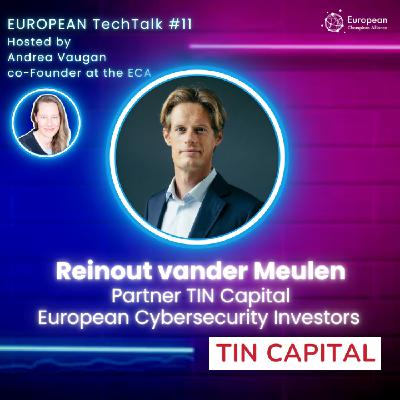
In this episode of ECA Tech Talks, Andrea Vaugan interviews Reinout Vander Meulen, a partner at Tin Capital, focusing on the European cybersecurity landscape. They discuss the challenges faced by European startups, including the funding gap, the need for a stronger presence in the US market, and the importance of leveraging European strengths in compliance and regulations. Reinout shares insights on strategies for success, the necessity of consolidation among European companies, and the future outlook for building European champions in cybersecurity.Hosted on Ausha. See ausha.co/privacy-policy for more information.

In this episode of ECA Tech Talks, host Andrea Vaugan sits down with Cody Barrow, CEO of Eclectic IQ, to dive deep into the challenges of scaling cybersecurity companies in Europe. They explore the critical gaps in growth capital, the barriers posed by European labor laws, and the acute shortage of cybersecurity talent. Together, they discuss actionable solutions, including fostering collaboration, building a stronger talent pipeline, and encouraging innovation through a global mindset. If you're looking to understand the unique hurdles and opportunities in Europe's cybersecurity landscape, this conversation is a must-listen.Key Topics Covered:Challenges in Scaling European Companies: Why European companies struggle to scale compared to their global counterparts and how cybersecurity is uniquely affected.Growth Capital and Value Creation: The stark difference in funding availability between Europe and the US, and how this impacts innovation and competitiveness.Labor Laws and Innovation: The impact of restrictive labor laws on hiring, firing, and fostering a dynamic workforce in cybersecurity.Talent Gap in Cybersecurity: The shortage of skilled professionals and how it hinders growth in a sector critical to Europe's future.Collaboration and Innovation: The role of partnerships, industry initiatives, and mindset shifts in driving change.Proposed Solutions: Ideas like a European Cybersecurity University and increased private-sector leadership in addressing talent shortages.Key Takeaways:European cybersecurity companies face significant scaling barriers.Growth capital is scarce in Europe compared to other regions, limiting opportunities for rapid expansion.Labor laws in Europe create obstacles for dynamic hiring practices, slowing down innovation.The talent gap in cybersecurity is one of the most pressing issues, necessitating long-term solutions like specialized education and training programs.Collaboration between companies, governments, and educational institutions is critical to fostering innovation and closing these gaps.Thinking globally and acting proactively are essential for European companies to remain competitive.Chapters:00:00 - Introduction: Welcome to ECA Tech Talks and introduction to guest Cody Barrow.04:43 - Challenges in Scaling European Companies: Identifying unique hurdles in Europe’s cybersecurity landscape.12:43 - Value Creation vs. Growth Capital: Discussing the funding gap and its impact on value creation.22:58 - Labor Law Challenges: How restrictive labor laws stifle innovation and agility.27:33 - Talent Shortage in Cybersecurity: Exploring the causes and potential solutions to the talent gap.34:54 - Collaboration as a Catalyst: Highlighting the importance of partnerships and proactive initiatives.40:27 - Conclusion and Call to Action: Final thoughts and an invitation to join the conversation on scaling cybersecurity in Europe.Links and Resources:Eclectic IQEuropean Champions AllianceConnect with Andrea Vaugan on LinkedInConnect with Cody Barrow on Linkedin Enjoyed this episode? Don’t forget to subscribe to ECA Tech Talks and share your thoughts on scaling cybersecurity in Europe. Join the conversation and help drive innovation across the continent!4oHosted on Ausha. See ausha.co/privacy-policy for more information.
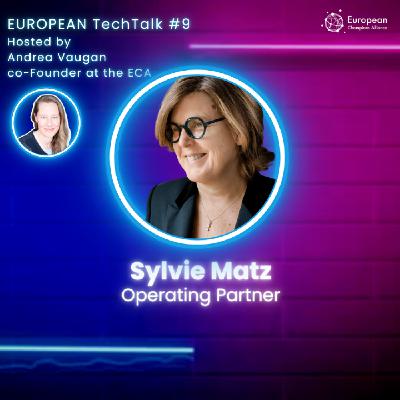
Summary In this episode of ECA Tech Talks, Andrea Vaugan interviews Sylvie Matz, an experienced operating partner, discussing the role and importance of operating partners in the European tech ecosystem. They explore the challenges faced by startups and scale-ups, the evolution of the operating partner role in Europe, and the need for more operating partners to bridge the value creation gap. Sylvie shares insights on how operating partners can drive growth, support management teams, and enhance the relationship between investors and companies. TakeawaysAn operating partner is a seasoned executive or entrepreneur.Operating partners help drive change and create value in portfolio companies.The relationship between capital, experience, and execution is crucial for startups.International development poses significant challenges for startups.Operating partners can provide valuable insights and connections.The role of operating partners is more established in the US than in Europe.Experience in leading companies is essential for operating partners.Building a personal network is key to becoming an operating partner.Operating partners can help close the talent gap in tech sectors.The value creation gap in Europe can be addressed by involving end users.Chapters00:00 Introduction to Operating Partners02:05 Defining the Role of an Operating Partner05:01 The Importance of Operating Partners in Scale-Ups11:33 The Relationship Between Operating Partners and Companies 12:20 The Evolution of Operating Partners in Europe 16:20 Becoming an Operating Partner 20:25 The Need for More Operating Partners in Europe 27:23 Closing the Value Creation Gap 33:25 Conclusion and Future DiscussionsHosted on Ausha. See ausha.co/privacy-policy for more information.

In this conversation, Andrea Vaugan interviews Ben Latour, an accent and fluency coach, about the importance of accent and fluency in English for professionals and executives. They discuss the impact of accent on credibility, competence, and self-confidence, as well as the need for professionals to improve their accent and pronunciation to effectively communicate in an international business context. Ben provides tips and strategies for self-evaluation, improvement, and practice, including recording oneself, imitating native speakers, and engaging in low-stakes conversations to exercise English skills. The conversation emphasizes that accent and fluency are skills that can be learned and improved with practice and guidance.TakeawaysAccent and fluency in English are important for professionals and executives in international business contexts.The way you deliver your message, including accent and pronunciation, is just as important as the content itself.Improving accent and fluency is a skill that can be learned and developed with practice and guidance.Self-evaluation, recording oneself, imitating native speakers, and engaging in low-stakes conversations are effective strategies for improving accent and fluency.Chapters00:00 Introduction and Background03:00 The Importance of Accent and Fluency07:18 Improving Accent and Pronunciation09:38 Strategies for Self-Evaluation and Improvement13:06 Exercising English Skills in Conversations17:19 Accent and Fluency: Enhancing Credibility and Competence23:23 Identifying and Addressing Language Blockages28:00 Accent and Fluency: A Matter of Skill and Control31:15 Conclusion and Next StepsHosted on Ausha. See ausha.co/privacy-policy for more information.
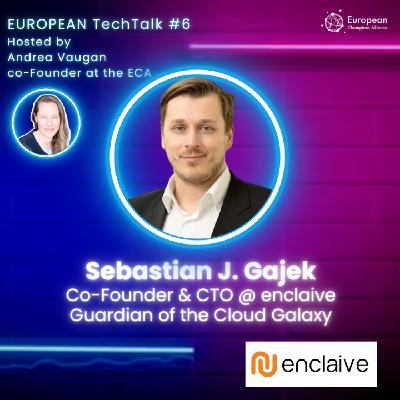
Sebastian Gajek, co-founder of @confidentialcompute , discusses the importance of confidential cloud computing in a European context. He explains how Enclaive's technology allows users to run applications in the cloud while ensuring security and confidentiality. Sebastian highlights the need for data sovereignty and compliance with European regulations, especially in light of the Cloud Act. He also discusses the maturity of clients in understanding and adopting confidential computing and the potential for a multi-cloud approach. Sebastian emphasizes the trust and familiarity that comes with working with a local European player in the cloud computing space.https://www.enclaive.io/ https://www.linkedin.com/company/enclaive https://www.youtube.com/channel/UChuBVOzH6WY7d31UcqMgMLg Key take aways: Confidential cloud computing allows users to run applications in the cloud while ensuring security and confidentiality. - Data sovereignty and compliance with European regulations are important considerations in the adoption of cloud technologies. The maturity of clients in understanding and adopting confidential computing is increasing, and it is becoming a cloud computing standard. A multi-cloud approach, combining European cloud providers and hyperscalers, can provide the best of both worlds in terms of scalability, availability, and data security. Working with a local European player in the cloud computing space can provide trust and familiarity. Chapters 00:00 Introduction and Background 08:21 Confidential Computing and Security 17:40 Data Sovereignty and Compliance 19:30 Maturity and Adoption of Confidential Computing 26:16 The Potential of a Multi-Cloud Approach 28:52 Trust and Familiarity with European PlayersHosted on Ausha. See ausha.co/privacy-policy for more information.

In this episode, Andrea Vaugan interviews Ludovic Leforestier, a specialist in analyst relations and the founder of Starsight and the Insitute of Influencer and Analyst Relations (IIAR). They discuss the importance of industry analyst relations for B2B startups and when to start engaging with analysts. Ludovic emphasizes that it's never too early to engage with analysts and highlights the benefits of getting feedback and refining positioning through analyst interactions. They also discuss the timing and sequencing of engaging with different types of analysts, the key elements of an analyst relations strategy, and the common mistakes to avoid. Ludovic also explains the role of different team members in the analyst relations process and the time and resources needed for effective engagement. They touch on the increasing importance of analyst relations for investors and the impact of analyst coverage on customer buying decisions.Takeaways It's never too early for startups to engage with analysts and seek their feedback. Engaging with analysts helps refine positioning and messaging. Start with smaller and niche analysts before approaching larger ones.Avoid rushing into expensive research subscriptions and focus on building relationships through briefings.Analyst relations require dedicated time and resources, and involvement from C-level executives. - Analyst relations can have a significant impact on investor perception and customer buying decisions. Hosted on Ausha. See ausha.co/privacy-policy for more information.
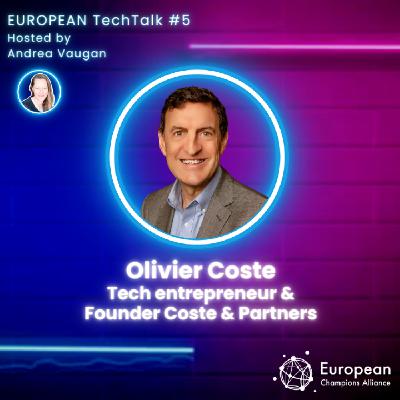
Europe lags behind the US and China in tech investment and innovation. The main reasons for this are the lack of investment in tech, the fragmentation of the European market, the lack of an entrepreneurial culture, and the high cost of failure in Europe. The cost of failure, which includes the costs of restructuring and severance pay, is much higher in Europe compared to the US. This discourages investment in risky tech projects. To overcome these hurdles, startups can focus on the US market, where there is more investment and a higher tolerance for failure. Large companies can also consider positioning their innovation efforts outside of Europe. In the long term, reforms are needed to reduce the cost of failure in Europe, particularly in terms of employment protection laws for highly educated and well-paid professionals. Europe, tech, investment, innovation, cost of failure, US market, startups, large companies, employment protection laws Takeaways - Europe lags behind the US and China in tech investment and innovation. - The high cost of failure in Europe, including restructuring and severance pay, discourages investment in risky tech projects. - Startups can focus on the US market, where there is more investment and a higher tolerance for failure. - Large companies can consider positioning their innovation efforts outside of Europe. - Reforms are needed to reduce the cost of failure in Europe, particularly in terms of employment protection laws for highly educated and well-paid professionals. Links to more information: https://www.europetechandwar.com Visit the European Champions Alliance here: https://european-champions.org Follow us on LinkedIn here: https://www.linkedin.com/company/european-champions-alliance Find the slides disussed in the video here: https://european-champions.org/wp-content/uploads/2024/05/240507-Olivier-Coste-ECA-Tech-Talks.pdfHosted on Ausha. See ausha.co/privacy-policy for more information.

In episode 4 of European Tech Talks, Andrea Vaugan interviews Leah Goldfarb, Environmental Impact Officer at Platform.sh. Platform.sh is a Platform-as-a-Service (PaaS) that removes the complexities of cloud infrastructure management and optimizes development-to-production workflows, reducing the time it takes to build and deploy applications.
Leah emphasizes the need for companies to measure their carbon footprints and optimize their operations, highlighting the role of technology in facilitating sustainability. The conversation further touches on the significance of global collaboration and the impact of the Corporate Sustainability Reporting Directive (CSRD) in standardizing ESG reporting for companies. Hosted on Ausha. See ausha.co/privacy-policy for more information.

In this third episode of the European Tech Talks, we wanted to tackle a topic that is close to our heart at the European Champions Alliance: climate. The urge to act is clear and acknowledged all around the globe, but vision differs between countries especially on both sides of the Atlantic. In her conversation with Mathieu Aguesse, the CEO of School Lab in San Francisco and teacher at Berkeley Haas on Equitable Design, Anne-Sophie tries to understand why the approach on fighting climate change is so different between Europe and the US. Regulation or profits, which approach will succeed?
Learn more about the ECA : https://european-champions.org/
Become a member: https://european-champions.org/join-the-european-champions-alliance/
And follow us on LinkedIn, Instagram and Youtube.
https://www.linkedin.com/company/european-champions-alliance/?viewAsMember=true
https://www.youtube.com/@europeanchampionsalliance7506
https://www.instagram.com/european_champions_alliance/
Want to recommend a guest for the podcast? Leave us a note at as.reinckens@european-champions.org
Hosted on Ausha. See ausha.co/privacy-policy for more information.

For this second episode of European Tech Talks, we sat with Jonathan Hollis from Mountside Ventures to analyze the current funding climate. Disclaimer: it's bad. Between economic uncertainty, war in Ukraine and post-Covid inflation, there is little room left to raise money for your startup. But also for VCs themselves.
It's been a fascinating conversation with Jonathan, trying to understand the current context and its impact on funding rounds. We've also discussed how startups should adapt their pitch to investors. And on what criteria (and by who) you will be evaluated as a company in Europe.
The money raising game has changed, it's time to adapt!
Learn more about the ECA : https://european-champions.org/
Become a member: https://european-champions.org/join-the-european-champions-alliance/
And follow us on LinkedIn, Instagram and Youtube.
https://www.linkedin.com/company/european-champions-alliance/?viewAsMember=true
https://www.youtube.com/@europeanchampionsalliance7506
https://www.instagram.com/european_champions_alliance/
Want to recommend a guest for the podcast? Leave us a note at as.reinckens@european-champions.org
Hosted on Ausha. See ausha.co/privacy-policy for more information.
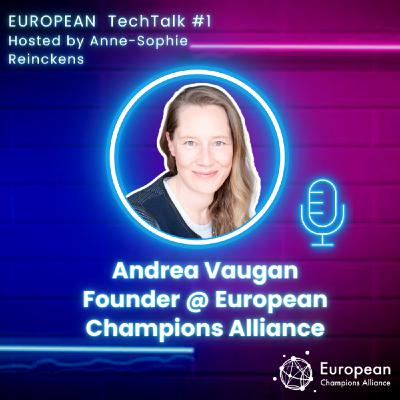
For this very first episode of European Tech Talks, Anne-Sophie is receiving Andrea Vaugan in her capacity as founder and secretary general of the European Champions Alliance. Andrea is European by heart being born and raised in Germany and having settled in France now for more than 20 years. Through her professional experiences as a CMO and Head of DACH for French startups, and then as a consultant helping French companies enter the German market, she realized that a piece of the ecosystem was missing. So she decided to launch the European Champions Alliance (ECA) in 2020.
Since then the ECA has evolved into a multinational organization, regrouping hundreds of startups, scaleups, corporates, and experts in the common motivation of building an ecosystem that contributes to the emergence of European tech champions.
Learn more about the ECA
Become a member
And follow us on LinkedIn, Instagram and Youtube.
Want to recommend a guest for the podcast? Leave us a note at as.reinckens@european-champions.orgHosted on Ausha. See ausha.co/privacy-policy for more information.
Comments


Download from Google Play

Download from App Store
 United States