


The Think Wildlife Podcast
Subscribed: 28Played: 243
Subscribe

© Anish Banerjee
Description
Every Monday, join our hosts, Anish Banerjee, as he speaks with renowned conservationists from around the world, dissecting some of the most pressing and intricate challenges threatening wildlife.
anishbanerjee.substack.com
anishbanerjee.substack.com
182 Episodes
Reverse
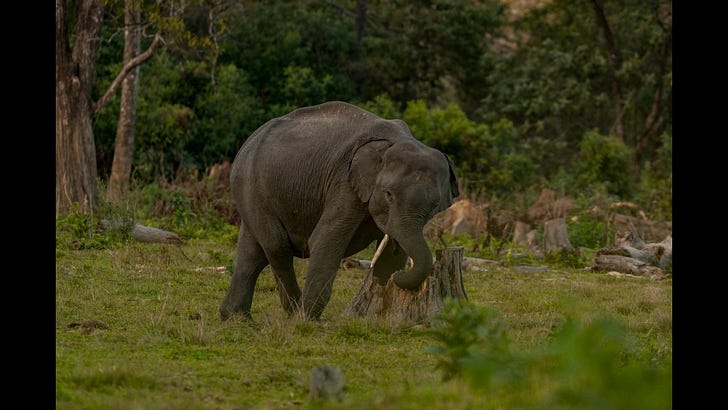
In this episode of The Think Wildlife Podcast, Anish Banerjee speaks with elephant conservationist Nitin Sekar about the ecological role of Asian elephants, the causes of human–elephant conflict, and the difficult choices involved in conservation and coexistence.Nitin begins with his doctoral research in Buxa Tiger Reserve, West Bengal. Using camera traps, feeding and germination trials, and animal movement data, his team examined how elephants disperse the seeds of large-fruited trees. He explains why other animals cannot always replace elephants as seed dispersers: even when they consume the same fruit, they may move viable seeds much shorter distances. We also discuss whether elephant populations concentrated within restricted habitats can alter vegetation in ways that disadvantage other species.The conversation then turns to human–elephant conflict. Nitin describes three interacting groups of drivers: “push” factors that make natural habitat less suitable; “pull” factors, such as accessible crops and water; and “collide” factors that increase the likelihood of dangerous encounters between people and elephants. He explains why habitat loss matters, but cannot by itself account for when and where conflict intensifies.What can reduce conflict in practice? We examine compensation for crop losses, changes in cropping patterns, community crop guarding, barriers and early warning. Nitin considers whether compensation is adequate and fair, whether a crop that deters elephants is suitable for farmers, and whether protecting one village simply shifts crop raiding to another. He also discusses practical measures that can reduce dangerous encounters, including safer travel routes and clear information for people unfamiliar with elephant presence.In the second half of the episode, we discuss Nitin’s book, The Elephant Jungle: A Story of Conservation and Coexistence. Through the experiences of people living around Buxa, the book examines livelihoods, forest access and the limits of conservation policies developed without sufficient attention to local realities. Nitin reflects on how his field assistant, Netra, challenged some of his assumptions about the relationship between people, livestock, and forests.Finally, we consider the trade-offs between ecological protection and local rights, the importance of implementing conservation measures effectively, and why the welfare of individual animals deserves a place in conservation decisions. Nitin closes with a memorable encounter between an elephant and a displaying peacock, and a broader question: what should conservation ultimately seek to protect?Timestamps00:00 Elephant conservation and coexistence: introduction01:17 Welcome to Nitin Sekar01:25 Nitin’s path into wildlife conservation03:21 Elephants as dispersers of large-fruited trees06:25 Can elephant populations alter vegetation?08:28 Push, pull and collide drivers of human–elephant conflict13:11 Can severe human–elephant conflict be prevented?15:59 Compensation, fairness and incentives19:15 Changing crops to reduce elephant damage21:16 Crop guarding, barriers and conflict displacement28:11 The Elephant Jungle: conservation and coexistence29:41 Netra’s perspective on people, livestock and forests32:43 Forest access and conservation in Buxa35:57 Why conservation measures can fail in practice37:23 Ecological protection and local rights40:01 Conservation trade-offs and animal welfare47:47 Closing remarks#ElephantConservation #AsianElephants #HumanElephantConflict #HumanElephantCoexistence #ElephantSeedDispersal #BuxaTigerReserve #CropRaiding #ConflictMitigation #CommunityConservation #ForestRights #AnimalWelfare #TheElephantJungle Get full access to The Think Wildlife Podcast at anishbanerjee.substack.com/subscribe

Bats account for nearly one-fifth of mammal species worldwide, yet they remain widely misunderstood. In this episode of The Think Wildlife Podcast, we speak with Kit Stoner, CEO of the Bat Conservation Trust, about why bat conservation matters, what UK bat population trends reveal, and how research, policy and public engagement can help protect these remarkable mammals.Kit begins by describing the encounter with bats that prompted her career change and her journey through more than two decades at the Bat Conservation Trust. She explains why effective conservation requires scientific evidence alongside communication, partnerships and an understanding of the people and industries whose decisions affect wildlife.Bats perform important ecological roles. All 18 bat species found in the UK feed on insects, including species that can damage crops. Elsewhere in the world, bats also pollinate plants and disperse seeds. Kit discusses insect pest control, ecosystem health and the value of long-term monitoring. Although some monitored UK species have shown signs of recovery following historic declines, more recent five-year trends present a less reassuring picture for several species.The conversation examines the pressures facing UK bats, including habitat loss, disrupted habitat connectivity, climate change and artificial light at night. Kit explains how warming may shift the ranges of some species while making maternity roosts too hot or altering the availability of insect prey. Lighting can affect roosts, commuting routes and feeding areas. We also discuss wind turbines and bats: how careful siting can avoid important movement routes, and how changes to turbine operation can reduce impacts when avoidance is not possible.Technology offers new opportunities to understand these changes. Kit explores advances in bat detectors, passive acoustic monitoring and AI bat identification, which allow researchers to collect data across larger areas and over longer periods. She also explains why automated species identifications require verification and why expert surveyors remain essential.We discuss the Bat Conservation Trust’s National Bat Monitoring Programme, whose volunteer-generated data inform species population trends, official statistics and wider research. Kit also describes the National Bat Helpline, the Trust’s work with agriculture, forestry and the built environment, and why considering bats early in development planning can help avoid preventable problems.Finally, Kit reflects on public misconceptions about bats, the importance of communicating their ecological value, and practical ways people can support bat conservation through wildlife-friendly gardens, bat boxes and local bat groups. Timestamps00:00 Introduction: Why bats matter01:45 Meet Kit Stoner of the Bat Conservation Trust01:51 Kit’s path into bat conservation02:43 Communication, partnerships and conservation leadership04:12 The ecological importance of bats05:00 Misconceptions about bats and development05:28 Underappreciated aspects of bat biology06:00 UK bat population trends and ecosystem health07:03 Public perceptions of bats after COVID-1907:52 The Impact of Climate Change on UK’s bats08:46 Wind turbines and bat conservation09:37 Artificial lighting, roosts and feeding routes10:24 Habitat loss and connectivity10:54 Integrating bats into development planning11:44 Bat detectors and advances in monitoring12:21 Acoustic monitoring and AI species identification13:05 The National Bat Monitoring Program13:55 The National Bat Helpline15:42 Bat conservation in farming and forestry16:44 Policy priorities and the value of nature17:16 How individuals can help bats17:36 Conservation challenges and career reflections19:00 Closing#BatConservation #BatConservationTrust #UKBats #BatPopulationTrends #EcosystemHealth #InsectPestControl #HabitatConnectivity #ClimateChangeAndBats #ArtificialLightAtNight #WindTurbinesAndBats #AcousticMonitoring #AIBatIdentification Get full access to The Think Wildlife Podcast at anishbanerjee.substack.com/subscribe
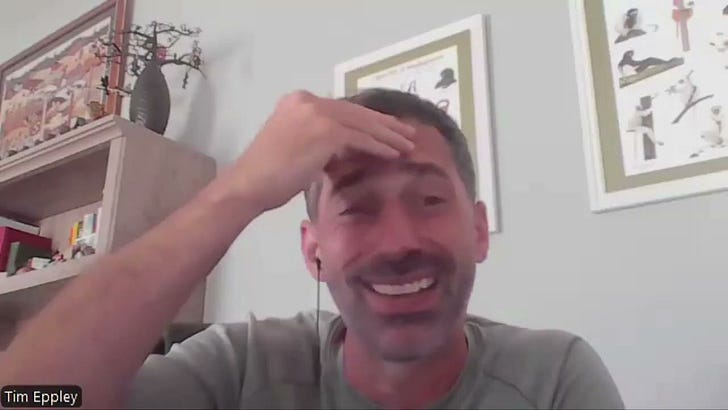
Why is Madagascar considered one of the world’s greatest conservation priorities? In this episode of The Think Wildlife Podcast, we speak with Dr. Tim Eppley, Executive Director of Wildlife Madagascar, about the island’s extraordinary natural heritage, the challenges facing its unique species, and the innovative solutions helping protect one of Earth’s most important biodiversity hotspots. With nearly 90% of its wildlife found nowhere else on Earth, Madagascar is a living laboratory of evolution, making Malagasy wildlife and biodiversity conservation essential to safeguarding millions of years of irreplaceable evolutionary history.Dr. Eppley shares his journey into conservation, from studying lemurs to leading Wildlife Madagascar, before explaining why Malagasy biodiversity is unlike anywhere else on the planet. He explores how 88 million years of isolation produced remarkable endemic species, including lemurs, chameleons, baobabs, and thousands of unique plants, cementing Madagascar as one of the world’s premier Malagasy biodiversity hotspots.The conversation examines the greatest threats to Malagasy wildlife, including deforestation, hunting, habitat fragmentation, political instability, and climate change. Dr. Eppley explains how increasingly unpredictable rainy seasons, prolonged droughts in southern Madagascar, stronger cyclones, and forest loss are placing unprecedented pressure on both wildlife and local communities, making Madagascar biodiversity conservation more urgent than ever.We also discuss how political instability can weaken conservation enforcement, increase illegal logging, and reduce long-term funding for protected areas. Despite these challenges, Dr. Eppley highlights the growing leadership of Malagasy scientists, conservation practitioners, and local communities who are driving successful Malagasy conservation efforts across the island.A major focus of the episode is Wildlife Madagascar’s ambitious 2025–2030 Strategic Plan, built around three interconnected pillars: biodiversity conservation, eco-agriculture, and responsible ecotourism. Dr. Eppley explains how improving food security through sustainable farming, restoring native forests, investing in Malagasy leadership, and supporting local livelihoods can create lasting conservation outcomes. He also shares how community-based conservation ensures that local people are partners—not bystanders—in protecting Madagascar’s extraordinary biodiversity.The episode explores how ecotourism can become a powerful conservation tool when tourism revenue directly benefits protected areas, local businesses, environmental education, and surrounding communities. We also discuss Wildlife Madagascar’s reforestation initiatives, which prioritise restoring functioning ecosystems using native tree species rather than simply planting large numbers of seedlings, ensuring forests remain resilient for generations.Finally, Dr. Eppley shares how listeners can support Wildlife Madagascar through memberships, donations, volunteer opportunities, and responsible travel to Madagascar. He reflects on the challenges and rewards of his conservation career, the importance of mentoring the next generation of Malagasy conservationists, and why he remains optimistic about the future of Malagasy biodiversity conservation.Timestamps00:00 Introduction to Wildlife Madagascar01:12 Tim’s Path to Conservation02:29 Working in Madagascar04:45 Exploring Madagascar’s Endemic Biodiversity06:09 Key Conservation Challenges in Madagascar07:15 The Threat of Climate Change10:00 Implications of Political Instability on Madagascar’s Wildlife 12:40 Wildlife Madagascar’s Conservation Strategic Plan 2025-203015:44 Why is Wildlife Madagascar working on Eco-Agriculture 20:11 The Role of Ecotourism in Biodiversity Conservation23:10 Wildlife Madagascar’s Reforestation Program26:44 Final Reflections#madagascar #biodiversity #endemicbiodiversity #biodiversityhotspot #MalagasyWildlife #LemurConservation #EndemicSpecies #HabitatFragmentation #ClimateChangeInMadagascar #CommunityBasedConservation #EcoAgriculture #ResponsibleEcotourism #NativeForestRestoration #WildlifeMadagascar #LemurConservation Get full access to The Think Wildlife Podcast at anishbanerjee.substack.com/subscribe
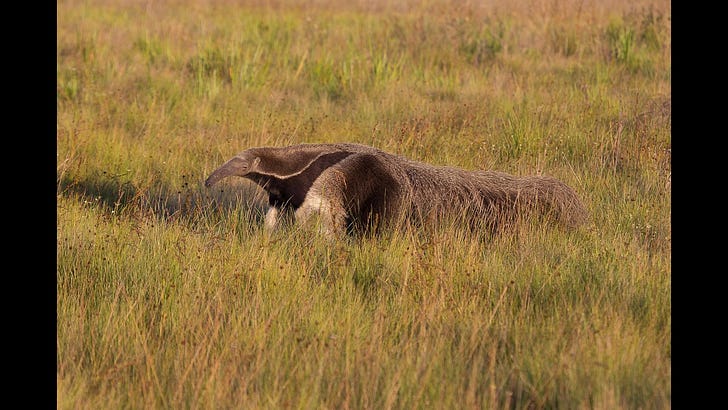
How do you conserve some of South America’s most elusive mammals while working alongside ranchers, indigenous communities, beekeepers, and local governments? In this episode of The Think Wildlife Podcast, we are joined by Dr. Arnaud Desbiez, Founder and President of the Instituto de Conservação de Animais Silvestres (ICAS), to explore over two decades of pioneering wildlife conservation and biodiversity conservation in Brazil.Dr. Desbiez introduces listeners to two extraordinary yet overlooked species—the giant armadillo and the giant anteater—whose ecological importance extends far beyond their rarity. As true ecosystem engineers, giant armadillos create extensive burrow systems that provide shelter for hundreds of other species, making them a keystone component of healthy tropical ecosystems. Giant anteaters, meanwhile, are among South America’s most distinctive tropical mammals, yet face increasing threats from habitat loss, wildlife vehicle collisions, wildfires, pesticides, and fragmentation.The conversation begins with Dr. Desbiez’s journey from France to Brazil before diving into the remarkable Pantanal, the world’s largest freshwater wetland and one of the planet’s most spectacular wetland conservation landscapes. He explains why the Pantanal, Cerrado, Amazon rainforest, Atlantic Forest, and Chaco together support exceptional South American wildlife, while also facing mounting pressures from Amazon deforestation, climate change, altered rainfall, El Niño, devastating Pantanal fires, and expanding agricultural development.We then explore decades of research on giant armadillo conservation and giant anteater conservation, including discoveries about their ecology, reproduction, habitat requirements, genetics, and behaviour. Dr. Desbiez explains why road ecology has become one of the greatest conservation challenges for giant anteaters and demonstrates how wildlife underpasses, wildlife fencing, and other road mitigation structures dramatically reduce wildlife roadkill and wildlife vehicle collisions while improving safety for both people and wildlife.Beyond species research, this episode highlights innovative examples of community conservation and community-based conservation. Learn how ICAS works with ranchers, indigenous communities, and beekeepers to promote human-wildlife coexistence, reduce conflict, improve honey production, restore habitats, reconnect fragmented landscapes, and develop practical conservation solutions that benefit both biodiversity and local livelihoods. These projects demonstrate how One Health, conservation education, community engagement, and sustainable livelihoods can strengthen long-term ecosystem conservation.Dr. Desbiez also discusses the importance of landscape conservation, habitat connectivity, forest restoration, wildlife corridors, and long-term ecological research for ensuring the future of Brazil’s remarkable mammals. Throughout the conversation, he emphasises that successful conservation science must combine rigorous research, biodiversity monitoring, wildlife monitoring, camera trapping, radio telemetry, policy engagement, and partnerships with the people who share landscapes with wildlife every day.Timestamps00:00 Introduction00:47 Meet Dr. Arnaud Desbiez (ICAS)00:53 Journey into Wildlife Conservation02:29 The Pantanal: South America’s Greatest Wetland04:55 Climate Change, Amazon Deforestation & Pantanal Fires07:40 ICAS: Instituto de Conservação de Animais Silvestres08:36 Giant Anteater Conservation09:30 Roadkill, Wildlife Crossings & Underpasses13:17 Giant Armadillos: South America’s Ecosystem Engineers15:34 Threats to Giant Armadillos16:42 The Giant Armadillo & Honey Project18:44 ICAS Conservation Across Four Brazilian Biomes22:48 Ranchers, Communities & One Health Conservation24:10 The Biggest Challenges Facing Conservation Today25:44 Favourite Field Moments with Giant Armadillos & Anteaters26:41 How to Support ICAS27:36 Thanks for Listening#GiantArmadillo #GiantAnteater #GiantArmadilloConservation #GiantAnteaterConservation #Pantanal #PantanalWildlife #PantanalConservation #BrazilianWildlife #BrazilBiodiversity #SouthAmericanWildlife #SouthAmericaBiodiversity #WildlifeConservation #BiodiversityConservation #EcosystemEngineers #CommunityConservation #CommunityBasedConservation #HumanWildlifeCoexistence #OneHealth #RoadEcology #WildlifeVehicleCollisions #WildlifeRoadkill #WildlifeUnderpasses #HabitatLoss #ClimateChange #AmazonDeforestation #WetlandConservation #ForestRestoration #WildlifeCorridors #ConservationScience #SpeciesRecovery Get full access to The Think Wildlife Podcast at anishbanerjee.substack.com/subscribe
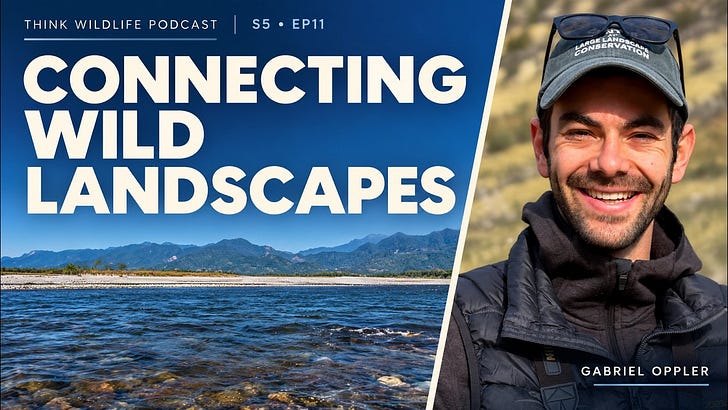
In an increasingly fragmented world, how do we conserve the ecological connectivity of large landscapes? Although the traditional protected area model has been crucial in the recovery of landscapes around the world, these are rarely sufficient for the conservation of wide-ranging species, which require large, connected landscapes.In this episode of the Think Wildlife Podcast, Anish Banerjee speaks with Gabriel Oppler, International Policy and Partnerships Specialist at the Center for Large Landscape Conservation (CLLC), about the science and policy of landscape connectivity.Gabriel explains what wildlife corridors are, how they relate to the wider permeability of a landscape, and why corridor design depends on the species being conserved. The conversation distinguishes structural connectivity- how habitat is arranged- from functional connectivity - how animals actually move through it. These landscape ecology considerations are central to effective wildlife corridor conservation.The discussion then turns to conservation policy: from Ecuador’s wildlife corridor model, international conservation policy frameworks, the barriers to their implementation, and the importance of transboundary landscape conservation. Gabriel also discusses wildlife crossings and the role of infrastructure planning in large landscape conservation. From biological corridors to transboundary landscape conservation, this episode explores what it takes to support large landscape conservation and ecological connectivity.Timestamps00:00 Introduction01:20 The Center for Large Landscape Conservation04:29 What Is Ecological Connectivity?10:02 Ecological Corridors: Definitions and Terminology15:12 Corridors, Landscape Permeability and Focal Species18:36 Structural vs. Functional Connectivity21:18 Policy and Governance Challenges24:23 Ecuador’s Wildlife Corridor Model27:10 International Policy Frameworks30:23 Barriers to Implementation38:24 Transboundary Conservation47:00 Wildlife Crossings and Infrastructure52:09 How Individuals Can Help55:04 Personal Reflections#LandscapeConnectivity #WildlifeCorridors #WildlifeCorridorConservation #LargeLandscapeConservation #LandscapeEcology #LandscapeConservation #TransboundaryConservation #TransboundaryLandscapeConservation #EcologicalCorridors #FunctionalConnectivity #StructuralConnectivity #BiologicalCorridors #ConservationPolicy #WildlifeConservationPolicy Get full access to The Think Wildlife Podcast at anishbanerjee.substack.com/subscribe

Comments

Download from Google Play

Download from App Store
 United States