


Taxbytes for Expats
Subscribed: 13Played: 124
Subscribe

© Copyright 2026 Stephanie Wickham, ExpatTaxes.ie
Description
Are you an expat who is confused by the Irish tax system? Maybe you are planning a move to or from Ireland and want to understand how to navigate the complex tax issues that arise? Taxbytes for Expats is the show that explains in simple terms the dos and don'ts of Irish taxes for expats.
72 Episodes
Reverse

Investing in Ireland has always been tricky, particularly for anyone who recently relocated here, and with so many options out there it's hard to realise the benefits of your savings beyond your pension without sound advice.In this episode of Taxbytes for Expats, I’m joined by Paddy Delaney, founder of Informed Decisions, for the first part of a really practical conversation about financial advice in Ireland. Paddy has spent over 20 years in the financial services world, and he brings a refreshingly honest perspective on how advice is given, where incentives can sit, and why it’s so important to understand who you’re dealing with before you take any financial recommendations on board.We step through the often-confusing differences between financial advisors, brokers, and financial planners, including how banks fit into the picture and what “independent” advice actually means in practice. This is one of those areas where people assume all advice is the same — and it really isn’t.Paddy shares real-world examples of why intent, structure, and remuneration matter, and how those factors can directly impact your long-term financial outcomes. We also talk about when you do need financial advice, and when you really don’t. Paddy is an expert on helping you make transparent and informed financial decisions.Main Topics Discussed in this Episode:Understanding the Different Types of Financial Advice: We break down the often-confusing distinctions between financial advisors, brokers, planners, and independent firms, and why knowing the difference really matters before taking advice.How Incentives and Commissions Can Shape Advice: Paddy shares real-world insight into how remuneration structures can influence recommendations, highlighting why transparency and client-first intent are so important.Banks as a Source of Financial Advice: We discuss why banks are still a common and accessible starting point for advice in Ireland, along with the limitations that come from being tied to a single provider.When You Actually Need a Financial Planner: This is one of those areas where assumptions creep in, so we talk honestly about who benefits most from paid financial planning and when simple saving habits may be enough.Why Pensions Are the Obvious Starting Point in Ireland: We explore pensions as a tax-efficient investment tool, common issues with underperformance, and why understanding what your pension is doing over the long term is just as important as contributing to it.Get in touch with Paddy DelaneyWebsite: InformedDecisions.ieLinkedIn: https://www.linkedin.com/in/paddy-delaney-qfa-rpa-apa-73778969/Podcast: https://www.informeddecisions.ie/podcasts*****Use the link below and quote "Expat Taxes" when registering with Currencies Direct to receive a €50 One4All or Amazon voucher when you transfer €5000 or
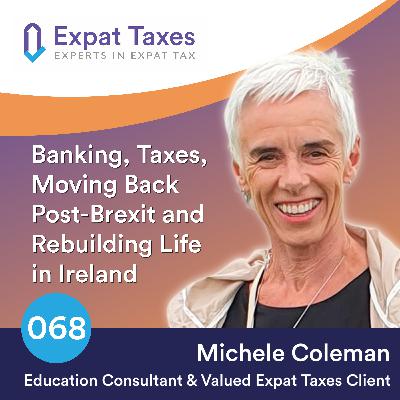
This episode is Part 2 of Stephanie's conversation with Michele Coleman. For the full conversation, make sure you listen to Part 1 and subscribe to the podcast.In this episode of Taxbytes for Expats, I’m joined again by Michele Coleman, a valued Expat Taxes client, as she shares the reality of returning to Ireland after decades living in the UK. Michele speaks candidly about what surprised her most, from banking and buying property, to moving her belongings, importing a car, and navigating everyday life back home.We talk through the practical lessons Michele learned the hard way: why having the right advisers early matters, how UK–Ireland differences can catch people out post-Brexit, and why planning currency transfers, removals, insurance, and car registration properly can save serious stress and cost.Michele also reflects on the emotional side of returning: resetting routines, rebuilding community, and adjusting expectations when “home” has changed. This conversation hit close to home for me, as my experience moving back from Australia was similar regarding the connection with friends and family when you return to Ireland not for a holiday, but for the long-term.Main Topics Discussed in this Episode:Buying Property and Banking on Returning to Ireland: Michele shares her experience navigating Ireland’s stricter banking system, the importance of existing accounts, and how having the right solicitor and advisers made the property purchase run smoothly.Moving Belongings from the UK Post-Brexit: We discuss the realities of international removals, why specialist experience and proper insurance matter, and the costly lessons Michele learned when things went wrong.Importing a Car and Avoiding Unexpected Taxes: Michele outlines what repats need to know about bringing a car from the UK, including registration timelines, exemptions, and the real risk of penalties if the process isn’t followed correctly.Tax Planning Between the UK and Ireland: We cover the importance of understanding double taxation, pensions, capital gains, and investment differences — and why getting tax advice well before the move is essential.Readjusting to Life Back Home: Beyond the logistics, Michele reflects on the emotional and practical side of returning to Ireland, from rebuilding routines and friendships to adjusting expectations about infrastructure and daily life.*****Use the link below and quote "Expat Taxes" when registering with Currencies Direct to receive a €50 One4All or Amazon voucher when you transfer €5000 or more in your first six months with Currencies Direct.*Click here for a special offer from our sponsor, Currencies Direct******If you loved this episode or have a similar story, we'd love to hear from you! You can get in touch with us directly at info@expattaxes.ie or leave a rating and review on Apple Podcasts or Spotify.Taxbytes for Expats is...

This episode is Part 1 of Stephanie's conversation with Michele Coleman. Make sure you subscribe for Part 2 coming in the next episode.In this episode I’m joined by one of our lovely clients, Michele Coleman, an Irish woman who left for the UK over 30 years ago to build a brilliant career in teaching and special education, and who has now started the journey home.Michele shares why she always felt that pull back to Ireland, even while enjoying opportunities in the UK that simply wouldn’t have been available to her here at the time.We talk about the reality of coming back after decades away – the emotional side as much as the practical. Michele explains what’s different about day-to-day life in Ireland compared to the southeast of England, from pace of life and community to the small interactions that make you feel like you belong. There’s even a mention of how the Irish drive differently!Michele’s story will give you a very honest feel for what “home” can look like after so many years, and why the pull back to Ireland is so strong despite decades away.Main Topics:Michele’s Career Journey in the UK: Michele shares how a lack of opportunities in Ireland initially pushed her to the UK, where she built a long, successful career across mainstream and special education.The Emotional Pull of Returning to Ireland: Despite thriving professionally abroad, Michele describes a constant desire to return home, rooted in family, friendships, and a deep cultural connection.Life Transitions and Timing the Move Back: Michele speaks candidly about personal loss, retirement, and the moment she finally decided the time was right to buy a home in Ireland—even making the offer from Spain.Cultural and Lifestyle Differences Between Ireland and the UK: She reflects on the contrast in pace of life, accessibility, commuting, and social interactions, highlighting what feels distinctly Irish versus life in the southeast of England.Belonging, Community, and the Irish “Way of Being”: Michele and Stephanie discuss the everyday warmth, banter, and sense of community that define Irish life—and why those small moments matter so much to returning expats.*****Use the link below and quote "Expat Taxes" when registering with Currencies Direct to receive a €50 One4All or Amazon voucher when you transfer €5000 or more in your first six months with Currencies Direct.*Click here for a special offer from our sponsor, Currencies Direct******If you loved this episode or have a similar story, we'd love to hear from you! You can get in touch with us directly at info@expattaxes.ie or leave a rating and review on Apple Podcasts or Spotify.Taxbytes for Expats is brought to you by ExpatTaxes.ie. If you're considering moving to or from Ireland and would like support with your taxes, book a consultation today:

This episode is Part 2 of Stephanie's conversation with Gráinne Convery. For the full conversation, make sure you listen to Part 1 and subscribe to the podcast.In this second part of my chat with Gráinne Convery from the Cronin Group, we get into the real-life bits of relocating to Ireland: the things that don’t always show up on the official checklists but make a huge difference to your day-to-day experience.From unexpected cultural quirks to the very real challenges of the current rental market, Gráinne explains what regularly catches newcomers off guard and how her team step in to keep stress levels down.We talk about PPS numbers and opening bank accounts, moving pets, transferring driver’s licences, and even finding the right sports club for the kids. The key thing to note here is that timing matters: engaging services like Gráinne offers early gives you better outcomes, clearer expectations, and a much smoother transition.Gráinne also shares helpful insight on supporting spouses and partners who often feel the impact of a move most acutely. There's a significant emotional component to moving country that is sometimes missed entirely in the administration of it all.If you’re planning a move to Ireland, this episode will give you a grounded, realistic view of what to expect and the practical steps that make settling in so much easier.Main Topics discussed in this Episode:Cultural and Everyday Surprises for Newcomers: Gráinne highlights the small but significant cultural differences in home rental that often catch expats off guard.Settling-In Essentials Beyond Housing and Schooling: We walk through the practical tasks people overlook, from PPS numbers and bank accounts to utilities, driver’s licences, and even extracurricular activities for children.The Rise of Rental Scams and How to Avoid Them: Gráinne explains the very real issue of sophisticated rental scams and why working through a trusted relocation partner provides crucial protection.Supporting the “Trailing Spouse” and the Emotional Side of Relocation: We talk about the often-forgotten partner in a relocation and the importance of having someone to reach out to when navigating a new country feels overwhelming.How the Relocation Process Works Step-by-Step: Gráinne outlines their structured home-search and settlement process, from the first call to move-in day, showing how early engagement leads to a much smoother transition.*****If you loved this episode or have a similar story, we'd love to hear from you! You can get in touch with us directly at info@expattaxes.ie or leave a rating and review on Apple Podcasts or Spotify.Taxbytes for Expats is brought to you by ExpatTaxes.ie. If you're considering moving to or from Ireland and would like support with your taxes, book a consultation today:

This episode is Part 1 of Stephanie's conversation with Gráinne Convery. Make sure you subscribe for Part 2 coming in the next episode.Moving to Ireland is exciting, but the practicalities can make or break those first few months and expend all the energy you have.In this episode, I’m joined by Gráinne Convery of Cronin Group to unpack the real-world relocation hurdles we see every week: the rental market crunch, how to be taken seriously by agents, pet and family considerations, and getting school places sorted without losing your sanity.We walk through the things you need to secure a home before you land, like virtual home searches, the 40% affordability rule many applicants trip over, and the unspoken realities landlords apply around pets, kids, and bedroom allocations.On schools, Gráinne explains how we compare curricula, manage waitlists, and steer families toward realistic options—so children settle faster and parents sleep better.The key thing to note here is planning early. If you understand what agents expect, how affordability is assessed, which developments accept pets, and which schools are actually possible, you’ll avoid a lot of unnecessary stress.Main Topics Discussed in this Episode:Ireland’s Rental Reality: The housing shortage, agent gatekeeping, and why starting early dramatically improves outcomes.Virtual Home Search: Viewing by video, negotiating on your behalf, handling paperwork, and key collection before you arrive.The 40% Affordability Rule: How many landlords/agents assess rent vs. net income—with examples that catch expats off guard.Pets, Children & Unspoken Landlord Rules: Practical barriers for families and pet owners, and how to target developments where you’ll be considered.School Places & Curriculum Fit: How Cronin supports school searches, manages expectations, and aligns international curricula with Irish options.Get in touch with Grainne:LinkedIn: https://www.linkedin.com/in/grainne-convery-globalmobility/Email: grainne.convery@croningroup.ie (and mention the podcast when you do!)Website: https://ireland-relocations.com/*****If you loved this episode or have a similar story, we'd love to hear from you! You can get in touch with us directly at info@expattaxes.ie or leave a rating and review on Apple Podcasts or Spotify.Taxbytes for Expats is brought to you by ExpatTaxes.ie. If you're considering moving to or from Ireland and would like support with your taxes, book a consultation today:

Buying a home in Ireland can be one of the most exciting and daunting parts of an expat move.In this episode, I chat with Rob Priestman, Business Development Manager at EBS, who’s been helping people secure mortgages for over 20 years. Rob’s also an ultra-marathon runner, which might explain his stamina for navigating the twists and turns of Ireland’s mortgage market!We talk through what’s really happening in the market right now and what expats and returning Irish need to know before applying. Rob explains how Central Bank lending rules work in practice, how lenders assess affordability, and what to expect if you’re earning in a foreign currency (including why only 80% of that income is typically taken into account). We also cover practical essentials like getting “mortgage ready,” working with a solicitor or buyer’s agent, and why opening a euro bank account early on can save you trouble later.The key thing to note here is that every case is different, but Rob’s advice will help you plan ahead and approach the process with confidence. His calm, practical insight is a real reassurance in what can be a complex journey.Topics Discussed in this Episode:Changes in the Irish Mortgage Market: Rob outlines how lending practices have evolved since the Celtic Tiger years, with Central Bank rules now enforcing stricter loan-to-income and affordability criteria to ensure borrowers can manage repayments.Getting Mortgage-Ready from Abroad: We discuss the practical steps expats should take before applying—understanding costs, securing mortgage approval in advance, and assembling the right professional support team including a solicitor and buyer’s agent.Foreign Income and Currency Considerations: Rob explains how lenders assess non-euro income (typically taking 80% of its value to allow for currency fluctuations) and why having a euro bank account is essential for repayments.Understanding Affordability and Repayment Capacity: We look at how repayment capacity is tested, including why existing overseas rent or mortgage payments must still be included until you return to Ireland—often reducing how much you can initially borrow.Buying vs. Building in Ireland: Rob shares how the process for self-builds mirrors that of a purchase, with extra focus on documentation and costings, and stresses the importance of starting conversations early to make the process smoother.Get in touch with Rob (and mention the podcast when you do!):Email: rob.priestman@ebs.iePhone: +353 879 037 867LinkedIn: https://www.linkedin.com/in/rob-priestman-3767277/*****If you loved this episode or have a similar story, we'd love to hear from you! You can get in touch with us directly at info@expattaxes.ie or leave a rating and review on Apple Podcasts or Spotify.Taxbytes for Expats is

This episode is Part 2 of Stephanie's conversation with Peter Ferrigno. For the full conversation, make sure you listen to Part 1 before you begin this episode.In Part 2 of this conversation, I’m joined again by Peter Ferrigno, a UK expat tax veteran (CTA, FCA, CIPD) whose career spans Big Four leadership, immigration and relocation, and hands-on advisory across Europe. Peter has lived the expat life himself—Poland, the Czech Republic, and now Spain—so he understands the human side of cross-border moves as much as the numbers.We get practical about how residency and citizenship planning intersects with tax. We talk candidly about “Plan B” residencies, why some clients only need clarity rather than action, and where the Ireland–UK rules can be optimised (or tripped over!) if you don’t plan ahead.We also cover Americans relocating to the UK after the abolition of the remittance basis and how the new foreign income & gains regime can be used in the first four years. Peter shares sensible guardrails for digital nomads (including a risk-based approach to day counting), the difference between income tax and VAT sourcing on remote advice, and why long-range planning needs flexibility when life and legislation change.The key thing to note here is: if you’re serious about changing tax residence, you actually have to move - company structures alone won’t save you and Peter can be the right person to lean on if you need support.Main Topics Discussed in this Episode:Residency and Citizenship Planning at Henley & Partners: Peter explains how tax advice integrates into residency and citizenship planning, especially for clients seeking a “Plan B” residency for flexibility or future relocation options.Cross-Border Planning Between Ireland and the UK: We discuss how careful timing and awareness of residency rules can prevent unintended tax exposure when moving between Ireland and the UK, and why long-term planning needs to stay adaptable.U.S. Citizens Moving to the UK Post-Remittance Basis: Peter outlines the implications for Americans relocating to the UK following the abolition of the remittance basis, and how the UK’s new foreign income and gains regime offers short-term opportunities.Digital Nomads and Global Mobility Challenges: We unpack the realities of digital nomadism—how tax treaties and day-count rules apply when you work remotely across borders, and why a risk-based, practical approach is essential.The Human Side of Expat Tax Advice: Peter reflects on his decades in international tax, sharing why personal connection, empathy, and calm professionalism matter just as much as technical expertise when helping clients navigate major life changes.Get in touch with Peter Ferrigno:LinkedIn: https://www.linkedin.com/in/peterferrigno1Instagram: https://www.instagram.com/peter.ferrigno/Chapters:(00:00) Welcome & Introduction(00:33) How Tax Fits into Residency and Citizenship Planning

This episode is Part 1 of Stephanie's conversation with Peter Ferrigno. Make sure you're subscribed to get Part 2.In this episode, I’m joined by Peter Ferrigno, an expat tax veteran (CTA, FCA, CIPD) whose career spans Big Four leadership, immigration and relocation, and hands-on advisory across Europe. Peter has lived the expat life himself—Poland, the Czech Republic, and now Spain—so he understands the human side of cross-border moves as much as the numbers.We unpack what’s driving today’s migration out of the UK (non-dom changes, rising effective rates, inheritance tax exposure), how to compare destination countries in a structured, practical way, and why tax is only one part of the decision. The key thing to note here is that assets, income sources, and lifestyle priorities change the answer—property portfolios, flat-tax regimes (e.g., Italy/Greece), UAE vs. EU trade-offs, temporary non-residence rules on business exits, and the impact of abolished schemes like Portugal’s NHR all feature.We also talk through Peter’s simple matrix for shortlisting countries, the importance of immigration pathways post-Brexit, and the real-world factors that make or break a move—kids’ schools, spouse integration, social networks. If you’re weighing a relocation to or from Ireland or the UK, this conversation will help you frame the right questions before you act.Main Topics discussed in this Episode:Peter’s Global Career and Perspective: Peter shares his journey across major firms and countries, shaping his people-focused approach to expat tax and mobility.The UK Exodus and Non-Dom Changes: We unpack why more high-net-worth individuals are leaving the UK and how Ireland and Europe compare.Tax Planning vs. Lifestyle Reality: Relocation isn’t just about tax—family, lifestyle, and emotional fit often decide success abroad.Choosing the Right Destination Country: Peter explains his method for comparing countries based on assets, income, lifestyle, and tax outcomes.Immigration Pathways and Investment Residency: We discuss how residence-by-investment schemes support post-Brexit mobility and tax planning.Get in touch with Peter Ferrigno:LinkedIn: https://www.linkedin.com/in/peterferrigno1Instagram: https://www.instagram.com/peter.ferrigno/Chapters:(00:00) Welcome and Introduction(00:31) Meet Peter Ferrigno of Global Expatriate Tax Services(01:44) How Peter’s Career in Global Tax Began(04:40) Living the Expat Life – Lessons from Abroad(06:01) Why More High-Net-Worth Individuals Are Leaving the UK(09:22) The Real Impact of UK Non-Dom Changes(10:12) How to Choose Where to Move – Tax Isn’t...

We have a special feature for you this week, as Stephanie Wickham was interviewed earlier this year on South East Radio on the Business Matters Radio show with Karl Fitzpatrick.Stephanie Wickham from Expat Taxes joins Karl Fitzpatrick to discuss the intricacies of taxation for expats that are returning to Ireland, the most common international territories which their clients have been based in and its web-based application for simplifying the tax remittance process.Listen to Business Matters with Karl Fitzpatrick:Website: https://www.southeastradio.ie/south-east-radios-business-matters-with-karl-fitzpatrick/Spotify: https://open.spotify.com/show/4hGsJ9KB3YVa0M0iXMWyEcApple Podcasts: https://podcasts.apple.com/ie/podcast/business-matters-with-karl-fitzpatrick/id1540616577*****If you loved this episode or have a similar story, we'd love to hear from you! You can get in touch with us directly at info@expattaxes.ie or leave a rating and review on Apple Podcasts or Spotify.Taxbytes for Expats is brought to you by ExpatTaxes.ie. If you're considering moving to or from Ireland and would like support with your taxes, book a consultation today: https://expattaxes.ie/book-a-consult/?utm_source=podcast&utm_medium=CaptivateFM&utm_campaign=episode.Mentioned in this episode:Special Offer from our Trusted Partner, Currencies DirectThis episode is brought to you by Currencies Direct, our trusted currency exchange partner when transferring currency to or from Ireland.
Use the link below and quote "Expat Taxes" when registering with Currencies Direct to receive a €50 One4All or Amazon voucher when you transfer €5000 or more in your first six months with Currencies Direct.
Click here for Currencies Direct Special Offer

In this second half of my conversation with Alexander Marino, Director of U.S. Tax Law at Moody's Tax, we get into the nitty-gritty of what it really means to exit the U.S. tax system, whether you're renouncing citizenship or handing back a long-term green card.This is one of those areas where emotion, tax policy, and real-life consequences all collide. Alex explains the U.S. exit tax (and how to avoid it), what being a “covered expatriate” actually means, and why some clients are better off paying millions in exit tax now rather than tens of millions in estate tax later. We also discuss some common myths like assuming a high-tax country means you’re covered, or thinking a long-expired green card means you’re off the hook.The key thing to note here is: this isn’t about being dramatic. For many U.S. expats living in Ireland or abroad, stepping away from the U.S. tax net is a practical financial decision—but it has to be done right. Alex shares how his team helps people navigate this process and why now might be the best window in history for high-net-worth individuals to consider it.If you’re feeling stuck or unsure about your U.S. status, don’t put it in the “too hard” basket. As always, professional advice is essential but hopefully this episode gives you a strong foundation to start asking the right questions.This is Part 2 of a two-part conversation with Alexander Marino. For Part 1, make sure you subscribed to the podcast.Main Topics discussed in this Episode:Understanding the U.S. Exit Tax: We unpack how the U.S. exit tax works and why avoiding it comes down to good planning, not good luck.Covered Expatriate Rules: Alex explains what makes someone a “covered expatriate” and the costly consequences that can follow.Green Card Holders Are Not Off the Hook: Letting a green card expire doesn’t end your U.S. tax obligations—many are surprised to learn they’re still on the hook.When Tax Treaties Don’t Protect You: Tax treaties help avoid double tax, but they offer no protection when only the U.S. taxes an event.Why Now May Be the Smartest Time to Act: Current exemption levels make this an unusually favourable moment to plan an exit from the U.S. tax system.Get in touch with Alex Marino:Email: amarino@moodystax.comWebsite: https://moodysprivateclient.com/team/marino-alexander/LinkedIn: https://www.linkedin.com/in/alexander-marino-45a76b26/*****If you loved this episode or have a similar story, we'd love to hear from you! You can get in touch with us directly at info@expattaxes.ie or leave a rating and review on Apple Podcasts or Spotify.Taxbytes for Expats is brought to you by ExpatTaxes.ie. If you're considering moving to or from Ireland and would like support with your taxes,...

If you’re a US citizen or green card holder living abroad (particularly here in Ireland) you’ve probably wondered at some point if keeping that US status is worth the hassle.In this episode, I’m joined by Alexander Marino, Director of US Tax Law at Moodys Tax and one of the world’s leading experts on US expatriation. His team works with clients across six continents to navigate the legal and tax complexities of renouncing US citizenship or terminating long-term green card status.We dig into why more expats are choosing to renounce, what really drives the decision (it’s not just politics!) and how US tax obligations can quietly snowball into a long-term financial and emotional burden. Alex walks us through the real risks and makes the case for getting clear, strategic advice if you’re considering this path.This is Part 1 of a two-part conversation with Alexander Marino. Subscribe to make sure you get Part 2 next time.Main Topics discussed in this Episode:Why Expats Are Renouncing US Citizenship: Alex shares the key reasons people take this step, from sky-high compliance costs to the frustration of being taxed by two countries on the same income.The Emotional and Financial Decision-Making Process: This comes up a lot with clients: the emotional attachment to US citizenship can cloud what’s otherwise a straightforward financial decision.The Hidden Tax Pitfalls for US Expats Abroad: Alex outlines the tax landmines US citizens often don’t see coming when they live overseas, especially in high-tax jurisdictions like Ireland.What It Really Means to Renounce—And Do It Right: Alex explains that renouncing properly isn’t just handing over a passport. Timelines, Triggers, and Taking Action: We cover when to start the process, what triggers might make it urgent (like selling a property), and why wait times at embassies can be longer than you think.Get in touch with Alex :Email: amarino@moodystax.comWebsite: https://moodysprivateclient.com/team/marino-alexander/LinkedIn: https://www.linkedin.com/in/alexander-marino-45a76b26/*****If you loved this episode or have a similar story, we'd love to hear from you! You can get in touch with us directly at info@expattaxes.ie or leave a rating and review on Apple Podcasts or Spotify.Taxbytes for Expats is brought to you by ExpatTaxes.ie. If you're considering moving to or from Ireland and would like support with your taxes, book a consultation today: https://expattaxes.ie/book-a-consult/?utm_source=podcast&utm_medium=CaptivateFM&utm_campaign=episode.Mentioned in this...

This is Part 2 of a two-part conversation with Dan Howse. Scroll back in the feed to hear Part 1 of Dan’s conversation.In this episode of Taxbytes for Expats I’m back with Dan Howse, global mobility expert and Tax Partner at Tax Advisory Partnership, to unpack the recent seismic changes to the UK’s non-domicile tax regime. If you’re a UK expat, a returning Brit, or someone with cross-border ties to the UK, this will help you figure out what's been happening in the UK and if you're impacted by the changes.Dan walks us through what’s changing, from the scrapping of the remittance basis of tax to the introduction of the new Foreign Income and Gains (FIG) regime. We talk about transitional rules, short vs long-term tax planning opportunities, the practical implications for remote workers, and how these shifts affect the UK’s tax appeal for expats compared to other countries (Ireland included, we still have a remittance basis FYI!).As ever, it’s about helping our clients not just stay compliant but make informed, strategic choices. There’s plenty in here for individuals and employers alike, especially if you’ve got staff moving between the UK and Ireland or further afield.Main Topics discussed in this Episode:Abolition of the UK Domicile Concept & Remittance Basis: Dan explains the end of domicile as a tax concept in the UK and how the remittance basis has been replaced, simplifying the system but reducing long-term planning opportunities.Introduction of the Foreign Income and Gains (FIG) Regime: The new FIG regime allows qualifying individuals to be taxed only on UK income and gains for their first four years of UK residence, creating new opportunities for returning expats and inbound professionals.Overseas Workday Relief and Remote Work Implications: The changes expand access to overseas workday relief, making it easier for cross-border workers and frequent travellers to claim UK tax exemptions on non-UK workdays.Impact on Long-Term Planning and Inheritance Tax Exposure: With fewer incentives for long-term non-doms, the UK may lose its appeal for high-net-worth individuals, prompting a need to re-evaluate estate planning and domicile assumptions.Ireland’s Position in Contrast to UK Changes: Stephanie highlights how Ireland’s retention of the remittance basis may become more attractive in comparison, especially for those considering their next move.Get in touch with Dan Howse:Email: dan.howse@taxadvisorypartnership.comLinkedIn: https://www.linkedin.com/in/daniel-howse*****If you loved this episode or have a similar story, we'd love to hear from you! You can get in touch with us directly at info@expattaxes.ie or leave a rating and review on Apple Podcasts or Spotify.Taxbytes for Expats is brought to you by ExpatTaxes.ie. If you're considering moving to or from Ireland and would like support with your taxes,...

If you’re working remotely across borders, or managing people who are, this episode is for you. I’m joined by Dan Howse, Partner at Tax Advisory Partnership in the UK, for part one of a practical conversation on cross-border working, social insurance, and how things have (or haven’t) shifted post-Brexit.This comes up a lot in conversations with clients: someone living in Ireland, working for a UK company, or the other way around and nobody’s quite sure where social insurance should be paid. Dan breaks it down clearly, covering the 25% rule, what employers need to know before saying yes to remote work requests, and the hidden costs that can catch you off guard if you don't plan for it.The key thing to note here is that tax and social insurance are not the same, but sound financial and tax advice from an expert like Dan Howse is the best way to find the best answer for you.Main Topics discussed in this Episode:Remote Working After COVID and Brexit: More people are living in one country and working in another but many employers still aren’t ready for it.Social Insurance vs Tax: They're not the same, and mixing them up can cost you and should be addressed separately and deliberately.Cross-Border Rules Between Ireland and the UK: Despite Brexit, many of the old EU rules still apply between Ireland and the UK.Employer Responsibilities and Risks: If your employee works abroad, you could be on the hook; even if you didn’t know.Why Individuals Should Care About Social Insurance: It’s not just about payroll: this affects your pension, maternity leave and more.*****If you loved this episode or have a similar story, we'd love to hear from you! You can get in touch with us directly at info@expattaxes.ie or leave a rating and review on Apple Podcasts or Spotify.Taxbytes for Expats is brought to you by ExpatTaxes.ie. If you're considering moving to or from Ireland and would like support with your taxes, book a consultation today: https://expattaxes.ie/book-a-consult/?utm_source=podcast&utm_medium=CaptivateFM&utm_campaign=episode.Mentioned in this episode:Special Offer from our Trusted Partner, Currencies DirectThis episode is brought to you by Currencies Direct, our trusted currency exchange partner when transferring currency to or from Ireland.
Use the link below and quote "Expat Taxes" when registering with Currencies Direct to receive a €50 One4All or Amazon voucher when you transfer €5000 or more in your first six months with Currencies Direct.
Click here for Currencies Direct Special OfferCheck out ExpatTaxes.ie to get your Tax sorted!

This is the second part of a two-part conversation with Amber Dawson - make sure to listen to Part 1 for the full background on our initial chat and intro to Amber.In this second part of my chat with Amber Dawson, senior financial advisor at Ally Wealth Management in Perth, we’re talking about superannuation: what it is, how it works, and why it’s one of the most tax-efficient ways to build long-term wealth for expats living and working in Australia.We unpack the tax benefits of super contributions, what happens when you leave Australia, and why trying to cash out early could cost you dearly. Amber shares practical tips for anyone navigating financial decisions between Ireland and Australia, from capital gains on Aussie property to the challenges of moving pensions across borders. We also talk about common mistakes expats make, the emotional side of relocation, and the power of planning your financial future BEFORE life makes the decision for you.If you’re an Irish expat in Australia, a returning Irish repat, or just trying to make sense of your super and investments when living elsewhere, you’ll find what you need here.Main Topics discussed in this Episode:Superannuation Basics & Tax Benefits: Amber explains how superannuation works in Australia, including its tax-advantaged structure and why it's a key tool for long-term wealth building.Accessing Super When Leaving Australia: We explore what happens to your super if you leave Australia, including the potential tax pitfalls of early withdrawals and why patience often pays off.Transferring Pensions Across Borders: Amber and I discuss the complexities of moving pension funds between Australia and other jurisdictions, particularly the limited options for transferring super out of Australia.Financial Planning for Expats & Repatriation: Whether you're planning to leave Australia or return, we highlight the importance of future-proofing your financial decisions based on your goals—even when life doesn’t go to plan.Common Mistakes Expats Make: From poorly timed property sales to misaligned financial products, Amber shares real-world examples of avoidable mistakes and the value of seeking advice early.Your special offer from Amber Dawson & Ally Wealth:Book a meeting with Amber to start your personalised Strategy Paper: https://calendly.com/ally-wealth-amber/introductory-meeting-online. Amber’s LinkedIn: https://www.linkedin.com/in/amber-dawson/ More info for Expats on Ally Wealth’s Website: https://allywealth.com.au/blog/*****If you loved this episode or have a similar story, we'd love to hear from you! You can get in touch with us directly at info@expattaxes.ie or leave a rating and review on Apple Podcasts or Spotify.Taxbytes for...

Australia is popular with Irish Expats and there are plenty of Australian Citizens who want to live around the world - and often the finance planning takes a backseat on their journeys.In this episode, I’m joined by Amber Dawson, Senior Financial Adviser at Ally Wealth Management in Perth, who specialises in helping Australian expats manage their finances smartly, wherever life takes them.Amber shares her perspective as both a qualified adviser and a former expat herself, giving practical guidance on the big questions clients face when moving countries. We cover Australian tax residency pitfalls, how rental income from Australian property is taxed, and what often gets overlooked in the rush to relocate. We also explore capital gains tax traps, why foreign income can be taxed differently depending on your residency status, and how to avoid costly surprises with your investment portfolio when leaving Australia.Whether you're returning to Ireland after years abroad or heading across the world for a fresh start, this will help you find the right people to talk to in the Australian system.Main Topics discussed in this Episode:Tax Residency and Relocation Pitfalls: Amber explains how Australia’s residency rules aren’t black-and-white. Tax Treatment of Australian Rental Property: We talk through how rental income from an Australian property is taxed when you're living overseas—including the flat 30% rate for non-residents.Capital Gains Tax for Expats: Amber mentions how selling property or investments as a non-resident can trigger higher CGT bills.Cross-Border Tax Coordination: We look at why it’s essential to get advice in both countries when moving between Ireland and Australia (including the double tax treaty).Expat Client Types and Real-Life Challenges: From young professionals to retirees and families with kids, Amber shares the different types of expats she advises and how their needs vary.Your special offer from Amber Dawson & Ally Wealth:Book a meeting with Amber to start your personalised Strategy Paper: https://calendly.com/ally-wealth-amber/introductory-meeting-online. Amber’s LinkedIn: https://www.linkedin.com/in/amber-dawson/ More info for Expats on Ally Wealth’s Website: https://allywealth.com.au/blog/*****If you loved this episode or have a similar story, we'd love to hear from you! You can get in touch with us directly at info@expattaxes.ie or leave a rating and review on Apple Podcasts or Spotify.Taxbytes for Expats is brought to you by ExpatTaxes.ie. If you're considering moving to or from Ireland and would like support with your taxes, book a consultation today:

Thinking of bringing your car back to Ireland when you move? There’s quite a few things you need to know before you start planning!In this episode, I’m joined by someone who knows the process inside-out: my husband, Bryan Wickham. As well as being a chartered accountant, Bryan’s a long-time car enthusiast who’s imported vehicles from overseas and handled all the twists and turns of VRT, customs, and navigating Revenue.We talk through the key tax and practical considerations for expats moving cars into Ireland. When exemptions apply, what paperwork is needed, the potential issues to watch out for, and the hidden costs people often miss. Planning to move a car from across the world can be a guessing game: securing insurance before registration, understanding CO2 bands for motor tax, the 12-month rule that could trigger a clawback… Bryan shares his experiences so you can better prepare to bring your car to Ireland.You should note that this isn’t a service we offer at Expat Taxes, but it’s a topic that comes up all the time with clients so we wanted to share what we’ve learned from making the move ourselves!Main Topics discussed in this Episode:Transfer of Residency Relief for Vehicles: Expats returning to Ireland may be eligible to import their personal vehicle tax-free under the Transfer of Residency relief.The VRT, VAT & Customs Cost Trap: Without relief, importing a car can trigger a hefty tax bill with customs duties, VAT, and Vehicle Registration Tax (VRT).Documentation, Agents & Practical Logistics: Using a customs agent can significantly ease the paperwork burden.Road Tax, Insurance & NCT Challenges: Finding the right insurer willing to cover an unregistered or left-hand drive car, ensuring NCT compliance & Ireland’s CO2 Road Tax bands.Risks, Grey Areas & When Things Go Wrong: If you fall short of the qualifying criteria or Revenue disagrees with your valuation, you could face costly appeals or clawbacks.*****If you loved this episode or have a similar story, we'd love to hear from you! You can get in touch with us directly at info@expattaxes.ie or leave a rating and review on Apple Podcasts or Spotify.Taxbytes for Expats is brought to you by ExpatTaxes.ie. If you're considering moving to or from Ireland and would like support with your taxes, book a consultation today: https://expattaxes.ie/book-a-consult/?utm_source=podcast&utm_medium=CaptivateFM&utm_campaign=episode.Mentioned in this episode:Special Offer from our Trusted Partner, Currencies DirectThis episode is brought to you by Currencies Direct, our trusted currency exchange partner when transferring currency to or from Ireland.
Use the link below and quote "Expat Taxes" when registering with Currencies Direct to receive a €50 One4All or Amazon voucher when you transfer €5000 or more in your first six months with Currencies Direct.
a...
Creating a Limited Incorporated Company in Ireland couldn’t be easier - but is it the best option for you?In Part 2 of my chat with Paul Coffey of Coffey Accounts, we talk about the realities of starting a limited company in Ireland. There’s a lot to consider, from tax planning and pensions to avoiding the common misconceptions of what you can and definitely shouldn’t put through the company.We cover why the structure of a company can bring real consistency (and sanity) to managing tax, the actual tax rates Irish business owners face (it’s not always the 12.5% headline rate) and why proper planning at year-end can make all the difference. We also talk about why buying assets through a company usually isn’t the win people think it is, and how Paul supports clients based on their stage, size and setup.If you’re already incorporated or thinking about it and want to avoid the admin chaos, this episode shows you how an expert advisor like Paul Coffey can really help you.Main Topics discussed in this Episode:Why limited companies offer more planning consistency: Paul explains how regular salary, payroll taxes, and pension contributions make financial planning simpler compared to sole tradership.How directors can take money out tax-efficiently: From salary and pensions to tax-free vouchers and qualifying business expenses—Paul outlines the legitimate ways to access company funds without triggering surprise tax bills.The real corporate tax rate for service companies: While 12.5% gets all the headlines, Paul breaks down why most service companies effectively pay a higher corporate tax rate due to surcharges.Common myths around buying assets through a company: Stephanie and Paul tackle the popular (but risky) idea of putting property or cars through a company—and why it's usually not worth it.How Paul Coffey supports clients based on their business needs: From quarterly oversight to full management accounts and payroll, Paul outlines the flexible support he offers based on a client’s size, goals, and transaction volume.Get in touch with Paul Coffey and mention the Podcast when you do!Email: paul@coffeyaccounts.iePhone: +353 086 074 0880LinkedIn: https://www.linkedin.com/in/paul-coffey-05081535/*****If you loved this episode or have a similar story, we'd love to hear from you! You can get in touch with us directly at info@expattaxes.ie or leave a rating and review on Apple Podcasts or Spotify.Taxbytes for Expats is brought to you by ExpatTaxes.ie. If you're considering moving to or from Ireland and would like support with your taxes, book a consultation today:
Are you moving to Ireland with an existing business, freelancing for the first time, or wondering if it’s time to incorporate a limited company?In this episode, I’m joined by Paul Coffey of Coffey Accounts—one of our go-to referral partners for freelancers and small business owners starting out (or levelling up) in Ireland.Paul and I unpack the practical side of becoming a sole trader in Ireland, what’s involved in setting up a limited company, and why choosing the right structure from the start can save you a world of hassle later. We also chat through common pitfalls, commercial realities (not just the tax stuff), and why sole tradership might make perfect sense—until it doesn’t.If you’re an expat or returning Irish passport holder thinking about working for yourself in Ireland, this episode will give you the clarity you need to take the next step. Part 2 coming soon, where we’ll get into director salaries, pensions, and planning for long-term growth.Main Topics discussed in this Episode:Sole Trader vs Limited Company: Paul explains the core differences between running a business as a sole trader and incorporating a limited company in Ireland.Setting Up as a Sole Trader in Ireland: They walk through the practical process of registering as a sole trader, what paperwork is involved, and why Ireland is considered relatively straightforward for getting started.Commercial vs Tax Considerations: Beyond the tax implications, Paul highlights real-world reasons clients might need a company structure.When and Why to Transition from Sole Trader to Limited Company: How and when a growing business might benefit from incorporation.Planning Ahead: Shareholding, Spouses, and Long-Term Strategy: Stephanie and Paul talk about the importance of thinking beyond the first year—considering shareholding arrangements, family involvement in the business, and future tax reliefs when setting up a company from day one.Get in touch with Paul Coffey and mention the Podcast when you do!Email: paul@coffeyaccounts.iePhone: +353 086 074 0880LinkedIn: https://www.linkedin.com/in/paul-coffey-05081535/*****If you loved this episode or have a similar story, we'd love to hear from you! You can get in touch with us directly at info@expattaxes.ie or leave a rating and review on Apple Podcasts or Spotify.Taxbytes for Expats is brought to you by ExpatTaxes.ie. If you're considering moving to or from Ireland and would like support with your taxes, book a consultation today: https://expattaxes.ie/book-a-consult/?utm_source=podcast&utm_medium=CaptivateFM&utm_campaign=episode.Mentioned in this episode:Check out ExpatTaxes.ie to get your Tax sorted!

If you're an Irish/US dual citizen, have US Tax Obligations or planning a move to Ireland from the US, this is for you.On Wednesday 7th May at 5pm GMT/12pm EST/9am PT, Stephanie Wickham will be running a live webinar alongside Jessica Beall of Beall Tax Consulting covering the Foundations of US and Irish tax domicile, residency, compliance, investing and anything else you need to know to get your tax covered.For only €95 you get access to Stephanie Wickham and Jessica Beall's combined expertise in a session that is sure to make your journey to or from Ireland or America much simpler. And there's a Live Q&A if you have any specific questions not covered in the session.Spaces are limited, so secure your spot on the webinar: https://tinyurl.com/ExpatUS.Episodes to prepare for the webinar:Jeremy Strozer Part 1: https://player.captivate.fm/episode/6aa84327-574e-46bd-972a-323e33638c8c/Jeremy Strozer Part 2: https://player.captivate.fm/episode/7420e8dc-8e0b-45b4-9b3d-d28fcea7ce93/Sean Kearney Part 1: https://player.captivate.fm/episode/1790e7de-0b9d-43fc-9365-5c5f5eca8e57/Sean Kearney Part 2: https://player.captivate.fm/episode/cf120c76-9816-4b8a-83eb-00835ece65da/*****If you loved this episode or have a similar story, we'd love to hear from you! You can get in touch with us directly at info@expattaxes.ie or leave a rating and review on Apple Podcasts or Spotify.Taxbytes for Expats is brought to you by ExpatTaxes.ie. If you're considering moving to or from Ireland and would like support with your taxes, book a consultation today: https://expattaxes.ie/book-a-consult/?utm_source=podcast&utm_medium=CaptivateFM&utm_campaign=episode.

Finding a Job and Driving are two of the biggest parts of expat life in Ireland to get right, and Jeremy Strozer has come out the other side of both with advice to share.In this second half of my conversation with Jeremy Strozer—an expat, relocation guide, and founder of Expatsi.com—we get into the raw and relatable parts of settling in Ireland. If you’ve ever tried translating a US-style CV into the Irish job market or navigated a roundabout on the wrong side of the road while jet-lagged with hangry kids in the back, this one’s for you.Jeremy opens up about the cultural curveballs that caught him off guard, the realities of finding a job as a newcomer, and why forming social circles in Ireland might take longer than expected—but is well worth the effort. We also unpack the joys and jolts of learning to drive on Irish roads, including how he accidentally gave a Dublin local a very expensive "hello."Main Topics discussed in this Episode:Breaking into the Irish Job Market as a Foreigner: The challenges of CV translation, cultural fit, and why international companies were the secret to Jeremy’s success.Adjusting Your Communication Style: Why the “sell yourself” approach doesn’t always land in Ireland, and how to adapt to local expectations in interviews.Building Your Tribe: Practical tips for finding community through hobbies, parenting, and happenstance connections (hint: coffee helps).Learning to Drive on the Other Side: A cautionary tale involving jet lag, roundabouts, and a sideswiped car—and why waiting a day might save your nerves (and insurance premium).The Emotional and Mental Shift of Moving Countries How your goals, identity, and plans evolve after relocating—and why that’s a good thing.Contact Jeremy:As an exclusive deal for Taxbytes For Expats listeners, you can book a Consultation Call with Jeremy for 20% off. Click the following link to book your consultation today: https://calendly.com/strozerj/ireland-consultation-clone.*****If you loved this episode or have a similar story, we'd love to hear from you! You can get in touch with us directly at info@expattaxes.ie or leave a rating and review on Apple Podcasts or Spotify.Taxbytes for Expats is brought to you by ExpatTaxes.ie. If you're considering moving to or from Ireland and would like support with your taxes, book a consultation today: https://expattaxes.ie/book-a-consult/?utm_source=podcast&utm_medium=CaptivateFM&utm_campaign=episode.Mentioned in this episode:Check out ExpatTaxes.ie to get your Tax sorted!

Comments

Download from Google Play

Download from App Store
 United States