DiscoverBooks & Writers: Novelists, Screenwriters, Poets, Journalists, Playwrights, Non-fiction Writers & Showrunners Talk Writing, Creativity & The Creative Process
Books & Writers: Novelists, Screenwriters, Poets, Journalists, Playwrights, Non-fiction Writers & Showrunners Talk Writing, Creativity & The Creative Process
Claim Ownership

Books & Writers: Novelists, Screenwriters, Poets, Journalists, Playwrights, Non-fiction Writers & Showrunners Talk Writing, Creativity & The Creative Process

Author: Novelists, Screenwriters, Poets, Playwrights, Non-fiction Writers, Journalists & Showrunners Talk Writing - Creative Process Original Series

Subscribed: 28Played: 426
Share

Description

Books & Writing episodes of the popular The Creative Process podcast. To listen to ALL arts & creativity episodes of “The Creative Process · Arts, Culture & Society”, you’ll find our main podcast on Apple: tinyurl.com/thecreativepod, Spotify: tinyurl.com/thecreativespotify, or wherever you get your podcasts!


Exploring the fascinating minds of creative people. Conversations with writers, artists & creative thinkers across the Arts & STEM. We discuss their life, work & artistic practice. Winners of the Pulitzer, Academy Award, Emmy, Tony, Grammy, Booker, Nobel Prize, and other honors. Leaders & public figures share real experiences & offer valuable insights. Notable guests include: Neil Gaiman, Roxane Gay, Ada Limón, George Pelecanos, George Saunders, Viet Thanh Nguyen, Jericho Brown, Daniel Handler a.k.a. Lemony Snicket, Siri Hustvedt, Jeffrey Sachs, Jeffrey Rosen (National Constitution Center), Tom Perrotta, Ana Castillo, David Tomas Martinez, Rebecca Walker, Isabel Allende, Ian Buruma, Aimee Nezhukumatathil, John d’Agata, Rick Moody, Paul Auster, Robert Olen Butler, Yiyun Li, Rob Nixon, Tobias Wolff, Yann Martel, Junot Díaz, Edna O’Brien, Eimear McBride, Jung Chang, Jane Smiley, Marge Piercy, Maxine Hong Kingston, Sara Paretsky, Carmen Maria Machado, Neil Patrick Harris, Etgar Keret, Hala Alyan, E.J. Koh, Lan Samantha Chang (Iowa Writers Workshop), Alice Fulton, Alice Notley, Emma Walton Hamilton, Krys Lee, Richard Wolff, Carl Safina, Suzanne Simard, among others.


The interviews are hosted by founder and creative educator Mia Funk with the participation of students, universities, and collaborators from around the world. These conversations are also part of our traveling exhibition.
www.creativeprocess.info
185 Episodes
Reverse
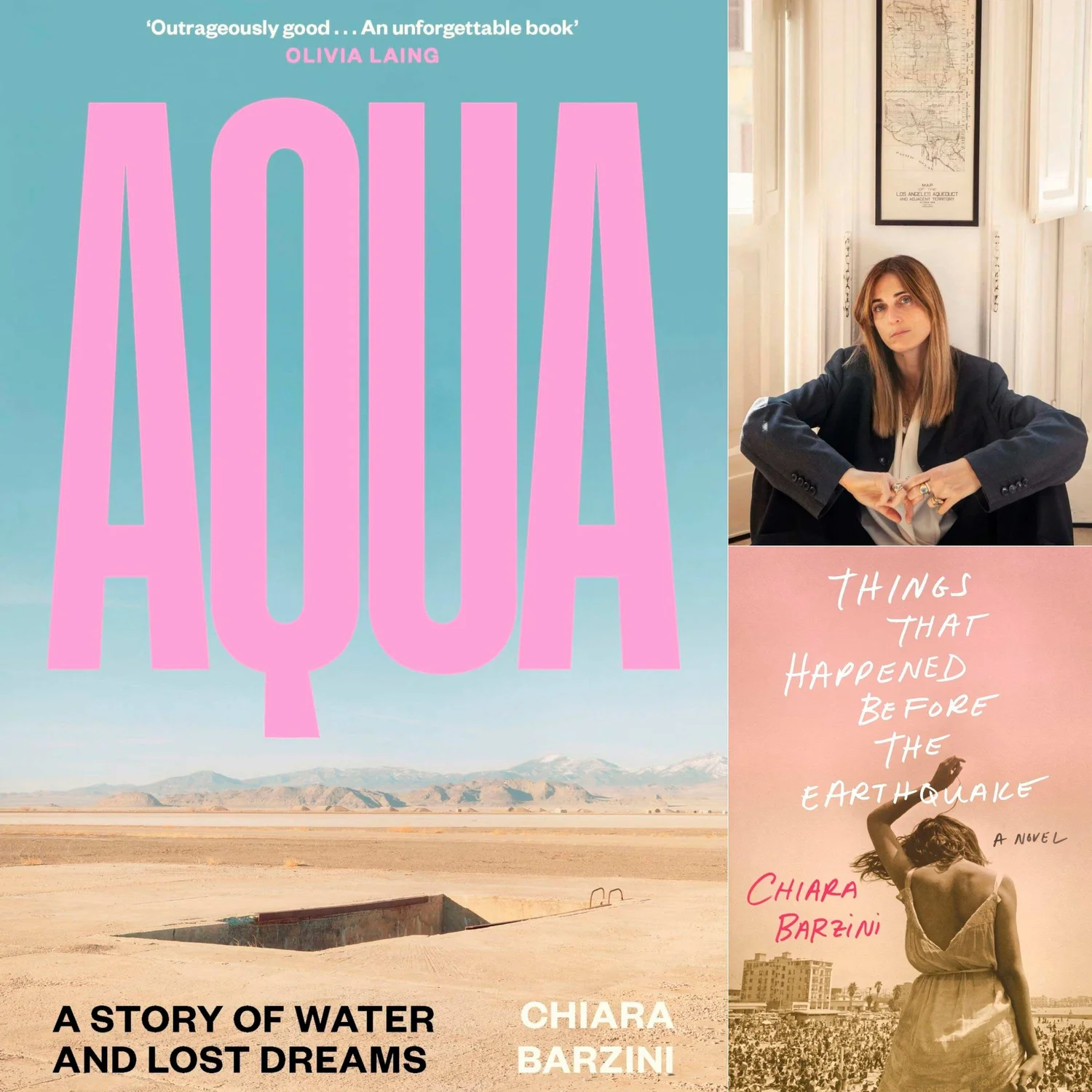
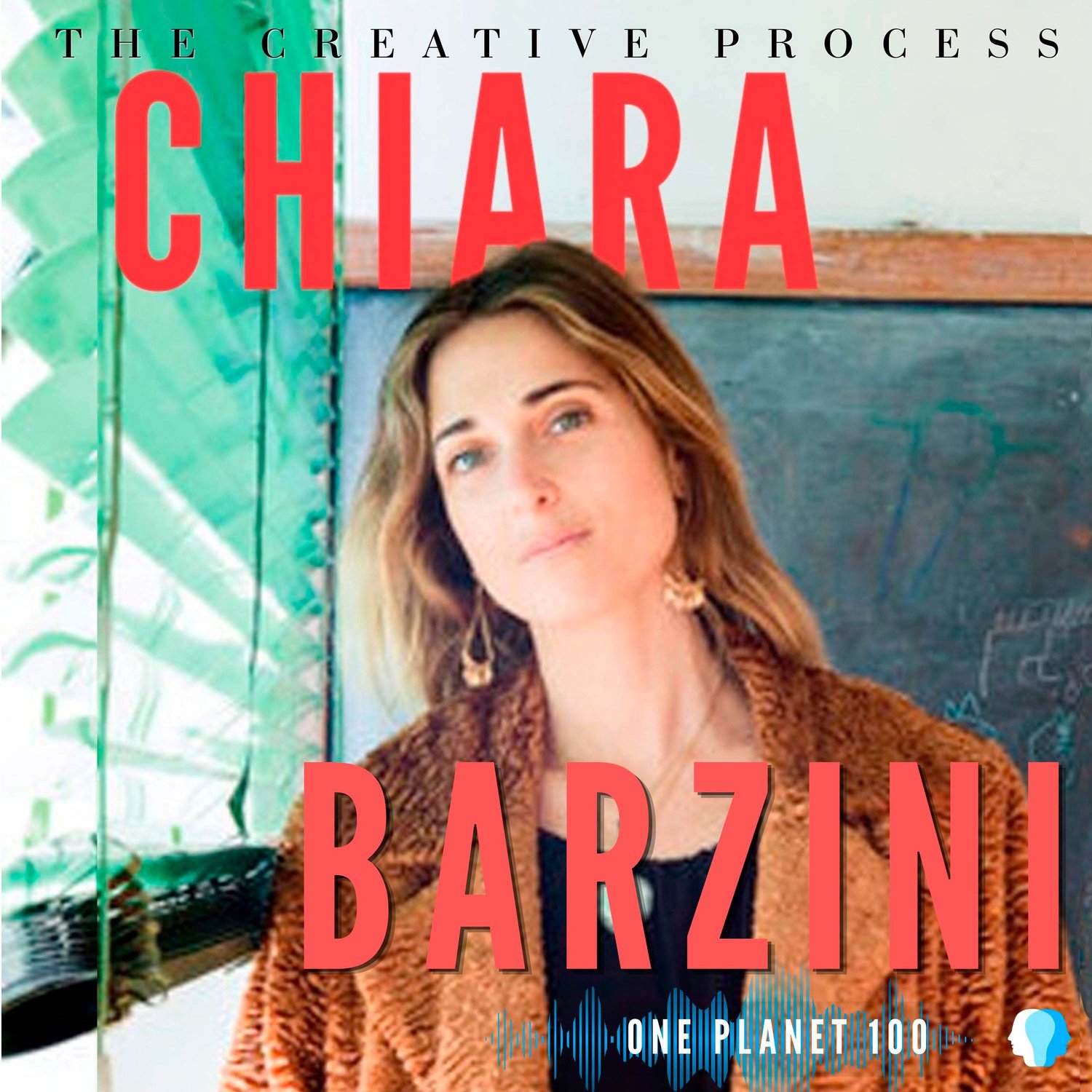
“I think first of all that in order to have disillusion, you need to have illusion and I really want to sort of take a stand in the name of being a delusional person, you know? I do think illusions are necessary to our sense of creativity, and we need to fall in love with extreme projects, and we need to have ideas that are sometimes unsustainable. We need to dream big in order to be creative and feel alive. The illusions that are a part of Aqua are larger illusions. They're illusions that have to do with my adult life. They're connected to nature and the presence or absence of water, the illusion that we can keep sustaining a city even though the water has run out.”My guest today, Chiara Barzini, has spent her life navigating the literal and cultural fault lines between Italy and California. Today we will discuss her book, Aqua: A Story of Water and Lost Dreams, and her life as an artist living between two countries. In her acclaimed 2017 novel, Things That Happened Before the Earthquake, she wrote about arriving in the San Fernando Valley just weeks after a catastrophic natural disaster and the illusions of the '90s.In Aqua, she examines nature, the California water crisis and the broken dreams of the Hollywood machine. We talk about family, film, art as an act of faith and our collective ecological coming of age, where the end of empire meets the end of abundance, and the consequences of hypercapitalism and colonialism. What does it mean to stare our illusions in the eye and find the courage to imagine a better future?(0:00) The Necessity of Illusions(1:40) Chiara Barzini, Author, Screenwriter(4:44) The End of Empire and Ecological Anxiety(12:15) The Allure and Cruelty of Capitalism(16:07)   Aqua: A Reading - On Hollywood and Water(21:02) Screenwriter Robert Towne and the Legacy of Chinatown(26:20) AI Consumption and Water Bankruptcy(30:23) The Edge of Apocalypse and Bombay Beach(33:41) The Etruscans and the Art of Dying(42:33) Translation and Creativity(44:28) Raising Children in a Crazy World(47:30) Poetry, Ruins, and The Waste Land(57:33) Scents and Sounds of Rome and Los Angeles(01:04:17) The Connection with Animals and Nature(01:07:35) The Evolution of Love and Compassion(01:09:17) The Memory Museum(01:13:00) We Are in This Lifetime TogetherEpisode Websitewww.creativeprocess.info/podInstagram:@creativeprocesspodcast
Chiara Barzini has spent her life navigating the literal and cultural fault lines between Italy and California. Today we will discuss her book, Aqua: A Story of Water and Lost Dreams, and her life as an artist living between two countries. In her acclaimed 2017 novel, Things That Happened Before the Earthquake, she wrote about arriving in the San Fernando Valley just weeks after a catastrophic natural disaster and the illusions of the '90s.In Aqua, she examines nature, the California water crisis and the broken dreams of the Hollywood machine. We talk about family, film, art as an act of faith and our collective ecological coming of age, where the end of empire meets the end of abundance, and the consequences of hypercapitalism and colonialism. What does it mean to stare our illusions in the eye and find the courage to imagine a better future?(0:00) Water as Power(2:17) The Necessity of Illusions(4:24) Aqua: A Reading - On Hollywood and Water(7:51) The Edge of Apocalypse & Writing(9:10) The Etruscans and the Art of Dying(13:13) Translation and the Creative Spark(14:38) Raising Children in a Crazy World(16:18) Poetry, Ruins, and The Waste Land(18:48) Scents and Sounds of Two Cities (Rome and Los Angeles)(20:43) The Connection with Animals and Nature(22:54) The Evolution of Love and Compassion(24:12) The Memory Museum(27:04) We are in this lifetime togetherEpisode Websitewww.creativeprocess.info/podInstagram:@creativeprocesspodcast
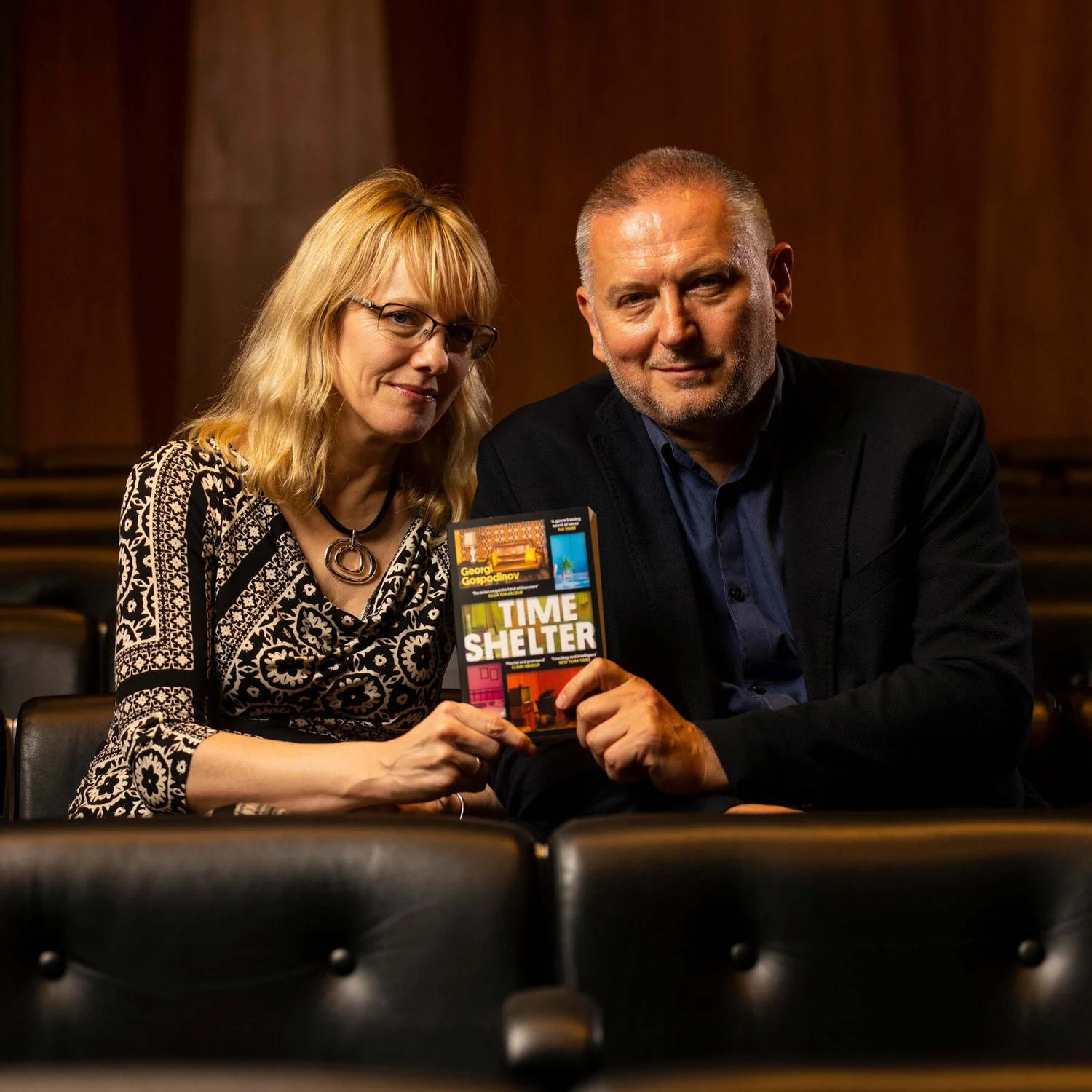
Today, we have a conversation about time, memory, and the bittersweet geography of human sorrow. Georgi Gospodinovis widely considered one of the most daring voices in contemporary European literature. His acclaimed novel, The Physics of Sorrow, won the prestigious Jan Michalski Prize in 2016, blending ancient myth and quantum physics to chronicle the delicate realities of post-socialist Eastern Europe. Joining him is Angela Rodel, a brilliant linguist, musician, and translator whose profound artistic empathy carries the flowing cadences of the Bulgarian language into vivid English. Together, this extraordinary creative duo made history by winning the 2023 International Booker Prizefor Time Shelter—the first book written in Bulgarian to ever receive the honor.Time Shelter is a masterfully dark, funny, and prescient novel. It begins with an enigmatic psychiatrist opening a clinic that treats Alzheimer’s patients by meticulously recreating past decades to match their internal clocks. But the experiment quickly escapes the clinic walls, triggering a pan-European crisis where entire nations hold democratic referendums to choose which era of the past they will retreat into. It is a book that holds up a mirror to our own world, exploring what happens when a civilization faces a deficit of meaning and tries to weaponize nostalgia.(0:00) The Trap of Nostalgia(1:22) The Nonlinear Approach to Storytelling(3:53) Translating the Atmosphere(4:31) The Pandemic of the Past(6:37) Death and the Gardener(9:49) The Translators Calling(11:00) Slowing Down Time(13:14) Storytelling vs Propaganda(15:54) Translating the Atmosphere(18:19) What makes a good life? What has given your life meaning?(20:56) Reflections on God and the Stories His Grandmother Told Him(23:43) The Importance of Hugging, Empathy and StorytellingEpisode Websitewww.creativeprocess.info/podInstagram:@creativeprocesspodcast
“We are in the middle of a labyrinth which suggests to us many fake corridors. What's the superpower of literature? Literature is like an antidote against propaganda. Propaganda explains the world easily in a two-dimensional way.  Literature gives you a more complex explanation. Literature tells personal stories.”Today, we have a conversation about time, memory, and the bittersweet geography of human sorrow. Georgi Gospodinovis widely considered one of the most daring voices in contemporary European literature. His acclaimed novel, The Physics of Sorrow, won the prestigious Jan Michalski Prize in 2016, blending ancient myth and quantum physics to chronicle the delicate realities of post-socialist Eastern Europe. Joining him is Angela Rodel, a brilliant linguist, musician, and translator whose profound artistic empathy carries the flowing cadences of the Bulgarian language into vivid English. Together, this extraordinary creative duo made history by winning the 2023 International Booker Prizefor Time Shelter—the first book written in Bulgarian to ever receive the honor.Time Shelter is a masterfully dark, funny, and prescient novel. It begins with an enigmatic psychiatrist opening a clinic that treats Alzheimer’s patients by meticulously recreating past decades to match their internal clocks. But the experiment quickly escapes the clinic walls, triggering a pan-European crisis where entire nations hold democratic referendums to choose which era of the past they will retreat into. It is a book that holds up a mirror to our own world, exploring what happens when a civilization faces a deficit of meaning and tries to weaponize nostalgia.(0:00) The Trap of Nostalgia(2:13) The Art of Translation(5:44) The Pandemic of the Past(11:30) Reading from ‘Time Shelter’(14:28) Death and the Gardener(19:34) The Translator's Calling(26:05) Cultural Rhythms of the Bulgarian Language(30:00) The Nonlinear Approach to Storytelling(34:30) Separating Personal and Historical Pasts(42:55) Storytelling vs Propaganda(47:19) Bodies, Animals and the Loneliness of the Minotaur(56:00) Reading ' Eight Minutes and 19 Seconds’(1:00:28) What makes a good life? What has given your life meaning?(1:04:18)   Childhood, Memory and Imagination(1:10:38) Reflections on God and the Stories His Grandmother Told Him(1:17:20) Education and the Empathic Imagination(1:23:25) The Museum of Memory(1:26:15) The Importance of Hugging and Empathy(1:28:02) AI and the Future of HumanityEpisode Websitewww.creativeprocess.info/podInstagram:@creativeprocesspodcast
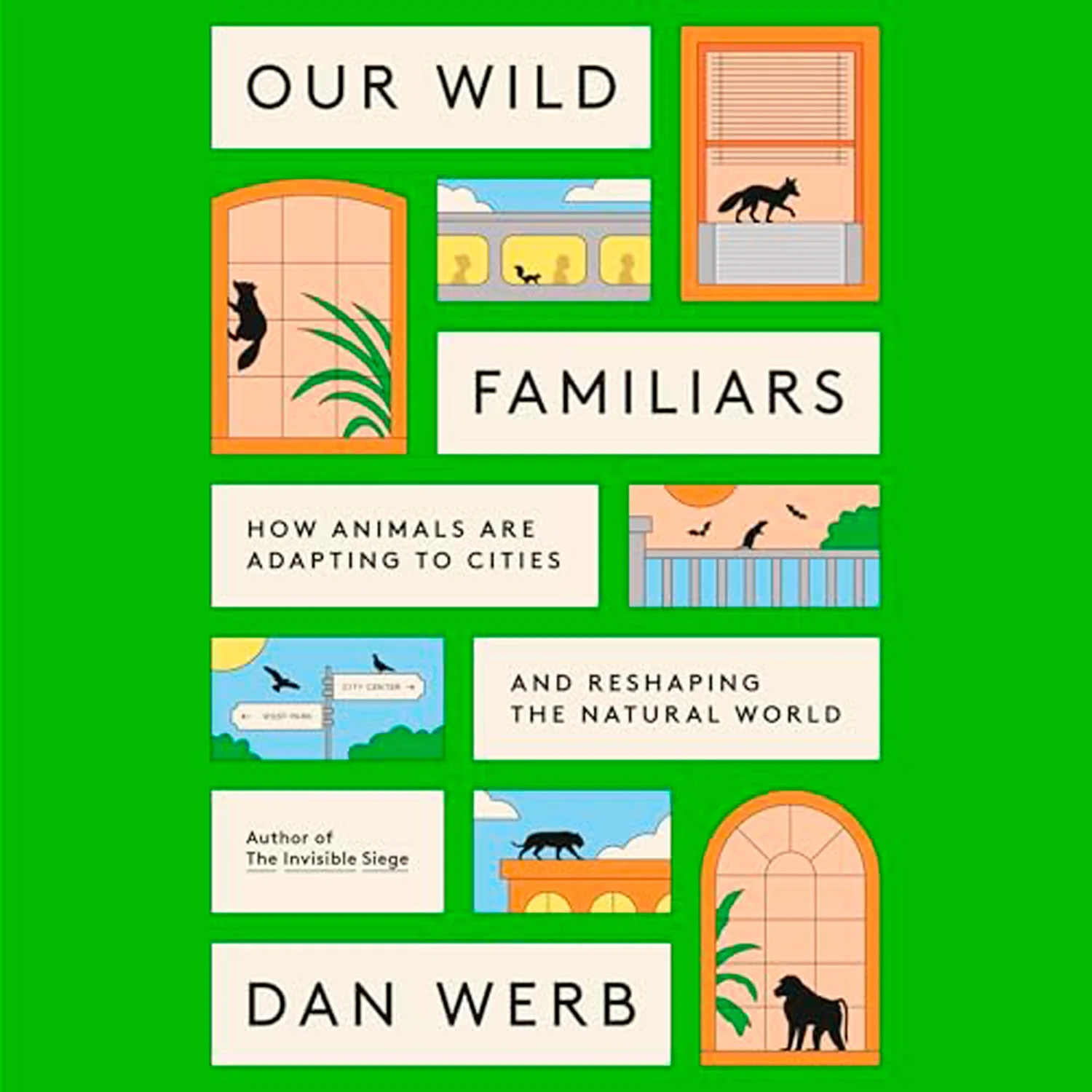
If you live in a city, you’ve probably had that moment in the middle of the night. You hear a scratching in the walls, or you catch the glowing eyes of a raccoon peering out from a dumpster, and for a second, the concrete world feels a lot less 'controlled' than we like to pretend. We’ve been taught to think of cities as 'biological deserts'—places where nature goes to die. But my guest today, Dan Werb, says that’s a myth we tell ourselves to feel safe. Dan is an award-winning epidemiologist and a musician, and in his new book, Our Wild Familiars, he explores the 'synanthropes'—the wild creatures that aren't our pets, but aren't quite strangers either. They are the coyotes, the bats, and even the octopuses that are learning to use our cities as laboratories for their own rapid evolution. He’s also the author of The Invisible Siege and City of Omens.(0:02) The unexpected biodiversity of urban areas and wild familiars(1:18) What is a Synanthrope?(4:15) The Myth of the Biological Desert(8:04) The Ancestral Bond between early humans, ravens, and foxes(9:15) Crows and Grudges(12:42) Stepping Stones in the Concrete(14:20) The Epidemiological Triangle(17:58) The Illusion of AI Connection(19:56) The Museum of MemoryEpisode Websitewww.creativeprocess.info/podInstagram:@creativeprocesspodcast
loading
Comments