


 Claim Ownership
The Cancer Professionals Podcast
Subscribed: 16Played: 175
Subscribe

© Copyright Macmillan Cancer Support
Description
Do you work in cancer care? On this podcast, we interview a wide range of guests, including health and social care professionals, to lift the lid on current issues faced by the cancer workforce. Expect to hear discussions of clinical practice, personal experience and practical advice to improve your knowledge and skills in supporting people affected by cancer. New episodes are released on the first Wednesday of each month.
The Cancer Professionals Podcast is brought to you by Macmillan Cancer Support. If you work in health or social care, visit www.macmillan.org.uk/learning for more information about free education and training from Macmillan Cancer Support.
Disclaimer: The content and information in these episodes is for informational and educational purposes only and does not constitute medical advice. All examples covered in the episodes are based in the UK and reflect the UK health systems as they were at the time of recording. Listeners are reminded to always refer to their local policies and procedures to ensure they are following the guidelines of their workplace. No material within this series is intended to be a substitute for professional medical advice, diagnosis or treatment. Always seek the advice of your physician or other qualified and registered healthcare providers.
The Cancer Professionals Podcast is brought to you by Macmillan Cancer Support. If you work in health or social care, visit www.macmillan.org.uk/learning for more information about free education and training from Macmillan Cancer Support.
Disclaimer: The content and information in these episodes is for informational and educational purposes only and does not constitute medical advice. All examples covered in the episodes are based in the UK and reflect the UK health systems as they were at the time of recording. Listeners are reminded to always refer to their local policies and procedures to ensure they are following the guidelines of their workplace. No material within this series is intended to be a substitute for professional medical advice, diagnosis or treatment. Always seek the advice of your physician or other qualified and registered healthcare providers.
44 Episodes
Reverse
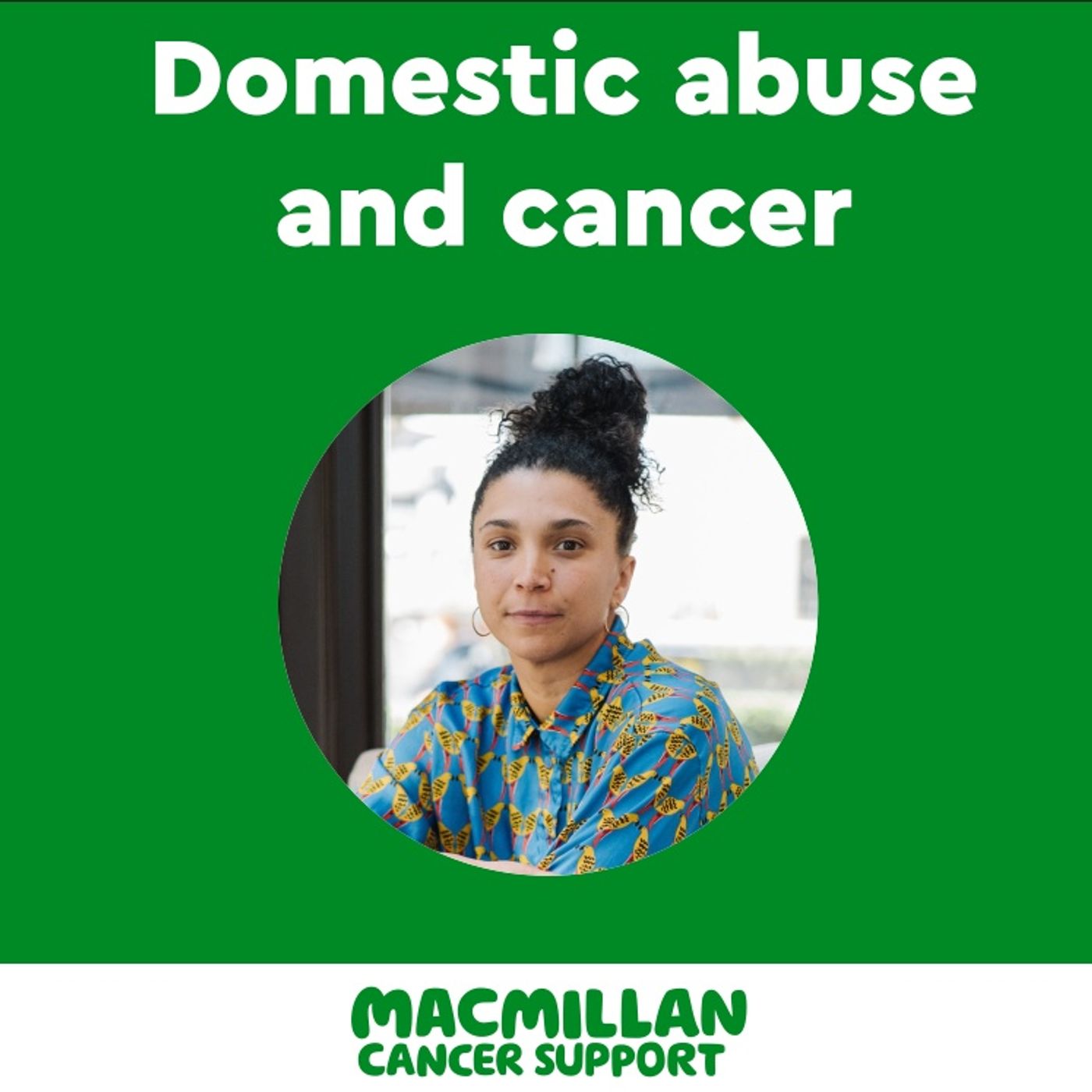
Domestic abuse affects one in five people, and cancer affects one in two, but what happens when they overlap?In this episode we explore the impact that domestic abuse can have on people affected by cancer. From delayed diagnoses and missed appointments to treatment decisions and recovery, domestic abuse can influence every stage of the cancer journey. We're joined by Lucy Angell John, Domestic Abuse and Cancer Trainer for SWAG Cancer Alliance, who shares her expertise on recognising the signs of domestic abuse, understanding how it may present in cancer care, and creating safe opportunities for people to access support.You'll also hear powerful lived experience accounts from Fee and Kimmy, who have generously shared, in writing, their experiences of navigating cancer while experiencing domestic abuse. Their stories offer valuable insight into the additional challenges some people face while undergoing treatment and recovery. This episode highlights that cancer professionals don't need to be domestic abuse experts to make a difference. By staying curious, recognising potential signs, and knowing where to signpost for support, healthcare professionals can play an important role in helping people affected by both cancer and domestic abuse access the help they need.Content warning: This episode contains conversations about domestic abuse and cancer. Some of the conversation may be upsetting or triggering, so please take it steady and be compassionate towards yourself. If you are affected by any of the issues raised in this episode, confidential support is available from the National Domestic Abuse Helpline. You can call 0808 2000 247 or visit nationaldahelpline.org.uk.This episode aligns with Macmillan's strategic objective to reach everyone, especially those who need us most. Read more about Macmillan's strategy.Links:Cancer and domestic abuse toolkit for professionals: Cancer-and-domestic-abuse-a-toolkit-for-professionalshttps://www.macmillan.org.uk/cancer-information-and-support/get-help/domestic-abusehttps://www.macmillan.org.uk/donate/gifts-in-wills/preventing-will-fraudNational Domestic Abuse Helpline: 0808 2000 247/ https://www.nationaldahelpline.org.uk/Galop- https://www.galop.org.ukNational LGBT+ Abuse Helpline: 0800 999 5428Domestic violence and abuse | NHS Employers'Making a Difference' animation- Making a Difference - Cancer and Domestic Abuse - SWAG Cancer AllianceLearning objectivesRecognise the signs and impact of domestic abuse in people affected by cancer. Understand how domestic abuse may influence treatment, recovery and healthcare engagement. Use appropriate questioning techniques to explore concerns safely and sensitively. Respond appropriately to disclosures and provide supportive validation. Access and signpost to relevant safeguarding and domestic abuse support services Please complete this short, anonymous survey to help us understand your experience as a listener- what you find most useful, how you've been able to apply insights from the podcast in your role, and where we can improve. It will only take around 15 minutes to complete: The Cancer Professionals Podcast- listener surveyIf you work in health or social care, visit www.macmillan.org.uk/learning or Macmillan’s Learning Hub for more information about free education and training from Macmillan Cancer Support.Disclaimer: The content and information in these episodes is for informational and educational purposes only and does not constitute medical advice. All examples discussed in episodes are UK based and reflect UK health systems at the time of recording. No material within this series is intended to be a substitute for professional medical advice, diagnosis or treatment. Always seek the advice of your physician or other qualified and registered healthcare providers.
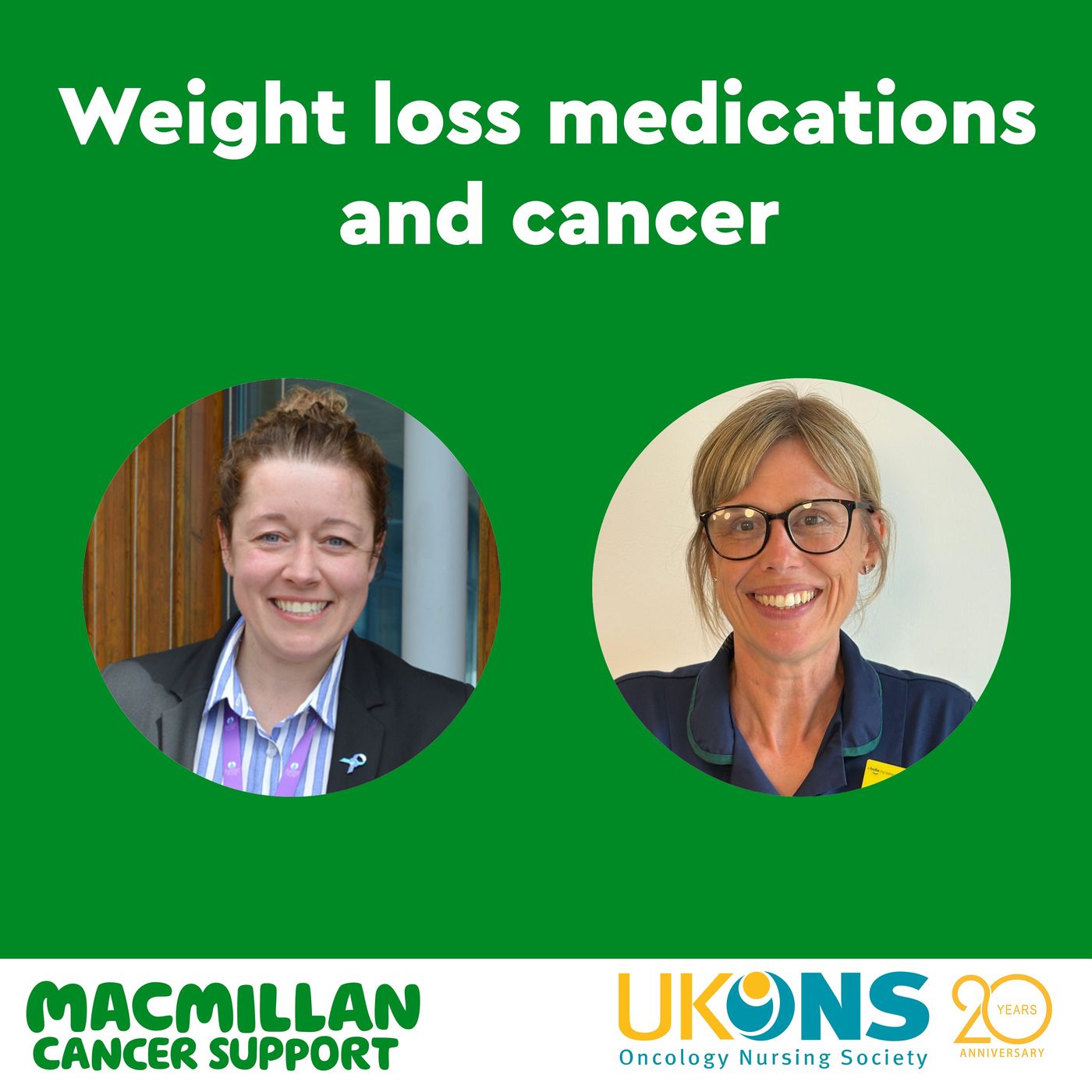
Medications for obesity, including GLP-1 medicines such as Wegovy and Mounjaro, are becoming increasingly common, but what do they mean for people living with and beyond cancer?In this episode, Kirsty Clutterbuck, Head and Neck Dietitian and Chair of the British Dietetic Association’s (BDA) Oncology Specialist Group, and Kate Turney, Lead Nurse for the Upper GI Cancer Clinical Nurse Specialist Team at University Hospitals Sussex NHS Foundation Trust, explore the benefits, risks and unanswered questions around medications for obesity in cancer care. They discuss how GLP-1 medicines work, the potential impact of weight and muscle loss during cancer treatment, and how side effects can overlap with cancer and treatment-related symptoms. They also explore how professionals can respond to patient questions, discuss weight and nutrition sensitively, and support shared decision-making through multidisciplinary care.By listening to or watching this episode in full, you will be able to:Explain how GLP-1 medicines work and the key considerations for people living with and beyond cancer.Recognise potential nutritional risks, including rapid weight loss, muscle loss and symptoms that may be difficult to distinguish from cancer or treatment side effects.Discuss obesity medicines, weight and nutrition with patients in a sensitive, non-judgemental way.Identify how dietitians, CNSs and wider multidisciplinary teams can support safe, person-centred decision-making.Content warning This episode contains conversations about obesity, eating behaviours and weight stigma which you may find upsetting or triggering. Listener discretion is advised.Links from the episode: Staying healthy when taking medications for obesity - BDAWeight-loss injections and cancer: your questions answered | Macmillan Cancer Support Nutrition Strategies for Next‐Generation Incretin Therapies: A Systematic Scoping Review of the Current Evidence - Spreckley - 2026 - Obesity Reviews - Wiley Online Library Screening for malnutrition in people living with cancer and overweight or obesity: A scoping review - ScienceDirect Further information This episode aligns with Macmillan's strategic objective to offer more personalised support to people affected by cancer and other health conditions. You can read more about this in Macmillan's strategy.Please complete this short, anonymous survey to help us understand your experience as a listener- what you find most useful, how you've been able to apply insights from the podcast in your role, and where we can improve. It will only take around 15 minutes to complete: The Cancer Professionals Podcast- listener surveyIf you work in health or social care, visit www.macmillan.org.uk/learning or Macmillan’s Learning Hub for more information about free education and training from Macmillan Cancer Support.Disclaimer: The content and information in these episodes is for informational and educational purposes only and does not constitute medical advice. All examples discussed in episodes are UK based and reflect UK health systems at the time of recording. No material within this series is intended to be a substitute for professional medical advice, diagnosis or treatment. Always seek the advice of your physician or other qualified and registered healthcare providers.
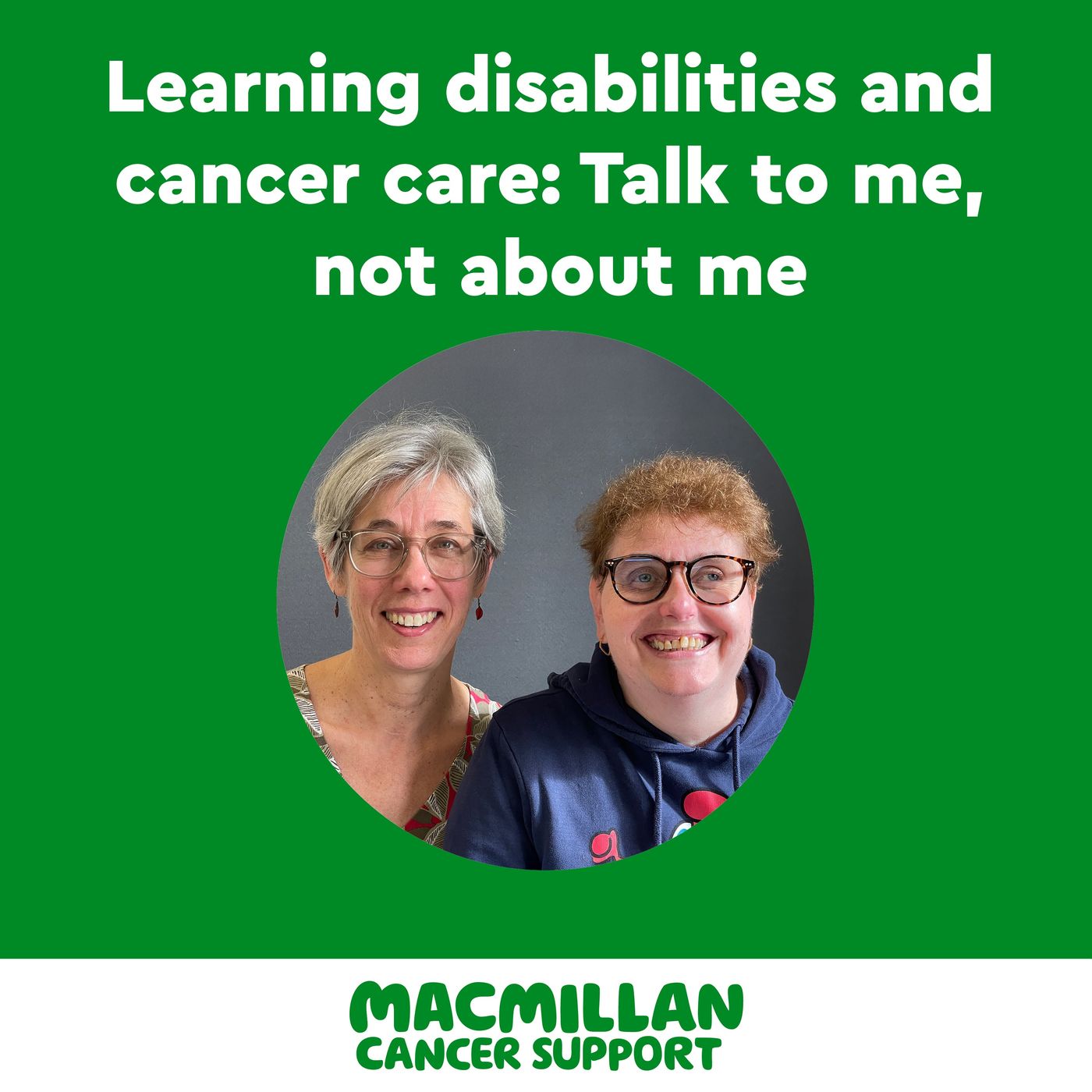
In this episode, we explore the experiences of people with learning disabilities across the cancer care pathway. While everyone has the right to be involved in decisions about their own health and treatment, people with learning disabilities often face significant health inequalities, including barriers to accessing cancer services, understanding information, and having their voices heard. Amanda Cresswell (researcher and contributor of lived experience) and Irene Tuffrey-Wijne (Professor of Intellectual Disability & Palliative Care, Lead of The KIND Research Group) join us to discuss the challenges people with learning disabilities can experience following a cancer diagnosis and throughout treatment and care. We also explore how healthcare professionals can improve outcomes through clear communication, reasonable adjustments, and person-centred approaches that ensure individuals are fully included in conversations and decisions about their care. By listening to or watching this episode in full, you will be able to: Identify common barriers to communication and involvement in cancer treatment and care for people with learning disabilities Reflect on the emotional and practical effects for people with learning disabilities by not being involved in conversations about one’s own care. Recognise the value of adapting communication and approaches to support individual needs for people with learning disabilities. Reflect on how healthcare professionals can create more inclusive, supportive, and person-centred interactions for people with learning disabilities. Content warning: This episode contains conversations about lived experience of cancer, which you may find upsetting or triggering. Listener discretion is advised. Links from the episode: The Victoria and Stuart Project - https://www.victoriaandstuart.com/ Books Beyond Words - https://www.booksbeyondwords.co.uk/resources-dl?rq=funeral The DAPPLE Project - https://www.dappleproject.com/ How to use ’My funeral cards’ https://www.youtube.com/watch?v=mv1L3ktlUfs LeDeR report – learning from the lives and deaths of people with a learning disability-https://www.kcl.ac.uk/research/leder Easy read cancer information https://www.macmillan.org.uk/cancer-information-and-support/get-help/translations-and-other-formats/easy-read-cancer-information Nhs passport https://www.england.nhs.uk/publication/health-and-care-passports/ NHS reasonable adjustments https://www.england.nhs.uk/learning-disabilities/improving-health/reasonable-adjustments/ This episode aligns with Macmillan's strategic objective to make cancer care fair for everyone Read more about Macmillan's strategy. Please complete this short, anonymous survey to help us understand your experience as a listener- what you find most useful, how you've been able to apply insights from the podcast in your role, and where we can improve. It will only take around 15 minutes to complete: The Cancer Professionals Podcast- listener surveyIf you work in health or social care, visit www.macmillan.org.uk/learning or Macmillan’s Learning Hub for more information about free education and training from Macmillan Cancer Support.Disclaimer: The content and information in these episodes is for informational and educational purposes only and does not constitute medical advice. All examples discussed in episodes are UK based and reflect UK health systems at the time of recording. No material within this series is intended to be a substitute for professional medical advice, diagnosis or treatment. Always seek the advice of your physician or other qualified and registered healthcare providers.
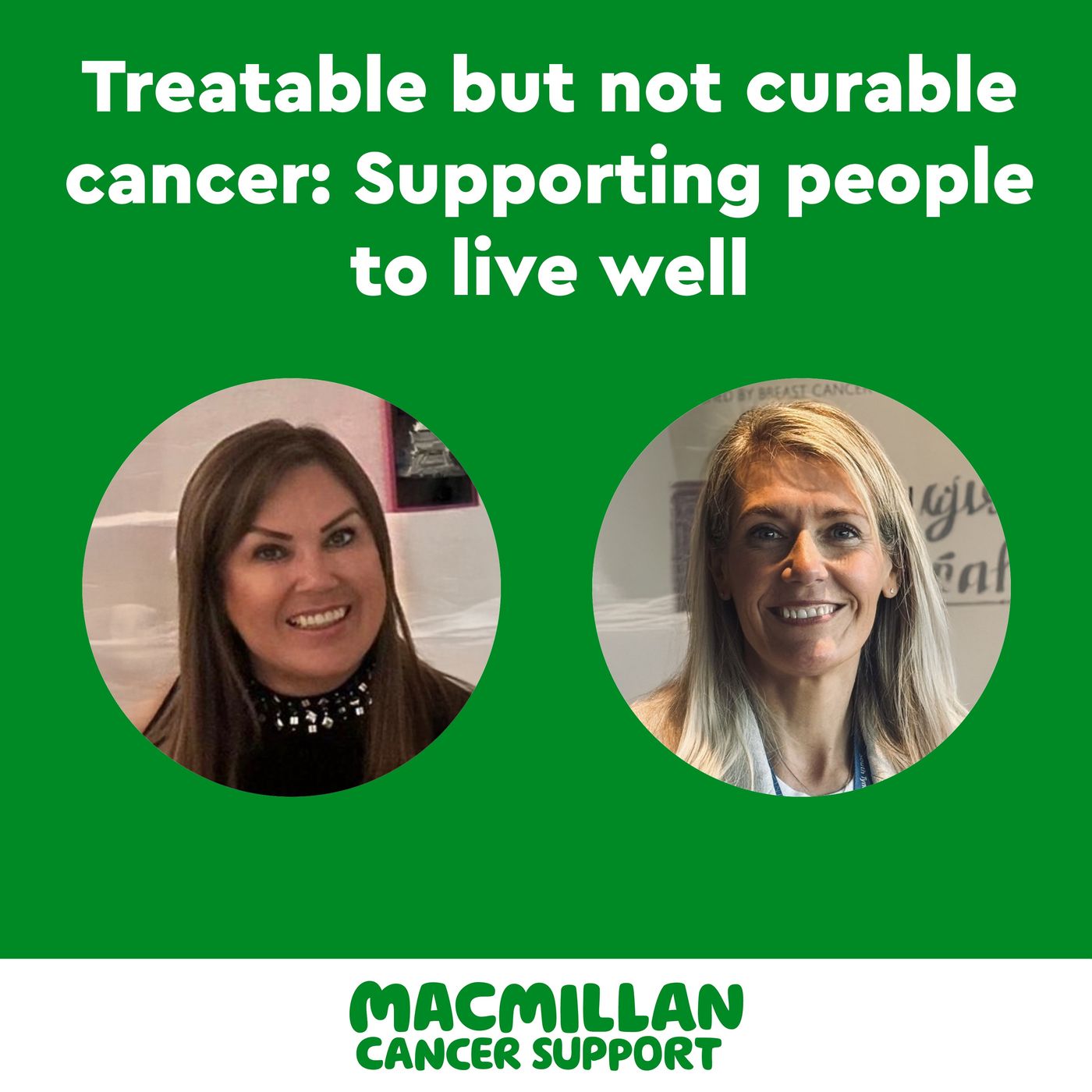
What does it mean to live with treatable but not curable cancer? In this episode, Alyson Thompson shares her lived experience alongside Caroline Tweedie's professional perspective, exploring the realities of living with ongoing treatment, uncertainty, and the impact cancer can have on everyday life. Together, we discuss personalised care, compassionate communication, and how healthcare professionals can help people live well beyond their diagnosis. The conversation offers practical insights and powerful reflections for anyone supporting people living with cancer, reminding us of the importance of seeing the person behind the diagnosis and focusing on what matters most to them. By listening to or watching this episode in full, you will be able to: Describe the impact that living with treatable but not curable cancer can have on a person's wellbeing, relationships, identity and daily life. Recognise the role of healthcare professionals in supporting people to navigate uncertainty while maintaining hope, autonomy and quality of life. Apply person-centred communication approaches that enable meaningful conversations about individual goals, priorities and support needs. Identify opportunities to improve care and support for people living with treatable but not curable cancer through holistic assessment, personalised care and collaborative decision making. Content warning: This episode contains conversations about lived experience of cancer which you may find upsetting or triggering. Listener discretion is advised. Links from the episode:Treatable but not curable cancer resources | Healthcare professionals | Macmillan Cancer SupportTreatable But Not Curable CancerThis episode aligns with Macmillan's strategic objective(s) to offer more personal support to people affected by cancer and other health conditions. Read more about Macmillan's strategy. Please complete this short, anonymous survey to help us understand your experience as a listener- what you find most useful, how you've been able to apply insights from the podcast in your role, and where we can improve. It will only take around 15 minutes to complete: The Cancer Professionals Podcast- listener surveyIf you work in health or social care, visit www.macmillan.org.uk/learning or Macmillan’s Learning Hub for more information about free education and training from Macmillan Cancer Support.Disclaimer: The content and information in these episodes is for informational and educational purposes only and does not constitute medical advice. All examples discussed in episodes are UK based and reflect UK health systems at the time of recording. No material within this series is intended to be a substitute for professional medical advice, diagnosis or treatment. Always seek the advice of your physician or other qualified and registered healthcare providers.
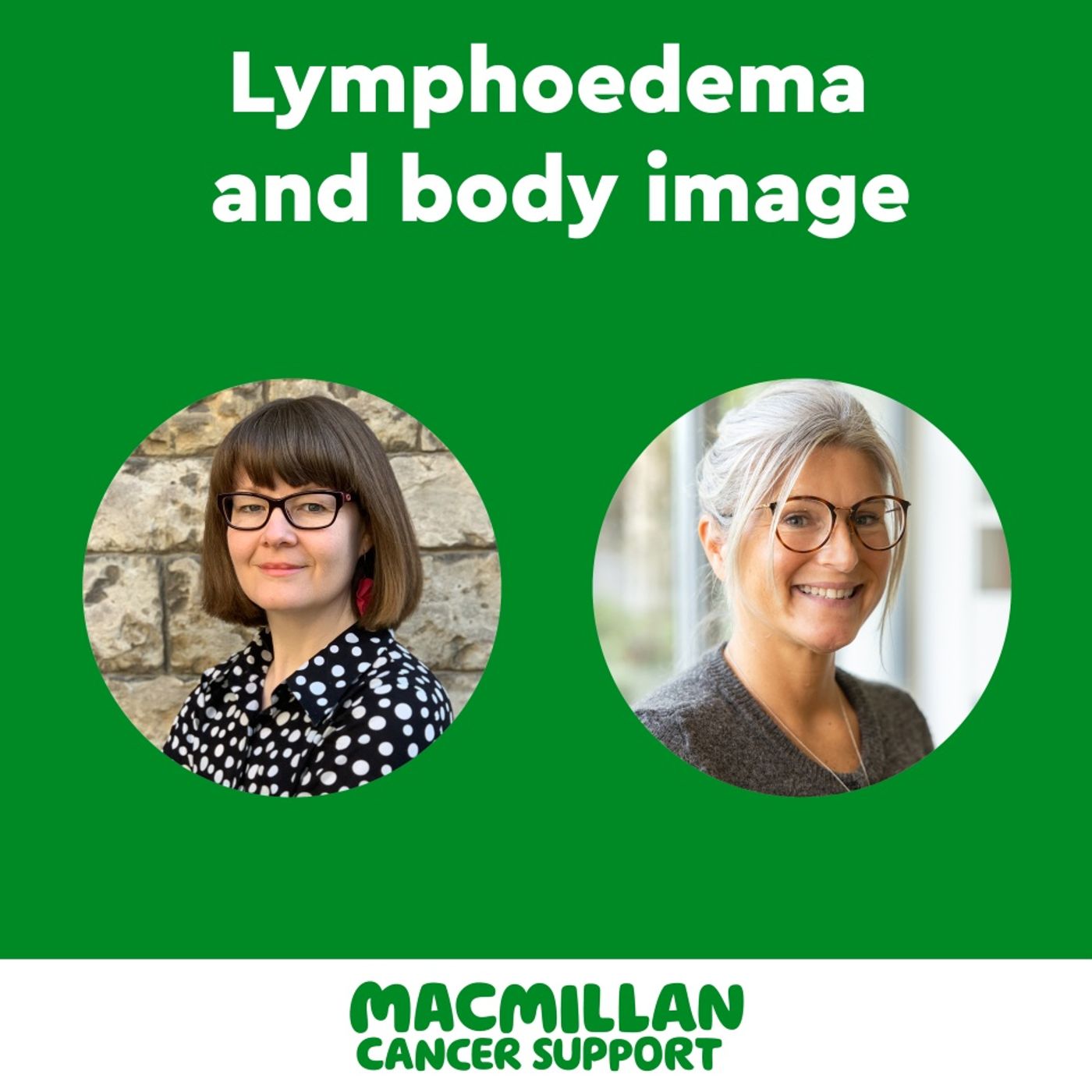
In this episode, we explore lymphoedema in cancer care, focusing on the physical, emotional and psychological impact. Our guests Carmel Cardona, who shares their experience of living with lymphoedema, and Beccy Elwell, Director of National Clinical Services at Accelerate Health CIC, discuss the physical and emotional challenges, the importance of early recognition and management, and the impact on identity, body image, intimacy and quality of life. They also highlight why person-centred care and greater awareness of lymphoedema are essential to supporting people affected by cancer. By listening to or watching this episode in full, you will be able to: Recognise the physical, emotional and psychological impact of lymphoedema for people living with and beyond cancer Understand how lymphoedema can affect body image, intimacy and sexuality, and why these aspects are important but often overlooked in care conversations Support people living with lymphoedema more holistically by addressing physical, emotional and psychosocial needs Identify practical ways health professionals can support people to become active partners in managing lymphoedema and reducing risks and complications. Content warning: This episode contains conversations about lived experience of cancer which you may find upsetting or triggering. Listener discretion is advised. Links from the episode:Education and Training | Healthcare professionals | Macmillan Cancer Support -To find out more about communication skills on the Macmillan Learning HubLymphoedema, Wound Care Courses & Leg Ulcer Management Training (paid for training) Lymphoedema Support Network – LSN – Because Lymphoedema MattersL-W-O Community | Lymphoedema Support UK & Online Home - Lymphoedema United British Lymphology Society - BLS Find links below to Macmillan resources about lymphoedema and body image for people affected by cancer:Lymphoedema treatment - lymphatic drainage massage, exercise | Macmillan Cancer Support Changes to your appearance and body image | Macmillan Cancer Support Sex and side effects of cancer treatment | Macmillan Cancer Support This episode aligns with Macmillan's strategic objective(s) to offer more personal support to people affected by cancer and other health conditions. Read more about Macmillan's strategy. Please complete this short, anonymous survey to help us understand your experience as a listener- what you find most useful, how you've been able to apply insights from the podcast in your role, and where we can improve. It will only take around 15 minutes to complete: The Cancer Professionals Podcast- listener surveyIf you work in health or social care, visit www.macmillan.org.uk/learning or Macmillan’s Learning Hub for more information about free education and training from Macmillan Cancer Support.Disclaimer: The content and information in these episodes is for informational and educational purposes only and does not constitute medical advice. All examples discussed in episodes are UK based and reflect UK health systems at the time of recording. No material within this series is intended to be a substitute for professional medical advice, diagnosis or treatment. Always seek the advice of your physician or other qualified and registered healthcare providers.

Comments

Download from Google Play

Download from App Store
 United States