


 Claim Ownership
Invested by Aleph
Subscribed: 31Played: 727
Subscribe
Description
How can values create value? Join Venture Capitalist and Author Michael Eisenberg as he speaks with global business leaders to explore the values and purpose behind their businesses, the impact of technology on humanity, and the humanity behind digitization. Michael Eisenberg is Co-Founder and General Partner of Aleph, an early-stage venture capital fund with $850M under management in Tel Aviv, Israel. Aleph is an early stage venture capital fund focused on partnering with great Israeli entrepreneurs to build large, meaningful companies and impactful global brands.
84 Episodes
Reverse

Ami Daniel, co-founder and CEO of Windward, on the Houthi blockade of Saudi oil, Trump's Russian diesel deal, and why the next war will be fought at sea.
On this episode of Invested, Michael Eisenberg talks with Ami Daniel, back for a record third appearance, about how Iran and the Houthis are disrupting shipping through the Strait of Hormuz and Bab el-Mandeb with cheap drones and missiles. Using Windward's maritime AI data, Ami explains why tanker freight rates have climbed from about $60,000 a day to nearly $1 million, why ship location transmissions around the Gulf have dropped 83%, and why he counts roughly 90 million more barrels leaving the Gulf over 12 days than public numbers show. They also cover Saudi Arabia's East-West Pipeline to Yanbu, the halt of Qatar's LNG exports from Ras Laffan, the split between US and European sanctions on Russia, marine insurance as the financial chokepoint of global trade, China's incursions near Taiwan and the Philippines, and the threat to undersea internet cables.
Ami served as an officer on the INS Hanit, the Israeli Navy corvette hit by a Hezbollah missile off Beirut on July 14, 2006. Four people were killed and about 12 were wounded. He first came on Invested after October 7th, when he set up a command center in his home to help rescue people from the Gaza envelope, and returned in March at the start of the war with Iran.
KEY TOPICS
00:00 - Intro
00:41 - Ami Daniel's Record Third Appearance
02:28 - What Windward Does
03:49 - Hit by a Hezbollah Missile in 2006
04:49 - Iran Copies the Houthi Model
05:47 - Why Hormuz Can't Be Opened by Force
07:00 - How ADNOC Keeps Gulf Oil Moving
08:42 - Tanker Freight Rates Near $1M a Day
10:15 - The 5 Million Barrel Swing Factor
13:04 - Why the US Guards Gulf Oil
14:21 - How Iran Armed the Houthis
16:20 - The Houthi Blockade on Saudi Exports
20:41 - 83% of Ships Go Dark
21:52 - 90 Million Barrels Missing From Public Numbers
23:31 - Qatar's LNG and Fertilizer Shutdown
25:19 - Jebel Ali Container Imports Cut Off
27:57 - Are Iran's Naval Mines Here to Stay?
31:49 - The Houthi Blockade on Eilat Port
33:32 - The Trump-Putin Russian Diesel Deal
38:06 - US vs. European Sanctions on Russia
41:12 - Marine Insurance, the Financial Chokepoint
43:52 - China's Push Into Marine Insurance
44:47 - What Big Banks Fear About Oil Prices
47:06 - Iran's Death by a Thousand Cuts
49:36 - Is the Blockade on Iran Working?
51:31 - Can Iran Wait Out Trump?
54:50 - Turkey's New Maritime Claim
55:49 - China's Incursions Near Taiwan
59:46 - Ukraine's Drones and Maritime Drones
1:02:06 - Undersea Cables Under Threat
1:03:51 - Who Protects the Seas?
1:06:24 - Ami's Predictions for Iran and Russia
RESOURCES
Follow Ami on LinkedIn - https://www.linkedin.com/in/amidaniel/
Learn more about Windward - https://windward.ai/
Listen to Ami's October 7th episode - https://www.aleph.vc/content/special-episode-of-invested-with-ami-daniel
Listen to Ami's Strait of Hormuz episode - https://aleph.vc/content/ami-daniel
Subscribe to Invested: https://content.aleph.vc/invested
Learn more about Aleph: https://www.aleph.vc/
Sign up for Aleph’s monthly email newsletter: https://newsletter.aleph.vc/
Subscribe to Aleph’s YouTube channel: https://www.youtube.com/@aleph-vc/
Follow Michael on Twitter: https://twitter.com/mikeeisenberg
Follow Michael on LinkedIn: https://www.linkedin.com/in/mieisenberg/
Follow Aleph on Twitter: https://x.com/aleph?s=20
Follow Aleph on LinkedIn: https://www.linkedin.com/company/aleph-vc/
Follow Aleph on Instagram: https://www.instagram.com/aleph.vc/
CREDITS
Executive Producer: Erica Marom
Producer: Sofi Levak, Dalit Merenfeld
Video and Editing: Nadav Elovic
Music and Creative Direction: Uri Ar
Content and Editorial: Jackie Goldberg
Design: Nimrod Sapir

Josh Kopelman, founding partner of First Round Capital and Half.com founder, on OpenAI and Anthropic's valuations and whether AI breaks seed investing.
On this episode of Invested, Michael Eisenberg talks with Josh Kopelman about building Half.com at the height of the dot-com era, when the company convinced Halfway, Oregon to rename itself Half.com, put coupon codes on 2 million fortune cookies, and sold to eBay in 2000. Josh compares that bubble to today's AI boom and explains why First Round's fund grew from a little under $150 million in 2004 to about half a billion without changing its strategy. He also argues that late-stage bets on SpaceX, Anthropic and OpenAI are a cyclical trade, while seed is a business that can make money in both risk-on and risk-off markets.
Josh goes back to Infonautics, the company he co-founded as a Wharton student, which scanned newspapers and magazines into Homework Helper for AOL, CompuServe and Prodigy before search engines existed. He explains why founders are cartographers, why he stays up until 3 a.m. building MCP servers with Claude Code even though he is not a strong engineer, why he doesn't think AI breaks the seed model, and how The Philadelphia Inquirer, where he served as chairman, went from "default dead" to "default alive."
Josh also describes publicly calling out Web Summit founder Paddy Cosgrave's tweets after October 7th, what it cost him, and what First Round looks for in Israeli founders.
Josh is a founding Partner at First Round Capital, a seed-stage technology venture fund. Josh has been an active entrepreneur and investor in the Internet industry since its commercialization.
In 1992, while he was a student at the Wharton School of the University of Pennsylvania, Josh co-founded Infonautics Corporation – and took it public on the NASDAQ stock exchange in 1996. Josh founded Half.com in July of 1999, and led it to become one of the largest sellers of used books, movies and music in the world. Half.com was acquired by eBay in July 2000 -- and Josh remained with eBay for three years, running the Half.com business unit and growing eBay’s Media marketplace to almost half a billion dollars in annual gross merchandise sales. In late 2003 Josh helped to found TurnTide, an anti-spam company that created the world's first anti-spam router.
Josh founded First Round Capital in 2004 to reinvent seed-stage investing. And since that time the firm has invested in over 350 emerging technology startups – becoming one of the most active venture capital firms in the country. Josh was ranked 3rd on the 2018 New York Times list of Top Venture Capitalists and consistently ranks in the top 20 of the Forbes Midas List of the top 100 tech investors. Josh has been named as one of the top ten ‘angel investors’ in the United States by Newsweek magazine, one of "Tech's New Kingmakers" by Business 2.0 magazine and a "Rising VC Star" by Fortune magazine. Josh also is the proud winner of a second place ribbon in the 2011 Nantucket Watermelon Eating competition.
Josh is an inventor on sixteen U.S. Patents for his work in Internet technology. In June 2000, he was awarded Ernst and Young’s prestigious “Entrepreneur of the Year” award for the Greater Philadelphia region.
Josh earned a Bachelor of Science degree cum laude in Entrepreneurial Management and Marketing from The Wharton School of the University of Pennsylvania.
KEY TOPICS
00:00 - Intro
01:46 - Half.com's Origin: eBay Meets Amazon
04:22 - Renaming Halfway, Oregon to Half.com
06:53 - Half.com Ads in Internet World Urinals
08:21 - Why Rate Card Is for Suckers
09:07 - Coupons on 2 Million Fortune Cookies
11:58 - Dot-Com Bubble vs. Today's AI Boom
16:20 - Why the Washout Belongs in Private Markets
17:29 - First Round's Fund Size From $150M to Half a Billion
19:28 - SpaceX, Anthropic and OpenAI vs. 20 Years of Exits
25:05 - Why Late-Stage AI Bets Are a Cyclical Trade
30:03 - Unvarnished Opinion, Unwavering Support
33:24 - Venture Conviction and Knowing the Risks
36:16 - Co-Founding Infonautics as a Wharton Student
40:27 - Infonautics' Bet on Closed Information
43:59 - Why Founders Are Cartographers
47:58 - Building MCP Servers With Claude Code
49:19 - What Y Combinator Got Right
52:07 - Does AI Break the Seed Model?
54:06 - First Round's "Imagine If" Brand
56:02 - Saving The Philadelphia Inquirer
59:32 - Calling Out Web Summit After October 7th
1:01:30 - Digitizing the Jewish Encyclopedia for Sefaria
1:02:18 - Investing in Israeli Founders
1:02:42 - Imagine If the Truth Was Knowable
RESOURCES
Follow Josh on LinkedIn: https://www.linkedin.com/in/jkopelman/
Follow Josh on X: https://x.com/joshk
Learn more about First Round Capital: https://firstround.com/
Subscribe to Invested: https://content.aleph.vc/invested
Learn more about Aleph: https://www.aleph.vc/
Sign up for Aleph’s monthly email newsletter: https://newsletter.aleph.vc/
Subscribe to Aleph’s YouTube channel: https://www.youtube.com/@aleph-vc/
Follow Michael on Twitter: https://twitter.com/mikeeisenberg
Follow Michael on LinkedIn: https://www.linkedin.com/in/mieisenberg/
Follow Aleph on Twitter: https://x.com/aleph?s=20
Follow Aleph on LinkedIn: https://www.linkedin.com/company/aleph-vc/
Follow Aleph on Instagram: https://www.instagram.com/aleph.vc/
CREDITS
Executive Producer: Erica Marom
Producer: Sofi Levak, Dalit Merenfeld
Video and Editing: Nadav Elovic
Music and Creative Direction: Uri Ar
Content and Editorial: Jackie Goldberg
Design: Nimrod Sapir

Yuval Kaminka, co-founder and CEO of Simply (formerly JoyTunes), on nearly running out of money, losing his co-founder Roey Izkovsky, and taking on Duolingo with an app that teaches piano, guitar, singing, and drawing.
On this episode of Invested, Michael Eisenberg talks with Yuval about the moment Simply ran out of money and even its own investors believed it wouldn't survive. They get into why that near-death experience shaped the company, how it fired a third of its staff and shared the bank account with every employee, and how Simply grew to millions of users.
They also talk about the last few years: Yuval's nephew Yannai, a search-and-rescue officer killed at Zikim on October 7th, and the sudden death of Roey, his co-founder and best friend, at 44. Simply responded by building Harmony, a therapeutic music room at Sheba Medical Center's rehabilitation hospital, and by bringing Simply Draw into the Tel Aviv Museum of Art.
Yuval Kaminka is an entrepreneur and the co-founder and CEO of Simply. He holds an MSc in computational neurobiology from the Weizmann Institute of Science and is a veteran of an elite technology unit. He co-founded JoyTunes (now Simply) with Roey Izkovsky and his brother, the musician Yigal Kaminka. He has built his career around a powerful idea: creating things that matter and elevate people's lives.
KEY TOPICS
00:00 - Intro
01:58 - What Simply Actually Does
05:38 - Out of Money and Written Off
09:25 - Two Principles Born From Crisis
10:35 - Firing a Third of the Company
13:05 - Sharing the Bank Account With Everyone
15:40 - Why Simply Chose to Stall Growth
18:40 - COVID Swapped the Weights for Feathers
22:17 - Free Apps in Times of Crisis
23:23 - From Cyber and Neuroscience to Music
26:08 - Why 90% of Kids Quit Instruments
27:30 - October 7th and the Iran War
31:20 - Remembering Yanai
38:18 - Building the Music Room at Sheba
45:08 - The Music Room That Brought Back Her Voice
47:20 - Simply Draw at the Tel Aviv Museum
49:40 - Losing Co-Founder Roey Izkovsky
55:42 - The Pod Structure Meets AI
59:02 - Building a Company With Family
63:01 - Velocity and Work That Matters
64:45 - Competing With Duolingo
#Invested #Simply #IsraeliTech #Entrepreneurship
RESOURCES
Follow Yuval on LinkedIn - https://www.linkedin.com/in/yuvalkaminka/
Follow Yuval on X - https://x.com/yuvalkaminka
Learn more about Simply - https://www.hellosimply.com/
Subscribe to Invested here - https://content.aleph.vc/invested
Learn more about Aleph - https://www.aleph.vc/
Sign up for Aleph's monthly email newsletter - https://newsletter.aleph.vc/
Subscribe to our YouTube channel - https://www.youtube.com/@aleph-vc/
Follow Michael on Twitter - https://twitter.com/mikeeisenberg
Follow Michael on LinkedIn - https://www.linkedin.com/in/mieisenberg/
Follow Aleph on LinkedIn - https://www.linkedin.com/company/aleph-vc/
Follow Aleph on Instagram - https://www.instagram.com/aleph.vc/
CREDITS
Executive Producer: Erica Marom
Producer: Sofi Levak, Dalit Merenfeld
Video and Editing: Nadav Elovic
Music and Creative Direction: Uri Ar
Content and Editorial: Jackie Goldberg
Design: Nimrod Sapir
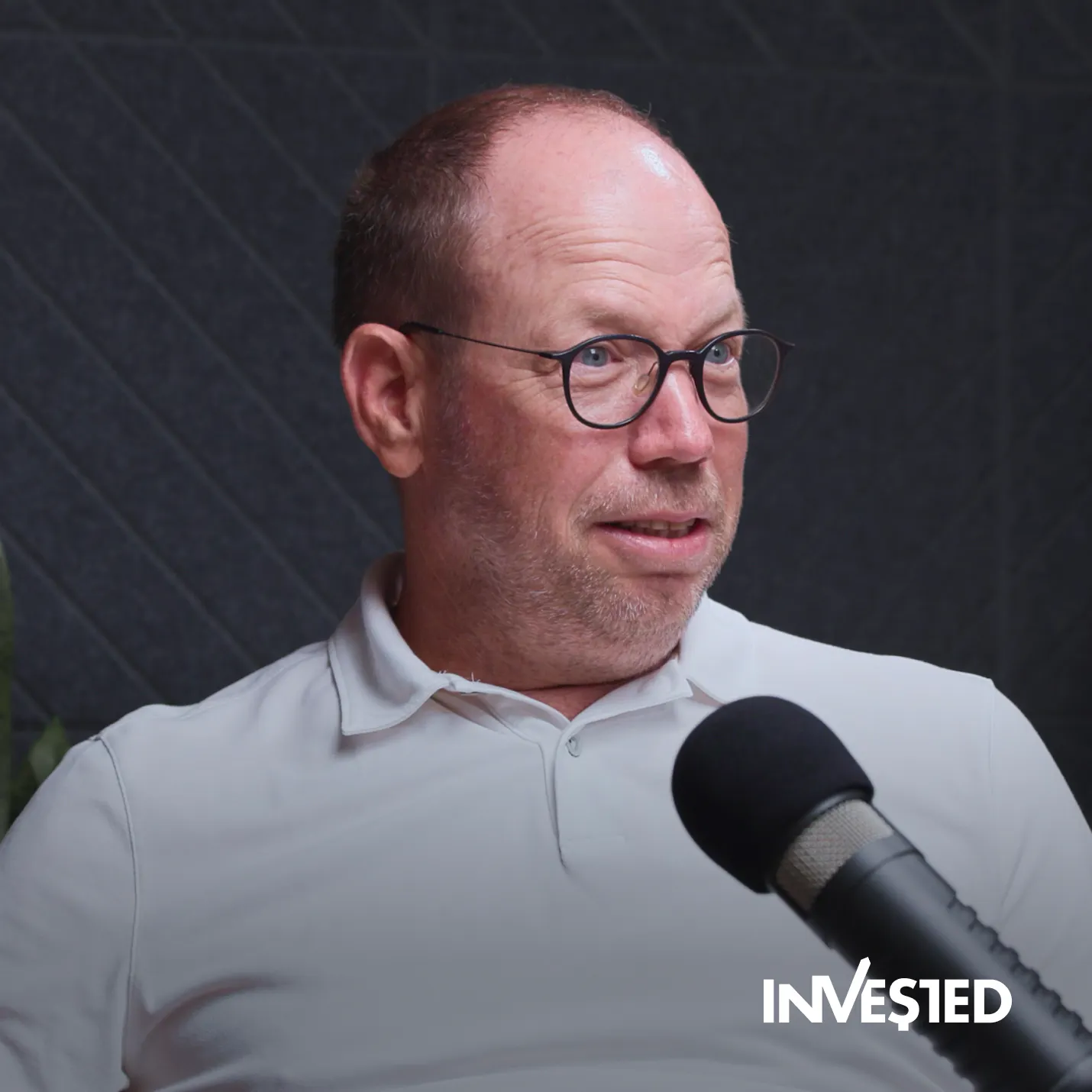
On this episode of Invested, Michael Eisenberg sits down with Gili Raanan, Founder of Cyberstarts, inventor of the CAPTCHA, and chairman of Wiz - whose $32 billion acquisition by Google ranks among the largest venture-backed exits of all time.
When Gili left Sequoia in 2018, he made two decisions he now calls "idiotic": to invest only in cybersecurity, at a time when no one believed cyber could produce big outcomes, and to never ask founders a single question about their technology, product, or business idea. Instead, he asks about their mothers and their childhoods - looking for people who faced real hardship, overcame it, and showed early signs of greatness.
In this candid conversation, Michael and Gili unpack how Gili decides to invest after a single conversation, what made Assaf Rappaport special (starting with the meeting he never showed up to), and why Gili has zero concern that cyber has run its course. They also go deep on the catastrophic risks of AI, the race toward a zero-vulnerability world, why governments must adapt or fall behind, and what CAPTCHA looks like in the age of AI agents.
They discuss:
Why Gili bet everything on cybersecurity when investors stayed away
Why he never asks founders about their technology or product
The childhood signals that point to great founders
The Wiz founder who stood him up - and why he never forgot it
Letting founders make the call on a multibillion-dollar decision
Why cyber is far from running its course
The "very dark decade" of AI-driven cyber risk
AI that refuses to shut itself down, and the race to zero vulnerabilities
Why governments that don't adopt AI risk falling behind
Inventing CAPTCHA - and why it never found a business model
What makes us uniquely human in the age of AI
How October 7th changed his investing and led him to Hapoel Tel Aviv
Gili Raanan is a distinguished cybersecurity expert who has proudly invested and mentored many of the most successful cybersecurity companies in the world, including Wiz, Armis, Fireblocks, Island, Cyera & Upwind among many others. In 2018, he founded Cyberstarts, an early-stage venture investing fund, with a clear vision: to accelerate the development and delivery of the best solutions in the cybersecurity industry.
Cybersecurity has been Gili's life's work since he served in Unit 8200, where he won the Israel Defense Presidential Prize in 1996 and the Israeli Intelligence Forces Innovation Award in 1992. An engineer by training, Gili is widely recognized as the inventor of the CAPTCHA, helped build the first WAF (web application firewall), and holds 10 other US patents in the fields of security and application management. After his military service, he built two enterprise software companies that were acquired by EMC and IBM. In 2009, he joined Sequoia Capital, where he led the firm's cybersecurity, internet, mobile and technology investing in Israel for nearly nine years as a General Partner before leaving to build Cyberstarts.
Under Gili's leadership, Cyberstarts has raised more than $720 million across 5 funds and made 28 investments to date with a combined company valuation of $55 billion, with notable exits including Noname, Axis, Bionic, Dazz, and Avalor. Gili currently sits on 10 company Boards and is a minority owner in Hapoel Tel Aviv, his favorite basketball team.
If you want to understand how one of the world's most successful venture investors picks founders, why Israel has become the global brand for cybersecurity, and what AI means for the future of security, this episode is essential viewing.
Please rate this episode 5 stars wherever you stream your podcasts!
KEY TOPICS
00:00 - Intro
02:26 - Two "Idiotic" Decisions
06:14 - Why He Skips the Smartest Kid
09:39 - Investing After 10 Minutes
10:54 - Founders Are a Gift Box
14:14 - Growing Up Misunderstood in Kfar Saba
16:23 - Assaf Rappaport: The Wiz Founder Who Stood Him Up
20:06 - Passing on a $23B Offer
21:41 - Zero to One, 50 Times
23:53 - Has Cyber Run Its Course?
27:07 - A Dark Decade for Cybersecurity
28:24 - The AI That Won't Shut Down
32:13 - Governments Must Adapt or Fall Behind
36:24 - Inventing CAPTCHA
38:07 - Why CAPTCHA Never Made Money
41:35 - How October 7th Changed Him
43:21 - Why He Bought Into Hapoel Tel Aviv
RESOURCES
Follow Gili on LinkedIn - https://www.linkedin.com/in/giliraanan/
Follow Gili on X - https://x.com/giliraanan
Subscribe to Invested: https://content.aleph.vc/invested
Learn more about Aleph: aleph.vc
Sign up for Aleph’s monthly email newsletter: https://newsletter.aleph.vc/
Subscribe to Aleph’s YouTube channel: https://www.youtube.com/@aleph-vc/
Follow Michael on Twitter: twitter.com/mikeeisenberg
Follow Michael on LinkedIn: https://www.linkedin.com/in/mieisenberg/
Follow Aleph on Twitter: https://x.com/aleph?s=20
Follow Aleph on LinkedIn: https://www.linkedin.com/company/aleph-vc/
Follow Aleph on Instagram: https://www.instagram.com/aleph.vc/
CREDITS
Executive Producer: Erica Marom
Producer: Sofi Levak, Dalit Merenfeld
Video and Editing: Nadav Elovic
Music and Creative Direction: Uri Ar
Content and Editorial: Jackie Goldberg
Design: Nimrod Sapir

On this episode of Invested, Michael Eisenberg sits down with Douglas Atkin, former Global Head of Community at Airbnb and author of The Culting of Brands, for a conversation about why people join cults, what that reveals about brands and politics, and how you build something people genuinely belong to. Douglas explains what he found when he set out to study the most extreme forms of belonging — that cult members are almost always ordinary, well-educated, socially capable people, and that they join, stay, and leave for exactly the same reasons as members of brand communities.
Michael and Douglas trace that insight from a focus group of teenagers talking about sneakers, to Meetup, to Airbnb — where Douglas spent three and a half weeks interviewing hundreds of hosts and guests and came back with the purpose that still runs the company: create a world where anyone can belong anywhere. He tells the story of what it cost to live that purpose, from taking the Attorney General of New York to court over a subpoena for 15,000 hosts’ data, to giving two non-marketers veto power over a marketing hire, to Airbnb turning away over a million would-be customers who wouldn’t sign its core values.
They also go deep on the darker mechanics of belonging: how demonization defines a group and manufactures solidarity, why the far right has run that playbook so effectively, what the decline of religion has to do with the rise of cultic politics, and what Douglas would actually prescribe for the loneliness epidemic.
They discuss:
Why the people who join cults are completely normal — and why that matters
The four Ds of difference, and why a cult is a new idea while a sect is a splinter
How demonization creates belonging by defining the in-group and inventing a threat
Why brands took over religion’s role, and why politics is now taking over from brands
The first golden rule of community: rub your members together until they get sticky
Why it takes showing up four times before a community becomes hard to pull apart
How Airbnb found “Belong Anywhere” by talking to hundreds of hosts and guests
Why a purpose is only real if it costs you something in the short term
The New York subpoena fight, and organizing hosts into political activists
Core values interviews with veto power, and turning away a million customers
The community commitment curve, and how to move people from clicking to face-to-face
Why working from home was a bad idea, and what actually treats loneliness
Douglas was ‘Global Head of Community’ at Airbnb, on its Leadership Team and was also ‘Architect of Purpose, Culture and Core Values’. He worked at Airbnb from 2012-2017 during its hyper-growth years. He led the development of Airbnb’s Purpose to ‘Create a world where Anyone can Belong Anywhere’. He also led all Community initiatives including grass-roots organizing and Movement-making techniques to mobilize Airbnb Hosts and Guests to take political action that changed laws to recognize home sharing.
He was Co-Founder of ‘Peers’, a movement for the Peer-to-Peer economy.
Douglas was the author of ‘The Culting of Brands: Turn your Customers into Believers’.
He Co-Founded Purpose, an organization that creates Movements, and was on the Board of one of its creations: AllOut, the world’s first and largest LGBTQ rights Movement.
He was Partner and Chief Community Officer at Meetup in 2007-8.
Prior to all this Community, Purpose and Movement-making stuff he was a Branding expert and Strategic Planner at several leading London and New York firms.
Chairman of the U.S. Account Planning Group for three years.
If you want to understand community, cults, purpose, culture, movement-making, and why belonging is both the best and the most dangerous thing about human beings — this episode is essential listening.
Please rate this episode 5 stars wherever you stream your podcasts!
KEY TOPICS
00:00 - Intro
01:25 - “Loyalty Is Dead. Branding Is Over.”
03:49 - The People Who Join Cults Are Normal
06:20 - How Flickr’s Founders Pulled Him Into Tech
08:33 - Why Apple Fans Talk Like Missionaries
11:20 - Cults vs. Sects: The Four Ds of Difference
13:25 - How Demonization Creates Belonging
16:45 - The Far Right’s Demonization Playbook
18:50 - Cultic Politics and the Decline of Religion
24:50 - “Rub Your Members Together Until They Get Sticky”
28:56 - The Breakfast That Led to Airbnb
31:20 - How “Belong Anywhere” Was Born
32:30 - New York Subpoenaed 15,000 Hosts
35:54 - Obama’s Organizers Trained Airbnb Hosts
43:48 - The Interview That Can Veto Your Hire
45:43 - Airbnb Turned Away a Million Customers
47:08 - The “Equal Opportunity Genitalia” Logo
49:05 - Burnt Out at the Top of Hypergrowth
52:12 - Working From Home Was a Disaster
52:34 - The Community Commitment Curve
53:51 - Curing the Loneliness Epidemic
57:58 - 29 Rights, 29 Countries, One Movement
61:19 - The Dark Side of Strong Community
RESOURCES
Follow Douglas on LinkedIn - https://www.linkedin.com/in/doatkin/
Follow Douglas on X - https://x.com/datkin
Read The Culting of Brands - https://www.penguinrandomhouse.com/books/292144/the-culting-of-brands-by-douglas-atkin/
Subscribe to Invested: https://content.aleph.vc/invested
Learn more about Aleph: aleph.vc
Sign up for Aleph’s monthly email newsletter: https://newsletter.aleph.vc/
Subscribe to Aleph’s YouTube channel: https://www.youtube.com/@aleph-vc/
Follow Michael on Twitter: twitter.com/mikeeisenberg
Follow Michael on LinkedIn: https://www.linkedin.com/in/mieisenberg/
Follow Aleph on Twitter: https://x.com/aleph?s=20
Follow Aleph on LinkedIn: https://www.linkedin.com/company/aleph-vc/
Follow Aleph on Instagram: https://www.instagram.com/aleph.vc/
CREDITS
Executive Producer: Erica Marom
Producer: Sofi Levak, Dalit Merenfeld
Video and Editing: Nadav Elovic
Music and Creative Direction: Uri Ar
Content and Editorial: Jackie Goldberg
Design: Nimrod Sapir

Comments

Download from Google Play

Download from App Store
 United States