


 Claim Ownership
The Hilliard Beacon Podcast
Subscribed: 0Played: 4
Subscribe

© Franklin Street Creative
Description
As The Hilliard Beacon our only goal is to help keep you informed and develop a reliable source of steady information and reporting for you - our community.
hilliardbeacon.substack.com
hilliardbeacon.substack.com
156 Episodes
Reverse

Paul LambertOriginally published on EducateHilliardEver since the 1980s, when the population of the Hilliard School District began exploding in response to the Penick vs Columbus Board of Education desegregation lawsuit, we’ve heard the phrase “Hilliard Schools, Columbus Taxes.”It was a powerful sales tool for the new home builders who were banging out houses by the thousands in the parts of the Hilliard School District which had been annexed into the City of Columbus. I remember hearing that phrase in 1979 when we bought our first home in Golfview Woods, one of many neighborhoods which fall into this category.A common misunderstanding is that folks in the Columbus part of the school district pay lower school property taxes, and there has often been some amount of outrage expressed about this mistaken belief - like those homeowner weren’t paying their fair share. More on this later….But did you know that today, there are folks buying new homes in the Columbus part of the Hilliard School District who will pay higher property taxes than most of the rest of us? Read on if interested…The truth is that everyone who owns property in the Hilliard School District pays the same millage rate to the District. Yes, there are tiny differences due to the property tax stabilization laws from the 1970s, often called “HB920,” which give rise to the “Reduction Factor” and “Effective Rate” we all see on our property tax bills. But the differences are truly tiny.Yet most folks who live in the Columbus part of the district do in fact pay a materially smaller property tax rate than the rest of us. That’s because they don’t pay any property tax to a township. When the City of Columbus annexes parcels, generally at the request of a home developer, they remove those parcels from whatever township they had been part of beforehand. If your Parcel Number, as assigned by the Franklin County Auditor, starts with 560, which is your “Tax District,” then you are in Hilliard Schools and the City of Columbus, but not in a township. So you don’t pay any township property tax.But this is starting to change. Because of the way the annexation laws work, developers who want quick decisions and no resistance from the County Board of Commissioners can use an annexation method called “Expedited Type 2 Annexation,” which requires the parcels to remain in the township. This arrangement worked out between Ohio’s townships and the developers is meant to ensure that the townships continue to have enough revenue to fund the services expected by the people of the township who aren’t going to get annexed into a city.About half of the Hilliard School District is within the City of Hilliard, and nearly all of the City of Hilliard is within Norwich Township. It has been this way for decades because the Fire and Emergency Medical Services for the community has been and continues to be provided by the Norwich Township Fire Department. So folks who live in the City of Hilliard, or the unincorporated areas of Norwich and Brown Townships, pay a township property tax to fund both township services and the NTFD.When Heritage Preserve was annexed into the City of Hilliard, it was a Type 2 annexation, and consequently remained part of Brown Twp. The folks who live there pay Brown Twp property taxes, and Brown Twp pays Norwich Township for the services of the NTFD. A few years ago, development began at Sugar Farms/Renner South, on Alton-Darby Rd north and south of Renner Rd. Because of the water/sewer services agreements with the City of Columbus (this is a whole big discussion all by itself), these parcels were annexed into the City of Columbus, not Hilliard. It’s still in the Hilliard School District (as a result of the Win-Win Agreement, another key factor in how central Ohio developed), and because it also was a Type 2 annexation, it’s now City of Columbus, Hilliard Schools and Norwich Township. This is the first development of this configuration.So it means that folks who buy homes (or rent apartments) in these developments pay Columbus, Hilliard and Norwich taxes. And under a contract between the City of Columbus and Norwich Twp, they are served by the Norwich Township Fire Department as the primary responders, a primary reason why Station 84 next to The Well was built. Police protection and other city services are provided by the City of Columbus..But that’s not all.When new developments go in, there is a need to build significant infrastructure to support it: water/sewer lines, electrical service, telecommunication, streets and sidewalks. The City doesn’t want to pay for this stuff - that just burdens everyone else in the City. Nor does the developer want to pay for it - that just increases what price they have to sell the new home for and/or decreases their profit.The Hilliard TIF tiff…In some cities, a mechanism called Tax Increment Financing (TIF) is used. A TIF can be applied to both residential and commercial development. Many commercial buildings in Hilliard were constructed with a TIF, especially along Cemetery Rd and Trueman Blvd. With a TIF, a portion of the property taxes that would be paid to the school district, township and other local governments is diverted to the City instead. The City then uses that money to reimburse the developer for the cost of putting in all the infrastructure mentioned. Past leaders of the City of Hilliard felt that taking away tax revenue from the School District and the Fire Department was okay because these new commercial buildings would generate no kids for the schools and few emergency response calls for the fire department. I believe that was flawed public policy, but that’s another conversation.Many would say that this TIF mechanism is a handout to the developers, and it probably is. It’s also a valuable tool that our Economic Development team can use to compete for important commercial projects. Those who want to completely do away with abatements don’t understand that we have to compete for valuable commercial developments - which help fund our city services - with other towns all around the country. If we don’t offer abatements in a prudent manner, we’ll likely get 100% of nothing. But abatements don’t make sense for residential development. We’re not competing for these developments. In fact in many cases, the current residents of the community would be happy if residential development stopped. That’s the reason a group of us got together and fought (successfully!) for a City Charter change to restrict the power of the City to use TIFs for residential development. The current version of this charter section (12.10) requires the City to come to an agreement with the Hilliard Schools and Norwich Twp before putting a TIF on a residential development, and this was first used for the TruePointe development. Consequently, both Hilliard Schools and Norwich Twp receive annual ongoing compensation for approving this TIF. Before this charter change, they likely would have received nothing.But a TIF still means that in a way, every taxpayer in the School District and the Township are participating in the cost of the new infrastructure. The school and township funding diverted has to be made up with more property taxes on everyone. Please don’t fill the comments with “Ax the Tax” rhetoric. That’s a topic for another post.There is another solution: a mechanism defined in Section 349 of the Ohio Revised Code called a New Community Authority. This is a very limited form of local government which can be enacted for a new development. There have been a couple set up, including ones for Heritage Preserve and Tarleton Meadows.Significant among the statutory powers of an NCA is the ability to levy property taxes solely on the authority of the governing Board of Trustees. There are limitations as to the purposes for which this tax revenue can be used - primary to construct the necessary infrastructure. In the beginning, there are no homeowners on this Board, as none of the parcels have yet been sold to new homebuyers. But as homes are purchased, the composition of the Board shifts to having more homeowners. [Disclosure: I have been (re)appointed by the Columbus City Council to sit on Sugar Farms/Renner South Board of Trustees]For the Sugar Farms/Renner South NCA, the Board has set the property tax rate to 6.5 mills. And this is a Special Assessment, not subject to the Reduction Factor. So for a home priced at $500,000, this would add approximately another $1,100 to the normal annual tax bill.It also means that the cost of the infrastructure for this development is being paid for by the folks buying homes there, and not the rest of us.That seems fair.HBAC #172Jordan, Kevin and Tim briefly cover City business over the course of about a week. Sometimes things move just that quickly! Council Retreat 9/25 & 269/28 Council Meeting and DSA presents non-cooperation campaign Tax Incentive Review Ccouncil - Ten Pin 9/28 to expected 10/12 cancellation actionCity Budget ‘27 (public hearing set for 10/26 @6pm)The Hilliard Beacon is a reader-supported publication. To receive new posts and support my work, consider becoming a free or paid subscriber. This is a public episode. If you'd like to discuss this with other subscribers or get access to bonus episodes, visit hilliardbeacon.substack.com/subscribe

We were happy to renew an annual tradition by hosting Artistic Director of the Hilliard Arts Council, Robin Brenneman, for another fun conversation around the thrill of putting on a show…Upcoming SeasonA Renewal of VoiceWe discussed Robin’s commitment to vocal performance and a re-emphasis on the multiple choir programs on offer at the Arts Center for performers young and old. Click the image below to visit the Choir website (with interactive calendar) or click to head to online registration for the Hilliard Community Choir right here!Diversifying the ExperienceThe Arts Council has matured alongside the Civic and Cultural Arts Center (est. 2016) with various elements coming forward over the last ten years. Currently showcasing the Art of Tammy Becker, the gallery at the CCAC is now fully programmed and features a rotating display of art in various formats throughout the year. Joining the diversification effort this year was the Summer Short Film Festival organized by Hilliard Grads and performers.The Power of the StageWe wrap with Jordan blubbering about upcoming film Elsinore but Robin rescues it and leaves us with her usual eloquent thoughts on the career she has spent helping creative people of all ages discover and share some of the best parts of themselves.The Hilliard Beacon is a reader-supported publication. To receive new posts and support my work, consider becoming a free or paid subscriber. This is a public episode. If you'd like to discuss this with other subscribers or get access to bonus episodes, visit hilliardbeacon.substack.com/subscribe

On this edition of the Audio Companion we sift through a full week of Hilliard happenings and big decisions affecting you!In a first since 2011…After a brief discussion of the shooting we reflect on our chat from last week with other local journalists and share our thoughts on their approach and our collaborative effort. Kevin reminds us that he usually looks to step up the posting rate with Council back in session and setting the pace. So, keep an eye out for additional writing on the website and your email inbox.Tubi TimeKevin - Refuses the siren song of Tubi for now - Tim offers to come over and download the app for himJordan - The Iron Circle - a Bruce Lee inspired fever dream memorable (to me) only for Eli Wallach’s brief, bizarre appearance. Jordan also watched Krull for some reason.Tim - The truly unimpeachable Rambo: First Blood, some assorted so-so documentaries and from the category “confusing VHS your grandparents owned,” The Giant of Thunder Mountain. Richard Kiel and Jack Elam? What do you mean this was a limited release?Housing Study IssuedSharing a link to the final product of the Housing Steering Commission’s work detailing Hilliard’s ongoing approach to adding rooftops in the 43026. We hope to return Jackie Yeoman (and hook up her microphone directly, this time), Vince Papsidero or Curtiss Williams to speak to the document directly but wanted to share this piece of information immediately with more analysis to come. This is precisely the type of long term story the Beacon loves to cover and we’re happy you’re here too.Electric Aggregation Agreement Ended 20:34 - 28:30We discuss the timing of the decision and whether or not a “guarantee of best price” was really all the Agreement was about. Given that the program was instituted in the rocky 2022 post-Covid economy and still saved 4.5 million dollars, one wonders at the logic of abandoning that same program with traditional energy markets in total freakout over data centers and the Strait of Hormuz.Jordan suggests a program that won approval with 61% of the vote was about embracing a community approach, using pooled buying power to create savings through concerted choice and gradually changing the shape of our electricity consumption.Instead of those embraced ballot values, residents are now back in the deregulated Ohio energy buying system they voted their way out of and comparing Apples to Apples at the most volatile moment in market memory. The city anticipates a traditional price dip in October.Hilliard Withdraws Appeal to Ohio EPA28:40 - 33:20Kevin’s reporting on the Fuel Cell issue and our subsequent discussion highlight the shifting ground of these major development decisions.We Talk:* State Legislature impacts* Standing issues * Ohio Power Siting Board* Increasing polarization at earlier and earlier points in the processFlock Cameras Paused33:20 - 43:20As national backlash mounts over ALPR technology and its deployment Hilliard City Council has chosen to pause the contract and re-evaluate the relationship.Jordan discusses the case of Lindsey Isaacs, a Florida woman wrongfully jailed for 13 days after a months long police investigation.Interestingly, Lindsey herself places blame on Police misuse and mistakes rather than the technology itself. It’s noted that Lindsey’s defense used a Flock hit on her vehicle in a certain location to actually provide her team with the ability to plainly state she could not have been at the scene at the time of the accident.Just one of an increasing number, it’s a cautionary tale showing that the entire structure, from security-vulnerable camera networks to hastily entered search terms, warrants significantly greater scrutiny.The Hilliard Beacon is a reader-supported publication. To receive new posts and support my work, consider becoming a free or paid subscriber. This is a public episode. If you'd like to discuss this with other subscribers or get access to bonus episodes, visit hilliardbeacon.substack.com/subscribe
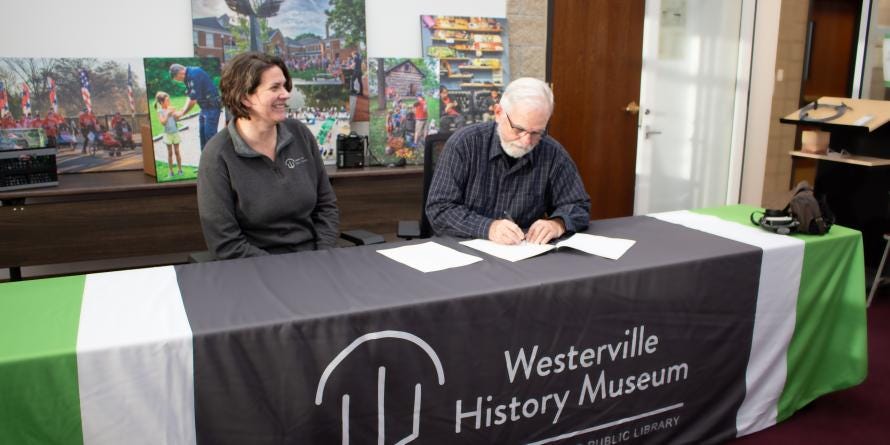
Telling it like it is…For the latest HBAC Jordan, Tim and Kevin called in the big guns, bringing together three pioneering local publishers for a conversation about the state of news and reporting in our region. We spend an hour with the the trio of bestsellers describing their individual efforts to rekindle the relationship between residents and good journalism in each of their communities.Gary Gardiner of Westerville News, Joe Case of Marysville Matters and William Lutz of Civic Capacity each came to Substack from different backgrounds but their reasons for picking up the local journalism torch are similar and quite related to our own.Gardiner spent decades in newspaper and Associated Press photography before launching Westerville News after Gannett closed its local weeklies. Case retired from a career that included radio journalism, statehouse reporting and corporate public affairs before turning his attention to Marysville and Union County. Lutz, a former elected official and local-government administrator, began Civic Capacity after hearing residents say they wished they better understood how their communities operated.Each drawn to generating reliable, recurring reporting the group spends the majority of the conversation discussing pieces and choices that have shaped their attempts to fill the gaps created following the collapse of the news environment locally and regionally.Topics Discussed:* Replacing the trust of ‘The Paper’* More than publishing information / signal to noise ratio* It starts with showing up* Stories under the story / the long tail* Regional overlap and development intensity* Helping residents to understand function of government and how to engage…* Audience growth and sustainability practices* Collaboration* Where local journalism is headed next and individual growth plans (including our own!)Each of these authors have already broken major stories in their community on their platforms. Each represent what is merely the tip of the iceberg relative to the effort necessary to meet the journalistic challenge of the 21st century.Will you be the next writer, photographer, resident to take up the banner?The Hilliard Beacon is a reader-supported publication. To receive new posts and support my work, consider becoming a free or paid subscriber. This is a public episode. If you'd like to discuss this with other subscribers or get access to bonus episodes, visit hilliardbeacon.substack.com/subscribe

We had a great time talking with pal and local legend Matt Barnes for this edition of the HBAC. We go through the arc of Matt’s career and unearth some great stories and bits of wisdom for people taking the unconventional route through working life. Risk, Transition, and Making it GoWe talked first about the excitement and intensity that drives a lot of career change. If lucky, it’s a thrilling moment of fulfillment but under stressful conditions it becomes more difficult. Repetition, support, and consistency personally all on top of market conditions and capital requirements makes for a powerful change agent good and bad.When you’ve finally started the thing and become an expert at all it requires - that’s merely the first step. Jeni’s Splendid Ice CreamOne of Matt’s first major career stops was Jeni’s - but not the juggernaut they are today. From his entry point into the company (a spot handwriting sample) through his “recruitment” as a lead sales person for the company (going from 35 locations to over 450), Matt’s run through the early and massively expansion oriented phase of this national company taught him a lot about scale and logistics.Aside from brute force and a little Charlie Day “can-do” dry ice shipping and in-store sampling were transformative to the business of moving premium ice cream, charging premium prices, and locking in committed buyers and fans.Tubi TimeWith such a pop culture enthusiast in the house our run through Tubi this week was extra enjoyable. Make sure to check out some…SOME…of the following.Tim - Stunt Rock, Electric Dragon 80,000 volts, TerminusJordan - Fistful of Dollars, The Good, The Bad, and The Ugly, For a Few Dollars MoreKevin - Discusses Svengoolie Movie Night - Still won’t watch TubiMatt - Brings up the Iron Eagle clubhouse (not streaming on Tubi - But IE2 is!) in the context of his next business venture but we also take time to talk the influence of regional cultural icons like Ghoulardi or Big Chuck and Little JohnLeisure Club - From Art Space to “Third Place”From its beginnings in the influential 400 West Rich arts hub - Leisure Club was always an evolving atmosphere. Tapping into mid-century modern aesthetics and nostalgia made for a place that grew into a social, cultural hub the wider scene lacked and that social media or exclusively online spaces could never match.Barnes is reminded of rooms full of people connecting and colliding over shared memories and a cold beer. The sense that Leisure Club was defining a social scene just prior to the devastating re-adjustment of the Covid-19 pandemic was very real.Subsequent pivots and re-formats were successful but very different. Vintage brands, merchandise, alternate locations with slight variations on the theme. All these efforts were adding to the Leisure Club brand and presence but subtracting from Matt Barnes.The New StyleThe group then move into discussion of suburban development and how small owners and entrepreneurs would instantly be better stewards of markets and communities without landlords and developers becoming permanent rent extractors.Using his own experience, after 17 years of tenancy and more than a half million in rent, Jordan is no closer to owning the location he’s made profitable while other addresses in the same plaza have turned over and over or remained vacant.He suggests, if a massive tech park can be spun up with 10 year 75% tax abatements at city expense then other models and modes of commercial ownership in traditional sectors could be developed across the city’s neighborhood geography for less.Jordan concludes, developing commercial land bank and trust models - providing alternate paths to ownership stakes and shared risk financing - would go a long, long way towards providing 21st century Hilliard small business with new, stable growth.Hilliard’s RiseWe wrap the conversation with more Hilliard talk: The Mill Run renaissance, parks and trails, housing and amenities growth…all emphasizing the point Matt made at the outset. Change is the only constant and communities are not static. As we have always said at the Beacon the variable that matters is YOU. Do you know about the bulldozers?The data centers?The scooter laws?Is your life being considered? Your voice heard and honored in council chambers?Will the next Hilliard be yours?The Hilliard Beacon is a reader-supported publication. To receive new posts and support my work, consider becoming a free or paid subscriber. This is a public episode. If you'd like to discuss this with other subscribers or get access to bonus episodes, visit hilliardbeacon.substack.com/subscribe

Comments

Download from Google Play

Download from App Store
 United States