


 Claim Ownership
The Picture of Wealth
Subscribed: 2Played: 47
Subscribe

© 2023 The Picture of Wealth
Description
What if wealth wasn’t just about what you have—but how you live?
Hosted by Dustin Serviss—entrepreneur, author, and lifestyle design specialist—The Picture of Wealth is a curated lab of ideas, conversations, and experiments exploring the intersection of money, performance, longevity, and lifestyle design.
This isn’t another financial podcast obsessed with spreadsheets and stock picks. It’s for high-performing business owners, professionals, and families who want to optimize their life’s work and live with intention—today.
From blood panels to business strategy, family legacy to financial independence, you’ll learn what it takes to thrive across every area of life—without burning out, selling out, or settling. Real guests. Big ideas. Tactical tools.
This is a documentary of modern thinkers building legendary lives.
Welcome to The Picture of Wealth.
Hosted by Dustin Serviss—entrepreneur, author, and lifestyle design specialist—The Picture of Wealth is a curated lab of ideas, conversations, and experiments exploring the intersection of money, performance, longevity, and lifestyle design.
This isn’t another financial podcast obsessed with spreadsheets and stock picks. It’s for high-performing business owners, professionals, and families who want to optimize their life’s work and live with intention—today.
From blood panels to business strategy, family legacy to financial independence, you’ll learn what it takes to thrive across every area of life—without burning out, selling out, or settling. Real guests. Big ideas. Tactical tools.
This is a documentary of modern thinkers building legendary lives.
Welcome to The Picture of Wealth.
207 Episodes
Reverse

Selling a business is rarely just a financial transaction.For the owner, it can also mean letting go of identity, routine, purpose, status and something they may have spent decades building.In this solo episode of The Picture of Wealth, Dustin Serviss explores the human side of selling a company — and why understanding the seller’s psychology can matter just as much as understanding valuation, deal structure and financing.The episode looks at obsession, perception and Wayne Dyer’s idea of “The Shift,” and asks what happens when the same drive that helped someone build a successful business is suddenly left without a target.For business owners considering an exit, this is a chance to think beyond the purchase price.For M&A professionals, bankers, advisors, investors and private equity teams, it is a reminder that some of the most important information in a transaction may never appear in the financial statements.Who is the owner without the company?What are they really afraid of losing?What does Monday morning look like after closing?And what deserves their ambition next?The numbers matter.So does the person sitting across the table.
Come on a journey outside normal for a second. In 2189, money still matters. Just not very much. Artificial intelligence can build companies, negotiate financing, manufacture products and restructure debt before lunch. Energy is effectively unlimited. Knowledge is everywhere. Humanity has solved scarcity. Or so it thinks.In this TPOW Lab Note, Dustin Serviss steps into a fictional future where the world's newest asset class isn't land, capital or information. It is proximity to rare people whose judgment, curiosity and unpredictability cannot be easily modeled.Billionaire Elias Vale can buy planets, weather and almost perfect physical access to one of these “Uncomputed Humans.”What he cannot buy is a relationship.The story explores a question that may become increasingly important as AI makes intelligence and execution cheaper:What becomes valuable when almost everything else becomes abundant?Perhaps the advantage isn't knowing more. Perhaps it is choosing the people, conversations and environments capable of changing what you know. A speculative TPOW story about artificial intelligence, human judgment, relationships, networks, wealth and the increasingly valuable difference between buying access and actually belonging in the room. Choose your orbit carefully.Key Questions:what becomes valuable when AI makes knowledge abundantwhy human judgment becomes more valuable because of AIwill AI make information less valuablehuman judgment versus artificial intelligence in businesshow AI changes competitive advantage for business ownerswhy relationships matter more in an AI economyhow successful entrepreneurs build valuable networks
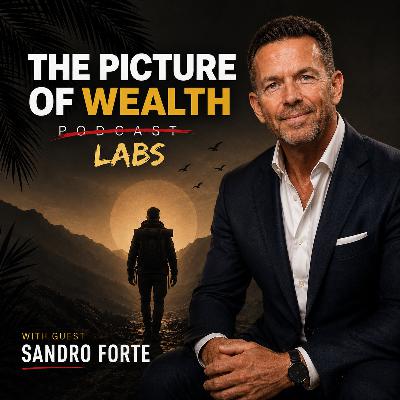
You built the company. You created the wealth. You finally completed the exit. But when the title, the employees and the Monday morning responsibilities disappear, what is left? In this episode of The Picture of Wealth, Dustin reconnects with longtime mentor Sandro Forte, a globally recognized financial professional, entrepreneur and speaker who has spent nearly four decades advising business owners, prominent families, professional athletes and high-profile clients.Their conversation goes far beyond investment returns.Sandro shares the story of a business owner who sold his company for £45 million after spending 30 years leading 300 employees, only to discover that financial freedom did not automatically create purpose, identity or emotional peace.Dustin and Sandro explore the vulnerable side of selling a business, why founders often underestimate the psychological impact of an exit, and why the best planning begins with a conversation rather than a financial questionnaire.They also break down a practical wealth-bucketing strategy: protect enough capital to secure your family and lifestyle, then create a separate pool of entrepreneurial capital that allows you to invest, build and take calculated risks without endangering the life you worked decades to create.The conversation moves into private equity, confidential business-sale processes, choosing the right clients, the danger of transactional advice and why AI will replace many financial tasks, but not the human relationships required during life’s most consequential decisions.Sandro explains why business owners must establish their rules of engagement early, why being prepared to walk away can strengthen a deal, and why long-term commercial success often comes from refusing to treat people like transactions.The episode closes with Sandro’s “horizon goal”: an ambitious objective placed far enough into the future that it forces you to grow. At 58, his goal is to enter a physique competition and appear on the cover of a men’s health magazine by age 60.Because even when you miss an ambitious target, you may travel further than you ever would have with a comfortable one.This episode is for founders preparing to sell, entrepreneurs searching for their next chapter, advisors navigating the age of AI and anyone who has created financial success but is still designing what that success is ultimately for.
Has inflation actually made us poorer—or has it made us more hesitant to act?Rising prices dominate today's headlines, but Dustin Serviss believes the bigger story isn't inflation itself. It's the quiet shift in how we think about opportunity.In this thought-provoking solo episode of The Picture of Wealth, Dustin explores why so many entrepreneurs delay starting businesses, making investments, or pursuing acquisitions while waiting for "better conditions." Drawing on lessons from Canadian business owners, private equity investors, and decades of economic history, he argues that uncertainty has never prevented exceptional businesses from being built—it has simply changed who is willing to build them.This episode examines the difference between discipline and paralysis, why conviction often matters more than perfect timing, and how successful operators create value while others wait for certainty.Whether you're an entrepreneur, investor, executive, or simply someone navigating today's economic uncertainty, this conversation offers a timeless framework for recognizing opportunity when everyone else is focused on fear.What You'll LearnWhy inflation may be changing our psychology more than our financesThe difference between caution and paralysis in businessHow private equity investors evaluate uncertaintyWhy some of Canada's best businesses were built during difficult marketsHow confidence built through competence compounds over timeWhy opportunity often appears ordinary before it becomes obviousA practical framework for recognizing opportunity during economic disruptionWhy long-term wealth is created by solving problems—not waiting for perfect conditions
Is kart racing really expensive—or are we measuring the wrong return on investment?When people discover that Dustin and his son spend weekends racing karts, the first response is almost always the same: "That must be expensive." But instead of accepting that assumption, Dustin decided to challenge it.After tracking every dollar—from chassis and engines to hotels, fuel, race tires, repairs, and practice days—he discovered something unexpected. The numbers told one story. The memories told another.In this solo episode of The Picture of Wealth, Dustin explores why we often obsess over the cost of experiences while completely overlooking their long-term return. Drawing inspiration from Formula One champion Lewis Hamilton's father, Anthony Hamilton, he reframes what it really means to invest in a child's future.This isn't an episode about motorsports.It's about confidence, discipline, family, intentional parenting, and understanding that some of life's greatest investments will never appear on a financial statement.If you're a parent, entrepreneur, or someone trying to build a richer life—not just a bigger bank account—this episode may completely change how you define value.What You'll LearnWhy "expensive" is one of the most misunderstood words in personal financeHow to think about the true return on experiencesLessons every parent can learn from Anthony Hamilton's commitment to Lewis HamiltonWhy confidence is built one experience at a timeHow shared challenges create stronger family relationshipsWhy memories often outperform material possessionsA different framework for evaluating where your money should go

Comments

Download from Google Play

Download from App Store
 United States