


 Claim Ownership
Africa Here and NOW
Subscribed: 15Played: 128
Subscribe

© Martine Dennis
Description
The conversation you've always wanted to have about Africa.Combining in-depth knowledge with exclusive analysis of events and trends affecting the continent. Our team has vast experience in Africa and has an extensive network of contacts from Cape Town to Cairo and from Addis to Accra, which will help us provide fresh commentary presented with wit and style.We believe there is a growing demand for accurate, incisive information about Africa and we are dedicated to asking the questions that matter and offering, at least, some of the answers.
Hosted on Acast. See acast.com/privacy for more information.
74 Episodes
Reverse
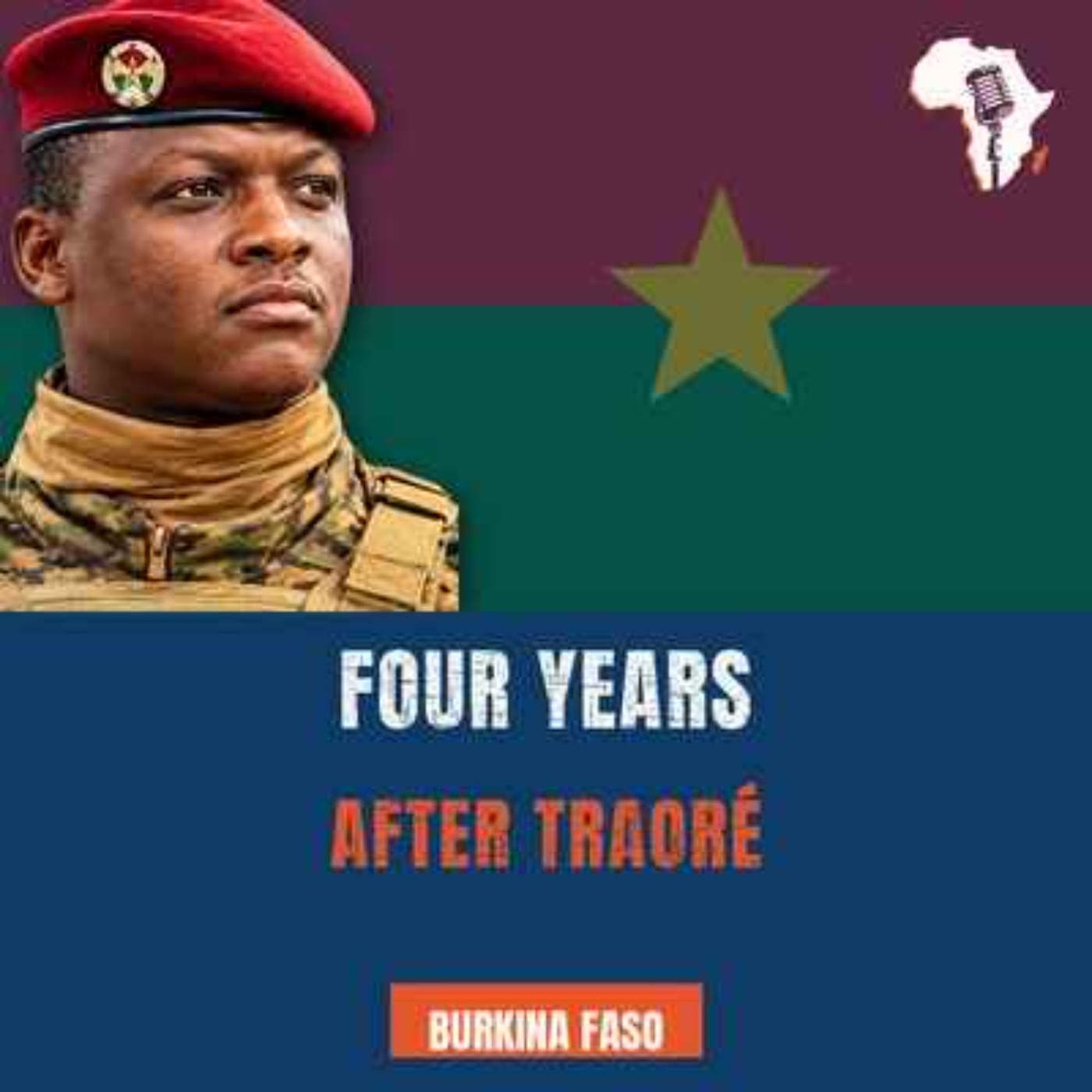
My Burkina Faso, Four Years After TraoréThis episode examines Burkina Faso four years into Captain Ibrahim Traoré’s rule, using a conversation with Dr. Lamourdia Thombiano, a soil scientist and writer from eastern Burkina Faso. It explores security, sovereignty, indigenous values, and the political mood in the country, with a strong focus on how many Burkinabe people see the changes firsthand.Dr. Thombiano argues that the country has more hope, cohesion, and national purpose than it did before Traoré took power, especially outside the cities. He also explains why many citizens view the current period less through the lens of elections and individual rights, and more through development, social unity, and cultural grounding.Key topicsDr. Thombiano says Burkina Faso feels more vibrant and politically engaged than it did four or five years ago.He links today’s patriotism to the legacy of Thomas Sankara, saying Traoré’s appeal partly comes from continuing Sankara’s unfinished project.Security remains a major challenge, but he frames it as part of a broader package that includes peace, social cohesion, development, and public confidence.He says the army’s morale has improved because soldiers are better equipped and supported by civilians who share information, food, and water.He argues that many Burkinabe people would prefer development spending on health, agriculture, and education over the costs of elections.He describes a shift toward indigenous governance, including traditional leaders handling disputes that are then recognized by the Ministry of Justice.He says Burkina Faso is moving toward a model where democracy is not only about elections, but about good governance and communal responsibility.He highlights concrete agricultural changes, including subsidized fertilizer, government ploughing support, and new crops such as coffee, cacao, plantain, banana plantain, and wheat.He says youth are being trained through “immersion patriotique,” with 65,000 young people reportedly trained this year in values like solidarity, hospitality, fairness, and service.On freedoms and repression, he argues that in Burkinabe culture the collective takes priority over the individual, so public speech is judged by whether it helps or harms the community.Chapters00:00 — Dr. Thombiano introduces himself and Burkina Faso’s new political reference points 00:56 — Traoré’s rise, his sovereignty message, and the promise to restore security 01:26 — Why many Burkinabe people feel renewed enthusiasm and national momentum 03:50 — Sankara’s influence and Traoré’s revolutionary legacy 04:20 — Security as part of a wider package of peace, cohesion, and development 05:19 — Why Sahel insecurity is viewed as a regional and global problem 06:20 — Improved army morale and stronger public support 07:18 — Dissolving political parties and delaying elections 07:47 — Indigenous values and traditional dispute resolution 09:16 — Democracy through a Burkinabe lens 10:41 — Why many people reportedly prefer development spending over election costs 11:09 — Mobile hospitals, rural healthcare, and agricultural support 12:07 — How Burkina Faso’s agricultural possibilities are changing 13:34 — Innovation, agricultural dynamism, and optimism 14:04 — Why optimism is stronger in rural areas 16:06 — Traoré’s hero status among young people 18:04 — French influence, Russian cooperation, and international alliances 19:59 — Burkina Faso as a country of hope and sovereignty 20:30 — “Immersion patriotique” and training a new generation 21:56 — Personal freedoms, collective responsibility, and cultural perspectivesNotable quotes“It’s a country of hope.”“The individual is at the service of the community, not the other way round.”“People realize the amount of money which is being used to organize election, they can use it for health, for agriculture, for education.” Hosted on Acast. See acast.com/privacy for more information.

Africa has 18% of the world's population and only 2% of its air traffic. RwandAir CEO Yvonne Makolo says the continent did that to itself.I speak to Yvonne about her nine years running Rwanda's national carrier — an airline that still isn't profitable, in a country of 15 million people with almost no outbound travel market, at a time when most African flag carriers have collapsed.She explains why Rwanda decided to build an airline anyway, how Kigali became a transit hub where more than half of passengers are just passing through, and that the long-delayed Qatar deal is still going through. She's blunt about what's holding African aviation back: taxes, fees, closed skies, restrictive visas, and a mindset that treats flying as a luxury for the rich.On being one of very few women running an airline, she has a sharp answer to the question she says she's always asked.And after nine years in the job, I ask her whether she'll still be doing it in ten.Yvonne says the question she's always asked — "what will you do to bring more women into aviation?" — is aimed at the wrong person. What did you make of her answer?Yvonne explains how Rwanda has used aviation as a strategic pillar for growth, why Kigali has become a growing transit hub, and how the airline’s ambitions tie into the country’s broader economy. She also reflects on the challenges facing African aviation, from high fees and restrictive visas to infrastructure gaps and geopolitical tensions.TagsRwandAir, Yvonne Makolo, African aviation, Kigali, Bugesera airport, Qatar Airways, Qatar Investment Authority, Ethiopian Airlines, open skies, Yamoussoukro Decision, IATA, AfCFTA, Rwanda, women in aviation, airline CEO, Africa Here and Now, Martine DennisThis is part of Africa Here & Now's special series on aviation including conversations with: Mesfin Tasew of Ethiopian Airlines, Kamil Al Alawadhi of IATA, Allen Onyema of Air Peace, Henok Teferra Shawl of Boeing Africa, Adefunke Adeyemi of AFCAC, and Nigeria's aviation minister Festus Keyamo.Key moments00:00 — Why Yvonne hopes the next generation takes over00:28 — Aviation and Africa’s unrealized potentialMartine introduces the special aviation series and frames the broader question of why African aviation still underperforms.00:51 — From technology to aviationYvonne shares her unusual career path from geography and environmental science into IT, telecoms, and aviation.02:33 — Entering a male-dominated industryShe describes the shock of walking into a room full of “grey suits” at her first IATA AGM.04:01 — The question women are always askedYvonne explains why conversations about bringing more women into aviation should involve men too.05:53 — Why Rwanda invested in a national airlineShe outlines the government’s deliberate decision to use aviation as a foundation for national development.06:22 — How the airline supports Rwanda’s economyTourism, exports, conferences, and sports tourism all benefit from the airline’s growth.08:20 — Measuring the value of a loss-making airlineYvonne discusses how the airline’s wider contribution to the economy matters as much as profitability.10:09 — Kigali as a hubMore than half of passengers are transit travelers, showing how Kigali is becoming a regional connection point.11:07 — Growth plans and new destinationsRwandAir is already competing internationally and plans to expand to more long-haul destinations.12:28 — Qatar Airways partnership13:23 — The new airport and future hub ambitions16:19 — Building aviation capacity in-house18:37 — Investing in aviation skills19:35 — Why African aviation is still underperforming22:23 — Why progress is too slowRwanda’s example shows what’s possible when the right policies are in place, but regional reform remains slow.23:16 — Fuel costs and geopolitical pressure24:36 — Navigating geopolitics25:34 — Looking aheadYvonne reflects on her future in the role and says it may be time for the younger generation to take over. Hosted on Acast. See acast.com/privacy for more information.

Days after Zambia went to the polls on 13 August, opposition leader Brian Mundubile sits down with me to describe a night he says he barely survived — soldiers at his gate, gunfire inside his home, and members of his camp shot or missing. What follows is a hard conversation about whether this election can be trusted at all, and what he'll do if the result doesn't go his way. And indeed, if it does.Mundubile's central charge is simple: the vote can't be called credible until someone explains, independently, what happened to the Gen 20 forms and the rest of the election material — and who had their hands on it. He describes what he says is a country on edge, an electoral commission he no longer trusts, a campaign he says was throttled, and a claim of victory he insists he never made.He describes the mood in Zambia as close to breaking point — soldiers on the streets, soldiers at the polling stations, soldiers at the tallying centres. Not a reassuring presence, in his telling, but an intimidating one.Then the attack. He says 70 to 80 army officers came to his home and opened fire inside the house. A former transport minister was hit, he says; so was his bodyguard. Others simply vanished — among them Bishop Trevor Mwamba. The government denied any of it had happened, he says, right up until observers and cameras turned up and documented the scene.His problem with the count comes down to custody. He says the Electoral Commission suspended announcing results and started calling in Gen 20 forms in a way that broke from normal procedure — and that military and intelligence officers should never have been anywhere near election material in the first place. So he won't accept a presidential result just because it's been read out. If the core questions aren't answered, he says, an announcement means nothing. He's firm that he never declared himself the winner — he was pointing to his own side's parallel count, not crowning himself — but he's equally clear he believes that count puts him ahead.He's scathing about the conditions his campaign ran under: police blocking meetings, days lost off the trail, violence flaring in several provinces, a final stronghold he never got to visit. There are also claims here of foreign mercenaries and attackers coming across the border, and an account of his own detention and release, with the police and intelligence services in the frame.On his own past, he doesn't dodge it. He accepts the Patriotic Front fell short in government, but insists his formation has changed .And if he wins? He says he'd protect the office of the outgoing president, follow due process on any corruption allegations rather than settle scores, and build a government that reaches across regions and reconciles rather than punishes.Chapters00:00 — Zambia after the vote: a country holding its breath00:49 — Soldiers everywhere, and the first doubts about the count01:32 — The night they came: gunfire at the house04:32 — Why he says this election can't be trusted05:28 — The Gen 20 forms, and what happened to them06:40 — Chain of custody: why who holds the paper matters08:02 — What he'll accept — and what he won't08:56 — His case against the Electoral Commission's independence09:46 — A campaign run on the back foot10:37 — Violence in the provinces, and the stronghold he never reached11:30 — Soldiers guarding ballots: how did we get here?12:58 — "I never declared myself winner" — setting the record straight13:41 — Why he believes his own count leads14:18 — Mercenaries and attackers across the border15:24 — Detained and released: the role of police and intelligence17:09 — Owning the PF's failures, and drawing a line under violence19:21 — What he'd do with a defeated president20:10 — Rule of law, not payback21:38 — Reconciliation and a government for every regionNote: The claims and allegations in this interview are Brian Mundubile's own account. Africa Here & Now puts them on the record and reports them as his testimony. Hosted on Acast. See acast.com/privacy for more information.
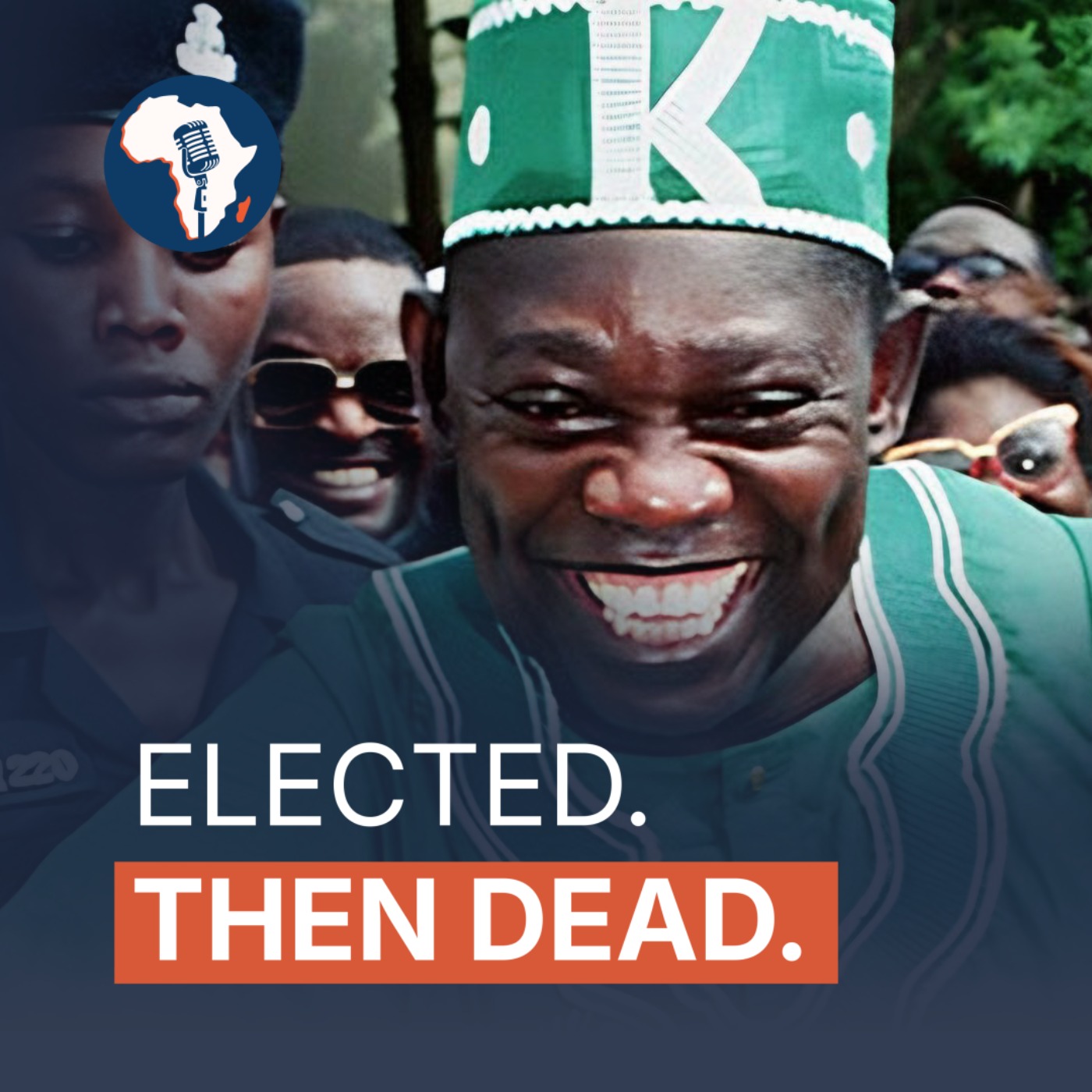
A new documentary asks those INVOLVED for ANSWERS to Nigeria's June 12th 1993 Election Question that Won't Go Away.In 1993, Nigeria held what many still call the freest election in its history. MOSHOOD KASHIMAWO OLAWALE ABIOLA — MKO — won it. Everyone accepted the result. Then the military annulled it, locked him up, and five years later he died in detention, collapsing during a meeting with a US delegation on the very day his release was expected. The cause of his death has never been settled.Filmmaker OSE OYAMENDAN spent years and more than a hundred hours of footage tracking down nearly everyone still alive who was in the room or near it — including GENERAL IBRAHIM BABANGIDA, who annulled the election, and GENERAL ABDULSALAMI ABUBAKAR, who was head of state when ABIOLA died. His documentary MKO had its world premiere at Sheffield DocFest 2026. He sits down with me to trace how a national election became a global mystery — and why, thirty years on, it still shapes Nigeria.In this conversation: what the record actually establishes about June 12 and the annulment; the family's final visit to a man who looked grey and unwell; BABANGIDA'S own account of why he cancelled the result; the rivalry between ABIOLA and OBASANJO; the testimony of ABIOLA's guard, THEODORE ZADOK, pulled away for forty minutes before the collapse; the tea, the cup, and why OSE is careful not to call it poison; the death of SANI ABACHA a month earlier and the connection some see between them; and what the annulment did to Nigerian democracy — including why OSE's own mother stopped voting.OSE is clear throughout that he draws no verdict on how Abiola died; the film lays out the accounts and leaves the conclusion to the viewer. Africa Here and Now follows the same line — the contested claims here belong to the film and its participants.MKO (2026) — a film by Ose Oyamendan. World Premiere, International Competition, Sheffield DocFest 2026.00:00 "we'll say it's in the tea"00:18 Getting Pickering to talk: lawyers, access, and the making of MKO01:35 Who killed Abiola? Why Ose leaves the verdict to the viewer01:57 June 12, 1993: the win everyone accepted, then detention02:22 The last days — the family's final visit, and a man gone grey03:31 The morning of the meeting: awake, singing, "excited"04:00 Building the chronology: reporting a story with various claims05:15 Babangida: the charm, the corner he boxed himself into06:34 Why he annulled it — "I don't want to die"07:03 The Abacha problem Babangida never dealt with08:41 Was Abiola too trusting? Naïve, or facing something new?10:46 The Renaissance man: the richest man who declared himself president11:13 Ose's first encounter with Abiola13:00 Obasanjo, rivalry, and "Abiola is not the Messiah"16:34 Abubakar takes over — why release everyone but him?18:22 Theodore Zadok: the guard pulled away for 40 minutes19:00 Inside the 28-minute tape: the cup, the discomfort, the collapse20:41 Was it the tea? Why the poisoning theory doesn't hold21:34 In defence of Susan Rice21:55 Abacha's death a month earlier — the apple, the connection22:55 Who benefits? Oil, the army, and the political class23:52 The mandate he would not renounce — and the Kofi Annan letter25:07 The stolen democracy: why Ose's mother stopped voting26:23 June 12 as symbol: the one man who won every part of Nigeria27:18 Has Nigeria recovered? Weak centre, strong regions, a military system29:19 Mandela's warning: no strong Nigeria, no strong continentKey figuresMKO Abiola — businessman and publisher, winner of the annulled 1993 election, died in detention 1998. Ibrahim Babangida — military president who annulled the result. Sani Abacha — seized power in late 1993, died June 1998. Abdulsalami Abubakar — head of state at the time of Abiola's death. Thomas Pickering — US Under Secretary of State, led the delegation at the final meeting. Susan Rice — then Assistant Secretary of State for Africa. Theodore Zadok — Abiola's security guard Hosted on Acast. See acast.com/privacy for more information.
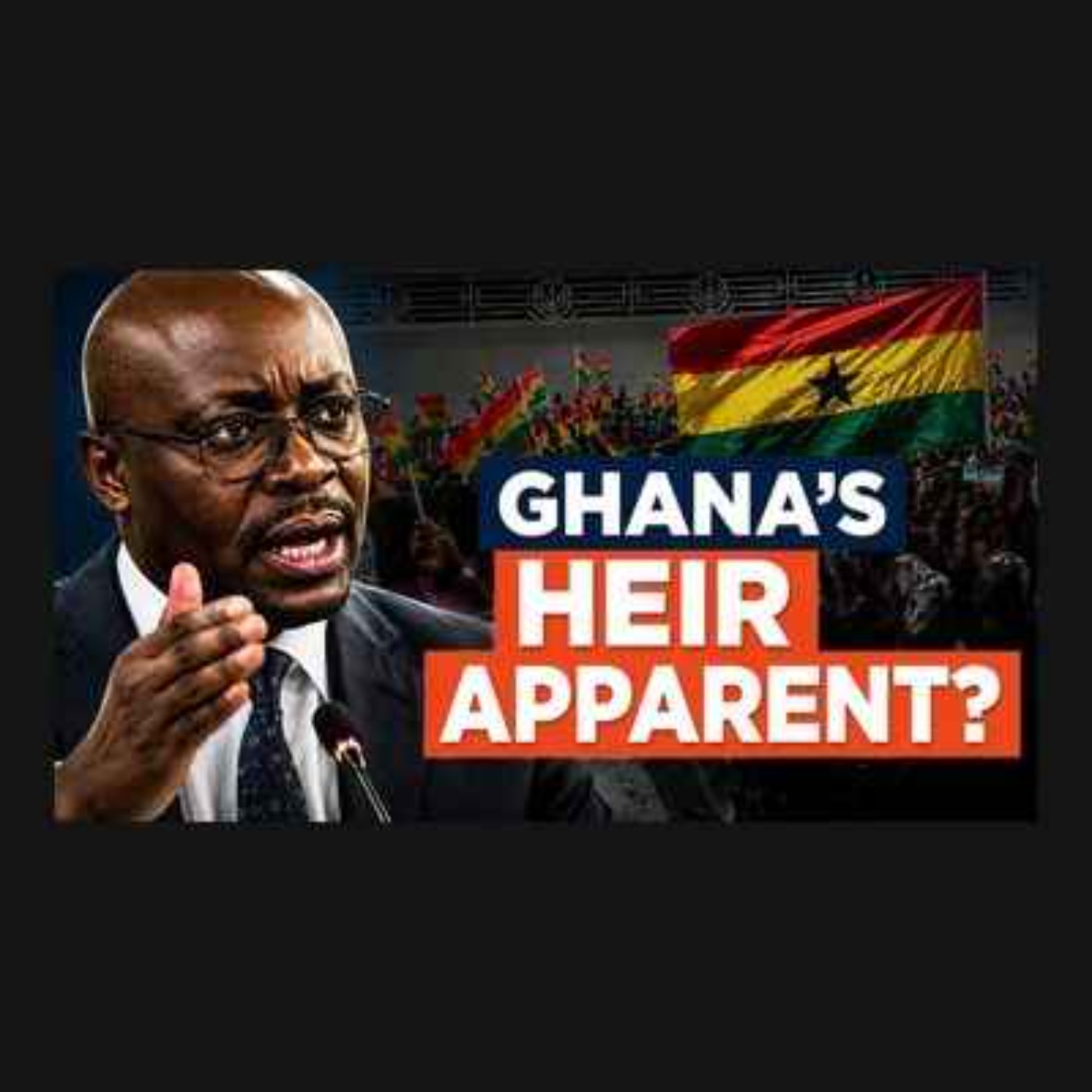
From Crisis to Recovery - Forson's Credited with Turning his Country's Economy Around Hosted on Acast. See acast.com/privacy for more information.

Comments

Download from Google Play

Download from App Store
 United States