


 Claim Ownership
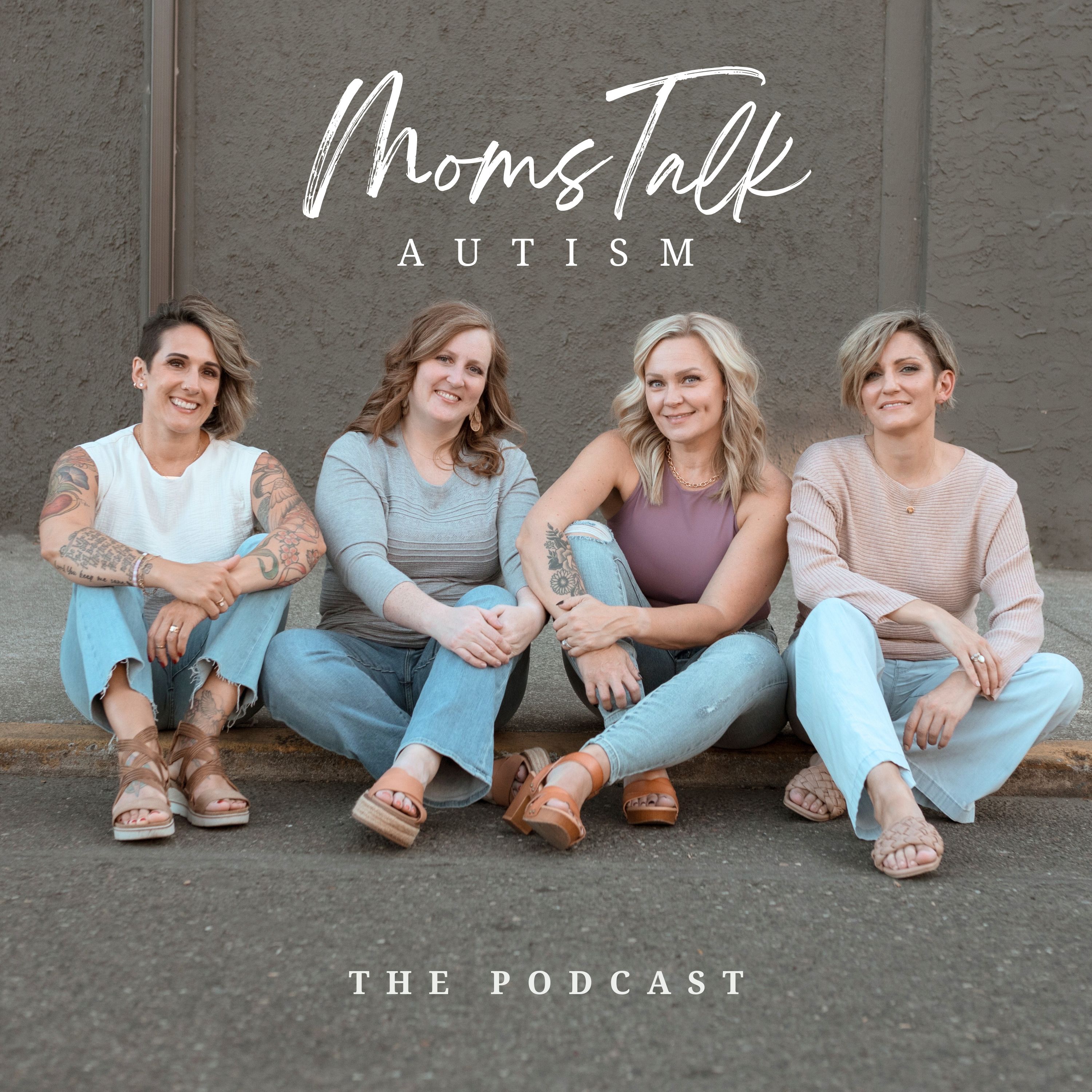
Moms Talk Autism Podcast
Subscribed: 167Played: 3,612
Subscribe

© 2021
Description
The Moms Talk Autism Podcast is for parents raising children with special needs.
We are four moms, all with autistic children and other neurodivergence.
Teaching a special needs child to navigate the world around them comes with challenges and struggles. We want to talk about those challenges openly with you and others. We discuss grief, school, family balance, siblings, therapies, social conversations, behaviors, delays, diagnosis advocation, and marriage.
We do not hold degrees in medicine or neuroscience, nor are we special education teachers, but we are experts in raising our kids and figuring out everything as we go.
Think of this podcast as a coffee shop chat with your closest girlfriends. We want to talk, raise awareness, and help each other thrive with our neurodivergent families in a neurotypical world.
Follow us on Instagram @momstalkautism
Website:
www.momstalkautism.com
Come say hello!
[email protected]
Shannon Korza, Tash Dillmon, Jean Mayer & Brittney Crabtree
292 Episodes
Reverse

Why does it sometimes feel like nothing we say is getting through?
In Part 2 of our conversation with Jonathan Alderson, we talk about receptivity, communication, and what may be happening when our kids seem like they “just won’t listen.”
We get into the frustration that can build when parenting feels like a constant battle, and how our own expectations, attitude, and intentions can shape the way our kids respond to us.
Jonathan also challenges us to think about connection differently—not just as something nice to have, but as part of what makes learning, cooperation, and communication possible in the first place.
And yes, we talk about “dating” our kids—creating intentional one-on-one time that isn’t focused on fixing, teaching, correcting, or getting through the next task.
Sometimes the shift isn’t about finding the perfect words.
Sometimes it starts with changing the way we show up. Hosted by Simplecast, an AdsWizz company. See pcm.adswizz.com for information about our collection and use of personal data for advertising.
When does picky eating become something more?
This week, Brittney, Tash, and Shannon sit down with therapist Natalia Aiza to talk about ARFID—Avoidant Restrictive Food Intake Disorder—and why eating can become so complicated for neurodivergent kids.
Natalia breaks ARFID into three big areas: sensory differences, low interest in eating, and fear-based food avoidance.
We talk about safe foods, brand-specific foods, texture and temperature issues, low hunger cues, fear of choking or vomiting, checking expiration dates, and what it can look like when food starts to feel genuinely unsafe.
We also get into the parent side of it—how easy it is to accidentally turn meals into a battleground, why “they’ll eat when they’re hungry” isn’t always true, and how our own anxiety around food can influence our kids.
The biggest takeaway: being uncomfortable does not always mean being unsafe.
And sometimes helping our kids eat means understanding what’s underneath the refusal first.
Instagram: @letstalk.ocd
Website: www.kairoswellnesscollective.com
Books and other resources: https://nataliaaiza.com/
IOCDF.org
Dr. Eli Lebowitz
Breaking Free Books
Children’s Yale-Brown OC Scale (CYBOCS) Hosted by Simplecast, an AdsWizz company. See pcm.adswizz.com for information about our collection and use of personal data for advertising.
What happens when a parent’s personal experience leads them to explore emerging treatments that medicine is still studying?
This week, Tash and Shannon sit down with Dr. Eric Weiss, a physician, father, and advocate for continued research into autism care.
Dr. Weiss shares how raising an autistic child changed the direction of his career and led him to explore emerging approaches, including stem cell therapy and the possible role of inflammation in autism.
We talk about his personal journey, what he has observed in his work, and why conversations around newer or less-established treatments can be complicated, especially in a community that has seen its share of overpromising, cure culture, and families desperate for answers.
Our goal in this episode is not to tell you what to believe or what treatment to choose. It’s to have an open conversation, ask questions, and explore one family and physician’s perspective while keeping the well-being and individuality of autistic people at the center.
As always: stay curious, do your research, and make decisions with the professionals who know your child best.
This episode is for informational purposes only and is not medical advice. The views shared are those of our guest, and we encourage families to research carefully and consult qualified healthcare professionals before making treatment decisions. Hosted by Simplecast, an AdsWizz company. See pcm.adswizz.com for information about our collection and use of personal data for advertising.
What if what looks like anxiety, rigidity, or “just part of autism” is actually OCD?
This week, Brittney, Tash, and Shannon sit down with clinician and mom of four neurodiverse children, Natalia Aiza, to talk about how OCD can show up in neurodivergent kids—and why it can sometimes be difficult to recognize.
We get into fear, compulsions, anxiety, and the overlap that can make it hard for parents to know what they’re actually seeing.
Natalia also shares what families may want to pay attention to and why understanding the reason behind a behavior can change the way we support our kids.
Because sometimes the behavior isn’t the whole story.
Sometimes fear is driving a lot more than we realize.
Instagram: @letstalk.ocd
Website: www.kairoswellnesscollective.com
Books and other resources: https://nataliaaiza.com/
IOCDF.org
Dr. Eli Lebowitz
Breaking Free Books
Children’s Yale-Brown OC Scale (CYBOCS) Hosted by Simplecast, an AdsWizz company. See pcm.adswizz.com for information about our collection and use of personal data for advertising.
How much should we expect from our kids?
And how do we know when we’re asking too much… or not enough?
This week, we’re revisiting a conversation about one of the hardest parts of parenting neurodivergent kids: balancing support and accommodation with opportunities to build independence, resilience, and confidence.
Our kids may need things to look different. They may need more time, more support, or a completely different path. But that doesn’t mean we stop giving them chances to learn, adapt, experience consequences, and discover what they’re capable of.
The hard part is figuring out where that line is for your child.
We talk about expectations, limitations, coping skills, independence, and why there is no one-size-fits-all answer.
At the end of the day, we keep coming back to the same things: know your child, communicate in whatever way works for your family, and lead with love. Hosted by Simplecast, an AdsWizz company. See pcm.adswizz.com for information about our collection and use of personal data for advertising.

Comments

Download from Google Play

Download from App Store
 United States