


 Claim Ownership
Data Unchained
Subscribed: 11Played: 37
Subscribe

© 2024 Data Unchained
Description
In the digital age, businesses run on data. Especially at a time when workers are distributed across the globe, it's more important than ever that teams have access to the data they need, when they need it, wherever they are. In this show, we explore the world of decentralized data and the issues it raises for doing business in the 21st century. Host Molly Presley talks with a fascinating lineup of guests, including scientists, business leaders, and thinkers at the cutting edge of data science about how and why data matters, and the ideas and technologies helping to advance our understanding of how to manage data in the 21st century.
Hosted on Acast. See acast.com/privacy for more information.
118 Episodes
Reverse

Can standards-based parallel NFS outperform traditional high-performance file systems like Lustre? Recorded live at SC26 in Chicago, Data Unchained host Molly Presley welcomes back Jon Flynn, Director of Applied Systems at Hammerspace, to explore breakthrough IO500 benchmark results and the innovations pushing high-performance computing storage to new speeds. Jon reveals how Hammerspace achieved 135 GB/s throughput from a single server and how testing on Los Alamos National Laboratory's Hellscape supercomputer delivered approximately 304 GiB/s average read performance. The conversation explores client-side striping, Flex Files, metadata optimization and Linux kernel advancements that are transforming how organizations approach HPC and AI infrastructure. Jon also explains why open standards matter, how upstream Linux contributions benefit the broader industry and what it takes to bring experimental performance breakthroughs into production environments.As AI workloads place increasing demands on storage infrastructure, could parallel NFS provide the performance, flexibility and efficiency organizations need without relying on proprietary file system clients? Discover what these advances mean for the future of supercomputing, enterprise storage and AI-driven research.Learn more about Hammerspace: https://hammerspace.comData Unchained is powered by Hammerspace. Hosted on Acast. See acast.com/privacy for more information.
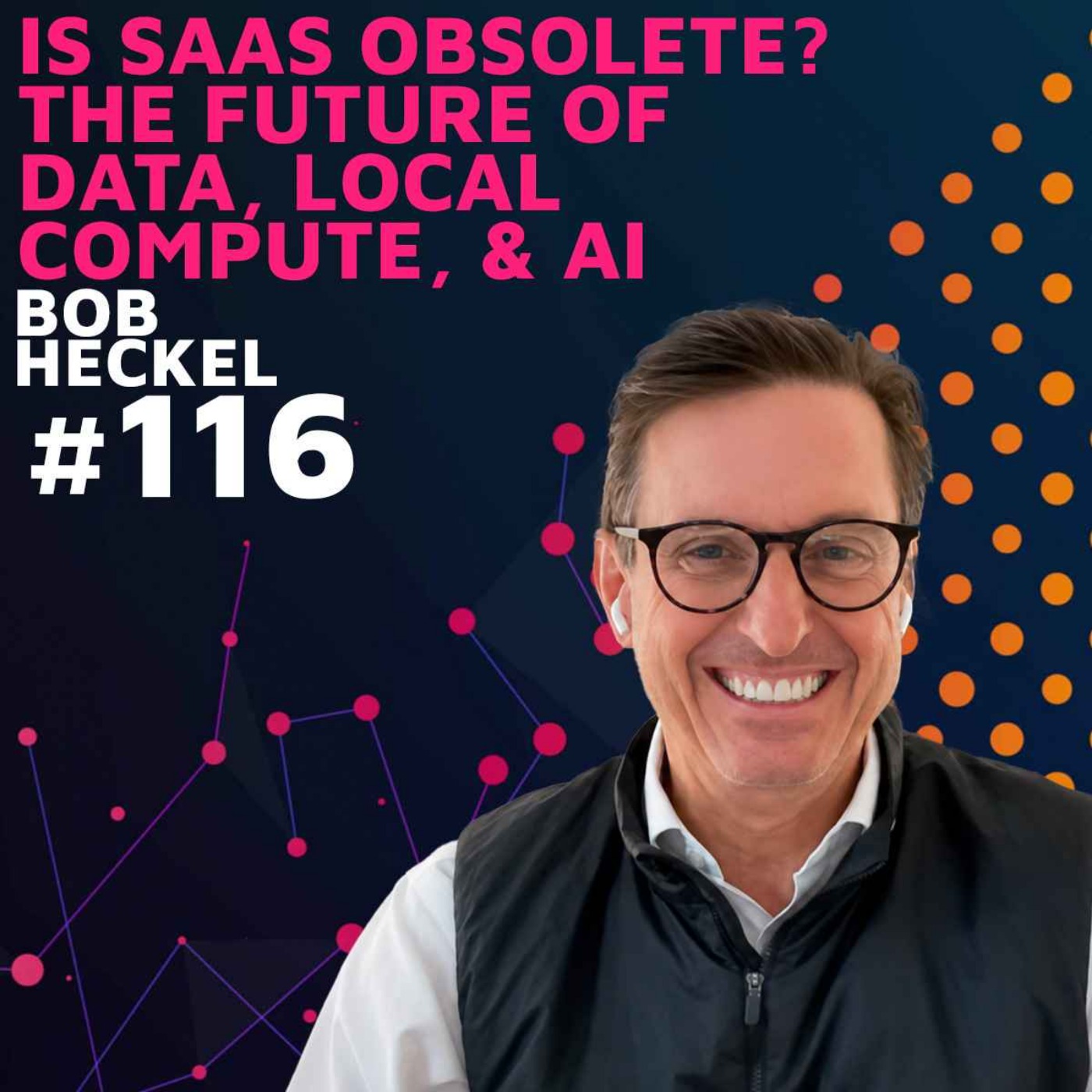
Enterprise AI is forcing organizations to reconsider how much of their technology, data and infrastructure they should own. Bob Heckel, CEO of Computer Visionaries AI, joins Molly Presley on Data Unchained to explain why he believes traditional SaaS is losing its place in an AI-native business environment. They discuss how computer vision and edge inference can improve retail, manufacturing, logistics and workforce operations, as well as why real-time processing often belongs closer to where data is created. Bob also explains how open-source models and local infrastructure can reduce token costs, address GPU constraints and give companies greater control over their data.Learn more about Computer Visionaries AI: https://cvaius.com/Connect with Bob Heckel on LinkedIn: https://www.linkedin.com/in/heckel/Contact Computer Visionaries AI: [email protected] more about Hammerspace: https://hammerspace.com/ Hosted on Acast. See acast.com/privacy for more information.

Network infrastructure generates enormous volumes of data, but much of it remains difficult to access, interpret, and use. In this episode of Data Unchained, John Capobianco, Head of AI and Developer Relations at Itential, joins Molly Presley to discuss how AI agents can turn network telemetry into practical insights, predict equipment failures, support troubleshooting, and help organizations build reliable sources of truth.John explains why read-only agents offer a lower-risk starting point for agentic operations and how natural language could become the primary interface between people, controllers, and infrastructure. The conversation also covers GPU-cluster networking, data retention, open-weight models, RAG, Model Context Protocol, data sovereignty, deterministic workflows, and the governance required before agents are trusted to make changes.Join the VibeOps community: https://vibeopsforum.com/join/Connect with John: https://www.linkedin.com/in/john-capobianco-644a1515/Watch John’s videos: https://www.youtube.com/@johncapobianco2527Learn more about Itential: https://www.itential.com/Learn more about Hammerspace: https://hammerspace.com/ Hosted on Acast. See acast.com/privacy for more information.

Enterprise AI is moving from experimentation to production, forcing organizations to reconsider how they store, access and manage their data. Wendell Wenjen, Senior Director of Storage Market Development at Supermicro, joins Molly Presley on Data Unchained to discuss the infrastructure demands behind enterprise AI. They examine the shift from training to inference, the growing role of storage in AI budgets, KV cache, on-premises AI and the challenge of preparing distributed enterprise data for production workloads. Wendell also explains why many AI proofs of concept never reach production, how power demands could influence infrastructure decisions and what businesses must address before deploying AI at scale.Learn more and register for the Supermicro Open Storage Summit, airing August 11 through September 3, 2026: https://thecube.net/Learn more about Hammerspace: https://hammerspace.com/ Hosted on Acast. See acast.com/privacy for more information.
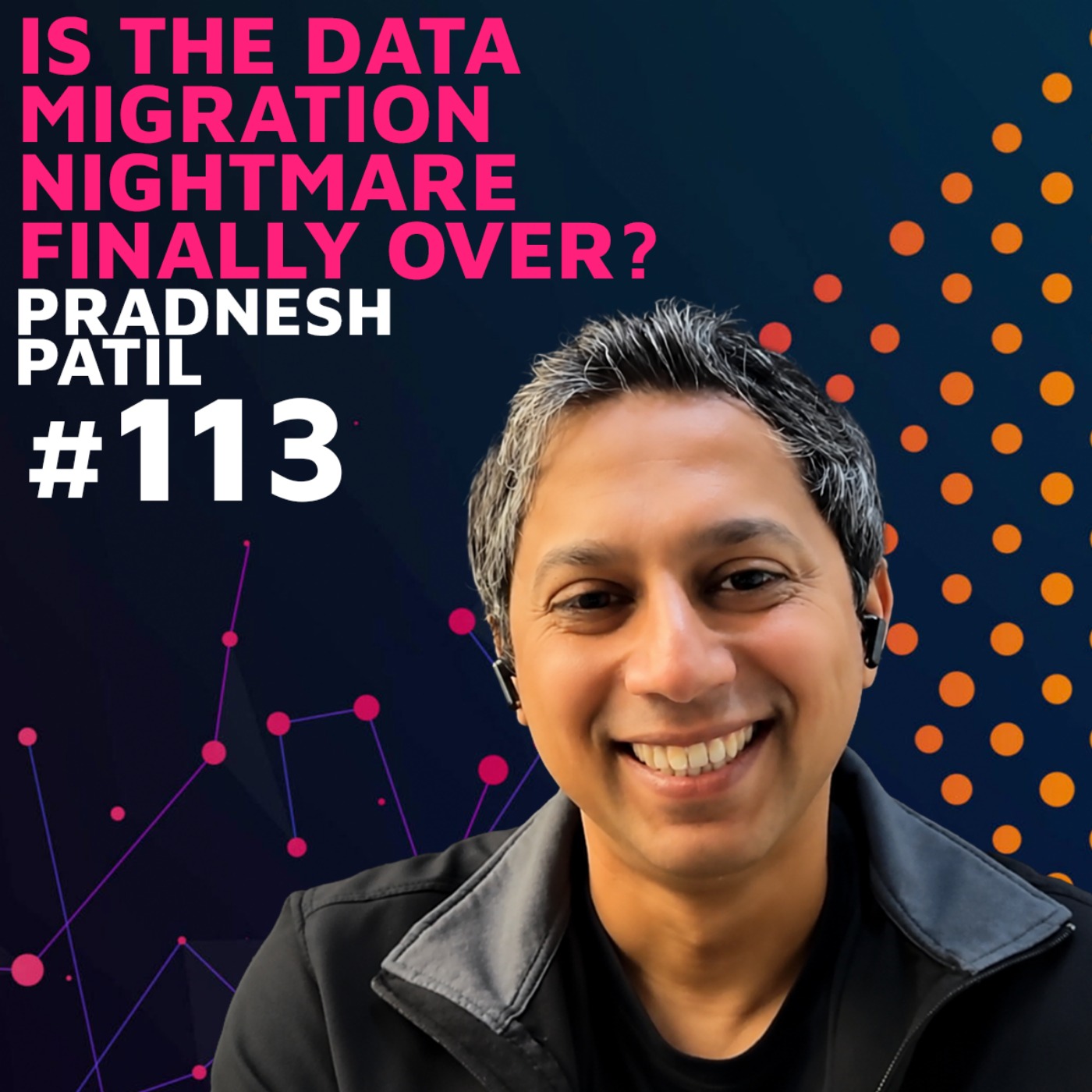
What is really slowing down enterprise AI? According to Pradnesh Patil, Founder and CEO of Altimate AI, the answer is not always the model. It is the data work behind it. In this episode of Data Unchained, host Molly Presley talks with Pradnesh Patil about the pressure facing modern data teams as AI adoption accelerates. They discuss why data engineers are buried in pipeline backlogs, how token costs can spiral out of control, and why enterprises need more open, vendor-agnostic ways to manage AI-driven data work. Pradnesh explains how AI agents can help with data pipeline creation, infrastructure optimization, governance, context management, and the painful migration projects most teams try to avoid. He also breaks down why walled-garden AI tools can limit flexibility, why context graphs matter, and how enterprises can reduce cost without sacrificing control.https://www.altimate.ai/Cyberpunk by jiglr | https://soundcloud.com/jiglrmusicMusic promoted by https://www.free-stock-music.comCreative Commons Attribution 3.0 Unported Licensehttps://creativecommons.org/licenses/by/3.0/deed.en_US Hosted on Acast. See acast.com/privacy for more information.

Comments

Download from Google Play

Download from App Store
 United States