


Sunni Aqidah- Sunni Islamic Beliefs
Subscribed: 5Played: 11
Subscribe

© Sunni Hubb
Description
Dive into the heart of Sunni Islam with Sunni Aqidah- Sunni Islamic Beliefs. This podcast offers lectures and talks from leading Sunni scholars, exploring core beliefs, the Quran, Sunnah, and living a faith-filled life. Perfect for those seeking to deepen their understanding and connect with their spiritual heritage. Join us for a journey into the essence of Sunni faith and practice.
24 Episodes
Reverse

Exposing Fake Pirs, Taweez & Black Magic | The Sunni Islamic PerspectiveShaykh Muhammad Danyaal.What does authentic Sunni Islam actually teach about Taweez, Ruqyah, black magic, jinn possession and spiritual healing? How can Muslims distinguish genuine Islamic spirituality from superstition, exploitation and fraudulent spiritual practices?In this extensive and evidence-based workshop, the speaker examines the disturbing rise of fake Pirs, fraudulent Aamils and spiritual healers who exploit vulnerable Muslims under the guise of Tasawwuf, religious authority and supernatural healing.Drawing upon the Qur'an, Hadith and classical authorities of Ahl al-Sunnah wa'l-Jama'ah, the lecture distinguishes legitimate Islamic practices from prohibited occult rituals, talismans, astrology, numerology and claims of supernatural powers.Topics discussed include:- The warnings of Imam Abd al-Wahhab al-Sha'rani and other classical Sufi scholars against fraudulent spiritual leaders.- Documented cases of spiritual, psychological, financial and sexual abuse committed under the pretext of religious healing.- The orthodox Sunni position on sihr (magic), jinn possession and the evil eye.- The difference between permissible Qur'anic Taweez and prohibited talismans.- The three scholarly conditions governing permissible Ruqyah and Taweez.- The rulings of Imam al-Nawawi, Imam Ibn Abidin, Hafiz Ibn Hajar al-Asqalani and Hafiz Ibn Hajar al-Haytami.- Why mysterious symbols, incomprehensible inscriptions, occult calculations and astrological rituals are religiously problematic.- How fraudulent Aamils use fear, superstition and psychological manipulation to control their followers.- The misuse of the names of the Awliya and Sufi authorities to legitimise questionable practices.- Why authentic Tasawwuf must be distinguished from exploitative Pir culture.The workshop also examines examples of Taweez and spiritual-healing manuals, comparing their contents with practices discussed and condemned in classical Islamic jurisprudence.This is not a rejection of Tasawwuf, the Awliya of Allah, or the reality of spiritual affliction. It is a call to return to the Qur'an, Sunnah and the recognised scholarship of Ahl al-Sunnah wa'l-Jama'ah, while protecting Muslim communities from religious exploitation.Content warning: This episode contains discussion of disturbing real-life cases involving physical abuse, sexual violence, child abuse and exploitation. Listener discretion is advised.Podcast: Sunni Aqidah – Sunni Islamic BeliefsMay Allah سبحانه وتعالى protect the Ummah from deception, exploitation and false spiritual authority, and grant us beneficial knowledge and steadfastness upon the Qur'an and Sunnah.

Does God Exist? Can the existence of Allah be established through reason, logic and evidence?In this thought-provoking debate held at the University of Manchester, renowned Sunni Muslim theologian Shaykh Asrar Rashid engages in a discussion with Guy Otten, Chairman of Greater Manchester Humanists, on one of humanity's most fundamental questions: Does God exist?Organised by the Madinah Society at the University of Manchester, this debate explores the philosophical, scientific and theological arguments surrounding the existence of God, contrasting the Islamic intellectual tradition with atheism and philosophical naturalism.Key topics discussed:- The First Cause Argument: Does the universe require an eternal, uncreated Creator, or can its origins remain unexplained?- Islamic Rational Theology (ʿIlm al-Kalām): How classical Sunni scholars, particularly the Ashʿari theological tradition, approached arguments for God's existence.- Science and Atheism: Can scientific observation and empirical evidence determine whether God exists?- The Problem of Evil: If God exists, why do suffering, disease, injustice and natural disasters occur?- Morality Without Religion: Can human beings establish objective moral standards independently of divine revelation?- Evolution and Creation: Do evolutionary explanations undermine belief in a Creator?- The Innate Recognition of God: Shaykh Asrar Rashid discusses ʿUbūdiyyah (servitude to Allah) and humanity's natural dependence upon its Creator.- Revelation and Historical Evidence: The role of the Qur'an, Hadith transmission and historical verification in establishing religious truth.Throughout the discussion, Shaykh Asrar Rashid presents arguments rooted in classical Islamic theology, rational reasoning and the concept of an eternal First Cause, while Guy Otten defends philosophical naturalism, humanist ethics and an evidence-based approach to understanding reality.The debate also features an audience question-and-answer session, examining objections and responses from both perspectives.About this podcastSunni Aqidah – Sunni Islamic Beliefs is dedicated to exploring and explaining the beliefs of Ahl al-Sunnah wa'l-Jamāʿah through classical Islamic scholarship, theological discussions, lectures and debates.Our aim is to make the intellectual and spiritual heritage of Sunni Islam accessible to English-speaking audiences.Event: Debate on Atheism and the Existence of GodSpeakers: Shaykh Asrar Rashid and Guy OttenVenue: University of Manchester, United KingdomOrganised by: Madinah SocietyPodcast: Sunni Aqidah – Sunni Islamic Beliefs#SunniAqidah #ShaykhAsrarRashid #GuyOtten #ExistenceOfGod #IslamVsAtheism #AhlusSunnah #IslamicTheology #Ashari #IlmAlKalam #IslamicDebate

Does believing that Rasul Allah ﷺ possesses knowledge of the unseen amount to Shirk? Or does the Qur’an itself establish that Allah ﷻ grants knowledge of the unseen to His chosen Messengers?In this episode, Shaykh Asrar Rashid explores the Ahl al-Sunnah wal Jama‘ah belief regarding Ilm al-Ghayb (Knowledge of the Unseen), addressing misconceptions and objections surrounding this important matter of Islamic Aqidah.The fundamental distinction is clear: Allah ﷻ alone possesses absolute, independent and eternal knowledge, whereas the knowledge of Rasul Allah ﷺ is bestowed upon him by Allah ﷻ.The Qur’an states:“The Knower of the Unseen, He does not disclose His unseen to anyone, except to a Messenger whom He has chosen.”— Surah al-Jinn (72:26–27)Through Qur’anic evidence and the understanding of classical Sunni scholarship, this episode explores why affirming the knowledge granted to Rasul Allah ﷺ does not diminish the unique attributes of Allah ﷻ.An important discussion for anyone seeking to understand the authentic beliefs of Ahl al-Sunnah wal Jama‘ah.🎙️ Listen to the full episode, reflect upon the evidence and share it with others so that misconceptions surrounding the blessed knowledge of Rasul Allah ﷺ can be addressed.#IlmAlGhayb #AsrarRashid #AhlusSunnah #SunniAqidah #IslamicKnowledge #RasulAllah #IslamicPodcast #WobblerBusters
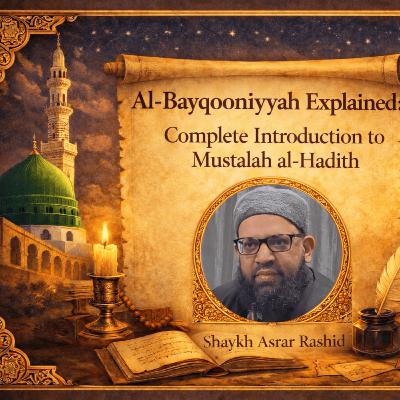
In this in-depth lecture, Shaykh Asrar Rashid delivers a detailed explanation of Al-Manẓūmah al-Bayqūniyyah fī Muṣṭalaḥ al-Ḥadīth, one of the most important classical introductory texts in the Science of Hadith Terminology (Mustalah al-Hadith).This comprehensive lesson covers the foundations of ʿUlūm al-Ḥadīth, including:Definition of Hadith and its typesṢaḥīḥ Hadith (Authentic Hadith)Ḥasan Hadith (Sound Hadith)Ḍaʿīf Hadith (Weak Hadith)Mawḍūʿ Hadith (Fabricated Hadith)Marfūʿ, Mawqūf, and MaqṭūʿMursal, Munqaṭiʿ, and MuʿḍalShādh (Anomalous) and Muʿallal (Defective) HadithTadlīs (Concealment in narration)Gharīb, ʿAzīz, and Mashhūr classificationsPrinciples of Isnād (chain of narration) analysisIlal al-Hadith (hidden defects in Hadith)Shaykh Asrar Rashid explains how classical Hadith scholars such as Imam al-Bukhari, Imam Muslim, Imam al-Tirmidhi, and others evaluated narrators, scrutinized chains of transmission, and preserved the Sunnah of the Prophet Muhammad ﷺ with unmatched precision and methodological rigor.This lecture is essential for:Students of Hadith StudiesStudents of Usul al-FiqhIslamic seminary studentsResearchers in Islamic sciencesAnyone seeking to understand how Hadith authentication worksIf you are studying Mustalah al-Hadith, Sharh al-Bayqūniyyah, or the principles of Hadith classification, this lecture provides a structured and scholarly foundation.May Allah grant us beneficial knowledge and sincerity in learning and teaching the Sunnah.
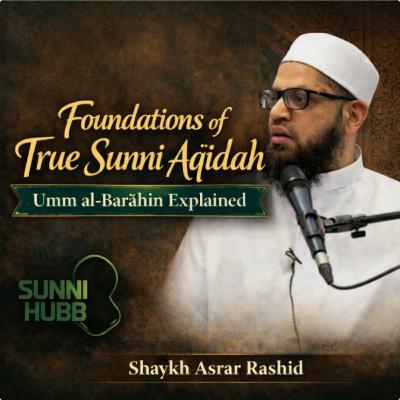
In this episode, Shaykh Asrar Rashid delivers a detailed and methodical lesson on Umm al-Barāhīn (also known as al-ʿAqīdah al-Ṣughrā) by Imam al-Sanūsī, one of the most important classical texts of Sunni theology. The lesson focuses on establishing correct belief through sound reasoning grounded in revelation, following the methodology of Ahl al-Sunnah wa’l-Jamāʿah.The discussion explains the rational foundations of creed, including the necessary, impossible, and possible attributes of Allah ﷻ, and why correct belief must be free from anthropomorphism, spatial direction, or resemblance to creation. Shaykh Asrar clarifies how Imam al-Sanūsī structured this work to protect Muslims from theological deviation while strengthening certainty through disciplined use of the intellect in harmony with Qurʾān and Sunnah.Key principles of Sunni kalām are unpacked with clarity, addressing common misunderstandings surrounding divine attributes, causality, and the limits of human reason. The lesson also highlights why Umm al-Barāhīn has been taught for centuries as a foundational text for students of knowledge seeking a firm grounding in orthodox belief.This episode is essential listening for anyone seeking to understand classical Sunni theology as transmitted by the scholars, rooted in tradition, precision, and intellectual rigor.

Comments

Download from Google Play

Download from App Store
 United States