


 Claim Ownership
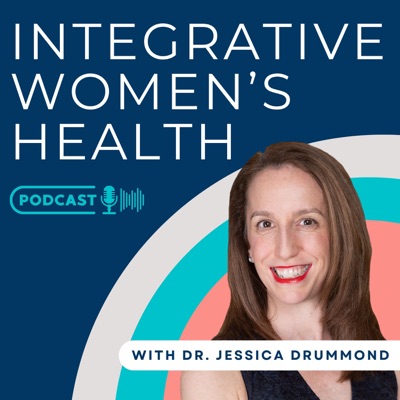
Integrative Women's Health Podcast
Subscribed: 30Played: 490
Subscribe

© Copyright 2026 Jessica Drummond
Description
Welcome to the Integrative Women's Health Podcast with Jessica Drummond, your go-to resource for cutting-edge insights into women's health and wellness. Hosted by Dr. Jessica Drummond, DCN, CNS, PT, NBHWC, a renowned expert with over two decades of experience in pelvic health and clinical nutrition, this podcast is designed for health and wellness professionals specializing in pelvic health, fertility, perinatal, postpartum, perimenopause, menopause, and overall wellness.
The "Integrative Women's Health Podcast" offers a unique blend of content formats to enrich your practice and knowledge. Expect enlightening interviews with innovative professionals in women's health, engaging conversations with students and graduates from The Integrative Women's Health Institute, insightful case studies with actual clients, and Dr. Drummond’s solo episodes on hot topics in integrative women's health practice.
Our discussions will focus on the latest tools for supporting women's health, featuring functional nutrition, health coaching, exercise, sleep, and other therapeutic strategies. Through our episodes, you'll learn how to empower your clients to heal from complex health issues using evidence-based approaches.
Dr. Drummond, founder and CEO of The Integrative Women's Health Institute, aims to provide practitioners with on-demand, evidence-driven continuing education. Our podcast mirrors this goal by offering valuable, practical information that you can apply in your practice.
Stay connected and enhance your expertise in women's health by visiting our website, IntegrativeWomensHealthInstitute.com (https://integrativewomenshealthinstitute.com/), and following us on Instagram @IntegrativeWomensHealth (https://www.instagram.com/integrativewomenshealth/). Subscribe to our podcast on your favorite platform and join us on this transformative journey in women's health.
134 Episodes
Reverse

“We have to do something different. This has to be better.” Dr. Aumatma SimmonsBeing told that miscarriage is common and just keep trying isn't particularly helpful for a woman who has experienced pregnancy loss. Especially when she's already had multiple losses, undergone genetic testing, and still doesn't have answers. Then, for women in their late 30s or early 40s, there's often the added pressure of feeling like they're running out of time. Instead, we need to look more closely at what might be contributing to these losses and how we can support a healthier pregnancy.As women's health practitioners, we have to think beyond egg quality and reproductive hormones. Endometriosis can be an underlying factor even when a woman has very few symptoms, and conception and a healthy pregnancy are also influenced by immune function, environmental exposures, metabolic health, and the health of the male partner. The goal is to support the health of the entire couple and their future baby, while also considering the mother's long-term health. That requires an individualized approach to testing and treatment rather than simply adding more supplements or rushing into another fertility cycle.In today's episode, I'm joined by my friend and fertility expert Dr. Aumatma Simmons to explore the underlying factors that can contribute to recurrent pregnancy loss. We discuss endometriosis, PCOS, environmental exposures, immune dysfunction, male-factor fertility, genetic differences that can influence supplementation strategies, prioritizing testing, addressing foundational health before focusing on egg and sperm quality, navigating fertility decisions during perimenopause, why conversations about reproductive health and egg freezing should begin much earlier in life, and more.Enjoy the episode, and let's innovate and integrate together!---Learn more or watch the video version of this conversation at https://integrativewomenshealthinstitute.com/why-pregnancy-loss-keeps-happening-5-root-causes-to-investigate/.Connect with me and access our entire platform at IntegrativeWomensHealthInstitute.com (https://integrativewomenshealthinstitute.com/).Find and follow us @integrativewomenshealth on YouTube (https://www.youtube.com/@integrativewomenshealth) and Instagram (https://www.instagram.com/integrativewomenshealth/).
“Movement has to be individualized. You have to have a plan that fits your physiology.” - Marta HanSome of our patients spend most of their days sitting, while others are doing high-intensity workouts on top of already demanding lives. When we work with women trying to conceive, we need to be very specific about the kind of exercise we recommend. We have to consider how exercise intensity, recovery, and nervous system regulation are affecting their reproductive health, because what supports one woman may not be appropriate for another.As a pelvic health physical therapist, I'm particularly interested in how targeted movement can support pelvic mobility, blood and lymphatic circulation, and hormonal health. And though we're talking about fertility, these approaches may also be valuable for younger athletes, women with menstrual health challenges, and those navigating perimenopause. There's an opportunity to think about movement much more broadly as a tool for supporting reproductive health throughout a woman's life.In today's episode, I'm joined by Marta Han and Zsofia Jamieson, founders of The Fertility Class, to explore the Aviva Method and how it supports reproductive health. We discuss their personal experiences with infertility and hormonal imbalances, the physiology behind these specialized exercises, balancing exercise intensity with adequate recovery, how cycle-aware movement can complement fertility treatments and existing fitness routines, and more.Enjoy the episode, and let's innovate and integrate together!---Learn more or watch the video version of this conversation at https://integrativewomenshealthinstitute.com/fertility-exercise-with-marta-han-and-zsofia-jamieson-of-the-fertility-class/.Connect with me and access our entire platform at IntegrativeWomensHealthInstitute.com (https://integrativewomenshealthinstitute.com/).Find and follow us @integrativewomenshealth on YouTube (https://www.youtube.com/@integrativewomenshealth) and Instagram (https://www.instagram.com/integrativewomenshealth/).
“Sex is not static. It changes at every stage of your life.” - Dr. Bat Sheva MarcusLow libido and sexual desire are among the biggest concerns we hear from women in perimenopause and menopause, and these challenges can become even more complicated for women who are also dealing with chronic pelvic pain, vaginal dryness, vaginismus, or another chronic health condition. Maybe she's tried hormone therapy, or she's been working with a therapist, but she's still struggling to enjoy sex or feel connected to her partner. So where do we go from there? How do we help women who have been avoiding intimacy for months or even years begin to feel comfortable with their bodies and their relationships again?We know that hormones can influence sexual desire, but we also have to consider what's happening in the brain and how a woman's sexual responses may change over time. Sometimes we need to address both the physiological and behavioral aspects of sexual health to see meaningful improvement. And for our patients who have experienced pain or have had to avoid intercourse for medical reasons, rebuilding intimacy may need to be very gradual, much like any other rehabilitation process.In today's episode, I'm joined by sex therapist, author, and sexual health educator Dr. Bat Sheva Marcus to explore a more comprehensive approach to sexual health during perimenopause and menopause. We talk about how hormones and the brain influence desire, the roles of estrogen, testosterone, and medications in addressing sexual difficulties, practical strategies for working through sexual avoidance, communicating with partners, rebuilding intimacy, Bat Sheva’s approach to scheduling sex, and more.Enjoy the episode, and let's innovate and integrate together!---Learn more or watch the video version of this conversation at https://integrativewomenshealthinstitute.com/how-to-have-great-sex-in-perimenopause-and-menopause-with-dr-bat-sheva-marcus/.Connect with me and access our entire platform at IntegrativeWomensHealthInstitute.com (https://integrativewomenshealthinstitute.com/).Find and follow us @integrativewomenshealth on YouTube (https://www.youtube.com/@integrativewomenshealth) and Instagram (https://www.instagram.com/integrativewomenshealth/).
“We can't treat clearly when we don't know what community of bugs are there.” - Wendy StrgarFor some women, vaginal infections are something to deal with once in a while and move on. But for others, it's a completely different experience. They keep getting the same symptoms, going back to the doctor, trying another round of antibiotics or antifungals, and hoping this time it will work. Sometimes this goes on for years. And one of the challenges is that we don't always have a clear picture of what's happening in the vaginal microbiome. Different infections can cause very similar symptoms, and the standard tests don’t always include all the organisms that could be causing the problem.As women's health practitioners, we have to think about what happens after we've treated an infection. Antibiotics can change the whole vaginal microbiome, including the beneficial bacteria that help protect against future infections. How do we help to restore that healthy environment? And what about women whose vaginal health has changed because of pregnancy, breastfeeding, perimenopause, or cancer treatment? These changes can affect everything from daily comfort to intimacy and quality of life, yet they're still often overlooked. We have an opportunity to provide more individualized care that supports the health of vaginal tissues and the microbiome over time.In today's episode, I'm joined by my longtime friend and colleague Wendy Strgar, founder of Good Clean Love and Good Clean Clinical Care. Wendy shares how her own experience with vaginal pain led her into women's sexual health research and product development. We talk about the limitations of conventional vaginal testing, the role of Lactobacillus and vaginal pH, why recurrent infections need a more comprehensive approach, how biomimicry can help support a healthier vaginal environment, vaginal health during menopause and cancer treatment, the importance of rebuilding the microbiome after treatment, how better access to care can help women with chronic vaginal infections, and more.Enjoy the episode, and let's innovate and integrate together!---Learn more or watch the video version of this conversation at https://integrativewomenshealthinstitute.com/the-vaginal-microbiome-and-chronic-vaginal-infections-with-wendy-strgar/.Connect with me and access our entire platform at IntegrativeWomensHealthInstitute.com (https://integrativewomenshealthinstitute.com/).Find and follow us @integrativewomenshealth on YouTube (https://www.youtube.com/@integrativewomenshealth) and Instagram (https://www.instagram.com/integrativewomenshealth/).
“Nervous system regulation is the ability to feel strong emotions and sensations, not get lost and stuck in them, and return to a baseline state that is balanced and alive and present.” - Michael RoessleinNervous system regulation has become one of those phrases we hear everywhere, but there’s still a lot of confusion around what it actually means. We tend to associate it with things that make us feel calmer, like breathwork or meditation, but feeling calm in the moment and having a regulated nervous system aren’t necessarily the same thing. It’s normal to feel anxious sometimes. We’re supposed to get angry, excited, sad, and overwhelmed. Nervous system regulation is about having the capacity to experience all of that without getting stuck and to come back to a place where we feel present and connected again.Understanding this is especially important when we’re working with women who have spent years dealing with chronic illness, pain, or medical gaslighting. By the time she gets to us, her nervous system may have had years of experiences where she didn’t feel heard, believed, or safe. On top of that, we bring our own nervous systems into the treatment room too. If we’re overwhelmed, activated, or uncomfortable with what a patient is sharing, she may feel that. So this work isn’t only about giving our patients more nervous system tools. It’s also about building our capacity to stay present, get curious about what safety looks like for each person, and become better co-regulators for the people we serve.In today’s episode, I’m joined by Michael Roesslein, founder of Anima, to dig into what nervous system regulation means and why it’s so much more individualized than we sometimes make it sound. We talk about fight, flight, fawn, freeze, and shutdown states, why constantly trying to calm an activated nervous system can actually be counterproductive, medical gaslighting, trauma, the ways women learn to experience safety from a very young age, why doing all the “right” things for your health sometimes still isn’t enough, increasing our capacity for difficult emotions as well as joy, working with our own nervous systems as practitioners, learning to recognize what each individual patient may need to feel safer and more supported, and more.Enjoy the episode, and let's innovate and integrate together!---Learn more or watch the video version of this conversation at https://integrativewomenshealthinstitute.com/what-really-is-nervous-system-regulation-with-michael-roesslein/.Connect with me and access our entire platform at IntegrativeWomensHealthInstitute.com (https://integrativewomenshealthinstitute.com/).Find and follow us @integrativewomenshealth on YouTube (https://www.youtube.com/@integrativewomenshealth) and Instagram (https://www.instagram.com/integrativewomenshealth/).

Comments

Download from Google Play

Download from App Store
 United States