


 Claim Ownership
Mindful Builder
Subscribed: 15Played: 310
Subscribe

© Copyright 2026 Matthew Carland and Hamish White
Description
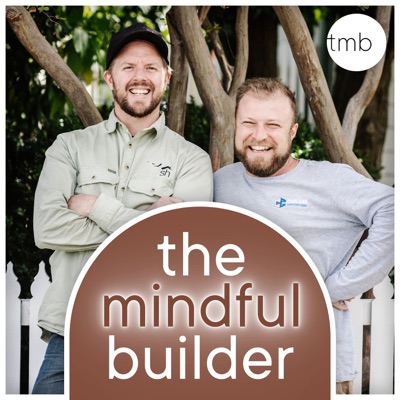
Join Matt from Carland Constructions and Hamish from Sanctum Homes in a podcast discussing sustainable building practices and passive house concepts.
They also talk to experts from all avenues of the building industry to share their knowledge and insights on what the industry looks like today.
Further to this, Matt and Hamish are building a platform through the podcast to discuss mental health issues that arise in the building industry. The industry can be quite negative at times and there is a great deal of stigma around what it means to be a "tradie".
Matt and Hamish are here to shine a light of positivity on the industry and share relatable topics that will help you in your own building or construction business.
146 Episodes
Reverse

“Can AI do this?” Adam Antony of Veo Building Co and WunderOps returns for part two of the conversation to break down how a builder, not a developer, is using AI to run a more profitable and less stressful construction business.We take a look at some of the bigger questions we all have first: Is AI going to replace builders, why on-site trades are some of the safest jobs going, and what AI still can’t do without your context. Adam explains why the same prompt gives everyone the same generic answer until you feed it your own files and way of working, and we dig into how AI could cut red tape in council approvals. We also get into things that we don’t really understand like: vibe coding apps that solve no real problem, privacy and data fears, guardrails, API keys, and MCPs.Then we get into where AI saves builders real time and money, especially in pre-construction. Adam covers estimate reviews that catch missing items and $0 line items, chasing scopes and quotes, sales follow-ups, and why he removed himself from labour estimating so his VAs and past job data can do it with the facts. Matt shares how automation has taken him to a four-day work week, and we talk through what happens if AI token costs rise. Adam’s advice for getting started is to treat AI like a new employee, document your process as clear steps, and turn it into a skill, because an agent is really just a skill on a schedule.We wrap up with WunderOps and WunderBuild. Adam explains why your business software needs to be your single source of truth, why costings are the heartbeat of every estimate and job, and how his two-day lock-in helps builders get set up without losing momentum. We also compare feasibility, budget and contract estimates, and why order-ready costings make sites run smoother. If you want practical AI for construction, estimating and pre-construction workflows, this one is worth the listen.There are a lot of things in this episode that we don’t fully understand even as the hosts, and that’s the whole point. You’re not expected to have AI all figured out and integrated, but it is a good time to start learning.CHAPTER MARKERS00:00 Introduction01:41 AI Adopter, Not Wizard03:31 Will AI Take Our Jobs06:22 What AI Can’t Do Yet09:53 AI And Council Red Tape16:47 Privacy And Data Worries19:33 API Keys And MCP Explained25:12 AI Pricing Risk33:19 The AI First Mindset40:30 Skills And Agents Simplified42:41 Best AI Tools Right Now For Tradies45:39 WunderOps Single Source Of Truth1:04:35 Feasibility, Budget, Contract Estimates1:08:16 VAs And Labour EstimatingOur Sponsors:Pro Clima - https://mindful-builder.captivate.fm/proclimaWunderbuild - https://www.wunderbuild.com/Biz Tech Guru: https://www.biztechguru.com.au/Connect with us on Instagram: @themindfulbuilderpodConnect with Hamish:Instagram: @sanctumhomesWebsite: https://www.yoursanctum.com.au/Connect with Matt:Instagram: @carlandconstructionsWebsite: https://www.carlandconstructions.com/

“I had no idea about business.” Adam Antony says it plainly, and it lands because it’s honest. In this episode of The Mindful Builder, Adam breaks down the hard lessons that hit when you go from being a great carpenter to running a building business, where margin, cash flow, quoting, and systems matter just as much as what happens on site. If you’re a builder, carpenter, or construction business owner trying to build a profitable, sustainable business, this one will feel familiar.Adam’s story starts in Goulburn, NSW, and it’s not a straight line. He came up through carpentry in a true start-to-finish environment, learning the sequence of a build because you’re responsible for it all. That mindset becomes the thread of the conversation, because Adam treats business the same way he treats building: there’s an order, there’s a flow, and if you do it out of order you pay for it later. It’s a practical chat about construction systems, leadership, and what it takes to run a tight operation.After his apprenticeship, Adam took a left turn into real estate, spending a year door knocking and cold calling as a prospector. It taught him communication, resilience, and how to hear “no” without taking it personally, which matters more than people think when you’re selling building projects and managing client expectations. He then returned to building, got licensed in his late twenties, and stepped into a partnership that led to a major opportunity: a townhouse development that delivered a solid result, but exposed how easy it is to underprice labour, miss margin, and rely on “it’ll be fine” decision-making.From there, the focus shifts to systems and structure. Adam shares how he rebuilt the business with clearer standards, better processes, and support that actually works because the foundations are solid, including the reality of using VAs in a building company. And just when they’re about to get into the “AI lord” chapter, Hamish tees up part two, where Adam’s move into AI, automation, and smarter workflows gets unpacked properly. If you’re interested in building business systems, construction estimating, and the future of AI in construction, you’ll want to catch the next episode.CHAPTER MARKERS00:00 Introduction04:54 Carpentry Path and All Round Skills07:43 Real Estate Detour and Sales Lessons10:43 Builders License and Going Solo12:47 First Big Partnership Project14:39 Business Mistakes and Pricing Lessons22:00 Starting a New Company23:49 Fresh Start With Systems25:28 Veo Team And Project Scale28:45 Systems Thinking Explained30:58 Making VAs Work33:57 WunderBuild And AI Emails35:12 Leading A Systems Culture38:14 Passive House MotivationOur Sponsors:Pro Clima - https://mindful-builder.captivate.fm/proclimaWunderbuild - https://www.wunderbuild.com/Biz Tech Guru: https://www.biztechguru.com.au/Connect with us on Instagram: @themindfulbuilderpodConnect with Hamish:Instagram: @sanctumhomesWebsite: www.yoursanctum.com.au/Connect with Matt: Instagram: @carlandconstructionsWebsite: www.carlandconstructions.com/

“I couldn’t unsee it.” Jimmy from June Building explains how Passive House building science finally clicked, after learning through Instagram and then winning the Pro Clima Passive House Tradesperson scholarship. Today Jimmy flips the format and turns up with a notebook full of questions on Passive House for us. Questions around high-performance homes, airtightness, mechanical ventilation, and what actually changes when you start building for comfort, not just compliance.Jimmy’s background is classic chippy-to-builder with a few turns that matter. Apprenticeship in Ballarat, travel to Banff in Canada, then Melbourne across maintenance, commercial, and high-end residential before moving to the Northern Rivers in early 2020. He’s now in the first 12 months of June Building, building the plane while flying it, and trying to bring Passive House principles into a market where clients aren’t necessarily asking for certification, even though mould, humidity, and comfort issues are everywhere.We talk about why you shouldn’t lead with the “Passive House” label and instead start with the problems people already feel in their current home: drafts, noise, dust, mould, and rooms that never feel right. Jimmy asks what details cause the most challenges, and we go straight to retrofits, because nothing is square, nothing is level, and you don’t find the real issues until you start pulling things apart. We also get blunt about where builders underquote when they move into high-performance construction, and it’s labour, all labour, especially detailing, wraps, window installs, battens, and set-out.Jimmy also pushes on PHPP and how builders should use it. PHPP isn’t just a certification hurdle. It’s a pre-construction tool for optimising cost and performance, spotting overheating risk early, and avoiding the nightmare of delivering a “high performance home” that still feels uncomfortable to live in. If you’re a builder, architect, or homeowner curious about Passive House Australia, high-performance building, and what it takes to lift your standard without blowing your budget, this episode is a solid place to start.CHAPTER MARKERS00:00 Introduction00:41 Pro Clima Scholarship Story05:12 Discovering Passive House06:04 Selling Performance in Byron11:09 Mould Messaging Without Labels14:10 Education-Based Marketing Debate18:03 Building a Social Audience23:57 Rapid Fire Passive House Qs25:02 Retrofit Details and Underquoting27:01 Estimating Labour and Costs32:05 Estimating Passive House34:27 Overheating and Shading35:34 Reading PHPP as Builder38:13 PHPP Course and Value40:53 When to Use WUFI42:44 Retrofit Wall Failures44:14 Skills to Learn Early45:14 AI Tools for BuildersJune Building: https://www.junebuilding.com.au/Our Sponsors:Pro Clima - https://mindful-builder.captivate.fm/proclimaBiz Tech Guru: https://www.biztechguru.com.au/Wunderbuild: https://www.wunderbuild.com/Connect with us on Instagram: @themindfulbuilderpodConnect with Hamish:Instagram: @sanctumhomesWebsite: www.yoursanctum.com.au/Connect with Matt: Instagram: @carlandconstructionsWebsite: www.carlandconstructions.com/

You can’t build ten versions of the same house, live in them for ten years, and then pick the best one.We’re sitting down with thermal modelling specialist Cameron Munro to talk about why “model early and model often” should be a non-negotiable part of pre-construction, whether you’re chasing Passive House or just trying to build a home that actually feels good to live in.We explain what modelling is really for (direction, not perfection), how to run “what if” scenarios across glazing, insulation, shading, and floor build-ups, and why the best decisions come from cost-benefit thinking instead of intuition. We also get into the real-world gap between models and lived performance, the risk of not updating models as drawings change, and why overheating is the mistake that bites hardest when you skip the final iteration.If you want fewer ugly conversations later, this is the episode.CHAPTER MARKERS00:00 Introduction02:08 Modelling As A “What If” Tool06:31 Where To Spend Your Effort (Heat Loss Breakdown)09:04 Under-Slab vs Over-Slab: Thermal Bridges And Payback13:34 Pro Clima Detail Library Shoutout15:17 “You Don’t Need Triple Glazing In Melbourne” (Context Matters)17:00 Overheating Risk And Why Passive House Classic Is Safer18:07 Shading: External Beats Internal24:24 When To Bring A Modeller In (Concept Stage)33:25 Why You Must Update The Model As Drawings Change35:37 Treat Modelling Like Engineering37:30 Builder Liability And Using A Modeller To Reduce Guesswork45:14 Keep It Simple: Standard Details And Practical WinsOur Sponsors:Pro Clima - https://mindful-builder.captivate.fm/proclimaMEGT - https://mindful-builder.captivate.fm/megtBiz Tech Guru: https://www.biztechguru.com.au/Connect with us on Instagram: @themindfulbuilderpodConnect with Hamish:Instagram: @sanctumhomesWebsite: www.yoursanctum.com.au/Connect with Matt: Instagram: @carlandconstructionsWebsite: www.carlandconstructions.com/

“At some point, someone’s paying for that tender.”Tendering sounds fair on paper. Same drawings, three builders, pick the best price, move on.But once you understand what it actually costs to price a job properly, and how tendering rewards omissions, risk loading, and variations, it starts to look less like a “market test” and more like a costly way to kick off a relationship.In this episode, Hamish and Matt break down what a tender really is, why the classic draw, bid, build model creates isolation and blame, and why negotiated tendering (paid pre-construction with clear costing stop points) changes the incentives for everyone.They also get into the uncomfortable bits architects and clients don’t always see: the real cost of tendering, why prices can come back wildly different, how gaps in documentation become legitimate variations, and why trust matters more than pretending you can compare builders like-for-like.If you’ve ever wondered why a project can look “fully resolved” and still blow out, or why builders hate competitive tendering, this one will probably ruffle a few feathers.CHAPTER MARKERS00:00 Introduction01:05 The Classic Tender Process And Why It Starts Badly02:10 What “Resolved Documents” Really Means04:19 What Gets Left Out Becomes Variations05:12 Why Projects Go Over Budget And Who Gets Blamed09:06 Tender Vs Negotiated Tender Depends On The Builder11:17 Risk Loading And Why Tendering Increases Markups13:01 Variations In Tender Jobs Vs Negotiated Jobs16:00 Wild Price Gaps And Why Tender Numbers Can Be Useless23:00 What A Negotiated Tender Actually Is35:26 Trade Quotes, RFIs, And Reducing Risk Before Site41:22 Tendering Feels Like IsolationOur Sponsors:Pro Clima - https://mindful-builder.captivate.fm/proclimaMEGT - https://mindful-builder.captivate.fm/megtBiz Tech Guru: https://www.biztechguru.com.au/Connect with us on Instagram: @themindfulbuilderpodConnect with Hamish:Instagram: @sanctumhomesWebsite: www.yoursanctum.com.au/Connect with Matt: Instagram: @carlandconstructionsWebsite: www.carlandconstructions.com/

Comments

Download from Google Play

Download from App Store
 United States