


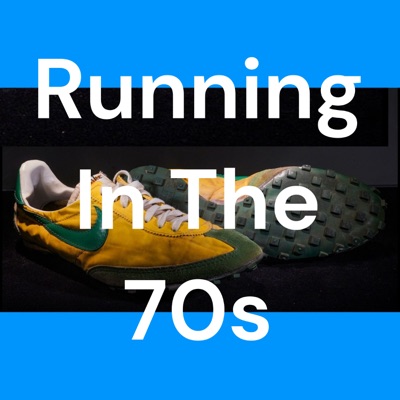
Running In The 70s
Subscribed: 0Played: 4
Subscribe


© Matthew Kleinosky
Description
Interviews with Cross Country Runners, Track Athletes, and Road Racers who ran in the 1970s
173 Episodes
Reverse

Running in the '70s: Voices, Stories and Memories of AthletesEpisode: 4.39 International Competition, Administration, and Life After Racing: The Denis Elton Cochran-Fikes Story (Part 2) Host: Matthew Kleinosky Guest: Denis Elton Cochran-Fikes Website: running70s.comIn Part 2 of their conversation, host Matthew Kleinosky continues his deep dive with Penn legend and Hall of Famer Denis Elton Cochran-Fikes. Denis details his international racing career, bizarre physical setbacks, collegiate coaching and compliance leadership at Harvard and Penn, and his long-term health journey. International Competition & The 1976 Growth Spurt: Denis represented the US at the 1976 USA–USSR dual meet and the International Military Championships (CISM). While serving in the Marine Corps, an officer forced him to race multiple distance events despite severe muscle spasms. At the 1976 Olympic Trials (1500m), chiropractic care from Dr. Leroy Perry enabled Denis to reach the semifinals before his legs seized up. A post-Trials military physical revealed the astonishing cause: Denis had grown from 6'1" to 6'3", and severe muscle-to-bone lag caused the chronic cramping. He closed his season taking silver in the steeplechase at CISM before taking an eight-month sabbatical. The 1970s Club Circuit: Denis ran for the historic New York Pioneer Club under Joe Yancy, Ed Levy, and Ted Corbett, later competing for the Philadelphia Pioneers (alongside sprinters like Herman Frazier) and Marty Liquori’s Athletic Attic. Evolving with Coach Jim Tuppeny: At Penn, Coach Jim Tuppeny shifted from an authoritarian style to a collaborative, athlete-centered mentorship. Tuppeny also dropped a ban on facial hair after learning its cultural significance to Black athletes, fostering an environment built on mutual respect. 1980 Boycott & A Penn Relays Farewell: Following the US boycott of the 1980 Moscow Olympics, Denis abruptly quit running. Marty Liquori urged him not to abandon the sport bitter and to craft an exit strategy. Denis agreed to run one final Ben Franklin Mile at the Penn Relays. Announcer Jack O’Reilly shared news of his retirement, prompting a standing ovation and an unforgettable honorary final lap. Harvard Coaching & Administration: Denis sought a career in collegiate athletics, but athletic directors were intimidated by his Wharton MBA. After removing the degree from his résumé on advice from Georgetown’s Frank Rienzo, he was hired by Harvard AD Jack Reardon. Denis rose to Assistant AD and agreed to coach the distance squads, guiding the women's cross-country team to two undefeated seasons and a 4th-place national finish. Penn Administration & NCAA Policy: Returning to Penn as Associate Athletic Director and Director of Compliance, Denis oversaw up to 20 varsity programs and traveled with teams. On the NCAA floor, he advocated for recruiting limits under Proposition 48 and successfully defeated a measure that would have stripped colleges of the right to award medals at premier scholastic invitationals like the Penn Relays. Health & Spine Surgery: Decades of unexplained leg collapse during runs led Denis to quit road racing by the late 1980s. In early 2025, discovering he had lost several inches in height from being bent over, Denis underwent major spine surgery in May 2026. Now recovering with trekking poles, he is steadily regaining his posture and mobility. "Running in the '70s was magical. Absolutely magical. I don't know if we'll ever have a decade or a series of decades that were like it, like the '60s, '70s, '80s."— Denis Elton Cochran-Fikes

NAIA National XC Champions Hall of Fame InductionEpisode 438: The "Rags" of Edinboro – 1975 NAIA National XC Champions Hall of Fame Induction In this special reunion episode of Running in the '70s, host Matthew Kleinosky sits down with legendary coach Doug Watts and key members of the historic 1975 Edinboro State College men’s cross country team—team captain Kevin Foley, Patrick Logue, and Joe Come—as they celebrate their upcoming induction into the Edinboro Athletics Hall of Fame as the school's very first national championship squad. Tracing the roots of a dynasty built at a "punky little school" in western Pennsylvania, the panel recounts how Coach Watts transformed an underfunded, overlooked program into a national powerhouse capable of toppling Division I giants. Episode Highlights:Humble Beginnings & Culture Shocks: From Patrick Logue showing up to his very first collegiate practice in high-top basketball sneakers after never having run cross country in high school, to local recruit Joe Come discovering that real training wasn’t hiding in the woods for 15 minutes, the panel reflects on how Watts discovered untapped potential in unlikely athletes. Depth Over Stardom: How Edinboro built a squad so deep that their "B-Team" was handed the keys to the college van, given a road map, and sent out to win major invitationals like Malone and Canisius on their own while the top varsity runners rested. Birth of the "Rags": Coach Watts and the team share the origin story of their legendary nickname. Running without official warmup suits or budget perks, the team warmed up in torn sweatpants, high school castoffs, and blue jeans in the sleet at Kenosha—prompting an opposing coach to dismiss them as "dressed in rags" before they dominated the field. Championship Glory & Salina Adversity: A detailed inside look at their 1975 NAIA National Championship victory in Salina, Kansas. Facing Eastern New Mexico's heavily favored lineup of international Olympians, Edinboro executed Watts’s strategy to pack it in through the 5th runner. Kevin Foley relives his painful fall into the course ditch, climbing out from 40th to charge home for 24th, while Joe Come battled through a severely sprained ankle to help secure the team crown. The Running Boom & Van Life Realities: Cramming into state vans with a $5-a-day McDonald's per diem, trading road signs, jumping into elite open road races at Springbank against Frank Shorter and Bill Rodgers, and the infamous post-Notre Dame joke with Michigan runners that inadvertently sparked an NCAA investigation over an imaginary console TV. A Lifelong Legacy: Five decades later, the runners reflect on how the discipline, mental toughness, and mutual belief forged under Coach Watts shaped their careers in education, government, and finance. The conversation closes with Coach Watts’s heartfelt reflections on seeing his athletes thrive as people, leaving a timeless tribute to the camaraderie of '70s distance running.

Running in the '70s: Voices, Stories and Memories of AthletesEpisode: Reluctant Runner to Trailblazer: The Denis Elton Cochran-Fikes Story (Part 1)Host: Matthew KleinoskyGuest: Denis Elton Cochran-Fikes — 2x All-American, Penn & Ivy League Pioneer, Coach, and Collegiate AdministratorWebsite: running70s.comIn Part 1 of this episode, host Matthew Kleinosky sits down with Denis Elton Cochran-Fikes, an athlete inducted into the Belmont Plateau, Van Cortlandt Park, and University of Pennsylvania halls of fame. Denis became the first sub-four miler in Penn and Ivy League history and clocked a legendary 3:55 mile. Yet, his journey began as a "reluctant athlete" who never sought individual stardom.Denis reflects on growing up in Brooklyn and East Harlem, caregiving for his brothers with intellectual disabilities, finding peace in running, navigating the New York Catholic high school racing circuit, surviving a crisis between college and the seminary, and breaking racial barriers in middle distance.Origins & Running as an Escape: After losing a childhood race to his sister, Denis assumed he lacked athletic ability. Growing up in East Harlem public housing, he helped care for two older brothers with intellectual disabilities. Running offered an emotional sanctuary and mental escape from the pressures of his neighborhood.Rice High School & The Catholic Circuit: Required to pick an extracurricular activity, Denis conditioned at Macombs Dam Park with the New York Pioneers. At Rice, freshman coach Ed Robinson—his sister’s ex-boyfriend—took Denis under his wing, teaching him downhill running and refining his fluid, balanced stride. Denis competed alongside CHSAA standouts like Tony Colon, Mike Keogh, and Joe Savage.The 1969 Penn Relays DMR Anchor: Denis anchored Rice High to an iconic Championship of America DMR win on Franklin Field's synthetic track, erasing a huge deficit in his team’s first-ever trip out of Harlem.Seminary Dilemma & Colon’s Wake-Up Call: During a senior-year crisis over whether to enter the Catholic seminary, his running faltered. At the New York Relays, rival Tony Colon bluntly yelled at him to race or get off the track, shocking Denis out of his slump.The Golden West "Self-Hypnosis" Finish: At the Golden West two-mile, Denis surged to a huge lead while attempting self-hypnosis. Thinking "I won" on the final turn, he snapped out of his trance, hit an immediate wall, took over 30 seconds to cover the final stretch, and collapsed across the line in third place, carried off by Bob Hayes.Choosing Penn & A Leadership Lesson: Denis committed to Penn after coach Jim Tuppeny supported him through his spiritual deliberations. Later, when Denis spent weekends training with Manhattan College friends, teammate Dave McKay reminded him that being captain meant being physically and emotionally present for his own squad.Pioneering Black Distance Running: Running in fields of 200+ runners where he was often the only person of color, Denis navigated patronizing labels like "credit to his race". He drew inspiration from NYU star Byron Dyce and clarifies the history of Black sub-four milers: Dyce in 1969 (3:59.6), Reggie McAfee in 1973 (first native-born), NAIA legend Tommy Fulton, and Denis's 1974 Penn Relays 3:55 mark, which stood as the record for Black Americans for nearly two decades."Long before the success in competition, I learned to enjoy running because of the escape that it allowed me from my physical environment." — Denis Elton Cochran-Fikes

Running in the (19)70s Episode 4.36 Malcolm East - From Twickenham to Allegheny GloryIn this episode of Running in the '70s, host Matthew Kleinosky sits down with Pennsylvania distance running legend Malcolm East. Originally from the UK, Malcolm transitioned from a youth spent playing soccer 90 minutes a day to emerging as a top-tier track and cross-country talent with Twickenham AC. As an 18-year-old, he made waves at Crystal Palace running a 9:00 flat 3,000m steeplechase and clocked an 8:14 3,000m flat—rivaling Ireland’s John Treacy among the fastest junior runners in Europe. Malcolm recounts his path across the Atlantic, beginning with a brief, challenging stint at the University of Arkansas under John McDonnell. Battling homesickness, depression, and a severe stress fracture, Malcolm transferred to Western Pennsylvania's Community College of Allegheny County (CCAC/Allegheny). There, coached on the roads by miler Sam Barr and backed by program architect Neil Cohen, Malcolm thrived alongside a squad of international and East Coast talent. Key topics and memories covered in this conversation include:The CCAC Dynasty & "Run for Fun" Lore: Training 100 miles a week around North Park, dominating the junior college ranks, winning individual national titles in cross-country, the 10,000m, and unexpectedly winning his debut 26.2 at the marathon national championships in Michigan. Tactics and Team Rivalries: Malcolm shares a candid, never-before-told story about dealing with anti-foreigner sentiment from team members by intentionally surging to lap them in the national 10,000m final before sitting back to take the victory. The Pittsburgh Great Race & The 27:57 Record: His dominant three-year winning streak at Pittsburgh’s signature road race, including dropping a mid-race 4:20 mile past Mercy Hospital to break 28 minutes and seal the course record. Allegheny Nike & Elite Road Racing: The birth of the powerhouse Allegheny Nike post-collegiate squad—where Tuesday nights at Oliver High School featured a dozen sub-2:20 marathoners—his signing with Nike via Jeff Hollister in Bermuda, and racing across the globe with mentors like Kevin Ryan. Resilience, Health, and Staying on the Roads: Malcolm opens up about living with a pacemaker, undergoing tricuspid heart valve repair, navigating current cardiology check-ups, and his determination to keep logging run-walk miles. Community and Legacy: His work at Fleet Feet, organizing monthly meetups with former Pittsburgh runners, showing off a one-of-a-kind black-and-gold Allegheny Nike racing singlet, and the retrospective short documentary Unbreakable. https://www.youtube.com/watch?v=d5459WAf_us

Episode 435: Decathlon Battles, Clerical Twists, and Athletics West with Roger George In this episode of Running in the '70s, host Matthew Kleinosky connects in Fresno, California, with collegiate national champion, three-time Division I All-American, and 1976 Olympic decathlon alternate Roger George. From wrestling irrigation pipes on a Central Valley turkey farm to training at the dawn of professional track and field with Nike’s Athletics West, Roger shares an incredible inside look at the golden era of the decathlon. From the Turkey Ranch to the Sawdust Pit: Growing up on a large ranch outside Fresno, Roger built work-hardened strength hauling hay and changing irrigation pipes in freezing alfalfa fields before school. He began pole vaulting with tapered Swedish steel poles into sawdust pits in grammar school, won a high school pentathlon, and drew early inspiration from local legend Bob Mathias. Fresno State & Dutch Warmerdam: Roger stepped into a proven decathlon environment at Fresno State under legendary pole vaulter and coach Dutch Warmerdam. Building on an unexpected background in the 800 meters, Roger developed a lethal decathlon 1,500 meters that became his tactical weapon to hunt down competitors in the final event. The Clerical Error at the NCAA Championships: Roger recounts his fierce battles against older Swedish international athletes recruited by BYU, including Raimo Pihl. In one national championship, Roger ran a clutch 4:15.5 1,500m to seemingly fall just five points short—only for Track & Field News to uncover a year later that officials used the wrong scoring tables; a rescore revealed an exact tie, won by Roger on the event-by-event tiebreaker. Heartbreak at the 1976 Olympic Trials: Competing in Eugene alongside Bruce Jenner during his world-record performance, Roger placed an agonizingly close fourth behind Fred Samara to take the alternate spot. A year later, Olympic coach Sam Adams revealed that an electronic timing failure during the meet required fallback hand-times for competitors other than Jenner and Roger, creating discrepancies that likely cost Roger a spot in Montreal. Pioneering Professionalism with Athletics West: In 1978, Nike signed Roger as one of its original 30 athletes for Athletics West in Eugene. Roger describes the surreal transition from college poverty to elite athlete care—earning stipends as "quality control testers," utilizing an all-access gear room, working with full-time physiologists, and being coached by legends Tom Tellez, Bill Bowerman, Mac Wilkins, and Al Feuerbach. The 1980 Olympic Boycott & Stream Therapy: When news broke mid-trials that the United States would officially boycott the 1980 Moscow Games, Roger and several top decathletes processed the gut punch by heading into the Oregon wilderness to fish for trout. Life Beyond Track: How the meticulous technical discipline of four Olympic coaches translated into Roger’s post-track life as a record-holding inland striper guide, longtime outdoor columnist for The Fresno Bee, and close friend of legendary Nike designer Tinker Hatfield. "The decathlon doesn't start until the seventh event... For a lot of decathletes, the 1,500 meters was a throwaway event. And for me, I became feared because I could run people down... they knew that I'd go out there and run hard, and I wasn't afraid to suffer." — Roger George "We got to the second day in the morning and it broke: We're gonna boycott. So everything you're doing is nothing... talk about a dead feeling... Those guys all remember more about the Olympic trials than anything: going fishing with me, and we caught a bunch of trout up in this really neat stream." — Roger George Roger's YouTube fishing channel with Catch America:https://youtube.com/playlist?list=PLhHOB55jLTh9nNfozNUmZDyps1FaUZofG&si=eWnM2P1D1Bsom9Sf

Comments

Download from Google Play

Download from App Store
 United States