


 Claim Ownership
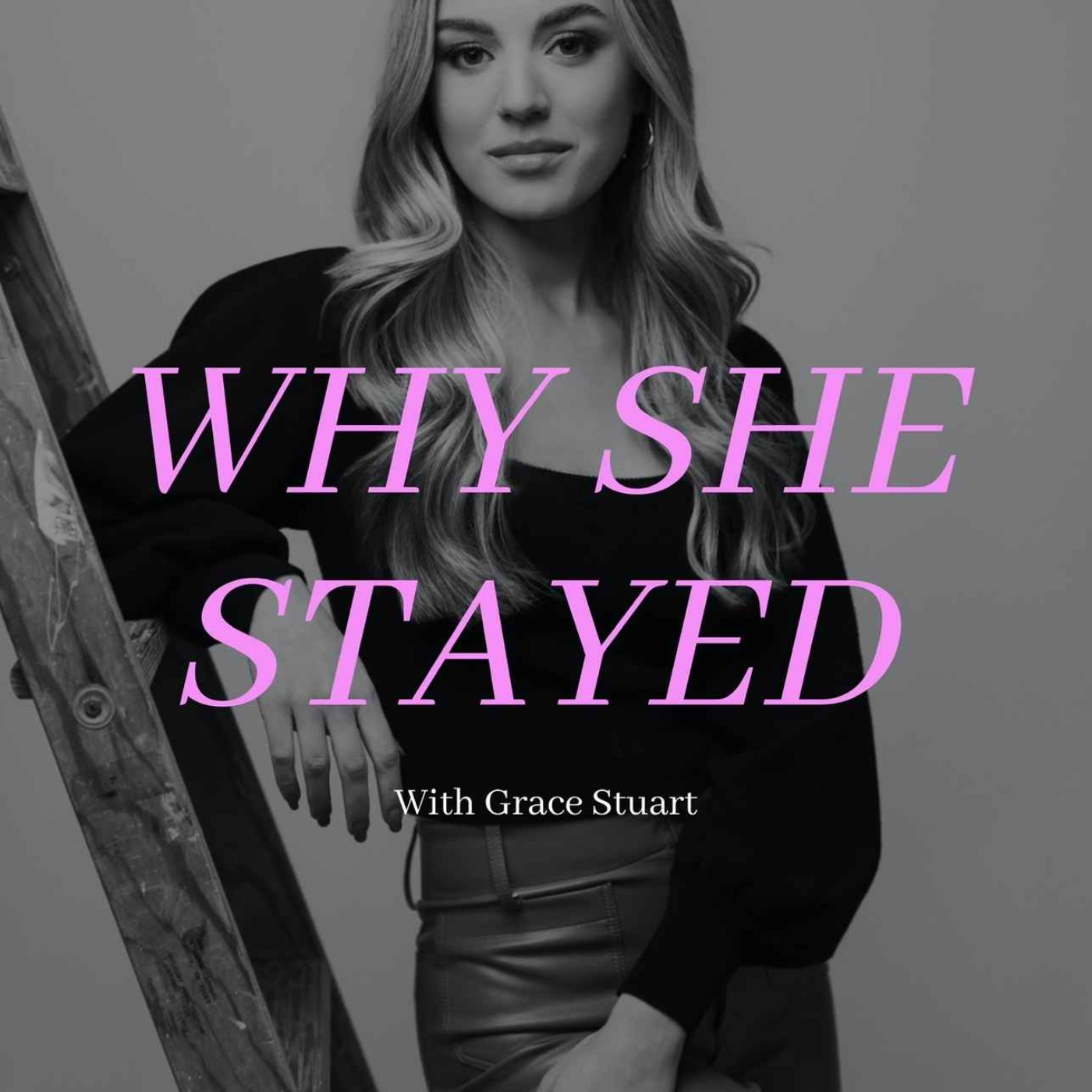
Why She Stayed
Subscribed: 201Played: 6,935
Subscribe

© Grace Stuart
Description
A podcast where we dive deep into what really goes on inside of domestic violence relationships that makes it so hard to simply "just leave". Through stories of survivors, and practical conversations with guests, I am going to put the microscope back on what the abuser is doing that causes us to become so trapped in the first place, and how each survivor was eventually freed. We will discuss what abusive relationships look like, sound like, and feel like for the purpose of educating and relating to one another in a much needed way.
Hosted on Acast. See acast.com/privacy for more information.
94 Episodes
Reverse
In this episode that originally aired on February 10th, Kelly shares her experience of being in a relationship where reality was constantly twisted. Her abuser was skilled at blame-shifting, making her feel like she was the problem for asking reasonable questions, having needs, or expecting basic respect.What made it even more confusing was how differently he showed up to the rest of the world. Friends, family, and acquaintances saw someone charming, easygoing, and well-liked. That contrast left Kelly feeling isolated, disoriented, and unsure of her own perception.This conversation is especially for anyone who is standing on the edge of a major commitment (like a wedding) and your gut is telling you something isn’t right, this episode may help you feel less alone, less dramatic, and more grounded in your truth. Sometimes the hardest thing isn’t leaving—it’s trusting yourself enough to believe what you already know.Guest Information: Kelly's Instagram pages- https://www.instagram.com/the.kellymichelle/?hl=en and https://www.instagram.com/ordinarilygolden/?hl=en Hosted on Acast. See acast.com/privacy for more information.
How do we read between the lines when our abuser has gotten really good at coloring within the lines?Deploying control often looks like mastering their craft and becoming “less messy.” As abusers become more skilled at controlling their partners, their methods may become harder to recognize, explain, and prove to others.We also talk about how they use "non-expensive" methods of control because "expensive methods" of abuse can leave evidence, make it easier for others to believe you, or help you trust yourself. This episode is about learning to look beyond what is obvious and recognizing the control that exists between the lines.All Links: Aimee Says tool: https://www.aimeesays.com/en/plan/selectBook a 1:1 with Grace: https://tr.ee/SKRHbDuUnZApply to be on the show: https://tr.ee/SKRHbDuUnZThe Control Code episode (Lindsay): https://podcasts.apple.com/us/podcast/ep-92-abusers-dont-lose-control-they-deploy-it-with/id1742281264?i=1000778726836 Hosted on Acast. See acast.com/privacy for more information.
In this episode, Hannah shares her story of what happens when coercive control slowly changes who you are.One of the things that ultimately helped Hannah leave was seeing the cycle of abuse unfold in such a short, compressed period of time. When the highs, lows, conflict, consequences, and reconciliation began happening so close together, she was able to see the pattern more clearly—and recognize that this wasn’t a series of isolated incidents.She also shares how he would repeatedly tell her that she needed to get out and pack her things. This became a powerful way of reversing victim and offender and shifting responsibility onto her.Aimee Says tool: https://www.aimeesays.com/en/plan/selectBook a 1:1 with Grace: https://tr.ee/SKRHbDuUnZGuest Instagram: https://www.instagram.com/haannahdanielle/?hl=en Hosted on Acast. See acast.com/privacy for more information.
In this episode, I’m sharing my honest thoughts on whether the word “narcissist” may actually be setting us back when it comes to understanding abuse and coercive control.We talk about why focusing so heavily on whether an abusive person is a “narcissist” can sometimes distract from what matters most: the behavior, the patterns, the power dynamics, and the impact of the abuse.I share my perspective on why I think it’s worth taking a step back from the narcissism conversation and looking more closely at coercive control and the dynamics of abuse.A Resource for Survivors: If you’re looking for additional support, check out Aimee Says, an AI tool designed to help survivors of domestic abuse.Use code GRACE at checkout: https://www.aimeesays.com/en/plan/select Hosted on Acast. See acast.com/privacy for more information.
In this episode, Helen shares her story of the subtle ways coercive control made her believe that she was the problem.She shares how he repeatedly blamed her for leaving “right when he was about to get things right,” pressured her sexually by suggesting other women would pursue him if she wasn't "his covering, and even involved their children by asking, “Do you want Dad to have to get a girlfriend?”Helen also describes how he compared her to other women and used criticism about her being “clumsy” to make her second-guess herself and constantly walk on eggshells.What looked like frustration, disappointment, or relationship problems was part of a larger pattern designed to shift the blame onto Helen and keep her focused on fixing herself.Aimee Says AI Tool: https://www.aimeesays.com/en/plan/selectUse Code GRACE at checkout for a discount.Helen's Instagram page: https://www.instagram.com/helennataliec/?hl=en Hosted on Acast. See acast.com/privacy for more information.

Comments

Download from Google Play

Download from App Store
 United States