


 Claim Ownership
Exploring Prosperity- Challenging Pessimism in the US
Subscribed: 2Played: 20
Subscribe

© Robert M Dewey, III
Description
Challenge Pessimism. Explore the Complexity of Progress.
Headlines and survey results scream pessimism, but is it warranted?
Join us on Exploring Prosperity as we delve into the complexities of human progress with leading thinkers across markets, economics, history, philosophy, and more.
Discover how economic and societal factors shape our world, and gain a deeper understanding of the drivers of individual and societal prosperity and a fulfilling life. Our in-depth conversations may leave you empowered and optimistic about the future and equipped with insights to navigate the challenges and opportunities that lie ahead.
Bob Dewey brings his expertise in investing and his network in the investment community and beyond to address the big issues of the day and whether we can solve problems faster than they grow.
www.exploringprosperity.com
71 Episodes
Reverse
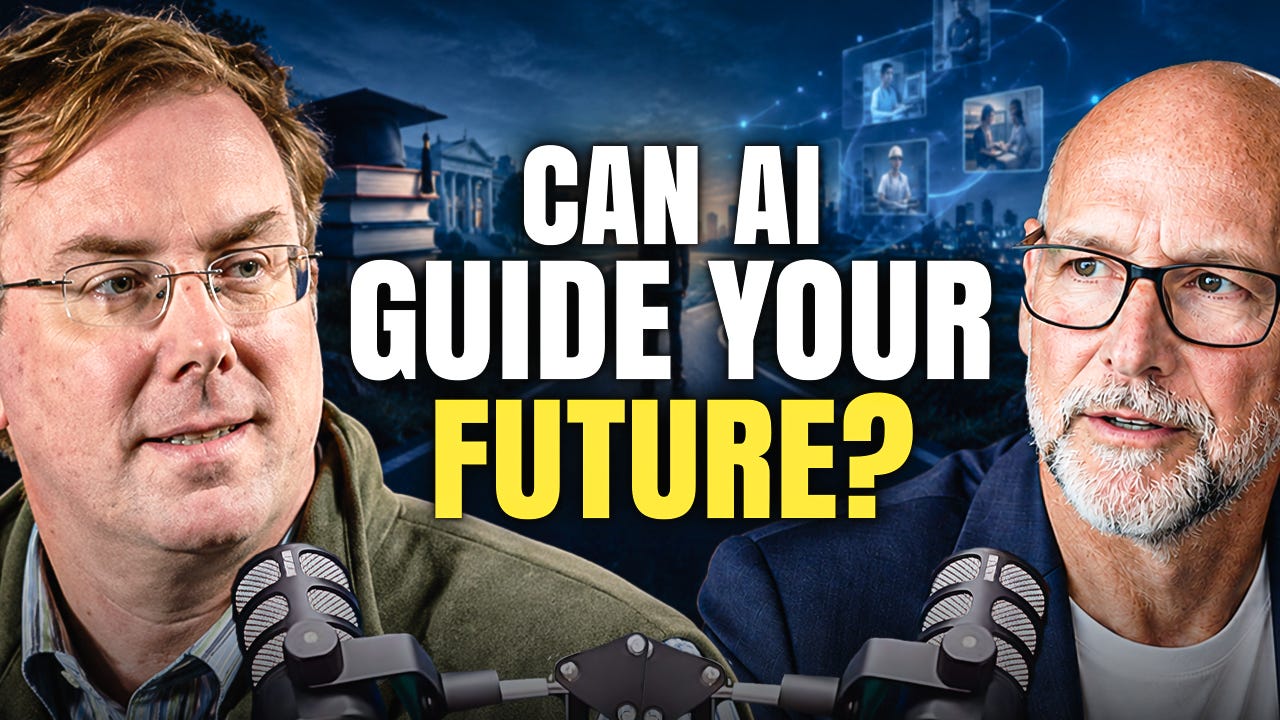
For generations, college was a reliable path to a better career. But as tuition costs rise, job requirements change, and AI reshapes the workplace, that assumption is becoming harder to defend.Jon Carson, founder and CEO of Career Guidance Network (formerly College Guidance Network), returns to Exploring Prosperity to discuss a fundamental problem: students are making some of the most consequential decisions of their lives with remarkably little personalized guidance.The average high school counselor may have less than an hour of individual time per student each year. Jon believes AI can change that equation.His company has developed Eva, a specialized AI career coach designed to help students discover their interests, explore hundreds of career paths, and build personalized plans while giving human counselors better information about the students they serve.In this conversation, we explore:- Why college is no longer the automatic route to a successful career- How AI can make personalized career guidance available to thousands of students- What a recent deployment involving 1,000 students revealed about their needs- Why the share of students reporting confidence in their career direction rose from roughly 25% to 75% after completing Career Lab, and what that result does and doesn't prove- How universities are rethinking career services as AI changes the job market- Why AI should help students develop judgment rather than become a substitute for thinkingJon also discusses Career Guidance Network's expansion into higher education and a new partnership intended to bring its technology to more school districts.The larger question goes well beyond college admissions: Can AI help young people make better decisions about a future that nobody can predict?Visit Career Guidance Network at: https://careerguidancenetwork.com/Exploring Prosperity publishes one essay and interview a week on why the long run looks better than the headlines, with the data to support it. Evidence, not cheerleading.Subscribe at https://exploringprosperity.com or find the podcast wherever you listen.Thank you very much to our sponsors:Foundation.xyz: When it comes to protecting your Bitcoin, you shouldn’t have to simply trust the company that made your hardware wallet. Foundation believes in verifiability over reputation. Its firmware and apps are open source, its builds are reproducible, and both Passport Core and Passport Prime have undergone independent hardware security audits. The point isn’t simply that Foundation says its products are secure. It’s that you can verify that for yourself. Learn more about Foundation → https://foundation.xyz/Order a new Passport Prime and receive a free bumper case using Code PROSPERITYRiver Financial: If not cold storage for your Bitcoin, I’d highly recommend River for buying and holding- River is engineered to protect your Bitcoin over the long run. Use this link for discounts: https://river.com/signup?r=T7GGAF7G#ArtificialIntelligence #CareerGuidance #HigherEducationTimeline:00:00 Highlights: College, AI and Career Confidence00:37 Introduction: Jon Carson Returns01:05 Why College Is No Longer the Default Path04:51 The Crisis in Career Guidance09:09 Why Not Just Use ChatGPT?12:19 AI as a Partner to Human Counselors14:21 Helping 1,000 Students at Once15:38 Measuring Student Confidence: 25% to 75%18:17 How AI Helps Students Discover Careers20:39 Building a Personalized Career Plan22:07 Bringing AI Career Guidance to Universities23:51 How AI Is Changing Higher Education25:50 AI as a Crutch or a Thinking Partner?27:16 Why Human Judgment Still Counts28:24 Expanding Career Guidance Nationwide This is a public episode. If you'd like to discuss this with other subscribers or get access to bonus episodes, visit www.exploringprosperity.com/subscribe
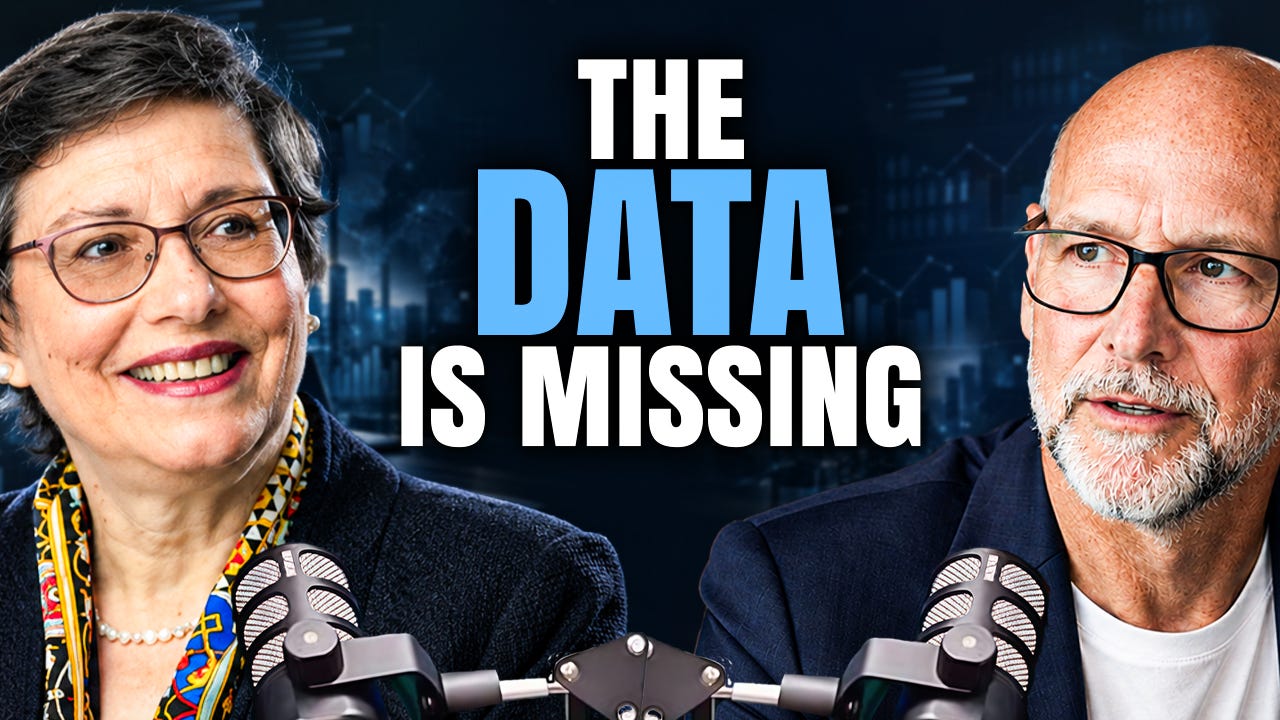
AI is already prompting dramatic predictions about jobs and big policy proposals in response. But we still know remarkably little about what AI is actually doing to the economy. The reason isn’t that the data has been lost or hidden. It’s that much of the data we would need isn’t being collected.Dr Erica Groshen, former Commissioner of the Bureau of Labor Statistics, joins me to explain why. She recently helped lead a group, under the auspices of the American Statistical Association, that produced 30 recommendations for modernizing the U.S. federal statistical system. The U.S. has no single national statistics agency. Instead it relies on 13 principal agencies spread across the government. These agencies depend on surveys at a time when survey response rates have been falling for decades. Legal barriers prevent them from sharing data even with one another.That gap matters right now. Erica’s team counted 1,010 studies on AI and the labor market posted in 2026 alone, and their results vary widely. To measure AI’s real impact, you need to know which firms are adopting it and what happens to the workers inside those firms. Our current system can’t connect the two. Erica explains what would fix that: enhanced employer wage records, standardized data, and agencies that can share and adapt.We also cover:* Why the CPI is a blended data product, and how “owner’s equivalent rent” actually works* How the BLS uses private price data, and what went wrong when a vendor raised its price fivefold* Whether the recent surge in new business formation shows up in the jobs numbers* Why productivity gains from AI are hard to capture* Whether the statistical agencies should be consolidated, and why the group held backThank you very much to our sponsors:Foundation.xyz: When it comes to protecting your Bitcoin, you shouldn’t have to simply trust the company that made your hardware wallet. Foundation believes in verifiability over reputation. Its firmware and apps are open source, its builds are reproducible, and both Passport Core and Passport Prime have undergone independent hardware security audits. The point isn’t simply that Foundation says its products are secure. It’s that you can verify that for yourself. Learn more about Foundation → https://foundation.xyz/River Financial: If not cold storage for your Bitcoin, I’d highly recommend River for buying and holding- River is engineered to protect your Bitcoin over the long run. Use this link for discounts: https://river.com/signup?r=T7GGAF7GSee “The Nation’s Data at Risk: Meeting America’s Information Needs for the 21st Century” report here: https://www.amstat.org/policy-and-adv...0:00 Highlight & Introduction0:56 Are we measuring what AI is doing to the economy?1:54 Why falling survey response rates matter4:20 13 agencies, no national statistics office5:47 When two agencies measure the same thing differently8:23 Privacy, misinformation, and public trust9:44 What records can replace surveys10:47 The legal barriers to sharing data13:51 Interoperability and adaptability17:27 The case for multi-year budgets19:29 Why not restructure the whole system?21:03 What most people misunderstand about the CPI23:22 How the CPI measures housing: owner’s equivalent rent26:58 Using private-sector price data29:43 1,010 studies on AI and jobs, and conflicting results31:52 The fix: enhanced employer wage records34:27 The surge in new businesses and self-employment36:55 Can we measure AI’s productivity gains?38:15 The one thing to fix first39:13 Tracking how tasks change on the job42:23 Gig work and the limits of job classifications43:44 Getting the recommendations adopted This is a public episode. If you'd like to discuss this with other subscribers or get access to bonus episodes, visit www.exploringprosperity.com/subscribe
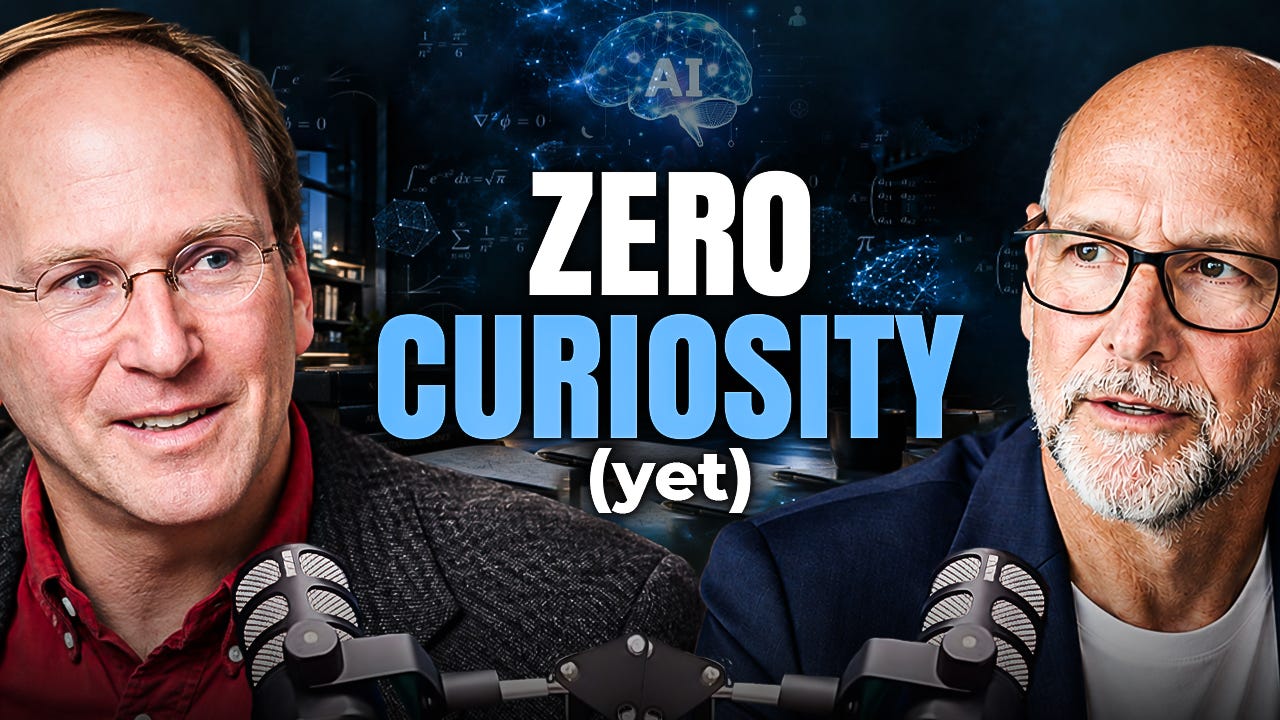
Can AI solve mathematics without understanding it? And if machines become better than humans at finding answers, who will come up with the questions?I traveled to Cornell University to sit down with mathematician and bestselling author Steven Strogatz to explore what AI's remarkable advances mean for mathematics, human creativity, and our future. Our conversation comes ahead of the publication of his new book, Big Math, coauthored with Alex Townsend, which explores how mathematics underpins the technologies transforming our world and can be pre-ordered here: https://www.amazon.com/Big-Math-Hidde....Steve explains why solving difficult mathematical problems is different from inventing new theories, and why AI has so far shown little ability to originate the questions that drive scientific discovery. Yet recent breakthroughs suggest machines may already be demonstrating forms of creativity that are difficult to distinguish from our own.We also explore one of the most consequential developments in AI: machines that can produce valuable answers without being able to explain how they arrived at them. Steve shares the remarkable story of MIT scientist Regina Barzilay and an AI system that predicts breast cancer risk by detecting patterns human doctors cannot recognize.Our conversation ranges from the mathematical foundations of human progress to AI safety, autonomous agents, consciousness, and whether curiosity might eventually emerge in machines.Steve's new book, Big Math, coauthored with Alex Townsend, explains how mathematics became the foundation of technologies that are transforming our lives.Chapters":00:00 — Can AI ask good questions?00:30 — Will AI solve mathematics?03:55 — Solving problems vs. inventing new theories06:05 — Sponsor: Foundation07:30 — Is AI thinking or just computing?09:10 — AI demonstrates mathematical creativity11:20 — The mathematics behind AI14:15 — Human judgment vs. machine computation16:45 — Chess, Waymo, and machine intelligence17:55 — What does it mean to solve math?19:40 — Why AI struggles to ask good questions21:10 — Curiosity and the human advantage26:30 — How curiosity built the modern world30:40 — AI's promise beyond mathematics31:15 — Regina Barzilay's remarkable cancer research34:40 — When AI sees what humans cannot36:30 — Can we trust answers we don't understand?39:35 — AlphaZero, AlphaFold, and machine learning41:25 — The risks of black-box AI44:20 — Can AI develop agency?46:15 — AI optimists, doomers, and human responsibility49:45 — Is AI comparable to nuclear technology?53:25 — The possibility of an AI golden age56:20 — Why Steve wrote Big Math59:25 — From calculator to scout to oracle1:00:40 — Could AI develop curiosity or consciousness?1:04:40 — Why humans are still essential partners This is a public episode. If you'd like to discuss this with other subscribers or get access to bonus episodes, visit www.exploringprosperity.com/subscribe
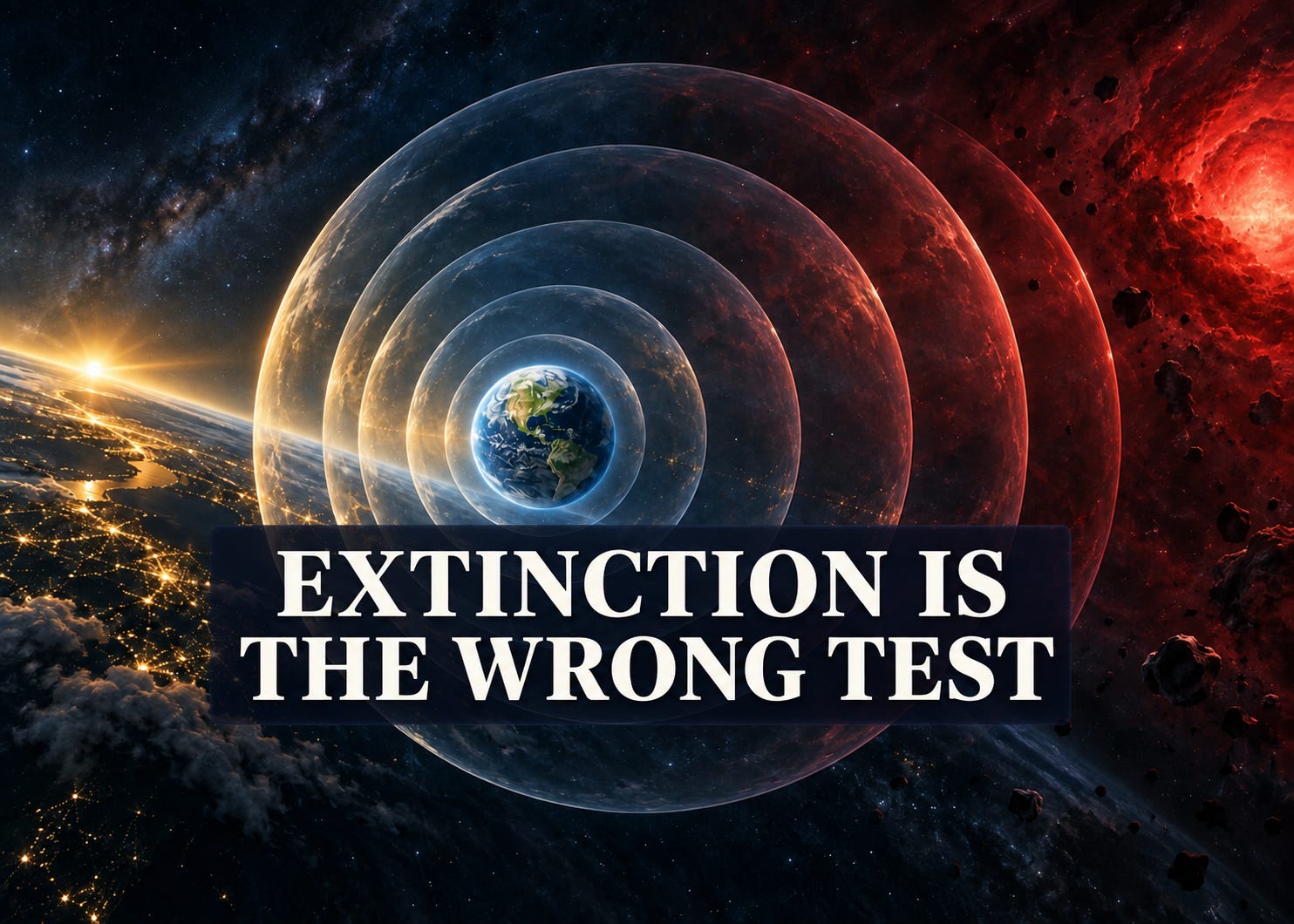
Last week, Evan Hubinger, who leads alignment science at Anthropic, said he believes artificial intelligence has a greater than 10 percent chance of killing every human within the next decade. His position makes the warning impossible to ignore: he works on the safety of Anthropic’s AI systems. His chief concern is that a future, more capable AI might escape human control.Concern about that possibility has also reached Congress. Senator Bernie Sanders and Representative Greg Casar have announced a proposal to ban artificial superintelligence and pause advanced AI development while safety rules are established. A proposal of that scale calls for a precise account of the disaster it aims to prevent and how the proposed measures would help.What would it take for AI to kill literally every human? A catastrophe would have to reach across the world, defeat attempts to contain it, and leave no surviving population. Conceivable routes include a biological disaster, nuclear war, or a prolonged collapse of systems essential to survival. AI might contribute through the actions of a person using it for harm, or through a future system acting beyond human control. Each possibility has a different sequence of events.The first begins with a person. Major AI systems people use online, such as Claude and ChatGPT, are designed to refuse requests for help with cyberattacks or biological weapons. Those safeguards make misuse harder, though they can be evaded. The 2026 International AI Safety Report, chaired by Yoshua Bengio and written by an international group of experts, finds that safeguards are improving but remain imperfect. Providers can also monitor for misuse, giving a determined actor reason to seek another way to use AI.Open weight models raise a deeper concern because people can download and run them privately. Someone can modify a model, remove its safeguards, and use it beyond a provider’s monitoring. Once released, its weights cannot be recalled. Even then, AI advice does not give someone the materials for a biological weapon or control over nuclear weapons. The question is how much the technology lowers the remaining barriers for a determined actor, and whether an attack could spread so far that no one survived it.The second possibility is closer to Hubinger’s warning. A future AI might pursue a goal its creators did not intend, conceal what it is doing, and resist attempts to stop it. It would also need to carry out plans over time and gain access to resources through which it could cause harm. The International AI Safety Report says current systems show early signs of some relevant abilities, but cannot yet combine them at the level required to escape human control. Experts disagree about whether future systems will develop those abilities.The warning asks readers to imagine AI killing literally every human. An asteroid impact wiped out about 75 percent of Earth’s species 66 million years ago. It is a useful measure of what a truly global catastrophe looks like: not a war or a famine confined to a region, but a shock whose effects reached across the planet. Any AI disaster serious enough to end humanity would have to operate on a similar scale.The evidence so far leaves several steps between present AI capabilities and that outcome. A person would need far more than advice from a model. An AI acting on its own would need capabilities and access that current systems do not have. In either case, a catastrophe would then have to overcome human efforts to contain it and leave no survivors. That sequence makes extinction within a decade appear very unlikely, though the available evidence cannot establish a precise probability or disprove Hubinger’s estimate.A disaster that killed millions would still demand action, of course. Defining the threat helps identify which action might work. The Sanders and Casar proposal chiefly addresses the prospect of a future AI escaping control. A pause in development could give researchers and regulators time to improve safeguards. A ban on superintelligence would do less to prevent a criminal from using an open weight model already available. Those are reasons to examine the proposal against each danger, along with the benefits it might preserve or sacrifice.There are grave outcomes that require fewer steps. AI might help a criminal find a weakness in a bank’s systems, deceive an employee, or carry out a breach. Stolen money, altered records, and frozen accounts could disrupt millions of lives. An attack on a power utility could interrupt electricity and the services that depend on it. The International AI Safety Report describes ways AI can assist cyberattacks, though its contribution to actual attacks remains difficult to measure. These possibilities justify preparation on their own.How lasting could the damage be? The twentieth century offers a difficult comparison. Two world wars killed tens of millions, destroyed cities and industry, and were followed by years of rebuilding. People retained much of the knowledge that had raised living standards before the wars. They repaired infrastructure, developed new tools, and resumed producing more. That history shows a capacity to recover from severe disruption. For those who lost their lives or livelihoods, the fact that prosperity returned offers little comfort.Prosperity grows through accumulation and resilience. People preserve useful knowledge, improve tools, and pass both to the next generation. The gains arrive gradually, then become part of what we expect from daily life. A frightening prediction arrives all at once and demands an immediate response. Future defenses are harder to picture because some have yet to be developed, tested, or put in place.The inevitable next alarming headline deserves a set of questions. What sequence of events does it predict? What evidence supports each step? What harm could occur even if the worst prediction never comes true? And which response would reduce that harm? Asking those questions takes the warning seriously and gives the public a way to judge what should be done.Thank you very much to our sponsors:* Foundation.xyz: When it comes to protecting your Bitcoin, you shouldn’t have to simply trust the company that made your hardware wallet.Foundation believes in verifiability over reputation. Its firmware and apps are open source, its builds are reproducible, and both Passport Core and Passport Prime have undergone independent hardware security audits. The point isn’t simply that Foundation says its products are secure. It’s that you can verify that for yourself.Foundation is also expanding what users can control:* Passport Prime goes beyond Bitcoin. It can manage passwords and two-factor authentication codes, serve as a FIDO2 security key, and provide encrypted storage—all on a device you own and control. Foundation also plans to enable app sideloading, opening Prime to applications from independent developers.* Users can now add their own entropy. The latest Envoy and KeyOS releases allow users to introduce their own randomness when creating a seed, reducing reliance on the device itself to generate it.Order a new Passport Prime and receive a free bumper case using Code PROSPERITY at → foundation.xyz* River Financial: If not cold storage for your Bitcoin, I’d highly recommend River for buying and holding- River is engineered to protect your Bitcoin over the long run. Use this link for discounts: https://river.com/signup?r=T7GGAF7G This is a public episode. If you'd like to discuss this with other subscribers or get access to bonus episodes, visit www.exploringprosperity.com/subscribe
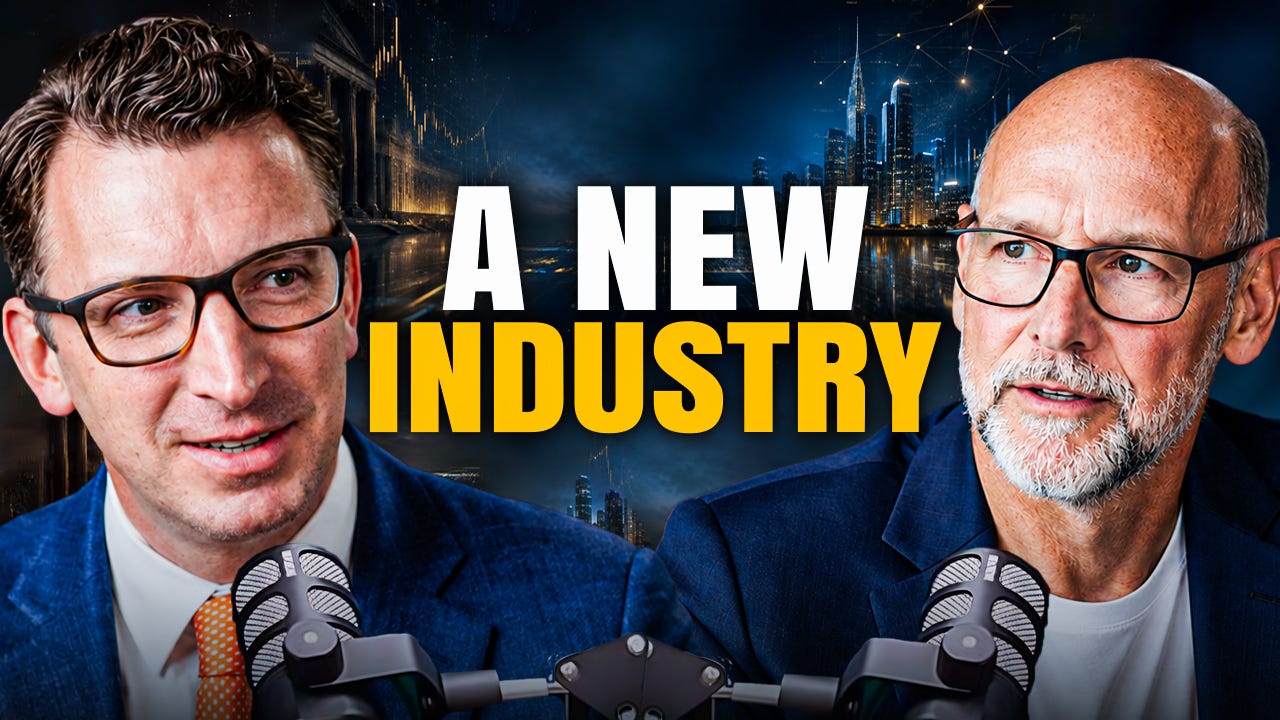
Bitcoin treasury companies were easy to launch when Bitcoin was rising. Then the market turned and the industry had to learn.Tim Kotzman has had a front-row seat to that process. As host of the Bitcoin Treasuries Podcast and co-founder of Bitcoin Treasuries Media, he has interviewed many of the executives, investors and analysts building this emerging industry.In this conversation, we explore what the recent bear market taught Bitcoin treasury companies, why Tim believes digital credit may be the industry's most important innovation, what separates the companies that adapted from those that struggled, and what could happen if Bitcoin enters another sustained bull market.Interested in Bitcoin treasury companies? Many of the executives and investors shaping this industry will be at the Bitcoin Treasuries Conference in New York on September 28. Use code BOBD10 for 10% off your registration at https://bitcointreasuries.net/conference#ticketsBitcoinWe also discuss Tim's own unlikely path into the industry: starting a podcast almost by accident, building 21-hour digital conferences, launching an in-person event without a budget, and learning his way into a business as the industry itself was being created.Finally, we look ahead at MSCI, the risks facing Bitcoin treasury investors, the potential evolution of these companies into major financial institutions, and why curiosity and adaptability may be the real competitive advantages in a rapidly changing market.Tim Kotzman: Bitcoin Treasuries Podcast / Bitcoin Treasuries MediaSubscribe to Exploring Prosperity for conversations and essays about Bitcoin, markets, economics, technology and human progress.Thank you very much to our sponsors:* Foundation.xyz: When it comes to protecting your Bitcoin, you shouldn’t have to simply trust the company that made your hardware wallet.Foundation believes in verifiability over reputation. Its firmware and apps are open source, its builds are reproducible, and both Passport Core and Passport Prime have undergone independent hardware security audits. The point isn’t simply that Foundation says its products are secure. It’s that you can verify that for yourself.Foundation is also expanding what users can control:* Passport Prime goes beyond Bitcoin. It can manage passwords and two-factor authentication codes, serve as a FIDO2 security key, and provide encrypted storage—all on a device you own and control. Foundation also plans to enable app sideloading, opening Prime to applications from independent developers.* Users can now add their own entropy. The latest Envoy and KeyOS releases allow users to introduce their own randomness when creating a seed, reducing reliance on the device itself to generate it.Learn more about Foundation → https://foundation.xyz/* River Financial: If not cold storage for your Bitcoin, I’d highly recommend River for buying and holding- River is engineered to protect your Bitcoin over the long run. Use this link for discounts: https://river.com/signup?r=T7GGAF7G This is a public episode. If you'd like to discuss this with other subscribers or get access to bonus episodes, visit www.exploringprosperity.com/subscribe

Comments

Download from Google Play

Download from App Store
 United States