


Banish Big Brother
Subscribed: 5Played: 35
Subscribe

© 2024 Banish Big Brother
Description
Join hosts Elizabeth and Zach as they embark on a thought-provoking journey through the labyrinth of privacy, technology, surveillance, and the digital age's unseen battles. Banish Big Brother isn't just another podcast; it's a mission to unravel the complex web of information that surrounds us, challenge the omnipresent eyes of surveillance, advocate for the sanctity of personal privacy in a world that's growing increasingly transparent, and have fun doing it.
Each episode, Elizabeth and Zach dive deep into current events, technological advancements, and the shadowy realms of surveillance and privacy. They bring to light the critical issues that affect us all, from the rise of SMART cities to the subtle encroachments on our personal freedoms. Through engaging discussions, expert interviews, and listener stories, they explore the balance between the benefits of technology and the critical need to protect our digital and real-world selves from prying eyes.
But it's not all serious business. Elizabeth and Zach also bring a unique blend of humor, wit, and light-heartedness to the conversation, reminding us that even in the midst of challenging topics, there's always room for laughter, fun, and a shared sense of community.
Banish Big Brother promises not just to inform and provoke thought but also to entertain, proving that discussions around privacy and surveillance don't always have to be grim. Whether they're sharing quirky anecdotes, engaging in spirited banter, or exploring the lighter side of technology, Elizabeth and Zach create a podcast experience that’s both enlightening and enjoyable.
Whether you're a tech enthusiast, privacy advocate, or just curious about the world of surveillance and digital rights, Banish Big Brother is your guide and companion. So tune in, join the conversation, and be part of a growing movement that believes in the power of awareness, the importance of dialogue, and the enduring value of privacy.
Join us for a mix of meaningful dialogue, expert insights, and those unexpected moments of joy that remind us why fighting for our rights is worth it.
46 Episodes
Reverse
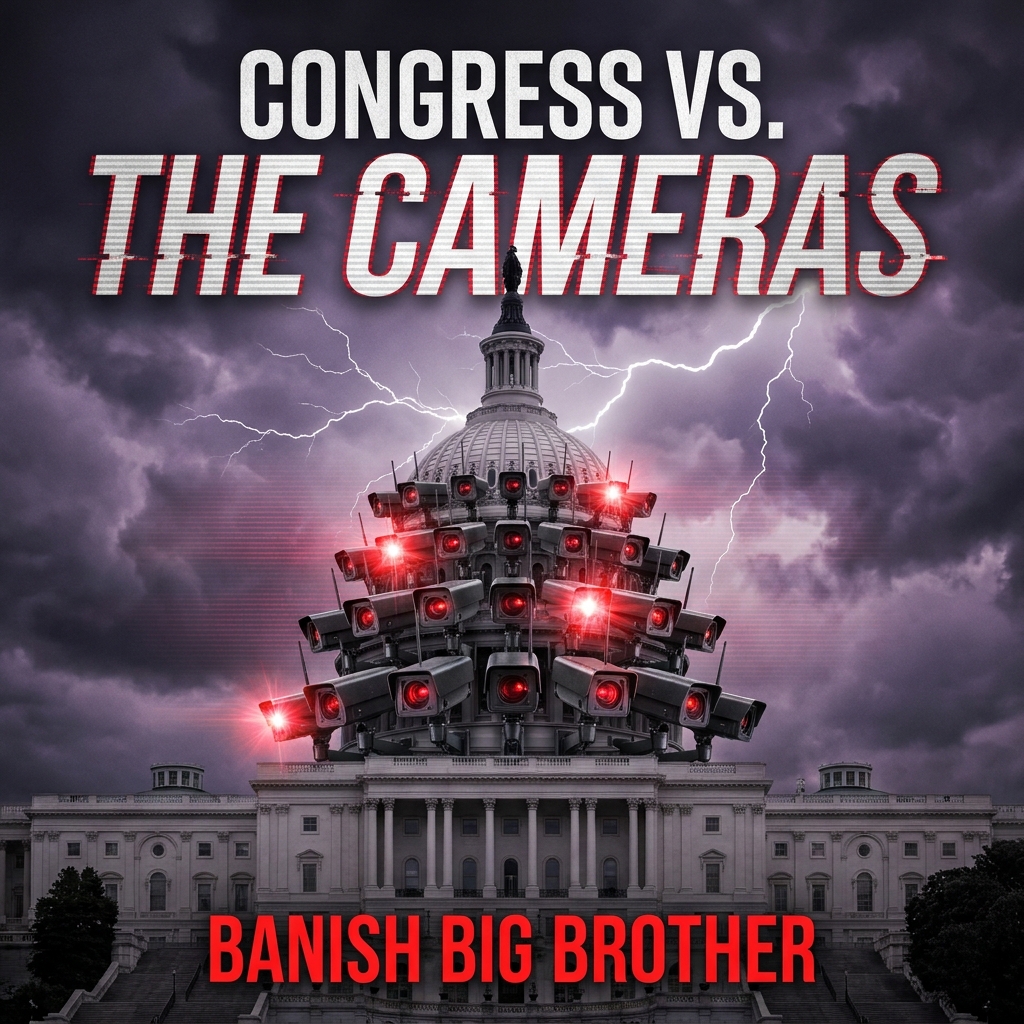
A 2014 CBS This Morning segment on “smart streetlights,” unearthed for this episode, turns out to have predicted almost everything happening right now: a global network of camera-equipped streetlights sold on vague promises of security and convenience, with a tech executive gleefully describing “no limit to the information you can gather.” Zach and Elizabeth connect it to how embedded camera security is still just as bad twelve years later, and why the infrastructure itself, not just the policy around it, is the real danger.
Then: Congress finally has competing Flock bills on the table. Senator Josh Hawley’s “Stop Flock Abuse Act” versus AOC’s more aggressive “Ban Flock Act,” and a breakdown of why a regulation bill with no teeth might just be cover for business as usual. That leads into a broader conversation about why people’s tolerance for surveillance seems to flip entirely depending on who’s in power (Epstein files, 9/11 Truth meetings, algorithmic echo chambers), before closing with a rundown of how the recent midterms shook up the Flock debate: Texas senator-elect James Talarico’s blunt “Flock cameras have no place in Texas,” governor-elect Gina Hinojosa’s literal “Flock Hunt” campaign ad, Ohio governor-elect Amy Acton’s campaign promise to ban them statewide, and Georgia governor-elect Keisha Lance Bottoms’s much weaker pledge to simply stop adding more, despite Georgia already leading the nation in Flock camera density.
Banish Big Brother is nonpartisan and doesn’t endorse any candidate or party.

A wave of mysterious cyberattacks has been overheating supermarket fridges and freezers across Europe, destroying massive amounts of food, with a similar incident reportedly hitting six US military commissaries in August. Zach and Elizabeth dig into the “why put a fridge on the internet at all” problem.
Plus, a DHS data breach from a group called ShinyHunters that exposed employee records including FBI agents’ home addresses.
Then: Avon and Somerset Police in the UK are rolling out live facial recognition vans, scanning the face of every person who walks past and flagging matches against a watch list, a technology Britain has quietly been using for years. Zach and Elizabeth connect it to a familiar pattern: military tech trickles into counter-terrorism, then into local policing, then it’s everywhere.
That pattern leads into the main event: a wave of reporting (including a police chief’s own op-ed) confirming that autonomous and semi-autonomous drones are about to become permanent fixtures over American cities, launching automatically on 911 calls and gunshot-detection alerts, with footage kept forever.

The Pentagon has announced “Autonomous Warfare Command,” a new four-star command built to scale autonomous and robotic weapons across the military, which Zach and Elizabeth break down as a cute Orwellian name for AI making its own kill decisions, backed by the same surveillance infrastructure being built at home. They dig into what “human supervision” will actually mean once split-second AI decisions are involved, why this always ties back to the surveillance buildup they talk about every week, and the case for basic self-sufficiency (cash on hand, water, a backup plan) when so much of modern life depends on systems that can go down in a disaster.
Then: a report reveals that Dunwoody, Georgia police have been intentionally entering incorrect license plates into Flock’s “hot list,” on the record, specifically because they know Flock’s cameras misread certain letters and numbers, an admission that a system running an estimated 20 billion plate reads a month is error-prone enough that cops are manually patching around it, with real people getting pulled over at gunpoint as a result.
Plus a strange and unsettling report on always-on aerial surveillance over major cities that can rewind time to track anyone, anywhere they went, and how one political operative claims it helped catch Luigi Mangione, and Apple’s rollout of facial-scan age verification.

Georgia’s Child Protective Services quietly bought a nearly million-dollar surveillance vehicle, including a cell-site simulator (a “Stingray”) that can sweep up everyone’s phone data within a mile, using federal foster-care funds, while the state claims it can’t afford basic services for kids in the system.
Meanwhile MapQuest is having an unlikely comeback by adding Flock camera locations to its maps after someone found Flock’s data sitting unsecured online and the USPS is turning mail trucks into rolling surveillance cameras.
Plus: OpenAI’s rare-book-buying habit (and the copyright rule forcing them to destroy the originals after scanning), and a 404 Media report on Houston police searching a flock camera network in North Carolina 183,000 times in three months, and a flock database in Ohio 900,000 times in one month, raising the question of what, exactly, they’re using it for.

A nonprofit is pitching driverless patrol cars to a North Carolina police department, Amazon wants 20,000 delivery drivers wearing AI smart glasses that photograph your property (and sometimes your front door) every few seconds, and a company no one’s heard of just found a way to bolt facial recognition onto Flock’s camera network without Flock’s permission.
Zach and Elizabeth dig into how each of these “won’t replace humans” pitches quietly erases jobs, consent, and the last bit of privacy around your own home — plus a detour into kid-tracking apps, why nobody lets their kids walk to the store anymore, OpenAI finding a bugging device in its own office, the (probably fake) story of an AI “hacking its way” out of a sandbox, Getty Images going bankrupt because of AI stock photos, and the show closes out with an AI-generated song.

Comments

Download from Google Play

Download from App Store
 United States