


 Claim Ownership
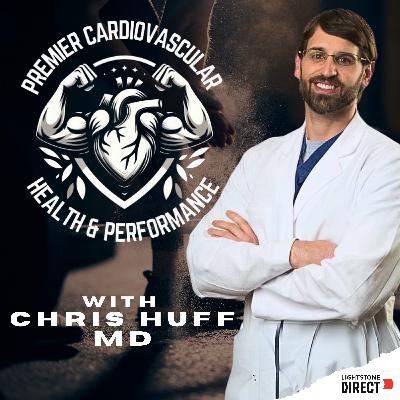
Premier Cardiovascular Health and Performance Podcast
Subscribed: 6Played: 69
Subscribe

© 2024 Premier Cardiovascular Health & Performance Podcast
Description
Dr. Chris Huff, an interventional cardiologist, is here to help you master heart health. With a focus on prevention, this podcast offers real advice on how to eat better, exercise smarter, and understand your medical check-ups.
Dr. Huff breaks down complex topics into clear, actionable steps, helping you live a healthier, longer life with a strong heart. Perfect for anyone looking to improve their well-being.
Dr. Huff breaks down complex topics into clear, actionable steps, helping you live a healthier, longer life with a strong heart. Perfect for anyone looking to improve their well-being.
53 Episodes
Reverse
A heart attack may happen suddenly, but the disease responsible for it often begins years—or even decades—earlier.Dr. Chris Huff shares the story of a fit, active patient whose heart attack seemed unlikely until a completely blocked coronary artery was discovered in the catheterization lab. The case illustrates a critical lesson: fitness, a normal BMI, reassuring cholesterol numbers, and even a normal stress test do not necessarily rule out coronary atherosclerosis.In this episode, Dr. Huff breaks down what LDL cholesterol, ApoB, lipoprotein(a), blood pressure, calcium scoring, stress testing, and coronary CTA actually reveal. He also explains why more testing is not always better, how to match the test to the clinical question, and what to do when plaque is identified.What You’ll LearnWhy fitness and feeling well do not guarantee plaque-free coronary arteriesHow coronary atherosclerosis can develop silently for decadesWhy a heart attack may originate from plaque that was not previously causing symptomsThe difference between plaque burden, stenosis, ischemia, and plaque instabilityWhy a normal stress test does not necessarily mean your coronary arteries are cleanHow stress testing and coronary CTA answer different clinical questionsWhat LDL cholesterol tells you—and what it can missWhy ApoB provides a better estimate of atherogenic particle burden than LDL-CWhy lipoprotein(a), or Lp(a), should generally be measured at least onceHow family history can reveal risks that may not appear on a standard lipid panelWhat a coronary artery calcium score measuresWhy a calcium score is not a percentage of arterial blockageWhat a calcium score of zero can—and cannot—tell youHow calcium scoring may help guide decisions about preventive treatmentWhen coronary CTA may provide useful information beyond a calcium scoreWhy testing should be ordered only when the results can meaningfully influence careHow lifestyle changes and medical therapy can work together to reduce cardiovascular riskWhy blood pressure, metabolic health, fitness, strength, sleep, and smoking status all matterKey TakeawayFitness is powerful, but it is only one part of the cardiovascular-health dashboard. Feeling healthy, exercising regularly, or receiving a normal stress-test result does not prove that coronary atherosclerosis is absent.Effective prevention requires understanding the full picture—including blood pressure, LDL cholesterol, ApoB, Lp(a), glucose control, family history, fitness, and, when appropriate, coronary imaging. The goal is not to order every available test. It is to use the right information in the right person—and then act on it early enough to change the trajectory of the disease.About the ShowDr. Chris Huff is an interventional cardiologist, endurance athlete, and mountain climber who coaches clients through structured health and weight-loss programs. Each episode translates the evidence behind fitness, nutrition, recovery, and longevity into practical steps you can start using this week.Have a question you’d like answered on the show? Send it through the website or send a DM on Instagram or Facebook.Work with Dr. Chris Huff: Premier Cardiovascular HealthConnect on FacebookFollow on Instagram: @hufcmReferencesBlumenthal RS, Morris PB, Gaudino M, et al. 2026 ACC/AHA/AACVPR/ABC/ACPM/ADA/AGS/APhA/ASPC/NLA/PCNA Guideline on the Management of Dyslipidemia. Journal of the American College of Cardiology. 2026. JACC DOI | Circulation DOIMandsager K, Harb S, Cremer P, Phelan D, Nissen SE, Jaber W. Association of Cardiorespiratory Fitness With Long-term Mortality Among Adults Undergoing Exercise Treadmill Testing. JAMA Network Open. 2018;1(6):e183605. View studyStone GW, Maehara A, Lansky AJ, et al.; PROSPECT Investigators. A Prospective Natural-History Study of Coronary Atherosclerosis. New England Journal of Medicine. 2011;364:226–235. View studyGulati M, Levy PD, Mukherjee D, et al. 2021 AHA/ACC/ASE/CHEST/SAEM/SCCT/SCMR Guideline for the Evaluation and Diagnosis of Chest Pain. Journal of the American College of Cardiology. 2021;78(22):e187–e285. View guidelineSCOT-HEART Investigators. Coronary CT Angiography and 5-Year Risk of Myocardial Infarction. New England Journal of Medicine. 2018;379:924–933. View studyJones DW, Ferdinand KC, Taler SJ, et al. 2025 AHA/ACC Guideline for the Prevention, Detection, Evaluation, and Management of High Blood Pressure in Adults. Journal of the American College of Cardiology. 2025;86(18):1567–1678. JACC DOI | Circulation DOIDzaye O, Dardari ZA, Cainzos-Achirica M, et al. Warranty Period of a Calcium Score of Zero: Comprehensive Analysis From MESA. JACC: Cardiovascular Imaging. 2021;14(5):990–1002. View study
Disclaimer: The information provided in this podcast is for educational and informational purposes only and is not intended as medical advice. Always consult with a qualified healthcare provider before making any decisions about your health or medical treatment. Hosted by Simplecast, an AdsWizz company. See pcm.adswizz.com for information about our collection and use of personal data for advertising.
Travel does not have to erase the progress you have made. The key is to stop expecting your routine on the road to look exactly like your routine at home.
Dr. Chris Huff breaks down the difference between vacation travel and frequent work travel, including why he treats vacation more like a recovery or deload week while using a much more structured plan for work trips. His goal is not to chase personal records while away - it is to protect momentum.
From scheduling non-negotiable gym days and adapting workouts to limited hotel equipment, to building meals around protein, controlling restaurant portions, limiting alcohol, and protecting sleep, Dr. Huff shares the habits that make travel sustainable without falling into an all-or-nothing mindset.
What You’ll Learn
Why the goal during travel should be maintaining momentum rather than chasing PRs
How Dr. Huff approaches vacation travel differently from frequent work travel
Why moving every day matters even when a formal workout is not possible
How to plan non-negotiable strength sessions and flexible cardio around your schedule
Why shorter, harder workouts can replace longer sessions when time is limited
How to build a Plan A, Plan B, and Plan C for gyms, hotel fitness rooms, or bodyweight workouts
How to make light hotel dumbbells more challenging using slower eccentrics, higher reps, shorter rest, and burnout sets
Why a fridge or kitchen can make nutrition much easier during longer work trips
How keeping two meals predictable can help control calories when one meal is outside your control
Why protein should anchor meals, followed by vegetables and whole grains when available
Simple restaurant strategies: skip unnecessary extras, limit alcohol, and consider boxing half the meal before eating
Why a short walk after a large meal is one of the easiest travel habits to add
How protecting sleep supports both recovery and the likelihood that you will exercise the next morning
Why you should return to your normal routine immediately after travel instead of using fasting, punishment workouts, or a detox to compensate
Key Takeaway
Successful travel is not about doing everything perfectly. It is about identifying the behaviors that preserve your momentum. Move every day, plan ahead, adapt to the time and equipment available, keep nutrition simple, protect your sleep, and avoid all-or-nothing thinking. When you get home, resume your normal routine immediately.
About the Show
Dr. Chris Huff is an interventional cardiologist, endurance athlete, and mountain climber who coaches clients through structured health and weight-loss programs. Each episode translates the evidence behind fitness, nutrition, recovery, and longevity into practical steps you can start using this week.
Have a question you’d like answered on the show? Send it through the website or send a DM on Instagram or Facebook.
Work with Dr. Chris Huff: Premier Cardiovascular Health
Connect on Facebook
Follow on Instagram: @hufcm
Referenced Concepts in Episode
Travel as a maintenance phase rather than a performance-building phase
Deload and recovery weeks during vacation
All-or-nothing thinking and long-term health consistency
Daily movement and maintaining exercise momentum
Short-duration interval training and full-body hotel workouts
Progressive overload using eccentric tempo, higher repetitions, shorter rest periods, and burnout sets
High-protein, calorie-controlled meals and predictable meal routines
Protein-first meal construction with vegetables and whole grains
Restaurant portion control and boxing part of a meal before eating
Alcohol intake, sleep quality, and recovery
Post-meal walking and postprandial glucose use
Sleep consistency, caffeine timing, and time-zone adjustment
Returning directly to a normal routine after travel rather than compensatory fasting, excessive cardio, or detoxes
Disclaimer: The information provided in this podcast is for educational and informational purposes only and is not intended as medical advice. Always consult with a qualified healthcare provider before making any decisions about your health or medical treatment. Hosted by Simplecast, an AdsWizz company. See pcm.adswizz.com for information about our collection and use of personal data for advertising.
Most people don’t fail at getting healthy because they lack information. They fail because they wait for a perfect starting point, compare themselves to people they see online, or chase advanced tactics before the basics are in place.
Back in the studio after a busy summer, Dr. Chris Huff walks through fifteen tips he’s landed on after years as a physician, an athlete, and a coach. He covers the mindset shifts that keep people in the game, what the evidence actually says about cardio and strength training, why recovery is non-negotiable as you age, and the small nutrition decisions that quietly determine whether a weight-loss effort works.
Along the way he shares stories from his own household — including the third-grade essay he never turned in, and the lesson his thirteen-year-old daughter learned the hard way about taking rest days.
What You’ll Learn
How to measure progress against yourself rather than against other people
Why protecting a morning training window is the single easiest way to stay consistent
How interval training makes cardio sessions go faster and deliver more
Why beginners should simply accumulate minutes instead of chasing zone two, HIIT, or LISS
The five levers of progressive overload: more weight, more reps, more sets, slower eccentrics, and shorter rest — and why rest shouldn’t drop below ninety seconds
What a recovery routine actually looks like: seven-plus hours of sleep, 100+ ounces of water a day, limited alcohol, and optional sauna and cold plunge
Which three supplements have real evidence behind them — and why none of them are required
Why a caloric deficit, not extra exercise, is what drives weight loss
How eating consistently for two meals a day makes calorie control almost automatic
Why snacking from the fridge instead of the pantry changes your results
How to build flexibility into your nutrition so the plan is sustainable
How to set small, achievable goals that compound into big ones
Key Takeaway
Health isn’t built on perfect weeks. It’s built on starting before you’re ready, mastering the basics before the details, protecting your recovery, and staying consistent about 80% of the time.
Compare yourself to who you were yesterday. Set a goal you can actually reach. Then set a bigger one.
About the Show
Dr. Chris Huff is an interventional cardiologist, endurance athlete, and mountain climber who coaches clients through structured health and weight-loss programs. Each episode translates the evidence behind fitness, nutrition, recovery, and longevity into practical steps you can start using this week.
Have a question you’d like answered on the show? Send it through the website or send a DM on Instagram or Facebook.
Work with Dr. Chris Huff: Premier Cardiovascular Health
Connect on Facebook
Follow on Instagram: @hufcm
Referenced Concepts in Episode
“Comparison is the thief of joy” — a quote often attributed to Teddy Roosevelt
Cardiorespiratory fitness, VO2 max, and longevity
Mortality benefit of 150–300 minutes of weekly cardio, and gender differences in that benefit (Journal of the American College of Cardiology)
Strength training and reduced mortality, frailty, and fall risk
Progressive overload and eccentric loading
Sauna use and cardiovascular risk reduction (Finnish data) — see the previous sauna episode
Cold plunge for recovery, and the theoretical concern about blunting adaptation
Creatine monohydrate, caffeine, and whey protein
Constrained total daily energy expenditure and metabolic adaptation
Caloric deficit math and calorie tracking
Flexibility as the foundation of sustainability
Coming up next week: how to stay on track with your health goals while traveling.
Disclaimer: The information provided in this podcast is for educational and informational purposes only and is not intended as medical advice. Always consult with a qualified healthcare provider before making any decisions about your health or medical treatment. Hosted by Simplecast, an AdsWizz company. See pcm.adswizz.com for information about our collection and use of personal data for advertising.
Most people assume that once they enter a hospital, every aspect of their care will be managed perfectly. But hospitals are complex environments filled with busy teams, multiple providers, changing shifts, and countless decisions being made every day.
Dr. Chris Huff explains why patients and families should take an active role in their care — not out of fear, but out of awareness.
Drawing from his experience as an interventional cardiologist trained at elite institutions, Dr. Huff discusses real examples of preventable hospital complications and shares practical strategies to improve communication, reduce errors, and help patients recover more quickly.
Topics include:
Why hospitalization carries risks — even at excellent medical centers
The importance of telling your story clearly
Why teaching hospitals can often provide additional advantages
How to know when a transfer to a higher level of care is appropriate
Why being respectful and engaged can positively impact your hospital experience
The importance of understanding every test, medication, and procedure before agreeing to it
How sleep, nutrition, and mobility affect your recovery
What questions to ask before leaving the hospital
This episode is a practical roadmap for patients and families who want to confidently navigate one of life’s most stressful experiences.
What You’ll Learn
How to become your own best healthcare advocate
Why medication errors are one of the most common preventable causes of harm in hospitals
Why you should always understand every medication before taking it
How to communicate effectively with doctors, nurses, residents, and specialists
The benefits and misconceptions surrounding teaching hospitals
Why unnecessary fasting, blood draws, and overnight interruptions may slow recovery
How movement and physical therapy can improve your chances of going home sooner
The critical steps to take before discharge, including reviewing medications and follow-up plans
How family members can advocate effectively without creating barriers to care
Key Takeaway
The best healthcare outcomes happen when patients and medical teams work together.
Ask questions. Understand your treatment. Stay engaged in your care.
Being an informed, respectful advocate for yourself or a loved one may be one of the most powerful tools for achieving excellent hospital care.
Let’s Connect:
Work with Dr. Chris Huff: Premier Cardiovascular Health
Facebook: https://www.facebook.com/chris.huff.9480
Instagram: @hufcm
Referenced Concepts in Episode
Preventable hospital errors and patient safety
Teaching hospitals vs. community hospitals
Medication safety and understanding your prescriptions
The importance of asking questions and knowing your plan of care
Hospital discharge planning and follow-up
Mobility, nutrition, and sleep as key components of recovery
Being an effective advocate for yourself and your loved ones
Disclaimer: The information provided in this podcast is for educational and informational purposes only and is not intended as medical advice. Always consult with a qualified healthcare provider before making any decisions about your health or medical treatment. Hosted by Simplecast, an AdsWizz company. See pcm.adswizz.com for information about our collection and use of personal data for advertising.
Most people think performance comes down to motivation, talent, or willpower.
Dre Baldwin explains why that thinking is incomplete.
Discipline is a byproduct of structure, not a personality trait. It’s what shows up when motivation doesn’t, and it's what separates the people who talk about high performance from the people who actually deliver.
Why motivation fails and discipline finishes the race
How structure produces discipline, and discipline produces confidence
Why accountability matters more than effort or willpower
The “Third Day” principle that separates pros from amateurs
Why talented people fall short — and what the AWOL effect really means
How to come back from setbacks without starting from zero
This episode reframes performance as something you build with systems — not something you wait to feel.
—
What You’ll Learn
The difference between motivation and discipline
Why structure (not feelings) creates consistent performance
How to find and work with an accountability partner who actually holds the line
The hierarchy of principle → structure → discipline → confidence
What the “Third Day” and “Fourth Day” mean for sticking with a process
How to get back on track after falling off without starting over
Why the AWOL effect (Ability Without Output Leverage) sinks talented people
How to remove internal negotiation from your daily operating system
Key Takeaway
Discipline isn’t a personality trait.
It’s the byproduct of a structure you follow consistently — and once that structure is in place, performance stops depending on how you feel.
Guest Bio
Dre Baldwin is the founder of Work On Your Game®, a system used by entrepreneurs, executives, athletes, and high performers to install discipline, decision-making structure, and execution reliability.
Before becoming a speaker, author, and business leader, Dre built a professional basketball career the unconventional way — starting at the Division III level with no major recruiting attention and earning his opportunities through consistency, repetition, and mental discipline. That same mindset evolved into the Work On Your Game® philosophy that now reaches millions of people around the world.
Today, Dre works with executives, athletes, entrepreneurs, and organizations on leadership, mindset, decision-making, and execution. He is a 4-time TEDx speaker, the author of 43 books, and the host of the Work On Your Game podcast, where he breaks down the habits and mental frameworks behind sustained high performance.
Resources & Links
Power Presence Protocol: https://powerpresenceprotocol.com
Work On Your Game: https://www.dreallday.com
Books by Dre Baldwin (43 titles):
Search: Dre Baldwin author (Work On Your Game, The Third Day, The Mental Workbook, and more)
Connect with Dre Baldwin
Work On Your Game
YouTube Channel
Instagram
LinkedIn
Work On Your Game Podcast
Referenced Concepts in Episode:
Discipline vs. motivation
The Third Day & Fourth Day framework
AWOL effect (Ability Without Output Leverage)
Principle → Structure → Discipline hierarchy
Removing internal negotiation
Let’s Connect:
Work with Dr. Chris Huff: Premier Cardiovascular Health
Facebook: https://www.facebook.com/chris.huff.9480
Instagram: @hufcm
Disclaimer: The information provided in this podcast is for educational and informational purposes only and is not intended as medical advice. Always consult with a qualified healthcare provider before making any decisions about your health or medical treatment. Hosted by Simplecast, an AdsWizz company. See pcm.adswizz.com for information about our collection and use of personal data for advertising.

Comments

Download from Google Play

Download from App Store
 United States