


 Claim Ownership
Sinica Podcast
Subscribed: 39Played: 295
Subscribe

© The Sinica Podcast
Description
A weekly discussion of current affairs in China that looks at books, ideas, new research, intellectual currents, and cultural trends that help us better understand what’s happening in China’s politics, foreign relations, economics, and society. Join each week for in-depth conversations that shed more light and bring less heat to the way we think and talk about China.
www.sinicapodcast.com
www.sinicapodcast.com
643 Episodes
Reverse
Something different this week. Since I moved back to Beijing, the question I get most often has nothing to do with trade or tech or the 15th Five Year Plan. People want to know what my life here is actually like. So I carried a mic and a portable recorder around for the weekend of October 30 to November 1 and let it roll: a Friday afternoon at Café Zarah with a new friend in from Berlin, Friday night at the Golden Weasel, a Saturday that ran from a China Unicom office to an HKU forum to a very good dinner, and Sunday lunch at Sanyang Cai with an old friend back after eight years. Along the way, conversations with Olumide Abimbola, Michael Cherney, Anthony Tao, Wang Zichen, Wang Feng, Andy Rothman, and Eric Fish, a few words on the word “expat,” and news of a new apartment near Tuanjiehu.* 01:19 – Why a weekend edition: what my weekdays in Beijing look like, informal office hours at Café Zarah, and a home full of moving boxes* 02:59 – A word about “expats”: why I avoid the word, why I don’t avoid the people, and what a city’s foreign community says about the city* 07:16 – Friday at Café Zarah with Olumide Abimbola of Berlin’s Africa Policy Research Institute: building-integrated solar in Baoding, and why Europe needs to say what it wants from China rather than just what it doesn’t* 12:40 – Friday night at the Golden Weasel: Michael Cherney on people coming back to Beijing and a creative scene finding its feet again* 14:43 – Anthony Tao on the bar as a third space, and why no one can ever paint the complete picture of something like the Mbappé controversy (plus Michael’s Schrödinger’s 猫 pun)* 20:42 – Amy on fifteen years in Beijing: the 2012 vibe, COVID, “the brickening,” and how the Weasel became a beacon* 23:38 – Saturday: a morning at China Unicom, then the HKU Talent Forum with Wang Zichen and with Wang Feng, the former FT Chinese editor-in-chief now heading up communications at the University of Hong Kong* 28:08 – My panel: the Republic of Letters, the CSC-PRC after the Nixon opening, and scientific exchange in an age of weaponized interdependence* 30:36 – Andy Rothman on why the government seems less worried than he is about income growth and consumption, the K-shaped economy, and what Foshan tells you about the property slowdown* 33:58 – Dinner with economist Zhu Ning and his theory linking the deliberate deflation of the property bubble to China’s push into AI and hard tech; a Halloween-free Saturday at the Weasel and Schwarzman Scholars at Time Keepers* 36:15 – Sunday lunch at Sanyang Cai with Eric Fish, back after eight years: what’s changed, what hasn’t, and Chinese students in the U.S. caught between “divorcing parents”* 41:21 – Monday-night open mic at Time KeepersPaying It ForwardOllie Dieckmann, a former Sinica intern and a very promising young researcher, who was in town last week with Marina Rudyak and her colleague Nadine.RecommendationsKaiser: The Master and Margarita by Mikhail Bulgakov, which I’m reading on the recommendation of Marina Rudyak, who was born in Russia and calls it her favorite Russian novel. Terrifically funny, lurching between big philosophical ideas and slapstick. Quite a contrast from the last Russian doorstop I read, Vasily Grossman’s Stalingrad. And if you’re in Beijing: the Monday-night open mic at Time Keepers (叁更) by the Drum and Bell Towers, hosted by Saso.Mentioned in this episode* Olumide Abimbola, founder of the Africa Policy Research Institute (APRI), Berlin* Michael Cherney, photographer, calligrapher, and painter* Anthony Tao, poet and co-owner of the Golden Weasel; my earlier conversation with him: Anthony Tao: The Poetry and Soul of Beijing* Wang Feng, former editor-in-chief of FT Chinese, now heading up communications at the University of Hong Kong* Zhu Ning, Shanghai Jiao Tong University (SAIF), author of China’s Guaranteed Bubble* Eric Fish, author of China’s Millennials: The Want Generation* Joe Studwell, How Africa Works (Profile Books) — my conversation with Joe is coming in two weeks* Marina Rudyak on Sinica: China, Europe, and the Russo-Ukrainian War This is a public episode. If you'd like to discuss this with other subscribers or get access to bonus episodes, visit www.sinicapodcast.com/subscribe
This week on Sinica, I sit down in Beijing with Tim Clissold. If you read one book about doing business in China in the 2000s, there’s a fair chance it was his Mr. China, the self-aware, admirably self-deprecating tragicomedy about standing between some $400 million of Wall Street money and twenty Chinese joint ventures that weren’t going to plan. He followed it with Chinese Rules, and for years since he’s worked mostly as a mediator between Chinese companies and the foreign investors who’ve fallen out with them. He’s a visiting fellow at Jesus College, Cambridge, and has been living, working, and thinking in and about China for nearly forty years.But that isn’t why he’s here. For twenty years Tim has been pursuing what I’ve taken to calling his Great Enterprise — his 大业 dàyè — a new A-level in Chinese Civilisation for British schools, modeled on the existing A-level in Classical Civilisation and taught entirely in English, no Mandarin required. He’s assembled a syllabus with a dozen of Britain’s leading sinologists, lined up ten vice chancellors, the chairs of some of the country’s biggest companies, and the money to pay for it. The Department for Education’s answer has so far been no. The campaign is the subject of his forthcoming, self-published book, Teach the People: How to Narrow the Knowledge Gap between China and the West, whose premise is that the Chinese know far more about us than we know about them, and that the gap is now a matter of national security. We test that premise, and then we talk about what closing it would actually look like. Along the way Tim is generous enough to cite my essay The Great Reckoning, which he says shaped the book’s historical frame.* 03:44 – Evidence of the knowledge gap* 09:18 – Is this more than the ordinary incuriosity of the bigger party? Late Qing parallels, and an energy transition the West willfully ceded* 14:49 – What was the West’s Second Opium War?* 19:35 – Feng Guifen, the Self-Strengthening Movement, and the reciprocal questions the West should be asking itself* 23:12 – The A66 and the Romans: twenty years to widen eighteen miles, a generation that can’t build wealth by working, and Hobbes as a forgotten Western strand* 26:41 – Inverting tǐ-yòng: Western values as essence, Chinese methods for use, and whether you can have the electro-state without the party-state* 30:40 – Mínzú: nation or race? Nine dictionaries, eight professors, a running battle with the FT, and the Stalin-to-Hitler op-ed that followed* 34:42 – The Woodward Scale: a tongue-in-cheek measure of China sentiment, and why knowing China ought to unite hawks and doves* 38:34 – The Great Enterprise: why Mandarin alone is pushing water uphill, collapsing language A-levels, native speakers taking all the A’s, and the Classical Civilisation model* 43:34 – Nick Gibb’s no, ten merry-go-round ministers, a chairman’s letter to the prime minister, a 272-page curriculum review that never mentions China, and “that’s in the particular”* 48:38 – Mind-enhancing and useful: would the A-level matter if China were no threat?* 55:55 – Who can say yes? Pockets in Whitehall, a British Tóngwénguǎn, Guan Zhong’s hundred-year horizon, and what a China-literate Britain would decide differently — from Mingyang to HuaweiPaying It ForwardMorrison Cleaver, Beijing-based policy analyst at the China-Britain Business Council — Cambridge Chinese Studies, Yenching Scholar, still in his twenties, and one of the very few Brits of his generation who actually studied Chinese at university. Tim calls him a trailblazer. He’s also the man who lent me his copy of Teach the People so I could read it ahead of this conversation.RecommendationsTim: Bleak House by Charles Dickens — the story of an interminable lawsuit that outlives its litigants and ruins plaintiff and defendant alike; deliberately hard to follow, Tim suspects, because the joke is on us. He’s also just read Middlemarch for the first time and loved it. (I’ll always put in a word for Middlemarch — it’s the second time Bleak House has been recommended on this show, so it goes to the top of my list.)Kaiser: Two novels by Mohsin Hamid, who’s become a friend through the Georgetown Global Dialogues. The Reluctant Fundamentalist — a short, semi-autobiographical novel told entirely as one side of a conversation in a Lahore café, by a Princeton-educated Pakistani who once understood America intimately. And Exit West, a very different and perhaps braver book about a young couple fleeing a city coming apart, in a world where doors open onto Mykonos and north London and an unrecognizable Marin County. Mohsin, I owe you a Chinese novel. This is a public episode. If you'd like to discuss this with other subscribers or get access to bonus episodes, visit www.sinicapodcast.com/subscribe
The world’s largest bank by assets is also a powerful instrument of Chinese statecraft. An investigation by the International Consortium of Investigative Journalists, based on 4.8 million confidential records, reveals how the Industrial and Commercial Bank of China (ICBC) aligned lending decisions with Beijing’s strategic priorities, sometimes overriding internal compliance concerns to secure natural resources, support Chinese companies, and strengthen political alliances.The findings highlight the tensions between commercial banking, geopolitical influence, and financial oversight. From lending to Russian companies despite sanctions-related concerns to financing infrastructure and resource deals abroad, the records expose how strategic imperatives can shape banking decisions. Limited transparency, meanwhile, leaves borrowing countries and regulators with significant questions about accountability and risk.Scilla Alecci, lead reporter and partnership coordinator for ICIJ’s China Capital Investigation, joins Eric to talk about ICBC’s overseas lending, Beijing’s influence over bank decisions, and the implications for financial regulation, resource access, and borrowing countries.Show Notes:* International Consortium of Investigative Journalists - How the world’s largest bank advances Beijing’s political priorities and global ambitions. https://www.icij.org/investigations/c... 📌 Topics Covered in This Episode* How ICBC Advances Beijing’s Global Strategic Interests* China’s State Banks and Geopolitical Power Projection* Sanctions Compliance and High-Risk Overseas Lending Decisions* Chinese Lending, Resource Access, and Political Alliances* Zambia’s Debt Repayments and China’s Lending Practices* Transparency, Financial Oversight, and Borrower AccountabilityJoin the Discussion:X: @ChinaGSProject | @eric_olander | @scilla_alecciFacebook: www.facebook.com/ChinaAfricaProjectNow on Bluesky! Follow CGSP at @chinagsproject.bsky.socialFollow CGSP in French and Spanish: French: www.projetafriquechine.com | @AfrikChineSpanish: www.chinalasamericas.com | @ChinaAmericas This is a public episode. If you'd like to discuss this with other subscribers or get access to bonus episodes, visit www.sinicapodcast.com/subscribe
India and China are cautiously rebuilding ties after years of confrontation, but normalization remains fragile. Recent high-level meetings have restored diplomatic momentum, yet unresolved territorial claims, persistent military deployments and deep strategic mistrust continue to constrain progress.Beyond the border, the two Asian powers face competing regional ambitions, an increasingly complex relationship with Washington and a deeply imbalanced trade relationship. India’s dependence on Chinese industrial components complicates efforts to reduce economic vulnerabilities, while China’s close partnership with Pakistan and India’s expanding security ties across Southeast Asia reinforce their strategic rivalry.Ananth Krishnan, China Correspondent at The Hindu, joins Eric to examine the trajectory of India-China relations, including border negotiations, the impact of U.S. policy under Donald Trump, and the challenges of balancing economic interdependence with strategic competition.Show Notes:* Substack: The India China Newsletter by Ananth Krishnan - https://substack.com/@indiachina* Ananth Krishnan’s Book - India’s China Challenge: A Journey through China’s Rise - https://www.amazon.com/dp/9390327687?...* The Hindu: Ananth Krishnan’s Reporting for the Hindu - https://www.thehindu.com/profile/auth...📌 Topics Covered in This Episode* India-China Border Talks and Normalization* Trump’s Impact on India-China Relations* China-Pakistan Ties and Regional Security Competition* India-China Trade Imbalances and Supply Chain DependenceJoin the Discussion:X: @ChinaGSProject | @eric_olander | @ananthkrishnanFacebook: www.facebook.com/ChinaAfricaProjectNow on Bluesky! Follow CGSP at @chinagsproject.bsky.socialFollow CGSP in French and Spanish: French: www.projetafriquechine.com | @AfrikChineSpanish: www.chinalasamericas.com | @ChinaAmericas This is a public episode. If you'd like to discuss this with other subscribers or get access to bonus episodes, visit www.sinicapodcast.com/subscribe
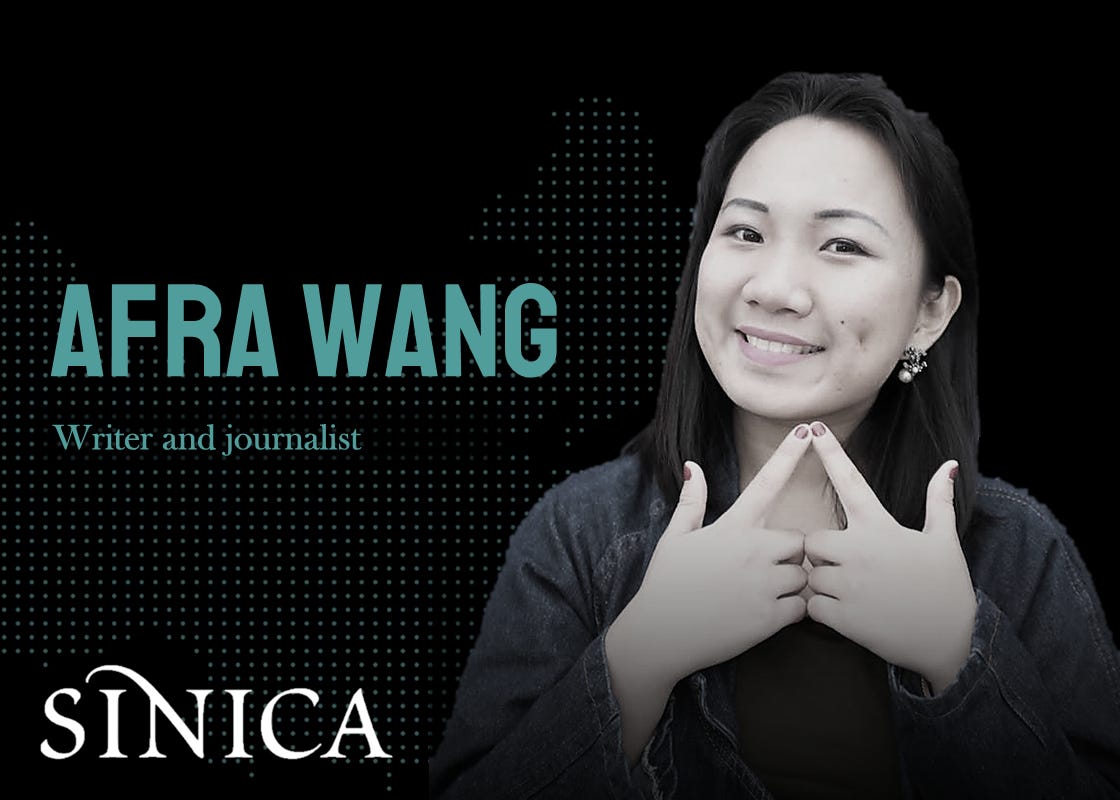
This week on Sinica, I’m joined again by Afra Wang, the Bay Area-based writer behind the AI newsletter Concurrent, who was last on the show in January to talk about her Wired piece on The Morning Star of Lingao and China’s “Industrial Party.” She’s back with two new pieces of on-the-ground reportage that get beneath the surface of China’s apparent AI techno-optimism: her New Yorker Lede piece on Liangzhu, the town outside Hangzhou where laid-off and burnt-out tech workers have gone to vibe code in each other’s living rooms (and where AI and BaZi fortune-telling have become strangely intimate), and a forthcoming New York Magazine piece on China’s sprawling, lucrative, and largely unregulated “learn AI, get rich” education industry. We talk about why 93% of Chinese respondents tell Gallup that AI will mostly help their country, what that number conceals, and whether what looks like optimism is sometimes closer to acceptance.Afra’s pieces discussed in this episode:* What China’s Vibe-Coding Capital Can Tell Us About the A.I. Boom — The New Yorker, September 23, 2026* [Her forthcoming New York Magazine piece on China’s AI education industry — [LINK TK, expected after October 12]]* You’ve Never Heard of China’s Greatest Sci-Fi Novel — Wired, January 2026, and our January 2026 Sinica conversation about it* Subscribe to Afra’s newsletter, ConcurrentAlso mentioned:* Optimism About AI Globally Widespread Despite Uneven Adoption — the Microsoft-Gallup survey* China’s OpenClaw gold rush — MIT Technology Review* Damien Ma and William Adams, In Line Behind a Billion People: How Scarcity Will Define China’s Ascent in the Next Decade* Evan Osnos, Crazy English — The New Yorker, April 2008* Lian Si 廉思, Journey Without a Map 无图之旅:一代青年的自我寻路* Ken Liu on Chinese science fiction — Sinica, 201606:51 – Walking into Liangzhu’s living rooms: the San Francisco déjà vu, and the grimness beneath the techno-optimist story the West wants to hear10:14 – Setting the scene: a real-estate developer’s utopian village, Neolithic ruins, Xi Jinping’s intervention, and a “road-to-food ratio” low enough to build real community17:30 – Child of the layoffs or child of DeepSeek? The post-COVID “ego death” of Chinese tech — and a quibble about the word “crackdown”21:42 – Master Qi and the living room as a social form: what Liangzhu offers that a Beijing office or a WeChat group can’t24:11 – What the 93% really tells us: optimism, acceptance, or FOMO when you can’t protest a data center29:26 – “Westerners get restless when they can’t protest; Chinese people get restless when they haven’t found a teacher”: qiúzhī 求知, meritocracy as religion, and the company called Shēngcái Yǒudào 生财有道32:48 – Inside Shengcai Youdao: the “prosperity evangelist” conference room, the ladder from ordinary member to CEO class, Mr. Tree’s Hilton seminars, and who’s actually paying 3,000 yuan a year37:44 – Scam or ladder? The state’s war on the “paid knowledge” mess, Dragon Ball referral credits, and the security guard running Claude Code on his phone during his shift41:03 – How it compares to the Valley’s course-sellers; selling hope and upward mobility, echoes of Crazy English, and “the prosperity gospel with Chinese characteristics”45:30 – “Take us to Silicon Valley!”: what the West means to a room of one-person companies building apps for the U.S. App Store47:18 – Xiao Kai, the 25-year-old AI filmmaker from Heilongjiang: murder mysteries as model-friendly plots, government commissions, WaytoAGI, and the local-government AIGC fever55:28 – Lian Si’s Journey Without a Map: a Party insider tells young people to “make peace with the ordinary” while everyone else says learn AI or be left behind59:59 – FateTell and the gray zone of AI fortune-telling: tarot slot machines in Shenzhen, crystal shops, and Liangzhu as “China’s Sedona”1:04:13 – Levy, the BaZi cosmology, Sam Altman’s chart, and Kaiser plays the skeptic: the Yijing as “humanity’s first statistical decision model,” the Whole Earth Catalog, and New Age re-imported from the West1:12:27 – Do they actually believe it? Speech fasting, BaZi compatibility in hiring, and Chinese syncretism at work1:14:45 – When the local government falls in love with the scene: Crazy Thursday, incubators, “new quality productive forces,” and why Liangzhu’s peak may already be over1:19:42 – Are Chinese people really cavalier about AI safety? Pragmatism, scarce compute, trust in state capacity, the blind spots of EA — and a preview of Afra’s third piece on China’s “industrial AI slop”Paying It Forward:Zilan Qian, a GovAI fellow researching AI governance in China who writes the Substack Until Zilan Finds a Better Name and is a must-read on how AI-safety concepts like “loss of control” translate (or don’t) into the Chinese context. Her most widely shared piece: Why America Builds AI Girlfriends and China Makes AI Boyfriends.Recommendations:Afra: Ken Liu’s new collection, The Passing of the Dragon and Other Stories, whose title borrows a metaphor from Ursula K. Le Guin.Kaiser: Marilynne Robinson’s Home, the second of the four Gilead novels — set in the same few weeks of 1956 as Gilead but seen from inside the Boughton household, as Glory and her prodigal brother Jack circle a secret the book doesn’t name until nearly the end. This is a public episode. If you'd like to discuss this with other subscribers or get access to bonus episodes, visit www.sinicapodcast.com/subscribe

Comments

Download from Google Play

Download from App Store
 United States