


 Claim Ownership
Danielle Oteri's Italy
Subscribed: 9Played: 70
Subscribe

© Danielle Oteri
Description
Discover the best of authentic Italy with travel expert and art historian Danielle Oteri. Each episode delivers inspiring stories and practical tips to help you confidently plan your next Italian adventure, covering art, archaeology, culture, food, wine, and history. Listeners get trusted recommendations and insider insights that unlock unforgettable experiences across Italy.
www.danielleoteri.com
www.danielleoteri.com
53 Episodes
Reverse

As someone who writes about history and non-Instagrammy places to visit in Italy, I definitely never go viral on Instagram. Until two days ago.I shared photos from my visit to The Lamentation by Niccolò dell’Arca in Bologna, which didn’t move past my core followers for a day, then suddenly took off. The most frequent comment is that it looks so modern, or that the artist was ahead of his time, and that’s because of the raw emotion it portrays. If you think of most Renaissance paintings of the Virgin Mary, she is serene, not sobbing. Women in general are shown with smooth foreheads, perfect golden locks, and gazes that never meet yours—a little too Botoxed, if you ask me —and, in fact, women did put drops of belladonna in their eyes to dilate their pupils and achieve that blissed-out/spaced-out look of passivity. (Belladonna not coincidentally means beautiful woman.) The women in this series instead are howling and screaming. Information about this series is sparse, and most of what I found on the first two pages of Google was inaccurate. So I went deep into the scholarly research and put together a podcast episode that walks you through it.You’ll hear about:* Who Niccolò dell’Arca was (a bit of a weirdo) and why he sculpted this in terracotta* The hospital and the flagellant confraternity that the figures were made for* Why public grief, specifically women’s grief, was banned in 15th-century Bologna * The signature scroll that touches Christ’s shoulder, and how it connects to Michelangelo’s Pietà. Yup, you have never heard of Niccolò dell’Arca, but big Mike did, and he was a huge influence on him.* Why I think that this might be the single best piece of art in all of Italy for those who don’t already love art to have their mind changed. Bold, I know. But you read my stuff because you know I’m not shy about sharing my opinions.Below, you’ll find my photos with plenty of close-ups of these remarkable figures. Get the tissues ready. I’m doing an Emilia-Romagna deep dive on Substack soon with my full Bologna recommendations. This will be for paid subscribers only, as I spent a small fortune testing a lot of terrible restaurants in Bologna and, as someone who doesn’t work on comps and commissions, I share the best stuff through paid subscriptions. Until then, check out Laura Itzkowitz’s “72 Hours in Bologna” for recommendations on everything else to do if you visit Bologna. Tell me what you think in the comments. This is a public episode. If you'd like to discuss this with other subscribers or get access to bonus episodes, visit www.danielleoteri.com/subscribe

If you loved Ep. 38: How To Plan Multigenerational Travel, this episode is part 2, especially if you’ve accepted the unpopular but very good advice that renting a villa in Tuscany is a bad idea. This episode offers a better alternative.A quick recap of resources and upcoming events:* Tuesday, October 6th at 7 pm ET is the next Ask Me Anything About Italy for paid subscribers. This live Q&A with me happens monthly. If you can’t attend live, send me your questions at [email protected]. I’ll answer them live, and you can watch the replay, available the following day.* Thursday, October 8th at 7 pm ET is a new online class for people with Italian roots. “Finding Your Way Back to Italy” debunks Ellis Island myths and explains why Italians left Italy en masse starting in the 1870s. This history is surprising, but it shouldn’t be—it’s beautiful, but also complex, and you will learn a lot about yourself and your family by understanding the underpinnings of the stories and ways of being you inherited. Click here to register.Danielle Oteri's Italy is a reader-supported publication. To receive new posts and support my work, consider becoming a free or paid subscriber. This is a public episode. If you'd like to discuss this with other subscribers or get access to bonus episodes, visit www.danielleoteri.com/subscribe
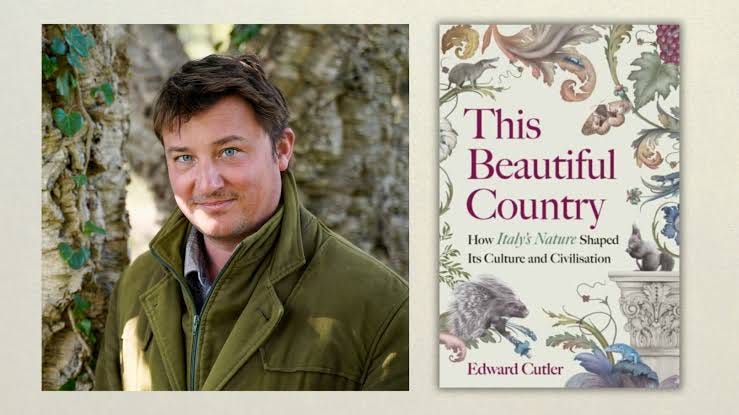
There are hundreds of books about Italy’s art and food, but you can count on one hand the number of books available about Italy’s nature. The oldest is Pliny’s Natural History, written in the 1st century CE, before he died on a rescue mission to Pompeii. The newest is Edward Cutler’s magnificent “This Beautiful Country,” a joy and a humbling reminder of how much we overlook every day. I hope you enjoy this episode and let me know what you think in the comments.Danielle Oteri's Italy is a reader-supported publication. To receive new posts and support my work, consider becoming a free or paid subscriber. This is a public episode. If you'd like to discuss this with other subscribers or get access to bonus episodes, visit www.danielleoteri.com/subscribe
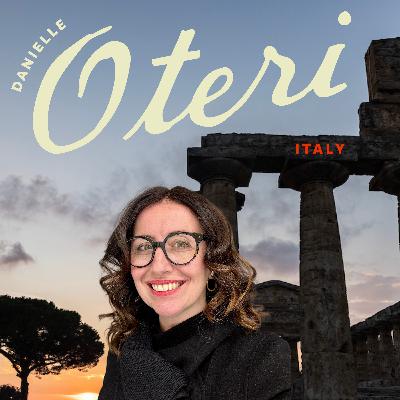
Joseph Walker, author of Buried Italy and the voice behind Italian History with Joseph, spent the early 1990s exploring the submerged Roman resort of Baia and harvesting grapes in the ancient amphitheater at Cuma. Before Baia had snorkeling schools and glass-bottom boats, Joseph Walker was hiring a local fisherman to take him out into the Gulf of Pozzuoli and swimming down into what turned out to be the nymphaeum of Claudius and Nero. That dive became his life’s work. He arrived in Italy with the U.S. Navy in the late 1980s and never really left. This episode is a long, winding conversation about the Campi Flegrei, the volcanic zone west of Naples where myth and geology keep colliding. Joseph and I share a lot of interests, and this conversation could have gone on for hours.What we discuss:* How Walker found Portus Julius and started bringing tourists to see the underwater ruins.* The Cave of Cumean Synil, how it predates Virgil by roughly 600 years, and Walker’s case for Etruscan involvement in its construction* The amphitheater at Cuma that isn’t on the archaeological park’s tourist map, and the harvest feast that Walker got invited to as a young man* Lago d’Averno as one of the mythological entrances to Hades, and the Oscan cult of death that came before the Greeks arrived* Naples’ own relationship to death and the ritual of adopting bones at the Fontanelle Cemetery* Bradyseism, the rising and falling of the Campi Flegrei landmass, and the current push to reopen sites like the Piscina Mirabilis to tourism* How the region’s volcanic history may connect to the extinction of the NeanderthalsWe also got into Puglia a bit and discussed:* Castel del Monte and Frederick II’s use of the octagon as a symbol linking heaven and earth* The mosaic floor at the Cathedral of Otranto, its King Arthur panel, and the monastery library destroyed in the 1480 Ottoman sackFind Joseph Walker:italianhistorywithjoseph.com/oteri — includes a free download of seven “Buried Italy” sites and a free chapter of the book (the Narnia chapter, cut from the final edit).Danielle Oteri's Italy is a reader-supported publication. To receive new posts and support my work, consider becoming a free or paid subscriber. This is a public episode. If you'd like to discuss this with other subscribers or get access to bonus episodes, visit www.danielleoteri.com/subscribe
Intense, I would say unbearable, summer heat is the new normal in Italy, and it changes how you should be planning a trip. This episode covers when to actually go (spring over fall, with one exception), what to do if summer is your only option, and why “I’m used to heat” doesn’t mean the same thing in Dallas as it does in Rome.In this episode:* Why hot summers in Europe can no longer be treated as an anomaly * Best time to visit for Venice, Florence, Rome: spring (minus Easter week) over the increasingly-booked-out fall* The seaside strategy for anyone who can only travel in summer — including how to structure a day around the heat* Why an Italian beach club is a unique cultural experience* Where to find real sagre and summer festivals * The single biggest mistake I have to unravel for clients overstuffed itineraries* Tipping in 2026: what’s expected now for guides, drivers, and restaurant staff — and why even the Germans are tipping.All podcasts are free, but if you want to hang out with my live, and ask questions, consider becoming a paid subscriber. On August 27th at 8 pm ET, I’ll be doing a Destination Deep Dive on Pompeii, Herculaneum, Baia, and Oplontis. Because even though Pompeii is worthy of a thousand visits, it’s just one piece of the story, and one of these others sites might actually be more appropriate for your trip. This is a public episode. If you'd like to discuss this with other subscribers or get access to bonus episodes, visit www.danielleoteri.com/subscribe

Comments

Download from Google Play

Download from App Store
 United States