


 Claim Ownership
 From the Pure Land Podcast
From the Pure Land PodcastSubscribed: 6Played: 63
Subscribe

© Mel Pine
Description
Impermanence is a core concept of Buddhism, so we understand that our lives can end in the next moment. But it took me 78 years of life and roughly four decades of practicing Buddhism to realize that I'm already in the Pure Land. Come join me there.
melpine.substack.com
melpine.substack.com
80 Episodes
Reverse
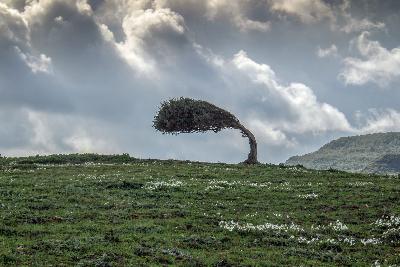
Often, in Buddhist texts, the “eight worldly concerns” make their appearance. This verse, for example, is part of my daily practice:I will learn to keep all these practices Untainted by thoughts of the eight worldly concerns. May I recognize all things as like illusions, And, without attachment, gain freedom from bondage.What are the concerns that taint daily life? The Buddha lists them in Lokavipatti Sutta. As translated by Ṭhānissaro Bhikkhu, the sutta begins:Monks, these eight worldly conditions spin after the world, and the world spins after these eight worldly conditions. Which eight? Gain, loss, status, disgrace, censure, praise, pleasure, & pain. These are the eight worldly conditions that spin after the world, and the world spins after these eight worldly conditions.That passage never struck me as profound until I saw the “concerns” translated as “winds.” Yes, most of us bend to the winds of:Gain/loss,status/disgrace,censure/praise,pleasure/pain.With all eight winds, the compass heading is between attachment and aversion to avoid being blown off the path. Walk the path of equanimity.You can find more From the Pure Land blog posts and podcasts at melpine.substack.com Get full access to From the Pure Land at melpine.substack.com/subscribe
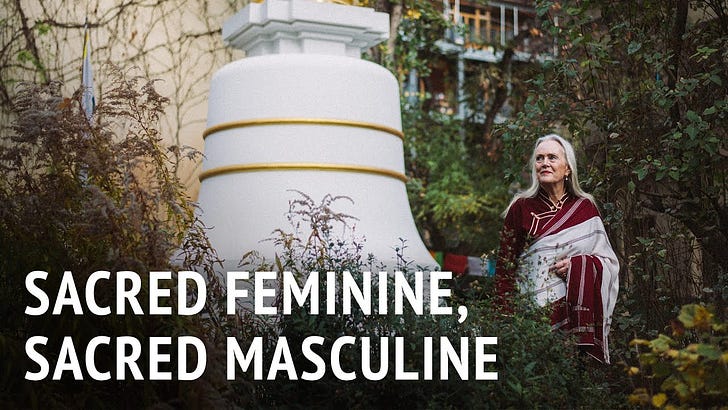
It was a joy this morning to spend 45 minutes interviewing Tara Mandala Executive Director Cady Allione and Chögé Lisa Erickson about that worldwide organization, which was created by Lama Tsultrim Allione, who traveled to Nepal and India in 1967 hoping to learn to paint mandalas and ended up with that and much more. She was one of the early pioneers in bringing Buddhism to the West.While Lama Tsultrim is on a solitary retreat, Cady and Lisa spoke with me about Tara Mandala, some of its programs, especially Feeding Your Demons, and its Yana social networking platform, which I find unique and encouraging for Buddhism in the West. Many Buddhist teachers, especially those trained in the East, tend to be cautious about providing space for students to freely share their lives and practices with each other. Oh, and did I mention they’re mostly men?If Buddhism is to flourish in the West, it needs more opportunities for students to build communities. That’s why I think Yana is a model. It’s not only for those of us in the West, of course, but that’s where most of my readers and listeners are.I could go on about Lama Tsutrim, Tara Mandala, and Yana… But Lisa and Cady do a better job than I could hope to, so I’ll stop typing and encourage you to watch or listen to the 45-minute recording. As a prelude or postlude, consider spending six minutes with Lama Tsultrim on the feminine and masculine in Buddhism: https://youtu.be/BdYbSTc7l60Mel's website and blog are at melpine.substack.com Get full access to From the Pure Land at melpine.substack.com/subscribe
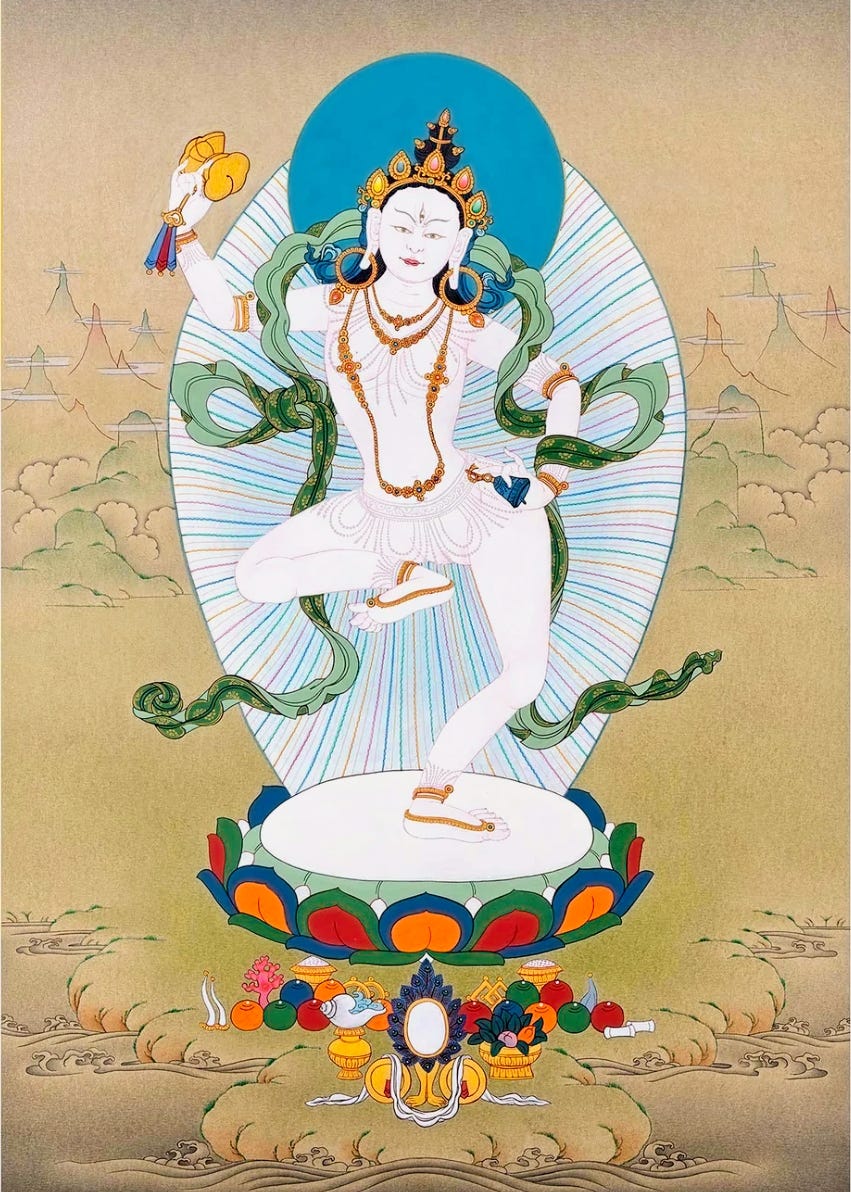
The essence of my practice is connecting with my pure mind, or my Buddha Nature. Teachers in the Dzogchen and Mahamudra traditions have pointed the way for me. If you are unfamiliar with the terms, there’s no need to distinguish between these slightly different ways to reach that inherent Buddha Nature. Just find the teacher you’re comfortable with to help guide you.Machig Labdrön (1055-1149) founded several lineages in the Mahamudra Chöd tradition. Chöd literally means cutting through. As a practice, it refers to cutting through the connection to your demons, especially the ego. Mahamudra refers to the clarity, wisdom, and emptiness of the pure mind, or Buddha Nature.Machig lived to the age of 93 or 94. The teaching known as her “final instructions” or “Wisdom From an Old Lady” expresses, as well as anything else I’ve come across, the mindset and meditation practice that lead one closer to the inherent pure mind. For those who’d like to listen in meditation to Machig’s words, as translated by Tsem Rinpoche, I’ll read them slowly, leaving periods of silence.…(M)ind itself has no support, has no object: let it rest in its natural expanse without any fabrication. When the bonds (of negative thoughts) are released, you will be free, there is no doubt. As when gazing into space, all other visual objects disappear, so it is for mind itself. When mind is looking at mind, all discursive thoughts cease and enlightenment is attained. As in the sky all clouds disappear into sky itself: wherever they go, they go nowhere, wherever they are, they are nowhere. This is the same for thoughts in the mind: when the mind looks at mind, the waves of conceptual thought disappear. This body of ours is impermanent, like a feather on a high mountain pass. This mind of ours is empty and clear like the depth of space. Relax in that natural state, free of fabrication. When mind is without any support, that is mahamudra. Becoming familiar with this, blending your mind with it — that is buddhahood. Supreme view is beyond all duality of subject and object. Supreme meditation is without distraction. Supreme activity is action without effort. Supreme fruition is without hope and fear. This old lady has no instructions more profound than this to give you.May we all find our place of rest in the nature of mind.Visit the From the Pure Land website and blog at melpine.substack.com Get full access to From the Pure Land at melpine.substack.com/subscribe

My flow of blog posts has slowed because I’ve been finalizing my book proposal. I’ll have it ready for my chosen publisher by Wednesday. To keep my subscribers and podcast listeners supplied with a steady flow of my words of wisdom, I’m making today’s release of a draft book chunk free to all.My experience in the writing, editing, and publishing universe confirms my belief in impermanence. Everything I plan and write now is tentative. It’s a long way from final (if anything ever is). Today’s release is for a book section where I’ll tell my personal spiritual story. Some of the content has appeared in previous From the Pure Land posts.The From the Pure Land blog has thousands of readers and subscribers in 40 U.S. states and 18 countries, and the podcast has thousands of listeners in 55 countries.You can check out the blog at melpine.substack.com Get full access to From the Pure Land at melpine.substack.com/subscribe

I had the pleasure today of interviewing Beth Korczynski, director of philanthropy for Tergar International, Yongey Mingyur Rinpoche’s worldwide organization. Tergar’s reach extends worldwide, so it’s accessible to almost anyone at any level of experience in meditation and spiritual practice.Beth and I discussed:* Tergar’s culture of openness and transparency. The ethics of transparency.* The Anytime Anywhere Meditation program, which can help with meditation for people with any religious background. Tergar trains teachers for the program, and you may be able to find one in your area by using this list.* The Joy of Living program for a wide range of students and the Path of Liberation for those seeking to continue on a Vajrayana (Tibetan) Buddhist track.* The book and course A Meditator’s Guide to Buddhism for those wanting more.* The character and commitment of Mingyur Rinpoche. His efforts to reduce the suffering of all.You can watch the 53-minute video and a much shorter one from Mingyur Rinpoche at https://melpine.substack.com/p/the-tergar-bus-will-pick-you-up-anywhere. Or go to my website at melpine.substack.com. Get full access to From the Pure Land at melpine.substack.com/subscribe

Comments

Download from Google Play

Download from App Store
 United States