


 Claim Ownership
The Reluctant Entrepreneur Podcast
Subscribed: 0Played: 0
Subscribe

© Mike Konrad
Description
I’m your host, Mike Konrad, the author of The Reluctant Entrepreneur - Anatomy of a Business Start-Up - From Uncertainty to Unstoppable, available on Amazon as a paperback, e-book, and an audible book, and I’m excited to share real stories that reveal the many paths people take to build their own businesses.
Whether you stumbled into entrepreneurship or you’ve always known it was your calling, this podcast is for you.
Let’s start with what it means to be a reluctant entrepreneur. Many entrepreneurs don’t set out with a grand plan to build a business.
Maybe you worked for a company that didn’t value your vision, and one day you thought, “I could do this myself”, that was my story. Or maybe life pushed you in an unexpected direction—losing a job, facing a personal crisis, or discovering a passion that grew into a business. Reluctant entrepreneurs often find themselves starting a business not because they always dreamed of it, but because it was the best—or only—option available.
And then there are intentional entrepreneurs. These are the people who’ve known from the start that they were meant to create something of their own.
They may have planned meticulously, crafted their vision, and followed a well-laid path to build a business. Intentional entrepreneurs are often seen as risk-takers, those with a drive to innovate, disrupt, and lead in their industries.
But even with all the planning in the world, intentional entrepreneurs face their own share of unexpected challenges, setbacks, and doubts.
On The Reluctant Entrepreneur podcast, we celebrate both types of entrepreneurs—the ones who jump in with both feet, and the ones who tiptoe cautiously into the water.
So, join me as we explore the many ways people navigate the complex and rewarding world of entrepreneurship.
Whether you’re here for inspiration, advice, or just a great story, I hope you find something valuable in every episode of The Reluctant Entrepreneur Podcast.
170 Episodes
Reverse
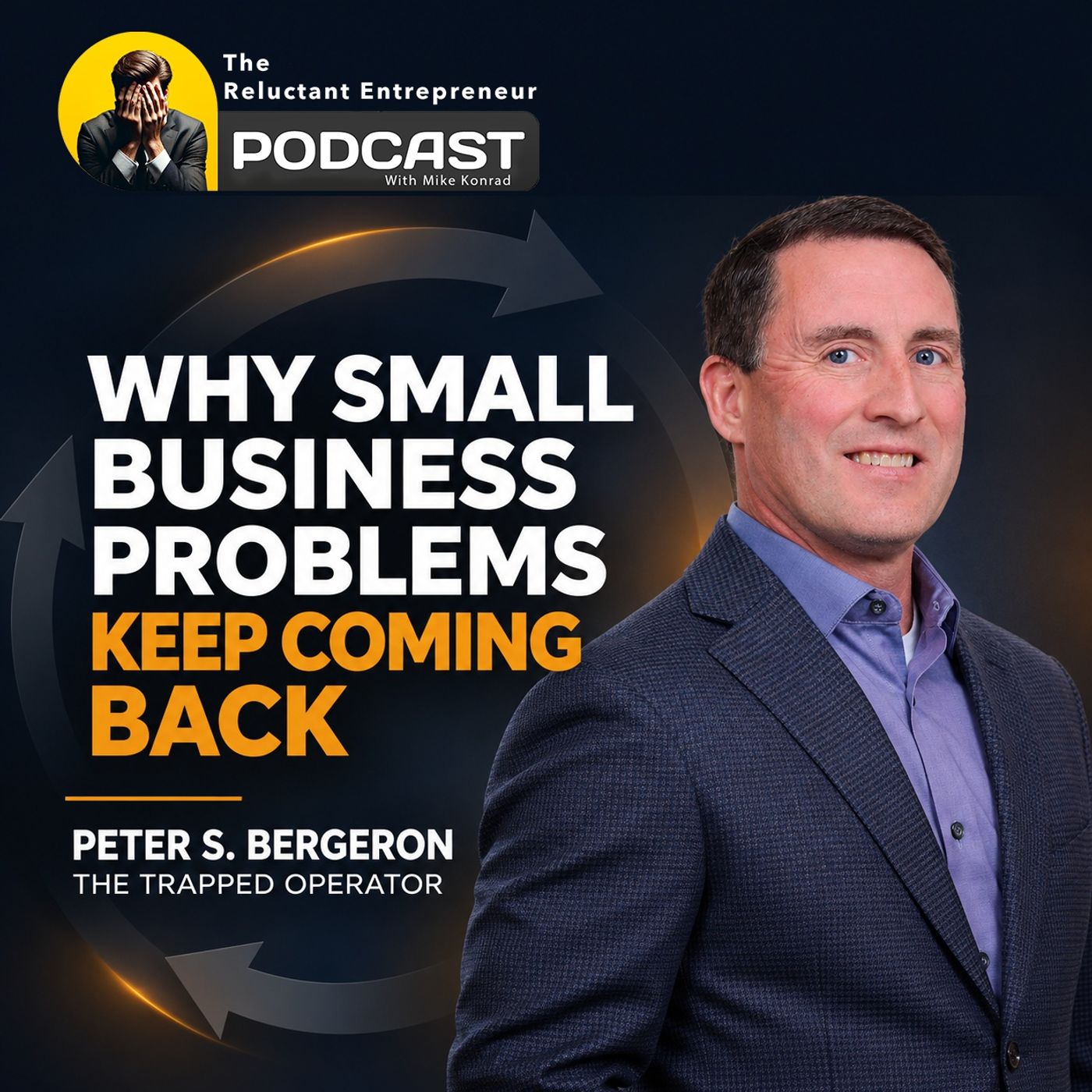
Sometimes the decision that feels safest for a business owner is the one that creates a bigger problem down the road. And sometimes the issue we keep trying to fix is only a symptom of something deeper.Today, I’m joined by Peter S. Bergeron. Peter spent nearly twenty years in finance and operations leadership at his family’s manufacturing business, which ultimately closed after more than forty years. That experience led him to study the pressures that build inside small businesses and to develop the 12 Fatal Issues Framework.Peter now teaches Entrepreneurial Mindset at Florida Gulf Coast University and is the author of The Trapped Operator. We’ll talk about what business owners may be overlooking when they make difficult decisions, how personal fears and assumptions shape those choices, and what it takes to build a business that doesn’t depend on its owner for everything.The Trapped Operatorhttps://thetrappedoperator.com
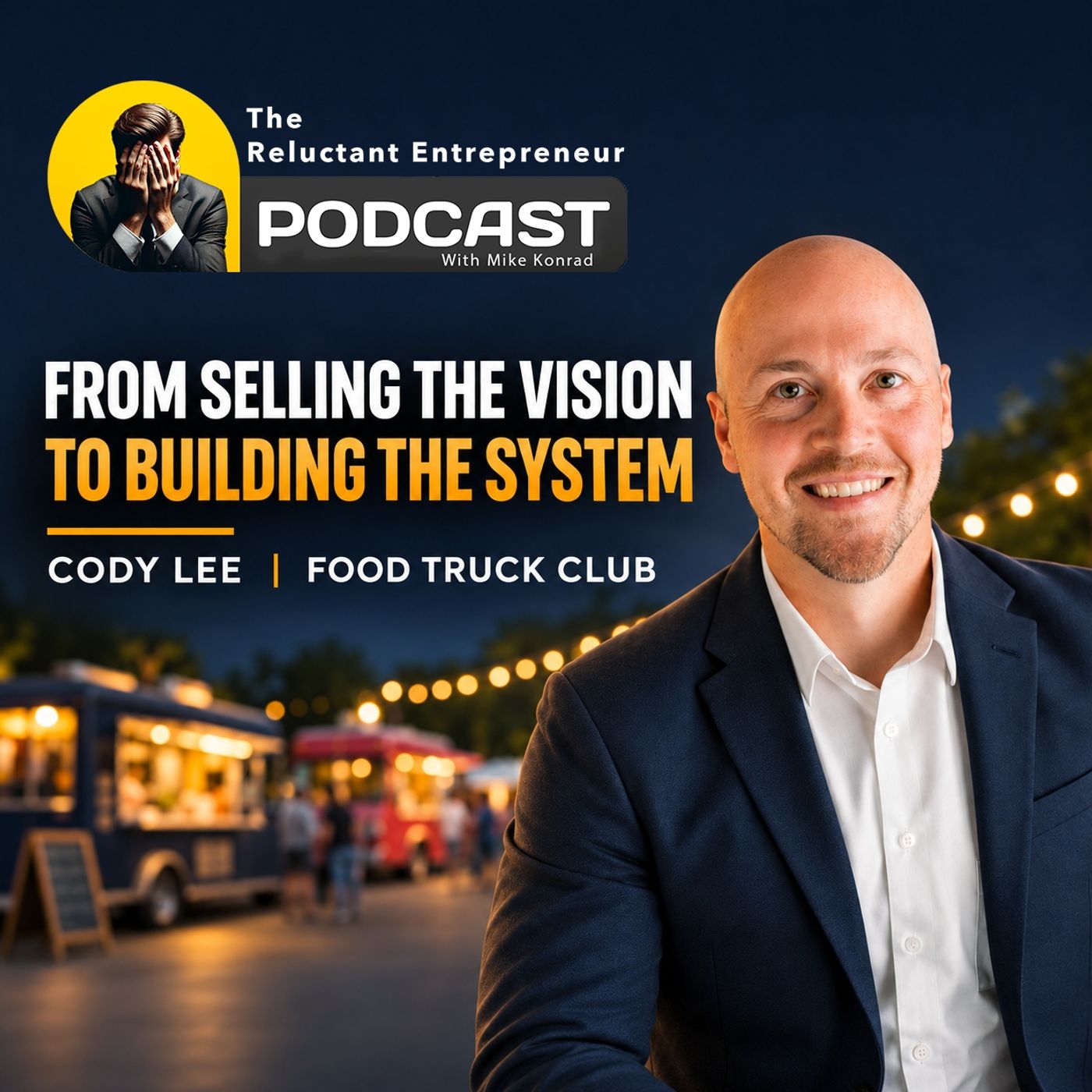
What happens when your business grows, but every decision still has to pass through you? You may have built a successful company, but you may also have built yourself a very demanding job.Today, I’m joined by Cody Lee, co-founder of Food Truck Club, a marketplace that helps companies book food truck catering. Cody has had to rethink his role in the business several times to keep himself from becoming the bottleneck.We’ll talk about what it takes to build a marketplace people can depend on, how to create systems that keep the business moving, and how to know when it’s time for the founder to step back. We’ll also explore the difference between growing a company and simply taking on more work.Food Truck Clubhttps://app.foodtruckclub.com

Circuit City was once one of America’s biggest electronics retailers. What went wrong?In this episode of Reluctant Lessons, we trace the company’s decline, from a $23.13 share price in March 2006 to $3.72 by January 2008. We look at the decisions and warning signs behind the collapse, including Circuit City’s 5.5% sales decline in fiscal 2008 while competitor Best Buy’s revenue grew 11.4%.Both companies served similar customers and sold similar products. One adapted and grew. The other lost its edge and ultimately liquidated.What can business leaders learn from Circuit City’s fall? Watch to find out.Subscribe for more Reluctant Lessons about the choices that help businesses thrive, and the mistakes that can bring them down.#CircuitCity #BusinessLessons #Retail #BestBuy #BusinessFailure #ReluctantLessons

What can you build with a laptop, a Sharpie, and ideas sketched on napkins? For Sean DeMott, those beginnings became Ex Posse, an entertainment company built around original stories and characters.In this episode of *The Reluctant Entrepreneur*, Sean shares how he built Ex Posse with a lean team, working from coffee shops and traveling across Asia to find writers and artists. His path included failed deals, difficult partnerships, the threat of bankruptcy, and times when he slept in his car to keep the business moving.Sean has produced or executive produced more than 35 feature films, raised over $13 million in private equity, and built a catalog of more than 120 products with over 100,000 units sold. Ex Posse later secured investment from Sony Music Entertainment Japan, while Sean maintained control of the intellectual property he spent years developing.We talk about building a creative business with limited resources, finding overlooked talent, turning original ideas into a catalog, and protecting ownership while pursuing growth.If you enjoy this conversation, please subscribe, leave a review, and share the episode with someone building a business of their own.#ReluctantEntrepreneur #SeanDeMott #ExPosse #Entrepreneurship #FilmProducer #IntellectualProperty #CreativeBusiness
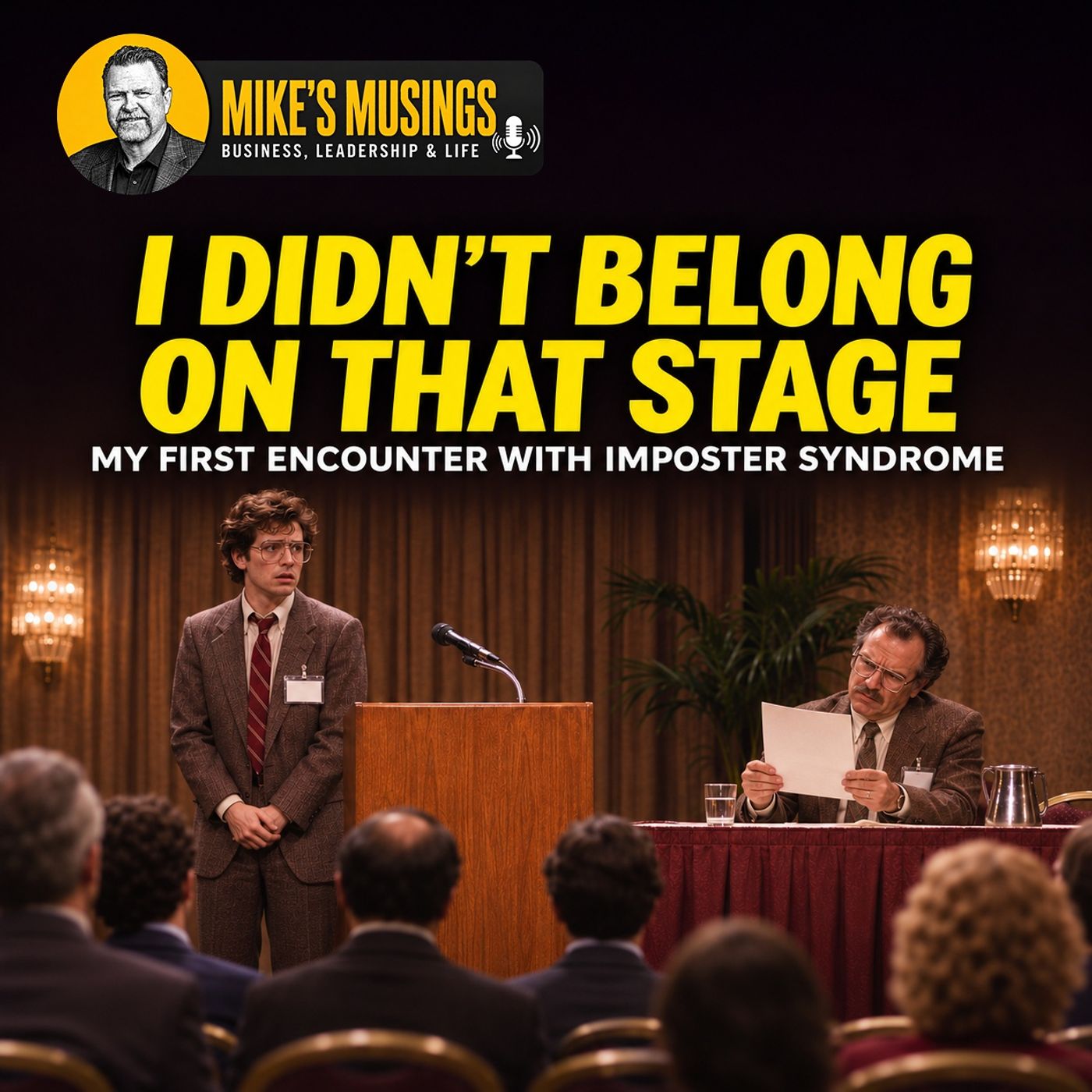
In 1985, I was asked to give a presentation at a major electronics industry conference. The first two speakers received impressive introductions filled with degrees, experience, and awards. When it was my turn, the session chair looked at his paper and found only my name: Mike Konrad.I was a college dropout who knew little about the industry when I entered it. I was sure the audience would discover I didn’t belong. But I had prepared, delivered the presentation, and learned that feeling like an imposter doesn’t mean you have nothing valuable to offer.In this episode of *Mike’s Musings*, I share that experience and practical ways to face imposter syndrome: name the feeling, look at the evidence, focus on the value you can offer, allow yourself to learn, and prepare without letting perfectionism hold you back.Have you experienced imposter syndrome? What helped you move forward? Share your story in the comments.

Comments

Download from Google Play

Download from App Store
 United States