Discover2 Commas: The $multi-million exit show with Josh Comrie
2 Commas: The $multi-million exit show with Josh Comrie
Claim Ownership

2 Commas: The $multi-million exit show with Josh Comrie

Author: Josh Comrie

Subscribed: 5Played: 137
Share

Description

Welcome to 2 Commas: The $multi-million exit show

I've spent over two decades helping founders scale their businesses and achieve successful, multimillion-dollar exits. I've also achieved this myself on multiple occasions. With my experience as an entrepreneur, advisor, and investor, I’ve had the privilege of guiding companies through the highs and lows of business growth and exit strategies.

Each episode will bring you the previously untold stories of entrepreneurs who have successfully scaled and exited their businesses for seven-figure (2 comma's) plus returns. You’ll hear more about the journeys, challenges, and pivotal moments that led to these transformative exits. My goal is to inform and inspire founders who are looking to scale their ventures to seven, eight or nine figures and beyond.

Follow me on LinkedIn: www.linkedin.com/in/joshcomrie

Download my e-book, "The Exit Factor" and sign up to receive the Business Growth Journal weekly: https://www.joshcomrie.com/the-exit-factor

99 Episodes
Reverse
A New Zealander was once escorted off the premises at NASA. No degree, no visa, no clearance. He went home and started a rocket company.That’s Peter Beck, and Rocket Lab is now worth more than 13 billion US dollars. This is part two of the 2 Commas 100th episode, where I try to work out how a country of five million at the bottom of the world produces unicorn founders at twice the rate of the United States. I start with the numbers most Kiwis have never seen, then trace the misfits behind them, from an SAS officer who can’t tell a bit from a byte to a dyslexic kid from Rotorua who helped name AGI.We get into:Why New Zealand punches so far above its weight in technologyThe Kiwis building billion dollar companies offshore, and the thread back homeThe founders who stayed and built world firsts anywayThe flywheel that turns one exit into the next founder’s first chequeThe four things that actually make us good at thisWe call founders geniuses in hindsight. Mostly they just stood in the right place, then backed the next person who did.Subscribe to the 2 Commas JournalOrder the 2 Commas bookFollow Josh on LinkedIn
On the 10th of April 1968, a radio engineer climbed off a sinking ferry in Wellington Harbour, picked up his case of samples, and turned up to his sales meeting the next morning anyway.That’s Angus Tait, and he’s one thread in the 100th episode of 2 Commas, the secret and occasionally ridiculous story of how a tiny country at the bottom of the world learned to build billion dollar technology companies. I start at a table in 2013 where an extra $2,500 became $775,000, then go back 45 years to trace the whole table that made it possible. Crystal factories under houses, a dial-up hack that bought a Ferrari, and a couch project that sold for the equivalent of a billion dollars.We get into:Why a tiny domestic market became a training camp, not a handicapThe first big software exits, and what they cost the foundersHow TradeMe changed the way the country saw technology wealthThe $1 that bought the name NavmanWhy Xero backed itself on the public market instead of Silicon ValleyThis is part one of two. Next week, the New Zealanders who built their biggest companies without ever building them here.Subscribe to the 2 Commas JournalOrder the 2 Commas bookFollow Josh on LinkedIn
Most finance companies live or die on keeping you. Sasha Lockley built one that wants you gone as fast as possible.She’s a trained classical singer turned forensic accountant who left corporate finance to start Money Sweet Spot, a lender built to get Kiwis out of debt rather than keep them in it. No fees, no default interest, and rewards for improving your financial literacy. In this one she’s honest about the identity shift of becoming a founder, why businesses fail to scale past the person who started them, and New Zealand’s consumer debt problem that nobody wants to say out loud.We get into:Why her lender measures success by the customers it losesThe borrower story that beats the credit risk curveWhy founder identity quietly caps how big a business can getNew Zealand’s debt reality, including the 49% rate still on offerWhere she’s taking the business, and why it isn’t a bigger loan bookBuild something good enough and one day it has to outgrow you. Here’s what that actually takes.⁠Subscribe to the 2 Commas Journal⁠ ⁠Order the 2 Commas book⁠ ⁠Follow Josh on LinkedIn⁠ ⁠Connect with Sasha Lockley
A few years ago I bought a new website from a stranger. My own IT company could have built it. They just never told me they did.That small story is the whole problem in miniature. Your customers can only buy the thing they know exists, and the adjacent work you'd love to win keeps slipping off to someone else. In this solo episode I make an argument most founders won't enjoy: the relationship you're proudest of is exactly why you've got no plan for it. I get into the research, the A/B/C system I use to sort accounts, and the three questions that turn a warm relationship into real revenue growth.We get into:The two forces that stop founders selling more to their best customersWhat 38 years of sales research says about being the likeable oneThe A/B/C system for sorting accounts before you planThe three questions every account plan actually needsWhy your customer base is the real moat before an exitMost founders are sitting on half their next year of growth and don't know it. Here's how to find it.⁠Subscribe to the 2 Commas Journal⁠⁠Order the 2 Commas book⁠⁠Follow Josh on LinkedIn⁠
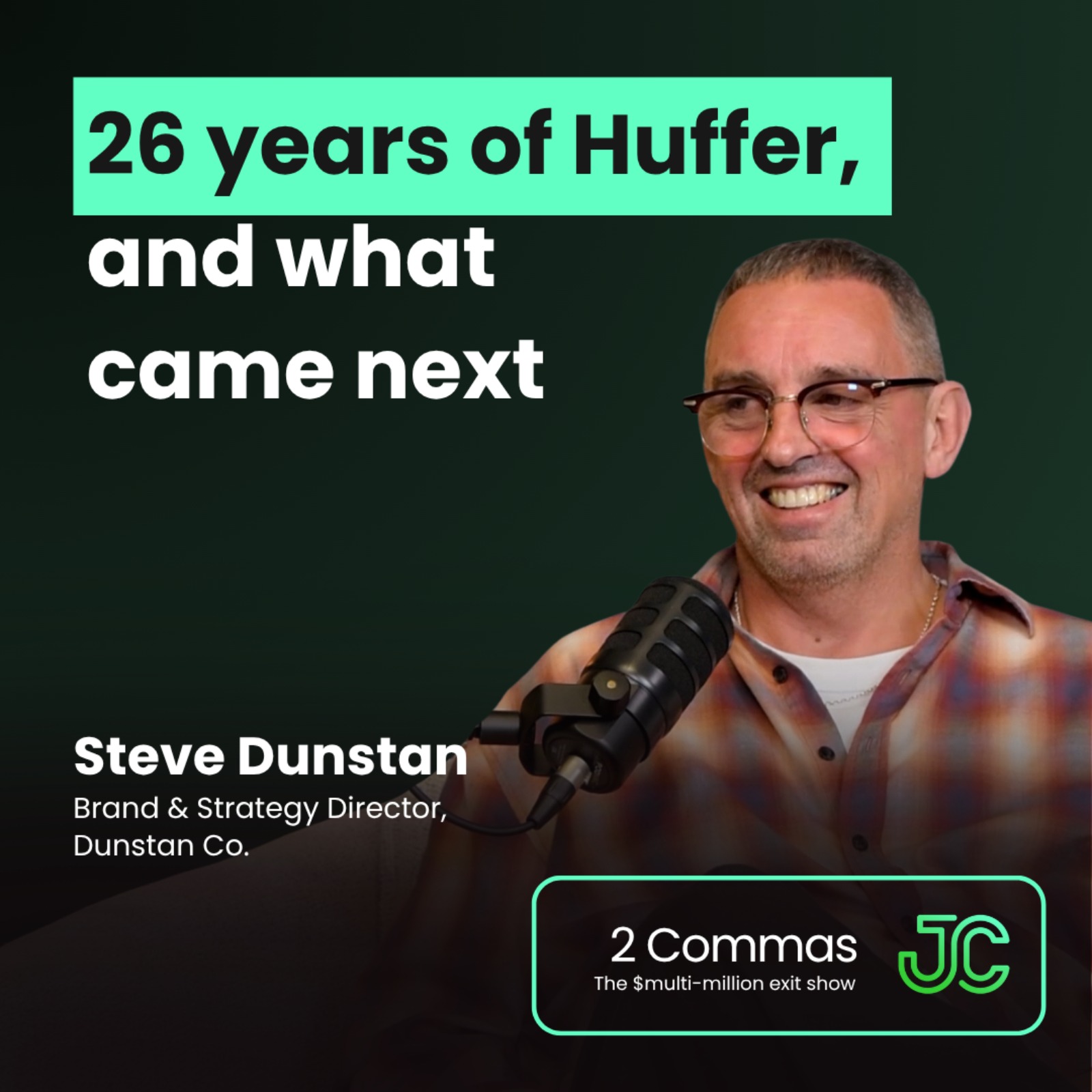
$20 and a fax machine. That's what Steve Dunstan started Huffer with.Twenty-six years later, he'd built one of New Zealand's most recognised streetwear brands, scaled it to around 200 people, survived the GFC, wrestled with a US expansion that didn't go to plan, and lost a co-founder along the way. In this one, Steve is straight about the part founders rarely admit: what happens to your identity when you and the brand become the same thing, what it takes to sell a business you built from the ground up, and how you rebuild yourself once it's gone.We get into:The $20 start and why the constraint helped$35k to over $1m in four years, no outside moneySurviving the GFC as a fashion brandWhy belonging became the thing that drove performanceThe exit after 26 years, and what came nextWould you know how to stop being the business, the day you finally sell it?Subscribe to the 2 Commas JournalOrder the 2 Commas bookFollow Josh on LinkedInConnect with Steve Dunstan
loading
Comments