


 Claim Ownership
Beyond the Bleeds
Subscribed: 1Played: 12
Subscribe

© Copyright 2026 Beyond the Bleeds
Description
Beyond the Bleeds is your go-to podcast for navigating life with bleeding disorders like hemophilia, von Willebrand disease, and more. Each episode brings expert insights, inspiring personal stories, and practical advice for managing these conditions. Whether you’re living with a bleeding disorder or supporting someone who is, this podcast offers support, education, and a sense of community. Join us as we explore the challenges, triumphs, and innovations in care. For more resources, visit hemophiliaoutreach.org.
58 Episodes
Reverse
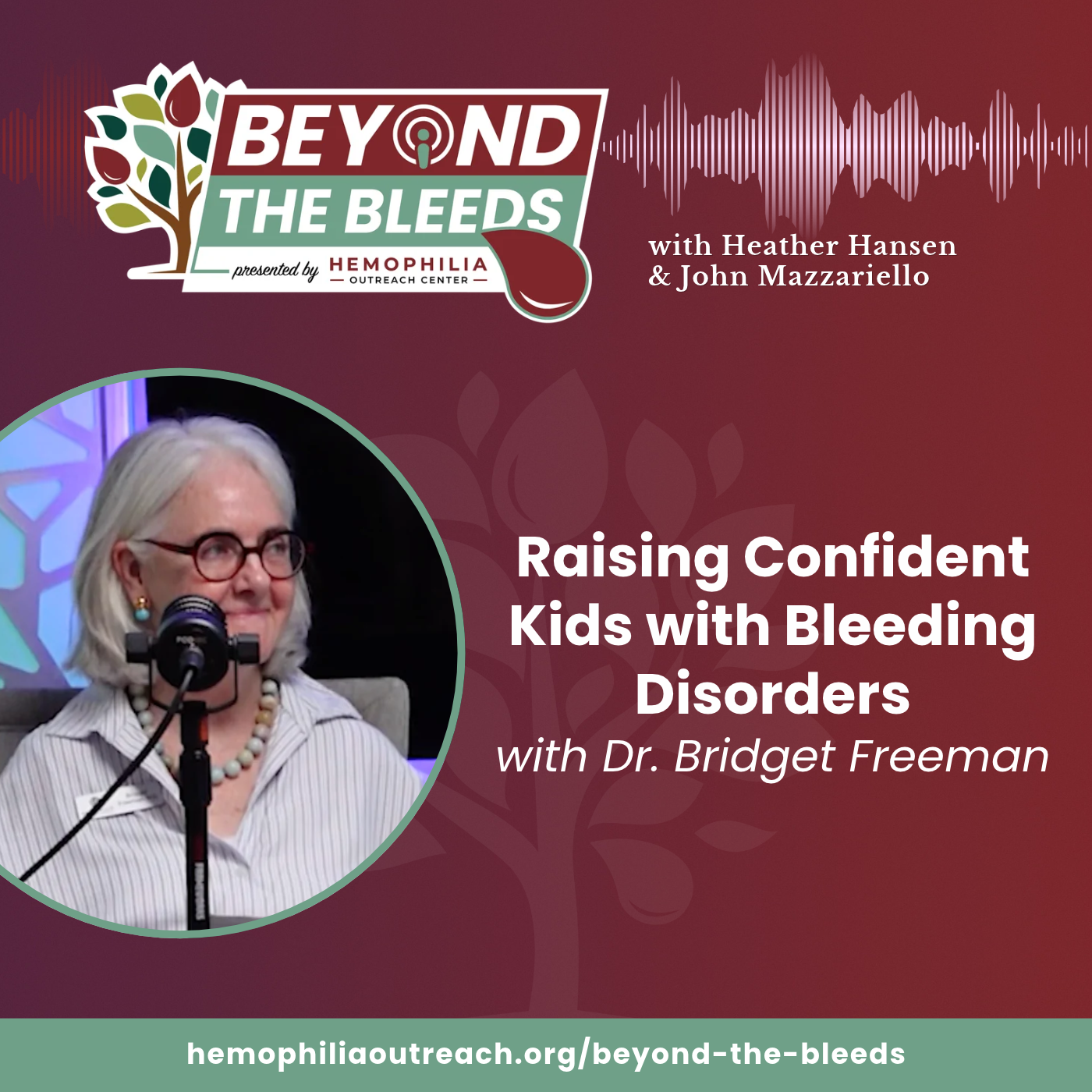
Today on Beyond the Bleeds, Heather and John welcome back Dr. Bridget Freeman, Pediatric Hematologist at Hemophilia Outreach Center (HOC), to discuss raising confident children with bleeding disorders. They explore how parents can balance protecting their children with giving them the freedom to grow, participate in activities, and develop independence.
Dr. Freeman explains how understanding a child’s bleeding disorder and available treatments can help parents manage their fears. She discusses the importance of allowing children to participate in everyday activities, build friendships, and enjoy childhood experiences without unnecessary restrictions. The conversation also explores how treating children differently from their peers can affect their confidence, self-esteem, and emotional well-being.
As children grow, families face new decisions about sports, social activities, and managing medical care. Dr. Freeman shares how parents can evaluate risks, work with their healthcare team, and gradually introduce responsibilities such as understanding treatments, ordering factor, and communicating with their care providers. She emphasizes that building independence starts with small steps and develops through practice, patience, and trust.
Most importantly, Dr. Freeman encourages parents to focus on what their children can do rather than letting fear define their experiences. She explains how knowledge, supportive relationships, and opportunities to make decisions can help children develop confidence and resilience. By encouraging independence throughout childhood, families can help prepare young people with bleeding disorders to successfully manage their health as adults.
“Trust in your own child and that they will make the correct decisions.” — Dr. Bridget Freeman
This episode of Beyond the Bleeds explores:
How parents can manage their fears while raising a child with a bleeding disorder
Balancing safety with opportunities for sports, friendships, and everyday childhood activities
The importance of building confidence, self-esteem, and independence without unnecessary restrictions
Ways parents can gradually teach children to take responsibility for their treatments and healthcare needs
Preparing children with bleeding disorders for a successful transition into adulthood
Looking for practical tips, expert advice, and a sense of community while living with or supporting someone with a bleeding disorder?
Subscribe to Beyond the Bleeds, the podcast that explores life with hemophilia, von Willebrand disease, and other rare conditions. Hosted by Heather Hansen and John Mazzariello, we share real stories and helpful conversations to support families at every stage.
Apple | Spotify | iHeart | Amazon Music | Pandora | Deezer | YouTube
The post Raising Confident Kids with Bleeding Disorders with Dr. Bridget Freeman appeared first on Hemophilia Outreach Center.

Today on Beyond the Bleeds, Heather and John welcome Sara Berger, Director and Senior Research Scientist at IBM, to discuss the growing role of artificial intelligence (AI) in healthcare. They explore how patients can use AI to better understand their health and what they should know before relying on these tools.
With a background in neuroscience, technology, and ethics, Sara explains how AI works and clears up common misconceptions. She shares examples of how AI already plays a role in everyday life and healthcare. Sara also discusses how patients can use these tools to understand medical terminology, explore health information, and prepare questions for appointments.
The conversation also covers the risks of using AI for medical information. Sara explains how AI can produce inaccurate answers and spread misinformation. She addresses privacy concerns when patients share personal health information with AI tools. For people with rare conditions like bleeding disorders, these challenges can be even greater. AI systems may have less reliable information about rare conditions than more common health concerns.
Most importantly, Sara encourages patients to use AI as a tool for understanding, not as a replacement for healthcare professionals. She explains why patients should verify information, protect their privacy, and consult their healthcare team before making medical decisions. Sara also looks ahead at the future of AI in healthcare. She shares why patients and providers should help shape how these technologies develop and how people use them.
“Use it as a starting point, not an ending point, and always verify everything.” — Sara Berger
This episode of Beyond the Bleeds explores:
How artificial intelligence is being used in everyday life and healthcare
Ways AI can help patients understand health information and prepare for medical appointments
The risks of misinformation, inaccurate answers, and relying on AI for medical decisions
Privacy concerns when sharing personal health information with AI tools
The future of AI in healthcare and the importance of maintaining trust between patients and providers
Looking for practical tips, expert advice, and a sense of community while living with or supporting someone with a bleeding disorder?
Subscribe to Beyond the Bleeds, the podcast that explores life with hemophilia, von Willebrand disease, and other rare conditions. Hosted by Heather Hansen and John Mazzariello, we share real stories and helpful conversations to support families at every stage.
Apple | Spotify | iHeart | Amazon Music | Pandora | Deezer | YouTube
The post AI in Healthcare: Benefits, Risks, and What Patients Should Know with Sara Berger appeared first on Hemophilia Outreach Center.
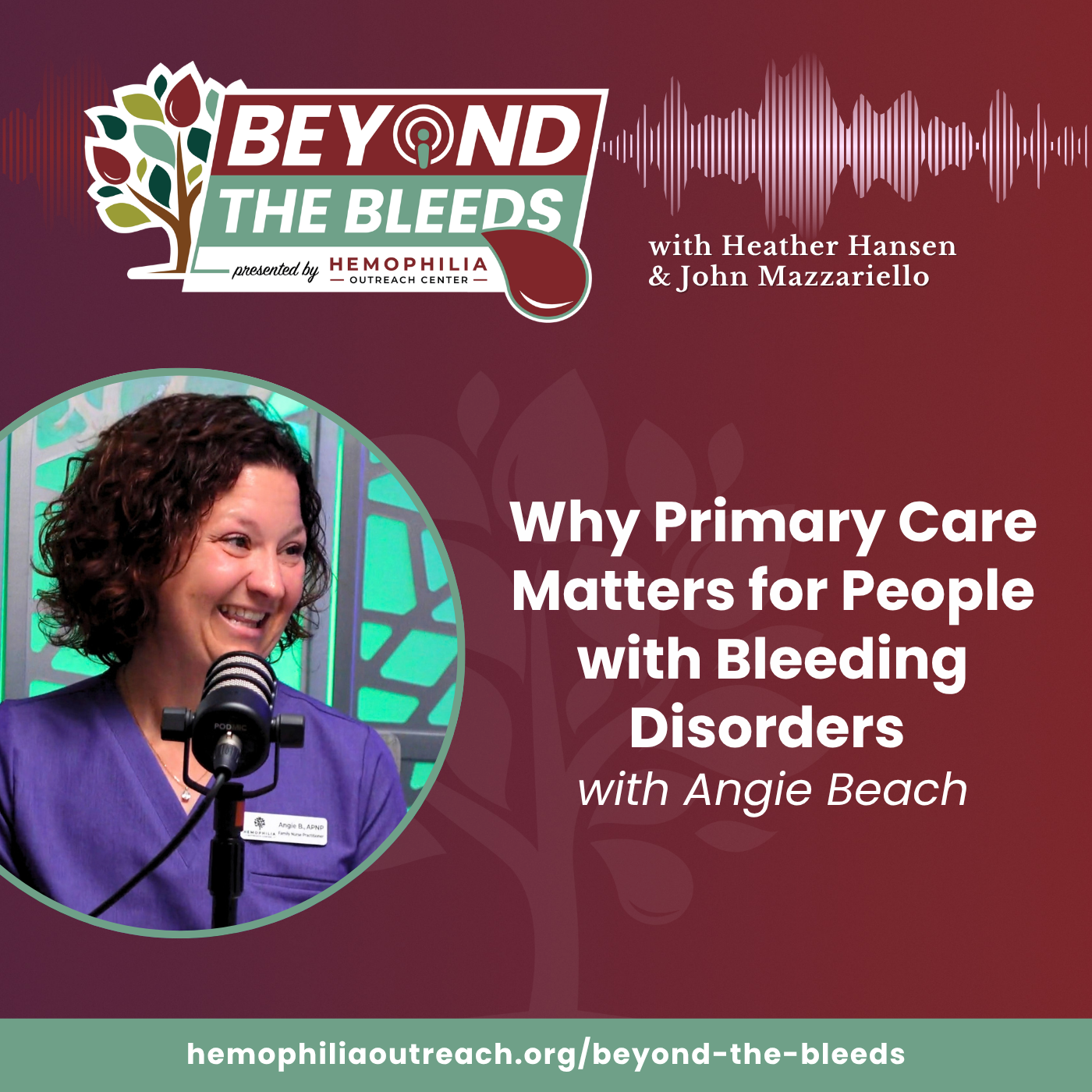
Today on Beyond the Bleeds, Heather and John are joined by Angie Beach, Family Nurse Practitioner at HOC, to explore the importance of primary care for people with bleeding disorders and how comprehensive care goes beyond managing a bleeding disorder alone.
Drawing on her years of experience in traditional primary care, Angie shares what she’s learned since joining HOC, including some of the misconceptions she previously had about bleeding disorders and the unique challenges patients can face when navigating healthcare. She also discusses what makes the comprehensive care model at Hemophilia Treatment Centers different and how access to specialized services and coordinated care can benefit patients and families.
The conversation explores the relationship between primary care providers and HTCs, including the importance of communication, collaboration, and understanding each patient’s individual needs. Angie explains why primary care providers don’t need to know everything about every rare disorder, but they do need to listen, respect their patients’ experiences, and work alongside specialists to provide the best possible care.
Most importantly, Angie emphasizes why having a primary care provider is essential, even for patients who regularly visit their HTC. From preventive screenings and vaccinations to managing everyday health concerns and chronic conditions, primary care plays an important role in maintaining overall health. Angie also shares how HOC’s primary care services can help patients access this care alongside their bleeding disorder treatment.
“We do owe it to them to listen and to validate their experiences, learn what we can about their diagnosis and needs, admit what we don’t know and respect their level of knowledge about their own health and conditions.” — Angie Beach
This episode of Beyond the Bleeds explores:
Why primary care is important for people living with bleeding disorders
Angie’s transition from traditional primary care to HOC’s comprehensive care model
How primary care providers and HTCs can collaborate to support patients
The importance of preventive screenings, vaccinations, and managing other health conditions
How HOC’s primary care services help patients address their overall health and wellness
Looking for practical tips, expert advice, and a sense of community while living with or supporting someone with a bleeding disorder?
Subscribe to Beyond the Bleeds, the podcast that explores life with hemophilia, von Willebrand disease, and other rare conditions. Hosted by Heather Hansen and John Mazzariello, we share real stories and helpful conversations to support families at every stage.
Apple | Spotify | iHeart | Amazon Music | Pandora | Deezer | YouTube
The post Why Primary Care Matters for People with Bleeding Disorders with Angie Beach appeared first on Hemophilia Outreach Center.

Today on Beyond the Bleeds, Heather and John are joined by Kristin Petrie, HOC Nurse Coordinator, to talk about what people with bleeding disorders should know before their next procedure and why contacting your Hemophilia Treatment Center ahead of time is so important.
When most people hear the word “procedure,” they think of major surgery, but for someone with a bleeding disorder, the list can be much broader. Kristin explains why patients should reach out before dental work, colonoscopies, biopsies, joint injections, tattoos, piercings, physical therapy, dry needling, and other activities that could potentially cause bleeding.
Kristin also takes listeners behind the scenes to explain what happens after a patient calls HOC. From developing an individualized treatment plan and coordinating with outside providers to making sure medication is available and working through insurance approvals, there can be a lot to put in place before the day of a procedure. Calling early gives the care team more time to prepare and coordinate the details.
Most importantly, Kristin reminds patients that they should never worry about bothering their HTC or wonder whether something is important enough to call about. Every patient and situation is different, and the HOC team would much rather answer a question ahead of time than address bleeding afterward. When in doubt, reach out.
“The earlier we know, the more options we have. As soon as you know that you’re going to have a procedure, as soon as you get it scheduled, the next step should be to call us.” — Kristin Petrie
This episode of Beyond the Bleeds explores:
What counts as a procedure for someone with a bleeding disorder
Why contacting your HTC early can help prevent bleeding complications
Dental work, tattoos, physical therapy, and other procedures you may not think to call about
How HOC coordinates treatment plans, medication, providers, and insurance before a procedure
Why every patient and situation is different and, when in doubt, you should reach out to your HTC
Looking for practical tips, expert advice, and a sense of community while living with or supporting someone with a bleeding disorder?
Subscribe to Beyond the Bleeds, the podcast that explores life with hemophilia, von Willebrand disease, and other rare conditions. Hosted by Heather Hansen and John Mazzariello, we share real stories and helpful conversations to support families at every stage.
Apple | Spotify | iHeart | Amazon Music | Pandora | Deezer | YouTube
The post Procedures and Bleeding Disorders: When to Contact Your HTC with Kristin Petrie appeared first on Hemophilia Outreach Center.
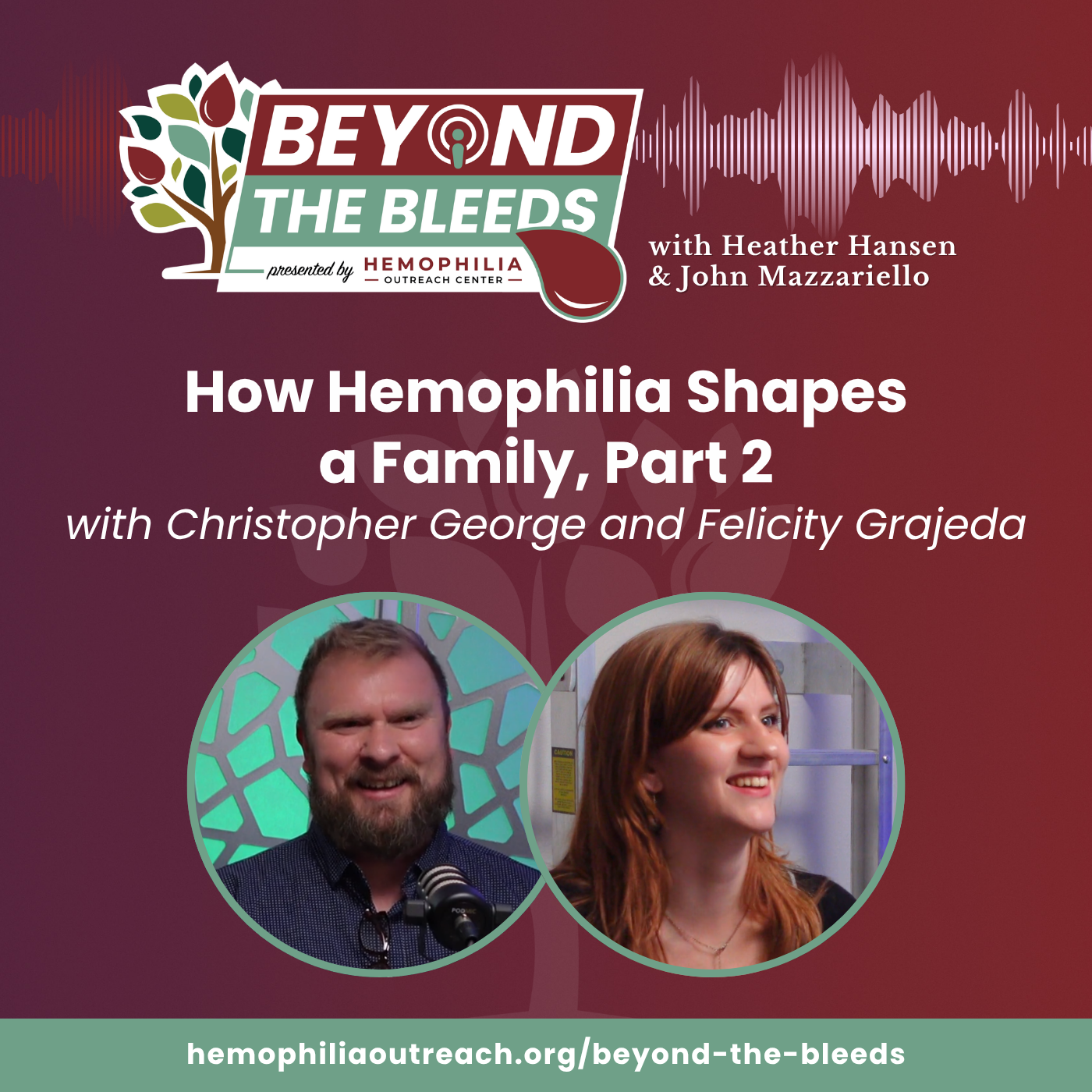
Today on Beyond the Bleeds, Heather and John are joined once again by Christopher George and his daughter, Felicity Grajeda, for part two of their conversation exploring how hemophilia shapes a family and the lessons, experiences, and support that can carry from one generation to the next.
Christopher shares what he hoped his daughters would learn from watching him live with hemophilia, including perseverance, independence, and not allowing a bleeding disorder to become an excuse or define what is possible. He also reflects on how advances in treatment have changed life with hemophilia and influenced his own decisions about starting a family.
Felicity shares her experience thinking about the possibility of having a child with hemophilia, the conversations she had with her husband, and what it was like when they learned their son had the disorder. Growing up surrounded by hemophilia gave her knowledge and a strong support system to lean on as she began navigating bleeding disorder care as a parent herself.
Together, Christopher and Felicity offer advice for other families, from building independence and understanding healthy limitations to leaning on HTCs, local chapters, friends, and the wider bleeding disorders community. They also discuss the importance of talking openly about hemophilia, passing knowledge along to others, and making it an important part of life without allowing it to become your entire identity.
“Lean into your support group. Make sure that other people around you know that you’re open and willing to accept support from them as well.” — Felicity Grajeda
This episode of Beyond the Bleeds explores:
Building independence and perseverance while living with hemophilia
How advances in treatment have changed life with a bleeding disorder
Felicity’s experience becoming the mother of a son with hemophilia
The importance of family, HTC, and community support
Passing knowledge and experience on to the next generation
Looking for practical tips, expert advice, and a sense of community while living with or supporting someone with a bleeding disorder?
Subscribe to Beyond the Bleeds, the podcast that explores life with hemophilia, von Willebrand disease, and other rare conditions. Hosted by Heather Hansen and John Mazzariello, we share real stories and helpful conversations to support families at every stage.
Apple | Spotify | iHeart | Amazon Music | Pandora | Deezer | YouTube
The post How Hemophilia Shapes a Family, Part 2 with Christopher George and Felicity Grajeda appeared first on Hemophilia Outreach Center.

Comments

Download from Google Play

Download from App Store
 United States