


AT Pit Crew Podcast
Subscribed: 1Played: 0
Subscribe

© 2024 Action Medicine Consultants, LLC
Description
Hosted by Ray Castle, an athletic trainer and EMT with 30+ years of experience, The AT Pit Crew Podcast covers sports emergency care topics with expert guests, including athletic trainers, physicians, EMS, and athletes. The show focuses on the "Pitcrew" approach to emergency care—a team-based, coordinated response to on-field emergencies. Each episode explores hot topics, real-world experiences, and best practices to improve emergency response in sports settings. Tune in for expert insights and practical tips to elevate your care.
17 Episodes
Reverse
Episode Description
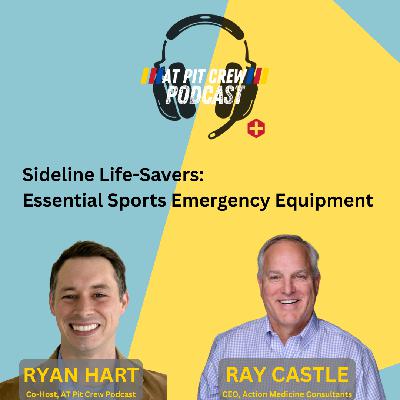
Sports emergencies don’t give second chances. In this episode of the AT Pit Crew Podcast, host Ryan Hart talks with Dr. Ray Castle (CEO of Action Medco and co‑author of the July 2024 Journal of EMS paper Best Practices for Emergency Action Planning and Implementation in Athletic Settings) about contemporary emergency care equipment and supplies.
They explore how the right tools – and the right preparation – can save lives when seconds count:
Minimum essential equipment every athletic venue must have, including CPR pocket masks, automatic external defibrillators (AEDs), personal protective equipment, bleeding‑control kits, splints and sanitation supplies
Why AED placement matters
Matching equipment to personnel and venue – align gear with staff qualifications and venue‑specific needs so your emergency action plan works in real life
Equipment maintenance & documentation – best practices for regular checks, manufacturer‑recommended service intervals and documentation protocols to ensure gear is ready when needed.
Integration with EAPs & training – how to incorporate equipment readiness into emergency action plans, practice drills and team communication.
By the end of this conversation, you’ll understand how properly selected and maintained equipment – paired with personnel training and clear protocols – builds a safety net for athletes, staff and spectators.
Call to Action: Subscribe to the AT Pit Crew Podcast so you never miss a lap. For more resources and hands‑on training, visit ActionMed.co and explore the AT Pit Crew course and the July 2024 Journal of EMS paper referenced in this episode.
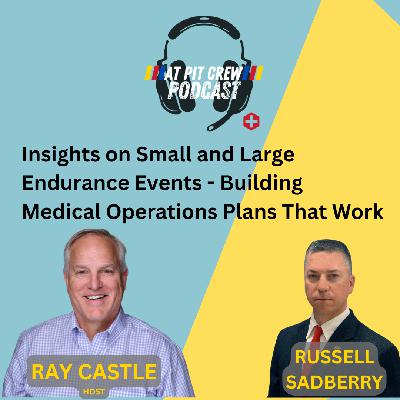
Endurance races don’t just test runners — they test your entire medical operations plan. In this episode of the AT Pit Crew Podcast, Dr. Ray Castle talks with Russell Sadberry, an athletic trainer with 32 years of experience at Katy Independent High School in Texas, about how to build scalable, reality-tested medical coverage for endurance and ultra-endurance events.
Russell brings a rare 360° view from working major events like the Houston Marathon and smaller ultra races, plus insights as the spouse of an accomplished marathoner who has completed four World Major Marathons.
They break down how to design and run medical operations that protect participants from the first mile to the finish line:
Command structure & roles
How to establish a clear incident command structure
Defining role clarity for medical volunteers at races of all sizes
Medical footprint by event size
Building a right-sized medical footprint for 700-runner ultras vs. large-city marathons with thousands of participants
Staffing mix strategies
Integrating athletic trainers, nurses, EMS, and community volunteers
Matching skills to positions so every station is staffed to its mission
Communication & redundancy
Radio and phone communication protocols
Backup plans when primary systems fail mid-event
Transport & hospital coordination
Designing transport routes and handoff plans
Coordinating with local hospitals for different event scales
Supplies, equipment & environmental care
Essential gear for cooling, warming, and emergency care
Building treatment areas that can flex with patient surges
Course design & medical coverage
How course layout, terrain, and access points drive resource placement
Real-time monitoring & thresholds
Using weather data, participant flow, and medical encounter trends to anticipate surges
Budgets, partnerships & sustainability
Budget considerations for smaller or resource-limited events
Creative partnership strategies with sponsors and local agencies
Contingency planning & reunification
Procedures for emergencies, course stoppages, and family reunification
What organizers often overlook until something goes wrong
By the end of this conversation, you’ll have a practical framework for medical operations planning that scales from local ultras to world-class marathons — and keeps runners, staff, and spectators safer when the race day pressure is highest.
Call to Action: Subscribe to the AT Pit Crew Podcast so you never miss a lap.
For more resources and continuing education on event medical operations, visit Acti...
Chapters
(00:00:02) - Emergency Medical Care(00:00:32) - Pit Crew: Endurance Events & Ultra Endurance Events(00:02:43) - General Command and Authority at Races(00:05:36) - What is the medical footprint of a race?(00:08:05) - Emergency Preparedness at an Ultra Endurance Race(00:10:17) - Race volunteers' critical skills(00:11:59) - Primary Communication Modes During an Event(00:14:29) - What Kind of Medical Coverage Does Trail Running Have?(00:19:57) - Medical Supplies and Equipment for Ultra Endurance Events(00:24:30) - Temperature and Cold at the Marathon(00:26:40) - Heat Stroke(00:31:58) - How to Manage the Marathon(00:35:19) - Endurance Events: Contingencies & After Action Reports(00:36:12) - Boston Marathon and Communication Plans in Action(00:40:18) - Five Quick Questions For Russell
Title: Measuring Systolic BP by Palpation: Your Sideline Game-Changer for Loud Environments
Description: Chaotic sidelines and roaring crowds can make traditional auscultation impossible. In this episode of the AT Pit Crew Podcast, host Ryan Hart sits down with Dr. Ray Castle (CEO, Action Medicine Consultants) to teach athletic trainers and sports medicine pros how to accurately measure systolic blood pressure by palpation. You’ll learn step-by-step technique, when palpation is preferable to auscultation, what equipment you’ll need, and how to interpret readings for emergency decision‑making. Ray also shares a real‑world case from a seizure emergency, explains how to communicate findings to EMS, and offers practice drills and protocols to keep this essential skill sharp. They touch on integrating palpation into emergency action plans, the MIST report format, Glasgow Coma Scale and AVPU assessment tools, and more.
Key Takeaways:
Step-by-step systolic BP palpation technique
Situations where palpation is the best option
Essential equipment and common mistakes
Interpreting readings and informing care decisions
Communicating results to EMS and integrating into EAPs
Real-world seizure case study and practice recommendations
Call to Action: Make sure to subscribe to the AT Pit Crew Podcast so you never miss an episode, and check out www.ActionMed.co for the AT Pit Crew Podcast and other resources to strengthen your emergency response skills.
Episode Description
In this special episode, Ray Castle welcomes Ryan Hart to the AT Pit Crew Podcast. Ryan recently joined Action Medicine Consultants as the Sports Medicine Event Manager and will be sharing hosting duties on future episodes. Learn about his journey from Louisiana to Colorado and back, his experience in clinical, surgical and industrial athletic training settings, and his passion for RV travel and podcasting. Ray and Ryan swap stories about weather extremes, heat illness protocols across regions, and even a few RV mishaps—all while highlighting what’s next for the show.
Key Takeaways
Meet Ryan Hart: Hear Ryan’s background in athletic training, including clinical and industrial experience across the Southeast and Colorado, plus his return to Mississippi to be closer to family.
Multiple Platforms: Ryan and his wife run “Living the Dream – Life on the Road,” combining YouTube and podcasting about full-time RV life. He’s also involved in the Colorado Athletic Trainers Association’s podcast and launching a new show, “Beyond the Sidelines: Inside Athletic Training.”
Heat Illness Across Regions: Discussion on how emergency care differs between humid southeastern states and the drier, high-altitude West—hinting at future deep dives on heat‑related protocols.
Fun Facts: Ryan grew up around rodeo events and can operate heavy construction equipment—skills he traded in to pursue sports medicine.
What’s Next: Expect Ryan to share hosting duties, bring fresh perspectives on emergency care, and explore topics from RV life tips to athletic training best practices.
Call to Action
Enjoying the AT Pit Crew Podcast? Follow and rate us on your favorite podcast app so you never miss a lap, and stay tuned for more episodes with Ryan and Ray. For resources and updates on sports emergency care, visit ActionMed.co.
Recorded live at the Arkansas Secondary School Interprofessional Sports Emergency Care Course, or "Arkansas ISEC", July 7, 2025, at Cabot High School with guest Cheria McDonald – State School Nurse Consultant, Arkansas Department of Education.
Episode Summary
Host Dr. Ray Castle, ATC, NREMT, is joined by Cheria McDonald, the State School Nurse Consultant for the Arkansas Division of Elementary and Secondary Education. Broadcasting from Arkansas ISEC, Ray and Cheria explore the vital and often underrecognized role school nurses play in sports emergency care and Emergency Action Plans (EAPs), especially in rural settings.
This discussion highlights the collaborative importance of school nurses in shaping emergency readiness, bridging gaps where athletic trainers may not be present, and preparing staff for real-life sports and school-based emergencies.
Topics Covered
The Expanding Role of School Nurses: Why school nurses are critical in both day-to-day student health and sports emergency preparedness—especially in districts without full-time athletic trainers.
Integrating Nurses into EAPs: How school nurses can help create, review, and implement Emergency Action Plans by partnering with athletic trainers, EMS, and school staff.
School Hours vs. After-Hours Coverage: Addressing the challenge of consistent medical coverage beyond the 7:30–3:00 school day and ensuring all stakeholders know their role during emergencies.
Training the Trainers: In Arkansas, nurses often train athletic trainers and coaches on medication administration, health histories, and emergency protocols for student-athletes with chronic conditions.
Hands-On Lessons Learned: Cheria reflects on eye-opening takeaways from the live labs—including the versatility of disaster response cooling bags and insights into face mask removal tools in helmeted athletes.
Special Feature
Fun Fact About Cheria McDonald: She grew up in her family’s hardware and lumber store and finds the scent of pine and wood calming. When stressed, you’ll likely find her “just smelling the lumber” in the home improvement aisle!
Key Takeaways
✅ School nurses are vital partners in sports emergency response, especially in rural settings ✅ EAPs must include all medical stakeholders—nurses, ATs, EMS, coaches ✅ Interprofessional education improves student safety and system readiness ✅ School nurses often serve as a consistent medical presence during and beyond school hours ✅ Simple tools and training can make a big impact in emergency readiness
About the Guest:
Cheria McDonald State School Nurse Consultant Division of Elementary and Secondary Education, Arkansas Department of Education Champion for student health, emergency preparedness, and interprofessional collaboration across Arkansas schools.
Enjoyed this session? Subscribe, share, and catch more live episodes at: www.actionmed.co
Legal Disclaimer:
The medical information in this episode is for educational purposes only and should not substitute for professional medical advice, diagnosis, or treatment.
Stay prepared. Stay proactive. See you next time on the AT Pit Crew Podcast!

Comments

Download from Google Play

Download from App Store
 United States