


Bigfoot Trail Tales
Subscribed: 6Played: 5
Subscribe

© 2025 Bigfoot Trail Alliance
Description
This podcast explores all aspects of the Bigfoot Trail in northwest California and southwest Oregon from thru-hikes, day-hikes, natural history, and stewardship.
7 Episodes
Reverse
What begins with learning the name of a tree can grow into something much larger.
Bigfoot Trail Alliance Executive Director Michael Kauffmann recently joined host Mike Green on Jefferson Public Radio’s The Jefferson Exchange for a conversation about the Klamath Mountains—and how a lifelong fascination with this remarkable landscape has evolved from studying conifers to building opportunities for young people to work and thrive here.
Michael’s journey began more than 15 years ago with the extraordinary botanical diversity of the Klamath Mountains. The region holds roughly 5% of the world’s conifer species, and learning those trees became a doorway into understanding the geology, ecology, and deep complexity of the landscape.
That same idea remains at the heart of the Bigfoot Trail Alliance: people protect the places they know and love.
From Youth Stewardship to a Regional Workforce
The conversation also explores how that philosophy has grown beyond hiking and natural-history education.
In 2020, the Bigfoot Trail Alliance helped launch the Youth Stewardship Project, bringing young people into the mountains for hands-on experiences in ecology and public-land stewardship. That work has now evolved into the Klamath Mountains Workforce Training Network, a regional collaboration connecting young people ages 15–24 with paid training, mentorship, and potential careers in conservation and ecological restoration.
Participants are gaining experience in everything from GIS and digital mapping to wilderness first aid, watershed restoration, trail stewardship, and other skills needed to care for these landscapes. Just as importantly, they are meeting the people and organizations already doing this work across the region.
The goal is bigger than workforce training. It is about helping young people imagine a future for themselves here—living, working, and caring for the Klamath Mountains.
As Michael says in the interview:
“I really want the love to come out — love for each other, love for place and love for a future in the Klamath Mountains.”
That feels like a pretty good description of what we’re working toward.

The Klamath Mountains are shaped by movement — rivers carving canyons, fire renewing forests, salmon returning upstream, and people traveling trails that connect communities across Northwest California.
Now, a new generation is stepping onto those trails.
The Klamath Mountain Workforce Training Network, is a regional collaborative helping young people gain hands-on experience in trail stewardship, ecological restoration, outdoor leadership, and conservation-based career pathways.
Through conversations recorded in the field and beside wild rivers, this podcast shares the voices of youth crews and mentors working together to care for the landscapes of the Klamath Mountains.
The network is powered through collaboration between the Bigfoot Trail Alliance, Ascend Wilderness Experience, Scott River Watershed Council, Salmon River Restoration Council, Trinity Together, The Watershed Research and Training Center, Trinity County Resource Conservation District, and regional Tribal governments and youth leaders.
Funding support for this work comes from the SH Cowell Foundation, Humboldt Area Foundation’s Klamath River Fund, and Redding Rancheria Community Fund at Community Foundation of the North State.
Whether you are interested in stewardship, restoration, public lands, youth empowerment, or simply the stories that emerge when people spend meaningful time outdoors, we invite you to follow along.
This is more than workforce training. It is about building connection, resilience, skills, and belonging through work rooted in the land itself.
Transcript
Overview
The Bigfoot Trail Tales podcast explores the Klamath Mountain Workforce Training Network, which unites youth, nonprofits, Tribes, and conservation groups to train the next generation of land stewards. The program focuses on trail restoration, wilderness stewardship, and ecological monitoring. Key speakers include Mike Splain, who hopes students gain life skills and tools for environmental improvement; Lori Lyn Acosta, who highlights fire suppression and climate change impacts; Aaron Joseph Martinez, who emphasizes youth collaboration and fun; and Dan Scollon, who discusses the importance of GIS in data management. The program aims to build confidence, resilience, and practical skills in young people, fostering a connection to community and public lands.
Outline
Klamath Mountain Workforce Training Network Overview
Michael Kauffmann introduces Bigfoot Trail Tales, focusing on landscapes, people, and stories in Northwest California.
The Klamath Mountain Workforce Training Network brings together various stakeholders to train the next generation of land stewards.
The program focuses on trail restoration, wilderness stewardship, ecological monitoring, watershed recovery, fire ecology, and outdoor leadership.
The goal is to build confidence, resilience, practical skills, and pathways towards meaningful careers rooted in stewardship.
Mike Splain's Vision for Students
Mike Splain, Development Director and Program Manager, hopes students gain life skills and tools to improve the Klamath Mountains region.
He emphasizes the importance of students being able to make their communities better than they found them.
The program aims to prepare students for future car...
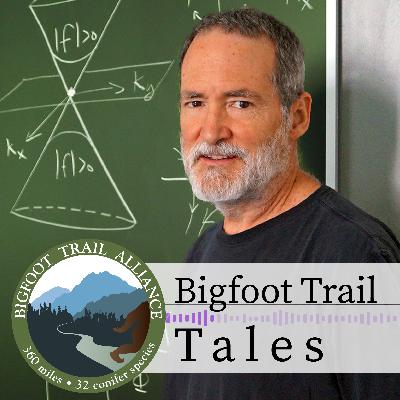
Some people meet the Klamath Mountains only once or twice in their lives. Others feel the call so strongly that it becomes a kind of compass. Dr. Brad Marston — physicist, professor at Brown University, and our 2025 Volunteer of the Year — is one of those people whose life keeps bending back toward this rugged, rain-washed country.
In this episode of Bigfoot Trail Tales, we sit down with Brad to explore the winding path that brought him from the world of theoretical physics to the deep canyons, marble caverns, and trail corridors of the Klamath Range. Brad talks about his early spark: a geology book that nudged him west in 1985, turning curiosity into a lifelong connection. From that first backpack in the Salmon Mountains to long days of trail work in the Yolla Bollys, he’s carried a scientist’s eye and a trail worker’s heart.
Over the years, Brad has blended both worlds with clarity and wonder. He speaks about the therapy of swinging tools, the joy of wandering off-trail to discover rare plants on Marble Mountain, and the strange beauty of places like the Yellow Bullies where fire, time, and limestone shape whole stories in stone. He’s even woven the mountains into his academic life, sharing how limestone dissolution in the Marbles pulls carbon from the atmosphere — a quiet process of healing hidden inside the range.
Brad also reminds us why long-distance trails matter. They knit ecosystems together. They help wildlife move. They help people understand change, especially in a time when fire is rewriting the map. As he points out, more than half of the Bigfoot Trail has burned since 2015, a living lesson in resilience and transformation.
And behind all of it is a simple truth: trail work is a form of care. It’s physical, grounding, mindful, and joyful — a way of tending the land that has given him so much.
As Brad looks toward retirement, he and his wife hope to move to Northwest California to be closer to the mountains that have shaped him. We could not imagine a more fitting homecoming.
Join us for this conversation — a blend of science, story, stewardship, and the steady pull of a landscape powerful enough to reroute a life’s trajectory.
Transcript Summary
Brad Marston, the 2025 Volunteer of the Year, discussed his extensive experience with trail stewardship and his deep connection to the Klamath Mountains. He shared his journey from a physicist to a trail enthusiast, inspired by a book on California geology. Brad highlighted his work with the Bigfoot Trail Alliance, including a memorable trip in the Yellow Bullies and his passion for exploring Marble Mountain. He emphasized the therapeutic benefits of trail work and the importance of long-distance trails for public climate awareness. Brad also expressed his interest in moving to Northwest California to be closer to the Klamath Mountains and continue his trail work.
Introduction to the Podcast
Bigfoot Trail Alliance congratulates Brad Marston on being the 2025 Volunteer of the Year and thanks him for participating in the podcast.
Brad shares his background as a physicist and how his scientific mindset shapes his thinking about landscapes and ecosystems.
Brad recounts his first backpack trip to the Klamath mountains in 1985, inspired by a book on California geology, and his subsequent interest in the area's geology and ecology.
Trail Stewardship and Mindfulness
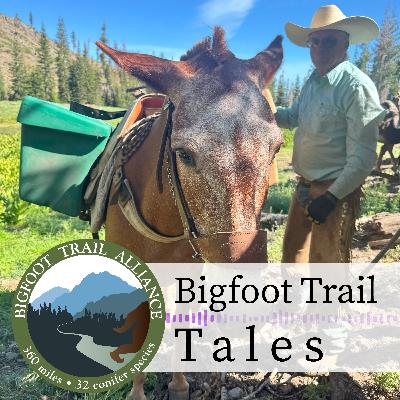
A Life in the Saddle
For nearly five decades, Ken Graves has ridden into the wilderness with horses at his side and purpose in his heart. As a seasoned horse packer on the Shasta-Trinity National Forest, Ken has spent most of his career navigating the rugged beauty of the Yolla Bolly-Middle Eel Wilderness — hauling tools, gear, and stories into the backcountry.
A Conversation with Ken Graves
In our latest podcast episode, we sit down with Ken to talk about his remarkable journey. He shares memories from a lifetime on the trail, reflections on the changing nature of public lands, and his commitment to training the next generation of packers — people who will carry on this vital, behind-the-scenes work that makes modern trail stewardship possible.
The Backbone of Backcountry Work
Horse packers like Ken are the unsung heroes of trail work. Machines aren't allowed in wilderness so it's the hoofbeats of mules and horses that bring in what’s needed to get the job done. Their contribution to trail conservation is quiet, powerful, and essential.
How You Can Get Involved
We invite you to listen in, be inspired by Ken’s story, and consider how you can support the trail — not just by hiking it, but by helping care for it.
The Bigfoot Trail Alliance offers opportunities for all skill levels to get involved, whether on remote volunteer vacations deep in the Klamath Mountains or weekend work trips near the trailhead. Every hand, hoof, and heart counts.
Listen to the episode and learn more at bigfoottrail.org/podcast
Sign up to volunteer at bigfoottrail.org/volunteer
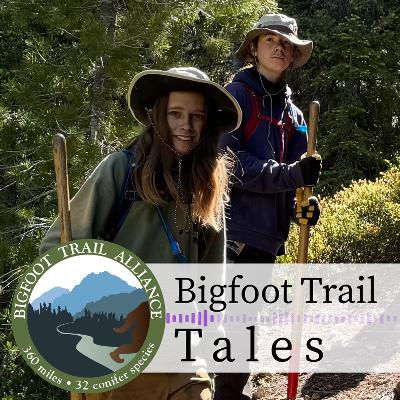
Congratulations to Sylas and Oliver!
We are excited to announce that our 2024 Volunteers of the Year are Sylas Kauffmann and Oliver Bullwinkle. They each volunteered 118 hours doing trail work across two week-long trips. The first trip was into the Siskiyou Wilderness where they worked on the Bigfoot Trail from Poker Flat toward Young’s Valley. Their second trip of the summer was to the Russian Wilderness where they worked on five miles of the Pacific Crest Trail — after our Marble Mountain trip was rerouted due to the Shelly Fire.
In this episode of the Bigfoot Trail Tales, proud dad Michael Kauffmann interview Sylas and Oliver about their adventures working and exploring along the Bigfoot Trail. They share tales of food, tools, and friends made along the way.
Oliver Bullwinkle (left) and Sylas Kauffmann (right) enjoy a fine backcountry meal during a volunteer work trip in the summer of 2024.

Comments

Download from Google Play

Download from App Store
 United States