


 Claim Ownership
NWA Founders
Subscribed: 1Played: 1
Subscribe

© BTB LLC 2026
Description
NWA Founders is a Northwest Arkansas business podcast hosted by Cameron Clark and Nick Beyer. The goal is to inspire entrepreneurship in Northwest Arkansas by highlighting the founders, owners and builders driving growth here.
Every other Tuesday, Cameron and Nick sit down on location with the people building companies here: founders, owners and operators from Fayetteville, Rogers, Bentonville, Springdale and across the region. Guests have built coffee roasters, construction firms, software companies, staffing agencies, restaurants, retail brands and family businesses handed down through generations. The conversations run long, usually around 90 minutes, and cover the parts most interviews skip: the early money, the first hire, the year it nearly ended, and what they would do differently.
Every episode, with full transcripts and a searchable archive of every conversation, is at nwafounders.com.
To recommend a guest or ask questions, reach out at [email protected] and follow us on YouTube and LinkedIn for video content.
51 Episodes
Reverse
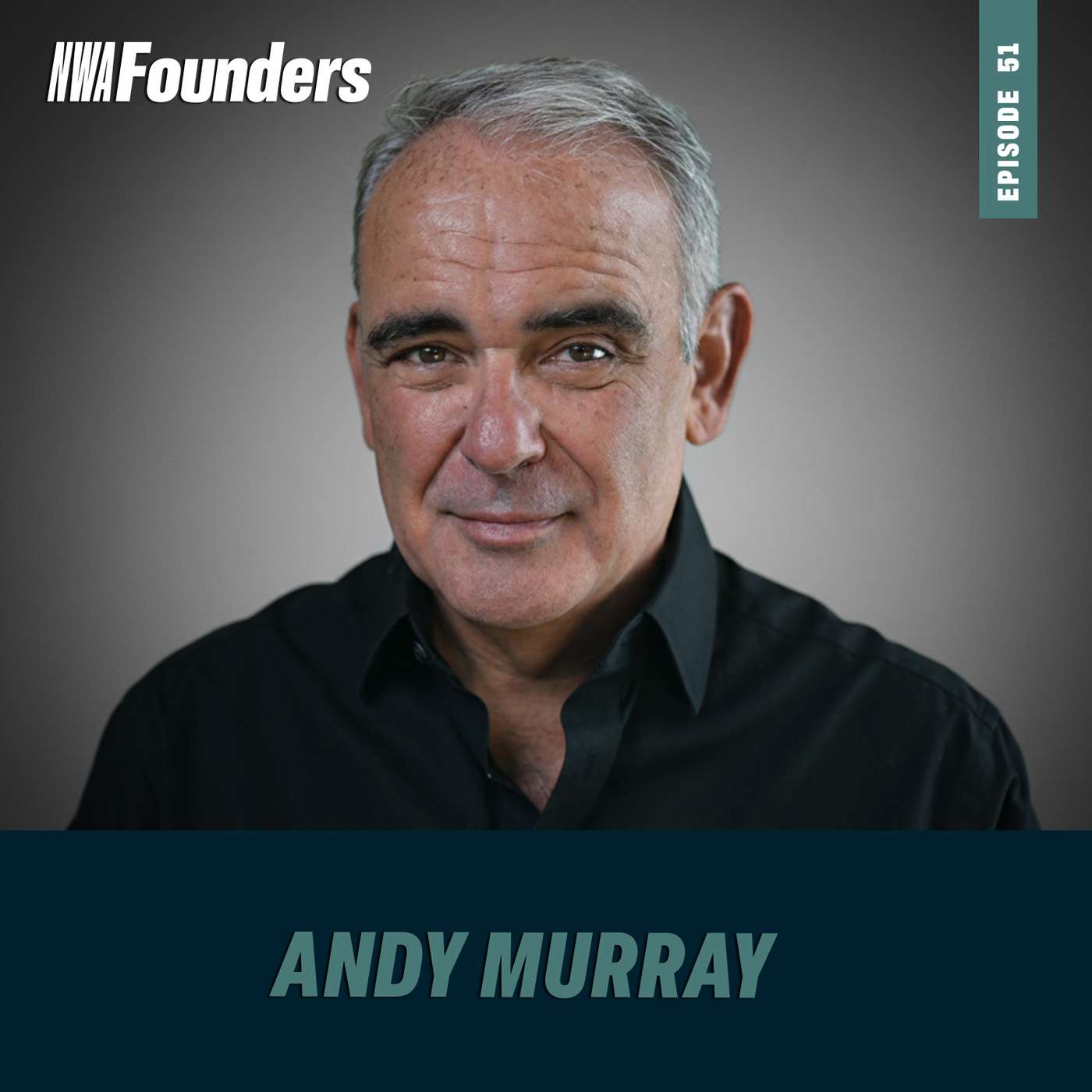
Andy Murray has spent his career at the intersection of entrepreneurship and corporate innovation — and he's done it at the highest levels of both. From riding shotgun in his father's plumbing truck as a kid in Cincinnati, to launching a driveway-sealing business at 16, to spending nine years at Procter & Gamble, to founding what became the shopper marketing industry, to serving as SVP of Marketing at Walmart and Chief Customer Officer at ASDA in the UK, Andy's path has been anything but linear. In this episode of the NWA Founders Podcast, Andy sits down with Cameron Clark and Nick Beyer to trace that journey — the risks, the mentors, the pivots, and the framework he's developed for driving entrepreneurial thinking inside some of the world's largest companies.Along the way, Andy shares the five questions he believes every corporate innovator must answer before launching new work, how a simple Veterans Day ad turned into the Green Light a Vet movement, the origin story of shopper marketing as an industry, the decision to sell his agency to Saatchi & Saatchi, and how asking "what's the biggest problem we could solve" transformed food insecurity efforts in the UK. He also reflects on identifying talent, the difference between being a builder and an owner, and what it means to live a true, good, and beautiful life. Key Moments4:14 — The Five Questions for Corporate Entrepreneurship — Andy lays out the framework he's used repeatedly inside big companies: define the problem, shape the outcome, identify the biggest barrier, decide how to measure success, and figure out motivation.9:28 — From a 30-Second Ad to the Green Light a Vet Movement — Andy recounts how asking "what's the biggest problem veterans face?" at Walmart turned a routine Veterans Day ad assignment into a multi-year national movement.39:17 — The Birth of Shopper Marketing — Andy describes the all-in gamble on a Walmart baby department project, working around the clock to deliver in six days, and how a $200,000 check from P&G launched an entirely new marketing discipline.57:28 — Builder vs. Owner — Facing an unexpected call from P&G's CMO about going global, Andy shares how a CEO listening tour and a card on his refrigerator helped him realize he was a builder, not an owner — leading to the Saatchi & Saatchi deal.76:15 — Transforming Food Insecurity at ASDA — Andy tells the story of how asking charity partners "what's the single biggest thing we could do together?" led to a £22 million refrigeration infrastructure project that delivered millions of fresh meals across the UK. Key TakeawaysThe answer resides in the question you're asking. Whether it's defining a problem for a startup pitch, asking "is this the biggest idea we could be working on?" at P&G, or interrogating whether a project is worth doing at all, Andy's career demonstrates that asking better questions — not having better answers — is the starting point for bigger ideas and meaningful innovation.Bigger ideas are easier than smaller ideas. Andy learned from mentor Tom Muccio that small ideas still require resources and effort, but big ideas that move hearts and minds attract people who want to help. From Green Light a Vet to the ASDA food insecurity project, framing an ambitious outcome draws collaborators out of the woodwork.Look outside your industry for operational breakthroughs. When his agency struggled with creative workflow bottlenecks during hypergrowth, Andy studied a pediatrician's patient-throughput model to redesign his team's traffic system. The lesson: uncommon inspiration leads to uncommon results.
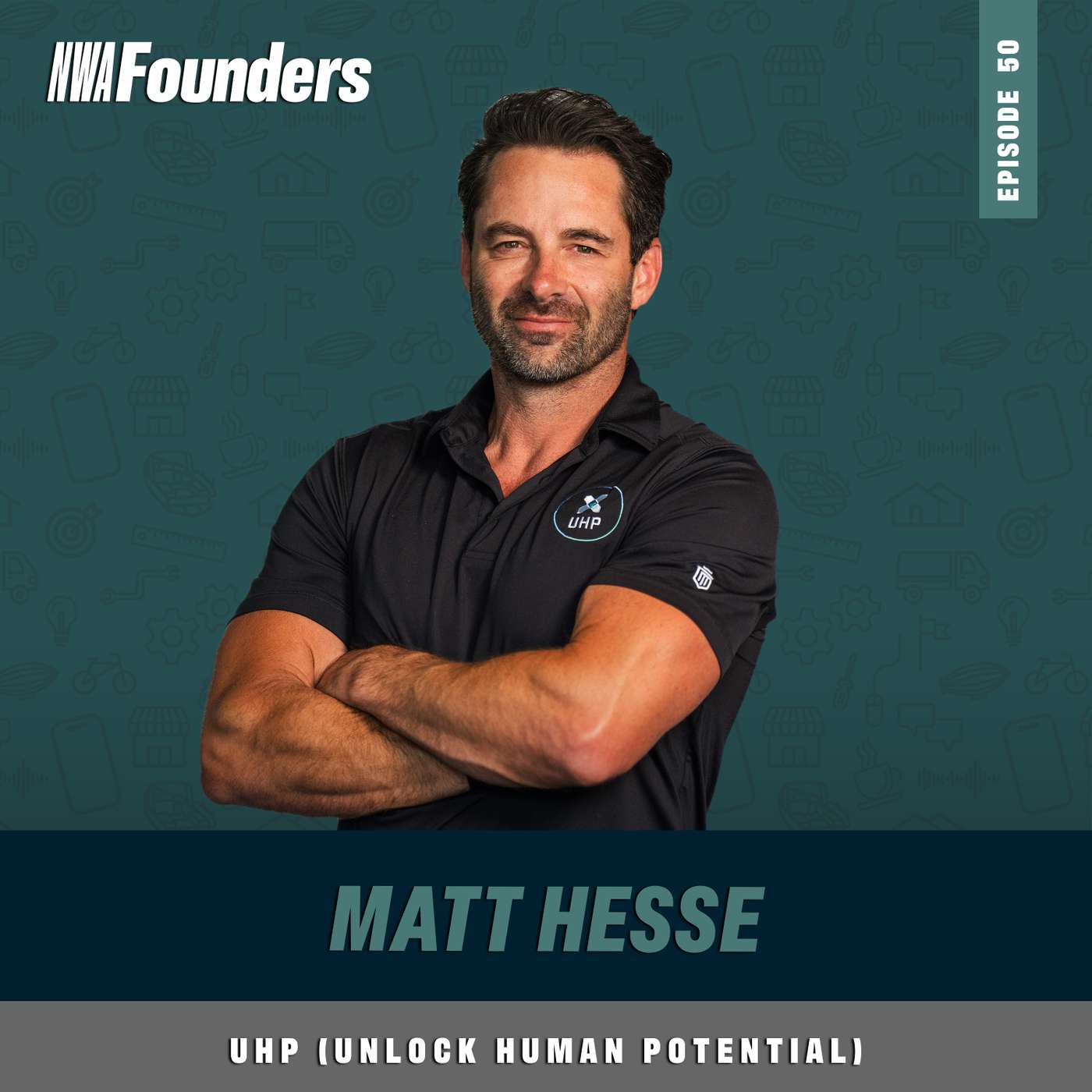
In this milestone 50th episode of the Northwest Arkansas Founders Podcast, host Cameron Clark rides around the UHP (Unlock Human Potential) campus with founder Matt Hesse, a former Army veteran and serial entrepreneur who has dedicated his life to solving the veteran transition crisis. After selling his sports nutrition company, Hesse invested heavily in veteran suicide research and discovered that loss of purpose—not combat trauma—is the primary driver of veteran suffering. In just four years, he has transformed 800 acres of raw Arkansas farmland into a $40+ million campus that trains veterans in human performance, industrial trades, and entrepreneurship, with a goal of serving 1,500 veterans per month by 2031.What makes UHP unique is its preventative approach: rather than treating the symptoms of veteran suffering through therapy and retreats, Hesse's team rebuilds purpose by helping veterans identify what they're passionate about, skilled at, believe in, and value—then channels them into thriving careers. The campus has become a magnet for major partners including Walmart, Google, NASCAR, Raytheon, and Apple, all drawn to Hesse's mission-driven model. The episode weaves together the personal story behind UHP's founding, the business case for investing in veteran talent, and Hesse's broader vision for making Northwest Arkansas a national case study in community-building.Key Moments4:30 — Hesse describes UHP as combining "Disneyland, Fort Bragg, and the University of Arkansas" into one campus6:10 — The devastating statistic: 7,300 combat deaths vs. 200,000 veteran suicides over 20 years of the Global War on Terror8:08 — Hesse identifies loss of purpose and identity—not combat trauma—as the primary driver of veteran suffering, explaining why UHP focuses on prevention over treatment50:15 — The transformation story of Mike Gerardo, a Marine who overcame injury, addiction, homelessness, and parole to become a mental health counselor serving veterans59:20 — Hesse unveils plans for a franchise model where veterans graduate from UHP and own a business with zero debt and no capital of their own, making up to $150,000 in under a yearKey TakeawaysPrevention beats treatment. The veteran support ecosystem is heavily weighted toward treating suffering after it happens—therapy, retreats, and symptom management. Hesse argues that the most effective approach is upstream: replacing the sense of purpose veterans lose when they leave the military, before suffering ever takes root.Mission-driven businesses attract extraordinary partners. UHP built the only federally-funded, veteran-only school in the country—navigating legislation that wasn't designed for this model—and in doing so attracted Fortune 1 partners (Walmart), defense giants (Raytheon, Lockheed Martin), tech leaders (Google, Apple), and state-level support. When the mission is authentic, resources follow.Northwest Arkansas is becoming a national case study. Hesse's decision to build UHP in Bentonville wasn't transactional—it was driven by the quality of people, servant-leadership culture, and the Walton family legacy of investing in community. He believes that in a few years, the region will be studied as a "one of one" example of what happens when values-driven leadership, corporate investment, and entrepreneurial grit converge in one place.
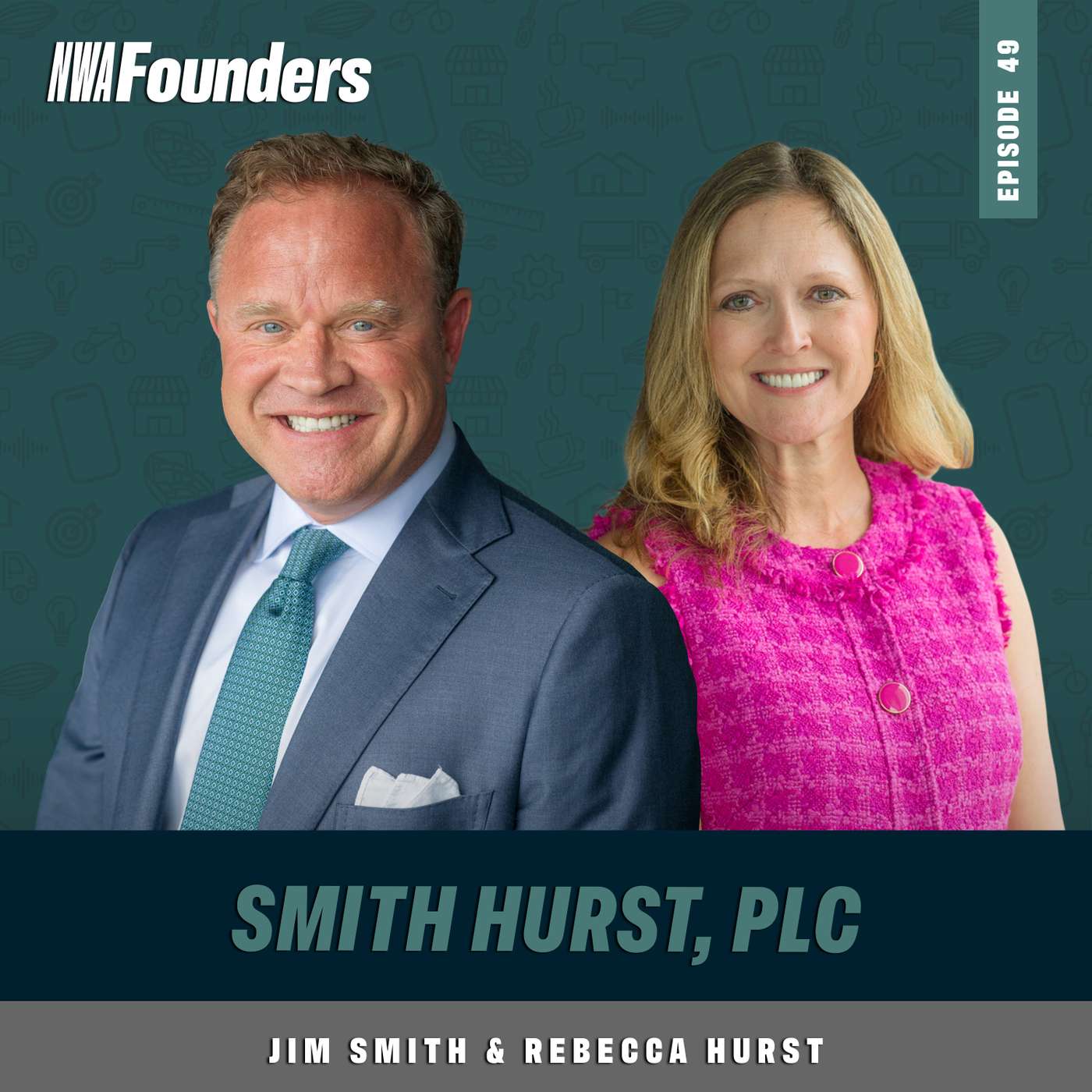
In this episode of the Northwest Arkansas Founders podcast, hosts Cameron Clark and Nick Beyer sit down with Jim Smith and Rebecca Hurst, the co-founders of Smith Hurst law firm and Emeraude (a multifamily office and business services platform). Jim and Rebecca share their parallel journeys — both with accounting degrees, both with tax LLMs from NYU — and trace the arc of their careers from the Friday firm (Arkansas's largest law firm) to launching Smith Hurst in 2011. They discuss the evolution of family offices in Northwest Arkansas, the explosive growth of the region's M&A and private equity landscape, and the strategic decision to expand beyond legal services into Emeraude, which provides family office and back-office business services to entrepreneurs and wealthy families.Throughout the conversation, Jim and Rebecca reflect on the relationships and timing that fueled their early success — from landing the Rockfish/WPP deal out of the gate, to the $83 million Acumen Brands capital raise in 2013. They cover practical topics like how M&A attorneys get paid (hourly, not success fees, to maintain objectivity), when to involve counsel in a deal (ideally before the letter of intent), and how AI is transforming legal practice. They also share the Wizard of Oz–inspired origin of the Emeraude name, discuss the $124 trillion wealth transfer ahead, and close with personal reflections on success, purpose, and the once-in-a-lifetime opportunity of building a business in Northwest Arkansas.Key moments:0:0013:45 — Their competitive edge: relationships, not the firm name — 738 files moved in two weeks14:30 — Landing the Rockfish/WPP acquisition deal out of the gate, giving the new firm instant credibility17:30 — Acumen Brands' $83M capital raise from General Atlantic, a top-five Q1 2013 PE deal45:35 — Why Smith Hurst bills hourly instead of success fees: maintaining objectivity51:18 — The Wizard of Oz / Emerald City story behind the Emeraude name75:55 — What's next: staying relevant as big players arrive in NWAThree key takeaways:Relationships are the real currency. When Jim and Rebecca left the Friday firm — the largest in Arkansas — 738 client files moved with them in the first two weeks. The business belonged to the relationships they'd built, not the firm name on the door. Jim emphasizes that most deals come through client and accountant referrals, and that the shift from legal advice to business strategy happens naturally over years of working alongside founders in the boardroom.Objectivity is worth more than a success fee. Smith Hurst deliberately charges hourly rather than taking a percentage of deal value, so clients never have to wonder whether the attorney's advice is driven by a personal financial stake in closing. Jim frames this as a trust principle: "We don't want them to feel that they're at risk that we're not giving them sound advice because we don't get paid if they don't close a deal." The same logic drives Emeraude — they facilitate, advise, and connect, but they don't manage assets or sell insurance, keeping their counsel independent.Northwest Arkansas is a once-in-a-lifetime window — and the clock is ticking. Both guests stress that the region's legitimacy as a market for private equity, venture capital, and talent is no longer a question. But Jim warns that bigger players will inevitably arrive as the population climbs toward 750,000 and beyond, and local firms must keep sharpening their edge. His advice to anyone on the fence: "Make the call" — whether for a family office, business services, or a career move — because the opportunity in NWA is as rare as it gets.

This episode of the Northwest Arkansas Founders Podcast features the team behind Duncan & Stone Paper Co. — Garrett Peters, Stephanie Peters, and Sarah Autry — discussing how they built a keepsake journal and gift business that now does e-commerce across Amazon, Etsy, and their own Shopify store. They trace the origin story back to Sarah quietly hand-making pregnancy prayer cards from her living room, Stephanie recognizing the business potential, and a family medical crisis that pushed them to seriously commit. A scrappy weekend at a stationery conference in LA, sketched-out plans on a cardboard box, and a risky $30,000 wire transfer for their first inventory order set the company in motion just before the pandemic — which, unexpectedly, became a growth catalyst as people stuck at home began filling out baby books.The conversation then moves into the mechanics of scaling an online consumer brand: navigating Amazon dupes and copycats, structuring ownership (52% women-owned, quarterly financial reviews, an annual planning retreat), managing cash flow and inventory forecasting for seasonal spikes, and deliberately staying lean with just four full-time owners and outsourced specialists instead of an office and large staff. They dig into marketing economics (ad spend, return on ad spend, shifting traffic from Amazon to their own Shopify store), product strategy (designing a "funnel" of journals across life stages), and the unpredictability of channels like TikTok. The episode closes on reflections about partnering with best friends, protecting relationships through trust and quick communication, and how each founder defines success — mostly in terms of financial stability and time with family rather than pure revenue growth, even as they debate whether to scale toward $10 million.Key moments:2:00 – Team introduces the business and Amazon/Etsy brand-building approach5:06 – Discussion of Amazon copycats, dupes, and trademark/copyright protection7:28 – Origin story: Sarah's stationery side hustle and the pregnancy prayer cards19:02 – Landing the manufacturer, the $30,000 first order, and pallets in the garage24:01 – Garrett quits his job to go all-in on the company28:42 – Scaling numbers: from 10 pallets in year one to 200 pallets today35:25 – Why they've kept the team to just four people, no office51:55 – Breaking down e-commerce mechanics: cost of goods, ad spend, ROAS69:36 – Each founder defines what success means to themThree key takeaways:Know your "why" before you grind. Multiple founders emphasize that a clear, personal reason behind the business — not just wanting extra income — is what sustains people through the hardest years of building a company.Structure and clarity protect both the business and the friendships. Formalizing ownership splits, roles, and communication norms (quick apologies, staying in your lane, quarterly financial reviews) before money is on the line kept the founders' partnership and friendships intact.Growth isn't always the goal. Despite having a path to double revenue, the team repeatedly chooses to stay lean and intentional, prioritizing time with family over maximum scale — success is measured holistically, not just in dollars.
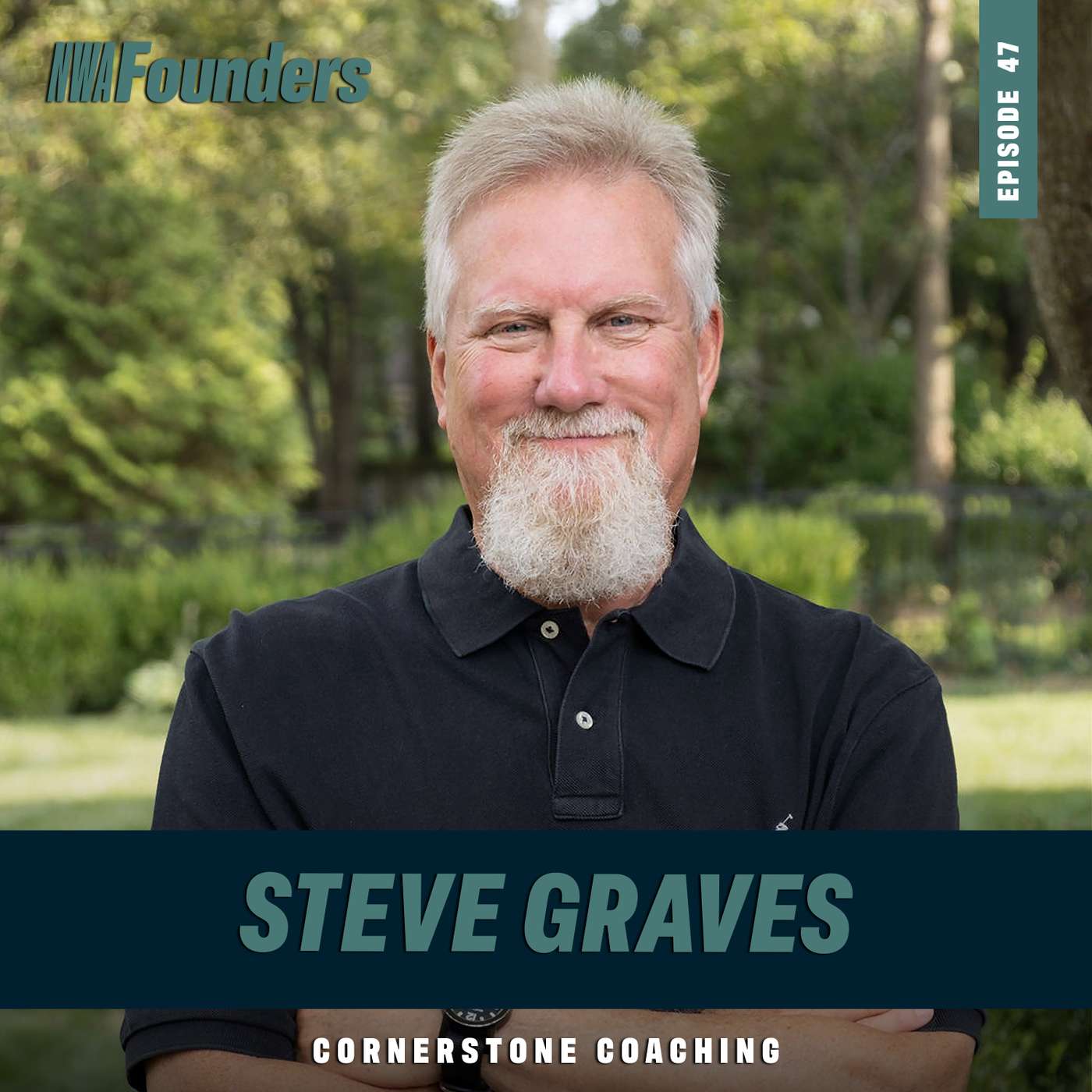
Steve Graves joins the NWA Founders Podcast to talk about his four-decade career coaching CEOs, founders, and business owners through his firm, Cornerstone Coaching. He shares his philosophy of working with individuals rather than companies directly, on the belief that as the leader grows, so does the organization. He explains how he and his original partner, Tom Addington, start the business on faith and word-of-mouth alone, deliberately keep a small client portfolio to protect quality and their personal lives, and eventually build a scalable model only after multiple failed attempts, with the right team finally making it work.The conversation ranges widely across leadership philosophy: the "composite scorecard" for measuring a holistic successful life, the danger of listening to too many strategic voices versus unlimited voices of inspiration, the difference between businesses designed to scale versus those that aren't, harnessing ambition to something bigger than yourself, and staying alert to market shifts (using Kodak as a cautionary tale). He closes by reflecting on why Northwest Arkansas is a hotbed for talent and thought leadership, and how he personally defines success through a faith-anchored, multi-dimensional lens rather than money alone.Click the link for The Founders Toolbox - https://www.stephenrgraves.com/nwafounders. An exclusive coaching tool for listeners developed by Steve Graves & NWA Founders. Highlights:0:44 – The "composite scorecard" concept: your results reveal your organization's design.10:57 – Steve's origin story: choosing philosophy/theology over law, and eventually founding Cornerstone with Tom Addington.34:44 – "A man with a testimony is never at the mercy of a man with an argument" — on overcoming the "age barrier" as a young coach.45:04 – The two voices every founder hears: unlimited inspiration vs. very limited, trustworthy strategic guidance.50:46 – Why his core strategy is offensive, not defensive — set your own pace and execute your plan.58:01 – "Businesses create cultures, cultures create businesses — but people create the businesses and the cultures."63:17 – The "Bonfire on the Beach" metaphor: focus on one real fire (business) instead of scattering energy across many small ones.81:57 – The Kodak cautionary tale — staying "heads up" to market change instead of just executing.87:51 – Defining success through a faith-anchored, multi-dimensional "composite scorecard" rather than money alone.Three key takeaways:Vision – Steve's business model and mission stay remarkably consistent for nearly 40 years.Wisdom – Decades of both failed and successful attempts to scale offer hard-won lessons on timing, team, and model design.Steadiness – A patient, deliberate pace — rather than a rush to scale — defines his approach and his advice to founders.Full show notes, the transcript and every chapter: nwafounders.com/episodes/steve-graves-cornerstone-coaching/More on Cornerstone Coaching: nwafounders.com/guests/steve-graves-cornerstone-coaching/Every episode, searchable: nwafounders.com

Comments

Download from Google Play

Download from App Store
 United States