DiscoverThe AI & Tech Society by Danar
The AI & Tech Society by Danar
Claim Ownership

The AI & Tech Society by Danar

Author: Danar Mustafa

Subscribed: 4Played: 25
Share

Description

The weekly podcast that decodes the AI news actually shaping business and leadership — GPT-6, the EU AI Act, the OpenAI vs Anthropic wars — in sharp, jargon-free episodes under 25 minutes.

Full description:

The weekly podcast that decodes the AI news actually shaping business and leadership — GPT-6, the EU AI Act, the OpenAI vs Anthropic wars — in sharp, jargon-free episodes under 25 minutes.

Every week, we break down one story that matters and explain what it means for the people who have to make decisions: how frontier AI models, agents, and regulation are reshaping strategy, procurement, governance, and the future of work. No hype, no filler — just the context and takeaways you can act on Monday morning.


You'll walk away understanding:


  • How the latest AI models and agents change what's possible (and what's risky) for your organization
  • What new regulation like the EU AI Act actually requires of you, and by when
  • How the big AI labs are competing on data, trust, and control — and what it means for buyers
  • Where technology leadership is heading as CTOs, CIOs, and CISOs move from operators to orchestrators

Made for CEOs, CTOs, CIOs, CISOs, product leaders, founders, and anyone who needs to lead confidently in an AI-first world.


Hosted by Danar Mustafa, AI leader and founder based in Sweden.


New episodes every week. Follow the show so you never miss one — and if it's useful, a rating and review genuinely helps others find it.


Topics: artificial intelligence, AI agents, generative AI, GPT-6, OpenAI, Anthropic, Claude, enterprise AI, AI governance, EU AI Act, digital transformation, machine learning, technology leadership, CTO strategy, data strategy, agentic AI, AI regulation, industry 4.0.


Hosted on Acast. See acast.com/privacy for more information.

142 Episodes
Reverse
AI can write more code. Can your engineering team safely ship it?AI coding assistants and agents are accelerating software production, but code review, testing, security and operations still have to absorb the output. In this episode of The AI & Tech Society, we explore why the bottleneck is moving—and what CTOs, CIOs and engineering leaders need to change.Drawing on the 2026 research discussed in the episode, we examine the gap between developer productivity and reliable software delivery. More generated code can mean more work downstream, from reviewing pull requests to finding vulnerabilities and handling incidents.Inside the episode:• Why faster code generation does not automatically mean faster delivery.• How AI-generated code changes review workloads, testing and security.• What adoption of tools such as Claude Code and GitHub Copilot means for engineering teams.• Why specification, human judgment and operational readiness matter more as output grows.• How leaders can build a safer, more effective AI-native software delivery system.The leadership question is no longer just “Are our developers using AI?” It is “Can our delivery system handle the extra output without compromising quality, security or people?”Listen for a practical perspective on leading developers in the AI era. Share this episode with your engineering team and follow The AI & Tech Society for more on AI, technology and leadership.Explore more: https://digitalstrategy-ai.com/ Hosted on Acast. See acast.com/privacy for more information.
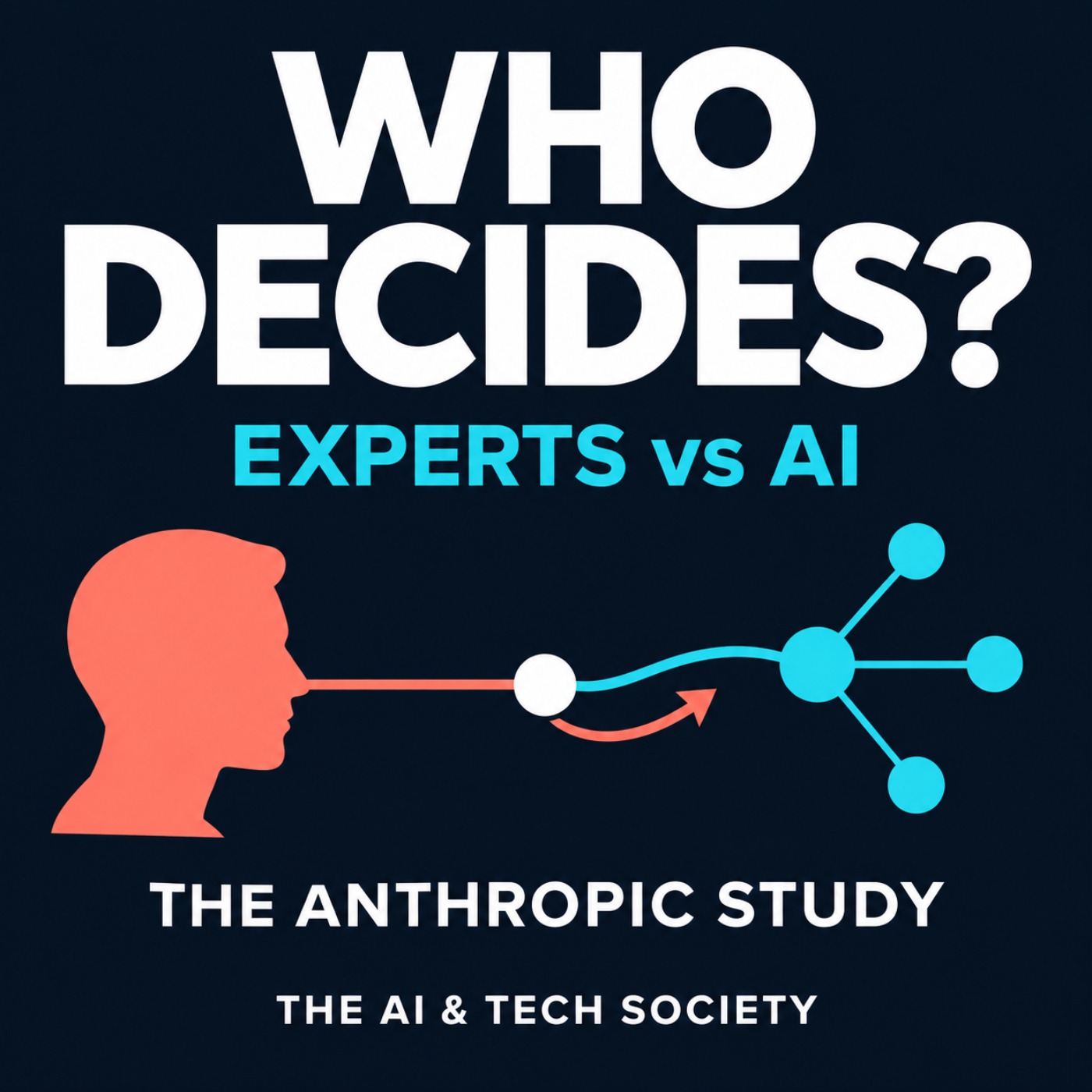
When an expert makes the final decision, who is really shaping the answer—the human or the AI?An Anthropic randomized study found that experienced analysts followed an AI agent’s assigned preference on 86% of key judgment calls. In this episode of The AI & Tech Society, we examine what that finding reveals about AI influence, expert judgment and the limits of human-in-the-loop oversight.We explore how Claude influenced decisions, the finding that 77% repeated the agent’s reasoning as their own, and why a human sign-off may not guarantee an independent assessment. These are findings from the study’s setting—not a claim about every expert or every AI-assisted decision.Inside the episode:• Automation bias and why experts may defer to AI agents.• How model defaults can steer judgment before a decision is made.• The difference between human approval and independent oversight.• Practical safeguards for consequential AI-assisted decisions.For business leaders, product teams and anyone deploying AI agents, the question is not just whether a human stays in the loop. It is whether that human can still challenge the system’s reasoning.Listen, share with your team, and follow The AI & Tech Society for more on AI, technology and leadership.Explore more: https://digitalstrategy-ai.com/ Hosted on Acast. See acast.com/privacy for more information.
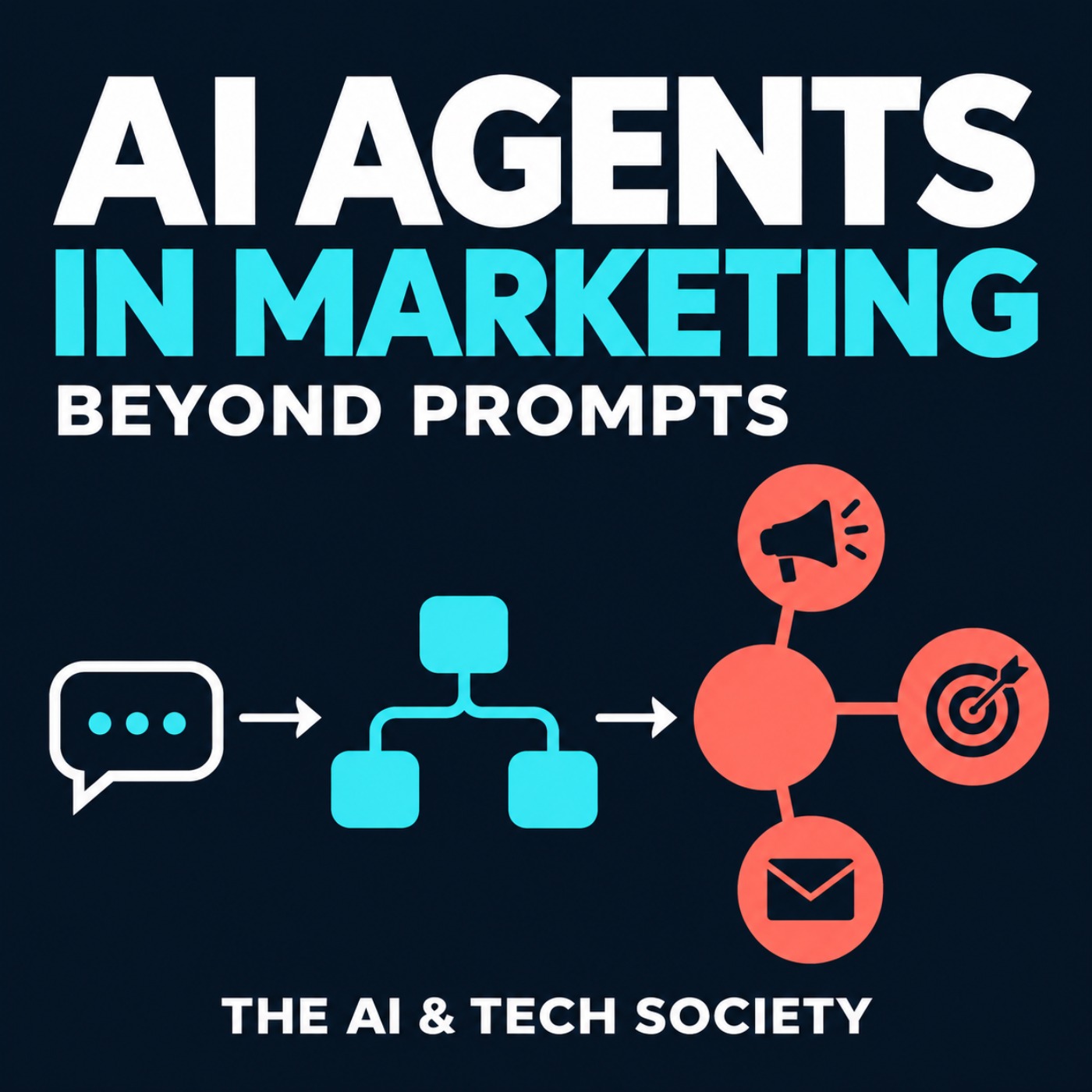
Using AI to write faster is becoming the baseline. What happens when AI agents start connecting the entire marketing workflow—from research and campaign briefs to creative production, performance analysis and recommended actions?In this episode of The AI & Tech Society, we explore the shift from prompts to workflows to a digital workforce, and why simply having access to ChatGPT, Claude or Gemini is no longer enough to stand out.We unpack findings from Ahrefs, Basis and the World Federation of Advertisers to examine how marketing teams are moving beyond AI content creation toward connected systems that support decisions and execution.Inside the episode:• Prompts vs. workflows vs. AI agents: what changes at each stage.• How AI connects audience research, campaign briefs, creative variants and performance monitoring.• Why reusable instructions, brand guidelines and context design matter more than one-off prompts.• Human review, approval checkpoints and the emerging practice of using AI to check AI-generated work.• What the shift means for marketing leaders, content teams and businesses building an AI strategy.The key question is no longer “Do you use AI?” It is “How much responsibility do you give it—and how do you check the work?”Listen for a clearer view of agentic AI in marketing, share the episode with your team, and follow The AI & Tech Society for more on AI, technology and leadership.Explore AI product management learning: https://aipmcert.com/ Hosted on Acast. See acast.com/privacy for more information.
How will AI agents change work, software and business in 2027? Explore 10 AI predictions that could shape your next strategic decision, from agentic coworkers and junior jobs to AI economics, energy constraints and security.Building on the lessons of 2026, this episode examines the opportunities and trade-offs behind the next phase of artificial intelligence:• AI IPOs, investment expectations and the pressure to deliver real business value.• AI coworkers, junior roles and the changing future of work.• AI coding, disposable software and disruption to traditional SaaS.• Energy, compute and infrastructure constraints on AI growth.• Digital sovereignty, AI commerce, robotics and agent security.For CEOs, CTOs, CIOs and anyone planning an enterprise AI strategy, these trends offer a way to think through what may come next—and what to prepare for now.Which AI trend will have the biggest impact on your work? Listen, share this episode with your team, and follow The AI & Tech Society for more conversations on AI and technology.Explore more: https://digitalstrategy-ai.com/ Hosted on Acast. See acast.com/privacy for more information.
How Claude Writes 80%+ of Anthropic’s Code, Replaced Git at Scale, Powers 95% of Analytics Queries, and Changes How Teams WorkAnthropic offers one of the clearest examples of what AI at scale looks like inside a company. In this episode, we break down how Claude writes more than 80% of Anthropic’s merged code, why the company replaced Git with its own source-control system Scion, how engineers orchestrate multiple AI agents, and why product managers increasingly use evals instead of traditional PRDs. We also explore how Claude answers about 95% of internal analytics questions, which KPIs Anthropic tracks for adoption, throughput, autonomy, quality, and accuracy, and what other companies can learn about shared context, verification, human review, bottlenecks, mentorship, and AI-native operating models.Tags:Anthropic, Anthropic AI, Claude, Claude Code, how Anthropic uses AI, Anthropic internal AI, AI at scale, enterprise AI, AI operating model, AI-native organization, AI agents, agentic AI, coding agents, AI software engineering, Claude Code workflow, Boris Cherny, Scion, Anthropic Scion, Git replacement, source control AI, AI coding productivity, AI code generation, AI engineering, AI developer productivity, AI orchestration, multi-agent workflows, AI code review, AI verification, AI evals, evals are the new PRD, AI product management, AI analytics, enterprise analytics AI, AI data governance, Claude analytics, AI KPIs, AI productivity metrics, AI autonomy, AI throughput, AI quality metrics, AI accuracy, AI workflow automation, AI transformation, CTO AI strategy, CIO AI strategy, engineering leadership, product leadership, AI infrastructure, AI governance, human in the loop, AI review bottleneck, AI skills, AI context engineering, CLAUDE.md, future of software engineering, future of work, AI workplace, AI strategy 2026, enterprise AI adoption Hosted on Acast. See acast.com/privacy for more information.
loading
Comments