DiscoverBLTnT Podcast
BLTnT Podcast
Claim Ownership

BLTnT Podcast

Author: Matt Loria

Subscribed: 0Played: 0
Share

Description

We can all agree that some of the best moments occur over a meal. For eons, “breaking bread” has been the common element among all cultures for human bonding.

Think about the many conversations that you’ve had over lunch that you wish you could share. This show is a platform to extend inspiring conversations about what we call BLTnT – Business, Life, Technology, and Transformations. Our guests are people we can learn from. They are storytellers. They are game changers, luminaries, business leaders, tech gurus, and friends.

The show’s host, Matt Loria, is the CEO of Auxiom, an IT and Cyber Security company serving businesses. Matt considers himself to be blessed to make numerous connections in his daily life and have meals with a lot of interesting people. He draws upon his love of connecting to inspire the most intriguing thoughts and perspectives from his guests. He is here to continue the conversation that typically started over lunch.

Of all the layers of BLTnT, transformations are arguably the most energizing. They take courage, luck, and fortitude. In each episode, our host will highlight at least one notable transformation or transition that the person has made, and we can be inspired by.

Come join us for stimulating conversations with people making BLTnT moves!

You can contact Matt Loria at:

[email protected]

www.auxiom.com

www.linkedin.com/in/mattloria/

95 Episodes
Reverse
Ashok Sivanand grew up overseas, came to Canada for engineering school, and now runs Nous. He’s built software for companies like Ford and Honda. His whole career has been translating what the business wants into something engineers can actually build.The road there was messy. He was an ADHD engineering student who failed out of school. He got back into school. He quit. And in doing that, he learned he could become someone he didn't know yet, as long as he knew what he was walking away from.That same instinct shapes how he looks at AI. Start with the problem. Then go test it yourself.What we covered: → Cutting a three hour workshop down to 50 minutes the night before → The two questions he asks before anything gets built: who's it for and what's it for → Whether vibe coders and programmers end up being the same job → Why offshoring companies are where AI money gets made and lost → Checklists, evals, and a plumber losing $30 on every missed callAshok doesn't trust anybody's AI timeline, including his own. "Go find out for yourself" is the most honest advice I've heard on the subject.Ashok, thank you for sitting down with me less than a day after running a room of 120 people with golf pencils. Cutting three hours to 50 minutes overnight and still landing it is no small thing.Chapters00:00:00 Intro00:00:47 Cutting a three hour workshop to 50 minutes00:03:54 Talking to engineers so the salespeople don't have to00:07:03 Three shoeboxes and who it's actually for00:16:26 Groupthink, post-its, and earning the right to solve00:25:19 Will vibe coders replace programmers00:36:22 The businesses Ashok won't back00:46:09 Model overhang, checklists, and evals00:57:18 Real AI wins from cables to plumbers01:06:33 How the workshop finds your biggest problem~~~Connect with Matthttps://www.linkedin.com/in/mattloria/https://www.facebook.com/mattloriahttps://www.instagram.com/loriamatt/Prefer to Listen?https://pod.link/1742631726This episode is powered by Auxiom.Finally ready to outsmart your IT chaos?https://auxiom.com/https://www.linkedin.com/company/auxiom-llc
Matt “Opi” Opificius runs SLED at Auxiom IT - building the network infrastructure, security, and the hardware that gets the internet to classrooms.With Auxiom’s AI innovations, networks have started fixing themselves - districts running AI-driven infrastructure are seeing 80 to 90% fewer support tickets, because the network catches them before a human even notices.On this episode of The BLTnT Podcast, we covered: → What "SLED" means and how E-Rate funding changes the game → Why AI can solve network problems human engineers physically cannot see → The difference between "AI for the network" and "Network for AI" → How "stuck ports" on security cameras and IoT sensors can be resolved automatically without a single help desk ticketThanks to Opi for being the first internal guest ever on BLTnT and for showing us how to stop firefighting and start leading!Chapters00:00 Intro01:00 Meet Opi and what Sled actually means06:03 How E-Rate funding pays for school networks09:51 The Waymo car and the self-driving network13:07 From IT intern to network architect21:17 Why the Mist platform was built from scratch28:16 Replacing a school's entire network overnight35:08 Ninety percent fewer tickets and the strategic shift45:55 Foggy runways, bad cables, and cameras that quit57:27 Building the Sled practice and Opi off the clock ~~~Connect with Matthttps://www.linkedin.com/in/mattloria/https://www.facebook.com/mattloriahttps://www.instagram.com/loriamatt/Prefer to Listen?https://pod.link/1742631726This episode is powered by Auxiom.Finally ready to outsmart your IT chaos?https://auxiom.com/https://www.linkedin.com/company/auxiom-llc
Dave Sokol grew up in Sterling Heights, went to West Point, and led soldiers through Desert Storm before he ever sold an insurance policy.In 2010 he took over a struggling Northwestern Mutual benefits office in Detroit that had already burned through three or four leaders before him. Sixty nine days in, he knew it was worse than anyone told him. He thought about walking away at the six month mark. Three years later he bought the company anyway, mortgaging his house and his retirement to do it, and lost his biggest client thirty days before the deal closed.He spent eighteen months just stopping the bleeding. Then he built the systems, the culture, and the team that turned Wilshire Benefits Group into one of the top five privately held benefit firms in the state, recognized eight years running as one of the best places to work in Detroit. Now he's watching his three sons come into the same business he almost lost before it started.What we covered: → Getting recruited to West Point and serving with the 101st Airborne in Desert Storm → Taking over a company that was losing money and almost walking away → Mortgaging his entire life to buy the business he was already running → Why healthcare costs keep climbing and where the real money is going → Building the Wilshire Way and raising three sons into the family businessGood, clean living and doing the right thing pays off, even when it takes years to see it.Dave's been a friend for years before he was ever a guest, and he still showed up ready to talk about the hard parts, not just the highlight reel. Thanks for making the time, Dave.Chapters0:00 Intro1:20 Meet Dave Sokol, president and CEO of Wilshire Benefits Group4:44 Getting recruited to West Point7:57 Leading soldiers into Desert Storm12:54 From bill collector to the benefits industry24:19 Taking over a company that was bleeding money28:04 Mortgaging everything to buy the business37:00 Why healthcare costs keep climbing42:24 Building the Wilshire Way and Detroit's best places to work56:07 Raising three sons into a family business~~~Connect with Matthttps://www.linkedin.com/in/mattloria/https://www.facebook.com/mattloriahttps://www.instagram.com/loriamatt/Prefer to Listen?https://pod.link/1742631726This episode is powered by Auxiom.Finally ready to outsmart your IT chaos?https://auxiom.com/https://www.linkedin.com/company/auxiom-llc
John Ninkovich almost lost everything the first time he became a CEO. Now he spends his career coaching other CEOs through the exact same thing.In October of 1997, he took over as CEO of a startup computer training company that was completely upside down. Cash was tight, he had two young kids at home, and he spent weeks on the couch barely sleeping. He calls that place the doom loop. It was not the last time he ended up there.A single Chrysler project brought in enough cash to turn the company around, and investors saw a 500 percent return over the next ten years. From there he ran a home health care company, then a staffing company, before becoming an executive coach at 50. Now he spends his time pulling other CEOs out of the same loop he once lived in.What we covered:→ What the CEO doom loop actually looks like and why it hits almost everyone who runs a company→ Building an A player leadership team that can hold each other accountable→ Why so many CEOs struggle to hear the truth about their own leadership→ The Gallup question most employees can't answer about their own job→ Why consistency beats chasing the big win, and the 20 mile march story that proves itJohn built and lost more businesses than most people attempt in a lifetime, and every one of those failures is exactly what makes him good at his job now.Thanks to John for making the trip in with Lisa by his side. Seriously, after everything he’s been through, it says so much about who he is that he’s still willing to pull up a chair and talk.Chapters00:00:00 Intro00:01:00 What is the CEO doom loop00:03:56 Imposter syndrome on his first day as CEO00:06:24 Growing up in the family dry cleaning business00:10:23 Betting everything on a computer training franchise00:15:57 The Chrysler deal that saved the company00:21:10 What Gallup taught him about employee engagement00:26:24 Home health care, staffing, and becoming a coach at 5000:37:18 Building a cohesive A player leadership team00:54:53 The 20 mile march and the case for consistency~~~Connect with Matthttps://www.linkedin.com/in/mattloria/https://www.facebook.com/mattloriahttps://www.instagram.com/loriamatt/Prefer to Listen?https://pod.link/1742631726This episode is powered by Auxiom.Finally ready to outsmart your IT chaos?https://auxiom.com/https://www.linkedin.com/company/auxiom-llc
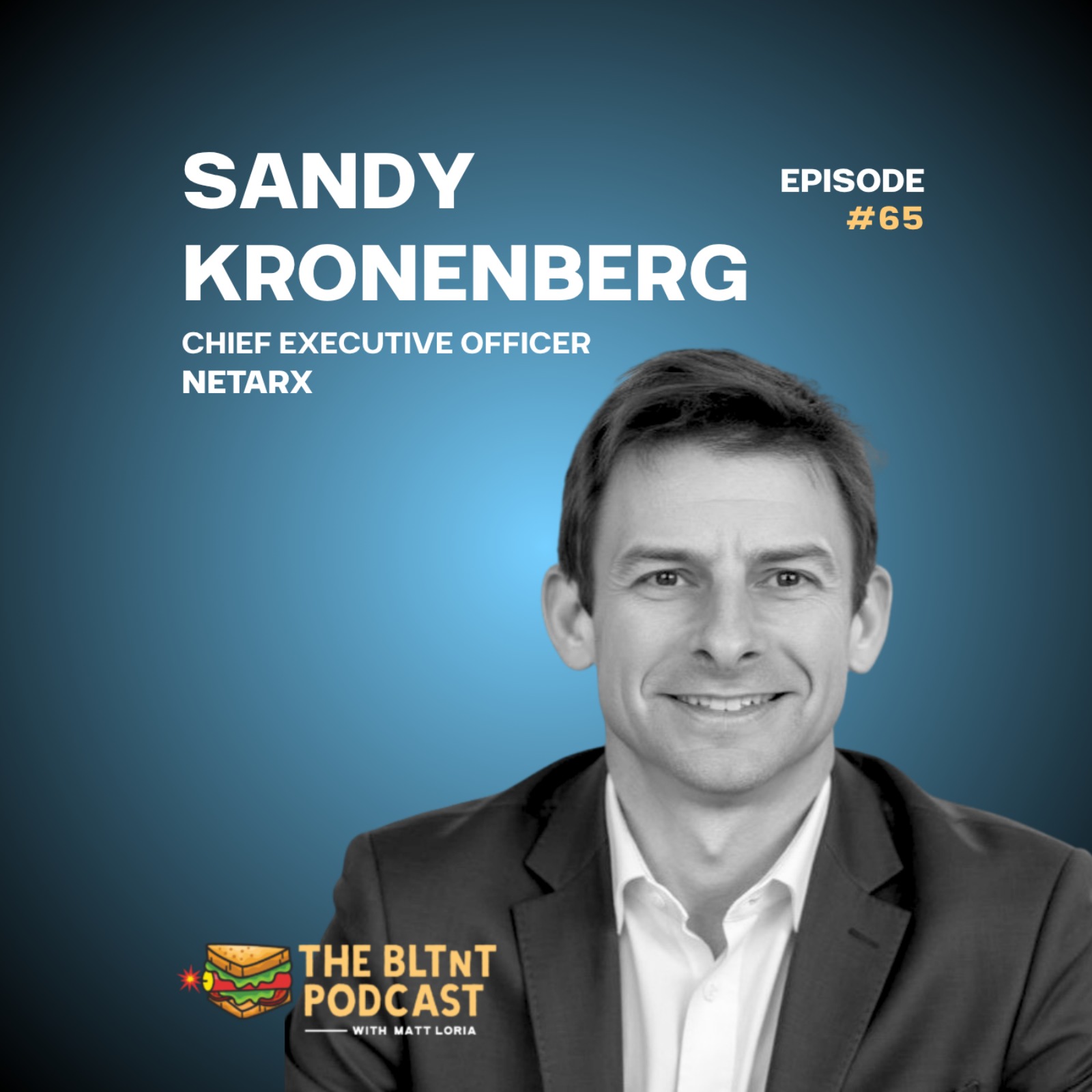
Sandy Kronenberg has started two companies from nothing. The second time, on a credit card he wasn't sure his dad would let him keep using.He's also spent the last three years watching AI turn old school fraud into something faster and harder to catch. A finance worker in Hong Kong wired close to $30 million after 17 video calls with someone who looked and sounded exactly like his CFO. He wasn't.Sandy built a company called Netarx to catch that kind of thing before it happens, a tool that puts a traffic light on your screen during any call to tell you if the person on the other end is real. Along the way he's run into North Korean operatives applying for remote jobs, water utilities with China already inside their networks, and a theory he calls the biggest heist of the century. Not the kind anyone's going to jail for.What we covered: → How a British construction firm lost $25 million to a deepfake video call → Why he started his first business on his dad's credit card → North Korean operatives getting hired as remote IT workers → Why water utilities have become one of the softest targets in the country → What he means by "the biggest heist of the century" → What happens to jobs and cars over the next ten yearsEvery person on a call today should probably be asking themselves if the face on the other side of the screen is actually who it says it is.Thanks to Sandy for carving out the time to go deep on all of this with me. There's a lot here worth sitting with.Chapters00:00 Intro02:17 The $25 Million Deepfake Heist05:11 Why Humans Are the Weakest Link in Cybersecurity06:54 Starting a Company on His Dad's Credit Card13:51 From a $65 Million Exit to a Wall Falling Down21:19 Building Netarx and the Deepfake Detecting "Nick"25:44 North Korea Is Getting Hired Into Your Company30:53 Why Water Plants Are Becoming the Softest Target36:52 The Biggest Heist of the Century1:00:52 Cars, Jobs, and the Next Ten Years~~~Connect with Matthttps://www.linkedin.com/in/mattloria/https://www.facebook.com/mattloriahttps://www.instagram.com/loriamatt/Prefer to Listen?https://pod.link/1742631726This episode is powered by Auxiom.Finally ready to outsmart your IT chaos?https://auxiom.com/https://www.linkedin.com/company/auxiom-llc
loading
Comments