


 Claim Ownership
START
Subscribed: 0Played: 3
Subscribe

© 2026 Fondo
Description
Fondo is an all-in-one accounting platform for startups. Get your books closed, taxes filed, and cash back from the IRS.
141 Episodes
Reverse
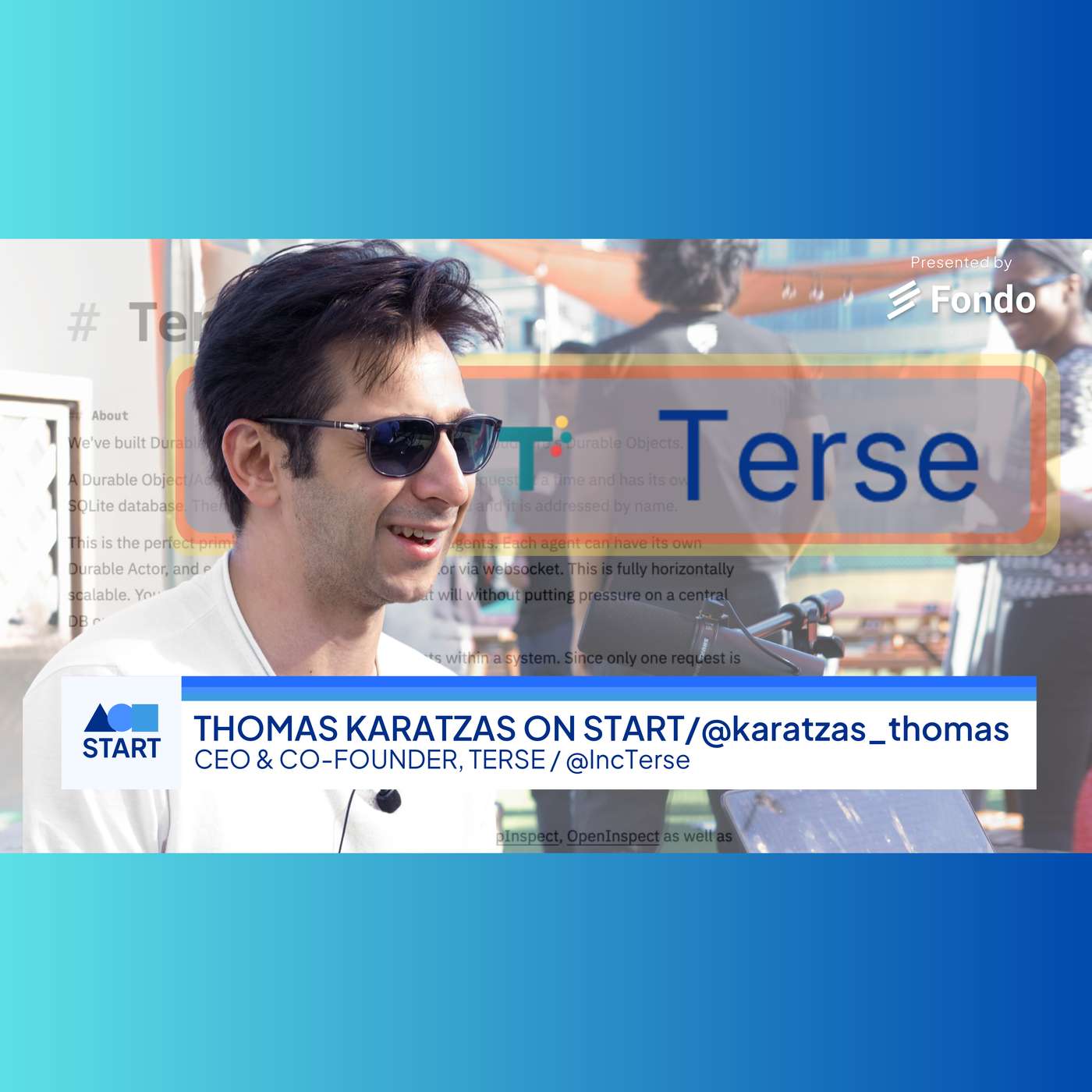
A user running one AI agent had no problems.Running 10 at once exposed a problem that would change the direction of an entire startup.The issue started with something simple.A workflow automation tool let users take a CSV containing a list of people and run automated tasks on portions of that list.When someone ran a workflow once, everything worked.But some users wanted to run 10 workflows simultaneously.That's when things broke.Each agent would read the same saved position in the CSV before the others could update it.Instead of processing different records, multiple agents ended up doing the same work.For Thomas Karatzas, Co-Founder & CEO of Terse (YC F26), the problem revealed a much bigger opportunity.Coordinating multiple AI agents that share state requires infrastructure that handles concurrency, persistence, and recovery.Rather than continuing to build workflow automation tools, the team decided to build the underlying infrastructure.That became the new direction for Terse.Its solution is Durable Actors.Each actor gets its own persistent state and SQLite database, with requests coordinated to prevent the race conditions that caused the original problem.Consider an AI evaluation that takes 10 hours to complete.If the process crashes halfway through, developers without durable execution may lose their progress or struggle to recover it.With Terse, applications can persist state as work progresses, allowing interrupted tasks to recover without starting over.The same infrastructure supports coordinating large numbers of AI agents, managing shared application state, and building real-time applications where humans and agents work together.And Terse is making its actor runtime open source, giving developers the option to run the infrastructure themselves rather than relying exclusively on a hosted service.What began as a problem with 10 agents processing a CSV helped reveal an infrastructure challenge that becomes increasingly important as AI applications scale.Sometimes the most valuable part of a product is the infrastructure you had to build to make it work.🎙️ Thomas Karatzas, Co-Founder & CEO, Terse on Fondo START 02:13 Building an LLM in Rust almost entirely by hand03:24 Going from 100 to 1,200 GitHub stars overnight04:17 How Terse started as a workflow builder05:12 The concurrency problem that exposed a bigger opportunity06:08 Pivoting toward durable infrastructure for AI agents06:43 Why long-running tasks need persistent state07:19 Coordinating large numbers of AI agents07:54 Why Terse is embracing open source09:47 Common infrastructure problems developers encounter with AI agentsCheck out www.useterse.ai
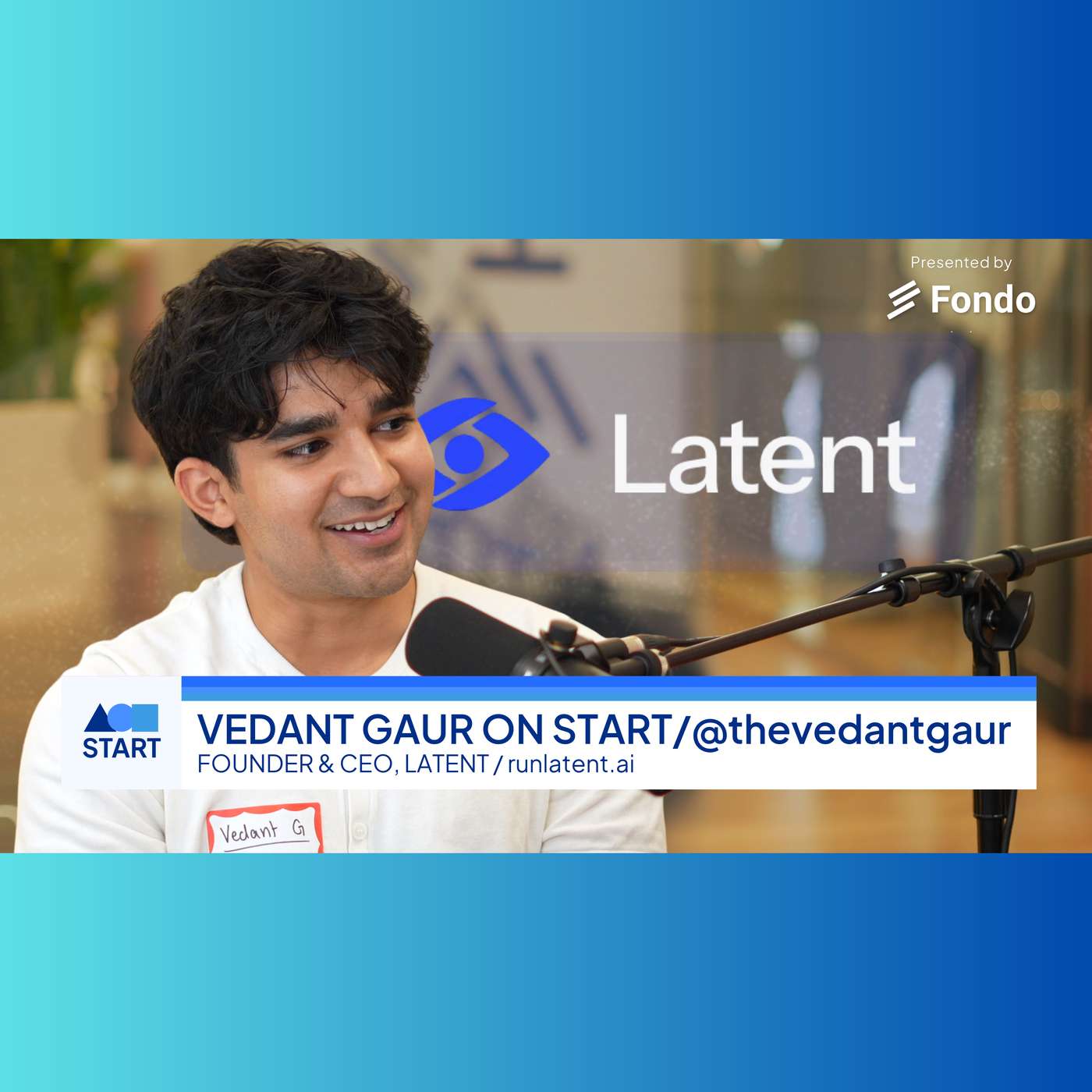
An AI model can be completely wrong and sound just as confident as when it's right.That's a problem when your customers are relying on its answers.And catching those mistakes isn't as simple as asking another AI to double-check every response.Running a second frontier model on every output is expensive, especially at scale.So how do you catch mistakes before they reach your customers?That's the problem Vedant Gaur is tackling with Latent.Vedant compares the technology to a lie detector.Someone can tell a convincing story, but a polygraph looks beyond their words for signals that might suggest something is wrong.Latent applies a similar idea to AI.Its runtime observability technology examines signals from model behavior to identify potentially incorrect or problematic responses.Rather than relying solely on traditional output monitoring, Latent can flag suspicious answers, hold them for review, or route requests to a stronger model.And it can do this at a fraction of the cost of conventional AI evaluation.In Latent's own benchmarks, its system labeled answers 176 times faster and 660 times cheaper than using a frontier model as a judge.But detecting errors is only part of the opportunity.Latent also turns model outputs into labeled training data, helping teams identify recurring failures and improve their models over time.The idea grew out of a gap Vedant noticed during years of AI interpretability research.Major AI labs have sophisticated internal tools for understanding model behavior.But developers and enterprises building products on top of those models don't necessarily have access to the same capabilities.And when something goes wrong, simply trusting the underlying model provider isn't enough.Companies need greater visibility and accountability over the AI systems they deploy.Vedant began researching large language models before ChatGPT launched.Now, as a solo founder in Y Combinator, he's bringing that research to developers and enterprises through Latent.The goal is to make advanced model monitoring, evaluation, and improvement accessible beyond the biggest AI labs.Because when an AI makes a mistake, it's ultimately the company deploying it that has to answer for it.🎙️Vedant Gaur, CEO & Founder, Latent on Fondo START01:18 What Latent is building and how runtime AI observability works01:43 Detecting and flagging problematic AI outputs before they reach customers02:12 Why checking every AI response with a second frontier model is too expensive02:37 How Latent uses a lie detector approach to identify potential AI mistakes03:08 Why convincing but incorrect AI responses are difficult to detect03:29 How analyzing model behavior can reveal signals of incorrect answers03:46 Vedant's experience building Latent as a solo founder in Y Combinator04:16 His background in AI interpretability research before ChatGPT launched05:09 Why enterprises need greater accountability and visibility into AI behavior05:38 How continuous runtime monitoring differs from traditional AI evaluations05:56 Bringing advanced AI interpretability tools beyond the major research labs06:07 Where developers and enterprises can get started with LatentCheck out runlatent.ai
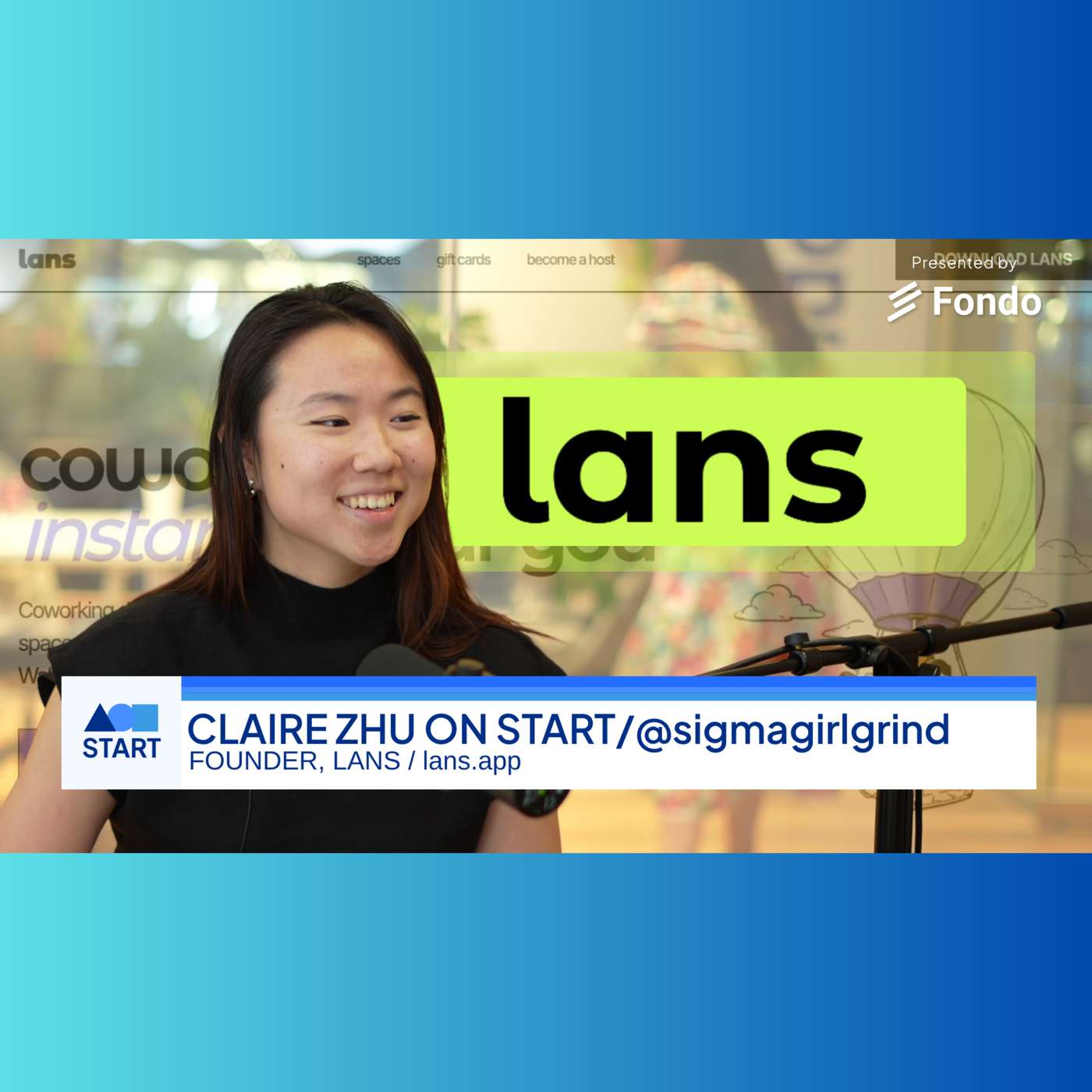
A coworking space in San Francisco had 15 seats.Every day, it was full.That demand became the starting point for @lans_sf, a coworking platform co-founded by Claire Zhu.Claire was originally working on an entirely different startup when she met her future co-founder at a coworking space.He was helping a friend make the space profitable by changing its business model.Instead of monthly memberships, the space offered day passes.The approach worked. With roughly 15 seats occupied every day, they started running out of room for people who wanted to work there.Claire recognized an opportunity.Rather than turning people away, why not connect them with other coworking spaces that could accommodate them?She began onboarding additional locations in San Francisco, turning a solution for one workspace into a platform connecting people with coworking spaces across different cities.That became lans.The platform lets people discover coworking spaces, purchase day passes, and start working the same day without committing to a monthly membership.What started with a single 15-seat coworking space has grown into a nationwide network.Today, lans lists more than 400 bookable coworking spaces across over 250 U.S. cities, with day passes starting as low as $5.Claire also credits AI agents with making it easier to onboard new locations and expand the network.The company started with a simple observation: people wanted flexible places to work, and one location couldn't accommodate everyone.Instead of opening more coworking spaces themselves, Claire and her co-founder built a way to connect people with spaces that already exist.🎙️Claire Zhu, Co-Founder of lans, on Fondo START with host Gauri Agarwal, Co-Founder & CTO of Koyal AI01:03 How Claire met her future co-founder while working on a different startup in a coworking space01:34 How a coworking space experimented with day passes instead of monthly memberships02:08 Why a 15-seat coworking space filling up every day revealed an opportunity to expand02:37 How Claire began onboarding additional coworking locations and using AI agents to support expansion03:12 Why Claire moved from Georgia to San Francisco to pursue her startup ambitions04:06 What makes San Francisco different, from its fast-moving startup environment to its concentration of ambitious founders05:09 How backpacks became an unofficial uniform of San Francisco's startup community05:43 How lans approaches customer acquisition through SEO, GEO, social media, and App Store discovery06:04 How lans competes for visibility with established coworking brands like WeWorkCheck out lans.app
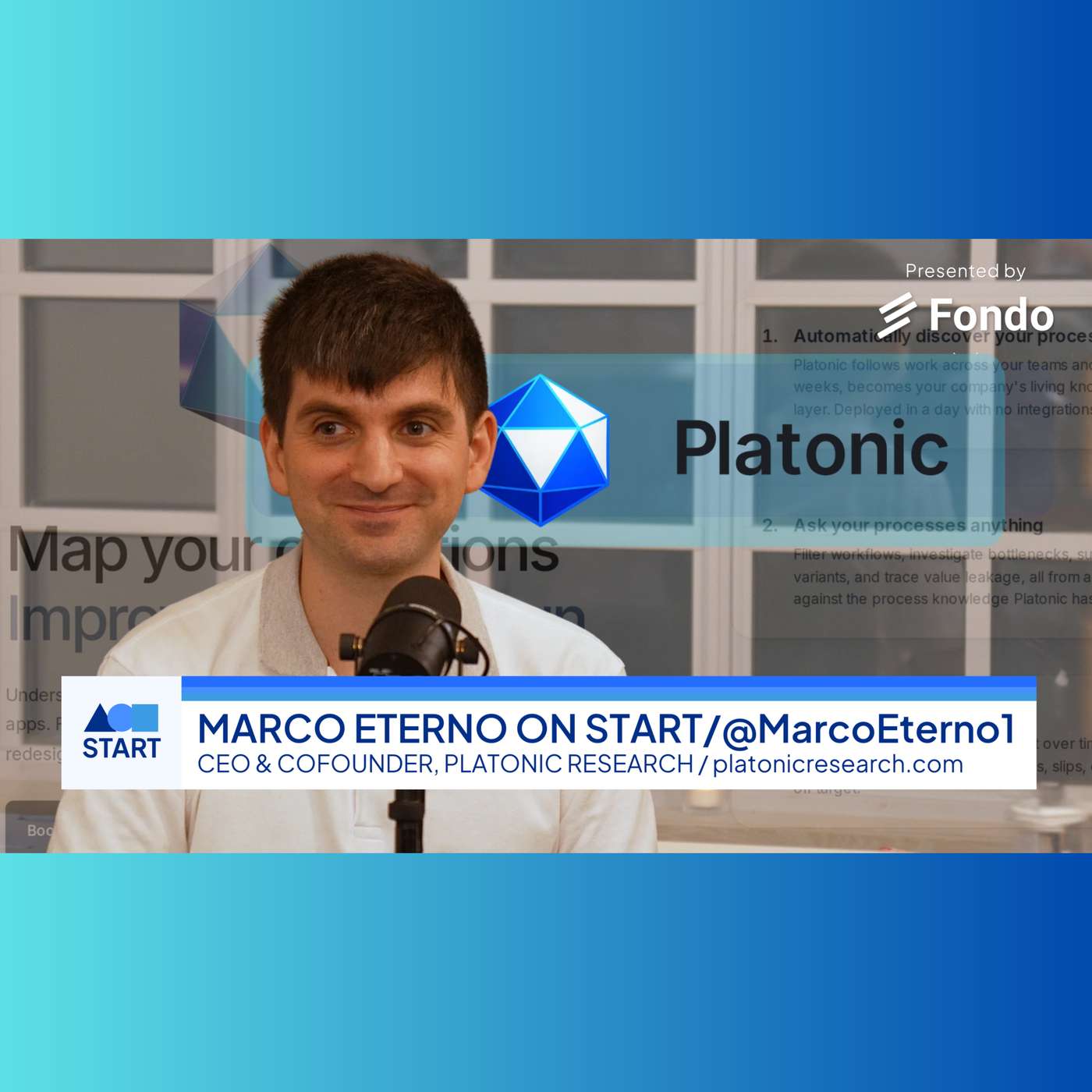
Companies are investing heavily in AI automation.But many still don't know which processes they should automate.That's the problem Marco Eterno and his co-founders are tackling at Platonic Research.The original idea was to build AI agents that could replicate the work employees performed on their computers.But conversations with potential customers revealed a fundamental concern.Without understanding the processes behind an automation, companies couldn't confidently control it.So they decided to solve the visibility problem first.Platonic Research builds software that automatically discovers and maps how work happens across a company.Rather than relying on weeks of employee interviews or complicated integrations, its software observes activity across applications and uses AI to reconstruct the underlying workflows.It can identify bottlenecks, repeated manual work, and inefficiencies, helping companies understand which processes are worth improving or automating.And because the system continuously monitors how work gets done, companies can track changes and measure improvements over time.The team initially focused on boutique consulting firms, helping reduce hours spent interviewing employees and documenting processes.Now they're pursuing a broader opportunity: giving enterprise AI teams the operational intelligence they need to prioritize automation.The technology to automate enterprise workflows is advancing rapidly.The challenge is understanding where to apply it.That's the problem Platonic Research is solving.🎙️ Marco Eterno, CEO & Co-Founder, Platonic Research on Fondo START with Guest Host: @gracegongGG Founder @ Smart Venture Media01:18 Where the name Platonic Research comes from01:37 How Platonic Research maps business processes02:05 Why enterprise automation requires visibility and control02:25 Helping companies identify automation opportunities and potential ROI03:10 How AI turns employee activity into process maps04:08 Why enterprise process analysis differs from recorded AI tasks04:20 Helping consulting firms reduce manual process discovery05:19 Expanding into private equity and enterprise AI transformation05:40 How process mapping helps companies identify operational improvements06:32 Marco's journey from physics and management consulting to enterprise AI07:01 Why trust and data privacy matter in enterprise process intelligence07:42 Building Platonic Research with six co-founders and an engineering-focused team08:36 Why physics backgrounds translate well into AI research09:09 Bridging the gap between AI capabilities and enterprise operations09:51 Why AI-powered spam filtering remains underappreciatedCheck out platonicresearch.com
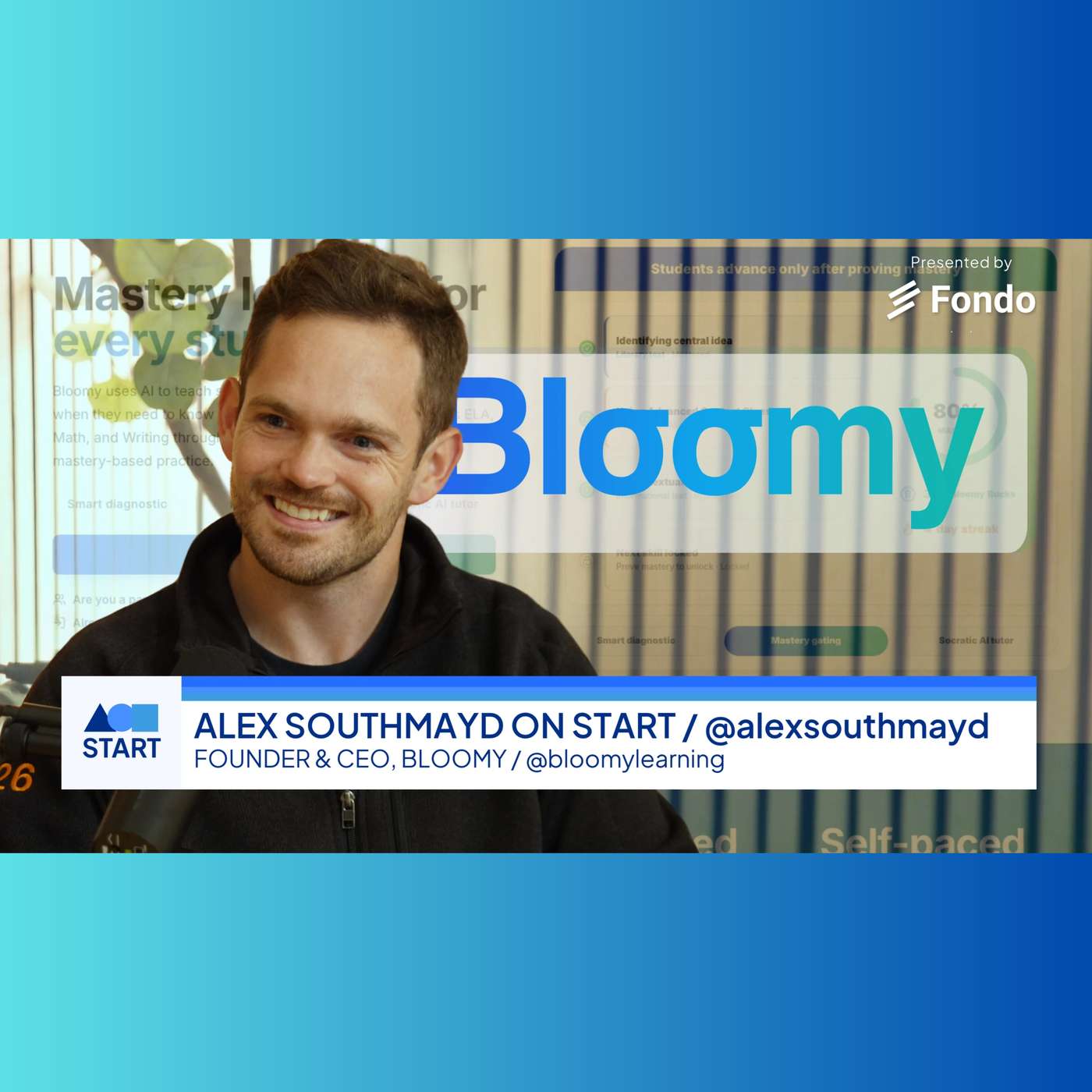
At one California charter school, students now spend most of their English language arts learning time using an AI-powered learning platform.That platform is Bloomy (YC S26), founded by former teacher Alex Southmayd.The goal isn't to keep students in front of screens longer. It's to make individualized learning more effective, freeing up time for entrepreneurship, personal interests, and life skills.The idea builds on research dating back to 1984.Education researcher Benjamin Bloom found that students receiving one-on-one tutoring performed two standard deviations better than students in conventional classrooms.The challenge has always been making that level of individualized instruction accessible to every student.Bloomy uses AI to identify what students already understand, find gaps in their knowledge, and create personalized learning paths across English, math, and writing.Rather than simply giving answers, its AI tutor guides students through problems and requires them to demonstrate mastery before advancing.And the early results are promising.In a spring 2026 pilot at a Title I charter school, students who used Bloomy the most demonstrated approximately twice the academic growth of students who didn't use it.The findings are correlational, not a randomized controlled trial, but they offer an encouraging early signal.For Alex, the opportunity goes beyond improving academic performance.If students can master the same material in less time, schools can dedicate more of the day to developing the skills and interests that matter outside the classroom.🎙️Alex Southmayd, CEO & Founder, Bloomy on Fondo START 01:57 Why education can have an outsized impact on a person's life02:20 Lessons from teaching seventh-grade English03:35 How Bloomy serves students, teachers, and schools04:42 How Bloomy personalizes learning with AI05:42 Benjamin Bloom's research on one-on-one tutoring06:02 How AI makes individualized instruction more accessible06:47 Why effective learning should mean less screen time07:37 Rethinking education around entrepreneurship and life skills07:55 How schools are implementing Bloomy08:47 Early pilot results showing promising academic growth09:45 The long-term vision for personalized education10:35 How Bloomy's interactive AI tutor works11:45 Challenges of conversational AI for young learnersCheck out bloomylearning.com

Comments

Download from Google Play

Download from App Store
 United States