


 Claim Ownership
Second Opinion with Rosemarie Beltz
Subscribed: 0Played: 6
Subscribe

© 2026 Rosemarie Beltz
Description
What if midlife isn't the beginning of getting old—but the beginning of something we haven't quite figured out yet?
Welcome to Second Opinion, where science meets real life in midlife.
Because the second half of life deserves a second opinion.
Hosted by Rosemarie Beltz—a cardiovascular perfusionist, Columbia-trained journalist, and former broadcast medical reporter with more than three decades inside operating rooms and high-stakes medicine.
Second Opinion brings together a career spent practicing medicine and reporting on it to explore health, longevity, reinvention, and the wonderfully complicated reality of being somewhere in the middle.
Because midlife is strange.
Some days you feel 25—curious, ambitious, optimistic, and convinced there's still so much ahead.
Other days? About 105. You're tired. Your body feels different. Your parents are getting older. Your career may not fit quite the way it once did. Relationships change. The future suddenly feels both incredibly exciting and a little more finite.
And somehow, all of those things can be true at the same time.
We're also living through an extraordinary moment. Medical discoveries, emerging technologies, and changing ideas about aging are reshaping what's possible in our 40s, 50s, 60s, and beyond.
We're talking about healthspan, hormones, metabolic health, strength, sleep, brain health, longevity, artificial intelligence, and treatments that barely existed a generation ago.
But more information doesn't always mean better answers and solutions.
After more than three decades working in medicine, Rosemarie has seen firsthand how asking another question, considering another perspective, or seeking a second opinion can change an outcome.
One expert doesn't have every answer. One approach doesn't work for everyone. And sometimes, the most important thing we can do is challenge what we've been told.
That's the philosophy behind Second Opinion.
We look beyond headlines, health trends, quick fixes, and conventional wisdom to explore what the evidence actually supports, where uncertainty remains, and what different choices might mean in real life.
And here's an even bigger question:
We may be living longer—but what are we going to do with all that extra life?
That's where the conversation gets really interesting.
Because midlife isn't just about our physical health. It's about our relationships, financial well-being, emotional health, careers, environments, changing priorities, and the lives we're still living and creating.
Through candid conversations with physicians, researchers, scientists, innovators, authors, and people with something meaningful to teach us, we explore the science, stories, decisions, and unexpected possibilities of midlife.
And sometimes Rosemarie turns the microphone on herself—sharing what she's learning from medicine, journalism, starting over, building something from scratch, and discovering that you don't necessarily become less curious about life as you get older.
Sometimes you become more curious.
What we're exploring:
- Health & longevity: Perimenopause, menopause, hormones, cardiovascular health, metabolic health, GLP-1s, sleep, strength, brain health, preventive medicine, and navigating healthcare.
- Relationships & connection: Dating after 40 and 50, love, sex, intimacy, friendships, family, and the relationships that shape our lives.
- Money, work & reinvention: Financial well-being, career transitions, entrepreneurship, confidence, changing priorities, and finding new purpose.
- Life beyond medicine: Mental and emotional well-being, beauty, technology, travel, our environments, personal growth, and finding more joy in everyday life.
This isn't about trying to be 25 again.
We can't go back. And maybe we don't want to.
We've lived. We've learned. We're not starting from scratch. We're starting with experience.
It's about taking everything we've learned, everything science is learning, and everything we still don't know—and exploring what might be possible from here.
Call it Midlife 2.0.
No perfect roadmap. No pretending we have it all figured out. Just smart conversations, good science, lived experience, a healthy dose of curiosity, and a willingness to look at things from another angle.
Because health matters. But being healthy isn't the whole point of living.
🌍 Independently created and produced in New York City, Second Opinion has reached audiences in more than 100 countries. A growing conversation for curious women and men who believe there's still so much more to discover.
And yes, Rosemarie is still figuring out what she wants to be when she grows up.
Real science. Real life. The bigger picture.
Second Opinion isn't here to tell you what to think. It's here to give you something worth thinking about!
62 Episodes
Reverse
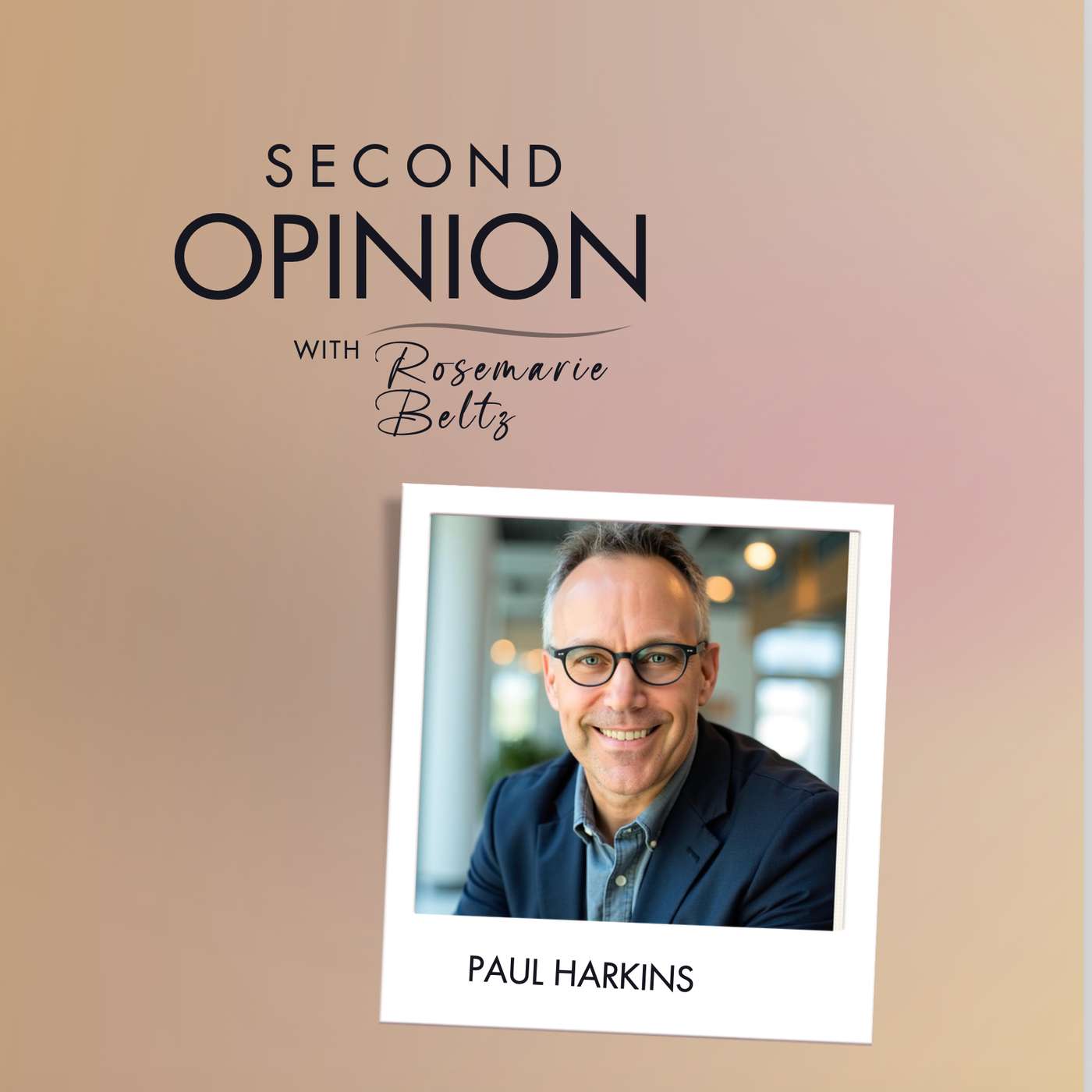
Love. Loss. Dating. And Another Shot at Something Great.We’re older. Wiser. More independent. We know what we want—or at least we think we do.So why can finding a meaningful connection in midlife feel so complicated?And here's a question worth asking: What if chemistry isn't the most important ingredient in a lasting relationship?This week on Second Opinion, Rosemarie Beltz sits down with New York City entrepreneur, inventor, and author Paul Harkins, whose book The Refrigerator Test explores dating after 50, compatibility, and the ordinary moments that reveal who we really are.Paul isn't a dating expert. He's a man who's built businesses, raised a family, experienced divorce and heartbreak, and found himself navigating love and relationships with a very different perspective.And he has some opinions…What if the person who makes your heart race isn't necessarily the person who makes your life better?What if we've become so independent that we've forgotten how to make room for someone else?And what if starting over isn't starting from scratch at all?From first-date chemistry to real-life compatibilityThis conversation goes well beyond dating apps, first impressions, and romantic expectations.Paul shares why he now values partnership over perfection, what he wishes he'd understood during his marriage, how his childhood shaped the way he connects with others, and why he believes meaningful intimacy takes more than physical attraction.Rosemarie brings her own midlife perspective to the table, challenging assumptions about chemistry, independence, sex, vulnerability, and the sometimes absurd reality of dating in New York City.They even get into the refrigerator.Because eventually, the restaurant closes, the vacation ends, and two people have to figure out whether they actually enjoy an ordinary Tuesday together.What we're getting intoDating after 50: What's genuinely different when you already have an established life?Chemistry versus compatibility: Can connection create attraction instead of the other way around?Love, divorce, and hindsight: What Paul would do differently in his marriage—and what he learned from losing it.Sex and intimacy in midlife: Why slowing down, building trust, and being vulnerable can change the experience.Independence versus partnership: How do two accomplished adults maintain their identities while building something together?Childhood and relationships: How early experiences can influence the way we communicate, react, and connect decades later.Modern dating and mixed signals: Why Paul pays more attention to actions than words.Starting over: The difference between rebuilding your life and believing you have to begin again from zero.The Refrigerator Test: What everyday habits might reveal about compatibility—and what they might not.Second chances: Are we too quick to walk away, too reluctant to change, or simply afraid of getting hurt again?A few moments worth listening forPaul explains why feeling peaceful beside someone has become more meaningful to him than romantic drama.He also challenges the conventional wisdom around instant chemistry, discusses how his views on marriage have evolved, and shares the unexpected circumstances of meeting someone new at a rock-climbing gym.And yes, Rosemarie has a refrigerator story of her own.The conversation is candid, funny, personal, occasionally uncomfortable, and full of the kind of questions that don't always have one right answer.Meet Paul HarkinsPaul Harkins is a New York City-based entrepreneur, inventor, and author with decades of experience building companies.His book, The Refrigerator Test: 32 Observations About Dating, Compatibility, and the Ordinary Moments That Reveal Everything, uses humor, personal experience, and everyday observations to explore what makes relationships work—or not work—after 50.Rather than presenting a formula for finding love, Paul asks readers to pay closer attention to the lives people actually lead.Connect with Paul and find his book:Website: https://paulharkins.comBook: The Refrigerator Test — available through Paul's website and Amazon.Instagram: https://www.instagram.com/bypaulharkins/About Second Opinion with Rosemarie BeltzIndependently created and produced in New York City. Now reaching audiences in more than 90 countries!Second Opinion is a podcast for curious midlifers who want more than headlines, health trends, or another list of things they're supposedly doing wrong.Independently produced and hosted by Rosemarie Beltz, a cardiovascular perfusionist, Columbia University -trained journalist, and former broadcast medical reporter, the show explores the science and lived experience of getting older—and getting more out of life.Hormones. Longevity. Sleep. Strength. Brain health. Relationships. Money. Work. Beauty. Purpose. And everything in between.Some conversations are clinical. Some are deeply personal. Others, like this one, take us down a few unexpected rabbit holes.The mission remains the same: ask better questions, challenge assumptions, bring context to complicated subjects, and create a global community where midlife isn't treated as a problem to solve.No scripts to follow. No one-size-fits-all answers. Just thoughtful conversations about the lives we're actually living.Real science. Real life. The big picture.Join the conversationHere's your Second Opinion question:What's more important to you now than it was at 25—chemistry, compatibility, independence, or peace?And because we couldn't resist:What would somebody learn about you by opening your refrigerator?Share your answer in the comments or wherever you connect with Second Opinion. We'd love to hear perspectives from midlifers around the world.If this episode made you laugh, think, reconsider an old assumption—or immediately inspect your refrigerator—follow, subscribe and pass along the Second Opinion love with someone who would have an opinion. Including others will help other curious midlifers like you, discover these conversations!Because whether you're single, dating, divorced, married, rebuilding, or perfectly happy exactly where you are, there's still room for connection, adventure, and another shot at something great.We're not starting from scratch. We're starting with experience.From New York, I'm Rosemarie. Stay curious, have some fun, and keep falling in love with your own life!
<...
You've lived long enough to know what works, what doesn't, and what you want. So why are you still doing some of the things you know aren't working?Welcome to midlife.Some days you feel 25. Other days? About 105. And sometimes both versions show up before lunchtime.I'm Rosemarie Beltz. I'm 54, living in Brooklyn, working in Manhattan, traveling whenever I can, building an independent podcast, and juggling healthcare, creativity, relationships, health, home, and all the other moving parts of a full life.Sound familiar?I'm also determined to clock the moments—the beautiful, spontaneous, ordinary, extraordinary moments that make life worth living.Because I'm committed to making the next 50 years my best 50 years.And I have no intention of missing today while planning for tomorrow.The Fall Refresh: Let's Question the FamiliarThis episode began with a conversation at the hospital.A colleague mentioned that we'd been doing something the same way for twenty years—as though that alone settled the question.And I started wondering:How often do we defend something in our personal lives simply because we've always done it that way?A habit. A relationship pattern. A responsibility. An expectation. An old story about ourselves.Sometimes we know something deserves another look.So why is it so difficult to change course?In Part One of our two-part Fall Refresh, we're exploring the psychology behind our attachments, decisions, and familiar routines—and what happens when we start questioning the internal systems guiding our lives.In This EpisodeThe sunk-cost effect: Why we sometimes keep investing in something because we've already invested so much.Status quo bias: Why the familiar can feel more appealing than an alternative.Loss aversion: How the possibility of losing something influences our decisions.Attachment and loyalty: When commitment is meaningful—and when it may deserve another look.The stories we tell ourselves: How our interpretations of past experiences can influence our sense of identity.Boundaries and self-trust: How to stay generous and open-minded without making every personal decision a committee hearing.Gratitude and ambition: Why loving your life and wanting more from it can coexist beautifully.And yes, we're talking about the experience of giving somebody else excellent advice—and then going home and doing the exact opposite.Because sometimes the person who needs a second opinion is us.Real Science. Real Life. The Big Picture.I'm a cardiovascular perfusionist, Columbia-trained journalist, and former broadcast medical reporter.I've spent decades working in healthcare and journalism, where evidence, experience, and asking better questions matter.But I'm also living this stage of life right alongside you.Early mornings. Long clinical days. Travel. Fitness goals. Creative projects. Wonderful conversations. An apartment I love. A calendar that occasionally has other ideas.I'm not interested in presenting midlife as a problem to solve.I'm interested in what we can do with all the experience we've earned.We're old enough to know better. Young enough to want more. Smart enough to question the instructions.And here's something I keep coming back to:You can love your life and still want more from it.More growth. More freedom. More connection. More laughter. More adventure.More of those moments worth remembering.That's what my Fall Refresh is about.Not a perfect life. A life we're actually present for.Join the ConversationWhat's one thing you've been doing for years that you've recently started questioning?A routine? An expectation? A relationship pattern? A belief about yourself?I want to hear your second opinion.Leave a comment, share this episode with a friend, and follow Second Opinion wherever you listen.And come back for Part Two: The External Revamp, when we take this investigation into everyday life—our habits, health, time, work, money, homes, and the systems that help us make room for more.Including the mystery of how I walked ten blocks to the gym at 34, but at 54 apparently need an operations team to travel three floors downstairs.We'll investigate.Find me: https://RosemarieB.comAbout Second OpinionSecond Opinion with Rosemarie Beltz is independently created, written, hosted, and produced by Rosemarie in New York City.From a Brooklyn home studio to listeners around the world, the podcast explores health, science, longevity, relationships, work, beauty, money, and the many dimensions of midlife—with curiosity, humor, evidence, and real-life perspective.As of October 2026, Transistor reports downloads from 90 countries. Every episode is independently produced, and the growing global community behind these conversations means a great deal.No corporate editorial agenda. Just thoughtful questions, fascinating conversations, and the belief that experience and age are always an advantage.Real science. Real life. The big picture.Research & ReferencesThe behavioral-science discussion draws on the following publications:Sunk-cost effect Arkes, H. R., & Blumer, C. (1985). The Psychology of Sunk Cost. Organizational Behavior and Human Decision Processes, 35(1), 124–140. https://doi.org/10.1016/0749-5978(85)90049-4Status quo bias Samuelson, W., & Zeckhauser, R. (1988). Status Quo Bias in Decision Making. Journal of Risk and Uncertainty, 1, 7–59. https://doi.org/10.1007/BF00055564Prospect theory and loss aversion Kahneman, D., & Tversky, A. (1979). Prospect Theory: An Analysis of Decision under Risk. Econometrica, 47(2), 263–291. https://doi.org/10.2307/1914185Narrative identity McAdams, D. P., & McLean, K. C. (2013). Narrative Identity. Current Directions in Psychological Science, 22(3), 233–238. https://doi.org/10.1177/0963721413475622Research is discussed for context. Personal observations and reflections are my own.🍎Created, hosted, written, and independently produced by Rosemarie Beltz in New York City.
🔗 Follow & Subscribe to never miss an episode. If you love the show, leave a review—it helps others get a second opinion!💡 Have a topic you’d love for us to cover? Reach out at www.rosemarieb.com.
One Day You Feel 25. The Next? 105.Welcome to midlife.“A Fall Equinox episode of Second Opinion”One minute you're walking through New York feeling strong, sassy, wildly alive and completely convinced you're in the prime of your life.The next?Your colonoscopy reminder arrives, you slept wrong, something hurts for no identifiable reason—and apparently standing too long is now an event.25. Then 105. Sometimes before lunch.Rosemarie started this episode in sunny Union Square, scribbled more of it in Flatiron, and finished it on a rainy Sunday on the eve of the Fall Equinox.Which turns out to be exactly the right way to begin a new season of Second Opinion.Because something is shifting.The light. The city. The season.And maybe us.But does every change in midlife require a reinvention?Or after five decades of living, working, loving, losing, learning, screwing things up, getting things right and collecting some very expensive wisdom...maybe the house already has pretty damn good bones.This episode is about what happens when you stop treating midlife like a problem to solve and start getting much more discerning about what deserves a place in your life.It's about health advice that has to survive Tuesday.An algorithm that is considerably more concerned about Rosemarie being 54 than she is.A new scientific rabbit hole she can't stop thinking about.Why fascination is not evidence.Why a taco place in Manhattan may be as useful as a strategic plan.Why a year-long search for a dining table somehow became a midlife philosophy.And something Rosemarie is calling...expensive dopamine.You'll have to listen for that one.Because as the days get shorter, feeling alive may require a little more intention.And at this age?We are expensive.Maybe it's time to be shameless about it.We're old enough to know better.Young enough to want more.Smart enough to question the assignment.This fall, Second Opinion is getting more curious, more personal, more playful—and even less interested in following the herd.More science. More life. More New York. More questions worth asking.No wellness gospel.No pretending the evidence is settled when it isn't.No instructions for becoming an entirely new human because the internet discovered your birth year.Just a board-certified cardiovascular perfusionist with more than 30 years in healthcare, a Columbia-trained journalist with more than a decade in news—and a 54-year-old woman living this right alongside you.Interesting. But is it true?Let's find out.And one more thing:What was your expensive dopamine this week?Tell Rosemarie. And if this episode makes you immediately think of someone, don't keep the good stuff to yourself—send it to them.Because there is always more to the story.Second Opinion with Rosemarie Beltz Real science. Real life. The big picture. RosemarieB.com
🔗 Follow & Subscribe to never miss an episode. If you love the show, leave a review—it helps others get a second opinion!💡 Have a topic you’d love for us to cover? Reach out at www.rosemarieb.com.
What if the smartest thing you do this August isn't adding another wellness habit...but letting something go?As we enter National Wellness Month and the final stretch of our 90-day Summer Experiment, this episode explores a different definition of well-being—one rooted in science, curiosity, preventive health, and the quiet confidence to change course when new information arrives.After a summer spent exploring hydration, freedom, attention, identity, and intentional living, August arrives with a new question:What have I learned—and am I willing to let that learning change my plan?Recorded from my Brooklyn terrace, on the bus into Manhattan, and while waiting for my annual mammogram before work at NYU, this deeply personal episode blends neuroscience, medicine, journalism, and the beauty of late summer into an invitation to slow down, reassess, and truly experience the season before it slips away.Together we'll explore:• Why changing your mind is often a sign of cognitive flexibility, not inconsistency• The surprising neuroscience behind pivoting, intuition, and decision fatigue• The difference between a placeholder, a true pivot, and simply getting stuck• Why preventive health care—mammograms, eye exams, screenings, and routine maintenance—is one of the most overlooked forms of wellness• What the latest microbiome research is teaching us about dietary diversity, fiber, and building upon healthy habits instead of constantly starting over• Why August may be the perfect month to subtract instead of add• How to recognize when your body is quietly asking for recovery• Why "living well" may be more important than endlessly optimizing yourselfAlong the way, I also share why I've decided to pause new weekly episodes through the remainder of August—and why that decision isn't about burnout.It's about paying attention.Sometimes the healthiest decision isn't pushing harder.Sometimes it's creating enough space to hear what's trying to emerge next.Because perhaps the final lesson of our Summer Experiment isn't becoming more disciplined.It's becoming more responsive.Responsive to our bodies.Responsive to our relationships.Responsive to new information.Responsive to the quiet voice saying:I still want the destination... I just don't want to get there this way.This August...Drink the water.Eat the peaches.Wear the dress.Make the appointment.Watch the sunset.Leave a little room for surprise.And maybe...Be the miracle.🌿 This Week's August ExperimentInstead of another wellness challenge, try this:RESTOREWhat in your life needs care?RELEASEWhat can you stop forcing?REIMAGINEWhere has new information changed the plan?RECEIVEWhat can you allow August to give you?🎧 While We're On PauseI'll be spending the remainder of August:• Continuing my hydration and microbiome research• Exploring nutrition through greater dietary diversity and fiber• Taking care of my own preventive health• Reading, writing, interviewing, and preparing an exciting Season Three• Spending intentional time with family and friends• Living enough life to come back with something worth sharingI hope you'll use these next few weeks to revisit previous episodes, continue your own experiments, and enjoy every beautiful day that's left of summer.💬 Let's Continue the ConversationI'd love to hear from you.What is one thing you're ready to release this August?Or perhaps an even better question...Where has life given you enough new information to change your mind?If this episode resonated with you, please consider:✓ Following Second Opinion✓ Leaving a review on Apple Podcasts or Spotify✓ Sharing this episode with someone navigating midlifeBecause curiosity is contagious.And the best conversations are the ones we continue together.📚 Research & Sources MentionedThis episode was independently researched using peer-reviewed medical literature, evidence-based health resources, and current neuroscience research.Preventive Health• U.S. Preventive Services Task Force (USPSTF) Breast Cancer Screening Recommendations https://www.uspreventiveservicestaskforce.orgNeuroscience & Decision Making• National Institutes of Health (NIH)Neural mechanisms of voluntary changes of mind and cognitive flexibilityExplores the brain networks involved in updating decisions, including the anterior cingulate cortex, anterior insula, and prefrontal cortex.https://pmc.ncbi.nlm.nih.gov/articles/PMC10152092/• National Institutes of Health (NIH)Intuition and Insight: Two Processes That Build on Each OtherA fascinating review examining intuition, insight, predictive processing, and how accumulated experience shapes rapid decision-making.https://pmc.ncbi.nlm.nih.gov/articles/PMC5020639/Decision Fatigue & Cognitive Load• Peer-reviewed reviews examining decision fatigue, cognitive effort, executive function, and the evolving science behind mental overload.https://pmc.ncbi.nlm.nih.gov/articles/PMC11808891/Gut Health & the Microbiome• Peer-reviewed research on the gut microbiome, dietary diversity, fiber, microbial metabolites, and gut-brain communication.https://pmc.ncbi.nlm.nih.gov/articles/PMC8153313/• Recent review of the Gut–Brain Axishttps://pubmed.ncbi.nlm.nih.gov/40728958/Books MentionedQuench Dana Cohen, MD & Gina BriaAn exploration of hydration, structured water, nutrition, and whole-body hydration.About the HostRosemarie Beltz is a Board-Certified Cardiovascular Perfusionist with over three decades of experience in medicine and a Columbia University-trained journalist.Second Opinion blends evidence-based health journalism with personal storytelling, helping curious mid-lifers navigate health, longevity, reinvention, relationships, and life's next chapter with curiosity instead of fear.Each episode is independently researched, written, produced, and hosted by Rosemarie in New York City.🤝 Interested in Being a Guest?One of my goals for Season Three is to bring even more world-class experts and thoughtful conversations to Second Opinion.If you're a physician, researcher, scientist, healthcare professional, longevity expert, psychologist, nutrition researcher, or someone with an extraordinary story that could help our audience better understand health and life after 40...I'd love to hear from you.I'm also always interested in hearing from listeners whose lives...
Why and how sunlight, hormones, fascia, your microbiome—and one extraordinary molecule—may matter more than another glass of water.We've spent decades asking one question:How much water should I drink?But what if the better question is...What does water actually do once it gets inside us?In this week's episode of Second Opinion, Rosemarie Beltz takes you on a fascinating journey into one of the most extraordinary—and surprisingly misunderstood—substances on Earth.Inspired by a drive home from the Jersey Shore and a second reading of Quench, this conversation begins with a simple realization:"I don't actually understand water."That moment of curiosity opens the door to a much bigger story.One that connects hydration with your brain, hormones, fascia, microbiome, muscles, circadian rhythm, and healthy aging.This isn't another "drink more water" episode.It's an exploration of the remarkable biology quietly happening inside each of us every second of every day—and why understanding one extraordinary molecule may change the way you think about your body forever.In This Episode• Why modern life changes the way our bodies manage water• The surprising science of chronic underhydration—and why researchers still don't have one universal definition• What a landmark 30-year NIH study of more than 11,000 adults revealed about hydration, healthy aging, chronic disease, and longevity• Why water is one of the most remarkable molecules in nature—and how its unique chemistry makes life possible• How electrolytes actually work (and why they're far more interesting than sports drinks)• The surprising connection between sunlight, circadian rhythms, cortisol, vasopressin, and hydration• Why your microbiome is less like "gut bacteria" and more like an extraordinary living ecosystem• What fascia really is—and why movement helps keep your tissues healthy and hydrated• How estrogen, progesterone, testosterone, cortisol, aldosterone, and vasopressin influence hydration during midlife• The fascinating science behind gel water—and why nature packages hydration inside fruits and vegetables• Practical, evidence-based strategies to help your body absorb and use water more effectively• A simple whole-food hydration recipe inspired by QuenchMore importantly...You'll never look at a glass of water the same way again.Because sometimes the greatest scientific mysteries aren't hidden inside a laboratory.Sometimes...they're sitting quietly beside your lunch.Featured Books & ResearchQuench: Beat Fatigue, Drop Weight, and Heal Your Body Through the New Science of Optimum HydrationDr. Dana Cohen, MD & Gina BriaYour Body's Many Cries for WaterDr. F. BatmanghelidjAdditional research and scientific literature referenced throughout this episode includes:• National Institutes of Health (NIH) research examining hydration markers, biological aging, chronic disease risk, and longevity, including a 30-year follow-up of more than 11,000 adults• Human hydration physiology• Circadian biology• Fascia and connective tissue research• Microbiome science• Menopause and healthy aging• Electrolyte physiology• Nutrition and water-rich foodsThis Week's Summer ExperimentInstead of asking..."Did I drink enough water today?"Try asking..."Did I create an environment where my body could use water well?"This week, experiment with building hydration rather than simply drinking it.Spend a few minutes outside in the morning.Eat foods naturally rich in water.Move your body.Protect your sleep.Feed your microbiome.Then notice what changes.Let's Continue the ConversationWhat surprised you most about today's episode?Was there one idea that completely changed the way you think about water?I'd love to hear from you.Leave a review, share this episode with a friend, or join the conversation on social media.Some of my favorite ideas for future episodes have come directly from conversations with listeners around the world.Coming Soon...I've invited Dr. Dana Cohen, co-author of Quench, to join me for a future episode of Second Opinion.If she accepts, we'll dive even deeper into the evolving science of hydration, fascia, structured (or "gel") water, hormones, the microbiome, and the practical habits that help us feel healthier, more resilient, and more alive.Stay tuned.If This Episode Resonated With You✓ Follow Second Opinion✓ Share this episode with someone who loves science, medicine, lifelong learning, or simply asking better questions✓ Leave a rating or review—it helps thoughtful conversations like these reach curious listeners around the worldBecause curiosity is contagious.And sometimes...one conversation really can change the way we live.Second Opinion is independently researched, written, produced, and hosted by me, Rosemarie a board-certified cardiovascular perfusionist with over three decades of experience in medicine and a Columbia University-trained journalist.Each week, Second Opinion blends evidence-based science, thoughtful storytelling, and genuine curiosity to explore health, longevity, reinvention, relationships, and the questions that help us live more intentionally.From New York...Thank you for listening.
🔗 Follow & Subscribe to never miss an episode. If you love the show, leave a review—it helps others get a second opinion!💡 Have a topic you’d love for us to cover? Reach out at www.rosemarieb.com.

Comments

Download from Google Play

Download from App Store
 United States