


 Claim Ownership
Music Evolves Podcast
Subscribed: 1Played: 0
Subscribe

© Copyright 2015-2025 ITSPmagazine, Inc. All Rights Reserved
Description
Welcome to the Music Evolves Podcast, where we explore the transformative power of music through the lens of technology, creativity, and innovation — by looking both forward and back. We dive deep into how cutting edge research and development are shaping the future of music, transforming how it’s created, shared, and experienced, while celebrating its timeless ability to inspire and connect us all. Whether you’re a musician, music enthusiast, or simply curious about the synergy between tradition and innovation at the intersection of art and technology, the Music Evolves Podcast invites you on a journey through the past, present, and future of music. Discover how music continues to inspire, connect, and evolve — redefining what’s possible and shaping the world one note at a time.
35 Episodes
Reverse

Show NotesJoe Raiola is President and Artistic Director of Theatre Within, the nonprofit behind the Annual John Lennon Tribute, which he has produced since shortly after Lennon's death in December 1980. What began as an informal community gathering of poets, storytellers, and musicians grieving a neighbor has grown into one of New York City's most significant annual benefit concerts, and the only ongoing John Lennon tribute in North America or Europe officially sanctioned by Yoko Ono. This year's 46th edition takes place November 21 at Town Hall, honoring Cyndi Lauper.The tribute funds Theatre Within's core mission: bringing free programs in creative expression and mindfulness to two communities in need. The John Lennon Real Love Project brings Lennon's music and life story into public elementary and middle schools, where each class writes and records its own verse of "Real Love" over Lennon's original piano track, building a version of the song that belongs entirely to that school. A parallel program serves the cancer community with songwriting workshops for children, teens, and adults, alongside creative writing, visual arts, photography, and meditation programs, including the MAD Art Workshop, led by longtime MAD art director Sam Viviano.Raiola also spent 33 years as an editor at MAD Magazine, work that shaped a generation of satirists, including Jon Stewart and Stephen Colbert, both of whom Raiola says drew on the magazine's influence before either had a show of their own. He speaks candidly about what was lost when the magazine's ownership relocated production to California in 2017 with an entirely new staff, folding the relaunch after roughly sixteen months, and about why he still believes in the tactile, patient experience of a physical magazine or a vinyl record in a culture that increasingly wants everything instantly.The conversation also touches on where AI-generated performance fits into all of this, including an uncannily convincing AI vocalist Raiola has been following. But the heart of the conversation is Raiola's answer to the question he says sits behind everything Theatre Within does: what was John Lennon's essential message, if not to give a damn?HostSean Martin, Co-Founder at ITSPmagazine, Studio C60, and Host of Redefining CyberSecurity Podcast & Music Evolves Podcast | Website: https://www.seanmartin.com/Guest(s)Joe Raiola, President and Artistic Director of Theatre Within, longtime editor of MAD Magazine, and producer of the Annual John Lennon Tribute | Website: https://www.joeraiola.comResourcesTheatre Within | https://www.theatrewithin.orgThe Annual John Lennon Tribute | https://www.lennontribute.orgJoe Raiola | https://www.joeraiola.comMusic Evolves Podcast | https://www.seanmartin.com/podcasts#musicevolvesMusic Evolves: Sonic Frontiers Newsletter | https://re4.ms/sfnKeywordsjoe raiola, theatre within, john lennon tribute, mad magazine, real love project, cyndi lauper, songwriting workshops, cancer community programs, satire, comedy, sean martin, music evolves, music podcast, music and technology podcast
About the hostSean Martin is the host of Music Evolves, a show about the intersection of music, technology and culture. He talks with artists, producers, filmmakers and builders about how new tools are changing the way music is made, shared and valued, and what stays human along the way. Sean is a musician and a CISSP-certified cybersecurity journalist, and he co-founded ITSPmagazine in 2015, where he also hosts Redefining CyberSecurity.Podcast, Music Evolves: https://www.seanmartin.com/music-evolves-podcastVideo, Music Evolves on YouTube: https://www.youtube.com/playlist?list=PLnYu0psdcllTRJ5du7hFDXjiugu-uNPtWNewsletter, Music Evolves: Sonic Frontiers: https://www.linkedin.com/newsletters/7290890771828719616/Journalism, ITSPmagazine: https://www.itspmagazine.comFor music and technology brands, Studio C60: https://www.studioc60.comLinkedIn: https://www.linkedin.com/in/imsmartin/
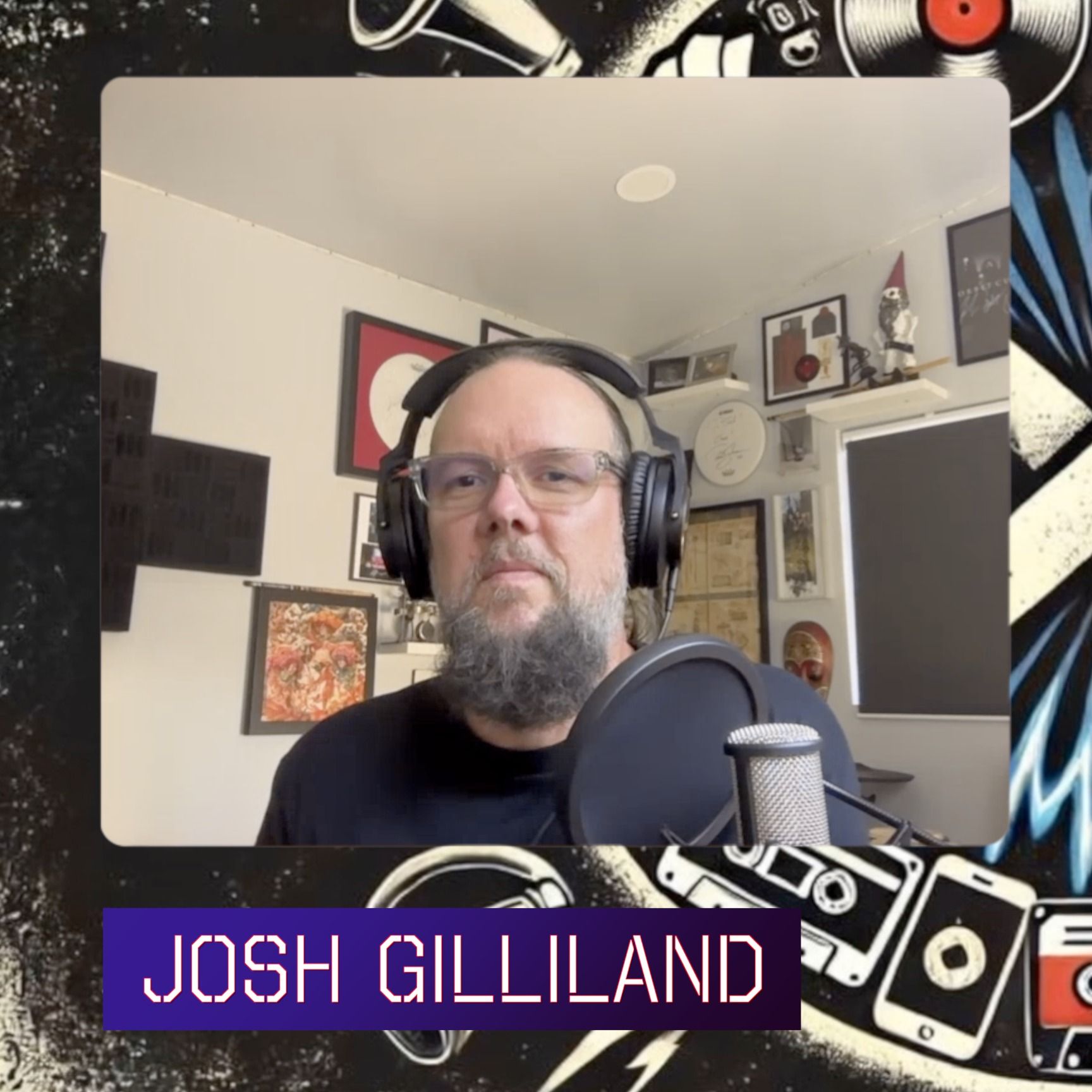
Show NotesThe argument over AI in music presents itself as a fight about authenticity. Josh Gilliland reads it as a fight about who holds the gate. The Founder of JG BeatsLab teaches musicians how to fold generative tools into real workflows, and he watches the platforms assemble a definition of legitimacy that has little to do with how a song actually gets made.That definition, as Gilliland describes it, rests on whether an artist tours, sells merchandise, and maintains a social presence. Measured against it, he does not qualify. He plays every instrument on his own band's records, uses no AI on them at all, does not tour because the project is one person, and has no interest in selling shirts. A standard that disqualifies a musician for working alone is not measuring music. It is measuring scale, and scale is what labels have.The disclosure requirements arriving at the distribution layer tell the same story. Gilliland points to DistroKid now asking artists to declare AI involvement in lyrics and composition while explicitly waving it through for mixing and mastering. The carve-out says something the policy does not. Some jobs are worth protecting and some are not, and engineers have been quietly sorted into the second category.Music has staged this argument before. Player pianos, drum machines, the 808, the synthesizer, sampling. Each arrived as proof that music was ending, and each time the boundary between real and artificial turned out to sit precisely where the person drawing it had stopped. Gilliland is blunt about what that makes the boundary: arbitrary, and drawn by whoever benefits from where it lands.None of which is a defense of the flood. Bot farms and mass uploads are manipulation rather than art, and he says so plainly. What holds his attention is the musician who spends months pushing raw sketches through generative tools and rebuilding the results by hand in a DAW, arriving somewhere neither the person nor the machine would have reached alone. He owns music royalties that are already training these systems and loses no sleep over it, on the logic that what a model returns is the past, and the work worth doing is the next thing.The question underneath this episode is not whether AI belongs in music. It is whether the people writing the rules are protecting the art or their position in it.HostSean Martin, Co-Founder at ITSPmagazine, Studio C60, and Host of Redefining CyberSecurity Podcast & Music Evolves Podcast | Website: https://www.seanmartin.com/Guest(s)Josh Gilliland, Founder of JG BeatsLab | On LinkedIn: https://www.linkedin.com/in/joshuagilliland/ResourcesJG BeatsLab | https://www.jgbeatslab.com/AI Music Revolution Podcast | https://podcasts.apple.com/us/podcast/ai-music-revolution/id1869714097Spotify Strengthens AI Protections | https://newsroom.spotify.com/2025-09-25/spotify-strengthens-ai-protections/Spotify Will Label AI Persona Profiles | https://techcrunch.com/2026/08/11/spotify-will-label-ai-persona-profiles-and-exclude-their-music-from-recommendations/The NAMM Show | https://www.namm.org/The NAMM Show 2025 | Anaheim Convention Center * Southern California -- Follow our coverage: https://www.itspmagazine.com/the-namm-show-2025-namm-music-conference-music-technology-event-coverage-anaheim-californiaMusic Evolves Podcast | https://www.seanmartin.com/podcasts#musicevolvesMusic Evolves: Sonic Frontiers Newsletter | https://re4.ms/sfnKeywordsjosh gilliland, jg beatslab, sean martin, ai music, spotify artist verification, distrokid ai disclosure, independent musicians, suno, music gatekeeping, ai music education, music royalties, streaming economics, drum programming, music, creativity, art, artist, musician, music evolves, music podcast, music and technology podcast
About the hostSean Martin is the host of Music Evolves, a show about the intersection of music, technology and culture. He talks with artists, producers, filmmakers and builders about how new tools are changing the way music is made, shared and valued, and what stays human along the way. Sean is a musician and a CISSP-certified cybersecurity journalist, and he co-founded ITSPmagazine in 2015, where he also hosts Redefining CyberSecurity.Podcast, Music Evolves: https://www.seanmartin.com/music-evolves-podcastVideo, Music Evolves on YouTube: https://www.youtube.com/playlist?list=PLnYu0psdcllTRJ5du7hFDXjiugu-uNPtWNewsletter, Music Evolves: Sonic Frontiers: https://www.linkedin.com/newsletters/7290890771828719616/Journalism, ITSPmagazine: https://www.itspmagazine.comFor music and technology brands, Studio C60: https://www.studioc60.comLinkedIn: https://www.linkedin.com/in/imsmartin/

Show Notes
The premise sounds like a stunt. Five strangers, one room, six hours, one original song. Meanwhile the show's host sits at a keyboard with a text prompt and half an hour. Grégoire Gensollen, Producer and Chief Operating Officer at Tucker Tooley Entertainment, built that episode of Band of Strangers knowing he could not predict the outcome, which is precisely why he made it.
Gensollen comes to this from the traditional side of the business. He grew up in Marseille, trained as an industrial engineer, moved into management consulting, then rerouted through business school at UCLA Anderson into Lionsgate and later FilmNation, where he ran distribution strategy and film finance across a run that included The King's Speech, The Imitation Game, Nebraska, Mud, and Looper. Ten years ago he partnered with Tucker Tooley. What he says he remembers from two decades of that work is not the tooling. It is who was in the room.
The origin of Band of Strangers is a documentary called The Unknown Tour, made by two filmmakers who outfitted a bus with a recording studio and drove across the country finding musicians on street corners, in dive bars, and in gospel churches. The pandemic put the idea on hold. When Gensollen and his team picked it up again, they made a decision that would have been unthinkable inside the studio system: skip the networks entirely and release directly on YouTube. Not for reach, but for control of the entire chain, and to protect a show about collaboration from the unscripted television reflex that turns every format into a competition with prize money and manufactured conflict.
The constraint that holds it together is the song. Every episode has to produce one, on a clock, or there is no episode. What varies is the entry point. A mariachi band at El Pueblo on Olvera Street laying a first track that hip hop artists in Leimert Park then struggle to find the rhythm inside. Buskers on the Venice boardwalk writing separately. Artists displaced by the Altadena fires building an anthem about rebuilding rather than grieving. Gensollen is candid that the stumbles stay in the cut, because the friction is the story.
On AI, he is neither evangelist nor holdout. He describes it as a tool his company will have to use to stay competitive, not against other producers but against creators working alone in their kitchens with the full chain in hand. He also draws a line: optimization, yes. Creative engine, no. His argument is structural rather than sentimental. Prediction models and comparables, the benchmarking method he learned at Lionsgate, tell you where the ceiling is on a category that already exists. A producer's job is to make the thing that does not exist yet.
That distinction is the real subject of this conversation. The question is not whether a machine can produce a competent song in thirty minutes. It clearly can. The question is who decides what is worth making, and whether an industry trained on comparables still knows how to recognize the thing it has no comparable for.
Host
Sean Martin, Co-Founder at ITSPmagazine, Studio C60, and Host of Redefining CyberSecurity Podcast & Music Evolves Podcast | Website: https://www.seanmartin.com/
Guest
Grégoire Gensollen, Producer and Chief Operating Officer at Tucker Tooley Entertainment | On LinkedIn: https://www.linkedin.com/in/gregoire-gensollen/
Resources
Tucker Tooley Entertainment | https://www.tooleyentertainment.com/
Band of Strangers | https://www.bandofstrangers.com/
Band of Strangers, Can AI beat REAL musicians? [Blind Test], the episode discussed in this conversation | https://www.youtube.com/watch?v=Gi0nadrsK8Y
Band of Strangers: Angelenos from different communities make music together from scratch, Los Angeles Downtown News | https://www.ladowntownnews.com/arts_and_entertainment/band-of-strangers-angelenos-from-different-communities-make-music-together-from-scratch/article_7f9978b0-18c2-4330-b160-b167c10e8856.html
Music Evolves: Sonic Frontiers Newsletter | https://www.linkedin.com/newsletters/7290890771828719616/
Keywords
gregoire gensollen, tucker tooley entertainment, band of strangers, sean martin, ai music, creator economy, youtube original series, music collaboration, songwriting process, unscripted television, film production, generative ai, artist discovery, independent distribution, music, creativity, art, artist, musician, music evolves, music podcast, music and technology podcast
About the hostSean Martin is the host of Music Evolves, a show about the intersection of music, technology and culture. He talks with artists, producers, filmmakers and builders about how new tools are changing the way music is made, shared and valued, and what stays human along the way. Sean is a musician and a CISSP-certified cybersecurity journalist, and he co-founded ITSPmagazine in 2015, where he also hosts Redefining CyberSecurity.Podcast, Music Evolves: https://www.seanmartin.com/music-evolves-podcastVideo, Music Evolves on YouTube: https://www.youtube.com/playlist?list=PLnYu0psdcllTRJ5du7hFDXjiugu-uNPtWNewsletter, Music Evolves: Sonic Frontiers: https://www.linkedin.com/newsletters/7290890771828719616/Journalism, ITSPmagazine: https://www.itspmagazine.comFor music and technology brands, Studio C60: https://www.studioc60.comLinkedIn: https://www.linkedin.com/in/imsmartin/
Show Notes
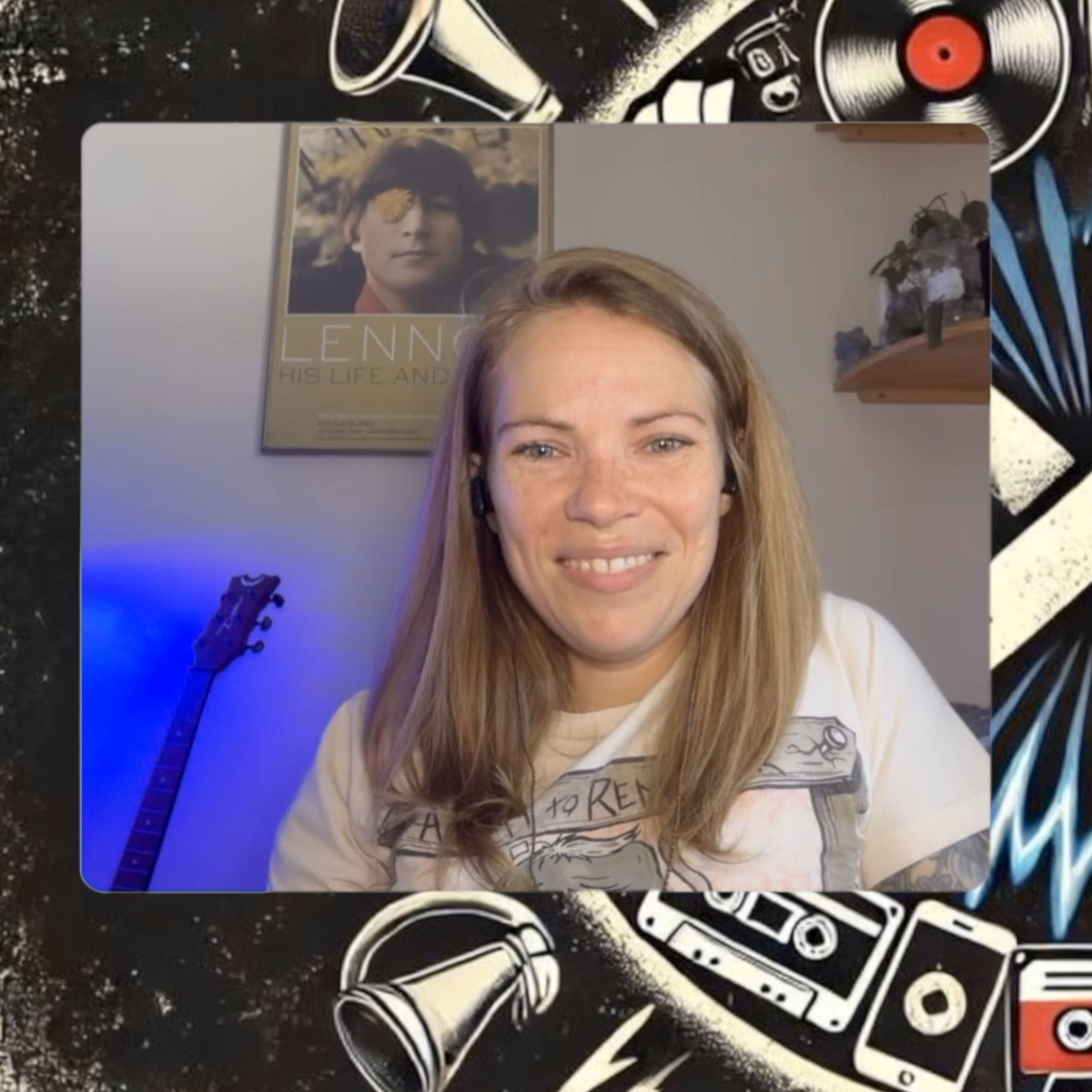
There is a version of the music career that gets written about, and there is the version that gets played. Frankie Raye lives in the second one. She performs six or seven nights a week across the greater Tampa Bay area, mixes covers with originals depending on what the room wants, and treats the gig itself as the practice session. She points at old video of herself and measures the distance she has traveled, not against a chart position, but against her own playing.
That volume changes how craft works. Frankie Raye does not describe herself as a guitar player. She describes herself as a singer whose guitar carries her voice, and she is direct about the shortcuts that make a set possible: capo up, transpose on the phone, skip the bridge if the chords are ugly, come back to the chorus. The room is singing along to the chorus anyway. What sounds like a confession is closer to a working method, and the results are visible over 12 years of professional performing.
Her songwriting has flipped in the past few years. Frankie Raye used to build the music first and squeeze lyrics into it. Now the hook arrives first, often from a conversation or a road sign, and lives in her phone until a riff comes along that fits. A song she is recording this year began as a complaint about venues that want maximum energy on a minimum budget. Another began as a poem written from the passenger seat on a drive south. She performs that one, "Wasting Time," live during the episode.
On artificial intelligence she is unambiguous. Frankie Raye does not use it for music, and her objection is not about quality but about origin and consequence: the material was written by people, and the person who could have been hired to write a song for a friend was not hired. That position leads somewhere unexpected. If machine-generated tracks are charting, she reasons, then chasing that sound is chasing something that no longer rewards a human for reaching it. So she stopped. She writes what she wants and releases what she wants, and she has decided against the label path she once wanted, choosing instead a following small enough to know by name.
The measure she offers at the end of the conversation is not streams or signings. It is 50 people who bought tickets because they wanted to be in the room. That is a quieter ambition than the industry usually rewards, and it may be the only one currently under an artist's own control.
Host
Sean Martin, Co-Founder at ITSPmagazine, Studio C60, and Host of Redefining CyberSecurity Podcast & Music Evolves Podcast | Website: https://www.seanmartin.com/
Guest
Frankie Raye, Singer-Songwriter | Website: https://frankieraye.com/
Resources
Frankie Raye Official Website: https://frankieraye.com/
Frankie Raye Live Show Schedule: https://frankieraye.com/live-show-schedule
Frankie Raye Electronic Press Kit: https://frankieraye.com/electronic-press-kit
Frankie Raye on Instagram: https://www.instagram.com/frankierayemusic/
Myrtle Beach Songwriters Festival, November 13-14, 2026: https://myrtlebeachsongwritersfestival.com/
Music Evolves: Sonic Frontiers Newsletter: https://www.linkedin.com/newsletters/7290890771828719616/
Keywords
frankie raye, sean martin, independent artist, singer songwriter, songwriting process, working musician, live music economy, ai in music, cover songs, gigging, tampa bay music scene, independent music career, hook writing, music, creativity, art, artist, musician, music evolves, music podcast, music and technology podcast
About the hostSean Martin is the host of Music Evolves, a show about the intersection of music, technology and culture. He talks with artists, producers, filmmakers and builders about how new tools are changing the way music is made, shared and valued, and what stays human along the way. Sean is a musician and a CISSP-certified cybersecurity journalist, and he co-founded ITSPmagazine in 2015, where he also hosts Redefining CyberSecurity.Podcast, Music Evolves: https://www.seanmartin.com/music-evolves-podcastVideo, Music Evolves on YouTube: https://www.youtube.com/playlist?list=PLnYu0psdcllTRJ5du7hFDXjiugu-uNPtWNewsletter, Music Evolves: Sonic Frontiers: https://www.linkedin.com/newsletters/7290890771828719616/Journalism, ITSPmagazine: https://www.itspmagazine.comFor music and technology brands, Studio C60: https://www.studioc60.comLinkedIn: https://www.linkedin.com/in/imsmartin/

⬥EPISODE NOTES⬥
Tidal is about to stop paying royalties on any track it judges to be fully machine-made. Frame that as a music story and you miss the shift underneath it. By Deezer's own detection, roughly 75,000 AI-generated tracks now arrive every day, about 44% of everything uploaded, yet that same AI music is only 1 to 3 percent of what people actually play, and around 85% of those streams are flagged as fraudulent. The flood is not an audience. It is an attack on a shared payout.
This edition follows one pattern across six industries: when the cost of generating something collapses toward zero, platforms stop paying for output and start paying for proof of human origin. Tidal cuts AI royalties. The Authors Guild sells a "Human Authored" badge for ten dollars a title. YouTube demonetizes "inauthentic" content. curl killed its bug bounty after a flood of AI slop, then reopened when the slop got good. And where no gatekeeper owns the payout, hiring, the open web, the scientific record, the flood just degrades the mechanism until no one trusts it.
In this edition of Lens Four:
🔹 Tidal's July 15 policy ends royalty attribution and direct-to-fan sales for fully AI-generated tracks, a payout decision, not a content ban.
🔹 Deezer takes in about 75,000 AI tracks a day (44% of uploads), up from roughly 10,000 a day at the start of 2025, while human uploads barely moved.
🔹 The paradox that reframes the debate: AI music is 44% of uploads but 1 to 3 percent of listening, and about 85% of those streams are fraudulent.
🔹 The first US criminal AI streaming-fraud case: Michael Smith pleaded guilty after collecting more than 8 million dollars in royalties from hundreds of thousands of AI songs and roughly 1,000 bot accounts.
🔹 curl shut down its bug bounty under a flood of AI vulnerability reports, then reopened a month later because the AI reports got good enough to read. Cutting the money did not cut the volume.
🔹 The counter-case: recruiters see about 11,000 job applications submitted to LinkedIn every minute, up 45% in a year, with no single payout to switch off.
🔹 Provenance becomes a product: Suno (2 million subscribers, about 7 million songs a day) adds identity-verified voice cloning while the Authors Guild sells human certification.
🔹 The danger tier: roughly 20% of AI-recommended software packages do not exist (slopsquatting), and close to 10% of cancer papers show paper-mill signatures.
🔹 The language turned first: Merriam-Webster made "slop" its 2025 word of the year, and YouTube quietly renamed "repetitious" content to "inauthentic."
🔹 Human filters see it clearest: DJ Sam Young asks why we need fifty versions of the same thing, and producer Gregoire Gensollen says he will remember the human moments, not the tool.
Fourth Lens: The three lenses meet at one move. Platforms re-price payouts around human origin, the market builds products that certify it, and the language teaches us to want it. That is not a defense of artists, it is a paywall around authenticity, sold as virtue, and it is arriving before audiences even asked for it. Reality has come at a premium, exactly as predicted in 2017. So the real question is not whether the real is worth more. It is this: when proof of human becomes a product, who is making the money, and who handed them the right to decide what counts as real?
▶ Read the full article and references
▶ Subscribe to Lens Four
▶ Redefining CyberSecurity Podcast
▶ Music Evolves Podcast
▶ ITSPmagazine
▶ Studio C60
Sean Martin, CISSP, is a cybersecurity market analyst, content strategist, and go-to-market advisor with more than 30 years of experience across engineering, product development, marketing, and media. He is co-founder of ITSPmagazine and Studio C60, host of the Redefining CyberSecurity Podcast and Music Evolves Podcast, and writes Lens Four at seanmartin.com.
Keywords: AI-generated music, Tidal, Deezer, streaming fraud, provenance, content authentication, Human Authored, Authors Guild, Suno, slopsquatting, curl bug bounty, AI slop, paper mills, AI job applications, Merriam-Webster slop, DJ Sam Young, Gregoire Gensollen, Sean Martin, Lens Four
About the hostSean Martin is the host of Music Evolves, a show about the intersection of music, technology and culture. He talks with artists, producers, filmmakers and builders about how new tools are changing the way music is made, shared and valued, and what stays human along the way. Sean is a musician and a CISSP-certified cybersecurity journalist, and he co-founded ITSPmagazine in 2015, where he also hosts Redefining CyberSecurity.Podcast, Music Evolves: https://www.seanmartin.com/music-evolves-podcastVideo, Music Evolves on YouTube: https://www.youtube.com/playlist?list=PLnYu0psdcllTRJ5du7hFDXjiugu-uNPtWNewsletter, Music Evolves: Sonic Frontiers: https://www.linkedin.com/newsletters/7290890771828719616/Journalism, ITSPmagazine: https://www.itspmagazine.comFor music and technology brands, Studio C60: https://www.studioc60.comLinkedIn: https://www.linkedin.com/in/imsmartin/

Comments

Download from Google Play

Download from App Store
 United States