


Normal Curves: Sexy Science, Serious Statistics
Subscribed: 232Played: 4,207
Subscribe

©2026 Regina Nuzzo & Kristin Sainani
Description
Normal Curves is a podcast about sexy science & serious statistics. Ever try to make sense of a scientific study and the numbers behind it? Listen in to a lively conversation between two stats-savvy friends who break it all down with humor and clarity. Professors Regina Nuzzo of Gallaudet University and Kristin Sainani of Stanford University discuss academic papers journal club-style — except with more fun, less jargon, and some irreverent, PG-13 content sprinkled in. Join Kristin and Regina as they dissect the data, challenge the claims, and arm you with tools to assess scientific studies on your own.
48 Episodes
Reverse
Could a new gene therapy slow the progression of Huntington’s disease? Early results suggested an astonishing 80% reduction in disease progression. But there’s a catch: the evidence comes from just a handful of treated patients, compared with patients from an entirely different study. How can we know whether we're comparing like with like? We dig into the science behind the treatment, the statistical challenges of finding a fair comparison group, and the heated controversy between the drug company and the FDA. Along the way, we take a statistical detour into propensity score matching—and wrestle with a difficult question: How much evidence should we demand when patients are running out of time?Statistical topicsExternal control groupsRandomized controlled trialsSham surgery controlsPropensity scoresRestricted full propensity score matchingInverse probability of treatment weighting (IPTW)ConfoundingSelection biasMethodologic Morals“Seventeen patients is still 17 patients, no matter how you cut it and no matter how many controls you have.”“With external controls, the question is always, are we seeing the treatment or are we seeing the difference between the studies?”ReferencesuniQure. uniQure announces update on US Phase I/II clinical trial of AMT-130 gene therapy for the treatment of Huntington’s disease. June 21, 2023.uniQure. uniQure announces positive interim data update demonstrating slowing of disease progression in Phase I/II trials of AMT-130 for Huntington’s disease. July 9, 2024.uniQure. uniQure announces positive topline results from pivotal Phase I/II study of AMT-130 in patients with Huntington’s disease. September 24, 2025.uniQure. Pivotal Phase I/II AMT-130 program update: 36-month analysis. Investor presentation. September 24, 2025.uniQure announces additional data from ongoing Phase I/II studies of AMT-130 in Huntington’s disease showing continued slowing of disease progression. September 29, 2026.uniQure. Investor presentations and archived webcasts.uniQure. uniQure announces alignment with FDA on key elements of accelerated approval pathway for AMT-130 in Huntington’s disease. December 10, 2024.uniQure. uniQure provides regulatory update on AMT-130 for Huntington’s disease. November 3, 2025.uniQure. uniQure provides regulatory update on AMT-130 for Huntington’s disease. March 2, 2026.uniQure. uniQure announces plan for BLA submission for AMT-130 in Huntington’s disease. June 17, 2026.uniQure. uniQure announces FDA acceptance and priority review of the Biologics License Application for ifezuntirgene inilparvovec for the treatment of Huntington’s disease. November 2, 2026.Feuerstein A. FDA is 'not convinced' UniQure’s Huntington’s therapy has benefit, senior official says. STAT. March 3, 2026.Reuters. Senior FDA official calls uniQure’s Huntington’s disease treatment a failure. March 5, 2026.Jewett C. F.D.A. faces upset over denials of new drugs. New York Times. March 5, 2026.Jackson K. Bring hope to Huntington’s disease families: Urge the FDA to uphold accelerated approval. Change.org.Further notes on Brain VolumeKristin and Regina’s online courses: Demystifying Data: A Modern Approach to Statistical Understanding Clinical Trials: Design, Strategy, and Analysis Medical Statistics Certificate Program Writing in the Sciences Epidemiology and Clinical Research Graduate Certificate Program Program that Kristin teaches in::Epidemiology and Clinical Research Graduate Certificate Program Kristin’s manuscript writing course:https://instats.org/seminar/from-data-to-discussion-writing-a-scientFind us on:Kristin - LinkedIn & Twitter/XRegina - LinkedIn & ReginaNuzzo.com(00:00) - Cold Open: FDA Demands a Bigger Trial
(08:17) - Huntington's Genetics: Dominant Inheritance and CAG Repeats
(18:05) - AMT-130: Gene Therapy Delivered by Brain Surgery
(20:31) - Early Trials, Sham Surgery, and Safety
(26:55) - External Controls: A Statistical Detour
(30:04) - Two-Year Headline: 80% Reduction
(37:39) - Propensity Scores: Barbie vs. Oppenheimer
(50:11) - FD...
Does cheating make you more creative? A provocative study from Harvard Business School suggested that it does. But data detectives uncovered suspicious patterns in the results, and a Harvard investigation found even more troubling changes in the data. In Part 2 of our investigation into the Francesca Gino research misconduct case, we dig into the now-retracted “Evil Genius” study and the suspicious changes that made its results look better, then turn to Harvard law professor Lawrence Lessig's defense of Gino: Could innocent mistakes by “an army of research assistants” explain what happened? Along the way, we explore the trap of circular reasoning in statistics, why good data management matters, and how much responsibility researchers bear for their data even when it's out of their hands.Statistical topicsStatistical sleuthingData forensicsData integrityData cleaningData managementReproducibilityStatistical significanceSpreadsheetsPredictor variablesOutcome variablesCircular reasoningResearch misconductMethodologic Morals“You cannot define your predictor variable using your outcome variable.”“If it takes an army of research assistants to clean your data, you're probably doing something wrong and maybe you need a statistician.”“Being too smart to commit stupid fraud is not a defense. Smart people do stupid things all the time.”“The more hoops your explanation has to jump through, the less convincing it becomes.”ReferencesGino F, Wiltermuth SS. Evil genius? How dishonesty can lead to greater creativity. Psychol Sci. 2014;25(4):973-981. Retracted. doi:10.1177/0956797614520714Retraction notice: Evil genius? How dishonesty can lead to greater creativity. Psychol Sci. 2023;34(8):947. doi:10.1177/09567976231187595Simonsohn U, Simmons JP, Nelson LD. Data falsificada (part 3): “The cheaters are out of order.” Data Colada. June 23, 2023. https://datacolada.org/111Simonsohn U, Simmons JP, Nelson LD. Exhibits 3, 4, and 5. Data Colada. September 16, 2023. https://datacolada.org/114Simmons JP. Harvard's Gino report reveals how a dataset was altered. Data Colada. July 9, 2024. https://datacolada.org/118Lessig L. The Gino Case. Website and podcast series presenting arguments challenging Harvard's research misconduct findings. https://theginocase.info/Simonsohn U, Simmons JP, Nelson LD. Data Falsificada. ResearchBox. Research data, analysis code, and supporting materials accompanying the Data Colada investigations. https://researchbox.org/1630.34Harvard Business School. Investigative report concerning allegations of research misconduct involving Francesca Gino. Harvard Business School Research Integrity Investigation Report. 2023. Accessed October 18, 2026. https://datacolada.org/wp-content/uploads/Harvard-Report-on-Gino.pdfKristin and Regina’s online courses: Demystifying Data: A Modern Approach to Statistical Understanding Clinical Trials: Design, Strategy, and Analysis Medical Statistics Certificate Program Writing in the Sciences Epidemiology and Clinical Research Graduate Certificate Program Program that Kristin teaches in::Epidemiology and Clinical Research Graduate Certificate Program Kristin’s manuscript writing course:https://instats.org/seminar/from-data-to-discussion-writing-a-scientFind us on:Kristin - LinkedIn & Twitter/XRegina - LinkedIn & ReginaNuzzo.com(00:00) - Intro
(06:50) - The Claim: Superstars and Fraud
(08:09) - Lessig’s Army of Research Assistants
(22:15) - Sorted Data and 13 Suspicious Values
(28:29) - Harvard’s Recovered Files from Gino’s Laptop
(31:27) - Twelve People Reclassified as Cheaters
(34:58) - Four RAT Totals That Don’t Add Up
(46:22) - Lessig’s Research Assistant Theory
(50:00) - Circular Logic and the Googling Defense
(01:05:36) - Where the Evidence Leaves Us
(01:08:15) - Rating the Claim
(01:10:35) - Methodological Morals
A famous Harvard researcher. A blockbuster finding about honesty. Suspicious data, failed replications, and a $25 million lawsuit. Welcome to one of the strangest research misconduct scandals in recent memory. In the first of two episodes about the Francesca Gino case, we investigate a famous experiment claiming that signing an honesty pledge at the top of a form makes people less likely to cheat. We follow the trail from a failed replication to some extraordinary detective work involving an Excel spreadsheet—and conduct a little statistical sleuthing of our own. Along the way, we discover how suspicious changes to a handful of observations can alter the story a scientific study tells.Statistical topicsStatistical sleuthingData integrityData managementReplicationSensitivity analysisEffect sizesStatistical significanceReproducibilitySpreadsheetsConceptual replicationDirect replicationCalcChainMethodologic Morals“There's cleaning your data, and then there's laundering your data.” “Good data record keeping is still sexy. Version control, baby.”ReferencesShu LL, Mazar N, Gino F, Ariely D, Bazerman MH. Signing at the beginning makes ethics salient and decreases dishonest self-reports in comparison to signing at the end. Proc Natl Acad Sci U S A. 2012;109(38):15197-15200. Retracted. doi:https://doi.org/10.1073/pnas.1209746109Kristal AS, Whillans AV, Bazerman MH, Gino F, Shu LL, Mazar N, Ariely D. Signing at the beginning versus at the end does not decrease dishonesty. Proc Natl Acad Sci U S A. 2020;117(13):7103-7107. doi:https://doi.org/10.1073/pnas.1911695117Retraction for Shu et al., Signing at the beginning makes ethics salient and decreases dishonest self-reports in comparison to signing at the end. Proc Natl Acad Sci U S A. 2021;118(38):e2115397118. doi:https://doi.org/10.1073/pnas.2115397118Data Colada investigationsSimonsohn U, Simmons JP, Nelson LD. Evidence of fraud in an influential field experiment about dishonesty. Data Colada. August 17, 2021. https://datacolada.org/98Simonsohn U, Simmons JP, Nelson LD. Data falsificada (part 1): “Clusterfake.” Data Colada. June 17, 2023. https://datacolada.org/109Simonsohn U, Simmons JP, Nelson LD. Data falsificada (part 2): “My class year is Harvard.” Data Colada. June 20, 2023. https://datacolada.org/110Simonsohn U, Simmons JP, Nelson LD. Data falsificada (part 3): “The cheaters are out of order.” Data Colada. June 23, 2023. https://datacolada.org/111Simonsohn U, Simmons JP, Nelson LD. Data falsificada (part 4): “Forgetting the words.” Data Colada. June 30, 2023. https://datacolada.org/112Simonsohn U, Simmons JP, Nelson LD. Exhibits 3, 4, and 5. Data Colada. September 16, 2023. https://datacolada.org/114Simmons JP. Harvard's Gino report reveals how a dataset was altered. Data Colada. July 9, 2024. https://datacolada.org/118Additional resourcesLessig L. The Gino Case. Website and podcast series presenting arguments challenging Harvard's research misconduct findings. https://theginocase.info/Gino v Harvard University. CourtListener. Federal court docket and publicly available filings. https://www.courtlistener.com/docket/67659904/gino-v-harvard-university/Simonsohn U, Simmons JP, Nelson LD. Data Falsificada. ResearchBox. Research data, analysis code, and supporting materials accompanying the Data Colada investigations. https://researchbox.org/1630.34Kristal AS, et al. Research materials and data accompanying Signing at the beginning versus at the end does not decrease dishonesty. Open Science Framework. https://osf.io/4b7mu/overviewCorrection for Kristal et al., Signing at the beginning versus at the end does not decrease dishonesty. Proc Natl Acad Sci U S A. 2026;123(27):e2610441123. doi:https://doi.org/10.1073/pnas.2610441123Harvard Business School. Investigative report concerning allegations of research misconduct involving Francesca Gino. Harvard Business School Research Integrity Investigation Report. 2023. Accessed October 18, 2026. https://datacolada.org/wp-content/uploads/Harvard-Report-on-Gino.pdfKristin and Regina’s online courses: Demystifying Data: A Modern Approach to Statistical Understanding Clinical Trials: Design, Strategy, and Analysis Medical Statistics Certificate Program Writing in the Sciences Epidemiology and Clinical Research Graduate Certificate Program Program that Kristin teaches in::Epidemiology and Clinical Research Graduate Certificate Program Kristin’s manuscript writing course:https://instats.org/seminar/from-data-to-discussion-writing-a-scientFind us on:Kristin - LinkedIn & Twitter/XRegina - LinkedIn & ReginaNuzzo.com(00:00) - Cold Open: Two Frauds in a Paper About Honesty
(02:41) - The Claim: Spreadsheets Are the Villain
(05:43) - The 2012 Honesty Pledge Study
(09:17) - Signing at the Top Wins
(13:31) - Failed Replications: Five Conceptual Tries, Then a Direct One
(17:39) - How Data Colada Got the Data and Found Car Insurance Fraud
(25:49) - Out-of-Order...
Can you spot problems in a scientific study just by reading the published paper? We put our statistical sleuthing skills to the test with a famous study on procrastination and deadlines that was retracted more than 20 years after it was published. But were there clues hidden in plain sight in the published results—and would we have noticed anything suspicious at the time? We put on our data-detective hats and find a few statistical clues of our own before turning to Data Colada’s investigation of the original data, where the story gets even stranger. Along the way, we hunt for missing participants, question suspiciously enormous effects, meet some unlikely data twins, and discover why sometimes the best statistical tool is simply asking: Do these data behave like real people?Statistical topicsStatistical sleuthingEffect sizesDegrees of freedomReplicationMissing dataMethodologic Morals“A data detective's toolbox is surprisingly simple. Check the degrees of freedom, look for twins, question giant effects, and ask whether the data actually make human sense.”“You don't have to be a statistician to catch a statistical criminal.”ReferencesData Colada blog posts:https://datacolada.org/138https://datacolada.org/139Data and code: https://researchbox.org/7135Retraction Watch article: https://retractionwatch.com/2026/09/03/procrastination-study-duke-dan-ariely-psychological-science-data-colada-tampering-retraction/ Original 2002 paper: https://journals.sagepub.com/doi/10.1111/1467-9280.00441 Retraction notice: https://journals.sagepub.com/doi/10.1177/09567976261488042 Hyndman K, Bisin A. Replication of "Procrastination, Deadlines, and Performance: Self-Control by Precommitment". Psychol Sci. 2026;37(8):557-571. doi:10.1177/09567976261460772Kristin and Regina’s online courses: Demystifying Data: A Modern Approach to Statistical Understanding Clinical Trials: Design, Strategy, and Analysis Medical Statistics Certificate Program Writing in the Sciences Epidemiology and Clinical Research Graduate Certificate Program Program that Kristin teaches in::Epidemiology and Clinical Research Graduate Certificate Program Kristin’s manuscript writing course:https://instats.org/seminar/from-data-to-discussion-writing-a-scientFind us on:Kristin - LinkedIn & Twitter/XRegina - LinkedIn & ReginaNuzzo.com
(00:00) - Introduction
(02:15) - The Procrastination Paper and Study Two
(08:51) - Suspiciously Tidy Results
(16:18) - Study One: Real Classroom Stakes
(20:06) - Missing Data and First Red Flags
(28:17) - How Data Colada Got the Data
(34:40) - When the Replication Failed
(36:33) - Red Flags: Data Twins and Sanity Checks
(48:18) - Study One Gets the Spreadsheet Treatment
(52:42) - The Grading Scheme Unravels
(58:48) - Manuscript Versions Reveal the Truth
(01:09:08) - Rating the Claim and Methodological Morals
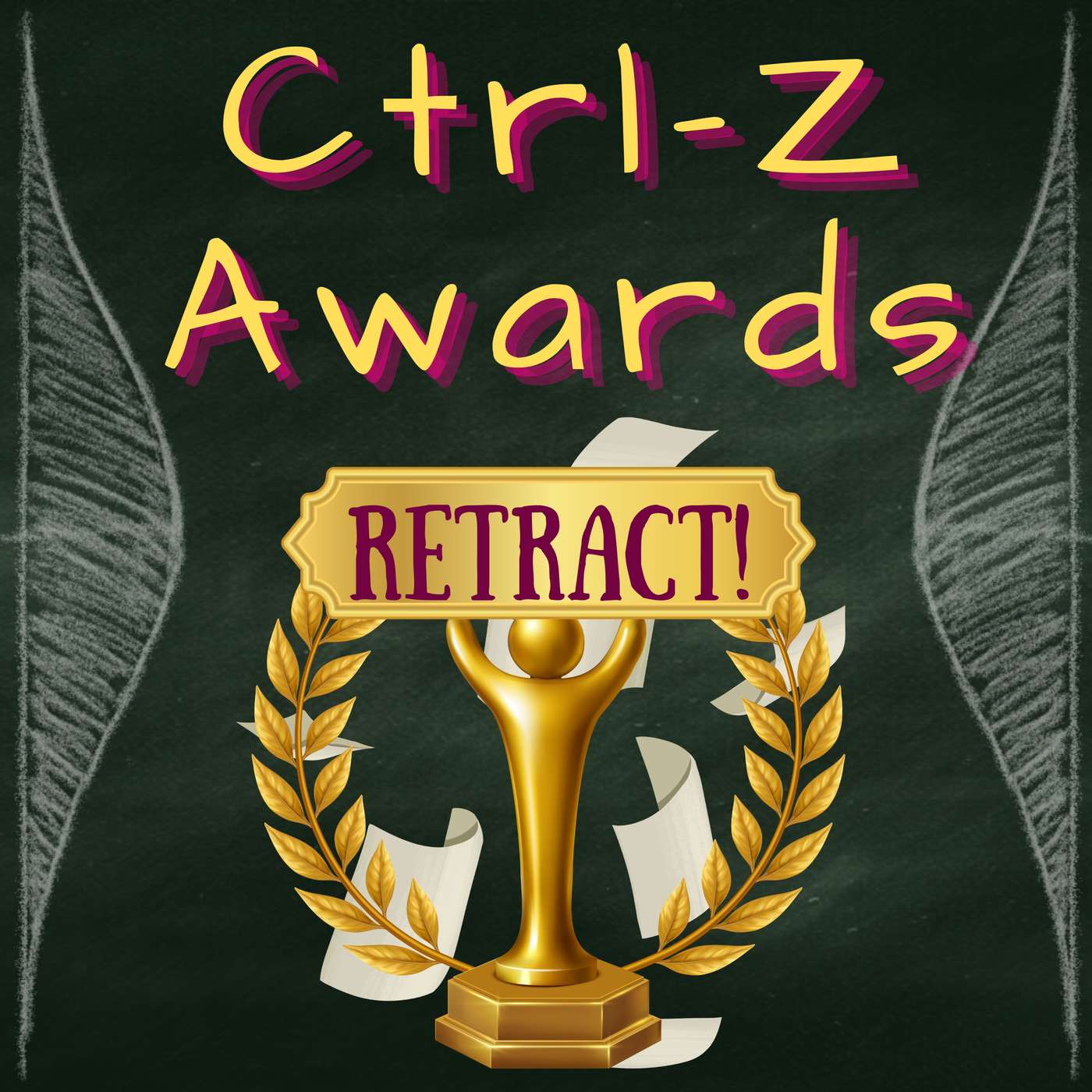
What happens when you discover that your published paper is wrong? Does retracting it ruin your reputation—or could owning the mistake actually make things better? In this episode, we meet the inaugural winners of the Ctrl-Z Awards, which recognize scientists for correcting or retracting their own work. Behavioral ecologist Kate Laskowski takes us inside a scientific detective story involving suspicious spider data, three retracted papers, and the fear that going public might tank her career. Then computational social scientist Alyssa Smith tells us how one small error in a figure led her to retract the paper at the center of her PhD and job talk. Along the way, we talk about data forensics, the stigma around retractions, and why self-correcting scientists are the heart of science.Statistical topicsData management and documentationOpen scienceReproducible workflowsResearch integrityRetractionsScientific misconductStatistical forensicsMethodologic Morals“Science is self-correcting, which means scientists need to be self-correcting too.”“Good documentation is boring—right up until it saves you.”“If you want scientists to correct their mistakes, reward them for correcting their mistakes.”“I'd rather be considered an honest idiot than for people to wonder if I'm untrustworthy.”ReferencesRetraction Watch: https://retractionwatch.com/Ctrl-Z Awards: https://retractionwatch.com/ctrl-z-award/Announcement of inaugural Ctrl-Z winners: https://centerforscientificintegrity.org/2026/08/04/2026-winners-ctrl-z-award-courage-retracting-own-work/ Kate Laskowski’s blog post: https://laskowskilab.faculty.ucdavis.edu/2020/01/29/retractions/Kate Laskowski’s Data Detective Course syllabusAlyssa Smith’s site: https://asmithh.github.io/ Laskowski KL, Montiglio PO, Pruitt JN. Individual and Group Performance Suffers from Social Niche Disruption [retracted in: Am Nat. 2020 Feb;195(2):393. doi: 10.1086/708066.]. Am Nat. 2016;187(6):776-785. doi:10.1086/686220Laskowski KL, Pruitt JN. Evidence of social niche construction: persistent and repeated social interactions generate stronger personalities in a social spider [retracted in: Proc Biol Sci. 2020 Jan 29;287(1919):20200077. doi: 10.1098/rspb.2020.0077.]. Proc Biol Sci. 2014;281(1783):20133166. Published 2014 Mar 26. doi:10.1098/rspb.2013.3166Modlmeier AP, Laskowski KL, DeMarco AE, et al. Persistent social interactions beget more pronounced personalities in a desert-dwelling social spider [retracted in: Biol Lett. 2020 Feb;16(2):20200062. doi: 10.1098/rsbl.2020.0062.]. Biol Lett. 2014;10(8):20140419. doi:10.1098/rsbl.2014.0419Smith AH, Green J, F Welles B, Lazer D. Emergent structures of attention on social media are driven by amplification and triad transitivity [retracted in: PNAS Nexus. 2026 May 07;5(5):pgag137. doi: 10.1093/pnasnexus/pgag137.]. PNAS Nexus. 2025;4(4):pgaf106. Published 2025 Apr 1. doi:10.1093/pnasnexus/pgaf106Kristin and Regina’s online courses: Demystifying Data: A Modern Approach to Statistical Understanding Clinical Trials: Design, Strategy, and Analysis Medical Statistics Certificate Program Writing in the Sciences Epidemiology and Clinical Research Graduate Certificate Program Programs that we teach in:Epidemiology and Clinical Research Graduate Certificate Program Find us on:Kristin - LinkedIn & Twitter/XRegina - LinkedIn & ReginaNuzzo.com

Comments

Download from Google Play

Download from App Store
 United States