


Flip Your Mindset
Subscribed: 18Played: 352
Subscribe

© Stacey Uhrig
Description
Having spent over four decades overcoming childhood adversities and helping others with my post-traumatic wisdom, I decided to change careers and pursue my purpose at the age of 49.
I became a Certified in Trauma Recovery, Rapid Transformational Therapy Practitioner, and Parts Work soon after, I launched Flip Your Mindset, a podcast that serves as a no-cost entry point for those looking to resolve their own traumas.
Through Flip Your Mindset™, my goal is to help listeners transform their perspectives and see their lives through a new lens. As a foul-mouthed, unapologetic Buddhist enthusiast, I'm not afraid to use colorful language to express my emotions, but I draw the line at any derogatory or dehumanizing language. Join me and let's explore new ways to overcome life's challenges and emerge stronger and more resilient than ever before.
Thank you for listening.
flipyourmindset.substack.com
214 Episodes
Reverse

A gentle note before you listen: this conversation includes childhood abuse and neglect, addiction and homophobic abuse. Please go easy on yourself, and take a break whenever you need one.What if some of the things you think are your personality aren’t actually who you are? What if they’re who you had to become?Maybe you learned to stay quiet because speaking didn’t feel safe. Maybe you learned to read a room because you never knew which version of someone was coming through the door. Maybe you learned to control everything because so much of your early life was completely outside of your control. And maybe you carried those ways of surviving with you long after the circumstances that created them were gone.My guest this week knows something about that. Tim Smith is the author of the memoir Fault Line: Still Standing, a raw story about survival, resilience, identity and the long shadow childhood trauma can cast across a life. Tim was born in Pensacola, Florida, and grew up in the rural South in a home shaped by addiction, instability, neglect, abandonment and abuse. He went from working as a short order cook and laboring in a Navy shipyard to a career in the financial sector, and along the way he became an award-winning photographer. Today he lives in Los Angeles with his husband and their rescue dogs.But what interests me most about Tim’s story isn’t simply what happened to him. It’s what happened inside of him because of what happened to him. Those are two very different things.Living in Southern California, Tim says the title may just have been in his subconscious. But the real fault line in his life was one morning in first grade, September 1st at 8:30. He was 6. They lived in the Florida panhandle, near the beach and the Gulf, and his mother was walking him to school when she asked how it would be if he didn’t go today. Then he saw his future stepfather’s gold Chevy Nova parked at a gas station, and he felt sick to his stomach before anyone said a word. She put him in the car and they drove away from his dad, the person he loved most. When he couldn’t stop crying, his stepfather threatened to leave him on the side of the road. Tim told me, honestly, that he wishes they had. It would have been much better than what was waiting for him.What struck me is how early the patterns started. Long before he had any language for what he was seeing, Tim was already the fixer. When his young parents sat drinking and playing Meat Loaf’s “Two Out of Three Ain’t Bad” over and over on the 8-track, he would pat their knee and say, it’s okay, mama, it’s okay. Later it was “mama’s hungover, go make mama’s coffee,” and finishing dinner for his little brother and his stepfather while she drank after her shifts at the Waffle House. Today he says, “I mother people.” It fills a need to be mothered that was never met, and it gives him a sense of control. If he can manage how everyone is feeling, he can be safe.And then there is the hypervigilance. “I know the minute a breath doesn’t feel right,” he said. “I know the minute a step doesn’t feel right.” And then, so honestly: I hate it.This is the heart of so much of my work. We call these things our personality. I see them as adaptations. Survival mode, all the time. Our nervous system, our parts and our mind start collecting data points long before we can name what is happening. And we shed authentic layers of ourselves to meet the needs of others, so that our own needs might be met.Tim didn’t see it that way for most of his life. When he started therapy, within the last 5 years, it was for something else entirely. When his therapist asked about his childhood, he crossed his arms: it was fine, how was yours? The kidnapping had always lived in his mind as a fact, almost like a police report, with no feeling attached. His mind was protecting him. Then one day his therapist asked, how did it feel? It became one of the most intense sessions of his life, because for the first time he saw that little boy and how scared he was.I hear a version of this all the time: I want to do this work with you, but I don’t want to go back to childhood. I’ll follow their lead, but I’m probably going to want to explore it, because this started somewhere. As Tim put it, it takes courage to go back there.After the kidnapping, Tim went nonverbal at home for months. Silence was the only weapon a little boy had. “And nobody cared,” he said. Today, when life gets to be too much, he still goes silent and dark until he can rebalance. A skill, he says, that he learned as a child.There was light in his story, too. His grandmother Ruthie, his dad’s mother, was his safe place. She had a one-bedroom cinder block house in the middle of nowhere that smelled like bacon and the gas heater. On Saturday mornings she would pull his toes for this little piggy. They looked for four-leaf clovers off her back porch, and she always asked what his favorite meal was and made it for him. No one at home was asking him those things. But those weekends were also when his dad would leave to go drinking, and that is where one of the most painful lines of the episode came from. His dad could do anything he wanted the other six days of the week. “Am I not worth 14 hours?”This is what happens. A child makes meaning out of what they see: if I were enough, if I mattered enough, you’d find a way to prioritize me. It isn’t logical once we understand addiction. But it makes complete sense to a child, because we are meaning-making beings. For Tim, that meaning stayed with him well into his 30s. He saw himself as trash, a throwaway person who deserved all the rejection he got.He kept trying to win his mother’s love, with clay ashtrays and Christmas and Valentine’s presents, even after she kicked him out at 17, halfway through his senior year, because she couldn’t accept having a queer son. We talked about his own years with alcohol, and the things he did to survive in his late teens and early twenties. When I asked if he can look back at that young man with compassion, he didn’t hesitate. No one should have to make survival choices at 16. He isn’t mad at himself. He’s proud of himself, because he survived.And then he said this: “I have every excuse and every reason in the world to be the villain.” He refuses to be the victim of those circumstances. He didn’t have role models, but he knew exactly who he didn’t want to become.I always say all behavior makes sense in context. It doesn’t mean we excuse the behavior. It means we understand where it came from, and that understanding takes us out of the role of being the problem. Writing the book gave Tim that wider lens on his parents. He still carries some resentment, and he’s allowed to. “I wish you could have done better,” he said of them. “I wish you could have seen what you were doing. You just weren’t able to. And I understand it. And I hate it for both of us.”For Tim, resilience is standing on the beach with 6-foot waves coming at you and still standing. It’s also peace, quiet and stability, creating order out of the chaos he came from, and what he calls his little family: his husband and their dogs. So many people who grew up like this keep seeking chaos, because chaos is the warm blanket they know. Tim doesn’t want that blanket anymore. When I asked who Tim is when he doesn’t have to survive, he said he’s quiet. He’s most at peace driving out in the desert with his camera or his drone, with no one else’s needs to tend to.My last question is the one I keep thinking about. If he could sit beside 6-year-old Tim, not to rescue him or change anything, just sit with him, what would he want him to know? He said he would love to just hold him. And then he would tell him: buckle up, kid. It’s going to be bitter in the beginning, but it’s going to be so sweet at the end. Hold on to the sweet part.That one stayed with me. I think I would have a very similar conversation with my 12-year-old self. I’m in the middle of writing my own book right… This is a public episode. If you'd like to discuss this with other subscribers or get access to bonus episodes, visit flipyourmindset.substack.com/subscribe
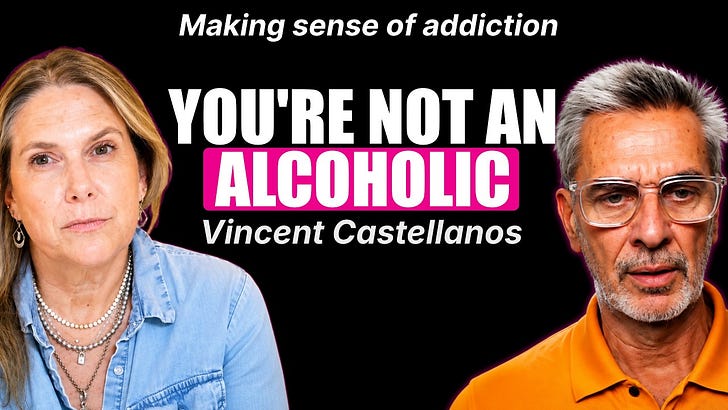
There is a saying I keep coming back to: we’re never happier than the saddest person in our home.When someone we love is struggling, we feel it in our own bodies. Their pain becomes our pain. Their chaos becomes our chaos. And without ever deciding to, we start co-regulating with them, making their challenge our challenge, because we don’t know how to separate ourselves from it.That is where this week’s conversation lives. Vincent Castellanos is back for part 2 of our Making Sense of Addiction series. Vincent is a Certified Trauma Recovery Coach and addiction counselor in Los Angeles, and he has been sober since 1994. In part 1 we talked about what addiction actually is. This time we turned toward the people standing next to it: the partners, parents, siblings and friends who love someone who is suffering.Vincent said something early on that I have not stopped thinking about. When someone we love is using, the family experiences powerlessness, sometimes for the first time in their lives, with no point of reference for it. So the focus goes back to the person who is struggling. We come up with solutions. If he just changed schools. If she just had different friends. If I were just a little more compassionate. Those ideas come from a beautiful place. But as Vincent put it, the only people who recover are the people who are willing to do what it takes to do so. Period.I wrote down a phrase while he was talking: fixing equals loving. So many of us were taught that. Vincent named the other side of it: the belief that “I have to fix you so that I can be okay.” And in that pursuit, he says, we destroy them and us.I see this all the time in my work. A client comes in, and a big part of the session is about how to keep a family member from feeling uncomfortable. All of that scaffolding. All of that contortion of themselves so that someone else stays okay. And when we get curious, it almost always comes back to the same place: growing up, it was their job to make sure everyone was okay.We also talked about tough love. Vincent doesn’t believe that is even a thing. In his words, tough love is not tough love, it’s love. It’s just loving in a way most of us were never taught. That might mean setting a boundary, and he had a piece of advice I want every one of you to hear: make very sure that the boundary you are setting is one you are able to keep. Because a boundary is not a tool to control someone else’s behavior. It is self-preservation. The real change a boundary creates is what it does for you.I shared a piece of my own story, too. From the age of 12 into my 40s, I lived in a state of hypervigilance. When my body couldn’t hold that anymore, it would drop into shutdown. I was either extremely high functioning and anxiety ridden, or I could not get out of bed. When I finally started doing my own work and had longer stretches without those highs and lows, I kept saying, I don’t know what’s wrong with me, I’m so tired. And then I heard it: you’re not tired. You’re relaxed. I had not felt that in about 30 years. You are not broken. You adapted.Vincent had his own version of that moment. At 49 days sober, he woke up in the middle of the night and noticed his hands were open. For years he had clenched his fists so hard in his sleep that they left marks. For the first time in decades, he had actually slept.Then I asked him the question I hear more than any other: how does someone take care of themselves without feeling selfish? His answer is the heart of this episode. Unless I am the priority in my life, he said, I am not going to be able to help anyone. It sounds harsh. It is actually the opposite of selfish. And when we don’t do it, the damage can spread: anxiety, depression, isolation, and sometimes the loved one starts reaching for something to cope, too.His invitation at the end was simple: seek help for you, so that you can help the person you love. That help does not have to be expensive. He spoke about Al-Anon and Adult Children of Alcoholics, and how much healing there is in realizing you are not the only one going through this.And here is what I hope you take with you. You do not have to struggle and suffer in tandem with someone to prove that you love them. Sometimes loving them enough sounds like this: I’m here, and I’m right by your side, but I cannot heal this for you. And I’m not willing to destroy myself while you destroy yourself.You can find Vincent at https://www.vincentcastellanos.com, where you can book a free 30-minute discovery call, and on Instagram at @coachvincent61. He also hosts Responsibility Revolution, The Podcast.If you missed part 1, start there:If this conversation stirs something about your own patterns, my free HURRT Assessment (Healing Unresolved Roots of Trauma) maps how experiences before 18 may still be shaping you now:Take it here: https://www.flipyourmindset.com/hurrtPrefer to watch? The full video version is on YouTube:https://www.youtube.com/channel/UCCAQUNLlaDa262nD-iNvGHgFollow Vincent:◼ Website - https://www.vincentcastellanos.com◼ Free 30-minute discovery call - https://www.vincentcastellanos.com/services◼ Responsibility Revolution podcast - https://www.vincentcastellanos.com/responsibility-revolution-podcast◼ Instagram - https://www.instagram.com/coachvincent61◼ LinkedIn - https://www.linkedin.com/in/vincent-castellanos-03b00a69/In this conversation: * why addiction is a family disease, the powerlessness loved ones feel, when helping turns into enabling, the belief that you can fix someone, why you have to be your own priority, co-regulation and “never happier than the saddest person in our home,” what enabling really looks like, why tough love is just love, setting a boundary you can keep, boundaries as self-preservation, a bottom as an alarm going off, peace of mind versus chasing happiness, the window of capacity, “you’re not tired, you’re relaxed,” 49 days sober and open hands, prioritizing yourself without guilt, “if I’m not suffering, I’m not loving,” and where families can find support.This conversation is for education and reflection, not a substitute for professional medical, addiction or mental health care. If you are struggling, in the US you can call or text 988, 24/7. For confidential help with substance use for you or someone you love, the SAMHSA National Helpline is free and open 24/7 at 1-800-662-4357.New episodes every Monday. If someone you love needs this one, send it to them.We cannot heal what we do not understand.Stacey This is a public episode. If you'd like to discuss this with other subscribers or get access to bonus episodes, visit flipyourmindset.substack.com/subscribe
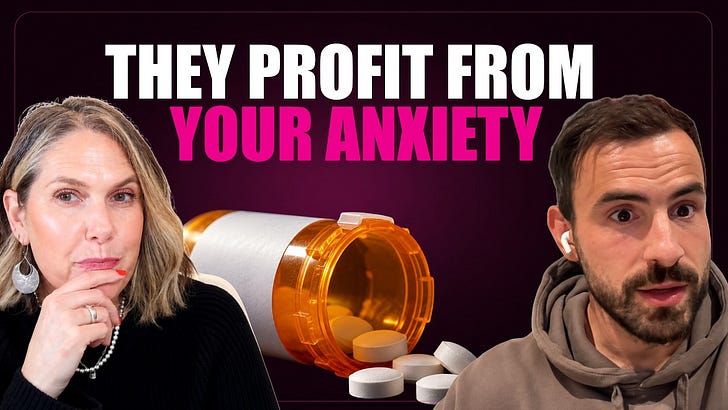
Have you ever stopped to think about how much time we spend trying to get rid of something we don’t like about ourselves?For me, it was anxiety. For you it might be overthinking. The need for control. The inability to relax. People pleasing, perfectionism, or the way you shut down when things get hard.Whatever it is, we usually come at it with the same question. How do I make it stop?And listen, I get it. When something is interfering with your relationships, your sleep, or your ability to feel comfortable in your own skin, of course you want relief. Who wouldn’t?But here’s what I’ve come to understand, through my own life and through the work I do with my clients. Sometimes we’re so focused on getting rid of something that we never stop to ask what might be contributing to it in the first place.That’s what I want to make sense of this week.A label is not a whyI was about 30 when I was diagnosed with generalized anxiety disorder. It felt like an Acela train running through my chest 24/7. My heart raced, my mind wouldn’t shut off, and I constantly felt like something bad was about to happen.Let me be very clear about something before I go any further. There is absolutely a place for diagnosis. There is a place for medication, for mental health support, and for other forms of treatment. For many people those things are incredibly helpful, and sometimes essential. They helped me too.But here’s where I think the conversation stops too soon.We had identified what I was experiencing. Nobody had explored why. People were very quick to tell me what was wrong with me. Nobody could explain the root cause. And those are two very different things.A diagnosis describes a collection of symptoms. It can guide treatment. But it doesn’t tell the whole story of how those symptoms developed, or what might be keeping them going.Anxious about being anxiousAt the time, I wasn’t interested in understanding anxiety. I just wanted it gone. I had no room for it in my body.If you’ve ever lived with anxiety that feels like it’s running your life, you know how debilitating it can be. And one of the most frustrating parts is that you can know there’s nothing to be anxious about and still feel incredibly anxious.Which makes you even more frustrated with yourself. So now you’re not just anxious. You’re anxious about being anxious, and you’re judging yourself for it. It’s an awful loop.One of the biggest takeaways from my own healing is self-compassion, which to me is the exact opposite of self-judgment. Because in that loop, we are judging ourselves for something we can’t seem to control.The question I stopped askingFor a long time, I treated my anxiety as something wrong with me. Something to fix, kick to the curb, kill off. I hated that part of myself.But as I began to understand trauma and the nervous system, and the ways our experiences shape us, I started asking very different questions.Not “why am I anxious?” in that angry, judgmental voice. Instead:What have I learned about the world?What did I learn about safety, or security?What did I learn about uncertainty, or about predictability and the lack of it?What might my nervous system have learned to anticipate long before I had the language to understand it?That is where things shifted for me. When I looked at my anxiety through the lens of experiences from decades earlier, it started to make sense. Of course I wanted to know what was coming. Of course uncertainty felt uncomfortable. Of course I learned to stay one step ahead of everything, because there was a time in my life when I didn’t feel like I had any control at all.It was a learned, brilliant adaptation.Understanding that history did not magically eliminate my anxiety. But it changed my relationship with it. I was no longer fighting something I didn’t understand. I was beginning to understand myself. And that is a very different place to heal from.A symptom can also be a signalNot always. Not every symptom is rooted in trauma. Biological, medical, genetic, environmental and psychological factors can all play a part. I know that.But sometimes the responses we struggle with today developed in an environment where they served a purpose.Think about hypervigilance. Constantly on alert. Scanning faces, listening for changes in someone’s tone, anticipating what happens next. As an adult, it can look like overthinking conversations, not being able to relax, always feeling on edge.Now imagine growing up where someone’s mood could change without warning. Noticing the smallest shift may have helped you prepare for what was coming. Being watchful was useful. Your nervous system learned: pay attention, stay alert, don’t get caught off guard.Years later, it can still run the show, even when your circumstances have changed.So instead of “why can’t I relax?”, we might ask: what did I experience that made being on alert feel so necessary? And the answer might sound like: of course I notice every little change in someone’s mood. Of course my body responds before I have a chance to think.Perfectionism isn’t simply a personality traitFor some people, perfectionism developed as a way to avoid criticism, rejection or disappointment. Maybe mistakes weren’t safe in your house. Maybe love felt conditional. Maybe being the responsible one, the accomplished one, the one who never caused problems was how you stayed connected.Fast forward 20 or 30 years, and you can’t turn off the internal pressure. Nothing feels good enough. You replay mistakes. You can’t celebrate a win because you’re already focused on what’s next.What if it began as a coping strategy, a way of holding on to safety, approval and belonging?Just because something once helped you doesn’t mean it has to keep running your life. Understanding why it developed can help you start making different choices.Making sense is not the same as making it OKWhen I say our symptoms make sense, I’m not saying they’re always healthy. I’m not saying we should ignore them. Sometimes they need medical attention. Sometimes the patterns we’ve built are hurting us or the people around us.Understanding why something developed doesn’t mean accepting its consequences. It gives us more information.And that matters, because if we only focus on eliminating a symptom, we may never address what keeps it going. Sometimes those conditions are still present. You might be trying to manage anxiety while living somewhere that still feels unpredictable or unsafe. Or trying to stop people pleasing while part of you still believes that disappointing someone means losing them.Insight alone doesn’t create change. But it shows you where change needs to begin.Three questions to tryNot because they’ll magically make a symptom disappear, but because they’ll help you relate to it differently.1. What am I experiencing? Without judgment. Not “I’m being ridiculous” or “I should be over this by now.” Just: I’m feeling anxious. I’m having a hard time relaxing. I need to control this situation. I’m shutting down. Name it without turning it into a character flaw.2. What might this be responding to? This is where curiosity comes in. Is something happening in my life right now? Does this remind me of something I’ve lived before? Is a belief about myself shaping my response? Sometimes the answer is physical, medical or about your current circumstances. We’re not hunting for a trauma story behind every symptom. We’re staying curious.3. What do I need right now? Even if a response started years ago, you live in the present. Maybe you need support, or a boundary. Maybe you need to challenge an old belief, learn a new way of responding, or reach out for professional help.Two simple wordsHow much time do we spend fighting ourselves? Criticizing our anxiety, judging our reactions, telling ourselves we should know better.Maybe we do know better. But knowing better and being able to respond differently are not the same thing. Our responses are shaped by experience, by repetition, by what wor… This is a public episode. If you'd like to discuss this with other subscribers or get access to bonus episodes, visit flipyourmindset.substack.com/subscribe
In his twenties, Ton Mazzone couldn’t get through a conversation without his mind going blank and his heart racing. He bought every confidence book he could find. Nothing worked. The only time he felt like himself was after a drink. So he did what so many of us do. He self-medicated, until that stopped working too.When he finally went to his doctor and asked for help, the appointment went the way so many of these appointments go. His symptoms were clustered into a diagnosis. Anxiety. Depression. Here’s the medication. He told me he left that room feeling even more broken than when he walked in, because the message underneath it was: you’re the problem, and this chemical is going to fix you.Nobody asked what had happened to him.It took Ton five more years to learn the word that changed everything: trauma. Not the big, one-off event he had always pictured, but the relational, developmental kind that stacks up quietly in a childhood that looks happy from the outside. Once he understood that, his whole belief flipped, from “I am broken” to “these are normal responses to abnormal experiences.”I felt that one in my bones, because it is my story too. I lived with anxiety for 30 years. I was told I had generalized anxiety disorder at 30, and with my grandmother’s history of shock treatment and lithium, I assumed it was simply my lot in life. When you get a label like that, you lose your agency. It took two breakdowns and a lot of learning before I understood that my nervous system had done exactly what it was designed to do.Ton turned his awakening into a film. Traumality took him four years, with no funding, no studio and no production company behind him. He reached out to more than a hundred of them and didn’t hear back from a single one. When he started, he didn’t even own a camera. The finished film features people every trauma practitioner I know studies and learns from, including Peter Levine, Deb Dana and Janina Fisher. It has since been screened for more than 100 healthcare professionals inside the very NHS that once handed him a prescription and sent him home.In this episode we go where the film goes, and yes, I got up on my soapbox. We talk about the DSM-5, the book often called the bible of psychiatry. As Ton puts it, mental health is the only field where they don’t scan the organ they’re treating. A diagnosis comes from a checklist of symptoms, and five different doctors can give you five different labels. Ton shares that roughly 60% of the people who wrote the DSM had funding from pharmaceutical companies. (A 2012 study in PLOS Medicine found that 69% of the DSM-5 task force reported ties to the pharmaceutical industry.) In his words: “I wouldn’t want to take the advice of somebody who’s profiting from the very thing that they’re diagnosing me from.”We also talk about why complex PTSD still isn’t in the DSM-5, even though the World Health Organization recognizes it, and how that gap leaves so many people carrying a label that never fit. And we talk about what a trauma-informed world could actually look like, from the belief systems we bring into a room, to Scotland’s trauma-informed experiment, to the way we parent.That last part matters to me more than almost anything. When a parent brings me a struggling child, I will very gently say, I won’t work with your child, but I will work with you. Not because anyone failed, but because so many of us are parenting with a playbook handed down by generations who were simply trying to survive. Our kids aren’t a collection of disorders. They learned brilliant adaptations.If you have ever been told something is wrong with you and quietly wondered whether there was more to the story, this conversation is for you. You are not broken. You adapted.Rent and stream Traumality here: https://traumality.comIf this conversation stirs something about your own patterns, my free HURRT Assessment (Healing Unresolved Roots of Trauma) maps how experiences before 18 may still be shaping you now:Take it here: https://www.flipyourmindset.com/hurrtPrefer to watch? The full video version is on YouTube:https://www.youtube.com/channel/UCCAQUNLlaDa262nD-iNvGHgFind Ton and Traumality on social media, where he shares every new screening.In this conversation: social anxiety and self-medicating, the appointment that left him more broken, discovering trauma five years later, why trauma isn’t always one big event, my own 30 years of anxiety, what the DSM-5 actually is, who writes it and who funds them, why complex PTSD isn’t in the DSM, bracing for pushback from psychiatry, the UK psychiatry apology, making a film with no funding, screening for NHS professionals, Scotland’s trauma-informed experiment, labels versus adaptations, and why it is so hard for parents to look at themselves.This conversation is for education and reflection, not medical advice. Please don’t start, stop or change any medication without talking to your doctor.New episodes every Monday. If someone you love needs this one, send it to them.We cannot heal what we do not understand.Stacey This is a public episode. If you'd like to discuss this with other subscribers or get access to bonus episodes, visit flipyourmindset.substack.com/subscribe
Most people assume that once you leave an abusive relationship, the abuse is over. You got out. You did the hard thing. Now you get to start healing.But what happens when you share children with that person?What happens when you cannot go no contact? When the courts require you to keep communicating? When parenting schedules, finances and the family court system itself become a brand new avenue for power and control?For a lot of survivors, leaving is not the end of the abuse. It is the beginning of a very different chapter of it.I sat down with Sybil Cummin for this week’s episode. Sybil is a licensed professional counselor who started her career as a play therapist, working almost entirely with children. She has testified in court for years. She went into this work believing what most of us believe: that everyone in the room, the judges, the evaluators, the attorneys, the court-appointed professionals, is on Team Kid.What she learned is that the system is not always on Team Kid.In most states, she told me, a parent’s rights will trump what is in a child’s best interest almost every time. Even when there is evidence of abuse. Even when there is coercive control in the home. A parent has the right to access their child, and it falls on the protective parent to prove, document and fight for every single protection.And the person who abused you knows that.They know a loophole in the parenting plan means another trip back to court. They know a late child support payment, followed by “oh, I didn’t know it was supposed to go through this way,” costs them nothing and costs you a filing fee, an attorney and another week of your nervous system on high alert. They know that joint decision making means they can quietly say no to the dentist, or to therapy, for the kid who needs it most.I am not sharing this to scare you. I am sharing it because I have watched too many people walk out of a toxic relationship thinking the hard part was over, and then feel like they were losing their minds when it was not. If no one tells you the truth, you will blame yourself for it. You are not crazy. You are not imagining it. This is a pattern, and it has a name: post-separation abuse.So I asked Sybil the question I most wanted answered. How does someone heal when the thing they are healing from never really ends?She called it the million dollar question. Then she said something I have not stopped thinking about. So many of the moms she works with carry this belief: it is impossible to heal while I am still stuck in this. My child is four. I have fourteen more years.Can you heal anyway? Absolutely.Sybil talks about felt safety: the times, places and people where you are safe to feel safe. Your nervous system has been doing its only job, keeping you alive, and anything connected to that person registers as danger. Healing is not waiting for the danger to end. It is giving your body small moments of proof that right now, in this moment, you are safe. In the shower. Getting dressed. Thirty seconds in the bathroom.And the piece she says matters most is relational safety. You cannot heal from relationship trauma outside of safe relationships. The survivors she has worked with who had even one safe person healed years faster than the ones who were alone.Which brings me to you, if you are the friend, the sister, the coworker someone finally opens up to. Please do not say, “Wow, I can’t believe that. He’s always been so nice.” What happens behind closed doors is designed to be unbelievable. Instead, try: “Tell me more. I may not understand, but I want to try.” And: “I believe you.”We also talked about the kids. Not only the ones whose pain is loud, but the ones Sybil worries about most. The helpful ones. The straight-A ones. The kids with a smile on their face and no problems, who have learned to read every mood in the house and become whatever keeps things calm. Those are the kids we are missing, because those are not the ones getting therapy.You were not weak for staying, and you are not weak for struggling now. Your body adapted to keep you safe. It just has not gotten the memo yet that it is allowed to rest.Go listen to this conversation, especially if this is your story or the story of someone you love. Sybil runs an online community for moms walking through exactly this, Rising Beyond Power and Control, at risingbeyondpc.com, and she hosts The Rising Beyond Podcast.And if someone you used to be close to has slowly disappeared, reach out. It does not have to be about any of this. Just: “Hey, I’ve been thinking about you. Can we grab a coffee?” Isolation is part of the playbook. Connection is part of the way out.If you want to understand how your own history is still showing up in your body today, my free HURRT Self-Assessment takes about eight minutes: flipyourmindset.com/hurrt.If you are in danger, please call 911. In the US, the National Domestic Violence Hotline is 1-800-799-7233, or text START to 88788.We cannot heal what we do not understand.StaceyAbout this week’s guestSybil Cummin, MA, LPC, ACSSybil is a licensed professional counselor and approved clinical supervisor based in Arvada, Colorado. She has spent more than a decade working with victims and survivors of coercive control and domestic violence, including the children living inside these family systems. She began her career as a play therapist, has testified in family court for years, and is actively involved in family court reform efforts in Colorado.She is the founder of Rising Beyond Power and Control, an online community that supports moms navigating post-separation abuse, shared parenting and the family court system, and the host of The Rising Beyond Podcast. She also trains therapists and mental health professionals to recognize and work with domestic violence and coercive control, and is the author of And Then We Do Harm, a book on rethinking clinical interventions for survivors.Connect with Sybil:* Community for protective moms: risingbeyondpc.com* Podcast: The Rising Beyond Podcast, wherever you listen* Training for mental health professionals: beyondpowerandcontrol.com* Instagram: @risingbeyondpc* LinkedIn: Sybil Cummin This is a public episode. If you'd like to discuss this with other subscribers or get access to bonus episodes, visit flipyourmindset.substack.com/subscribe

Comments

Download from Google Play

Download from App Store
 United States