


 Claim Ownership
Ocean Collaborations
Subscribed: 1Played: 0
Subscribe

© Jan Maisenbacher
Description
Blue Leadership beyond BlueBlueBlaBla: Unique knowledge from ocean regeneration projects and personalities that make waves, shape the future and lead the change towards blue regeneratives economies. Get inspired how the magic of collaboration is able to scale impact for our ocean!
janmaisenbacher.substack.com
janmaisenbacher.substack.com
40 Episodes
Reverse

Imagine 195 young people, one from every country in the world, learning to dive and then voting underwater on plastic pollution, deep-sea mining and the high seas. Sounds crazy? That is exactly what Johann Hoschtialek says about his own idea too.Johann is the father of three daughters and comes from Grenada, a small island nation in the Caribbean. Eight and a half years ago, he sat down with his oldest daughter and asked: what could we do? That conversation has grown into a global project that aims to travel the world within a single year.Why the ocean needs people who are called crazyIn this episode, he explains how a father-and-daughter idea can grow into a project involving governments, universities and millions of people. Why he sees fear of the water as one of the biggest problems. What gives him hope despite everything. And how a caravan like this is financed at all.Listen in, and ask yourself afterwards: what would your contribution be if this caravan came to your country?Linklist:Webpage: https://195in365.com/Johann on LinkedIn: https://www.linkedin.com/in/johann-hoschtialek-acc-dir-712a3462/You have a (crazy) ocean collaboration impact project like Johann? Don’t hesitate to get in touch: [email protected] information about ocean collaborations podcast: https://janmaisenbacher.com/en/ocean-podcast/ This is a public episode. If you would like to discuss this with other subscribers or get access to bonus episodes, visit janmaisenbacher.substack.com

Helle Herk-Hansen works where the energy transition meets the sea. Her conviction is that if we fix only one of the two, we fail at both.Helle is Vice President Environment at Vattenfall and co-chair of the Global Future Council on the Regenerative Blue Economy at the World Economic Forum (see link to their special report at the bottom). I recorded this conversation with her only days after she returned from the UN Biodiversity Conference (COP17) in Armenia. She was tired, still processing, and surprisingly hopeful.What you’ll hear in this episode:🌊 Why the biggest hurdle may not be technology at all, and what Helle thinks is actually missing to make the shift real towards a blue regenerative economy🌊 How one of Europe’s largest energy companies holds the daily tension between delivering affordable power and protecting nature🌊 Why Helle is asking for something she calls a “regenerative seascape”, and why it needs a place you can go to and feel, not just read aboutLinklist:* Helle Herk-Hansen on LinkedIn: https://www.linkedin.com/in/helleherk-hansen/* Vattenfall: * Our goal is fossil freedom - Vattenfall* Biodiversity transition plan 2030* Global Future Council on Regenerative Blue Economy (World Economic Forum): https://initiatives.weforum.org/global-future-council-on-regenerative-blue-economy/home* The WEF white paper/special report: Regenerative Blue Economy: Pathway to Prosperity: https://www.weforum.org/publications/the-regenerative-blue-economy-pathways-to-prosperity* Casebook of Corporate Action for Biodiversity | ACT OceanOcean Collaborations is a podcast about the people, partnerships and courage that move ocean regeneration forward into action (beyond blue-blue-bla-bla). If this conversation sparks something for you, share it with one person who works on ocean solutions (and is maybe frustrated like you are about the progress).The podcast is available on Substack, Spotify and Apple Podcasts. More information about the podcast:https://janmaisenbacher.com/en/ocean-podcast/ This is a public episode. If you would like to discuss this with other subscribers or get access to bonus episodes, visit janmaisenbacher.substack.com

The day before we sat down in Kiel, a Second World War bomb was found next to our train in Hamburg. The next morning, every phone in the room started screaming.That was the start of the week Graham Patterson (REEF Roundup) and I spent in northern Germany for a three-part documentary series.Below the surface of the North Sea and the Baltic lie 1.6 million tons of munitions. Not lost in battle. Put there on purpose, after the war was over.We met the people who decided, 80 years later, to go back down and bring it up: divers, a toxicologist, a retired navy officer who spent his retirement in the archives, a naval architect, and a chemist who isn’t sure the risk is what we all assumed.Questions we couldn’t stop asking:– Why would anyone sink a war into the sea, and who signed for the boxes?– What can a frozen mussel from 1985 tell us about today?– Is this really a ticking time bomb, or is the clock something else entirely?– Why do coastal towns say “please, do it here” instead of “not in my backyard”?I expected a story about the past. About my grandfathers. What I found was one of the rarest things in ocean work: a problem that went from first alarm to real solution in about a decade, because scientists, ministries, companies and citizens chose to pull in the same direction.If you’ve ever felt that change in ocean conservation is too slow, too fragmented or too lonely, this episode is for you.Episode 1 of Forget-Me-Not is out now. 🎧 Put your headphones on and start with the alarm.This episode was made possible by SEASCAPE Hamburg. Thank you Wolfgang Sichermann for the ocean collaboration: https://seascape.deA special thank you goes to Andreas Beerlage for the help in preparing our packed three interview days (and this amazing fish restaurant we went together). Link List: Press Release of the Germany Ministry for Environment (BMUKN) to announce the winners of the tender process to construct the worlds first platform for ocean dumped munitions (german): https://www.bundesumweltministerium.de/pressemitteilung/bundesumweltministerium-erteilt-auftrag-zur-entwicklung-einer-mobilen-entsorgungsplattform-fuer-munition-im-meerMentioned companies and organsations of this episode:SeaTerra: https://seaterra.deGeomar: https://www.geomar.de/University of Kiel (Insitute for Toxicology): https://www.toxi.uni-kiel.de/deYou wouldn’t mind a podcast episode for your ocean collaboration project? Don’t hesitate to get in touch! https://janmaisenbacher.com/en/ocean-podcast/ This is a public episode. If you would like to discuss this with other subscribers or get access to bonus episodes, visit janmaisenbacher.substack.com
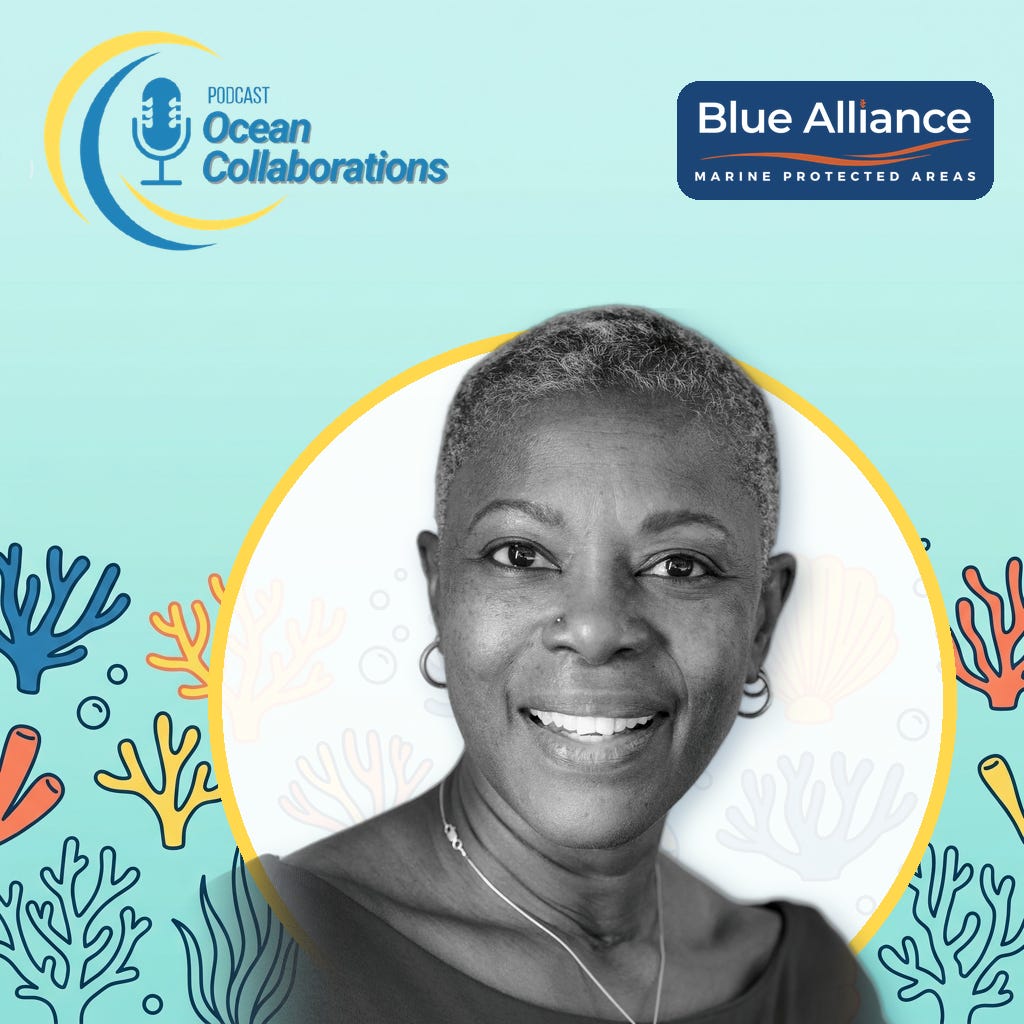
Marine conservation faces a tough reality: philanthropic grants are shrinking just as ocean crises accelerate. Drawing boundary lines only creates “paper parks” - marine protected areas lacking financial durability, enforcement, and authentic local ownership.In this episode of Ocean Collaborations, Jan Maisenbacher sits down with Angelique “Angie” Brathwaite, Director of Conservation and Science at Blue Alliance, to unpack what scalable, self-sustaining ocean protection looks like on the ground.With over two million hectares of coral reef under co-management across Indonesia, the Philippines, and Zanzibar, Blue Alliance bridges policy, science, and market realities. Angie outlines their pioneering model of “reef-positive enterprises” -initiatives like restorative sea cucumber aquaculture and regenerative ecotourism that generate commercial revenues to fund ongoing conservation, science monitoring, and local patrol teams.Thanks for reading - and listening! Subscribe for free to receive new posts Crucially, Angie details the human side of impact: hiring local leaders, listening deeply to artisanal fishers, and merging technical science with ancestral knowledge.For ocean changemakers, impact investors, and scientists seeking practical solutions beyond traditional donor cycles, this dialogue delivers an honest, pragmatic masterclass.Tune in now to discover how innovative enterprise and deep collaboration are regenerating our ocean for the long haul. Connect with Angie on LinkedIn: https://www.linkedin.com/in/angelique-brathwaite70Blue Alliance Links:* Internet: https://bluealliance.earth/* on LinkedIn: https://www.linkedin.com/company/blue-alliance-mpa/Angie’s Voice of the Ocean Music: Listen to Natural Mystic from Bob Marley on youtube here (watch it on Substack)Podcast Ocean Collaborations is produced out of Switzerland by janmaisenbacher.com: https://janmaisenbacher.com/en/ocean-podcast/ Subscribe on Substack, Spotify or Apple Podcasts. This is a public episode. If you would like to discuss this with other subscribers or get access to bonus episodes, visit janmaisenbacher.substack.com
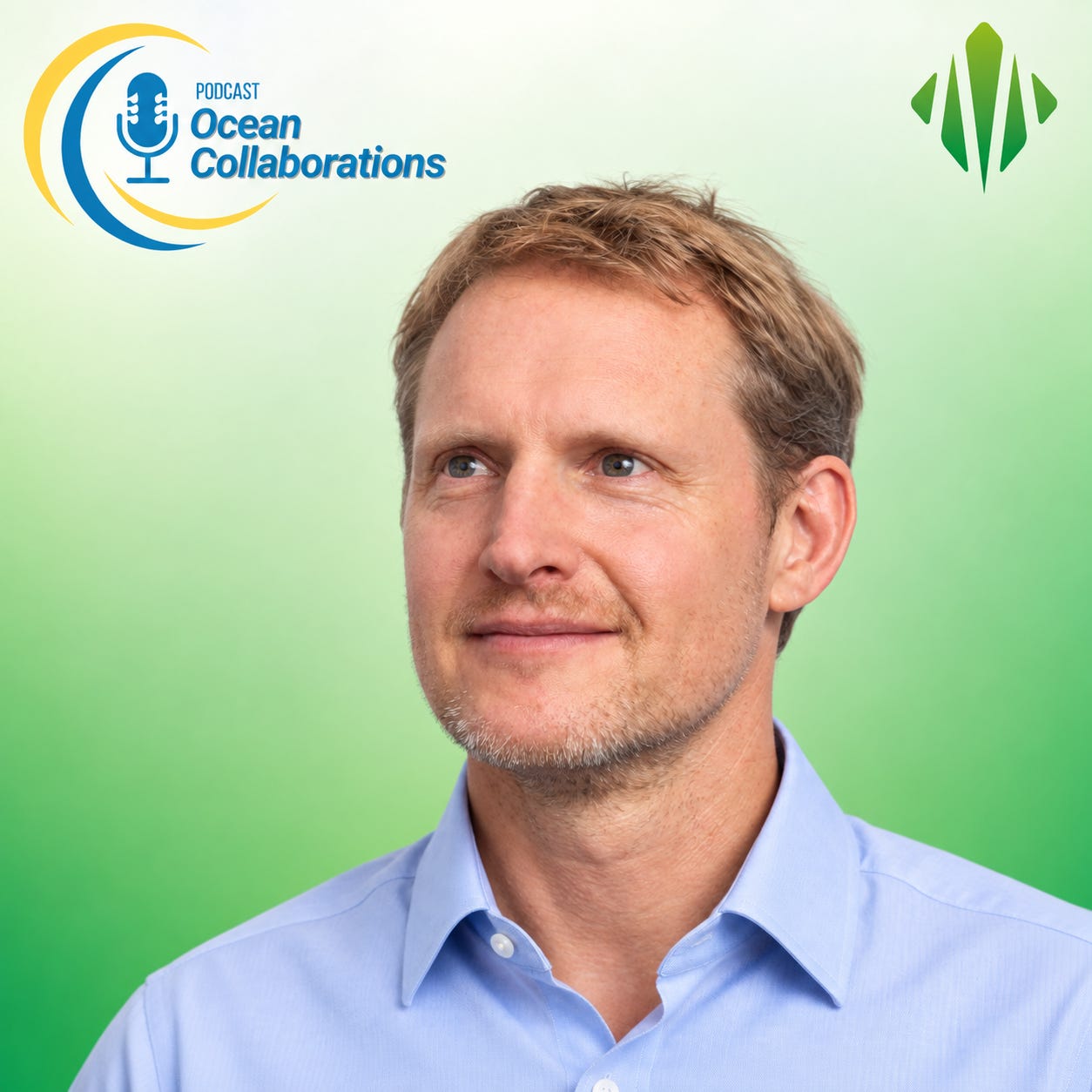
We talk constantly about regenerating the ocean - but who is regenerating the people doing the work?In my very first solo episode, I step behind the mic to get honest about ocean conference exhaustion, superficial networking, and change leader burnout. How do we move from passive panels to transformative retreats and radical collaboration? Tune in to Episode 37 for an intimate reflection on creating sanctuaries for impact, inner resilience, and what’s next for Ocean Collaborations in 2027.If my collaboration invitation of this episode speaks to you, don’t hesitate to reach out: [email protected] with me on LinkedIn: https://www.linkedin.com/in/janmaisenbacher/More information about me: https://janmaisenbacher.com/en/about-jan-maisenbacher This is a public episode. If you would like to discuss this with other subscribers or get access to bonus episodes, visit janmaisenbacher.substack.com

Comments

Download from Google Play

Download from App Store
 United States