


 Claim Ownership
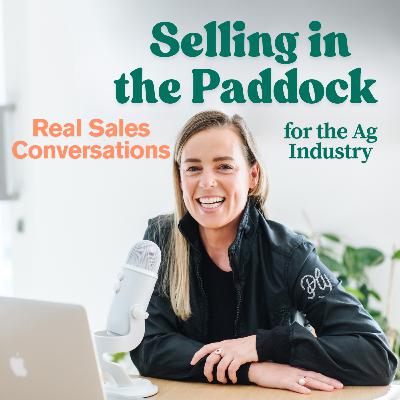
Selling in the Paddock
Subscribed: 6Played: 37
Subscribe

© Georgia Stormont
Description
Selling in the Paddock is a podcast about real sales in agriculture. Hosted by Georgia Stormont, The Ag Sales Coach, it cuts through the noise and gets to the point—how to sell better, lead stronger, and get results.
Guests include Paul Roos, AFL premiership coach turned leadership consultant, and Troy Williams, CEO of the National Farmers’ Federation, plus top ag reps, buyers, and business owners.
If you work in ag and want to sell smarter and build better teams, this podcast is for you.
Guests include Paul Roos, AFL premiership coach turned leadership consultant, and Troy Williams, CEO of the National Farmers’ Federation, plus top ag reps, buyers, and business owners.
If you work in ag and want to sell smarter and build better teams, this podcast is for you.
93 Episodes
Reverse
From Farm Finance to World-Class Horses | Chris Bailey, Sprout Agribusiness & Bullio RazorbackWhat do agribusiness finance, elite endurance horses and building successful businesses have in common?More than you might think!In this episode of Selling in the Paddock, I'm joined by Chris Bailey, Regional Partner at Sprout Agribusiness and the man behind Bullio Razorback, an Australian endurance horse breeding and training business producing some of the world's leading endurance horses.I first met Chris when I spoke at the Sprout Agribusiness Annual Conference in Bowral. We ended up sitting together at dinner, and let's just say we covered A LOT of ground. From banking and finance to horses, genetics, nutrition, supplements and everything in between. I'm not sure anyone else at the table got much of a word in! 😂I knew straight away I wanted to get Chris on the podcast.Chris grew up on a farming property near Cowra, NSW, before building a career in agricultural banking and eventually joining Sprout Agribusiness.But alongside his finance career, Chris has built something quite extraordinary.Together with his wife Kath, he operates Bullio Razorback, breeding and developing elite endurance horses for international markets, including the Middle East and Europe.And we're not talking about your average weekend horse ride!These horses compete over distances of 100–160 kilometres, with performance depending on an incredible combination of genetics, temperament, fitness, nutrition and recovery.In this episode, we explore:Chris's journey from growing up on a farm to agricultural banking and Sprout AgribusinessHow he sold his first endurance horse overseas while still at schoolBuilding international relationships with clients in the Middle EastWhy honesty, trust and genuinely understanding your customer are fundamental to successful sellingThe importance of having the confidence to recommend what your customer needs, not simply what they think they wantHow Bullio Razorback has developed world-class endurance horsesThe fascinating similarities between human endurance athletes and elite equine performanceGenetics, nutrition, recovery and the science behind breeding championsWhy surrounding yourself with great people matters in businessThe value of taking a long-term approach to relationships and commercial successOne of my favourite takeaways from Chris was his approach to building relationships.He's never really considered himself a salesperson.Instead, he focuses on understanding people's problems, being genuinely interested in their businesses and finding ways to help.And sometimes that means being honest about what you don't know or what you can't deliver.We also explore something I found particularly powerful: the confidence to back your own expertise, even when a customer is asking for something different.Whether you're selling financial services to a farming family or breeding an endurance horse for an international client, understanding the real problem you're solving is where the value lies.This episode takes us from Australian farming families to the stables of Dubai, with a few fascinating detours into IRONMAN triathlons, horse genetics and even broccoli sprout supplements!It's a brilliant conversation about agriculture, business, relationships and following your passions.🎧 Tune in to this week's episode of Selling in the Paddock.Connect with Chris and learn more:Sprout Agribusiness – Chris BaileyBullio Razorback – Follow their endurance horse breeding and training journey on Instagram.
Is Cold Calling Dead? Or Have We Just Stopped Doing It?Have we become a generation of order takers in agriculture?It's a question I've been thinking about a lot lately.After a recent discovery call with a branch manager, one thing stood out. His sales reps were busy. They were servicing customers, responding to enquiries, processing orders and sending quotes.But when he looked at their sales pipeline, there was a problem.There were very few new opportunities coming in.And it's something I've been noticing across agricultural businesses for quite some time.Since COVID, the way we sell has changed. Face-to-face visits became less frequent, remote communication became the norm, and biosecurity requirements have made turning up unannounced at a farm driveway less appropriate in some parts of agriculture.But have we adapted the way we prospect? Or have we simply stopped doing it?In this solo episode of Selling in the Paddock, I'm challenging the way we think about cold calling, prospecting and the difference between being busy and actually growing a business.I share my own experiences selling vegetable seed, driving up farm driveways, building relationships with growers, and how prospecting looks very different today in my coaching business.Because these days, my cold calls often look like a LinkedIn message, a handshake at a conference or an introduction through an existing relationship.The approach has changed. The responsibility to create new opportunities hasn't.In this episode, we unpack:Have agricultural sales teams become too comfortable taking orders?The difference between servicing existing customers and creating new businessHow COVID may have accelerated the shift towards reactive sellingWhy biosecurity considerations are changing the traditional farm visitWhether we've lost the skill of prospecting or simply the confidence to do itHow cold calling has evolved through LinkedIn, referrals, conferences and planned farm visitsWhy a full diary doesn't necessarily mean a healthy sales pipelineThe questions sales managers should be asking in their weekly sales meetingsThree practical challenges to help you start creating new opportunitiesAnd here's the question I want you to think about:If no new opportunities entered your pipeline this month, where would your sales come from in three or six months?Because if we're only talking to customers who already buy from us, we're not necessarily building tomorrow's business.We're servicing today's.And there's a big difference.Selling is a privilege, team. But we have to be prepared to start the conversation.🎧 Tune in to this week's episode of Selling in the Paddock.To learn more and find a copy of my book selling in the paddock.
Your customer doesn’t care about your product.Well… not in the same way you do.You know the formulation, the genetics, the horsepower, the trial data, the specifications and exactly why your product is better than the competitor’s.But your customer? They care about what it changes for them.They care about getting the crop off. Margin. Reliability. Labour. Risk. Profitability. And whether spending another $20K, $50K or $200K is actually going to make a meaningful difference to their business.In this solo episode of Selling in the Paddock™, I unpack one of the traps I see technically brilliant agricultural salespeople fall into all the time: using product knowledge as a safety blanket.Because talking about what we know feels safe.Asking better questions requires curiosity — and sometimes a little courage.I explore the difference between a feature, benefit and impact, and why you can't truly know the impact of your product until you understand the individual customer sitting in front of you.We also talk about:Why technical expertise is incredibly important — but isn't enough on its ownHow product knowledge can become a place to hide in a sales conversationThe difference between demonstrating expertise and dumping everything you knowWhy knowing where your product doesn't fit can actually build credibilityHow to respond to questions about price, trials and competitors while staying curiousWhy “our people are different” and “our service is second to none” aren't automatically compelling value propositionsWhat commercially confident selling looks like when your product genuinely isn't the right fitAnd I leave you with one simple shift to make before your next customer meeting.Instead of asking:“What do I need to tell them?”Ask:“What do I need to understand?”Because your customer cares about their farm, their business, their people, their risk, their profitability and their problems.Understand those first, and you'll know which parts of your product actually matter.Better thinking creates better conversations. And better conversations create better commercial outcomes.Want to go deeper?Grab a copy of my book, Selling in the Paddock™, where I unpack the skills, mindset and conversations behind selling well in agriculture.And if you're looking to build greater commercial confidence across your sales team, head to Selling in the Paddock™ online to explore my sales training, workshops and programs for agricultural businesses.sellinginthepaddock.com.au
Selling new technology into agriculture isn’t just about proving that the product works.You’re often asking someone to change a process, rethink the way they’ve always done something, invest real money and trust that the change will make their business better.In this episode of Selling in the Paddock, I’m joined by Michael Whittaker from Tabula, an agricultural technology business celebrating 20 years of selling technology into agriculture.Michael shares a brilliant perspective on the tension between the speed of technology and the seasonality of agriculture — and why successful adoption often comes from small, incremental changes rather than trying to change everything at once.We talk about why you need to get your “muddy boots” on if you want to sell into agriculture, and why understanding the practical realities of your customer’s business matters just as much as understanding your own product.We also unpack ROI — because value isn’t always measured in dollars. Sometimes the biggest return for a customer is time, efficiency, simplicity or removing another job from an already overloaded day.Michael and I discuss:• Why selling technology is often really about selling change• The importance of incremental wins when introducing something new• Why understanding the realities of farming matters in agricultural sales• How to communicate value rather than getting stuck talking about features• Why ROI can mean time and efficiency, not just dollars• The power of customer advocates and social proof• Why overselling and overpromising can destroy trust• How seasonality creates a unique sales cycle in agriculture• Why salespeople need to know the limitations of what they sell• Why the human side of selling may become even more important as AI, automation and technology advanceOne of my favourite ideas from this conversation is simple:AI doesn’t do business with AI. Humans do business with humans.Technology will continue to change agriculture. But the ability to listen, understand, build trust and have great commercial conversations isn’t becoming less important.It may be becoming more important than ever.To view Tabula's website hereConnect with Michael Whittaker on LinkedIn🎧 Listen now to Selling in the Paddock.
Have you had a chance to look at the quote?Three days later…Just checking in.What would happen if I removed “just checking in” from your sales vocabulary tomorrow?In this solo episode of Selling in the Paddock™, we’re talking about follow-up — why it matters, why so many of us avoid it, and how to follow up with confidence without sounding desperate, pushy or annoying.Because silence doesn’t always mean rejection.Harvest happens. Weather happens. Budgets get delayed. Priorities change. Someone else needs to approve the spend.But sometimes silence does mean there wasn’t enough value or urgency to progress the opportunity.And your job in the follow-up isn’t to endlessly chase a yes.A good follow-up should do one of two things: move the opportunity forward or give you enough information to qualify it out.In this episode, I unpack:Why “just checking in” gives your customer very little reason to respondThe psychology behind why salespeople avoid following upWhy fear of rejection leaves opportunities sitting in pipelines for monthsHow a follow-up problem can actually be a discovery problemWhy a clean no can be incredibly commercially usefulHow to bring something valuable into the conversation instead of simply asking about your quoteWhy clarity with the customer matters more than trying to maintain “power” over themHow communication preferences are changing across generationsWhy you shouldn't follow up with a generation — you should follow up with a personThe simple question you can ask customers to understand how they actually want you to communicate with themAnd perhaps the biggest lesson:The best follow-up strategy starts before you ever need to follow up.Great salespeople design the next conversation before the current conversation ends.Instead of finishing a discovery meeting with:“I’ll send something through.”Try:“I’ll have the proposal to you Thursday. Why don’t we book 20 minutes on Monday afternoon to talk it through?”Now you're not chasing. You both know what happens next.So here's the challenge from this episode:Go into your CRM and find three opportunities you've been “just checking in” on.Ask yourself:What conversation actually needs to happen here?Maybe you need to add value.Maybe you need to ask a better question.Maybe you need to pick up the phone.And maybe you need to give someone permission to say no.Because sometimes the follow-up isn't the problem at all.The conversation you had three weeks ago was.Better thinking. Better conversations. Better commercial outcomes.📘 Read the book: Selling in the Paddock: A Proven, People-First Framework for Selling with Confidence in Agriculture — available on Amazon Australia.🌱 Sales training, workshops and more: Visit Selling in the Paddock™ to learn more about working with me and building greater commercial confidence across your agricultural sales team.Keep learning with Selling in the Paddock™

Comments

Download from Google Play

Download from App Store
 United States