


 Claim Ownership
Tales From The PROS
Subscribed: 11Played: 73
Subscribe

© Imaginovation, LLC
Description
Tales from the PROS is hosted by Michael Georgiou, Co-Founder, and Eric Lawrence, Director of Growth at Imaginovation, an award-winning app and software development company. Each episode dives into honest, unscripted conversations, hard-earned lessons, and educational insight into how to help bridge the gap between technology and people.
If you’re a founder, exec, or innovator trying to navigate the tech world without getting burned, this podcast is your no-BS roadmap. Through real talk, personal stories, and insights from the front lines, you’ll pick up smarter ways to build software, steer clear of common mistakes, and choose the right partners in a crowded, often confusing space.
Whether you’re scaling a startup, driving digital change at a larger company, or just love keeping up with tech innovation, Tales from the PROS brings you straight-shooting advice and inspiration without the fluff.
95 Episodes
Reverse
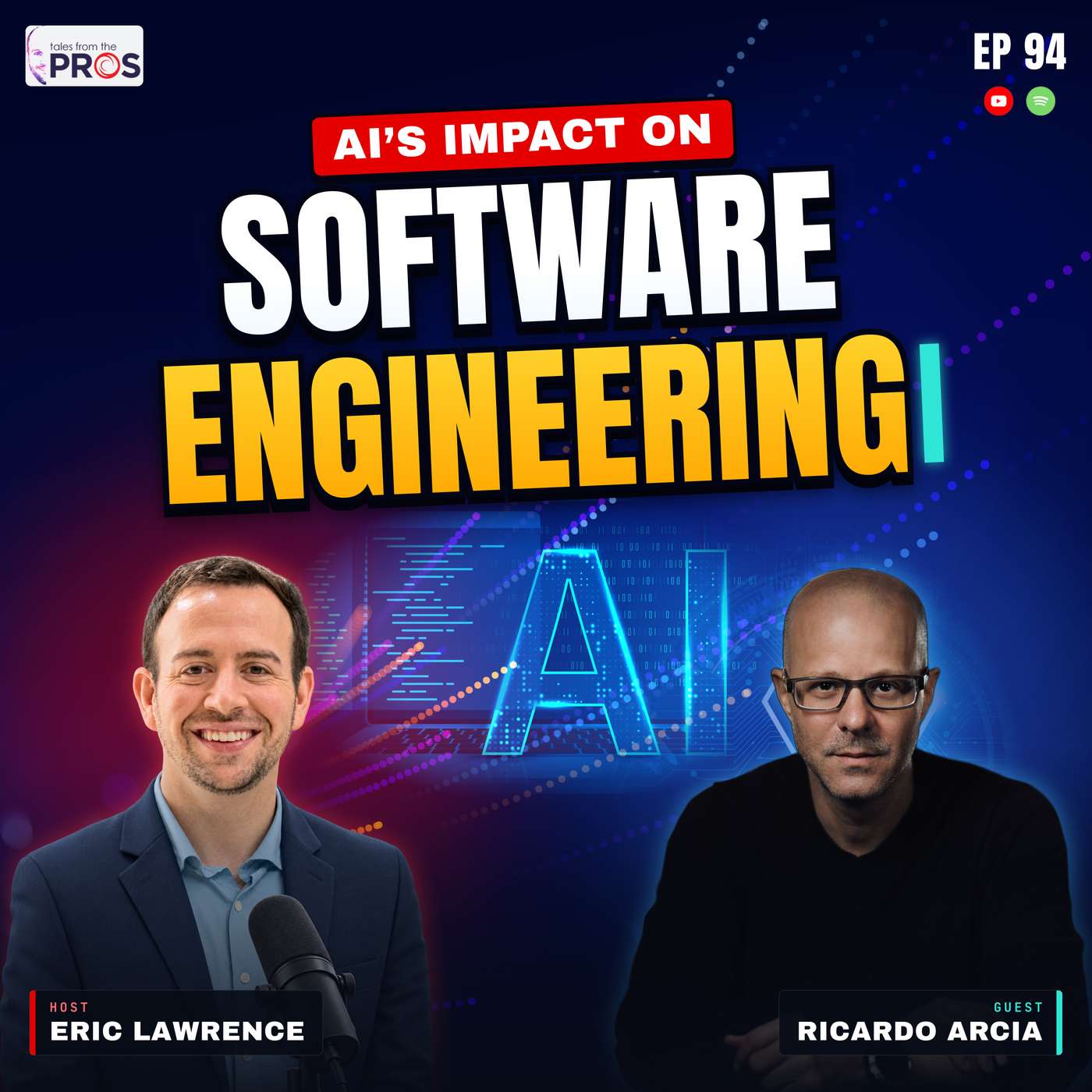
In this episode of Tales from the PROS, Eric Lawrence sits down with Ricardo Arcia, CEO and Co-Founder of Teravision Technologies and author of The Cognitive Leader, to explore how AI is changing software development and what it takes for engineering teams to adapt.After experimenting with AI across his company's 200+ engineers and interviewing more than 150 technology leaders, Ricardo discovered that faster coding doesn't necessarily mean better software delivery.He shares what happened when his team tried to complete a seven-month development project in just eight weeks using AI, why introducing AI without proper engineering standards can increase technical debt, and how companies can build a structured approach to AI adoption.They also discuss the future of software engineering, AI-powered development tools, measuring productivity gains, and why successful AI transformation ultimately depends on leadership and people.🎯 Highlights You Won't Want to MissWhat Ricardo learned from experimenting with AI across engineering teamsWhy AI accelerates individual development tasks but doesn't always improve overall deliveryHow AI-assisted coding can introduce technical debtWhy AI adoption is different for MVPs and established software systemsHow the Cognitive Engineering Framework helps teams adopt AI consistentlyWhy measuring AI productivity and ROI is essentialWhat Ricardo learned from interviewing 150+ CTOs and technology leadersWhy leadership and organizational change are the hardest parts of AI transformation🎧 Listen and SubscribeSpotify:https://open.spotify.com/show/6QkUtrcNllUkqtq1fjlwnZApple Podcasts:https://podcasts.apple.com/us/podcast/tales-from-the-pros/id1371067192YouTube:https://www.youtube.com/@Imaginovation/podcastsSoundCloud:https://soundcloud.com/talesfromthepros💡 Key TakeawaysAI can significantly accelerate prototyping, but complex software systems still require experienced engineering teams.Poor engineering practices can become bigger problems when AI accelerates development.Giving developers access to AI tools isn't enough. Teams need training, standards, and clear processes.A dedicated innovation team can help organizations test AI workflows and scale successful practices.Measuring engineering performance in 90-day cycles can help demonstrate the value of AI adoption.The biggest challenge in AI transformation is often getting people and leadership aligned around a new way of working.🗂 Topics We CoverAI in software development and engineeringAI-assisted coding and developer productivityMVP development vs. complex enterprise softwareTechnical debt and engineering standardsThe Cognitive Engineering FrameworkScaling AI adoption across development teamsMeasuring AI ROI and engineering performanceAI leadership and organizational changeAI coding tools like Lovable and Base44The future of software engineering careers⏱️ Chapters00:00 — Introduction to Ricardo Arcia01:22 — Building Teravision Technologies03:55 — Experimenting with AI in software development06:49 — AI for MVPs vs. complex software systems09:33 — Training engineers to work with AI11:54 — How AI can amplify technical debt15:54 — Building a structured AI transformation framework18:14 — Using Team Zero to scale AI adoption19:39 — Measuring AI productivity through 90-day cycles20:07 — Why AI transformation is a leadership challenge23:52 — What happens when companies lack an AI strategy26:54 — Lessons from 150 technology leaders29:29 — Buying software vs. building with AI30:40 — Advice for business leaders adopting AI34:06 — Will AI replace software engineering teams?35:37 — How AI is changing the way software is designed38:30 — Ricardo's book, The Cognitive Leader39:21 — The future of AI leadership
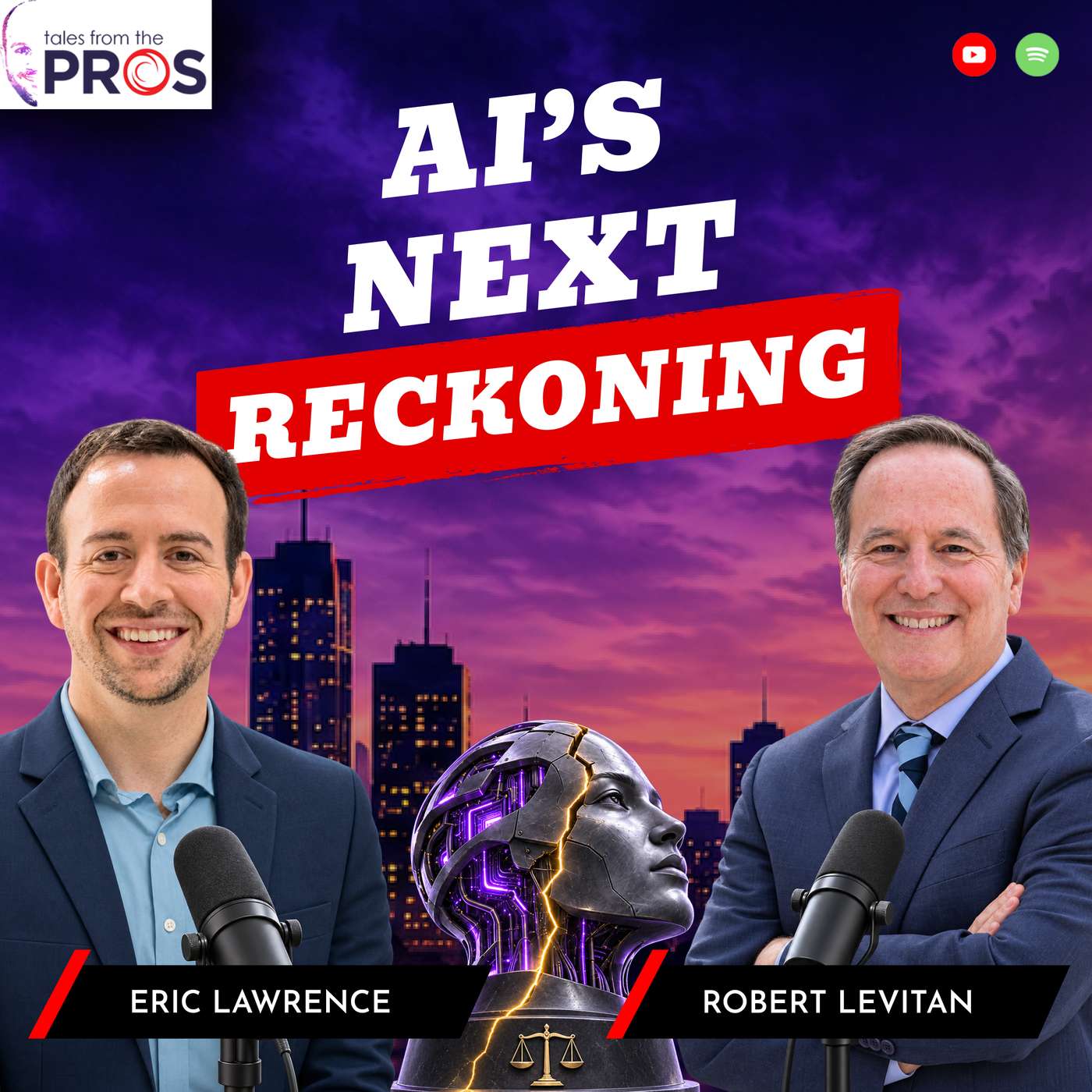
In this episode of Tales from the Pros, Eric Lawrence sits down with Robert Levitan, co-chair of the Ethical Tech Project and a serial entrepreneur who has founded six companies, including iVillage, to discuss why AI's biggest challenge may not be the technology itself, but what happens when something goes wrong.Drawing on his experience building companies during the early internet era, Robert explains why he believes AI is heading toward a major moment of public accountability. He shares a powerful historical parallel from the 1911 Triangle Shirtwaist Factory fire and what it can teach businesses about the consequences of ignoring foreseeable risks.They also discuss the business case for responsible AI, why customer trust matters, and how companies can establish practical AI governance without slowing innovation.If your organization is adopting AI, building AI-powered products, or deploying autonomous agents, this conversation offers a valuable perspective on managing risks before they become serious business problems.🎯 Highlights You Won't Want to MissWhy Robert believes AI is approaching a major accountability momentWhat the 1911 Triangle Shirtwaist Factory fire can teach today's tech companiesHow AI failures could affect thousands of customers at onceWhy responsible AI can become a competitive advantageWhat the early internet and social media reveal about unintended consequencesWhy trustworthy data matters for AI reliability and customer confidenceHow businesses can establish AI governance beyond written policiesWhat companies should do now to prepare for future AI risks🎧 Listen and SubscribeSpotify:https://open.spotify.com/show/6QkUtrcNllUkqtq1fjlwnZApple Podcasts:https://podcasts.apple.com/us/podcast/tales-from-the-pros/id1371067192YouTube:https://www.youtube.com/@Imaginovation/podcastsSoundCloud:https://soundcloud.com/talesfromthepros💡 Key TakeawaysNew technologies create unintended consequences, and AI is no exceptionCompanies should anticipate potential AI failures rather than react after harm occursResponsible AI practices can strengthen customer trust and business relationshipsAI governance should reflect a company's values, industry, and acceptable risk boundariesReliable data and clear data provenance are essential for trustworthy AI outcomesEffective governance requires ongoing monitoring, not just documented policiesBusinesses need systems to detect and correct AI issues before they cause serious harmCompanies that establish clear AI principles and guardrails now may be better positioned to manage future risks🗂 Topics We CoverThe coming AI accountability crisisLessons from the early internet and social mediaThe Triangle Shirtwaist Factory fire and AI regulationAI risks and unintended consequencesResponsible AI as a competitive advantageCustomer trust and AI adoptionAI governance frameworks and ethical principlesData quality, privacy, and provenanceAI monitoring and risk managementPreparing businesses for AI failures⏱️ Chapters00:00 — Introduction00:43 — Meet Robert Levitan and the coming AI reckoning02:12 — Lessons from 30 years of building technology companies04:32 — The Triangle Shirtwaist Factory fire and its warning for AI06:51 — What a major AI failure could look like08:22 — Why responsible AI is a competitive advantage10:18 — Real-world examples of AI risks and safeguards14:45 — What the early internet teaches us about regulation20:20 — The tobacco industry parallel and tech accountability25:58 — AI security risks and the need for safeguards29:13 — Making the business case for responsible AI31:55 — Why trusted data and AI governance matter33:46 — Building an AI governance framework35:30 — The two pillars of responsible AI40:17 — What separates companies that survive major AI failures44:05 — Preparing for AI's unintended consequences46:24 — Final advice and how to connect with Robert Levitan
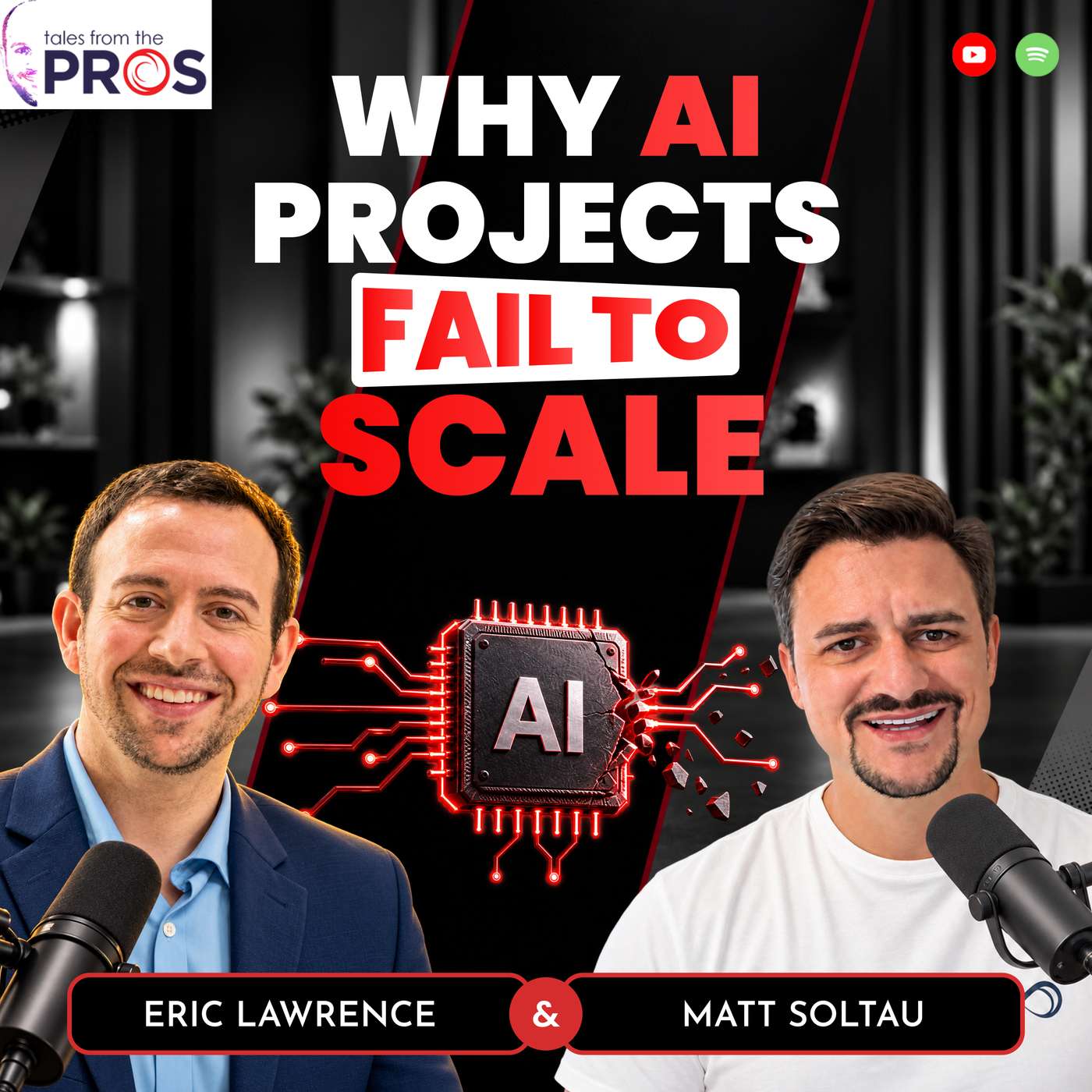
In this episode of Tales from the Pros, Eric Lawrence sits down with Matt Soltau, Global Director of Strategy and Operations at IntelliPaaS, to discuss why so many AI projects struggle to move beyond the pilot stage.Matt explains why even promising AI projects can fail when they're introduced into real business environments. The problem often isn't the AI model itself. It's the disconnected systems, unreliable data, and outdated infrastructure behind it.They also discuss what data silos look like in everyday business operations, why companies accumulate integration debt, and how organizations can prepare their existing systems for AI without replacing everything.If you're planning to implement AI or struggling to scale an existing project, this conversation offers practical advice on building a reliable data foundation, managing risks, and getting your organization AI-ready.🎯 Highlights You Won’t Want to MissWhy successful AI pilots often fail when deployed in real business environmentsHow poor data quality and disconnected systems affect AI performanceWhat messy data infrastructure looks like in everyday business operationsHow manual spreadsheets and conflicting reports reveal deeper integration problemsWhy data integration matters when scaling enterprise AI projectsHow organizational culture and employee readiness affect AI adoptionWhy data governance, privacy, and security need attention before scaling AIMatt's practical 90-day approach to preparing a business for AI🎧 Listen and SubscribeSpotify:https://open.spotify.com/show/6QkUtrcNllUkqtq1fjlwnZApple Podcasts:https://podcasts.apple.com/us/podcast/tales-from-the-pros/id1371067192YouTube:https://www.youtube.com/@Imaginovation/podcastsSoundCloud:https://soundcloud.com/talesfromthepros💡 Key TakeawaysAI projects can perform well in controlled tests but struggle when exposed to real-world business dataClean, accessible, and trustworthy data is essential for reliable AI performanceDisconnected systems create integration debt that becomes harder to manage as businesses growCompanies don't necessarily need to replace their existing software to become AI-readyA connected data infrastructure can make it easier to change vendors and introduce new technologiesAI readiness depends on both technical infrastructure and an organization's willingness to adopt changeProper governance and access controls help businesses use AI while protecting sensitive informationA practical starting point for AI readiness is to map your data, connect your systems, and establish governance before scaling🗂 Topics We CoverWhy AI projects fail to scaleAI pilots vs. real-world deploymentData quality and trustworthy AIData silos and integration debtEnterprise data integrationLegacy systems and scalable infrastructureVendor lock-in and system connectivityOrganizational AI readinessAI governance, privacy, and securityBuilding a 90-day AI readiness roadmap⏱️ Chapters00:00 — Why AI needs trustworthy data02:30 — The problem with disconnected systems03:07 — Why AI pilots fail in production06:24 — AI implementation and access to business data08:31 — What a messy data stack looks like11:18 — Warning signs of data silos and integration debt15:12 — Building scalable data infrastructure17:13 — Legacy systems, vendor relationships, and data integration22:37 — What separates innovative organizations from the rest25:20 — Why organizational readiness matters for AI30:07 — AI regulation, data privacy, and security34:59 — Managing shadow AI and protecting sensitive data36:29 — A 90-day AI readiness plan: Map, Connect, Govern

In this episode of Tales from the Pros, Michael Georgiou and Eric Lawrence sit down with Tim Condon, CRO at Clutch, to talk about how B2B buying is changing.Tim shares what he has learned from growing products, working closely with product and revenue teams, and listening to what customers actually want. He also talks about why good products still need strong distribution and why data matters when teams disagree.The conversation then shifts to AI. Tim explains how AI search and AI agents could change the way companies find and evaluate service providers. He also shares how Clutch is preparing for a future where buyers may start their search with AI instead of Google or a company website.If you work in software, B2B services, sales, marketing, or product, this episode gives you a practical look at where buyer behavior may be heading and what businesses can do to stay visible and trusted.🎯 Highlights You Won’t Want to MissWhy product and revenue teams need to stay closely alignedHow data can help settle competing opinions and prioritiesWhy even a great product still needs the right distributionHow Clutch turned underused traffic into a meaningful revenue streamWhy AI could reshape the entire B2B buying journeyHow AI agents may eventually help buyers scope projects and evaluate providersWhy reviews and third-party trust signals matter for AI visibilityWhat AI means for the future of software development and B2B services🎧 Listen and SubscribeSpotify:https://open.spotify.com/show/6QkUtrcNllUkqtq1fjlwnZApple Podcasts:https://podcasts.apple.com/us/podcast/tales-from-the-pros/id1371067192YouTube:https://www.youtube.com/@Imaginovation/podcastsSoundCloud:https://soundcloud.com/talesfromthepros💡 Key TakeawaysStrong product and revenue alignment starts with trust, communication, and shared goalsCustomer feedback is more useful when teams understand which requests truly matterData works best when teams agree on the right metrics before seeing the resultsGreat products still need strong distribution to reach the right customersAI is making B2B buyers more informed before they ever speak with a providerReviews, verification, and reputation are becoming important signals for AI recommendationsB2B service companies are unlikely to disappear, but how they deliver and price their expertise may changeBusinesses need to actively build their reputation across the web, not just on their own websitesTim also notes that Clutch sees a strong relationship between reviews, verification, and how frequently companies are surfaced in AI-driven results. 🗂 Topics We CoverProduct, sales, and revenue alignmentCustomer feedback and data-driven decision-makingProduct growth and distributionB2B marketplaces and buyer behaviorAI search and AI agentsReviews, reputation, and trust signalsThe future of B2B servicesAI and software developmentOutcome-based pricingGoogle, AI search, and the changing discovery landscape⏱️ Chapters00:00 — Why product and revenue teams drift apart01:33 — Tim’s journey from The Washington Post to Homesnap and Clutch03:42 — Building alignment between product and revenue08:58 — Using data to make better product decisions14:04 — Why great products still need distribution17:49 — Joining Clutch and finding new growth opportunities24:02 — Building a marketplace around buyer trust26:01 — How revenue and product teams can work better together30:03 — Clutch’s AI project brief and the future of B2B buying35:36 — AI search, trust signals, and changing buyer behavior40:47 — What AI means for software development companies44:23 — How businesses can become more visible to AI47:15 — Google, AI competition, and the future of search
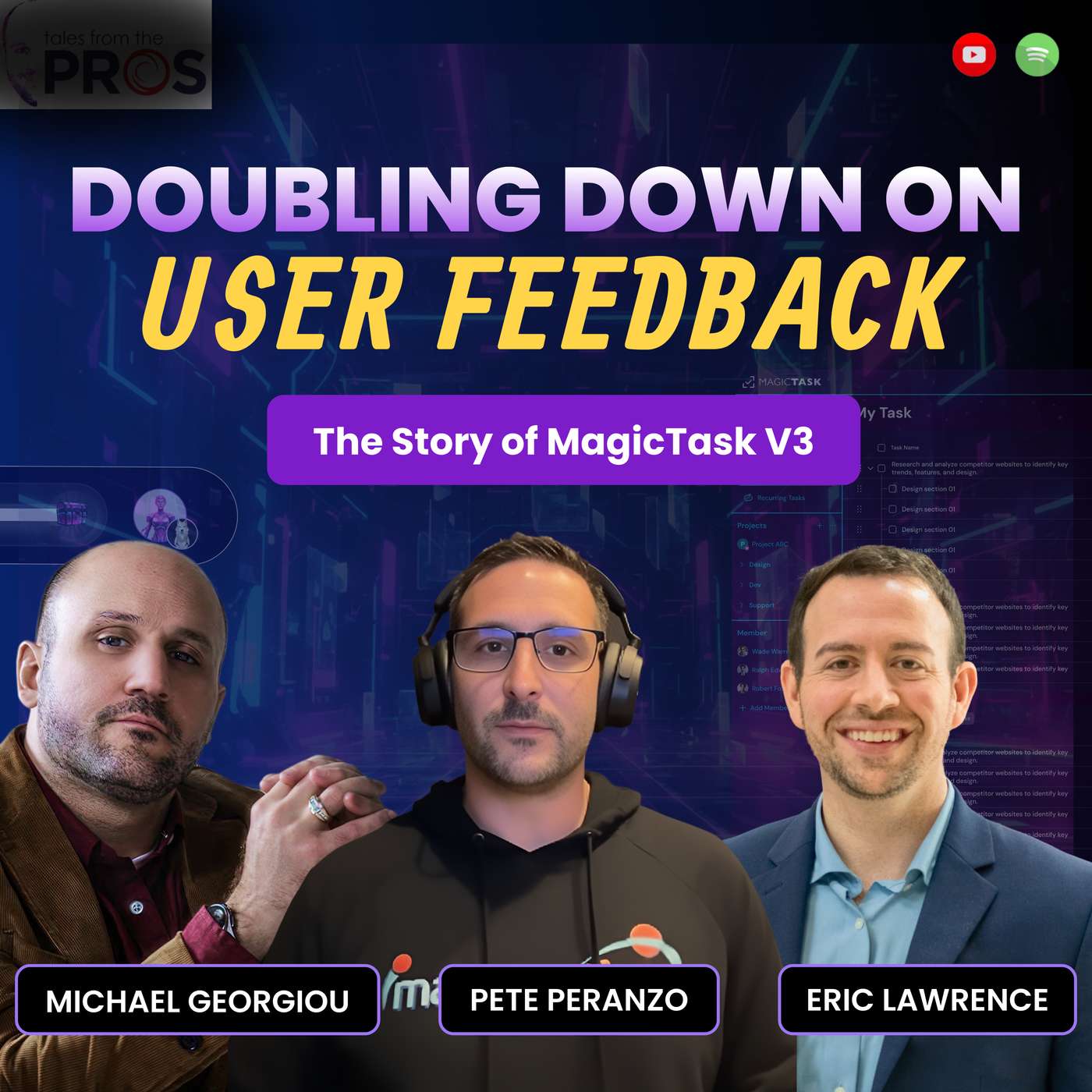
In this episode of Tales from the Pros, hosts Michael Georgiou and Eric Lawrence sit down with Imaginovation co-founder and creator of MagicTask, Pete Peranzo, for a candid, behind-the-scenes look at what it truly takes to build, launch, fail, and completely rebuild a digital product. While MagicTask just shipped its biggest release ever—Version 3—the journey to get there spanned more than six years of technical pivots, monetization mistakes, and fundamental breakthroughs in user psychology.Pete shares the raw origin story of MagicTask, starting back in 2019 when Imaginovation's leadership ran entire agency and development workflows out of Notepad++ text files. After building Version 1 as a web-based checklist and finding it too tedious to sustain long-term use, the team introduced gamification in Version 2. But despite acquiring thousands of users through paid campaigns, V2 fell into a punishing trap: an inverted difficulty curve where working harder resulted in months-long reward droughts, paired with a monetization model that failed to convert users.Rather than continuing to patch an architectural dead-end, the leadership team drew inspiration from Marty Cagan's product benchmark Inspired: How to Create Tech Products Customers Love and made the bold decision to scrap the codebase and rebuild from scratch. Version 3 completely reimagines gamification in SaaS product design with a proprietary Dynamic Difficulty Adjustment (DDA) engine that balances daily rewards to ~1 chest per day, a strict 2-minute daily interaction limit that prevents distraction, and intuitive gaming terminology centered on Realms, Dungeons, and Boss Chests.The conversation also explores how radical simplicity and gamification for ADHD users help maintain daily focus in high-churn environments, how daily task execution functions as an operational leading indicator driving business revenue, and Pete’s ambitious long-term vision of transforming task management into a competitive team arena where companies can battle asynchronously based on their daily work output.If you're a founder, product manager, or software engineer navigating product pivots, technical debt, or exploring enterprise gamification solutions to boost engagement and retention, this episode delivers a transparent, practical breakdown of how to build remarkable digital products that people genuinely love.🎯 Highlights You Won’t Want to MissThe origin story: Moving from Notepad++ to building an in-house agency task toolWhy Version 2 failed: 6-month reward droughts, monetization missteps, and technical debtThe decision to rebuild vs. patch: Applying Marty Cagan's Inspired philosophy to software developmentSolving the gamification paradox: Why productivity and gaming are like oil and vinegarThe 2-minute guardrail: How passive gamification delivers dopamine without disrupting deep workDynamic Difficulty Adjustment (DDA): Calibrating backend algorithms so every user earns ~1 reward chest per dayReplacing abstract "Themes" with intuitive mechanics: Realms, Dungeons, and Boss ChestsWhy radical minimalism makes MagicTask a game-changer for ADHD and neurodivergent professionalsLeading vs. lagging indicators: How daily task execution drives bottom-line revenueThe future of work: Pete's vision for company-vs-company arena battles (Imaginovation vs. Google)🎧 Listen and SubscribeSpotify: https://open.spotify.com/show/6QkUtrcNllUkqtq1fjlwnZApple Podcasts: https://podcasts.apple.com/us/podcast/tales-from-the-pros/id1371067192YouTube: https://www.youtube.com/@Imaginovation/podcastsSoundCloud: https://soundcloud.com/talesfromthepros💡 Key TakeawaysProductivity is defined by consistency, not sporadic bursts of high outputGamification must never compete with work—keep direct game interactions under two minutes dailyInverted progression curves kill user retention; systems must dynamically adapt to individual workloadsInternal dogfooding uncovers architectural and UX flaws faster than synthetic testingDon't patch broken fundamentals—when a product isn't remarkable, commit to a ground-up rebuildCluttered enterprise suites overwhelm users; austere simplicity empowers focus and neurodivergent mindsHigh-performing teams focus on leading indicators (daily completed actions) to ensure lagging results (revenue, growth)Effective gamification uses universally understood mental models (Dungeons, Chests) rather than abstract points🗂 Topics We CoverSoftware product evolution and complete rebuild strategyGamification psychology vs. workplace productivityDynamic Difficulty Adjustment (DDA) algorithmsMVP validation, user retention, and SaaS monetization lessonsOvercoming technical debt and modernizing software architectureCognitive overload in legacy enterprise project management toolsADHD-friendly product design and focus mechanicsWorkplace culture, camaraderie, and team-based competitionLeading vs. lagging business performance indicators⏱️ Chapters00:00 — Introduction: Why productivity should feel rewarding02:13 — The origin story: Running an agency on Notepad++03:40 — Consistency as the true definition of productivity04:13 — The failure of V2 monetization & early implementation traps04:45 — The catalyst: Marty Cagan’s Inspired & building something remarkable06:18 — Escaping the clutter of Jira, Basecamp, and Monday.com08:50 — The technical realities: Bugs, architecture, and building without AI tools11:49 — Acquiring 5,000 users vs. validating willingness to pay12:47 — Dogfooding: How MagicTask powered Imaginovation’s agency operations13:33 — The gamification flaw: The 6-month to 2-year reward drought15:21 — The V3 breakthrough: Dynamic Difficulty Adjustment (DDA) explained18:16 — Shifting from "Themes" to intuitive Realms, Dungeons, and Boss Chests23:00 — Finding the market gap: Radical simplicity over enterprise bloat25:12 — The gamification paradox: Balancing gaming dopamine with deep work26:33 — The 2-minute rule: Making gamification passive and non-intrusive27:36 — Daily streaks, magic tokens, and building consistent work habits28:39 — The long-term vision: Evolving from a task manager to an arena platform32:06 — Gamification for B2B teams, sales motivation, and culture33:23 — Company-vs-Company battles: Imaginovation vs. Google36:53 — Leading vs. lagging indicators: How daily habits drive business revenue38:07 — Why MagicTask holds attention for ADHD & neurodivergent users39:35 — Key takeaways and final thoughts

Comments

Download from Google Play

Download from App Store
 United States