


 Claim Ownership
The Fifth Wave
Subscribed: 18Played: 91
Subscribe

© IWK Foundation
Description
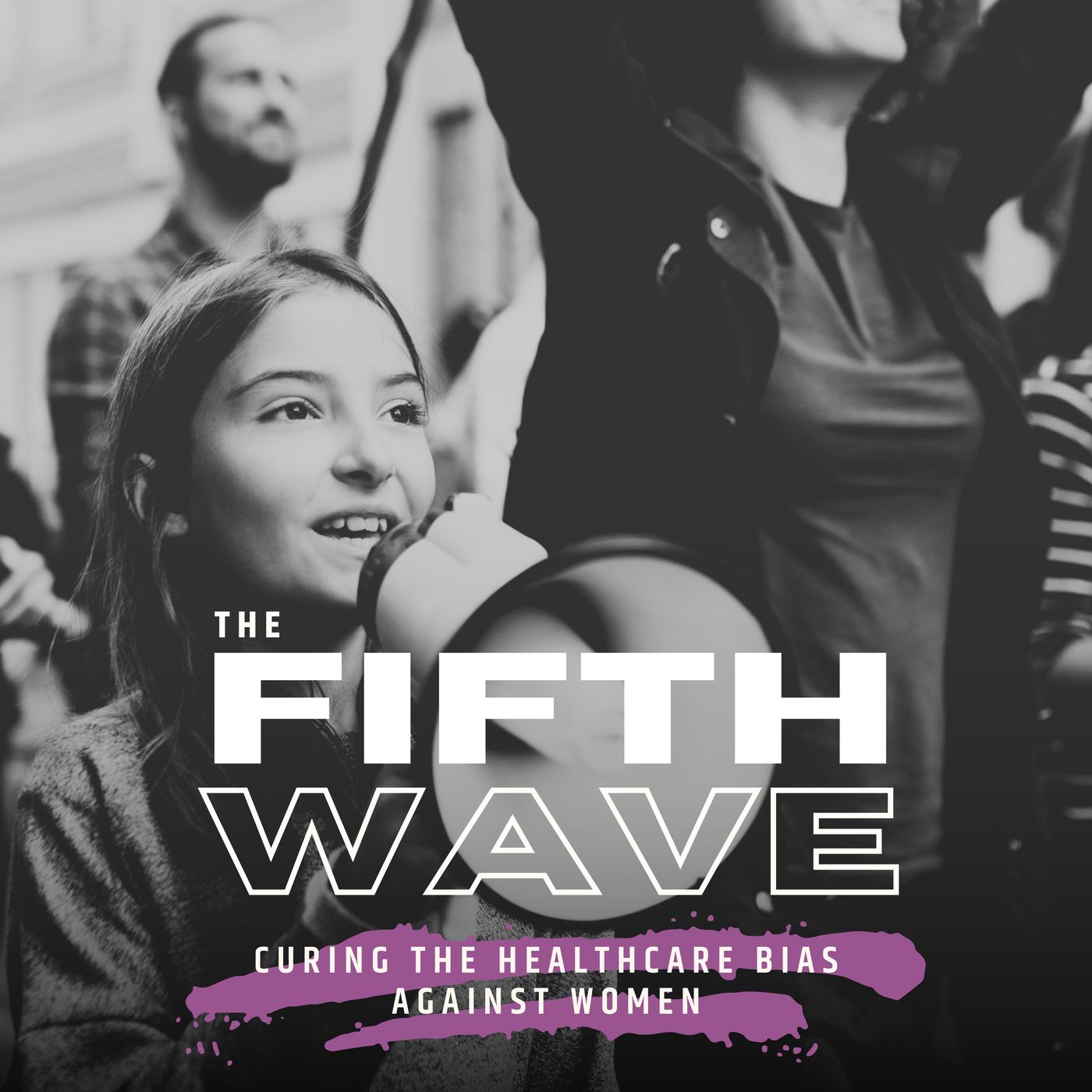
In The Fifth Wave: Curing the Healthcare Bias against Women, healthcare champions, the IWK Foundation, bring to light the profound and often dangerous consequences the gap in women’s health and research has had on women. The study of human biology has defaulted to the male body, which has hindered understanding of sex-based biological differences and results in fewer available and less effective treatments for women. We have been living in a world built for men, not only in heath care, but transportation, technology and beyond. This series will spark both curiosity and outrage leaving you wanting large scale change – a movement even. With insights from medical experts and researchers, The Fifth Wave challenges the default male standard and asks: What happens when half the population is left out of the equation? We hope to empower every woman and girl with the awareness and information to take charge of her health. Hosted by Avis Favaro.
20 Episodes
Reverse
In this episode of The Fifth Wave, Avis Favaro uses Derek Sivers' famous "first follower" leadership talk as a lens for how change in women's health actually happens: not just through the person leading, but through the people willing to be the first to follow. Karla Bernard, MLA for Charlottetown-Victoria Park, PEI, is the first follower. Aimee Terrio, a reproductive health advocate in Nova Scotia, and Jason Urquhart, a benefits reform advocate with Hub International Canada, show what it looks like when a movement picks up more followers, one advocate, one employer and one kitchen table conversation at a time.Key Takeaways:Movements start with a first follower, not just a leader. Karla Bernard's PEI motion linking a new Menopause Centre of Excellence to local care passed the legislature almost unanimously, part of her track record of unanimously-passed women's health motions.Personal advocacy matters. Aimee Terrio spent years navigating conflicting diagnoses, including premature ovarian insufficiency at age 37, before turning her experience into public advocacy for better access to care.Canadian women with full benefit plans spend three to three and a half times more out of pocket on healthcare than men under 40, because plans are still designed around a male default.Change happens in layers: at the kitchen table, in the legislature, and in how benefits are designed. All three matter, and none of them require waiting for someone else to go first.The thing you really NEED to know:You don't need a title or a platform to move the needle on women's health. You need to talk about it publicly, be easy to follow, and be willing to be the first person who shows up when someone else takes the risk of speaking first.--Guest Info/Resources: Karla Bernard, MLA, Charlottetown-Victoria Park, Prince Edward Island: Legislative Assembly ProfileAimee Terrio, reproductive health advocate, Nova Scotia: LinkedIn ProfileJason Urquhart, Vice President, Advanced Analytics and Decision Science, Hub International Canada: LinkedIn ProfileJennifer Gillivan, President and CEO of the IWK Foundation: LinkedIn ProfileThe views, thoughts, and opinions expressed by the hosts, guests, and participants of the Fifth Wave belong solely to the individuals involved and do not necessarily reflect the official policy or position of the IWK Foundation. The information discussed in this podcast is for informational purposes only and should not be taken as medical, legal, or professional advice from the IWK Foundation. While we strive for accuracy, the IWK Foundation makes no representations as to the accuracy, completeness, suitability, or validity of any information on this podcast and will not be liable for any errors, omissions, or any losses, injuries, or damages arising from its use. Listener discretion is advised.
In this episode of The Fifth Wave, Avis Favaro explores why women's brains are different, and looks for answers to why nearly two-thirds of people living with Alzheimer's are women. Dr. Jenny Rabin of Sunnybrook Research Institute explains how menopause and declining estradiol may be a critical turning point for brain aging. The episode then turns to a connection few people talk about: the link between intimate partner violence and brain injury. Karen Mason and Dr. Paul van Donkelaar of SOAR, an organization dedicated to researching and raising awareness of this issue, explain why up to 80% of women who experience intimate partner violence may also be living with an undiagnosed brain injury.Key Takeaways:Nearly two-thirds of people living with Alzheimer's are women, and new research shows menopause, not just longer lifespan, may be a critical turning point for brain aging.Between 35% and 80% of women who experience intimate partner violence also experience symptoms of a brain injury, yet up to 75% never seek medical attention for it.Strangulation is one of the most under-recognized dangers in intimate partner violence. A woman who has been strangled is 7.5 times more likely to be murdered in a future incident.New Alzheimer's treatments targeting amyloid pathology are now approved in Canada, slowing decline by about 30% on average, though they are not a cure and carry some side effects.The thing you really NEED to know:Brain injury from intimate partner violence is a modifiable risk factor, unlike age or genetics, which means early recognition and the right support can change a survivor's long-term health trajectory. That only works if the healthcare and shelter systems are actually looking for it.--Resources & Guest Information:SOAR Project https://soarproject.ca/Dr. Jennifer (Jenny) Rabin, Scientist, Sunnybrook Research Institute Sunnybrook ProfileKaren Mason, co-founder and Executive Director, soarproject.ca LinkedIn ProfileDr. Paul van Donkelaar, co-founder and Scientific Director, SOAR; Professor, School of Health and Exercise Sciences, UBC Okanagan: soarproject.caJennifer Gillivan, President and CEO of the IWK Foundation: LinkedIn ProfileThe views, thoughts, and opinions expressed by the hosts, guests, and participants of the Fifth Wave belong solely to the individuals involved and do not necessarily reflect the official policy or position of the IWK Foundation. The information discussed in this podcast is for informational purposes only and should not be taken as medical, legal, or professional advice from the IWK Foundation. While we strive for accuracy, the IWK Foundation makes no representations as to the accuracy, completeness, suitability, or validity of any information on this podcast and will not be liable for any errors, omissions, or any losses, injuries, or damages arising from its use. Listener discretion is advised.
In this episode of The Fifth Wave, Avis Favaro asks a hard question: what happens when women aren't counted? Only 7% of Canadian health research funding specifically targets women, a number that hasn't moved in 15 years, even though women make up 51% of the population. Through conversations with Dr. Justine Dol of IWK Health, Kearie Daniel of the Black Women's Institute for Health, and Dr. Alice Aiken of Dalhousie University, this episode breaks down why the data gap exists, how it compounds for Black women and other underrepresented groups, and what it would take to finally fix it.Key Takeaways:Just 7% of Canadian health research funding specifically targets women, and that number hasn't moved in 15 years, according to a 2025 study of Canadian Institutes of Health Research grants.Closing the women's health research gap could add an estimated $37 billion a year to the Canadian economy by 2040, according to the McKinsey Health Institute.Black women in Canada are chronically underrepresented in health data. Voices Unheard, the first national survey of its kind, found that 42% of Black women delay seeking care out of fear of how they'll be treated.Disaggregated data, broken down by race, age and other factors, reveals gaps that averages hide, and it's the only way to actually fix the system for everyone.The thing you really NEED to know:You can't fix what you can't measure. Until Canada collects, funds and actually uses disaggregated data on women's health, including Black women, Indigenous women and other underrepresented groups, the healthcare system will keep being built around a population it was never designed to serve.--Guest Info/Resources: Dr. Justine Dol, Dr. Margaret Oulton Accelerate Chair in Women+ Health Research, IWK Health: justinedol.comKearie Daniel, Founder and Executive Director, Black Women's Institute for Health: LinkedIn ProfileDr. Alice Aiken, Professor, School of Physiotherapy, Dalhousie University; co-founder, Canadian Institute for Military and Veteran Health Research: LinkedIn ProfileResource: Maritime Women+ Health Priority Setting Partnership StudyResource: Voices Unheard: Healthcare Barriers and the Lived Experience of Black Women in Canada, Black Women's Institute for Health (November 2025).The views, thoughts, and opinions expressed by the hosts, guests, and participants of the Fifth Wave belong solely to the individuals involved and do not necessarily reflect the official policy or position of the IWK Foundation. The information discussed in this podcast is for informational purposes only and should not be taken as medical, legal, or professional advice from the IWK Foundation. While we strive for accuracy, the IWK Foundation makes no representations as to the accuracy, completeness, suitability, or validity of any information on this podcast and will not be liable for any errors, omissions, or any losses, injuries, or damages arising from its use. Listener discretion is advised.
In this episode of The Fifth Wave, Avis Favaro looks at how Europe is pushing women's health policy forward, and what Canada can learn from it. Since 1957, gender equality has been part of EU law, but almost seven decades later, true equality still hasn't been achieved anywhere, including in healthcare. Through conversations with Peggy Maguire of the European Institute of Women's Health, Dr. Martina Alberani of the Young Women's Health Group, Jennifer Gillivan of the IWK Foundation, and Dr. Graeme Smith of Queen's University, this episode explores concrete European policy wins, like paid menstrual leave in Spain and free period products in Scotland, and asks what it would take for Canada to build its own national women's health strategy.Key Takeaways:Europe has taken concrete policy action: paid menstrual leave in Spain, free period products in Scotland, and a 2014 EU mandate requiring gender to be included in clinical trials.Progress is inconsistent even within Europe. The EU has 27 member states with very different systems, and being listened to and believed remains the single biggest factor shaping women's care.Canada is starting to move. A bill to establish a national framework for women's health has been introduced in the Senate, but progress is still a patchwork of provincial plans.Canadian innovation is already leading internationally. Dr. Graeme Smith's postpartum maternal health record, developed in Kingston, has been translated into more than a dozen languages and is now recommended globally by FIGO, the International Federation of Gynaecology and Obstetrics.The thing you really NEED to know:Equity in women's health doesn't happen by accident. It happens when data, policy and lived experience come together in the same room. Canada doesn't need to reinvent the system, it needs to assemble what already works and hold itself accountable to measurable outcomes.–Resources & Guest Information:Peggy Maguire, Director General, European Institute of Women's Health.Dr. Martina Alberani, public health physician and Chair, Young Women's Health Group.Jennifer Gillivan, President and CEO of the IWK Foundation: LinkedIn ProfileDr. Graeme Smith, Professor and Head, Obstetrics & Gynaecology, Queen's University; editor-in-chief, Journal of Obstetrics and Gynaecology Canada: Faculty ProfileThe views, thoughts, and opinions expressed by the hosts, guests, and participants of the Fifth Wave belong solely to the individuals involved and do not necessarily reflect the official policy or position of the IWK Foundation. The information discussed in this podcast is for informational purposes only and should not be taken as medical, legal, or professional advice from the IWK Foundation. While we strive for accuracy, the IWK Foundation makes no representations as to the accuracy, completeness, suitability, or validity of any information on this podcast and will not be liable for any errors, omissions, or any losses, injuries, or damages arising from its use. Listener discretion is advised.
 1
Movement is one of the most powerful…and overlooked…tools for women’s long term health. In this episode of The Fifth Wave, insights from sport and exercise physician Dr. Tina Atkinson, athletic trainer Kaelin Agar, strength coach Michelle MacDonald and neuroscientist Dr. Lisa Galea help to break down how every day activity can transform women’s physical, mental and cognitive well being. From age related muscle loss to the mental health benefits of exercise, to a stunning fitness transformation that began at age 70, this episode reframes movement as essential medicine. The message is clear, women don’t need perfection or extreme workouts. They need consistent, enjoyable movement that supports strength, energy, longevity and confidence. Key takeaways: Movement is medicine. Especially for women. Women lose bone density and muscle mass earlier and faster than men. Regular strength training and daily activity significantly reduce the risk of osteoporosis, mobility issues and chronic disease. You don’t need intense workouts. You need consistency. Experts emphasize that walking, light strength work and movement you genuinely enjoy are more sustainable and far more impactful than short bursts of extreme effort. It’s never too late to get stronger. Michelle MacDonald’s 70 year old mother transformed her health with simple, consistent training. Proving that women can build strength function and confidence at any age. The thing you really NEED to know: Exercise is more effective than medication in preventing stroke and heart disease, which are the top causes of death for women. Small, consistent habits can literally save lives. ---Guest Info/CTAs/Resources (pertaining to the episode)Dr. Tina Atkinson, sport and exercise physician, Chief Medical Officer of The Canadian Sport Centre Atlantic; Maritime Sport Medicine; LinkedIn ProfileKaelin Agar, athletic trainer, Agar AthleticsMichelle MacDonald, fitness and strength coach, founder and CEO of The Wonder Women; Train With JoanDr. Liisa Galea: Treliving Family Chair in Women’s Mental Health at the Centre for Addiction and Mental Health; https://www.galealab.com/The views, thoughts, and opinions expressed by the hosts, guests, and participants of the Fifth Wave belong solely to the individuals involved and do not necessarily reflect the official policy or position of the IWK Foundation. The information discussed in this podcast is for informational purposes only and should not be taken as medical, legal, or professional advice from the IWK Foundation. While we strive for accuracy, the IWK Foundation makes no representations as to the accuracy, completeness, suitability, or validity of any information on this podcast and will not be liable for any errors, omissions, or any losses, injuries, or damages arising from its use. Listener discretion is advised.

Comments

Download from Google Play

Download from App Store
 United States