


 Claim Ownership
The Diplomacy Podcast
Subscribed: 10Played: 22
Subscribe

© Nicholas Kralev
Description
18 Episodes
Reverse
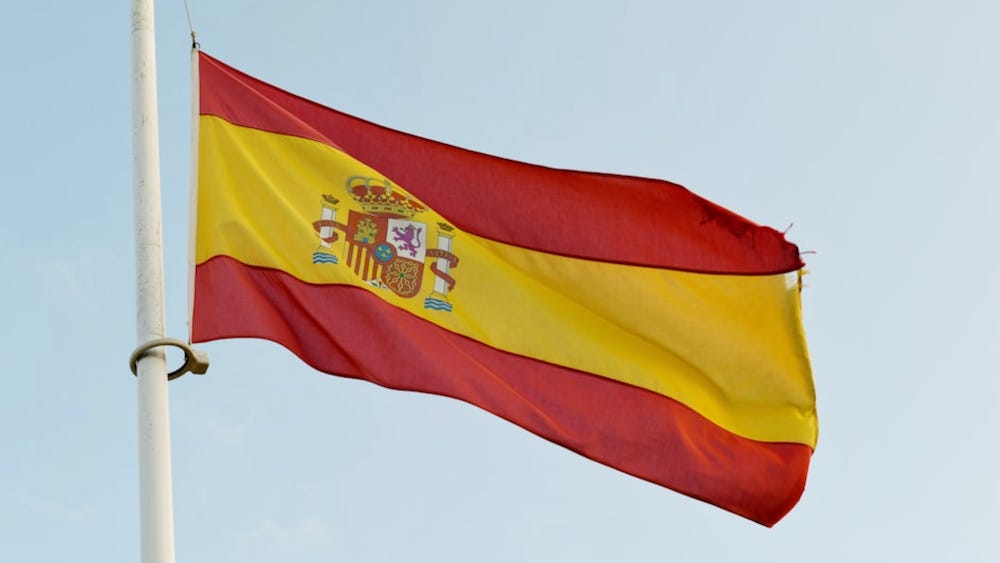
A former senior official calls Trump's agenda "conducive to confrontation," not "peace and prosperity."-----Spain has emerged as one of the most vocal opponents of the Trump administration’s upheaval of the international system — unlike the many countries trying to avoid getting caught in Washington’s crosshairs.Prime Minister Pedro Sánchez has challenged the administration over its war against Iran, its approach to Gaza and the International Criminal Court, its demands for higher European defense spending and its broader rejection of international law and multilateral cooperation.Yet Spain continues to regard the United States as a “natural and historic” ally. That tension — resisting Washington’s worldview while preserving the transatlantic relationship — led me to invite Cristina Gallach as the guest on the latest episode of The Diplomacy Podcast. She served as deputy foreign minister in Sánchez’s government, following a stint as U.N. undersecretary-general for communications.Explaining Spain’s position in its current disagreements with Washington, Gallach noted that Spanish public opinion largely supports Sánchez’s defiance of Trump. Nearly 70 percent of Spaniards expressed unfavorable views of the United States in a YouGov poll in February, and 78 percent said they didn’t trust Trump “to do the right thing regarding world affairs” in a Pew survey in May.The Trump administration’s agenda runs counter to Spain’s commitment to international law, Gallach said. “We don’t think it’s conducive to peace and prosperity. It’s conducive to confrontation,” she added. “We don’t like it.”Today’s overlapping wars, trade conflicts and climate emergencies require more cooperation and stronger international institutions — not abandoning multilateralism, she said. But she called for a “new multilateralism” that reflects the distribution of power and influence in 2026, not a return to the system created in 1945.I also asked her about the misinformation campaign that persuaded tens of thousands of migrants to swim from Morocco to Spain’s North African enclave of Ceuta last month. That social-media campaign was based on a wrong interpretation of a Spanish Supreme Court ruling, falsely claiming that the migrants wouldn’t be expelled.To hear her response, watch or listen to the episode above — or on one of these platforms: YouTube, Spotify, Apple Podcasts.As always, my guest’s opinions don’t necessarily represent my own views. This is a public episode. If you would like to discuss this with other subscribers or get access to bonus episodes, visit nicholaskralev.substack.com
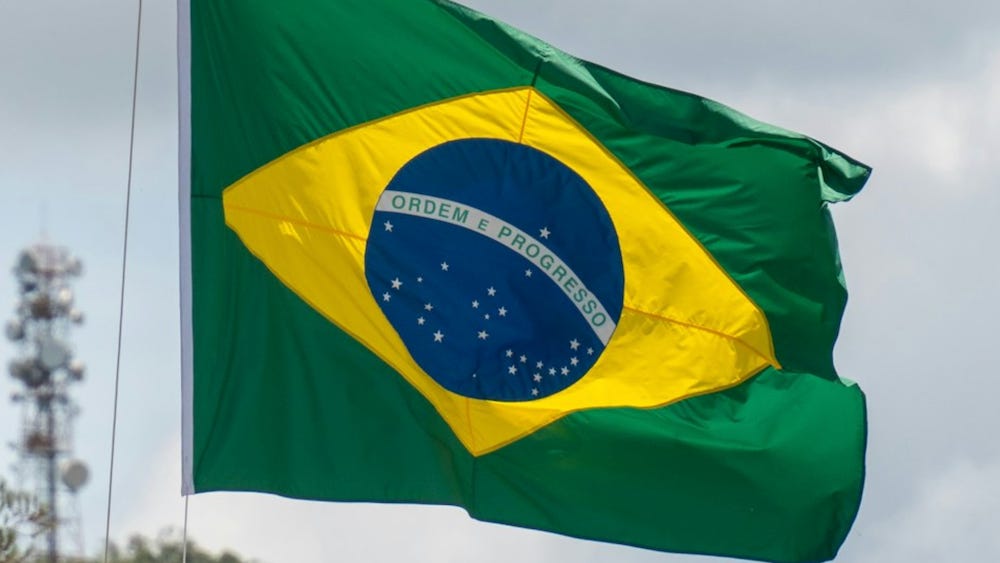
An international relations scholar explains why his country still needs a global order it has long criticized.------Brazil has long relied on diplomacy, international law and multilateral institutions to protect its independence from more powerful countries. What happens when the United States, the principal architect of the so-called rules-based order, begins operating by different rules?My guest on this week’s podcast episode is Antonio Ramalho, a professor of international relations at the University of Brasília whose public service has included positions at the Ministry of Defense. This season, I’m bringing you perspectives from key countries on how they are adapting to the changing international system.We begin with the latest tensions between Washington and Brasília: new U.S. tariffs on Brazilian imports and accusations that the Trump administration is interfering in Brazil’s upcoming presidential election.In late July, the government of President Luiz Inácio Lula da Silva denied entry visas to two State Department political appointees, saying they intended to “cast doubt on the credibility of Brazil’s electoral system.”Yesterday, the Trump administration said it had revoked the U.S. visa of Brazil’s ambassador to Washington, Maria Luiza Ribeiro Viotti. It accused Brasília of delaying approval for Trump’s nominee to serve as U.S. ambassador to Brazil, Daniel Perez, a Florida state lawmaker with no foreign-policy experience.Revoking a visa doesn’t necessarily require its holder to leave the United States but Viotti couldn’t re-enter the country if she left. A host-government can expel a foreign diplomat by declaring that official persona non grata (PNG).The Trump administration hasn’t PNGed — in diplomatic jargon — Viotti yet and said it would reinstate her visa if Brazil granted formal approval, known as agrément, to Perez.I spoke with Ramalho shortly before the visa revocation. He explains why Trump’s tariffs and vocal support for Lula’s opponent in the October election, Flávio Bolsonaro, may actually help Lula win — and how Trump’s actions are pushing Brazilian businesses, students and tourists away from the United States.We then turn to the larger picture. How are the Trump administration’s actions affecting Brazil more broadly, including its politics, economy and society, and how is the country responding? What might replace the rules-based order if it doesn’t survive?As always, my guest’s opinions don’t necessarily represent my own views.Watch or listen to the episode above, or on one of these platforms: YouTube, Spotify, Apple Podcasts. This is a public episode. If you would like to discuss this with other subscribers or get access to bonus episodes, visit nicholaskralev.substack.com
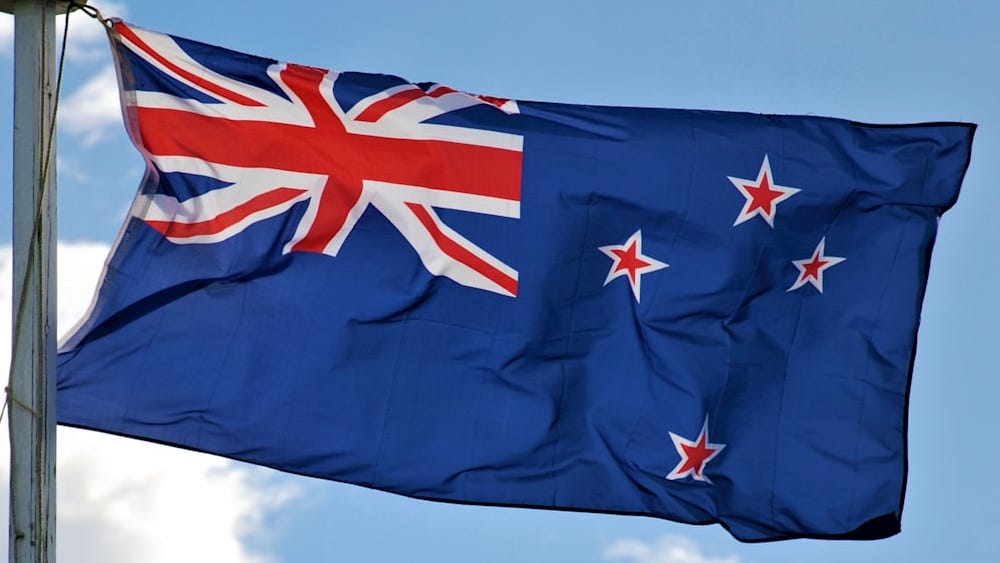
A pro-American former minister and ambassador worries about the U.S. trade retreat's global impact.------When Americans consider how the upheavals of the Trump era affect the rest of the world, they usually think of Europe, Canada or perhaps Japan.Yet few countries have benefited more from a stable, rules-based international system than New Zealand. And few people have observed that system more closely than Tim Groser — a former trade, climate change and conservation minister, former ambassador to the United States, Indonesia and the World Trade Organization, and one of New Zealand’s most experienced diplomats.On this season of The Diplomacy Podcast, I’m introducing you to some of the policymakers, diplomats, journalists and scholars I meet as I travel to more than 20 countries researching a book on the shifting international system. They share how U.S. actions are changing their countries.Unapologetically pro-American, Groser offers a sober assessment of where U.S. leadership is retreating, why trade concerns him more than any other area, and why New Zealand’s instinct in today’s geopolitical climate is remarkably simple: keep your head down.If you appreciate thoughtful, highly informed and expertly analytical insight from a longtime practitioner, I think you’ll enjoy this conversation.As always, my guest’s opinions don’t necessarily represent my own views.Watch or listen to the episode above, or on one of these platforms: YouTube, Spotify, Apple Podcasts. This is a public episode. If you would like to discuss this with other subscribers or get access to bonus episodes, visit nicholaskralev.substack.com
An American-turned-European journalist decries the old continent's longtime addiction.------Almost 20 years ago, an American journalist packed his bags, moved to Europe and decided he would never go back. Today, he argues that the old continent has a problem few Europeans recognize: it can’t overcome its unhealthy dependence on the United States.That American is Dave Keating, Brussels correspondent for France 24, the French international news network, and author of the book “The Owned Continent.” He is my first guest on the new season of “The Diplomacy Podcast.”This season will be different. As I’ve noted before, I’m traveling to more than 20 countries to research a book on the profound changes reshaping the international system. I’ll introduce you to some of the policymakers, diplomats, journalists and scholars I’ve met to discuss how they see the world — and where they think it’s headed.Keating, whom I met recently in Brussels, has a message to Americans contemplating a move to Europe. “Don’t think you can escape the United States by moving to Europe,” he says. “Europeans’ daily lives are so dominated by American culture, you really feel like you’ve never actually left. They can’t stop talking about America and consuming its culture and its news.”He also poses a thought experiment: Take everything the Trump administration has done to Europe over the past year and a half and imagine it had come from Xi Jinping’s China instead. How would the European Union have reacted?If you’ve ever wondered whether the transatlantic relationship is an alliance of equals — or something else entirely — you’ll enjoy this conversation.As always, my guest’s opinions don’t necessarily represent my own views.Watch or listen to the episode above, or on one of these platforms: YouTube, Spotify, Apple Podcasts. This is a public episode. If you would like to discuss this with other subscribers or get access to bonus episodes, visit nicholaskralev.substack.com
Guest: Marc Grossman, former U.S. undersecretary of state for political affairs and ambassador to TurkeyThe world looks very different at the end of 2025 compared to the beginning of the year. How did diplomacy contribute to that difference, and what were the major diplomatic successes and failures?On this episode of “The Diplomacy Podcast,” we discuss the Trump administration’s diplomacy, its highs and lows, and their impact on the world. My guest is Marc Grossman, former U.S. undersecretary of state for political affairs, assistant secretary for European affairs, director-general of the Foreign Service and ambassador to Turkey. He spent 32 years in the Foreign Service.Having served as the State Department’s third-ranking official under Secretary of State Colin Powell, Grossman talks about what he learned during their daily 5 p.m. meetings. He also discusses the recent loss of expertise in the department, as a result of mass firings.As always, my guest’s opinions don’t necessarily represent my own views.Watch or listen to the episode above, or on one of these platforms: YouTube, Spotify, Apple Podcasts. This is a public episode. If you would like to discuss this with other subscribers or get access to bonus episodes, visit nicholaskralev.substack.com

Comments

Download from Google Play

Download from App Store
 United States