


 Claim Ownership
The Cabbage Coins Podcast
Subscribed: 2Played: 85
Subscribe
© 2026 Tony Gryckiewicz
Description
A podcast dedicated to the rare coin market, providing education and insights to collectors and new dealers in the hobby.
64 Episodes
Reverse
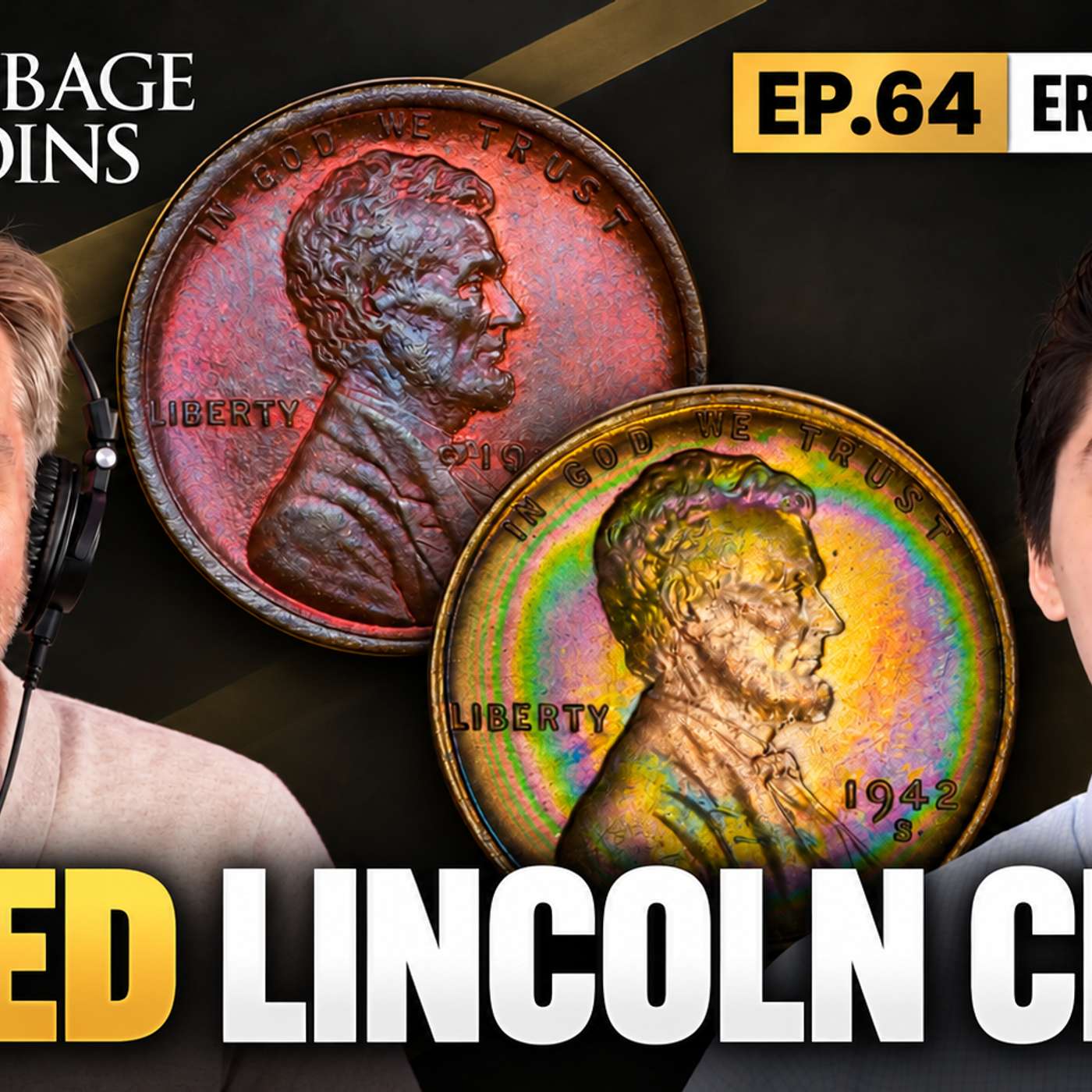
Eric Lindholm of Sublime Cents returns to the Cabbage Coins Podcast to cover early Lincoln cents. He and Tony Gryckiewicz go through example coins: Philadelphia vs. San Francisco strikes, planchet quality, color grades, rare key dates, and natural vs. problem toning. They close with a few rapid-fire questions.Key topics and takeawaysWhy Lincoln cents are popular (2:20): They're accessible, and they're an icon of American coinage. Eric says both cents series are strong in the market right now.San Francisco alloy problems (4:23): Early S-mint coins often have improperly mixed bronze. That leaves streaks and "wood grain" patterns on the surface, as on the 1909-S VDB.Spotting cleaned coins (9:14): Look for fine lines in the fields and an excess of whiteness when you tilt the coin. Tony also explains the range from chemical to mechanical cleaning.Philadelphia coins should be near-perfect (13:05): Look for sharp rims, strong detail and good luster. Collect higher grades of these, since they're more plentiful.S-mints are weaker (14:00, 22:08): Expect weak strikes and uneven planchets on the 1917-S. Even the best examples won't match Philadelphia coins.Red vs. brown (16:02): Some mellowing of the red is normal on early S-mint coins, so grading is more lenient there. Eric shares a story about buying a 1921-S at the Long Beach show, and how the Gray Sheet price was a poor guide for nice early red coins (16:28).Dealer risk and offers (19:25): Tony and Eric discuss who should name the price and the risk dealers take on when they buy.Strike tip (24:02): Check whether the "O" in "ONE" is fully struck.Orange peel texture and luster (26:00, 37:10): A bumpy "orange peel" surface and a band of luster around the face are good signs. Coins that look flat usually aren't.Grading focus (27:00): Graders seem to care more about clean fields than hits on the portrait. Eric adds that a clean jacket is something to look for (52:07).1926-S key date (29:01): An MS65+ red is listed at about $125,000, and a 66 brown could be worth around $200,000 in a red holder. Eric suggests a nice MS65 brown (about $3,000) as a budget alternative to chasing one color (35:21).Toning (36:05–54:40): Eric covers raspberry, honeycomb/yellow, blue and rainbow toning, with premiums ranging from none to several times a coin's value. Natural toning tends to be non-uniform with mixed colors. Monochrome, electric colors call for caution. A rainbow-toned cent he sold for $750 on eBay shows how big the premiums can get.Conservation caution (40:17): One coin had a light film lifted with a Q-tip. Eric and Tony both warn against experimenting on valuable coins.Rapid-fire questions (55:33)Favorite non-cent series: Barber quarters.Favorite shows: the FUN show, Central States (Schaumburg, IL), and Long Beach.Favorite book: Rick Snow's book on Indian cents and Flying Eagles.Where to find Eric: sublimecents.comIG: @sublime_centsWhere to find Tony and Cabbage Coins:https://cabbagecoins.com/Email: [email protected]: @cabbage_coins“Video editing and post-production by Manuel — specializing in podcast, YouTube, and digital content editing.”Intro/Outro Music - "Obverse Fields" by Timothy Gryckiewicz
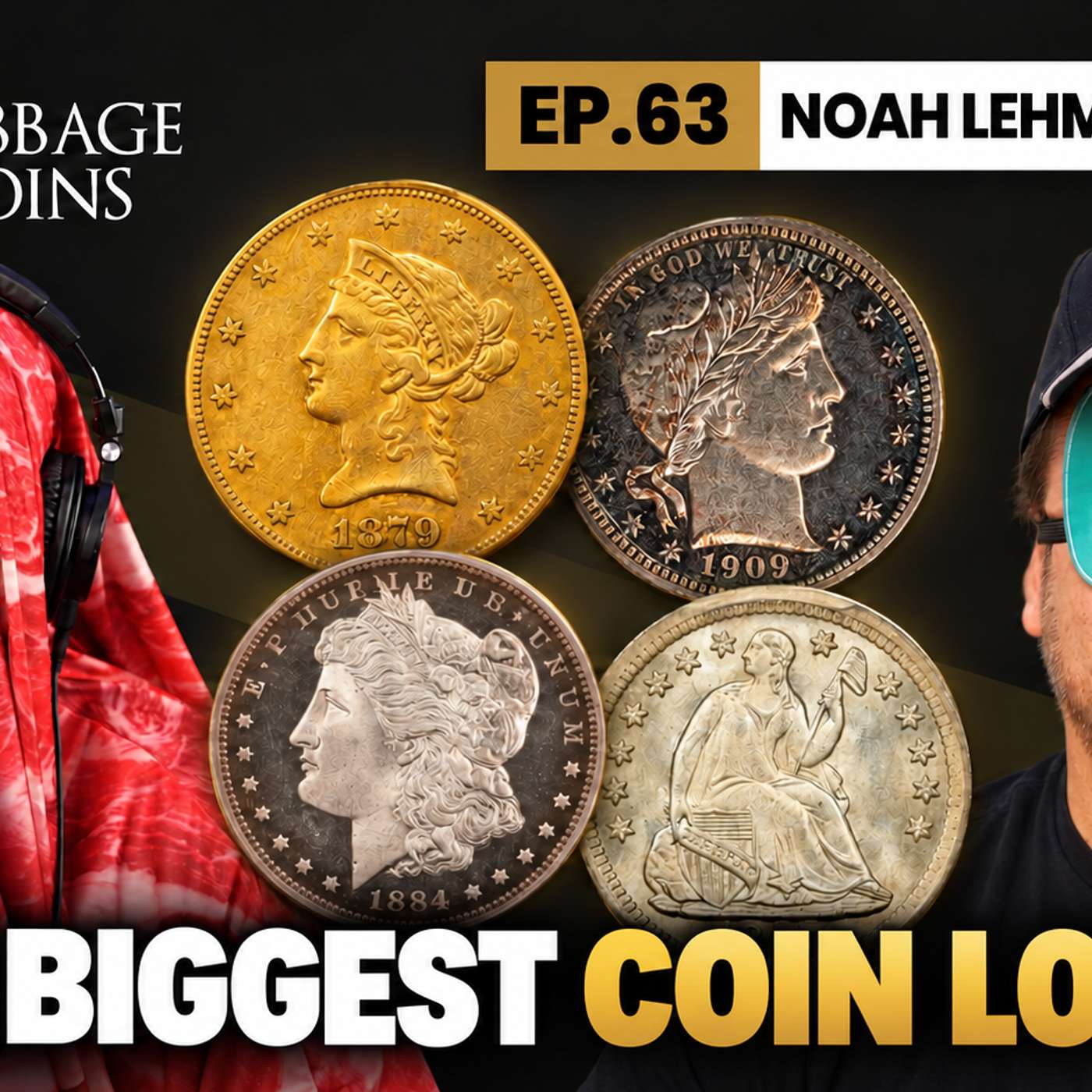
In this episode of the Cabbage Coins Podcast, hosts Tony Gryckiewicz and Noah Lehmann-Haupt discuss their top ten losses in coin dealing. They share personal stories behind each loss, emphasizing the lessons learned and the importance of understanding market demand, grading, and the stories behind coins. The conversation highlights the challenges of pricing, the significance of collector preferences, and the dynamics of the numismatic market. The discussion highlights the need for caution, patience, and informed decision-making in the world of coin collecting and trading. They share personal anecdotes about scams, market fluctuations, and the challenges of the upgrade game, providing valuable insights for both collectors and dealers.Chapters00:00 Introduction to Coin Losses03:11 The Story Behind the 1884 Proof Set05:55 Understanding Market Demand for Proof Sets09:09 The 1991 CC Ten Dollar Coin11:46 The 1957 Half Dime Experience14:56 The 59-S Coin and Market Dynamics18:13 The 1951 Franklin Coin Trap21:02 The 1872 CC Ten Dollar Coin37:46 Lessons from a $700 Loss38:41 Understanding CC Gold Coins39:48 The Risks of Trading Coins44:35 The Perils of Coin Restoration49:56 Learning from Counterfeit Coins57:53 The Challenge of High-Value Coins63:04 Navigating Plus Grade Coins68:05 The Allure and Risks of CAC Coins70:12 The Risks of Buying Coins on Social Media78:46 Lessons from Expensive Coin Purchases82:54 The Upgrade Game: Risks and Rewards87:22 Scams and Trust in the Coin Community91:50 Market Fluctuations and Their Impact on Coin ValuesWhere to find Tony and Cabbage Coins:https://cabbagecoins.com/Email: [email protected]: @cabbage_coinsWhere to find Noah and Rarity7:https://www.rarity7.com/Email: [email protected]: @rarity7coins“Video editing and post-production by Manuel — specializing in podcast, YouTube, and digital content editing.”Intro/Outro Music - "Obverse Fields" by Timothy Gryckiewicz

In this conversation, Tony Gryckiewicz, Mike Nottelmann, Ben TheCoinGeek and David Tine discuss current trends in the coin market, particularly focusing on the US Mint's recent releases. The discussion covers the state of coin shops, the excitement and challenges surrounding bullion sales, and a detailed critique of various mint products, including innovative designs and disappointing releases. The hosts share their ratings and opinions on several coins, providing insights into the collector's perspective and market dynamics. They explore specific coins, including the Breast Cancer Awareness coin, Enhanced Reverse Proof coins, and the recent DC Comics series, highlighting the balance between aesthetics, rarity, and market trends. The redesign of classic coins, such as the dime, is also examined, with insights into how these changes resonate with collectors. In this conversation, the participants discuss various aspects of coin design, focusing on recent US Mint products. They explore the artistic interpretations of coin designs, the significance of commemorative coins, and the aesthetics of modern coins. The discussion also touches on the concept of retreads in coin design, the innovation of curved coins, and the mixed reception of the Best of the Mint series. Finally, they provide recommendations for collectors on which coins to consider for their collections.00:00 - Show Introduction and Guest Lineup01:05 - Coin Shop Updates and Bullion Market Trends03:36 - Introducing the US Mint Product Discussion04:45 - Liberty Bell Gold Coin Review and Ratings09:46 - 2014 Baseball Hall of Fame Concave Coin13:53 - 2017 Enhanced Uncirculated Set Critique18:12 - 2021 High-Relief Gold Eagle Assessment23:00 - US Mint Pricing Strategies and Market Impact25:34 - V75 WWII Anniversary Coin and Privy-Mark Gold Eagle28:09 - Half-Ounce Gold Medal and Rare Gold Eagle Variants30:38 - 2018 Breast Cancer Rose-Gold Coin Review35:15 - 2019 S-Enhanced Reverse Proof Silver Eagle38:48 - DC Superhero Coin Design Critique44:08 - Design Critiques: 2001 Buffalo Nickel and 2026 Pilgrim Quarter49:32 - Negative Review of the 2001 Buffalo Coin50:55 - V75 Gold Eagle Rarity and Market Performance53:57 - Final Thoughts on the 2026 Pilgrim Quarter Series55:31 - Second Curved Coin: The Astronaut Design57:13 - More on the Astronaut Curved Coin1:00:59 - Best of the Mint: The 1804 Dollar Debate1:02:26 - More on the Best of the Mint 1804 Dollar1:05:40 - Recommendation: 2008 Quarter-Ounce Gold Buffalo1:07:14 - 2007 Proof Platinum Frosted Freedom Mint Error1:08:08 - Collector Advice and Underappreciated Mint Coins1:11:27 - Closing Remarks and Thanks1:45:08 - OutroBen TheCoinGeekHost of “TheCoinGeek” YouTube Channelhttps://www.oldpueblocoin.com/email: [email protected] Mike NottelmannCo-Host of “The Coin Show Podcast” on YouTubehttps://coinshowradio.com/email: [email protected] David TineOwner of Eagle Coin & Precious Metals – Eagle, IDhttps://eaglecoinshop.com/email: [email protected] GryckiewiczOwner of Cabbage Coinshttps://cabbagecoins.com/email: [email protected]“Video editing and post-production by Manuel — specializing in podcast, YouTube, and digital content editing.”Intro/Outro Music - "Obverse Fields" by Timothy Gryckiewicz
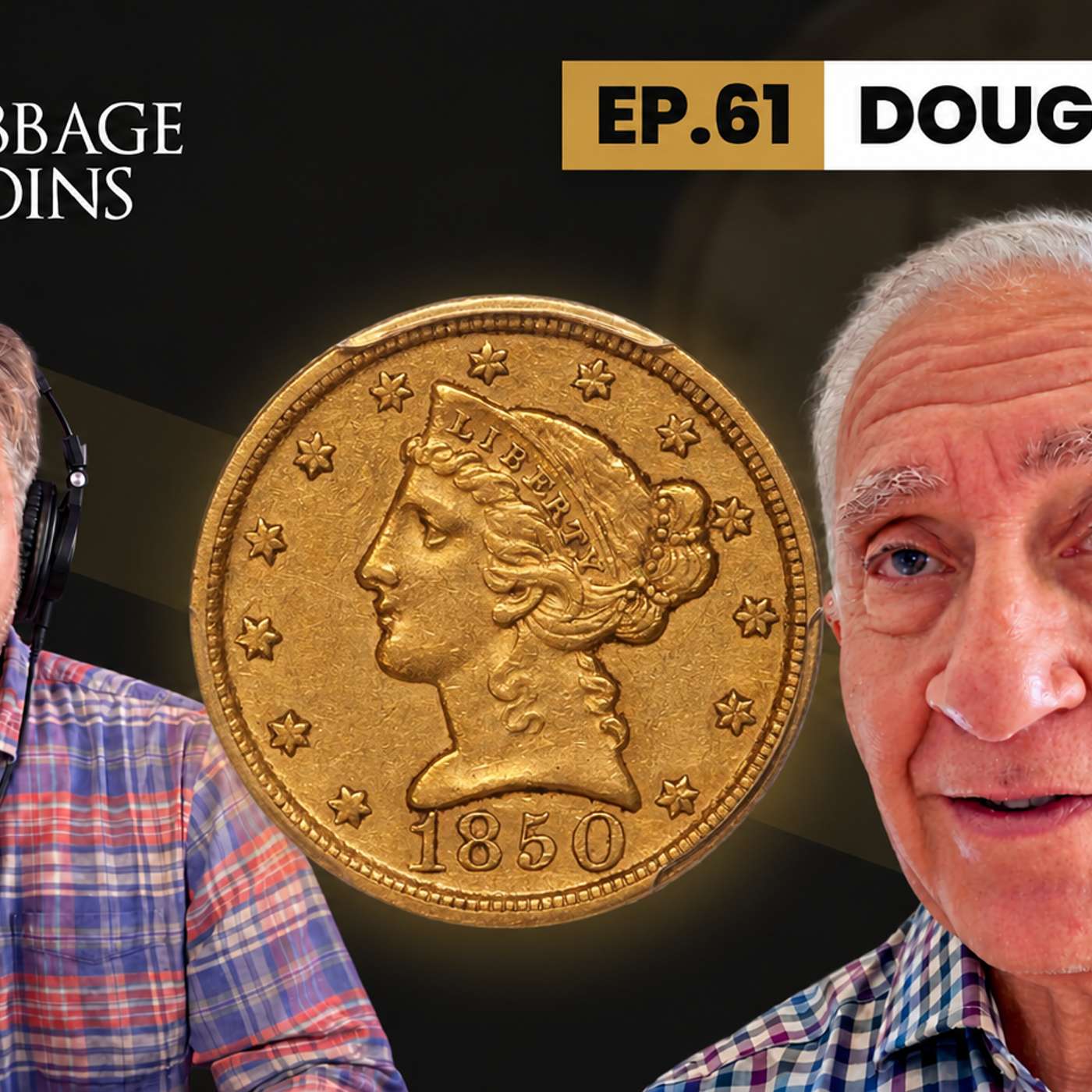
In this episode of the Cabbage Coins Podcast, host Tony Gryckiewicz welcomes back Doug Winter to discuss affordable pre-1933 gold coins. They explore various price ranges, focusing on coins that collectors can acquire without breaking the bank. Doug shares insights on specific coins, their historical significance, and the current market trends, including the impact of the Fairmont Collection on coin values. The conversation emphasizes the accessibility of gold coins for collectors of all budgets and the importance of research in the numismatic community. They also discuss the appeal of type one $20s, the impact of shipwrecks on coin populations, and the nuances of Carson City $20s. The conversation also touches on the importance of originality in coins, the subjective nature of grading, and the significance of classic head gold coins. Additionally, they share insights on favorite coin series and recommend top coin shows for collectors.Where to find Tony and Cabbage Coins:https://cabbagecoins.com/Email: [email protected]: @cabbage_coinsDoug WinterOwner - Doug Winter NumismaticsIG: @raregoldcoinsWebsite: raregoldcoins.comWebsite: doubleeaglebook.comEmail: [email protected]“Video editing and post-production by Manuel — specializing in podcast, YouTube, and digital content editing.”Intro/Outro Music - "Obverse Fields" by Timothy Gryckiewicz
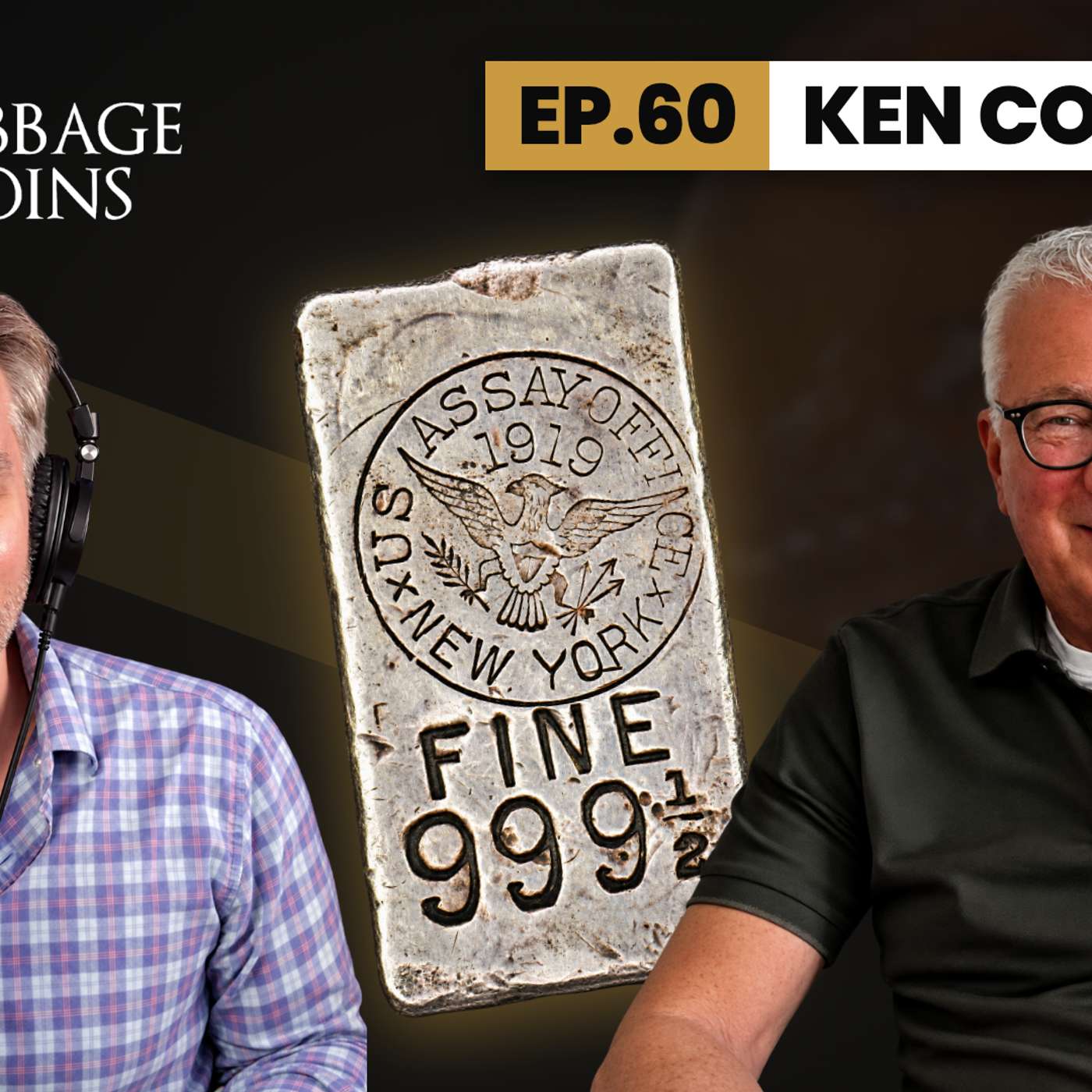
In this episode of the Cabbage Coins podcast, host Tony Gryckiewicz and guest Ken Conway delve into the fascinating world of vintage silver ingots, particularly focusing on government ingots from the San Francisco and Philadelphia mints. Ken shares his journey into collecting, the evolution of the market for these ingots, and the various factors that contribute to their value. The conversation also touches on the purpose behind the production of these ingots, the role of different mints, and strategies for collectors to organize and value their collections. Tony and Ken explore the evolution of ingot sizes, the rarity of certain bars, and the unique characteristics that make vintage ingots valuable. The discussion also touches on the importance of information in the collecting community and the stories behind personalized bars. Ken shares insights from his extensive experience in the field, providing listeners with a deeper understanding of the numismatic landscape.Chapters00:00 Introduction to Vintage Silver Ingots01:27 Ken Conway's Journey into Collecting03:53 The Evolution of Government Ingots05:43 Understanding the Value of Ingots11:48 The Purpose and Production of Ingots15:29 Philadelphia Mint's Role in Ingots21:08 Collecting Strategies and Organization30:10 Complete Type Set of Ingots32:48 Understanding Silver Ingot Types35:09 The Evolution of Ingot Sizes37:04 Collector Insights on Rare Bars39:28 Exploring the Rarity of Denver Mint Ingots42:16 Unique Characteristics of Vintage Ingots44:56 The Significance of the 'Cube' Ingot46:01 The Role of Information in Collecting48:31 The Mystery of New York Assay Office Bars50:47 Grease Bars and Their Historical Context53:22 Personalized Bars and Their Stories56:58 Reflections on Collecting and Future PlansWhere to find Tony and Cabbage Coins:https://cabbagecoins.com/Email: [email protected]: @cabbage_coinsWhere to see Ken's collection and research:https://www.silveringots.com/Video editing and post-production by Manuel — specializing in podcast, YouTube, and digital content editing.Intro/Outro Music - "Obverse Fields" by Timothy Gryckiewicz

Comments

Download from Google Play

Download from App Store
 United States