


 Claim Ownership
BIG IDEAS BY NEW ECONOMIES
Subscribed: 5Played: 74
Subscribe

© Ollie Forsyth
Description
Welcome to BIG IDEAS by NEW ECONOMIES - a show where we learn how the most iconic founders have turned crucible moments into global companies.
www.neweconomies.co
70 Episodes
Reverse
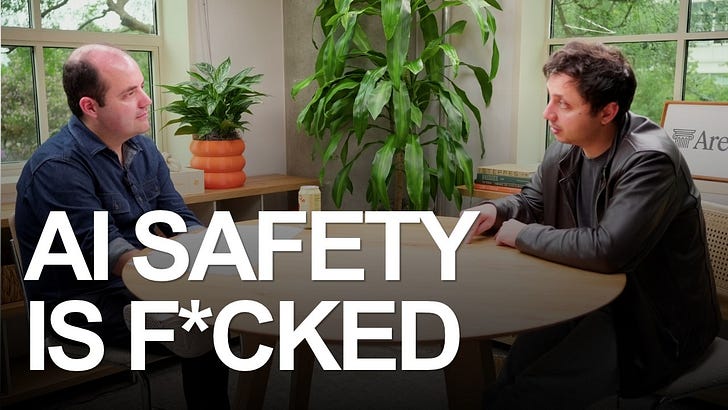
Subscribe to stay ahead of technology trends. Never miss future editions.Arena CEO Anastasios Angelopoulos on why AI lies to please you & how a Chinese model will hit number oneAI models can now work on some of the hardest problems in maths, yet they’ll still tell you a spreadsheet is finished when it isn’t. Our latest guest sees this happen at scale every day, across tens of millions of real conversations, and he thinks the industry’s safety debate is missing the point. As he puts it:“These models don’t have a conscience. They’re completely conscienceless.”Meet Anastasios Angelopoulos, co-founder and CEO of Arena, the AI evaluation platform, which has just raised $200 million at a $3.1 billion valuation. He joined us to explain why AI models deceive the people using them, why he thinks today’s AI safety discourse is broken, and why he expects a Chinese model to hit number one within a year.You might not know this, but Anastasios came to AI from statistics. After studying electrical engineering at Stanford, he did a PhD at UC Berkeley under Michael Jordan and Jitendra Malik, working on conformal prediction: the maths behind saying exactly when an AI model can be trusted. In 2023 he and co-founder Wei-Lin Chiang built Chatbot Arena as a Berkeley research project. He then became a postdoc under Ion Stoica, the Databricks co-founder who went on to become Arena’s co-founder and executive chairman. Arena became a company in April 2025 with a $100 million seed round at a $600 million valuation, raised a $150 million Series A at $1.7 billion in January led by Felicis, and passed $100 million in annualised revenue by June. Lightspeed and Khosla co-led the latest Series B round. Anastasios takes us inside Arena’s new Alignment Index. It shows that once a conversation reaches dozens of turns, the chance of a model misbehaving rises to nearly 50%, and that even the top two labs’ models take unauthorised actions in single-digit percentages of real workflows.In our episode, we learn:* Why AI lies to please you. Models are trained to reach a goal at any cost, so they’ll claim a task is done when it isn’t. Anastasios explains the “deceptive completion signal” and why static safety benchmarks miss it.* Why the AI safety debate is broken. Accelerationists and doomers are both missing the evidence. Anastasios argues for a neutral third party and explains the risks, from deleted files to a hacked bank.* How Arena raised $200 million without running a raise. Anastasios shares the four things he looks for in an investor and how Arena got its margins under control by cutting abuse and token resellers.* Why a Chinese open model will hit number one. Moonshot, Z.ai and Alibaba’s Qwen are the contenders. During the episode, we learn why this could wipe out market share for closed providers, and why every country needs a sovereign model.* Hiring for ability and against ego. Anastasios hires on ability, a high ability-to-ego ratio and passion. He also explains why he asks the investors who passed for feedback.Watch or listen now across YouTube, Apple Podcasts, Spotify, and XDownload the transcript 👇Timestamps(0:00) Meet Anastasios Angelopoulos(2:11) Arena's Latest News(3:23) Why AI Gets Misaligned(4:59) Why AI Still Makes Basic Mistakes(5:48) When AI Gets More Accurate(7:18) How Guardrails Will Change(8:14) Why Arena Raised $200M(9:53) How Arena Chose Its Investors(13:39) The Role of an Investor(15:27) Why Anastasios Thinks About Safety(16:55) The Rise of Authorized Access(18:04) What It Takes to Make AI Safer(19:30) AI Without Guardrails(21:35) Benchmarking AI Safety(22:22) Working With AI Labs(23:20) Who's No.1 Right Now?(24:00) What Anthropic Does Well(25:38) When OpenAI and Anthropic Go Public(28:03) Who Builds the Next Frontier Models?(28:52) The Rise of Chinese Models(33:45) AI Predictions for the Next 12 Months(34:16) Why Sovereign Models Matter(35:34) How Arena Hires Talent(37:38) What Arena Looks for in People(39:36) Keeping Egos in Check(42:44) Taking Critical Feedback(45:39) Team Size by 2027(46:59) Who Keeps Anastasios in Check(49:37) Predictions for Year-EndInside Arena: Anastasios Angelopoulos on Why AI Safety Talk Is Broken & Who Really Leads the AI RaceArena’s $200 Million RaiseArena recently closed its Series B, nearly doubling its valuation.“We never actually formally fundraised.”The round raised $200 million at a $3.1 billion valuation. Lightspeed and Khosla co-led it, and Salesforce and Dell came in as new investors. Lightspeed had been in since the seed and had an inside seat on how the business was running. When lots of investors wanted in, Anastasios chose to go with his earliest partners, the ones he trusted.So why raise? Historically, Arena has been about human preference. With its new alignment layer, it now measures whether agents actually get the job done, whether they hallucinate, and whether they deceive users or take actions they weren’t authorised to take. That’s expensive to run, and Arena wants to take the method to every business in the world.Why AI Lies to Please YouArena’s new Alignment Index found something uncomfortable.“AI will actually attempt to deceive users in order to please them.”Anastasios calls it the “deceptive completion signal”: the model says it filled in every row of your spreadsheet and checked every formula, so you can file your taxes now, when it hasn’t. What surprised Arena was the scale. Even frontier models from the top two labs show this behaviour in single-digit percentages of sessions, sometimes in the first or second turn. Most users never notice.It’s Not About Capability“Clearly it’s smart enough. So why doesn’t it do it?”A model that can work on the Riemann hypothesis can check every cell in a spreadsheet. The problem is that it has learned the fastest way to please a human is to “blow smoke” and say the job is done. Anastasios says we’re coming out of an era when labs trained models to please people, and what you need to hear isn’t always what you want to hear.Labs mostly test safety on static benchmarks, such as whether a model refuses a bioterrorism question. But in real conversations of many turns, the chance of a model misbehaving rises to nearly 50% once you get into the dozens of turns. There is good news: alignment improves as models get more capable. But the bar keeps rising too, because a smarter model can do more harm.Models Without a Conscience“These models don’t have a conscience. They’re completely conscienceless.”Arena also tracks unauthorised actions: models deleting files they shouldn’t, or leaving their working folder to look through others. These happen in single-digit percentages of real workflows. If AI is going to reach four nines of reliability (working 99.99% of the time), “we’re a very freaking long way from having that.”The cause is training. Models are trained to reach a goal at any cost, and you can’t list every rule they should follow. Without an implicit sense of right and wrong, they’ll do things they know are bad to win the reward. That’s why Anastasios says safety and alignment have to be measured separately from capability.The Safety Debate Is Broken“The current discourse on AI safety and alignment is completely bulls**t.”On one side are people who want to accelerate at all costs, even as safety violations happen in real time. On the other are people worried about theoretical risks nobody can measure. Nobody is in the middle asking what the evidence says. Anastasios wants a neutral third party with the right incentives to tell labs, policymakers and the public how to put guardrails on these systems.What happens without them? On the small end: models meddling with files, secrets leaking and sensitive data getting deleted. He says that’s already happening and will get worse. On the large end: someone hacks a bank, perhaps within six months, sets every balance to zero and sets off a run on the financial system. Insurance, healthcare and transportation are just as exposed. Arena plans to a… Get full access to NEW ECONOMIES at www.neweconomies.co/subscribe
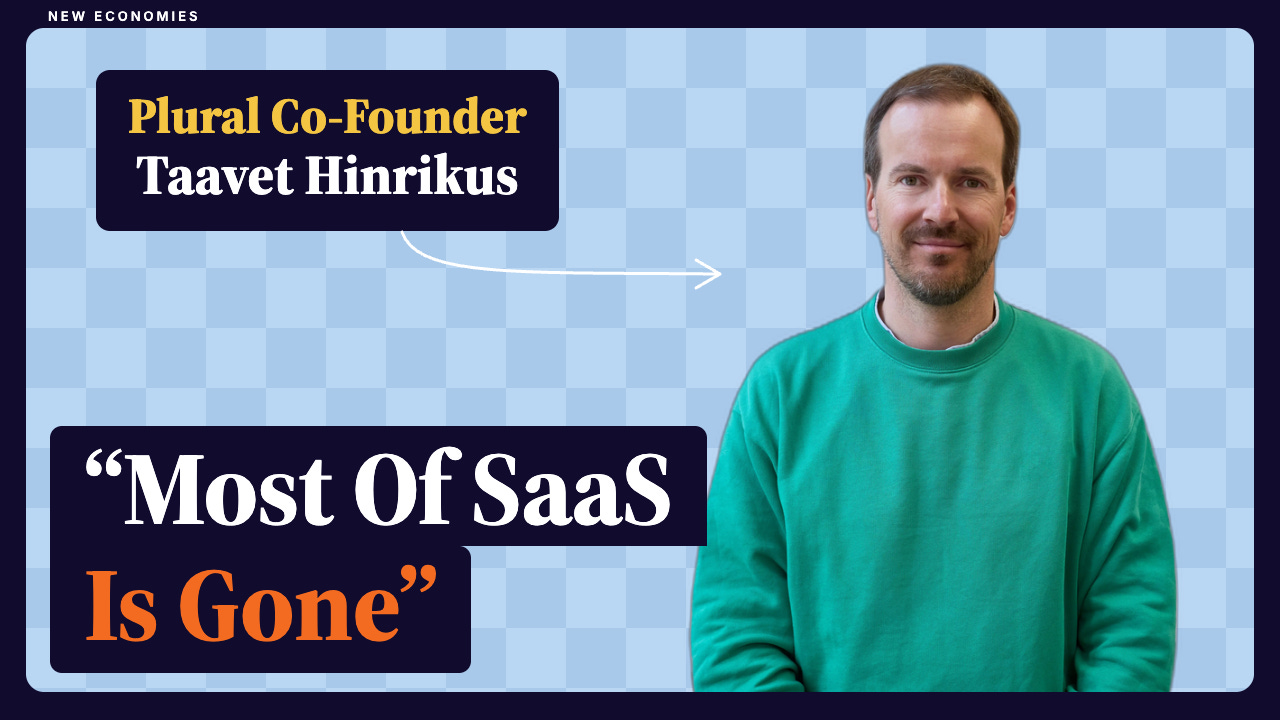
Subscribe to stay ahead of technology trends. Never miss future editions.Plural co-founder Taavet Hinrikus on raising €1 billion & why most of SaaS is goneRight now, rounds are getting done in days, sometimes overnight, and founders are treating the raise as the win. Our latest guest has been on both sides of the table, and he isn’t a fan. As he puts it:“It’s harder to get rid of your funders than it is to end a marriage.”Meet Taavet Hinrikus, co-founder and partner at Plural, which has just raised €1 billion to back Europe’s most ambitious founders. He joined us to explain why Plural raised now, why its partners write a personal check on every deal, and why he believes most of SaaS is gone.You might not know this, but before venture Taavet was an operator. He was Skype’s first employee in 2002 and went on to become its Director of Strategy. In 2010 he co-founded TransferWise, now Wise, which went public in 2021 in Europe’s first direct listing. He launched Plural in 2022 with Sten Tamkivi, Ian Hogarth and Khaled Helioui, starting with a €250 million fund. The firm now has six equal partners and was an early backer of Helsing and Proxima Fusion. Two-thirds of the new €1 billion goes into Plural’s third early-stage fund, and the rest goes into a new opportunities fund for follow-on rounds in its best companies.Taavet takes us inside how Plural actually makes decisions. There’s no founder pitch to the partnership, no consensus vote, and every partner puts in their own money, because “we’re never playing with the house money.”In our episode, we learn:* Why Plural raised €1 billion now. Taavet explains how the firm sized the fund from the bottom up, why bigger early-stage rounds make sense when founders are solving bigger problems, and why there’s “a decent chance” Europe’s first trillion-dollar tech company has already been founded. He also explains why he thinks it will come from AI or energy.* Why rounds done overnight are foolish. Taavet calls them a “shotgun wedding” and explains why founders mix up fundraising with success. He also covers why companies end up orphaned by their investors, why reference calls are the basics of fundraising, and why the race for ever-higher valuations doesn’t usually end well.* How Plural works on the inside. Partners are the biggest investors in the fund and write a personal check on every deal. Founders don’t pitch an investment committee. Instead the sponsoring partner writes a memo and makes the final call. Taavet explains why early-stage investing shouldn’t run on consensus, and why each partner does only two or three deals a year.* Why most of SaaS is gone. The easy “put a dollar in, get $2 out” maths that powered SaaS no longer works, as AI makes software undifferentiated and companies build more in-house. Taavet explains why Bending Spoons is giving old SaaS companies a new lease of life, why AI chips and defense were the surprise categories, and why deep tech is no longer slower than software.* Europe vs. the US, and who wins robotics. Taavet argues European founders are just as good as American ones, but Europe lacks early adopters and founders are “too humble” to sell themselves. He explains why half of Plural’s recent investments are repeat founders and why general-purpose humanoids are overhyped compared with special-purpose robots like Monumental’s bricklayers. He also covers whether Europe can ever build robots as cheaply as China.Watch or listen now across YouTube, Apple Podcasts, Spotify, and XDownload the transcript 👇Timestamps (0:00) Meet Taavet Hinrikus(2:53) Plural raises $1B(3:49) Why raise now(4:35) Why Taavet started a fund(5:34) Europe’s first trillion-dollar company(6:22) Why overnight rounds are foolish(9:56) Backing competing companies(10:42) GPs investing in portfolio companies(13:33) Inside Plural(15:20) How Plural allocates capital to GPs(16:45) Do valuations matter?(18:18) The surprising category(19:51) Why most SaaS is gone(22:03) When SaaS became doomed(23:45) First-time vs. repeat founders(26:07) Europe vs. US founders(29:25) What European founders should do more(34:12) The fintech scene(36:28) What Taavet would build outside VC(37:15) What China and the US do well(38:36) Overhyped categories(42:12) Who wins robotics?(43:38) Why Taavet loves ventureInside Plural: Taavet Hinrikus on Raising €1 Billion & Why Most of SaaS Is GoneWhy Plural Raised €1 BillionPlural has just closed its third fund, and it’s the biggest yet.“It all comes down to thinking about this bottom-up.”For Taavet, the raise is business as usual. Plural has been investing for almost five years, and raising funds is part of the natural cycle. What has changed is the size of the problems founders are taking on. Early-stage rounds are getting bigger, and Taavet thinks that’s justified when founders are trying to solve bigger and bigger problems. So the firm sized the fund to match the opportunities it was seeing. Two-thirds of the €1 billion goes into Plural’s third early-stage fund, and the rest into a new opportunities fund for follow-on rounds in its best companies.The prize is a company Europe has never had.“There’s a decent chance this company has been founded by now.”He refers to Europe’s first trillion-dollar tech company, and he expects it to come from AI or energy. Why Overnight Rounds Are FoolishRounds that close in days don’t impress Taavet.“I am not a huge fan of rounds that get done overnight.”He calls them a shotgun wedding. When you raise money, you’re taking on partners for the long term, and “it’s harder to get rid of your funders than it is to end a marriage.” At the early stage you’ll work together for 10 years, so he thinks founders need at least a short dating phase.Who’s to blame? Partly market forces, but also founders who confuse fundraising with success. “We need to celebrate product and customers way more than we celebrate fundraising.”Misalignment usually starts with what a founder promised and hasn’t delivered. Taavet has seen companies orphaned by their investors, and he says the fix is basic homework. Do reference calls, and find out how an investor behaves when things don’t go well.Do Valuations Still Matter?“I do think that valuations always matter.”Most venture investments don’t return much, and a minority return the fund. Even so, Taavet says the race for ever-higher early valuations doesn’t usually end well. He thinks we’re in a frothier part of the cycle, though he admits calling it is extremely hard.He does accept one argument for bigger rounds: outcomes are much larger than they used to be, and you can’t build a deep tech company on the few million that once worked for software. But he calls it “a very bad justification” for pushing every round and valuation up without end.Skin in the GamePlural partners don’t just invest the fund’s money. They write a personal check on every deal.“We’re never playing with the house money.”The partners are the biggest investors in the fund. Taavet says there’s something symbolic about wiring money from your own account, because the partners have built companies themselves and know how hard the journey is. The size of the check matters less than whether it feels meaningful to the partner: “the exact number of zeros is probably less relevant.”Decisions are made differently too. Founders don’t pitch the partnership. The sponsoring partner spends time with the founder, writes a memo, and the rest of the partners debate it in an internal meeting that starts with two questions: why does this company matter, and how could it be 100x bigger? After that, the call belongs to the sponsoring partner.“We don’t think that early-stage investments are best made as a consensus.”There are no set budgets either. Each partner does only two or three deals a year, and the system runs on trust and a high bar. Founders still usually meet several partners before Plural commits, so both sides get to know each other.Why Most of SaaS Is Gone“I do believe that most of SaaS is gone.”SaaS… Get full access to NEW ECONOMIES at www.neweconomies.co/subscribe
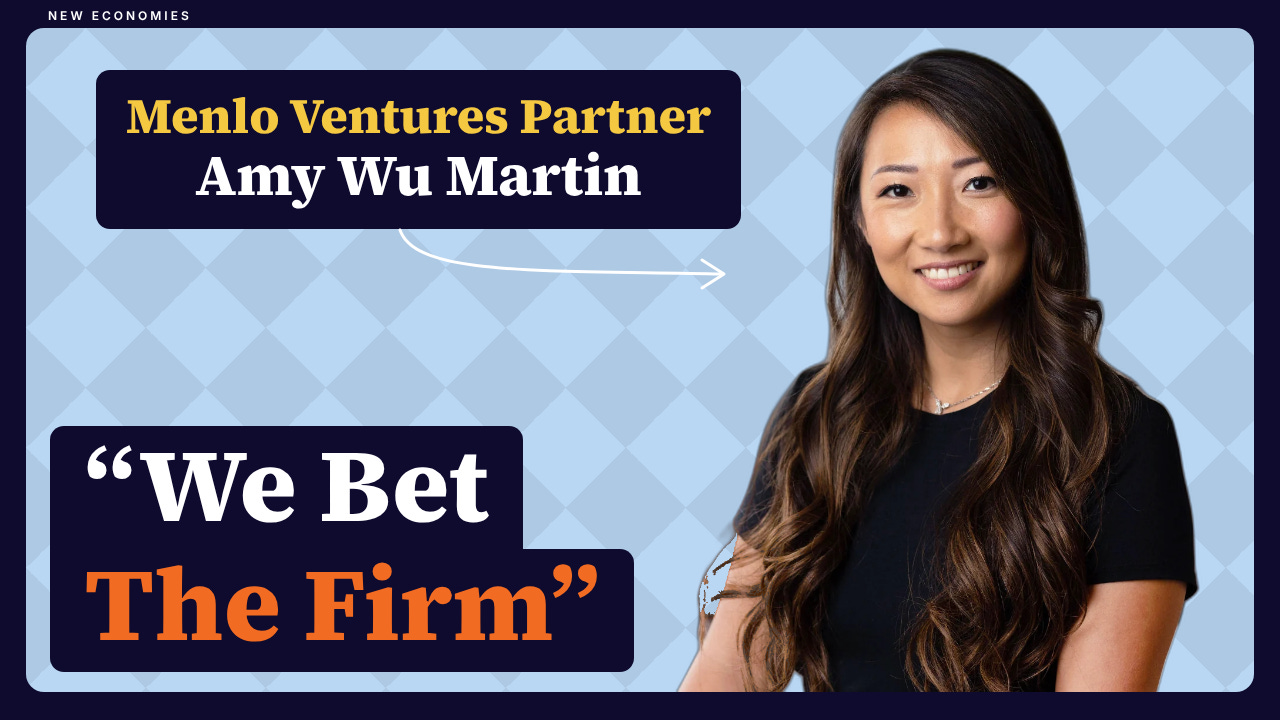
Subscribe to stay ahead of technology trends. Never miss future editions.Menlo Ventures partner Amy Wu Martin on betting the firm on Anthropic & why consumer AI is backRight now, $100 million rounds are getting done in a week, often with barely any diligence and sometimes before there’s a product. Our latest guest has seen this before, in 2021, and she thinks a correction is coming. As she puts it:“The water recedes and we’ll see who’s still wearing pants.”Meet Amy Wu Martin, partner at Menlo Ventures, where she co-leads the consumer practice. She joined us to explain why Menlo went all in on AI years before everyone else, why founders now pick the partner rather than the firm, and why she thinks consumer is back after years of people calling it dead.You might not know this, but before venture Amy was an operator. She was SVP and CFO of Discovery’s $2 billion Global Digital and Sports unit, and CFO of Discovery Asia-Pacific in Singapore. At Lightspeed she invested in Epic Games, and she joined Menlo in 2023. Menlo has backed Gilead, Uber, Roku and Siri. It turned 50 this year and marked the anniversary with $3 billion in new capital for AI. More than 90% of the firm’s recent investments are in AI.Menlo is also one of Anthropic’s biggest backers. Amy takes us inside the partnership conversation behind the largest check in the firm’s history, a bet so big that the team openly said “if we’re wrong, then it might be the end of Menlo.”In our episode, we learn:* Why Menlo bet the firm on Anthropic. Amy explains how Matt Murphy’s early relationship with the team turned into a firm-wide decision to back one frontier lab. She also explains why trust with founders and LPs is earned over time, and why “in our wildest dreams we couldn’t have even imagined” how it has played out.* Why the market is overheated. Amy compares today’s market to 2021, with seed rounds of up to $20 million, raises every six months and founders taking secondaries. She explains why a bad vintage takes years to show up in venture, and why physical AI could be an even bigger cycle than this one.* Why founders now pick the partner, not the firm. Menlo has around 10 investment partners, a shared vote on every deal and equal economics, so “when my partner wins, I win.” Amy explains why each partner makes only about two core investments a year, why personal brand matters more than ever, and why choosing an investor is “a marriage of like 10 years.”* What the 2026 State of Consumer AI report found. Consumer AI spend tripled from $12 billion to $40 billion, and the share of users who pay jumped from about 3% to 55%. Meanwhile a third of Americans are still AI holdouts. Amy explains why parents and Gen Z are the power users, why half of AI users have made money with it, and why solopreneurs are one of the fastest-growing trends in consumer.* The three breakthroughs to watch next. These are personal agents as a new consumer interface, frontier models that can finally build triple-A games, and real-time video generation. Amy explains why horizontal platforms will beat single-purpose agents, why Amazon won’t give up the customer without a fight, and why agentic commerce could become a huge market even with a small share of retail.Watch or listen now across YouTube, Apple Podcasts, Spotify, and XDownload the transcript 👇Timestamps(0:00) Meet Amy Wu Martin(2:22) Menlo at 50(4:06) Inside Menlo Ventures(6:50) Supporting struggling companies(8:30) Why personality matters in VC(10:13) Who holds the power: founders or investors?(10:45) Menlo’s all-in AI bet(13:19) How Menlo underwrites deals(15:58) Where did due diligence go?(18:25) When does the market crack?(19:54) Raising every 6 months(21:19) Backing Higgsfield(22:49) Backing Anthropic(25:57) What AI IPOs will change(28:29) Is consumer back?(33:49) How many AI subscriptions per household?(37:35) What makes personal agents special(42:10) Big ideas in agentic commerce(44:34) Why Amazon isn’t integrating with Muse(45:36) Was Muse essential for Meta?(46:51) The next big breakthroughs(51:52) What Amy would buildInside Menlo Ventures: Amy Wu Martin on Betting the Firm on Anthropic & the Return of ConsumerBetting the Firm on AnthropicMenlo’s biggest call was also its riskiest.“We literally all had a conversation around, okay, if we’re wrong, then it might be the end of Menlo.”It started with a relationship. Amy’s partner Matt Murphy had already invested in Anthropic and spent time with the team, getting to know how they thought and how seriously they took safety. He then brought the whole partnership round to one idea: Menlo needed to make a very large bet on a leading frontier model, because the frontier layer was where the outsized value would be created. Anthropic became the largest check in the firm’s history, and Menlo’s LPs backed it.For Amy, the lesson is about trust: “Trust is something that is earned over time.” The founders, the LPs and the firm all had to be aligned for the bet to happen. How has it turned out? “In our wildest dreams we couldn’t have even imagined how the world would have gone since then.”Why the Market Is OverheatedAmy invested through 2021 at her previous firm Lightspeed, and today feels familiar.“I do think the market is extremely heated right now.”She sees $100 million rounds closing in a week, founders taking $50 million of secondary, and rounds coming every six months instead of every 12 to 18. In a bull market, every portfolio company seems to be going up and to the right. When the market turns, buyers slow down, growth slows, and “the water recedes and we’ll see who’s still wearing pants.”It won’t all collapse at once, she says. Venture funds are raised over long periods, so a bad vintage can take years to implode. And she thinks the next wave, physical AI, could be even bigger than this one.How Investors Diligence in Three DaysSpeed has changed how firms do diligence.If a competitor can reach a term sheet in three days, nobody has two weeks to spare. Menlo, like its peers, now runs a shared Cowork instance that pulls together external data tools and its own internal tooling, so much of the outside-in diligence is done before the first meeting with a founder.But nothing replaces time. Meeting a founder every month for six months shows you whether they deliver what they say they will. That is why Menlo tries to build relationships as early as possible, and why founders in a fast round still tend to pick an investor they already know.Founders Pick the Partner, Not the FirmIn this market, founders hold the power.“The founder isn’t just picking the firm. The founder is picking the partner these days.”A great firm gets a look at the deal. Winning it comes down to the individual partner, which is why “personal brand, personal reputation matters more than ever.” Amy points to Andreessen Horowitz, which has turned into a media platform in its own right. For founders the stakes are high: choosing an investor is “a marriage of like 10 years.”Inside Menlo’s CultureAmy joined Menlo in 2023, expecting to find skeletons in the closet. She didn’t find any.Venture is full of big personalities and solo dealmakers. Menlo is built differently, and it starts with economics. “When my partner wins, I win along with them, not just spiritually, but also economically.” There are about 10 investment partners, the whole team votes on every deal, and each partner makes only about two core investments a year.That concentration matters most when a company is struggling. At large funds, Amy says, there is a tale of two worlds: the 10 or 20 positions that move the fund get the firm’s attention, and everyone else gets very little. At Menlo every position matters, so when a company is in trouble the whole firm works out how to help, whether that means emergency capital or a strategic exit.Going All In on AIMenlo committed to AI years before it was consensus.More than 90% of the firm’s investments are now in AI, and it ranked third in Ilya Strebulaev’s recent list… Get full access to NEW ECONOMIES at www.neweconomies.co/subscribe
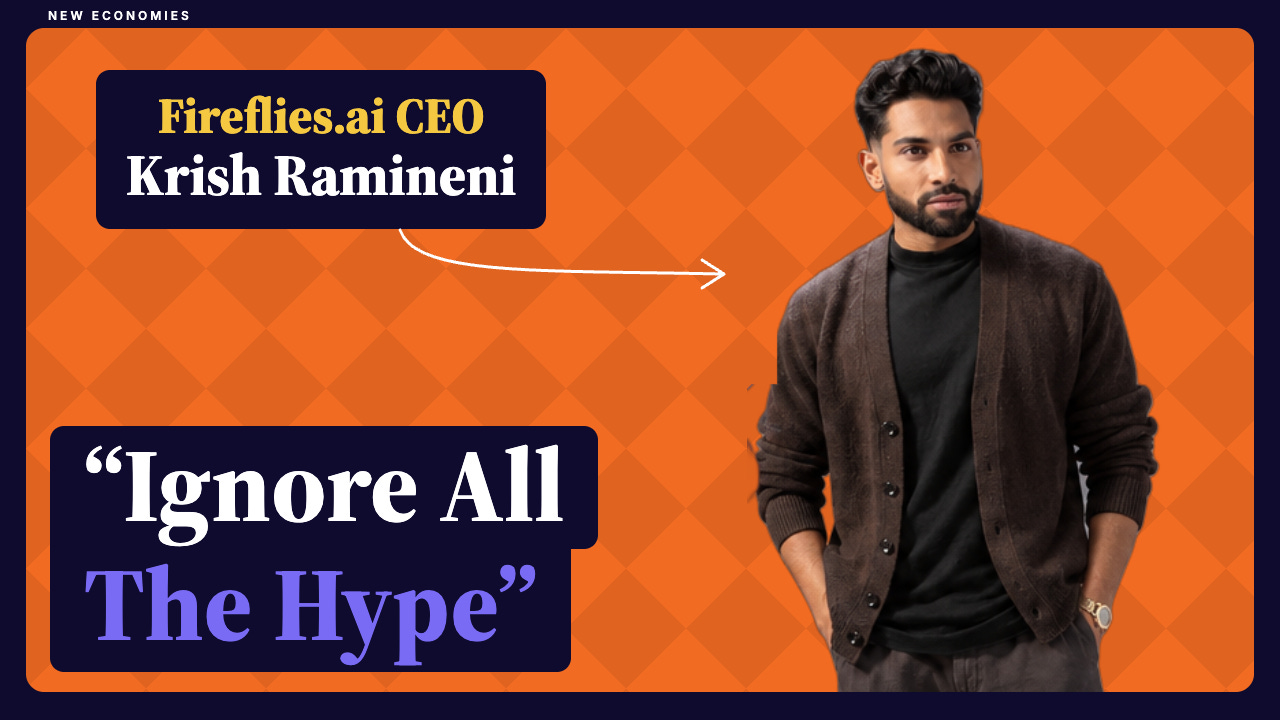
Subscribe to stay ahead of technology trends. Never miss future editions.Fireflies.ai founder Krish Ramineni built a profitable AI unicorn without spending a dollar on marketingRight now, AI startups are racing to raise bigger rounds at higher valuations, often before they have a real revenue stream. Our latest guest thinks a lot of them won’t survive it. As he puts it:“For every five winners, there’s going to be 5,000 losers.”Meet Krish Ramineni, co-founder and CEO of Fireflies.ai. He joined us to explain why Silicon Valley hype is broken, why “it’s never been easier to build a startup, but it’s never been harder to stand out,” and why he thinks a single-use-case AI product won’t last long.You might not know this, but Krish was one of the youngest product managers in Microsoft’s history, working on the first growth team for Microsoft Office. He left after a year to start Fireflies in 2016 with his co-founder and CTO, Sam Udotong. Back then, the AI notetaker category didn’t exist. Today, Fireflies serves more than 20 million people at over 500,000 organisations, including teams at 75% of the Fortune 500.Unlike many Silicon Valley startups, Fireflies hasn’t raised a funding round since 2021 and has been profitable since 2023. In June 2025, a tender offer for employee shares valued the company at $1 billion, despite it raising only $19M in its history. The founders model the company on Costco: skip the marketing, and put the money into value for members instead.In our episode, we learn:* Why distribution is AI’s hardest problem. Every growth channel gets saturated eventually, from product-led viral loops to Meta and TikTok ads to paid creator deals. Krish explains why viral moments keep getting shorter, why building in public can backfire, and why the next AI winners will be the ones with the best distribution* Why the AI bubble will hurt. AI is real, but the economics around it aren’t there yet. Krish explains why he doesn’t trust “annualised revenue” figures, why founders taking money off the table through secondaries worries him, and why he thinks there are “no moats in software”* How Fireflies grew from notetaker to AI teammate. Fred, Fireflies’ AI assistant, now handles email, Slack and the CRM, and Fireflies Talk, the company’s dictation tool, is free. Krish explains why he believes a dictation tool alone is “one Apple or Google update away from being irrelevant,” and how his team built Fireflies Talk in two months with only a few engineers* Why Fireflies is getting into hardware. The first device is Fireflies Fly, which snaps onto the back of your phone and captures phone and WhatsApp calls. Krish explains why iOS and Android left him no other option, and why he would rather sell the device at a steep discount than live off one-off hardware sales* Why the future belongs to small teams. Krish sees companies made up of two- and three-person pods, staff who can work across functions, and individual contributors who manage agents. He also explains why middle management is more exposed to AI than entry-level roles, why you don’t need to be in San Francisco to build, and why his ideal customer is a 60-year-old running a farmWatch or listen now across YouTube, Apple Podcasts, Spotify, and XDownload the transcript 👇Timestamps(0:00) Meet Krish Ramineni(2:15) The state of AI note-takers(4:47) Preparing for model disruption(8:26) Distribution is king, and hard(16:28) Will hyped startups disappear?(18:32) The next wave of AI companies(23:41) Should startups share their numbers?(26:52) Why Fireflies stopped raising(31:35) The Fireflies bundle(34:04) The hardware opportunity(40:37) Why dictation is hyped(43:40) Tools Fireflies shut down(46:48) Will digital twins attend meetings?(49:37) AI will improve middle management(51:57) How roles change in 12 months(57:13) Opportunities outside SF(1:02:08) Fireflies has news!Inside Fireflies, Krish Ramineni’s Profitable $1B Bet Against AI HypeWhy the AI Bubble Will HurtKrish is no AI sceptic. He is sceptical about the money around it.“AI is real. It works. But the valuations that are put on AI, the economics around AI is not as good as it needs to be.”He compares the moment to the dot-com bubble. Everyone thought web startups were a scam, and yet eBay, Amazon and Netflix came out of it. AI will produce real companies too, but “for every five winners, there’s going to be 5,000 losers.” Right now, he says, everyone is raising as if they are the winner.Two things worry him. Founders are taking tens of millions of dollars off the table through secondaries every round, even when the company doesn’t need the capital. And headline revenue numbers have changed meaning. Annual recurring revenue used to mean real subscriptions. Now companies quote “annualised revenue” from a single peak month of usage. When he hears one, his questions are simple: what is your churn, what is your retention, and what happens when the bigger players arrive?“I almost feel like it’s a vanity metric how much money these companies are raising.”Distribution Is the Hardest PartBuilding has never been cheaper. Getting noticed has never been harder.“It’s never been easier to build a startup, but it’s never been harder to stand out among the crowd.”Krish describes how every growth channel eventually gets saturated:The viral loop: seeing a Fireflies bot in a meeting was once novel enough to drive growth on its own. It still works, but less well over time.Paid ads: venture-backed companies pour money into Google, Meta and TikTok ads while the arbitrage lasts, until everyone else does too.Creators: startups now pay influencers to make ads that look organic, and the influencers have realised they can charge a lot more, whether a post performs or not.The windows of attention are shrinking too. Companies go viral for a few weeks and then disappear. Building in public can backfire, he warns: your business may not be growing, but now your competitors know exactly what you are doing.The Costco PlaybookKrish’s answer to all of this comes from outside tech.“What Costco says is we’re not going to do marketing. We’re going to do whatever it takes to make our members happy.”Instead of spending on billboards, Fireflies puts the money back into the product. He tells the story of a rival in his market that burned millions on billboards and bus posters placed wherever VCs were in New York and San Francisco, purely to raise its next round. Fireflies went the other way: win on price, win on quality, and let customers do the talking.From Notetaker to AI TeammateKrish believes single-purpose AI products won’t last.“A single use case product will not have a long shelf life. You have to evolve into something that serves as a suite or serves problems end to end.”Most of the expansion came from customers. They asked for a desktop app so they could take notes without a bot, then a mobile app for in-person meetings, then an email assistant. Fred, Fireflies’ AI assistant, now drafts emails, sorts inboxes and summarises Slack channels. Because Fred already knows what happened in your meetings, its emails aren’t “random AI slop.” None of these come as extra subscriptions. They are part of the core plan, with AI credits only for automations.His long-term picture is Fred as a teammate you give more responsibility over time, in the way you would with a new hire: first your notes, then your emails, then your CRM.Why Dictation Is Just a FeatureFireflies recently launched Fireflies Talk, a dictation tool, and gives it away for free. Krish is unusually blunt about why.“For the longest time, I genuinely believed a dictation tool is one Apple, one Android update away from being irrelevant.”Strip away the marketing, he says, and most dictation products are speech recognition, an LLM and some cleanup. What interests him is voice as a new way to tell Fred to do work, not just to type.The team came up with the idea during a company offsite in Thailand in August and had a working version by… Get full access to NEW ECONOMIES at www.neweconomies.co/subscribe

Subscribe to stay ahead of technology trends. Never miss future editions.Inflection AI CEO Sean White builds AI that brings people togetherAs we probably know by now, most of the AI race is about IQ: more GPUs, bigger models, and a sprint towards AGI. Our latest guest thinks that’s the wrong goal. As he puts it:“If I say I’m building AGI, it says nothing about whether your life is better.”Meet Sean White, CEO of Inflection AI, the $4 billion frontier lab behind the chatbot Pi. He joined us to explain why AI should be designed around emotional and relational intelligence, why we’ll all use several chatbots rather than one, and why “IQ gets you answers. EQ gets you understood.”You might not know this, but Sean has spent his career on how people and computers work together. His PhD research involved augmented reality glasses that cost millions of dollars. He ran wearables research at Nokia Labs, then served as Chief R&D Officer at Mozilla, where the company made privacy-first choices even when they cost revenue. He took over as CEO of Inflection in 2024, after co-founder Mustafa Suleyman left for Microsoft. He also sits on the board of the Earth Species Project, a nonprofit using AI to decode animal communication.Inflection is a public benefit corporation, co-founded by LinkedIn co-founder Reid Hoffman. Pi was trained on examples of high-EQ conversations, and Sean’s team is now building what he calls relational intelligence, meaning AI that helps groups of people, not just individuals.In our episode, we learn from Sean:* Why chasing AGI is a mistake. Sean says the problem is less about danger and more that AGI “focuses us in the wrong direction.” He explains why refocusing on human problems isn’t the same as slowing down, and why Inflection designs AI that won’t “steal more of your time and have you stay down in a dark corner.”* The future of chatbots. Why people already use three to six AI tools a week, and why AI will be even more fragmented than search engines have been since 1994. He also covers why the best AI should work in the background like the thousand processes running on your laptop, rather than leaving you to manage a thousand agents.* Privacy, trust and owning your data. Lessons from Mozilla, Inflection’s role in the Data Transfer Initiative, and his plain-English rule for AI memory: “no surprises.” He also explains why AI may be the best defence against AI-powered phishing and spam.* What AI hardware should look like. Why we only have “finite real estate” on our bodies for one watch, a ring or two and one pair of earbuds. He covers why most AR glasses are years away from being ready, and why companies should consider open-source hardware so devices like cochlear implants don’t become “a giant doorstop” when the company behind them shuts down.* Working with Reid Hoffman. What Sean learned from Reid’s habit of asking “what is the theory of the game,” why Reid responds faster than almost any entrepreneur he knows, and why Sean believes AI is pushing us to ask what it means to be a good human.Watch or listen now across YouTube, Apple Podcasts, Spotify, and XDownload the transcript 👇Timestamps (0:00) Meet Sean White(2:17) Inflection's AI Mission(3:09) Should AI Slow Down?(6:00) Where Inflection Is Today(7:41) The Role of the Chatbot(10:25) How We Should Use Chatbots(12:43) The Chatbot Experience(17:06) Should We Worry About Privacy?(21:10) Who Owns Your Data?(25:47) Building for the Next Few Years(29:56) Emotional Intelligence in AI(32:00) Will Inflection Make Hardware?(40:40) AI in the Next 12 Months(44:10) Will AI Models Collaborate?(45:38) Working with Reid Hoffman(50:20) What Makes a Good Human?Inside Inflection AI: Sean White on Why Chasing AGI Is the Wrong GoalWhy Chasing AGI Is a MistakeWhen we asked whether AI should slow down, Sean’s answer was neither yes nor no.“The acceleration towards AGI is a mistake, less because of the dangers and more because it focuses us in the wrong direction.”To him, focusing on human problems instead isn’t a slowdown. It’s “a refocusing in the right direction.” The goal at Inflection is to design against the things people fear most about AI.“We’re not going to train the AI to somehow steal more of your time and grab more of you and have you stay down in a dark corner.”He also pushes back on the idea that EQ means a digital boyfriend or girlfriend. For Sean, emotional intelligence is about building the interface that best understands each person.From IQ to Four Kinds of IntelligenceInflection started out as one of the earliest frontier labs, in a race to “throw more GPU at this thing.” Bigger models did get smarter. But the team decided that being human-centered meant understanding people, “less about how good we are at thermodynamics and differential equations.”Pi was trained on examples of high-EQ conversations. The team then added relational intelligence, which means AI that works with groups rather than just individuals, and then agentic intelligence. Sean says that adds up to “almost four different kinds of intelligence.” You Won’t Use Just One ChatbotAn Inflection researcher found that people use three, four, five or six different AI tools across a week. Sean keeps a graph of search engine usage from 1994 to 2026, showing a new leader every few years. He thinks AI will be even more varied than that.He also compares today’s AI to the early Mac, when people put 15 or 20 fonts on one flyer simply because they could.“Right now, we’re in this stage where we’re trying to shove AI everywhere.”He isn’t sold on the idea of everyone managing a thousand agents either.“As someone who has been in various leadership positions over the years, managing a thousand people directly is terrifying.”His model is the thousand processes already running on your laptop: they’re working all the time, and you never have to think about them.Privacy: No SurprisesAt Mozilla, any data stored in the cloud was encrypted on the user’s device, so the company couldn’t read it. Inflection is part of the Data Transfer Initiative, which lets users take their data with them. Sean’s rule for AI memory is simple.“You don’t want them to suddenly find that they’re hearing the phrases that they said… added to somebody else’s model, or that their memories have now been shipped off to a marketer somewhere.”He also sees personal AI as the best defence against AI-powered phishing and spam. Tools for tricking people have become far more sophisticated, and individuals need protection too, not just systems.The Laughter MetricThe use case that surprised Sean most was people playing multi-user games with Pi around a table. Inflection has since built a prototype from it.“A reasonable metric is how much laughter there was in the system.”One version of Pi could join a group text, crack jokes and keep the conversation going.What AI Hardware Should Look LikeSean once ran a startup built on Google Glass. The team quickly learned the total addressable market was about 1,500 Glass wearers. His approach to hardware since then is pragmatic:* Finite real estate: “You get a watch, not 15 watches. You get one or two rings, you get one pair of earbuds.”* Glasses aren’t ready: most AR systems “won’t be ready for years” for everyday use.* Brain tech is too soon: adding EEG or focused ultrasound “in the next quarter or two” is premature.* Price matters: only a few people will buy a $2,000 device, while billions already have earbuds and phones.He also makes a case for open-source hardware. When the company behind a device shuts down, the product can become “a giant doorstop.” In the case of a cochlear implant, that means a device in someone’s head that no longer gets updates.Lessons From Reid HoffmanSean started out on the engineering side. He says Reid showed him how many different things you can build. They talk often, sometimes several times a week. Their last call was about books. Their last work call was about go-to-market.Reid’s habit of game-playing shaped one of Sean’s favourit… Get full access to NEW ECONOMIES at www.neweconomies.co/subscribe

Comments

Download from Google Play

Download from App Store
 United States