


 Claim Ownership
Change Narratives
Subscribed: 0Played: 0
Subscribe

© Dumebi Okwuosah 2025
Description
Change Narratives is where Africa’s development journey meets real stories, bold ideas, and fresh perspectives.
Hosted by Dumebi and other collaborators, the podcast spotlights innovators, changemakers, and everyday people whose work is redefining what’s possible for the continent. From music and culture to governance, gender, technology, and social impact — we go beyond the headlines to uncover the voices and experiences shaping Africa’s future.
Bhange Narratives is more than conversation — it’s a platform for refining systems, reclaiming voices, and reshaping Africa.
🎧 Tune in for inspiring stories, practical insights, and powerful lessons that connect Africa’s history, culture, and creativity with the possibilities of tomorrow.
24 Episodes
Reverse

If school helped shape what you believe about your intelligence, can you change that story as an adult?In Part 2 of our conversation with Asher Kure, we move from the classroom to the learner, the teacher and the education system around them.Asher explains how the brain continues to learn, why practice matters for mastery and why different people may need different routes into learning.We talk about reading, listening, observation, memorisation, asking questions and research, and why the right learning strategy depends on both the person and what they are trying to achieve.Then we widen the conversation.Because education as a social unit is bigger than the learner.It includes teachers, schools, training institutions, curriculum, resources and governments.So how much responsibility can we place on learners when schools are underfunded, teachers are unsupported or the right learning materials are not available?Asher talks about government responsibility, teacher education in Nigeria, colleges of education and why learners should be taught how their brains work instead of simply being expected to figure it out.This is a conversation about learning, but also about the systems that shape it.And for anyone who spent years believing they simply were not good at school, the message is simple:You can learn again.
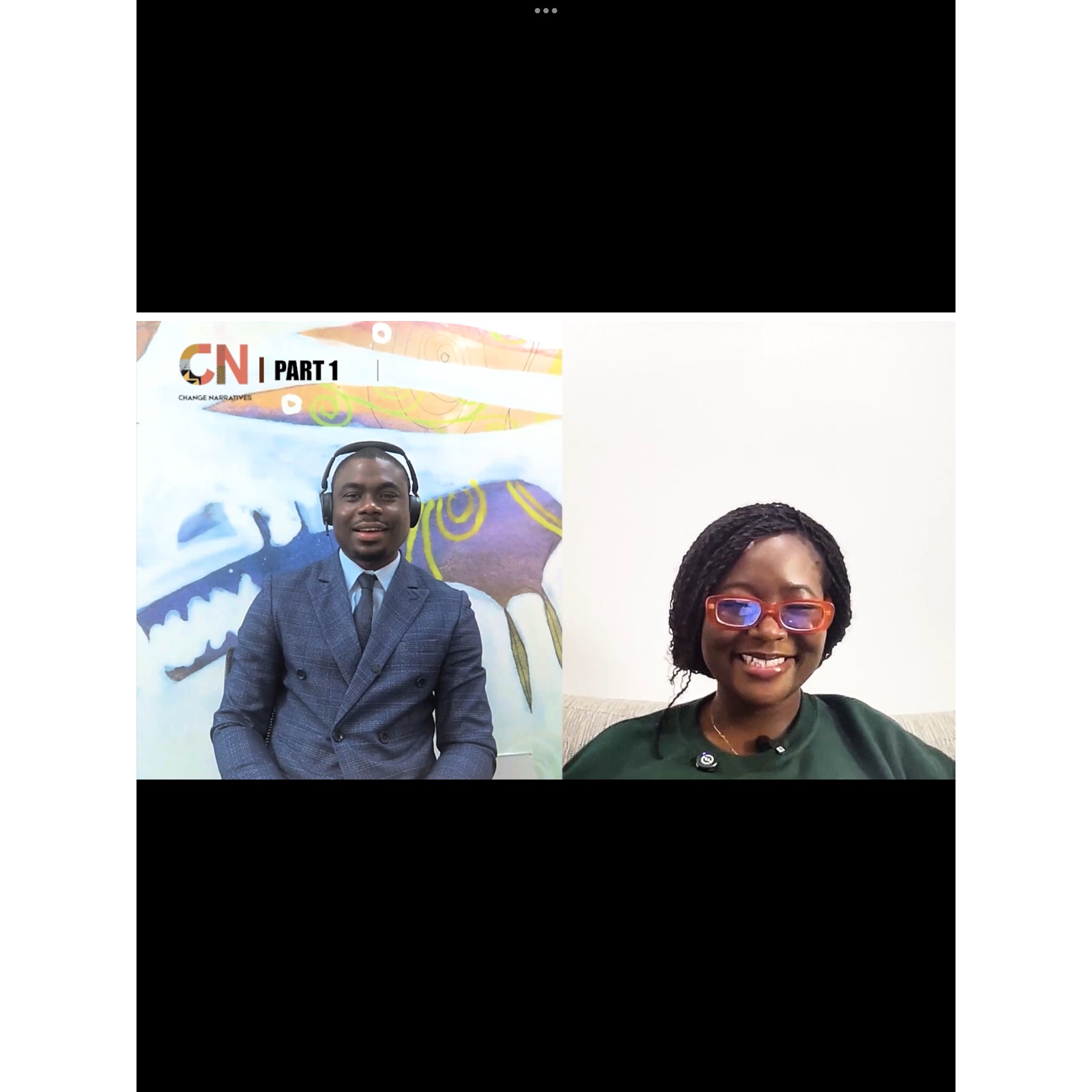
This season of Change Narratives looks at the social units that shape people: families, communities, institutions, environments and experiences.Education is one of the biggest.For many of us, school is where we first start deciding whether we are smart, slow, academic, creative or simply “not good at learning.”But what happens when those conclusions are wrong?In Part 1 of our conversation with researcher, educator and author Asher Kure, we explore the experiences that made him question some of our most familiar assumptions about intelligence and learning.Asher tells the story of a student who struggled badly in class, but outside school could play a sophisticated PlayStation game so well that his older brother struggled to beat him.The child could clearly learn.So what was really going on?From that question, we get into learning habits, behaviour, memory, the methods high-performing learners use and the classroom experiment that helped students learn from their peers.We also talk about Mind Palaces, memory triggers and why Asher believes learning itself should sit at the centre of education.This conversation is not only about how people learn.It is about how an institution like school can shape what people believe about themselves long after they leave the classroom.What if you were never bad at learning?

Nigeria is 66 today.And somehow, October is here too.🎊🎊🎊So we thought we would check in.How are you actually feeling about Nigeria right now?There is a lot that is frustrating. There is a lot that is tiring. But there are also people doing good work, things that are moving, and reasons to still hope for better.Eddie said maybe this should be a reflective year, and that probably sums up this conversation best.Today gives a real chance to think about where we are, what is getting better, what still needs work, and what we want to see change.So as we start a new month and mark 66 years of Nigeria:What are you hopeful about?Happy Independence Day 🇳🇬Happy new month!❤️

September is here, and everyone is talking about locking in for the final stretch of the year.But what if locking in didn’t have to mean doing everything alone?In this short bonus episode, we reflect on one of the biggest ideas from our recent conversation with Precious Ebere-Chinonso Obi: the role friendship and professional networks can play in helping us build, create opportunities and make an impact.We also look back at what we learned about working with donors without losing sight of your mission, and give a little preview of what’s coming next on Change Narratives as we turn to another social unit that shapes a changemaker: education.If you haven’t listened to Parts 1, 2 and 3 of our conversation with Precious, this is a good time to catch up.And as we head into the last few months of the year, here’s the question we’re thinking about:What are you locking in to build — and who are you building it with?Follow and subscribe to Change Narratives so you don’t miss the next conversation.

Every organisation talks about scaling. Few talk honestly about what it takes.In Part 3, Precious Ebere-Chinonso Obi shares how DO Take Action has expanded its work across multiple donors while staying true to its mission. We discuss flexibility, innovation, procurement, trade, policy, and why solving real problems is what earns long-term support.The conversation ends with Precious's vision for the future of DO Take Action and the practical steps needed to create opportunities for women at scale.

Comments

Download from Google Play

Download from App Store
 United States