


 Claim Ownership
Raising Men
Subscribed: 7Played: 46
Subscribe

© 2026 Shaun Dawson
Description
Raising Men is a podcast about parenting, masculinity, and the lifelong journey of raising sons—and ourselves—to be men of courage, character, and purpose. Hosted by Shaun Dawson, each episode features real conversations with parents, leaders, and thinkers redefining what it means to raising men in today’s world.
74 Episodes
Reverse
In this episode of Raising Men, Shaun Dawson sits down with Liz Ortenburger, CEO of SafeNest, Nevada's largest non-profit addressing domestic and sexual violence, to navigate some of the most daunting topics facing parents today. Together, they confront the reality of early digital exposure and pornography, discussing how accidental access impacts developing adolescent brains and skews expectations around intimacy. Liz offers a refreshing, proactive perspective, urging parents to replace shame and avoidance with early, open conversations. Moving beyond traditional masculine stereotypes, Liz and Shaun examine how fathers, coaches, and mentors can guide boys to evolve from the historical expectations of protecting and providing into becoming true partners in their relationships. Key TakeawaysTeach Kids to Swim, Don't Just Build Fences: Digital filters alone cannot stop pornography exposure; parents must actively educate children early so they can navigate accidental exposure with critical thinking instead of shame.Shift from Protect and Provide to Partner: Modern masculinity requires expanding traditional roles to teach young men how to build healthy, equal, and collaborative partnerships with women.Role Models and Mentors Matter: While parental shame pushes boys into secrecy, constructive accountability from respected mentors, coaches, and peer circles effectively redirects harmful behaviors.Uncorrected Behavior Is Condoned Behavior: In youth environments like sports locker rooms, unaddressed misogynistic or harmful banter is perceived by developing brains as approved behavior.Value Diversity of Experience: True cultural progress and healthy environments require valuing individual life journeys and diverse perspectives rather than relying on rigid categorical metrics."If you are not having the conversation with your kids, Pornhub is having it for you." — Liz Ortenburger"What does not get corrected gets condoned." — Liz Ortenburger"We have to start teaching young boys how to protect, provide, and partner." — Liz Ortenburger00:00:00 - Unannounced Mom Knocking Teaser00:00:25 - Guest Intro Liz Ortunburger00:02:23 - Modern Evolution of Pornography00:04:26 - Brain Development and Addiction00:07:48 - Avoiding Shame in Conversations00:11:00 - Guiding Healthy Youth Development00:14:05 - Value of Male Role Models00:17:46 - Shaping Locker Room Culture00:20:20 - Extreme Consequences of Ignorance00:23:30 - Protecting Providing and Partnering00:28:40 - Modeling Healthy Adult Relationships00:35:45 - Safe Nest Contact InfoBooks, Links and Frameworks MentionedSafeNest: Nevada's largest non-profit addressing domestic and sexual violence https://safenest.org/Scott Galloway: Bestselling author and statistician referenced for his writings on manhood (Notes on Being a Man)Mentorship Programs: Big Brothers Big Sisters, 100 Black Men, Gentlemen by Choice, Coaching Boys into MenProtect, Provide, and Partner: Framework for expanding traditional masculine development to include healthy, collaborative relationship skillsCar Windshield Conversations: Tactical approach for discussing uncomfortable or sensitive topics with teens in low-pressure settingsLiz Ortenburger on LinkedIn: https://www.linkedin.com/in/liz-ortenburger-9539aa32/

In this episode of Raising Men, host Shaun Dawson introduces a new format focused on cultivating one of the most critical skills in modern masculinity: evaluating claims to discover what is actually true. Prompted by a viral quote claiming American teenagers have lower testosterone levels than 68-year-old men, Shaun uses this episode to practice moving from reactive emotional responses to disciplined, analytical thinking. Drawing from personal experiences—like how updated science changed his view on artificial sweeteners—and Stoic philosophy, he sets the stage for checking complex health claims. Shaun breaks down the current debates surrounding male hormone decline into three distinct perspectives: the alarmists who view it as a cultural and health crisis, the skeptics who consider it a moral panic driven by flawed data and weight gain, and the commercial entities capitalizing on the controversy. This episode lays the groundwork for critical thinking before diving directly into the scientific literature in part two.Key TakeawaysMove from Conan to Sherlock: Emotional or outrageous health claims target our reactive, survival-focused brain first; true critical thinking requires passing those claims to our analytical prefrontal cortex before accepting or spreading them.Seek Out the Steel Man: Avoid creating easily defeatable "straw man" versions of opposing arguments; instead, find and evaluate the strongest, most serious version of a claim.Question the Source of Nuance: Scientific understanding evolves over time, and even if popular claims turn out to be partly right or wrong, the underlying mechanisms are often vastly different from public perception.Beware Outrage as a Business Model: Media outlets, political commentators, and commercial sellers profit off controversy and fear regardless of the truth, making healthy skepticism essential.Trace Claims to Primary Sources: Before repeating headlines or accepting sweeping statistics about male health, follow the citations down to the original scientific studies to evaluate the actual data.00:00 Intro & Teenager Testosterone Claim 00:43 Evaluating Claims & Personal Misconceptions 03:15 Artificial Sweetener Research Shift 03:52 Epictetus & Evaluating Harsh Appearances04:56 Steel-Manning the Testosterone Decline 06:01 Deteriorating Male Reproductive Health Studies 07:03 Camp 1: Crisis & Action 09:29 Camp 2: Moral Panic View 11:13 Lab Differences & Weight Factors 12:56 Camp 3: Commercial Interests 13:48 Outrage as a Business Model 14:32 Chasing Evidence for Next Week Books and Frameworks mentionedConan Brain vs. Sherlock Holmes Brain Framework: Shaun's neuroscience metaphor contrasting the reactive, survival-driven amygdala with the analytical, regulating prefrontal cortex[cite: 1, 3].Steel Man vs. Straw Man: The philosophical practice of evaluating the strongest possible version of an opposing argument.Epictetus on "Harsh Appearances": Stoic philosophy encouraging individuals to examine impressions before accepting them as reality.Tucker Carlson's The End of Men (2022): Documentary segment referenced regarding testosterone trends and red light therapy.2022 & 2025 Gut Microbiome & Sucralose Clinical Trials: Studies cited by Shaun regarding artificial sweeteners, gut bacteria changes, and insulin sensitivity.European Fertility Conference (July 2026 Analysis): Pooled study analysis mentioned regarding male reproductive health and testosterone data.
In this episode of Raising Men, host Shaun Dawson sits down with Dr. Katrina Ostmeyer—CEO of Beyond the Individual, Associate Professor of the Practice at the University of Kansas, licensed psychologist, and Board Certified Behavior Analyst. Beyond her clinical and academic credentials, Dr. Ostmeyer brings invaluable lived experience as the mother of a neurodivergent boy. Together, they navigate the complex landscape of raising sons whose minds do not fit into standard conventional boxes.The conversation explores the key diagnostic differences between boys and girls, how to distinguish normal boyhood energy from neurodivergence, and the delicate balance between behavioral interventions and medication. Dr. Ostmeyer highlights a transformative, strength-based perspective on neurodiversity, framing labels not as lifelong limitations, but as personal shortcuts for understanding a child's unique needs. This episode provides actionable insights and grounded encouragement for parents aiming to help their sons thrive.Key TakeawaysDiagnosis vs. Normal Development: Evaluating whether a child's behavior requires formal intervention comes down to whether it causes significant impairment and if simple environmental adjustments can resolve the issue first.Shift to Strength-Based Care: Modern clinical approaches are moving away from trying to "fix" neurodivergent children, focusing instead on leveraging their unique personal strengths to help them achieve their goals.Behavior as Functional Data: Misbehavior or defiance should be viewed as communication and analyzed functionally to understand why it is happening rather than simply labeling the child.Accommodations Build Skills: Accommodations at school or home are not about lowering standards permanently; they are tools designed to support children while they build essential skills.Parenthood Over Perfection: The ultimate objective of parenting is not raising a perfectly behaved child in every moment, but equipping boys with the independence and resilience needed to become happy, functioning adults."There’s a lot of variation in the population... and it’s really not a problem unless it’s a problem." — Dr. Katrina Ostmeyer"A disorder says you have a problem... but moving away from 'let's fix this' to 'what do you want your life to be and how do we help you recognize what you're working with' is where the field is going." — Dr. Katrina Ostmeyer"Our goal at the end of the day is not to have a perfectly behaved child; it’s to help raise functioning, successful, and happy adults." — Dr. Katrina OstmeyerTranscript Summary00:00 Introduction02:26 Balancing clinical expertise with raising a neurodivergent son03:52 Gender disparities and diagnostic bias04:54 Disambiguating natural male energy from clinical neurodivergence07:01 Rethinking classroom environments and expectations for young boys12:27 Evolutionary perspectives on ADHD and shifts in treatment options16:30 Moving from negative disability labels23:20 Understanding childhood defiance 27:46 Real world parenting stories 35:28 Early childhood milestones and determining when to seek professional help39:50 Reframing neurodivergence through strengths and personalized support systems47:08 Dr Ostmeyer's core principle for parents raising excellent menBooks, Links and Frameworks MentionedBeyond the Individual: https://www.beyondtheindividual.comPSYPACT (Psychology Interjurisdictional Compact): Telehealth authority framework across 44 states.Diagnostic and Statistical Manual of Mental Disorders (DSM-4 / DSM-5): Referenced diagnostic frameworks for ADHD and Autism.504 Plan Framework: Educational accommodation framework used in public schools.American Academy of Pediatrics (AAP) Guidelines: Reference framework for treating ADHD.Berry Picking Paradigm: Evolutionary psychology framework regarding foraging behaviors and ADHD traits.
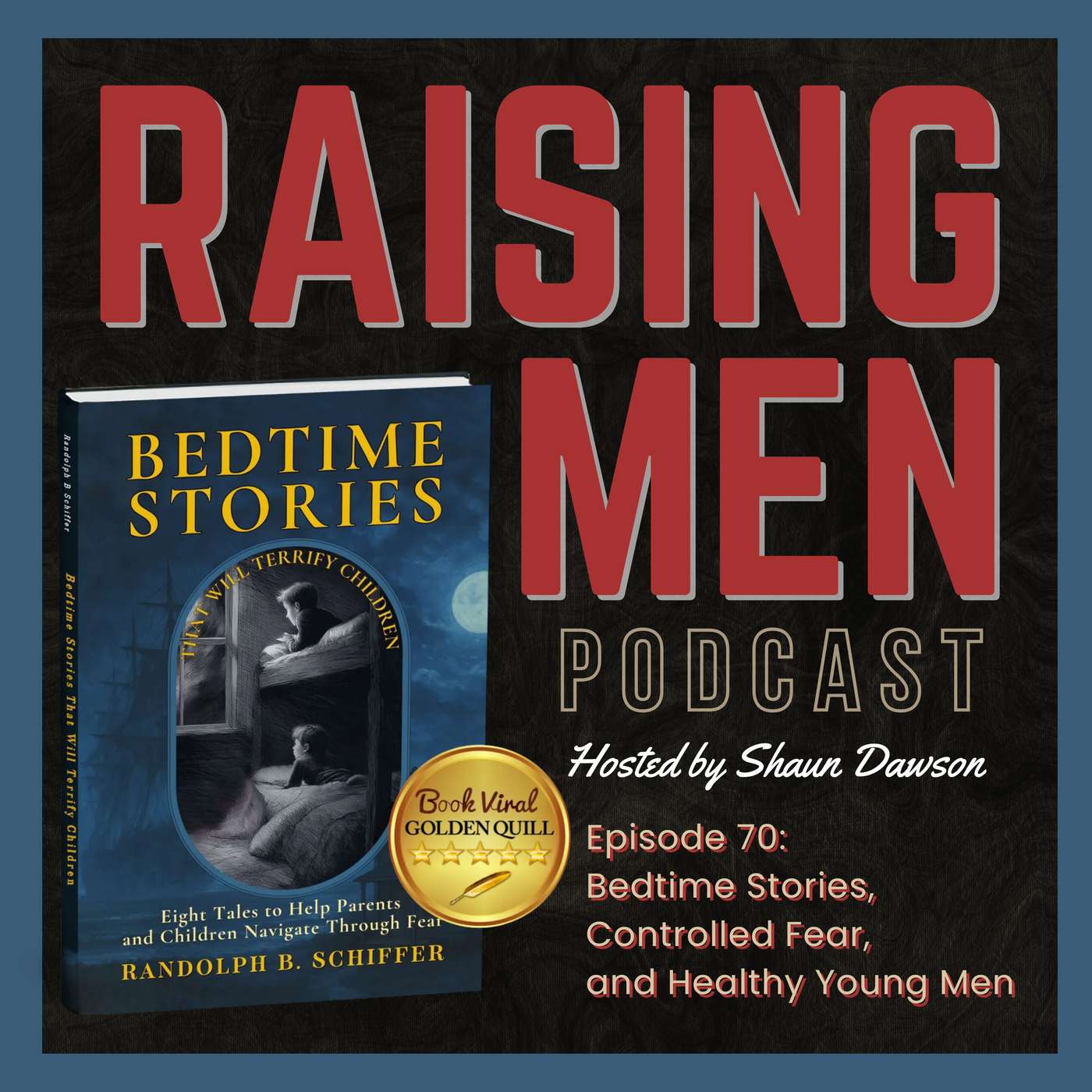
In this episode of Raising Men, host Shaun Dawson shares a special solo reading inspired by a recent conversation with Dr. Randolph Schiffer, author of Bedtime Stories That Will Terrify Children. Exploring how experiencing controlled fear in a safe environment is essential for a boy's emotional health, Shaun reads "Dog"—a story about two young brothers navigating late-night dread inside a forest cedar house. As sounds echo through the dark, seven-year-old Brenton and five-year-old Randy must find the courage to confront the unknown together. From cold floors to a shaking white door, the tale reveals how fear gives way to brotherhood, resilience, and unexpected relief. Join Shaun for a story about stepping into the dark, overcoming panic, and discovering what really lies on the other side.KEY TAKEAWAYSExperiencing controlled fear helps young men develop emotional resilience and courage in safe environments.Older siblings carry the natural weight of responsibility, but brothers draw strength from each other when facing the unknown.Courage is dynamic—its loss is common, but its resurrection allows even the youngest to take action.Imagined fears in the dark are often far more terrifying than the reality waiting on the other side.True strength involves taking small, shared steps forward together when facing panic.Books, Links and Frameworks MentionedBedtime Stories That Will Terrify Children by Dr. Randolph Schiffer https://www.amazon.com/Bedtime-Stories-That-Terrify-Children-ebook/dp/B0FVG5S1RHControlled Fear Framework: Facing fear in safe environments to build emotional health in boys https://randolphbschiffer.com/home
In this episode of Raising Men, host Shaun Dawson welcomes Dr. Randolph B. Schiffer, a neurologist, former Marine infantry officer, and founding director of the Cleveland Clinic's Center for Brain Health. Together, they examine how modern parenting culture often protects children from discomfort, inadvertently creating a fearful society that avoids failure, responsibility, and risk. Dr. Schiffer explains that while fear is built into human biology, courage—the capacity to think, speak, and act despite fear—is a skill that must be learned. Drawing from his experiences in combat during Vietnam, decades in medicine, and creating stories for his young son during a battle with leukemia, Dr. Schiffer highlights the transformative power of storytelling. By internalizing heroic figures, children learn to process fear, build resilience, and cultivate self-curiosity. This conversation provides actionable insights on modeling emotional processing to raise courageous men.Key TakeawaysCourage Is Learned, Not Innate: While fear is hardwired into infants and young toddlers, courage—the capacity to think, speak, and act despite fear—must be actively learned and modeled by adults.Overprotection Creates Cultural Anxiety: Shielding children from upsetting experiences or fearful situations creates long-term societal anxiety, leading to a fear of failure, responsibility, and life itself.Dads Must Model Fear Processing: Parents often fail to talk explicitly about their own fears, missing a crucial opportunity to model for their children how to process and overcome frightening situations.Storytelling Serves as an Emotional Anchor: Fictional and heroic characters stay with children forever, giving them internal models to navigate moral conflict, pain, and adversity.Self-Curiosity Is the Ultimate Operating Principle: Developing self-curiosity about who we are and who we wish to be is the most valuable skill for raising men of character."Courage, the capacity to speak, think, and act in spite of our fears, that is not built in. We have no courageous infants or young toddlers that I ever saw. That has to be learned." - Dr. Randolph B. Schiffer"If the lead figures, the heroes in the story, are shown to overcome fear, frustration... those figures from the story stay with them forever." - Dr. Randolph B. Schiffer"Self-curiosity about who we are and who we wish to be—if that can be begun and nurtured and modeled, that's the most valuable skill of all." - Dr. Randolph B. SchifferCHAPTER MARKERS00:00 - The distinction between innate fear and learned courage 00:37 - Introduction to Dr. Randolph B. Schiffer and brain health 01:58 - How overprotective parenting creates a fearful culture 05:45 - Navigating modern cultural expectations for young men 09:07 - Why parents must model processing their own fears 12:26 - Using storytelling to teach children resilience and values 14:12 - The neurological connection between memory and emotional arousal 18:47 - Redefining truth and lying in parental storytelling 22:52 - Lessons on internalized hero figures from combat in Vietnam 24:46 - Writing bedtime stories to help a son battle childhood leukemia 30:13 - The long-term psychological impact of war and medical service 32:05 - One key operating principle for raising men of courageBooks, Links and Frameworks MentionedBook: Bedtime Stories That Will Terrify Children by Dr. Randolph B. Schiffer https://www.amazon.com/dp/B0FVG5S1RH?lv=shuf&channelId=500&plpRedirect=mhFallbackLiterature/Pop Culture Reference: Frank Merriwell (fictional heroic athlete from Yale used as an internalized model of courage)Framework: Learned Courage Model (fear is an innate biological impulse, whereas courage requires adult modeling and intentional practice)Framework: Emotional Memory Colocation (the brain's memory and fear systems are co-located in the medial temporal lobes, making emotionally charged stories stick permanently)

Comments

Download from Google Play

Download from App Store
 United States